Announcing the new McLean Center for Metabolic Psychiatry Learn more.


Listen, Watch & Subscribe on:


Q&A: Keto Safety After a Stent, During Pregnancy, and in Serious Mental Illness
Listen
About the host

About the host


Bret:
Welcome to the Metabolic Mind Podcast. I’m your host, Dr. Bret Scher. Metabolic Mind is a non-profit initiative of Baszucki Group, where we’re providing information about the intersection of metabolic health and mental health and metabolic therapies, such as nutritional ketosis as therapies for mental illness.
Thank you for joining us. Although our podcast is for informational purposes only and we aren’t giving medical advice, we hope you will learn from our content and it will help facilitate discussions with your healthcare providers to see if you could benefit from exploring the connection between metabolic and mental health
Welcome back to Metabolic Mind. We’re here for another Metabolic Mailbag episode where we answer your questions that you’ve submitted to us. And I’m joined by our producer again, Erica Gerard. Erica, thank you for joining me.
Erica:
Hi, Bret. Great to see you.
Bret:
Yeah. Remind everybody where they can send us some questions, and then we’ll get into these because we have a lot to get through.
Erica:
Yes. So, if you have a question for Dr. Scher, you can send it on our website at metabolicmind.org/questions, or you can shoot us a quick email at info@metabolicmind.org. You’re welcome to stay anonymous, if you prefer. Or if you’d like to share your name, we’d be happy to give you a shout-out on air.
Bret:
Yeah, and just also to say, you said if you have questions for me, yeah, please send them.
But also, Dr. Georgia Ede, and we had Templeton Stewart on. So if you have other guests maybe, that you have questions for, let us know that, too, and we’ll see if we can get them on. But definitely, Dr. Ede, we’ll have her on a number of times, too. Yeah.
Erica:
Yes, absolutely.
Bret:
Great. All right.
Erica:
So with that, let’s jump into our questions.
Bret:
Let’s do it.
Erica:
All right. So, first question is from anonymous at the mailbox, and the question is, “You have done an excellent job of debunking the idea that keto causes heart disease. However, I already have atherosclerosis and a stent. So, is keto generally safe for people like me once we have identified CAD?”
Bret:
So yeah, I get this question a lot. As a cardiologist, it’s a lot of what I see in my practice. And of course, the answer is everything is individualized. You have to work with your doctor because nobody is the same. We can’t just give one recommendation. However, what I can say, in general for me, the prevention of heart disease and the treatment of heart disease are one in the same. Because when someone already has heart disease, you’re preventing progression or recurrence. And if someone doesn’t have heart disease, you’re preventing the onset of heart disease.
So, the concept is the same, where I want to make sure someone has ideal metabolic health, blood pressure, body composition, triglyceride to HDL ratio, your insulin levels, your, metabolic health is ideal. And I want to make sure you have a good lipid profile, which is again, different for everybody. And that you have lower cardiac risk factors with low inflammation. And then, your other lifestyle factors, right?
So, it’s this big blanket. So to say, “Can I do keto with heart disease?” I’d be like, “Sure, like anybody can.” The question is, how does it impact all those markers? How does it impact your cardiovascular risk? How does it impact your overall health? It isn’t that keto is good or bad. It’s how it fits into your lifestyle and your treatment program.
So, in my practice, I treat lots of people with significant atherosclerosis who’ve had stents, who’ve had bypass surgery. I treat them with a ketogenic diet, ketogenic therapy as part of their overall treatment program. To me, there’s no absolute indication or absolute contraindication either way.
It’s just part of the treatment plan. Does that make sense?
Erica:
Yeah, but I’m not going to let you off the hook so easily because the question was, is it generally safe for people? So, I think what I’m hearing you say, given that you do treat people all the time with atherosclerosis using keto, that you feel that it generally is safe, or else you wouldn’t be recommending it.
Bret:
Yeah, not only do I think it’s generally safe, I think it’s generally very beneficial for cardiovascular health because of its pretty significant and profound metabolic health impacts. Does that mean it is safe and beneficial for everybody? No, and you can say exactly the same for a vegan diet. You can say exactly the same for a Mediterranean diet, right?
There is no absolute. But I think, in general, the answer is yes, but needs to be individualized.
Erica:
Great. Thank you. All right, next question. This person also wrote to us at the mailbox and would like to stay anonymous. So, the question is, “I’d like to ask you about, weight loss. So, how could someone follow a ketogenic diet without wanting to lose weight?
I’m really afraid of losing weight because a few years ago, I lost a lot of weight suddenly, and it was devastating. Thank you in advance.”
Bret:
Yeah. So, I’m actually going to quote Dr. Ken Berry. He says, “A ketogenic diet is not a weight loss diet. It’s a weight optimization diet.” Which I thought was really interesting and helps reframe it, right?
And we’ve seen it, a recent publication from Dr. Guido Frank, of using it to treat people with weight-restored anorexia, who of course, you don’t want losing weight. But they didn’t in his trial. They did not lose weight. So, it is not truly a weight loss diet for everybody, right? If you have a lot of weight to lose, it’s going to help you lose that weight.
If you don’t have much weight to lose, chances are you’re not going to. Now, some people still do, and a lot of that is because they reduce their calories. They feel so satiated by eating the fat and the protein, reducing their carbs, getting rid of the foods that make them want to eat more and more. And they just naturally reduce their calories so they may start to lose weight.
And some people also have this mental block about eating, quote-unquote, “so much fat.” So, they aren’t adequately increasing their calories on a keto diet. So, the way to make sure you don’t lose weight is to not do those things, right? To make sure you’re getting adequate fat, to make sure you’re getting adequate protein.
There’s this concept that sort of snacking is, quote-unquote, “bad.” If you’re trying to lose weight and improve your metabolic health, then yeah, snacking’s probably not going to help you as much. But if those things are already good and you’re trying to not lose weight, then snacking is great.
So then, that helps get you added calories between your meals to help prevent you from losing weight. So, there are lots of tricks to make sure you’re not losing weight on a ketogenic diet. And it is not by definition a weight loss diet, although it certainly can be an effective one for the right person.
Does that make sense?
Erica:
Yeah, definitely. I remember when you were talking with Temple Stewart, and you guys were mentioning dairy and how dairy foods can be really sneaky because they are so caloric.
I would imagine that’s one thing that easily you could do to increase your calorie intake. And make sure that you’re not losing weight is bust out the cream cheese and the full fat yogurt. And I know for me, those things, I could eat endlessly.
Bret:
Yeah. Exactly. The dairy and nuts tend to be a lot of the big ones for sure.
Erica:
Yeah. Okay, great. Thanks for that question.
And since you mentioned the Dr. Guido study, the Dr. Guido Frank, we actually have someone who participated in that study who wrote in with a question. I think that’s pretty cool. So the question is, “I just participated in a 14-week study with Dr. Guido Frank on the use of ketogenic diet in weight-restored individuals who still struggle with anorexia nervosa.
I’m about three months out from my last brain scan with less support, but doing really well.” Great, happy to hear that. “And have a few questions. So ,the first question is, has a ketogenic diet been studied for pregnancy and those who are nursing?
Bret:
Yeah. So, why don’t I’ll answer the questions first? And then, I’ll go back and talk a little bit more about the study.
Pregnancy and nursing with keto. Now, there are, of course, there are no studies about this. No research. So, we’re really just going on clinical experience and individual experience. And if you look at contraindications, it’s usually listed as a contraindication. So actually, let me tackle the nursing part first.
So, there was one case report that was published in the literature of a woman, who was nursing and looks like she had low caloric intake and went into ketoacidosis. So from that, first, do no harm. Everybody was concerned about ketogenic diets with nursing. In a way, that makes sense because the caloric demands and the metabolic demands of the body with nursing are dramatically increased.
So, if you think you’re going to just be able to keep eating the same amount and nurse, your body’s not going to like that. Your body’s going to need more. That can certainly increase the risk. Do I think it’s an absolute contraindication? I think it’s an absolute contraindication to do without clinical guidance, yes.
But as with a lot of these contraindications, if you’re doing it under guidance with someone who is very experienced, and you are certain you’re getting enough calories. And you’re monitoring your ketones, and you’re really paying attention, and again, under clinical guidance, then I think it absolutely can be done.
But absolutely contraindicated to do on your own without that type of supervision. And with pregnancy, same sort of thing. Pregnancy is one of those areas where we in medicine measure ketones, but it’s for the harm, right? Having ketones when you’re pregnant is very dangerous, and that’s the concern.
So people would say, therefore, you can’t use a ketogenic diet when you’re pregnant. But actually, people have shown that their gestational diabetes resolves with a ketogenic diet, and they have used it safely. Does that mean everybody can? No. Again, I would say it’s contraindicated without proper clinical supervision. But that doesn’t mean it can’t be done under correct, experienced supervision.
So, it’s tricky when it hasn’t been studied and we’re going off of clinical experience and individual experience. But the key for this, I would say, is don’t do it on your own by any means. You have to do it with a very experienced practitioner following you.
Erica:
All right. So, this person’s next question, this is a two-parter.
Bret:
Yeah.
Erica:
And then we’ll get to the anorexia study. “Other than cholesterol, are there other blood markers like hormone levels, et cetera, that may change during extended ketosis that may be flagged as unusual but are actually expected? And knowing what might change can actually help patients like this person, like myself, better advocate for ourselves in front of clinicians that may not be educated on the matter.”
So any other blood markers, Dr. Scher, that we should be noting?
Bret:
Yeah, so it’s again, it’s a hard question to answer simply. But yes, like she said, looking at lipids, so triglycerides should go down. HDL should go up. LDL can do a number of different things. But sometimes we see triglycerides go up and HDL go down,. And it’s hard to explain, but that’s clearly not the, quote-unquote, “normal response to ketosis.”
I’d say the same for liver function tests. The majority of people are going to see improvement in liver function. We occasionally see examples of someone whose liver function appears to be worsening with ketosis. Again, hard to explain across the board if it’s a genetic predisposition or what, but certainly something you want to follow.
Thyroid, same thing. Some people, their TSH may go up a little bit, their T4 may go down a little bit. Does not always mean it’s clinical hypothyroid. In fact, usually does not mean that, but something to consider. And that’s one where, again, if a doctor just wants to reflexively start you on a medication or tell you to stop the diet because of a lab change, the key is always reflecting the lab change back to how are you doing clinically?
How are you feeling? Because a lot of people may see their TSH go up, and they’re losing weight. They’re having more energy, right? They’re sleeping better. They’re have better hair and nails, right? The opposite of the things you would expect with hypothyroid because of the benefits of ketosis and improved metabolic health.
But if you just looked at the lab, you’d say, “Oh, this is dangerous hypothyroid. We got to treat it,” when all their symptoms are the opposite, right? So, you have to correlate the labs with the symptoms.
Erica:
So, look at the whole person evidence and not just the numbers on the page.
Bret:
Exactly. Exactly.
Erica:
Yeah.
Bret:
Yeah, so but I’m so glad we got a question from somebody who was in Dr. Frank’s study. And we should, we’ll link to it below because we have a lot of content on it. Interviews with Dr. Frank. And basically, what he did was he was involved in a five-person pilot study, writing it up, a couple years ago about using ketosis for treating anorexia.
And he said, “I’ve been treating anorexia and eating disorders for decades, and this seems to be one of the most promising treatments I’ve seen, right?” I’m using his voice, and speaking for him. So, what he did was he did a 18-person trial of weight-restored anorexia. So, I want to clarify.
These were people who had restored their weight. They were not seriously underweight, but they still had the psychological symptoms. The food noise. The constant thoughts about food. The eating disorder thought process, I guess you could say. And so he said, “I want to see if ketogenic interventions will treat that part and be safe and effective.”
So, it was a pilot study. What he did find was absolutely, it was safe and effective. Everybody, the weight stayed the same. There was not any weight loss. And this goes back to this, is keto a weight loss diet or not? In this population, it was not. And you wouldn’t want it to be, right? So, that worked out well under very good clinical supervision.
And the symptoms, the eating disorder symptoms, improved dramatically. Depression symptoms, anxiety symptoms all improved significantly. So, a really encouraging pilot study. And he’s already moving on to the next studies, looking at this more carefully, eventually moving towards a randomized controlled trial.
This is how science starts. People will say, “Oh, it wasn’t an RCT. What can you tell from it?” No, but who else was looking at this, right? Again, this was a, quote-unquote, “contraindication.” Most dieticians and doctors will tell you, you cannot treat an eating disorder with a restrictive diet, Well, if that’s how you look at it, then you’re only seeing half the picture.
Instead, it’s a metabolic physiologic treatment that is changing brain chemistry, that is changing brain fuel and brain energy, and appears that it can also help with these symptoms and be safe. So, really encouraging. Possibly one of the most encouraging treatments for anorexia and eating disorders that we’ve seen in ages.
So, I’m really curious to see where this goes.
Erica:
Oh, it’s just fascinating. Why do you think that this particular treatment has had so much success with anorexia? What do you think is happening in the brain? Is it that it’s reducing inflammation? Do you think that it’s just increasing overall brain health, which is having an effect on the anxiety, the food noise, all those symptoms that we’re trying to address?
Bret:
Yeah, so again, I think we can link to a video interview I did with Dr. Frank where he talks about his theory for the mechanisms. And I want to emphasize it is a theory. But it does make sense, and a lot of it does come down to the brain energy.
It has your brain utilizing and transforming energy and the downstream effects. Often when our drug culture, we think one drug, one effect, right? It’s clear. With ketosis, it’s not so clear because you’re improving energy transformation and usage. You’re providing a different fuel, and you’re frequently seeing decreased neuroinflammation.
You’re seeing changes in neurotransmitters. You’re improving overall metabolic health in addition to brain metabolic health, right? You see so many different changes. It’s hard to say this is the one thing. But I think a lot of it does come down to energy usage. That you’re using ketones, which maybe bypasses a disordered use of glucose for brain energy, which then improves symptoms.
I think that’s probably at the root of it, but there is still a lot to be discovered.
Erica:
It’s really interesting and could be a massive breakthrough for a historically very difficult to treat disease. So, we’ll keep bringing you information about it.
Bret:
Yeah.
Erica:
All right.
Bret:
The evidence is early, but still certainly growing. And of course, under clinical supervision, again, being the key.
Erica:
Yes, absolutely. Okay, just two more questions for today for you, Dr. Scher. This question is about schizophrenia symptoms. “So, do the findings of a keto diet put schizophrenia symptoms into remission, and is it considered a cure? So, does this mean that schizophrenia is not genetic?”
Bret:
Yeah. So, this actually came up recently when RFK, Jr. Said he saw studies that keto diets can cure schizophrenia.
And cure, I appreciate his enthusiasm and that he’s excited about it, as something new and that can be very helpful. But I’m not sure cure is the right word because cure suggests it’s gone and never coming back. And that’s probably not what he meant, if I can guess what he was talking about.
But I would say no. It is not a cure. I think we have to be very clear. Now, can it put symptoms into remission? Yeah, I think that is something that we can say. Now, we can say it’s happened. We can’t say it’s been proven in randomized controlled trials, although those are ongoing. So I’m very curious to see what those show.
But same with type 2 diabetes. You’re not, quote-unquote, “cured” because if you go back to your old lifestyle with type 2 diabetes, it’s likely going to come back. And same potentially for schizophrenia. We see people, whether it’s depression, bipolar disorder, schizophrenia, OCD, name your diagnosis. If someone improves with a ketogenic intervention and ketogenic therapy but then comes out of ketosis and off their therapy, we often see symptoms come back.
So, that is definitely not a cure, but certainly an improvement. And further research that’s ongoing is going to help us refine that even more. So, I would say it’s not a cure. Does it mean schizophrenia is not genetic? So, to say something is or is not genetic, I think, is like just not the best way to look at it. Because genes can increase likelihood of things, but almost never make it 100% or zero.
Now, for some dramatic gene mutations, I guess they can, right? They can make like homozygous familial hypercholesterolemia, or there are certain gene conditions that are 100%. But for something like schizophrenia or even something like type 2 diabetes, which I used as an example, you can have genes that make that more likely. But it’s not going to be an all or none effect.
And then, as we know, we can affect our gene expression, the epigenetic expression, by lifestyle, by environmental inputs and so forth. Genes are not 100% destiny, but I wouldn’t say genetics have zero input, right? By just saying there’s a metabolic component to mental illness does not then equate that there is no genetic input.
Absolutely not. There still is a genetic contribution that can be modified potentially by metabolic inputs. I think maybe that’s a cleaner way to think about it.
Erica:
Okay. So, you’re not saying that these things don’t run through bloodlines or run through families. But you are saying that there’s a lot of other factors that can turn them on, you know, lifestyle, environment, nutrition, all of those things.
Bret:
Yeah.
Erica:
So, yeah, is that right?
Bret:
Yeah. And so, if it was a, quote-unquote, “genetic disease,” if two parents, who have a diagnosis of schizophrenia, had a child, a, quote-unquote, “genetic disease,” 100% of their offspring would have schizophrenia. That’s a simple way to think about it, but that is not the case, right?
Instead, you can have genetic predispositions and epigenetic manifestations that can change.
Erica:
Great. Okay, we actually have two more questions. I lied. So sorry, but they’re both very interesting. So, I wanted to get to them.
Bret:
Okay.
Erica:
One of them is about a video that we shared recently, which I thought was fascinating, about a man who was experiencing homelessness who was able to stick to a keto diet using very simple things. High-fat ground beef, tallow, and a microwave.
Bret:
Yeah.
Erica:
And yeah. It was just so wonderful to hear that. You can be somebody on a low income and approach this diet in a way that makes sense for you and your budget. So, I guess the question is what else can we do?
Bret:
Yeah.
Erica:
Is there other ways that we, maybe not all of us, want to just eat a tin of ground beef every day. But are there other recommendations that you have for all of us, you know, in today’s economy, right? We’re looking for ways to save money. Are there ways that we can be successful on a keto diet without breaking the bank?
Bret:
Yeah. And this comes up a lot. And there are some good resources out on the web. People have different guides for keto on a budget, which I think can be so helpful. But yeah, ground beef, eggs, cheese. They tend to not be that expensive. It doesn’t have to be the rib eye steak and avocado and the highest quality olive oil.
Sure, if you can afford that, then go for it. But by no means does it have to be that. And eggs don’t have to be the pasture-raised regenerative ranch eggs. Again, ideally, if you can afford it, and if it was the same or if it was the same price, average everyday eggs are not that expensive.
Ground beef is not that expensive. Butter is not that expensive, right? And so, there are a lot of different options. And frozen vegetables, that are low carb vegetables, are cheaper than fresh vegetables. Finding what meat is on sale. Getting the less expensive cuts of meat. All of those things are little tips that can certainly help.
So keto diet does not have to be an expensive diet. No question about it.
Erica:
I find lately I’ve been buying more tofu, like a big block of tofu, because it’s actually quite inexpensive.
Bret:
Yeah.
Erica:
And when you dice it up, you can get many meals out of it. So, just another tip there. I don’t know, what are your feelings on tofu though?
Bret:
I think just by mentioning it, we’re going to light up our comments because it’s a very, it’s a controversial food. Some people like it. Some people hate it. It’s got anti-estrogen and pro-estrogen effects. What does all that mean? But it’s a good protein source. It’s relatively low carb.
Especially for someone who doesn’t eat animal products, it’s a great protein source. So, I think it’s fine to eat some amount of tofu. I wouldn’t want someone eating a ton of tofu. So. I do worry about if that’s someone’s only protein source. But yeah, like you said, it’s inexpensive and can be super, super helpful to get your protein. And you would definitely need to add some fat to it to get adequate fat calories, too, for a ketogenic diet. But certainly doable.
Erica:
Oh yeah. And not to mention it tastes way better when you fry it up than if you have it baked. All right, next question and last question this person would like to know if a keto diet is taught in medical school.
Bret:
Yeah.
Erica:
Is it taught? Do doctors learn about this diet at all?
Bret:
No.
Erica:
Ugh.
Bret:
And that is a big part of the problem.
Erica:
That’s a shame.
Bret:
One is because nutrition education is really focused on preventing severe nutrition diffren- deficiencies. Diseases like pellagra and kwashiorkor, and things that you don’t really see much in the industrialized world. And very little nutrition education is about chronic disease and metabolic disease.
Now, hopefully, that is changing, but that’s the way it’s been. And also, a keto diet, quote-unquote, “keto diet,” has a bias against it. That it is a unhealthy weight loss diet that can’t be sustained long term. That is the bias. The literature does not support that, especially when it’s part of ketogenic therapy, which is a metabolic medical intervention.
So, I think we need to just rephrase how we think about it. How we talk about it, and it should be taught in medical schools.
Erica:
It should be. And hopefully, you and your wonderful show are going to change that someday. We can all only hope.
Bret:
We can hope. We can hope.
Erica:
Yeah.
Bret:
Thank you for the questions. Thank you, Erica, for joining me to ask them. And thank all of you out there for sending them to us.
And please, keep them coming. And we will definitely be back for more, Metabolic Mailbag episodes. So, we will see you here next time at Metabolic Mind.
Erica:
See you next time.
Bret:
Thanks for listening to the Metabolic Mind Podcast. If you found this episode helpful, please leave a rating and comment as we’d love to hear from you. And please click the subscribe button so you won’t miss any of our future episodes. And you can see full video episodes on our YouTube page at Metabolic Mind.
Lastly, if you know someone who may benefit from this information, please share it, as our goal is to spread this information to help as many people as possible. Thanks again for listening, and we’ll see you here next time at the Metabolic Mind Podcast
Listen, Watch & Subscribe on:
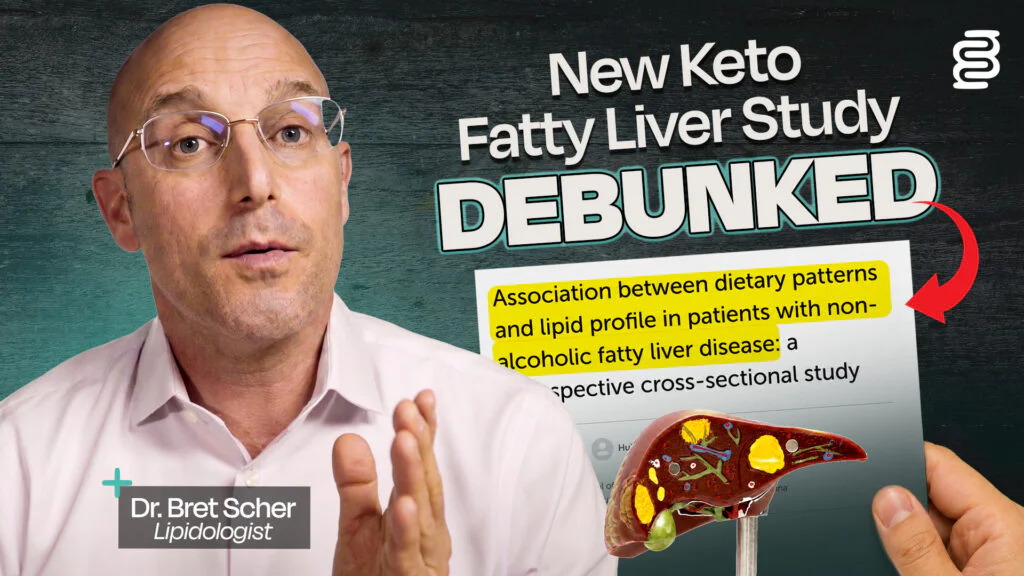
In this Metabolic Mind Bitesize episode, Dr. Bret Scher tackles a new study claiming ketogenic diets worsen fatty liver disease, a finding that appears to contradict prior research showing keto helps treat fatty liver. He breaks down why this retrospective cross-sectional study from China is deeply flawed, from never verifying ketosis to ignoring reverse causality and baseline differences, then contrasts it with a much stronger body of randomized controlled trial evidence showing the opposite conclusion.
Read more
Can intermittent fasting support ketosis and help treat serious mental illnesses like bipolar disorder, schizophrenia, depression, and anxiety? Transcript: Can intermittent fasting help with ketosis or help with…
Learn more
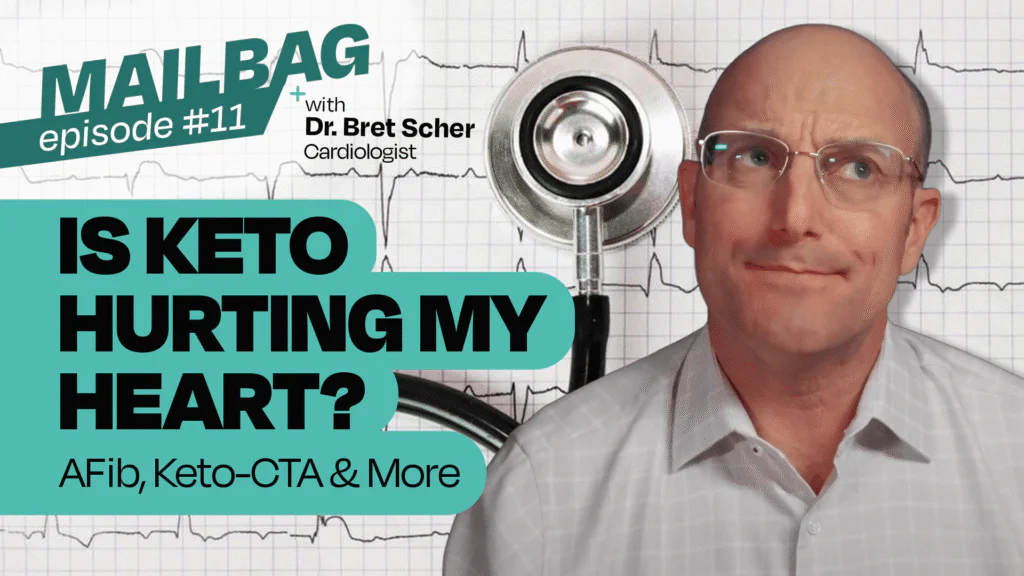
Dr. Bret Scher and producer Erica tackle listener questions in this Metabolic Mailbag episode, covering whether keto helps or hurts AFib risk, concerns over the controversial KETO-CTA study's flawed initial data, and practical troubleshooting for someone experiencing low energy and brain fog despite strict adherence to keto. They wrap up with a stepwise approach for safely raising ketone levels when standard adjustments aren't working.
Learn more
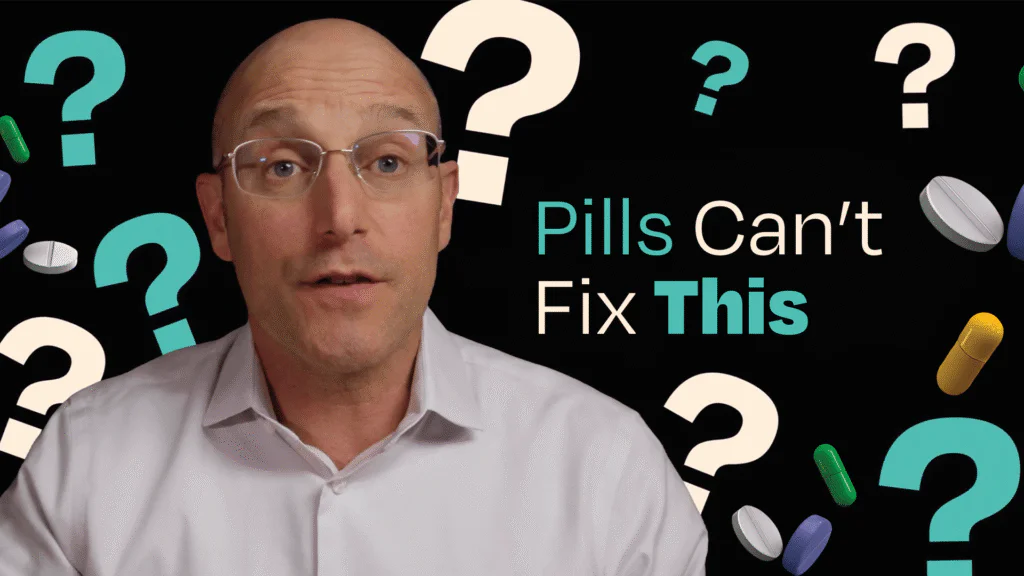
Dr. Bret Scher examines a new trial showing the drug olezarsen dramatically lowered triglycerides and ApoB, yet produced zero reduction in coronary artery plaque. He uses this as a case study for a broader point: lowering a lab number with a drug isn't the same as fixing the underlying metabolic dysfunction that caused it, drawing parallels to blood sugar, blood pressure, and weight management medications.
Learn more
In this Metabolic Mind Bitesize episode, Dr. Bret Scher tackles a new study claiming ketogenic diets worsen fatty liver disease, a finding that appears to contradict prior research showing keto helps treat fatty liver. He breaks down why this retrospective cross-sectional study from China is deeply flawed, from never verifying ketosis to ignoring reverse causality and baseline differences, then contrasts it with a much stronger body of randomized controlled trial evidence showing the opposite conclusion.
Read more
Can intermittent fasting support ketosis and help treat serious mental illnesses like bipolar disorder, schizophrenia, depression, and anxiety? Transcript: Can intermittent fasting help with ketosis or help with…
Learn more
Dr. Bret Scher and producer Erica tackle listener questions in this Metabolic Mailbag episode, covering whether keto helps or hurts AFib risk, concerns over the controversial KETO-CTA study's flawed initial data, and practical troubleshooting for someone experiencing low energy and brain fog despite strict adherence to keto. They wrap up with a stepwise approach for safely raising ketone levels when standard adjustments aren't working.
Learn more
Dr. Bret Scher examines a new trial showing the drug olezarsen dramatically lowered triglycerides and ApoB, yet produced zero reduction in coronary artery plaque. He uses this as a case study for a broader point: lowering a lab number with a drug isn't the same as fixing the underlying metabolic dysfunction that caused it, drawing parallels to blood sugar, blood pressure, and weight management medications.
Learn more