New Results: First RCT for Schizophrenia & Bipolar Disorder. Learn more.


Listen, Watch & Subscribe on:


Q&A: Keto for AFib, Heart Risk, Ketone Levels & More
Listen
About the host

About the guest


Erica:
“I now fear I am also damaging my heart health in the process. Can you address this from your expert perspective?” How can someone raise their ketone levels when all else fails? Help or hurt? Keto for AFib.
Bret:
Welcome to the Metabolic Mind Podcast. I’m your host, Dr. Bret Scher. Metabolic Mind is a non-profit initiative of Baszucki Group, where we’re providing information about the intersection of metabolic health and mental health and metabolic therapies, such as nutritional ketosis as therapies for mental illness.
Thank you for joining us. Although our podcast is for informational purposes only and we aren’t giving medical advice, we hope you will learn from our content and it will help facilitate discussions with your healthcare providers to see if you could benefit from exploring the connection between metabolic and mental health.
Many of the interventions we discuss can have potentially dangerous effects if done without proper supervision. Consult your healthcare provider before changing your lifestyle or medications. In addition, it’s important to note that people may respond differently to ketosis and there isn’t one recognized universal response
Welcome back to another mailbag episode here at Metabolic Mind. And today, I’m joined by our producer, Erica. So, welcome. So, great to see you again.
Erica:
Great to be back. Thanks, Bret.
Bret:
So, it’s great to have you on this Q&A episode, this mailbag episode, and I’m excited to get started. As usual, we have a number of questions all sent out by you from the audience. So, thank you so much for sending them, and please keep sending them.
We love to be able to address them.
Erica:
With that, why don’t we get into some questions that we’ve received from you guys. You ready?
Bret:
Absolutely.
Erica:
You ready to go, Bret?
Bret:
Let’s do it.
Erica:
Okay. Great. So, this first question comes from RobertoCG2GR from YouTube, and it’s about AFib. So, Roberto wants to know, “What is the effect of keto on AFib, and how can keto improve heart muscles?”
So, keto and AFib. What do you think, Bret?
Bret:
Good question, Roberto. So, there have been some reports and some, not a lot published, but there have been some reports that keto can worsen the risk of AFib, which is actually in general not true. And like I said, nothing really published on it. Now, If you’re familiar with keto, what we talk about the keto flu or the keto transition period, there is a big fluid shift and electrolyte shift, with sodium, potassium and fluids changing dramatically in that initial period.
Any electrolyte shift and fluid shift can increase the risk for atrial fibrillation. So, if you’re not, if somebody is not paying any attention to hydration or electrolytes, there is a small chance that. AFib or any type of cardiac arrhythmia may increase in that period. But it is easily preventable and very short-lived. And even then, a small risk.
But then, if you actually look at what are the main causes or contributors for atrial fibrillation, it’s high blood pressure. It’s sleep apnea, right? It’s thickness of the heart muscle. Those are some of the most common contributing factors, and ketogenic therapy can be good for all of those.
It can help lower blood pressure, right? And it can, of course, help treat and reverse type 2 diabetes and help you lose weight, and all these improved factors which can then improve sleep apnea. So, from that sense, it can actually be beneficial for AFib because you’re treating the potential contributing factors to atrial fibrillation.
Now, sometimes people can get palpitations where they, which is just a sensation of your heart beating in your chest. That is not the same thing as atrial fibrillation and may require an evaluation to make sure it’s not, but they’re not one in the same. It could just be an extra beat here and there, which for most people is completely benign, which is very different from atrial fibrillation.
Sometimes people think of those as the same thing. I don’t want to get too technical.
Erica:
Is that the same thing as arrhythmia?
Bret:
So, arrhythmia is this big, huge category that just means the heart is beating in some way it’s not supposed to, and that can be anything. It can be what we call PACs, premature atrial contractions, which are, like I said, for the most part completely benign for most people, although it’s still quote-unquote “an arrhythmia,” whereas atrial fibrillation would be a more concerning arrhythmia.
So, arrhythmia is just the umbrella term.
Erica:
Okay, so help or hurt, keto for AFib?
Bret:
Yeah, in general, help. In general, help because it is going to help treat and potentially reverse the majority of the contributing factors.
Erica:
All right. Our next question comes from an anonymous submitter, who came to us from our Metabolic Mind inbox, and the question is, “I’m very concerned about recent results from the KETO-CTA study.
Ketogenic therapy works so well for me, but I’m now afraid to continue given that the study results did not rule out negative cardiac consequences. By choosing to improve my mental health and control my Type 2 diabetes with a therapeutic keto diet, I now fear I am also damaging my heart health in the process.
Can you address this from your expert perspective?” Bret, what was the KETO-CTA study? Let’s remind people what that was.
Bret:
Yeah, so I will cover it a little bit here because there’s a lot to cover, but I highly recommend anybody, who’s interested in learning more details about the KETO-CTA study to follow Dave Feldman and look at all the content he has put out.
But essentially, this is a study where he recruited 100 individuals, who are lean mass hyper-responders. So, they’re in ketosis. They’re relatively lean and metabolically healthy with quote unquote “normal cholesterol” before they started keto. And then, had dramatic rises in their LDL cholesterol with also good HDL, good triglycerides.
And that happened after starting ketosis. So, he took these individuals, and did a CT angiogram. So, not just a calcium score, but a CT angiogram with plaque analysis at baseline. And then, one year later, and I say at baseline, but the average they’d already been in ketosis for about five years. So, at baseline, and then one year later.
Now unfortunately, the original paper has since been retracted. So, there currently, as of the time of this recording, there is no published paper on KETO-CTA. So, the big question is why was it retracted? And unfortunately, the data was completely inaccurate and just could not stand by the data it’s a whole saga.
This is like a movie saga, like soap opera saga, that I’ve never seen. This company that did the evaluation, basically, really messed up. And there are a number of layers of evidence as to kind of essentially proving that they messed up, and they would not repeat the scans. Individuals had the same company evaluate their same scan but blinded. So, the company didn’t know it was the same person and got dramatically different results.
Like some people who had significant progression of plaque, according to the scan as it was read for the study, when they submitted it, the same study individual as an individual showed regression of plaque. So, instead of significant progression, there was actually regression. How do you wrap your head around this?
How could this could possibly be other than the company really messed up? And that’s unfortunate because there’s been so much, I guess, positive, negative attention to this study because it addresses this question that so many people have. Like I’m worried about what this means for me. I want some direction, and the hope was that this study would give the people some direction. And the first study just blew up because the data was just inaccurate because this company really looks like it messed up.
Now the good news is there are other layers of evaluation. They had the scans evaluated by different companies, and maybe published sometime soon. Who knows the way publishing works? But so, we will have more evidence soon to help direct us. But right now, we just have to wipe out that initial publication because the data was just inaccurate.
And like I said, Dave Feldman has much more information about this if you want to learn more.
Erica:
But the second part of the question, why didn’t it rule out negative cardiac consequences?
Bret:
So, it depends on what you mean by that. the findings, which are probably going to hold true in the next published paper, is that the presence of plaque is what matters most.
So, we can’t assume that everybody who is in this position, who has high LDL and is on keto is all the same, right? Nobody is exactly the same. Why did you go on keto? What was your plaque like before? What was your cardiac risk before? Did you smoke? What’s your family history, right? All these things. So, it’s a very heterogeneous group. But so, for somebody who has a lot of plaque at baseline and has other cardiac risk factors, then quote-unquote “being keto” isn’t at, just by definition, protective of any of those other risk factors in the presence of plaque.
Those still really matter. But if someone has no plaque and no risk factors, does being keto and having high LDL present an incredibly high risk? We don’t have evidence one way or the other yet for that. But I think that’s what this published paper will help us evaluate better when we have reliable data that we can stand by.
So, there was some chatter online about this study showing that there is clearly rapid progression, and this is clearly dangerous. But that was the faulty data. And that was the faulty data that re-evaluation has shown actually looks like it’s probably mostly going the other way, and that there likely isn’t that.
But like I said, we need to wait. And I should say it is pre-printed, so I’m not talking too much about it because it’s not peer-reviewed, but it is in pre-print, so you can see how the majority of the data suggested is not by definition a high-risk condition and that those with more plaque progress, those with less plaque tend to progress less.
So, that’s a pre-print. Now, once it’s peer-reviewed, we’ll talk about it a lot more and see what the findings can mean. To be continued. And again, the other thing is this is a pilot study that had to be crowdfunded that was not done by a major university. Nobody was interested in studying this.
So, this is a first of its kind study. It’s not going to answer every question. But hopefully, will set the stage for us to ask more and research more.
Erica:
Good. We will pick that back up once it’s been peer-reviewed and published, and we’ll talk more about it. Okay, our next question comes from Matia, and it’s from YouTube,. And the question is, “I’ve been on a strict keto diet for over three months.
I train five times a week resistance training.” Woof, good for you. “And walk around 15,000 steps daily and do 16-hour fasts.” Wow. “I keep carbs below 20 grams and eat 160 grams of protein. Ketones rarely go above .9, likely due to the protein. Lowering it makes me too hungry. Over time, though, I start feeling depleted – low energy, brain fog, return of old symptoms.
Fasting insulin is 3.0. glucose,” I’m giving you all these numbers, “so insulin sensitivity looks fine.” Basically, “how can I raise ketones without compromising energy, satiety, or thyroid? Can some carbs be added without disrupting ketosis or metabolic balance?”
Bret:
Yeah, so good question. There are a lot of details. And again, I can’t give individual advice.
But the key for this, just like with everything, is to go back to why are you in ketosis? What are you using ketosis for, and are you seeing a benefit? So, that’s the first question because not everybody needs to be in ketosis, right? This person mentioned they’re rarely above .9 millimoles per liter on their ketones, but does that matter?
Right now, if you’re treating a psychiatric diagnosis, if you’re seeing benefits to symptoms at higher ketone levels, then it matters. If you’re trying to improve your metabolic health or treat type 2 diabetes or lose weight, then the ketones probably don’t matter as much. So that, that’s the first part.
Now, the second part, how can I raise ketones without compromising energy, satiety, or thyroid? So, one is I want to make sure this individual is getting enough calories and enough fat. They are very active. So, first is making sure they’re getting enough fat, calories because that’s going to be their energy source.
But second, they probably can also increase their carbohydrates. And that would be a good experiment because someone who is this active with very good insulin sensitivity, they could probably be in ketosis with 50 or even 75 grams of carbohydrates. Many people can. Now, if they’re looking for higher ketone levels, that may be an issue. But if you’re happy in the .5 to .9 range, then you can certainly increase your carbohydrate, if you are this active and this insulin sensitive.
And so, I think that’s another important point. We frequently say, start with 20 or 30 grams of carbs to get into ketosis, but that is just a starting point and is very individualized. And the more active and insulin sensitive you are, the more carbs you can handle and still be in ketosis.
So, one is making sure you’re getting enough calories. Two is you can increase your carbs, if you need to. And the other thing is maybe the 16-hour fast isn’t even necessary. Perhaps that can be helpful in a lot of different ways, but not always. So, if someone is feeling a little depleted and low energy, then maybe not doing that fast or at least experimenting with that could be an experiment to do. So, I guess the point is there are a few different experiments someone can do for this.
And you mentioned thyroid. So, make sure you’re checking your thyroid, right? Make sure you’re checking your electrolytes. Make sure you’re checking regular blood tests to make sure there’s nothing else going on. But those are the things that pop into mind for me, but I love that you’re exercising, and that you’re walking and doing resistance training.
Yeah. And then, of course, this is also the time where working with an experienced dietician or a ketogenic coach or a clinician, who’s trained in ketogenic therapy, could also be helpful, especially if you’re using ketosis to treat a specific medical condition.
Erica:
Yes. Yes. all great recommendations.
And so, it sounds like to answer your question, you may want to add some carbs, and it might be okay for you. But again, it might be time to work with a professional to try to help dial those things in, and keep you going. How can someone, just last quick and dirty question here to just add on to this question that we just discussed.
How can someone raise their ketone levels when all else fails?
Bret:
The traditional answer is lower your carbs, increase your fat, lower your protein, in order, right? Make sure your carbs are low enough. Make sure you’re getting enough fat. Make sure you’re not getting too much protein, which is a tricky subject because you still want to get enough protein for metabolic health, satiety, lean muscle, et cetera.
So, still somewhere around the 1.2 grams per kilo or somewhere around there. So, those are the first steps. And then, also, there are non-food related things. Make sure you’re sleeping, right? Make sure your stress is well managed. And then, there are medications that can impact ketone production.
And then, next is you can add MCT oil, or you could even take exogenous ketones, right? So, there’s a number of stepwise approach you can do to approach your ketones. And if you want them to be higher, and how you can do different things to impact that.
Erica:
Dr. Bret Scher, thank you so much for answering all these great Metabolic Mailbag questions.
Bret:
My pleasure. Thank you, Erica. And thank you all for submitting your questions, and please keep them coming. And we’ll see you next time at our next mailbag episode.
Thanks for listening to the Metabolic Mind Podcast. If you found this episode helpful, please leave a rating and comment as we’d love to hear from you. And please click the subscribe button so you won’t miss any of our future episodes.
And you can see full video episodes on our YouTube page at Metabolic Mind. Lastly, if you know someone who may benefit from this information, please share it as our goal is to spread this information to help as many people as possible. Thanks again for listening, and we’ll see you here next time at the Metabolic Mind Podcast.
Listen, Watch & Subscribe on:
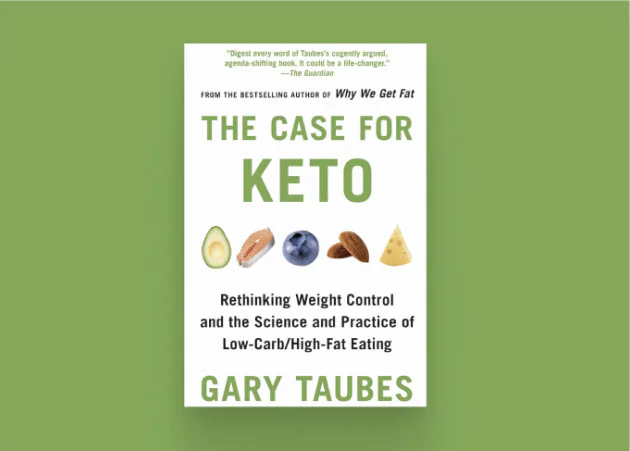
For fifty years, the medical establishment has preached the same rules for losing weight: restrict calories, eat less, and exercise more. Yet in that time, obesity in the United States has skyrocketed.
Read more
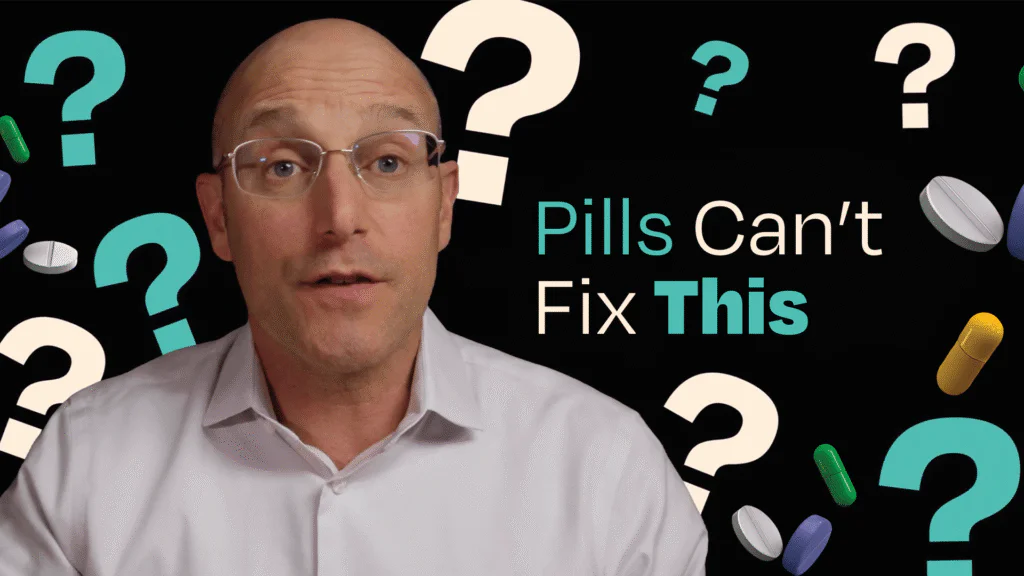
Dr. Bret Scher examines a new trial showing the drug olezarsen dramatically lowered triglycerides and ApoB, yet produced zero reduction in coronary artery plaque. He uses this as a case study for a broader point: lowering a lab number with a drug isn't the same as fixing the underlying metabolic dysfunction that caused it, drawing parallels to blood sugar, blood pressure, and weight management medications.
Learn more

Behind the smiling selfies and busy school schedules, an alarming truth is unfolding: today’s youth are struggling with mental health challenges at unprecedented rates. Rates of depression and…
Learn more
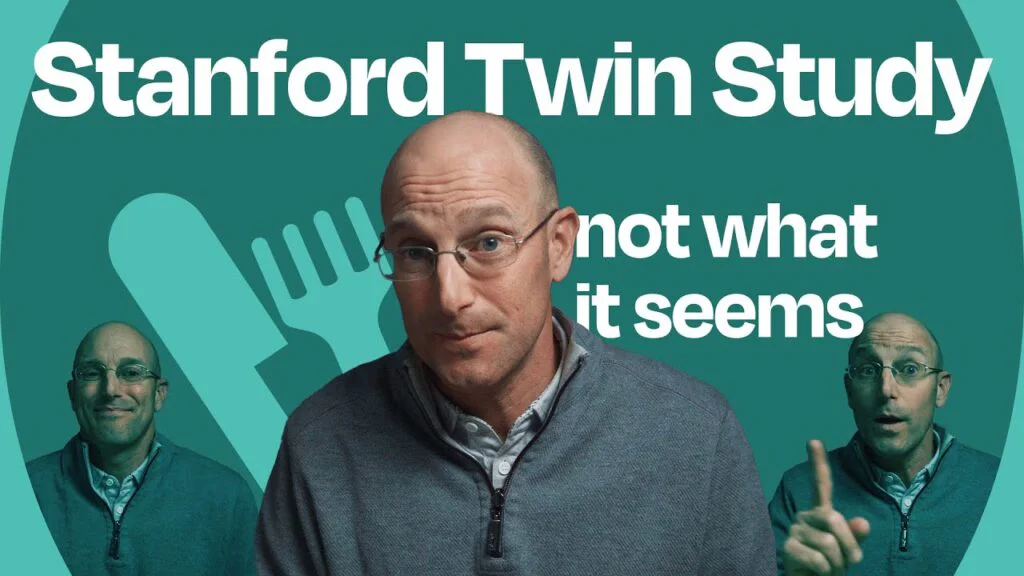
Dr. Bret Scher unpacks the Stanford Twin Study comparing vegan and omnivore diets, revealing why the media’s claims that “vegan is healthier” oversimplify the science. In this episode, he explains the study’s design limitations, short duration, and focus on two high-carb diets, noting that calorie differences—not food type alone—likely drove the results. The discussion challenges popular narratives around plant-based diets, explores issues of sustainability and long-term health, and invites Stanford researchers to collaborate on a new, more comprehensive trial comparing vegan and ketogenic diets to advance nutrition science and public understanding.
Learn more
For fifty years, the medical establishment has preached the same rules for losing weight: restrict calories, eat less, and exercise more. Yet in that time, obesity in the United States has skyrocketed.
Read more
Dr. Bret Scher examines a new trial showing the drug olezarsen dramatically lowered triglycerides and ApoB, yet produced zero reduction in coronary artery plaque. He uses this as a case study for a broader point: lowering a lab number with a drug isn't the same as fixing the underlying metabolic dysfunction that caused it, drawing parallels to blood sugar, blood pressure, and weight management medications.
Learn more
Behind the smiling selfies and busy school schedules, an alarming truth is unfolding: today’s youth are struggling with mental health challenges at unprecedented rates. Rates of depression and…
Learn more
Dr. Bret Scher unpacks the Stanford Twin Study comparing vegan and omnivore diets, revealing why the media’s claims that “vegan is healthier” oversimplify the science. In this episode, he explains the study’s design limitations, short duration, and focus on two high-carb diets, noting that calorie differences—not food type alone—likely drove the results. The discussion challenges popular narratives around plant-based diets, explores issues of sustainability and long-term health, and invites Stanford researchers to collaborate on a new, more comprehensive trial comparing vegan and ketogenic diets to advance nutrition science and public understanding.
Learn more