New Results: First RCT for Schizophrenia & Bipolar Disorder. Learn more.


Listen, Watch & Subscribe on:



Lipidologist Questions the New Keto and Liver Disease Study
Listen
About the host


Bret:
This is Metabolic Mind Bitesize. I’m Dr. Brett Scher. A new study says a keto diet is bad for your liver, worsening fatty liver disease. But wait a second. Don’t other studies show that a keto diet actually treats fatty liver? Yeah, they do. So at this point, you’re probably wondering what’s going on, and why can’t science agree on anything?
And I guess my simple answer is because as often happens, the headlines are more about clicks than about scientific accuracy. And we, once again, fail to recognize the quality of the evidence. So, let’s talk about it because it’s crucially important topic. And to start, as a cardiologist who works closely with ketogenic therapy and metabolic health, I recognize how important these details are to patients and how frustrating this can be with competing headlines.
And that’s why I think, really all medical professionals have a duty to put studies into perspective consistent with their level of evidence. So, let’s start with the study itself so we’re all working from the same foundation here. So, this is a retrospective cross-sectional study, and I’ll explain that because it’s important.
And it was conducted at a single hospital district in China. So, I already mentioned one of the most important points. Cross-sectional means the data came from one point in time. Not followed for months or years or even days, but one point in time. So, they looked at 650 patients with non-alcoholic fatty liver disease and divided them into three dietary groups: ketogenic, low fat, and balanced.
And this was based on food frequency questionnaires and 24-hour dietary recall. So, nobody was put on a diet. There was no dietary education program. None of that. It was subjective, relatively low-quality questionnaires. And the authors reported that the ketogenic group showed higher triglycerides and elevated liver enzymes compared to the other groups.
And that’s the finding kind of generating all the headlines about the dangers of keto. And I want to be balanced and see both sides of the issue. But I have to admit, the evidence hierarchy here is unusually clear. There are too many critical problems with this study that changed the interpretation entirely.
So, one fundamental problem that should be mentioned in every piece of coverage is that there was no measurement of ketones at any point in the study. No blood ketones, no urine ketones, no breath ketones, nothing. Participants were classified as following a ketogenic diet based entirely on self-reported dietary recall.
And apparently, not even asking them if they were eating a keto diet because maybe they would know, but it was by macro estimates from the food frequency questionnaire. That means in reality, we have no idea whether anyone was in ketosis in the ketogenic group. And that seems like a pretty big emission, doesn’t it?
And of course, it matters because ketogenic therapy is not simply a high fat dietary pattern. It’s a specific metabolic state in which the body shifts from burning primarily glucose to burning primarily fat and producing ketones. And without confirming that, you’re not studying ketogenic therapy at all.
In fact, you might be studying the high fat, high carb pattern that we have plenty of evidence to suggest is not healthy. But we don’t know. There’s a second methodological concern that the authors themselves acknowledge, but hasn’t received any attention really in the commentary that I’ve seen, and that’s reverse causality.
In a cross-sectional study like this, you’re looking at one snapshot in time. You can’t establish what came before that dietary pattern, right? So, in a cohort of patients with non-alcoholic fatty liver, as we know now, MASLD, it is entirely possible that people with more advanced disease and worse metabolic markers were the very ones to seek out a ketogenic diet as a therapeutic intervention.
So, if that’s true, the data would show exactly what the study shows. Worse metabolic markers in the ketogenic group, but not because the diet caused the problem, but because the problem motivated the dietary choice. You get that? But the study can’t distinguish between these two explanations at all. It just, there’s no way to do it.
And then, there are the other baseline data points, which are important. The ketogenic group had significantly higher body mass, bigger waist circumference, and in a cohort with fatty liver, greater central adiposity independently predicts higher liver enzymes. So, the authors can try to adjust for BMI statistically, but no way they can adjust for all the confounding variables.
They just can’t be accounted for. So, we could stop here and show how limited and misinterpreted this study is, but let’s not. Instead, let’s look at what the controlled trial literature actually shows because this is where the contrast becomes the most striking and that’s the higher level of evidence.
A meta-analysis of 62 randomized controlled trials, not one RCT, but 62 RCTs examine the effect of ketogenic diets on lipids. And the findings are directly at odds with what this study reports. So, ketogenic diets produced a significant reduction of triglycerides of nearly 20 milligrams per deciliter. So, across 62 randomized controlled trials, keto diets reduced triglycerides 20 milligrams per deciliter on average, which is exactly the opposite of what the study showed.
And if we want to look at the liver findings, there was a recent retrospective cohort study that followed 102 patients with fatty liver disease through 12 weeks of supervised nutritional management, comparing ketogenic diet to a calorie-restricted diet. So here, even though it was retrospective, we know it was an actual ketogenic dietary intervention, and that’s important.
And the results were striking. Eighty-four percent of patients in the ketogenic group achieved a clinically meaningful reduction in liver fat compared to only 45 in the calorie-restricted group. And there are plenty of other studies. I actually did a recent interview with Dr. Adam Wolfberg, who’s the chief medical officer at Verta Health, and they published a claims-based paper showing significant reduction of fatty liver in their keto group.
So, the evidence piles up, and there are other randomized controlled trials showing this as well. So, I guess here is why I’m most confused. Why would we talk about an uncontrolled point in time measurement with no verification of ketosis when we have so many studies at higher levels of evidence that already exist?
Randomized controlled trials and meta-analyses, they sit far above these retrospective cross-sectional observational studies. And this evidence hierarchy exists for good reason because observational data is prone to confounding and reverse causality, measurement error, selection bias, so many other things that controlled trials are specifically designed to minimize.
We’ve said it before, I’ll say it again. Observational studies can generate hypothesis, but they do not override the conclusions of controlled trials. So, when an observational finding directly contradicts a meta-analysis of 62 randomized controlled trials, the appropriate scientific response is not to accept the observational finding and question the RCTs.
It’s to ask what features of this observational study might explain the discrepancy. And in this case, the answers are pretty obvious. No ketone verification, no dietary verification at all, possible reverse causality, baseline differences in adiposity and absence of key metabolic health data. So, in conclusion, there, there is no credible evidence here that ketogenic therapy, ketogenic diets are harmful in any way.
At best, this study can generate a weak hypothesis from a very limited study that’s been interpreted far beyond what the data really can support. So, if you want to understand what ketogenic therapy actually does to metabolic liver disease, look at the controlled trial evidence. That’s where the signal is.
I recognize this video was kind of pointed, but I think the stakes of accurate science communication are high enough to warrant it. And sometimes I just don’t understand how we keep falling into the same trap. I don’t know. Leave me a comment and help me understand if you have thought about it. And if you want to learn more about ketogenic therapy and its broader applications in metabolic health and mental health, visit us at metabolicmind.org.
So, thank you for watching. I’m Dr. Brett Scher, and we’ll see you here next time at Metabolic Mind, a non-profit initiative of Baszucki Group.
Listen, Watch & Subscribe on:


Explore metabolic therapies with Steven who put his bipolar 2 disorder into remission. Discover tips for beginners & pros on diet, lifestyle & wellness.
Read more

Dr. Bret Scher examines a new trial showing the drug olezarsen dramatically lowered triglycerides and ApoB, yet produced zero reduction in coronary artery plaque. He uses this as a case study for a broader point: lowering a lab number with a drug isn't the same as fixing the underlying metabolic dysfunction that caused it, drawing parallels to blood sugar, blood pressure, and weight management medications.
Learn more

A Practical Guide to the Ketogenic Diet, Why Formulation Matters, and How a Nutrient-Dense Approach Can Unlock Its Full Therapeutic Potential. As research continues to uncover the therapeutic…
Learn more
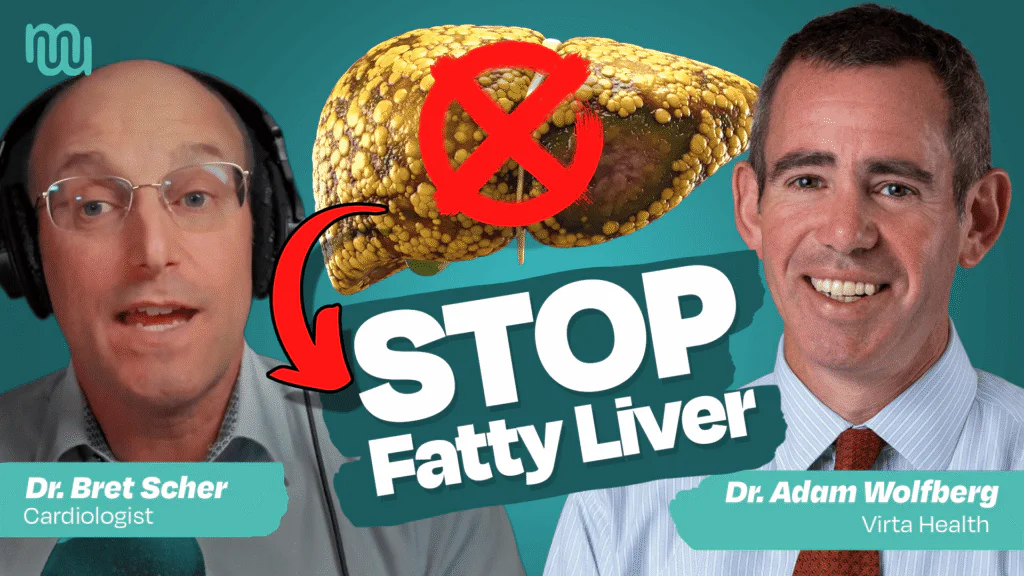
Dr. Adam Wolfberg of Virta Health discusses new research in the Journal of Hepatology showing that a ketogenic intervention originally designed for type 2 diabetes also prevents fatty liver disease, comparing 5,000 Virta patients to a matched control group. Patients on the program had significantly lower rates of liver disease, with a number needed to treat of just 65 to prevent one case, highlighting how treating metabolic dysfunction broadly can protect multiple organ systems at once.
Learn more
Explore metabolic therapies with Steven who put his bipolar 2 disorder into remission. Discover tips for beginners & pros on diet, lifestyle & wellness.
Read more
Dr. Bret Scher examines a new trial showing the drug olezarsen dramatically lowered triglycerides and ApoB, yet produced zero reduction in coronary artery plaque. He uses this as a case study for a broader point: lowering a lab number with a drug isn't the same as fixing the underlying metabolic dysfunction that caused it, drawing parallels to blood sugar, blood pressure, and weight management medications.
Learn more
A Practical Guide to the Ketogenic Diet, Why Formulation Matters, and How a Nutrient-Dense Approach Can Unlock Its Full Therapeutic Potential. As research continues to uncover the therapeutic…
Learn more
Dr. Adam Wolfberg of Virta Health discusses new research in the Journal of Hepatology showing that a ketogenic intervention originally designed for type 2 diabetes also prevents fatty liver disease, comparing 5,000 Virta patients to a matched control group. Patients on the program had significantly lower rates of liver disease, with a number needed to treat of just 65 to prevent one case, highlighting how treating metabolic dysfunction broadly can protect multiple organ systems at once.
Learn more