New Results: First RCT for Schizophrenia & Bipolar Disorder. Learn more.


Listen, Watch & Subscribe on:



Oxford’s Keto for ADHD & Depression Randomized Controlled Trial – with Ally Houston
Listen
About the host

About the guest

Bret:
Ally Houston of MetPsy.com has brought together a team to study ketogenic therapy for ADHD and depression. Let’s hear about the study, and what its impact may be for psychiatric care.
Welcome to the Metabolic Mind Podcast. I’m your host, Dr. Bret Scher. Metabolic Mind is a nonprofit initiative of Baszucki Group where we’re providing information about the intersection of metabolic health and mental health and metabolic therapies, such as nutritional ketosis as therapies for mental illness.
Thank you for joining us. Although our podcast is for informational purposes only and we aren’t giving medical advice, we hope you will learn from our content and it will help facilitate discussions with your healthcare providers to see if you could benefit from exploring the connection between metabolic and mental health.
All right, Ally Houston, thanks for joining me at Metabolic Mind.
Ally:
My pleasure, Bret. Great to be here.
Bret:
Yeah. I’m really excited to hear more about your study. We keep wanting to interview everybody who’s running this study in this field. And it’s just growing and growing, the number of studies that are happening, which is so exciting and keeping us busy with interviews, which is a good problem to have.
But before we get into that, give us a little bit of your background. Tell us the high level. Who you are, how you got to this point, and what got you interested in even thinking about this study?
Ally:
Sure. Yeah, i’m from Scotland in the UK and. I originally was a physicist. So, I got a physics degree and went to work in China for a year as an English teacher, but then got into industry.
So, I was working in the laser industry as a kind of mid-level Bond villain henchman making lasers. And I was always interested in potentially doing a PhD. Started a PhD in 2013, late 2013, in the gravitational wave group in Glasgow, in Scotland. And that’s part of an international collaboration.
They actually, coincidentally, the year after I joined, discovered gravitational waves, which I can’t really take any credit in. But I was close to it. It was very exciting to see. And the heads of the collaboration ended up getting the Nobel Prize for it. But, I was very lucky that my professor, my supervisor, Ken Strain, had healed his M.E. chronic fatigue syndrome by changing his diet.
He’d basically been told he wouldn’t work again in his early forties. And he did some of his own research, discovered Gary Taubes’ “Good Calories, Bad Calories,” tried a keto diet, and within six months, he was running 10Ks again. And so fast forward a few years, and I arrived with a history since I was a child of chronic anxiety, seasonal depression. And in 2015, I was diagnosed with ADHD, which made sense of a lot of my childhood and kind of negative adult experiences at work and studying. All of this seemed to be quite cyclical and very detrimental. I’d been suicidal at points, and I wasn’t functioning properly.
So, he noticed this and thought, maybe there’s something metabolically up here, pointed me in the right direction in terms of the literature, blogs, et cetera. And I think if you read that critically, then you can’t help but come up thinking there’s something in this. And I changed my diet as well, 2016 to a ketogenic diet ,and within weeks, my problems started to melt away.
So, I had gut problems that would clear up. That year was the first year I didn’t have seasonal depression in as long as I could remember. It was an absolute gift ,and I was just so grateful. I knew I had to change my career really to help other people to experience what I did at the time.
There wasn’t really the ecosystem to connect the dots with metabolic health and mental health. The only loud voice that I knew of in the space was Georgia Ede’s, and a very clear and expressive voice it is. But still very fringe at the time. And so I started a couple of businesses around food, keto and paleo food delivery.
Sugar-free chocolate and ice cream. And, ultimately, around 2020, started to train as a health coach, and put all of this knowledge that I’d developed since 2015 when I started reading about all this, into practice. And then in 2022, of course, the Baszuckis kind of burst onto the scene and made it cool to link metabolic health and mental health.
And so I thought, brilliant. And myself and fellow Scot, Dr. Rachel Brown, who’s a psychiatrist in the NHS in Edinburgh, she’d been involved with Iain Campbell’s study on bipolar disorder and ketogenic diets. And we got on and we thought, you know what?
Now’s the time. Let’s start something. So, we founded MedPsy, which is our coaching company, and that kind of brings us up to where we are now.
Bret:
Wow. What a journey. And I, on the one hand, I hate to hear these stories, right? That you only learned about this because of hearing it from somebody else. Not from a doctor, not from the medical community, but you, basically, had to find it on your own.
But, on the other hand, I love to hear these stories because of what you’re doing with your own personal experience. You just, it wasn’t enough for you to have this end of one experience and say, okay, good. It help me. But now you’re trying to translate that to help so many others with your MedPsy app, and now also with this research study.
Now, it makes sense why you are looking into ADHD and depression and ketogenic interventions for that because that speaks to your personal experience. But tell us more, beyond your personal experience. Why is it so important that you’re studying ADHD and depression, specifically?
Ally:
Yeah, I suppose there’s a few reasons. Like you say, it’s my experience writ large. And I think most people will resonate with this when they discover how powerful ketogenic diets can be for their physical, mental health, that they may be evangelize a little. And it’s an unfortunate experience sometimes to find out that your closest friends and family actually are the ones who might listen to you the least.
And that the power of anecdote doesn’t seem to extend even that far a lot of the time. And it’s not true all the time. I think I’ve had close friends and family who’ve responded amazingly, and actually taken on a ketogenic diet themselves to try and got a lot of benefits.
But understandably, people have to come to these things in their own time, and anecdote sometimes isn’t enough. It’s always been an ambition of mine to get involved with scientific research again since leaving physics. And I think I have skills that can be brought to bear to help as many people as possible in that regard.
And it felt what better story to cover, if you like, than my own, but in a rigorous academic setting. And so, I got in touch with quite a few academics in the UK and abroad about potential opportunities. And it’s difficult because the funding available to academics is usually tied to specific calls for better known conditions, or certainly, metabolic mental health is still extremely niche in that regard, although that’s changing, which is cool.
So, I sought to find other sources of funding and interest, and Baszucki Group’s been very kind to step forward, and say that they’ll help with the study. But I’d got in touch with Phil Burnett and Mike Browning, both professors at Oxford, and they were two of the most keen out of any of the academics that I spoke to, which I thought was great because they’re very conservative and, careful researchers, who see a signal out of the noise here.
And they want to try to do something about it. And so, I think it would be, it’ll be a very rigorous study, I hope, and one that people will be able to hold up to friends and family and whoever and say, look, Oxford says this.
Bret:
Yeah, that’s a great point to have the name and the power of Oxford behind it. But you bring up a good point, that funding of these types of studies can be very difficult. And so, again, it’s a shame of the way the system is, but so thankful that we have the Baszucki family and anybody else who is a philanthropic supporter of research, I think is so important.
But to get back to the ADHD and depression diagnoses, the incidents of those diagnoses are on the rise dramatically over the past couple decades. And you can make lots of arguments about why that may be, but maybe the research and the treatment hasn’t caught up with the degree of diagnosis?
You can make that argument. So, I think it’s so important that you’re specifically looking at these two diagnoses with a ketogenic intervention. So, give us a little bit of the structure about the trial. How many people, for how long? And tell us about how you’re using your app in it and the intervention.
Give us the basics.
Ally:
Sure, yeah. So, I totally agree on the point about ADHD and depression as well. Because on the one hand, it’s my story, and the other hand, it’s so many other people’s story, unfortunately. And it’s not getting addressed. There’s been some interesting developments on ketogenic diet for depression studies, like Erin Bellamy and Megan Kirk Chang’s in Oxford.
So, I was looking to be complimentary to those rather than just repetitive. Also, ADHD is really sorely under researched. There’s another one in Holland that’s about to happen. But apart from that, there’s not really any human stuff. There’s one on rats and one on dogs. So, it’s pitiful at the moment.
The waiting lists In some places in the UK for even a diagnostic check is 10 years and, it just, it might as well be infinity. People have to spend lots of money with a private psychiatrist to get a diagnosis, and even if they do, then the options at the moment really are mainly pharmacological.
People can get coaching to manage symptoms, but it’s not really root cause treatment. And the the pharmacological approach is sometimes ineffective. And when it is effective, it can become less effective as tolerance to the drugs build up. People need to take more to feel the same effect. And ultimately, side effects could take over.
That’s certainly my experience of it, and I was really glad to be able to get off them. particularly Ritalin, which is what I was on. And that there’s a worldwide shortage of these drugs at the moment. China’s stopped making them for the last few years. So, it’s a bit of a mess.
ADHD and it’s, I think, it’s being slower to be jumped on by the metabolic psychiatry community because it is classed as a slightly different thing, both in terms of being neurodevelopmental as much as maybe metabolic, which is an interesting distinction to make. And we can talk about that later, if you like. And that’s not seen as serious, understandably, because it doesn’t involve psychosis.
It doesn’t have as serious a suicidality profile. So, fair enough to make the distinction. But I think it’s time that we looked at it. And I think it’s so comorbid with depression that it makes sense to look at these things together, and try and tease it out. I also think that people are changing the way they think about the DSM.
Definitions of these diseases ,and how they actually can overlap a lot, especially if there’s similar metabolic root causes. So, what we want to do is recruit late this year after the ethical approval goes through, and minimum 25 people in intervention arm, 25 people in control. And if the funding allows, we can go up to maybe 50 people in each arm.
So, 25 people in the intervention arm, they’ll be coached on using a ketogenic diet by me online in groups. We’re going to recruit from across the UK. Someone, if they want to take part, they have to have an ADHD diagnosis. Now, we might end up recruiting from waiting lists and testing people to see if they have ADHD. And then, if they do, then they’ll be allowed on.
They also need to have depression symptoms. That could be self-identified or could be diagnosed with depression. We’ll recruit all we need for both arms and then stratify so that the level of depression in each arm is matched as close, as closely as we can. Not only will we coach on using a ketogenic diet for 16 weeks, we’ll give the intervention arm access to the MedPsy platform.
And so, at the moment, that consists of a membership area where people can watch liive Q and As with myself and Dr. Brown and interviews with experts on specific topics around metabolic mental health. The app also allows for a forum interaction and a tracker, which is quite rudimentary at the moment, but we’re going to develop that hopefully in the next six to 12 months.
So that what the study participants are using is a little bit more advanced than it is now. And then the intervention arm, they’ll be coached online in a similar way, but by a dietician who’ll be coaching what, in England, is called Eat Well Guide. And it’s ironically named because it’s healthy whole grains, quote unquote “eat the rainbow,” generic healthy advice as it usually comes from the mainstream.
So, that’ll be what we’ll be testing against. And those people have access to the online resources for the Eat Well Guide to hopefully control a little bit for the digital access that the intervention arm will have to MetPsy.
Bret:
All right. That’s very interesting. Yeah, I like how you have the control arm still getting coaching and teaching to try and make that as equivalent as possible in the study. So, you mentioned you’ll be recruiting throughout the UK. So, is it indeed limited to the UK? So, if you’re in the US or other parts of Europe, they can’t take place in your study right now?
Ally:
Right now, yeah. But something we are looking at the moment for the next six to 12 months is a pilot data sprint. See what we see is potentially very useful to understand prior to the Oxford study, and to augment the results from the Oxford study, is if people are wearing, devices like continuous glucose monitor and an Oura ring, for example, then can that data help to form a kind of causative data set for their mental health?
We want to run a, pilot with maybe 50 to a 100 people, who already have access to CGM, and put their data and their logged mood record and ADHD symptom kind of log, through our data cruncher and see if there’s correlations that can be inferred as causal.
And I think what ultimately we want to build after that, and the Oxford study is almost a real-time analyzer and optimizer for mental health using those parameters. And I think we’re nearly there in terms of wearables, AI data analysis, and giving that real-time feedback loop because, ultimately, we want a solution that’s going to be really safe at scale.
And so, I think when we do that pilot data sprint, we’ll not be looking for people with ADHD and depression. We’ll just be looking for people with ADHD because it has a safer profile, and we just want kind of people to realize that safety is paramount. And I hear it all the time in this channel, and I think it’s absolutely right, that you must work with your doctor.
That this kind of service shouldn’t be thought of as replacing it, and that it’s a coaching service. And so, if you like, we’ll be starting with ADHD to see how people react in the wild. And then we can look more at the formal clinical setting for more serious disorders further down the line and after Oxford.
So, that’s the plan for the next kind of six to 12 months.
Bret:
Yeah, that’s ambitious. I like it. I like it. So, definitely anybody in the UK who’s interested should reach out to you to see about enrolling in this study. But you alluded to it earlier, so let’s get into this just a little bit here.
With serious mental illness, as it’s called, bipolar disorder, schizophrenia, schizoaffective, and major depression, you can draw parallels with seizure disorders, whether it’s the medications or some of the neurotransmitter imbalances. You can draw some mechanistic similarities and say, if ketogenic interventions work for one, then ketogenic interventions should work for another.
So, that’s one sort of rudimentary way of connecting the dots. And now, we’re having research showing that yes, indeed, ketogenic interventions for those diagnoses can be very beneficial. But you alluded to that ADHD has maybe different etiology, different root causes, so to speak, which may make it, potentially make some people think, oh, maybe it won’t benefit the same.
But yet there still can be some similarities. And if the brain is healthier and running more efficiently, so to speak, on more efficient fuel or however you wanna phrase it, there still can be some mechanistic reasons for why it works.
So, how do you connect the dots to say, yes, ketogenic interventions can still likely be effective for ADHD and here’s why?
Ally:
Yeah, clearly I’m post evangelical about the fact that ketogenic diets do work for mental illness. And I think, I can’t remember who said it, there’s no real difference between a neurological neuron and a psychiatric neuron.
And so, when you’re talking about Parkinson’s or Alzheimer’s or epilepsy or bipolar disorder, you’re not really crossing a massive line there. And there’s genetic variability between individuals that, depending on their environmental exposure, they’ll express one illness or another. But the root causes may be very similar.
it’s absolutely clear in the literature that Parkinson’s, one root into Parkinson’s is through your gut health deteriorating. And things that should stay in the gut or maybe should never have been in the gut in the first place, pathogenic microbes, along with environmental exposure to things like gluten, can break down gut integrity, get into the systemic bloodstream, and start causing all sorts of havoc around, damage and neuroinflammation.
So, I think that pathway is very common to multiple of these illnesses. And that once the gut gets damaged, you can start getting deficiencies in certain vitamins and minerals that can then lead to further problems. And it’s a damaged spiral. And I think to the extent that your genetics predicts how I you’re going to get in life, we didn’t evolve over millions of years to have fatal flaws in the system here, there, and everywhere.
I think it’s just potluck which genes you get that will interact negatively with the environment that we live in today. Whether that’s being born cesarean, being bottle fed, and not judging, there’s good medical reasons and social reasons why these things happen, affect gut health profoundly.
Bret:
Yeah, that’s a good point.
Ally:
Range and range of antibiotics for child.
Bret:
Yeah, there’s definitely a connection between so many different parts that it’s hard to say here’s the one mechanism, when there’s so many interactions. But I like how you bring up a great point, though, about a neuron is and neuron, and a healthier neuron is going to manifest different ways than an unhealthy neuron. And it can manifest differently in different people.
Ally:
ADHD and autism spectrum disorder are interesting in there people say, you can’t say that it’s environment because they’re neurodevelopmental. But then you can point to potential positives in certain aspects of ADHD and autism spectrum disorder. So, I’m not saying that it’s a blessing or that it’s a superpower or that it’s a gift.
Clearly for most people with either ADHD or autism spectrum disorder, which are obviously very different, it’s a curse, and people hate it. But then, very often with ADHD, there’s like a double-edged sword where people say, I feel creative and I feel like I can take on multiple projects, and lateral thinking when I’m at my best.
And then, but there’s all this brain fog and rejection-sensitive dysphoria and mood issues and stuff that I hate. But then, what happened with me was those negative things quietened down to very quiet, and the positives kind of remained. Yeah, I think there is neurodevelopmental thing going on there, but not necessarily pathologic.
I think it could be that it’s, and I know Iain Campbell’s done some interesting stuff on this with bipolar disorder genes. You can see how with the positives of ADHD, there’s potential massive evolutionary advantages in having them. And certain autism spectrum disorder, hyperfocus, very sort of niche skills, to a very high level in certain individuals who are high functioning, could be seen as a big evolutionary advantage that might remain in the gene pool. But then, when it’s mixed with the modern environment, leads to potentially catastrophic negative expressions.
And that’s my take on the sort of difference between ADHD and ASD and the sort of, some of the other ones that are not seen as neurodevelopmental.
Bret:
Yeah, but I think that lays it out well. But very interesting to see that a ketogenic intervention, by changing the brain’s chemistry and fuel, can impact so many different disease states beneficially, but not for everybody.
So, then maybe that’s another thing you can start to learn from research is, who responds and who doesn’t? And such an important point to be able to define that. So, I’m really excited to hear more about the study as it transpires, and to see how your results come out.
Where can people go if they want to learn more about it or to see if they can qualify to sign up?
Ally:
So, everything will be expressed on MedPsy.com. And there’s another way to get involved, too, beyond just signing up for the mailing list or downloading the app. And getting onto the mailing list that way because we’re crowdfunding for the study as well.
Baszucki Group has very kindly offered to match the first £10,000 of crowdfunding money. So, that means that for every pound or dollar that, people give, it’s getting doubled. So, it’s brilliant. And the crowdfunding page is up and running. The address for that is bit.ly/adhdketo,  bit.ly/adhdketo. And if people give something on there, then we’ll keep them up-to-date as well on being involved with this study and the potential sort of citizen science study that we’re doing as well.
Bret:
Awesome. Thank you for all that information, and please keep us updated as things transpire. And best of luck.
Ally:
Absolutely, Bret. Thanks so much.
Bret:
Thanks for listening to the Metabolic Mind Podcast.
If you found this episode helpful, please leave a rating and comment as we’d love to hear from you. And please click the subscribe button so you won’t miss any of our future episodes. And you can see full video episodes on our YouTube page at Metabolic Mind. Lastly, if you know someone who may benefit from this information, please share it as our goal is to spread this information to help as many people as possible.
Thanks again for listening, and we’ll see you here next time at The Metabolic Mind Podcast.
Listen, Watch & Subscribe on:
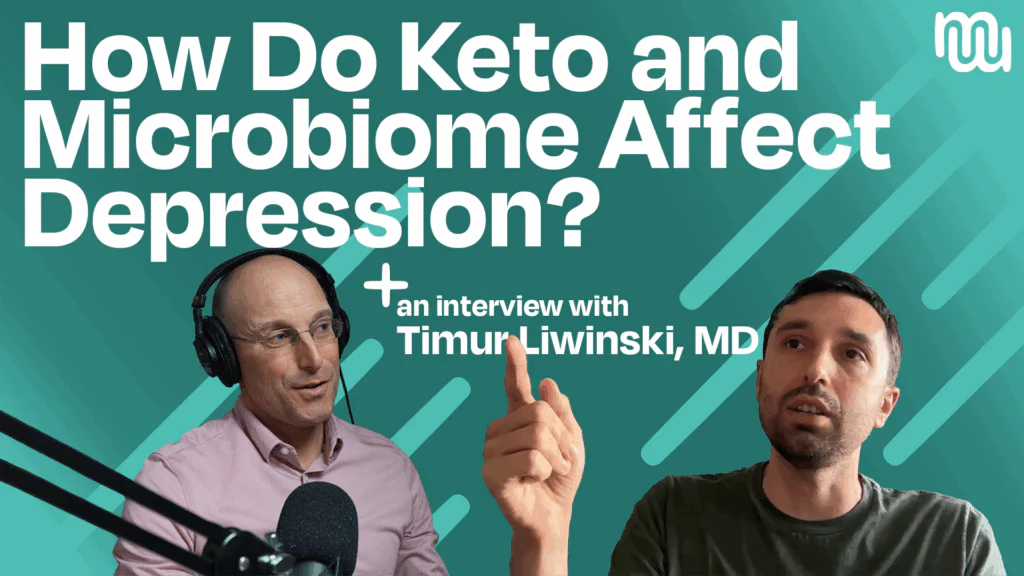
Swiss clinician–scientist Timur Liwinski is running a 10-week randomized controlled trial testing a medical ketogenic diet for major depression, tracking HAM-D scores alongside metagenomic microbiome changes. With structured nutrition counseling and pragmatic design, the study probes whether species-appropriate, low-carb eating can outperform standard care in metabolic psychiatry.
Learn more
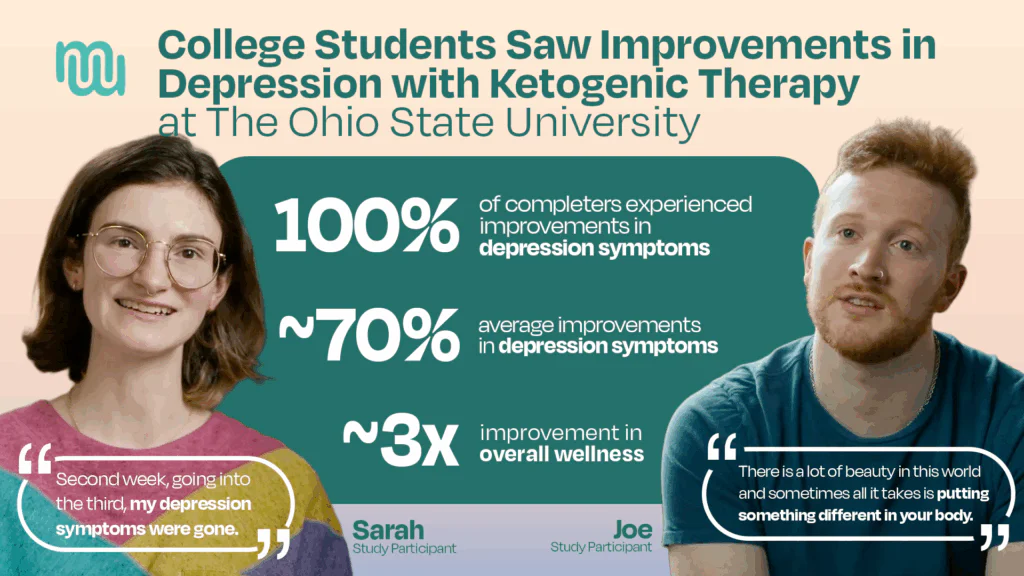
A new study shows an association between at least 10 weeks of following a well-formulated ketogenic diet and a roughly 70% decrease in depression symptoms among a small…
Learn more
THINK+SMART is a community-inspired resource that provides a framework for ketogenic and metabolic strategies like those that have helped our son and so many others recover mental wellness.
Learn more
Swiss clinician–scientist Timur Liwinski is running a 10-week randomized controlled trial testing a medical ketogenic diet for major depression, tracking HAM-D scores alongside metagenomic microbiome changes. With structured nutrition counseling and pragmatic design, the study probes whether species-appropriate, low-carb eating can outperform standard care in metabolic psychiatry.
Learn more
A new study shows an association between at least 10 weeks of following a well-formulated ketogenic diet and a roughly 70% decrease in depression symptoms among a small…
Learn more
THINK+SMART is a community-inspired resource that provides a framework for ketogenic and metabolic strategies like those that have helped our son and so many others recover mental wellness.
Learn more