First Ketogenic Therapy for Anorexia Nervosa Trial. Learn more.


Listen, Watch & Subscribe on:



Improving Quality of Life in Bipolar Disorder – with Mayo Clinic's Dr. Mark Frye
Listen
About the host

About the guest

Bret:
Welcome to the Metabolic Mind Podcast. I’m your host, Dr. Bret Scher. Metabolic Mind is a nonprofit initiative of Baszucki Group where we’re providing information about the intersection of metabolic health and mental health and metabolic therapies, such as nutritional ketosis as therapies for mental illness.
Thank you for joining us. Although our podcast is for informational purposes only and we aren’t giving medical advice, we hope you will learn from our content and it will help facilitate discussions with your healthcare providers to see if you could benefit from exploring the connection between metabolic and mental health.
A psychiatrist specializing in bipolar disorder with over 25 years of experience shares what his top advances are in helping him treat his patients and also discusses the role of metabolic health, nutrition, ketogenic therapy, and how all this fits into what he does of trying to improve people’s lives.
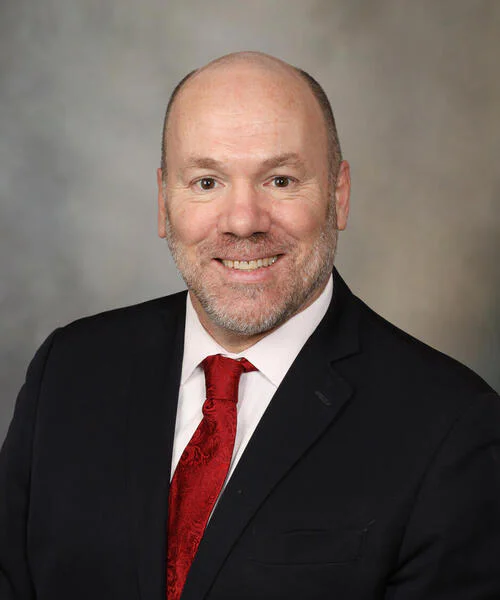
Today, I am joined by Dr. Mark Frye, who is the former Chair of the Department of Psychiatry at Mayo Clinic and is currently a Professor of Psychiatry at Mayo Clinic. He’s a clinician and a researcher and also has an advocacy role as he’s the Director of the Scientific Advisory Board for DBSA, the Depression and Bipolar Support Alliance. And he’s going to share with us his experience and his lessons learned over his career of psychiatry, and the promising future of where it may go.
But first, please remember our channels for informational purposes only. We’re not providing individual or group medical or healthcare advice or establishing a provider patient relationship. Many of the things we discuss can be challenging and difficult and dangerous, if not done with proper clinical supervision.
So, always consult your healthcare team, your healthcare provider before making any changes to your medication or lifestyle. So with that, let’s get on with this interview with Dr. Mark Frye.
Dr. Mark Frye, thanks for joining me here at Metabolic Mind.
Mark:
Hey, Bret. Good to see you.
Bret:
Yeah, it’s great to see you. Now, we’ve seen each other at a number of conferences and spent some time talking about psychiatry, about the past, the present, the future. I want to hear from you though. You’ve been practicing psychiatry for a while now.
How have you seen things change in terms of meeting your ultimate goal of helping treat your patients as best you can? So, I guess the questions are, first, what is your goal in treating patients? And then the second is, what are some of the main advances you’ve seen to help you with treat your patients to reach those goals?
Mark:
So Bret, I have been a clinician for 25 years. That is a long time to really watch trajectories and clinical practice and how individuals living with bipolar disorders see their treatment and what are important goals for them. I would say what I really just find so wonderful, and honored to be a practicing clinician and a psychiatrist, is really working with individuals who are in different places and what prompts them to seek care is oftentimes very different.
So, I think part of my job as a clinician is really listening to where the individual is and meeting them where they are, as opposed to how we probably learned in medical school to get them to where we think they need to be. That’s a different approach, but I think it’s an important one.
And emphasizing goals that they have in treatment, and what would feeling better or thinking better or overall doing better look like. So, hearing what that is first, I think, is really important.
Bret:
Yeah, I think that makes a lot of sense that there’s not just one goal across the board, but it depends on the individual. And over your time, you’ve seen new medications come and go, new interventions come and go.
Whether it’s the recent hype of psychedelics or the use of ketamine or procedures like TMS, you’ve probably seen a lot of things come and go. What are some of the ones that, for you, have stuck and said, you know what? This has been a major advancement in how we can help people with their psychiatric diagnoses.
Mark:
Bret, when I started my training in the context of really focusing on bipolar disorder, there was lithium, there was divalproex sodium, and there was an emergence of olanzapine and clozapine as, atypical antipsychotics. And those really were starting to come forward as really very beneficial treatments for managing symptoms of acute maniand for some of these compounds, bipolar depression. That was a game changer.
There’s no question because the earlier version of those drugs were not as helpful. And the side effect burden, particularly from the standpoint of something we call tardive dyskinesia, just really was so significantly disabling. So, I would say in my early training, it was the emergence of these compounds.
I would say major sort of advances beyond that. You’ve referenced some of them and the concept of neuromodulation. So, really, stimulating neurons. We’ve always been able to do that with electroconvulsive therapy, but transcranial magnetic stimulation therapy really was an advance. And I think then most recently, these rapid acting compounds.
They’re not antidepressants, but they certainly can significantly improved mood, whether that’s esketamine, which now has a regulatory approval for treatment-resistant depression, or some of these other newer compounds, I think are yet to be fully evaluated, but are promising. So, as exciting as those advances are, they’re bittersweet in a couple ways. One, there’s no question the atypical antipsychotics have emerged as, many of them have emerged as, very effective mood stabilizing treatments.
But I think we underestimated, or didn’t look as carefully as we should early on, as to the significant cardiometabolic burden that these medicines can bring to individuals that absolutely can negatively impact the overall outcome of what we’re looking for. That has proven to be a significant challenge.
And when you think about obesity rates in this country, and the rates of being overweight or obese in individuals struggling with mood disorders, this goes beyond stabilizing mood. And it’s a public health problem, in my opinion. I think the other, what I would call gap, is these advances in really innovative treatments, neuromodulation, esketamine, maybe psilocybin, all these rigorous studies have been in major depressive disorder, which is wonderful for individuals struggling with depression.
None of them have had a systematic large-scale development program for bipolar disorder. So, as we see all of these advances in pharmacotherapy and neuromodulation, I get disappointed and frustrated that there’s not the incentive to look more broadly.
The reality is depression, in the context of a history of mania, is very different. It’s neurobiology, and it is very different to treat than depression where there’s no history of mania. As there are these advances, it’s frustrating to see that they’ve not had a regulatory, substantial development program in bipolar disorder. Which then, at the end of the day, really leaves a lot of individuals with significant symptom burden and not reaching those treatment goals that they would like.
Bret:
Yeah, that’s a really good point about the studies and the regulatory evaluation. But yet, so much of what we do in medicine is off-label. And it worked for this, let’s try it for this and see if it still works. And so, I’m sure you’ve seen a lot of that in psychiatry and in bipolar disorder.
Do you have concerns with that or have you seen some, still some progress with that? Like how do you approach that?
Mark:
We, as you point out, that’s not unique to the field of bipolar disorder or for psychiatry for that matter and I think that the ability to really think creatively and innovatively of how established treatments might be useful for other conditions is critical for the field of medicine, and that will continue.
But to state perhaps what might be the obvious, those regulatory approvals are important. Number one is they really just have such a clear package insert, if you will, of how to use the medication or the treatment, side effects, things to monitor for. And remember that FDA approval then goes to insurance companies who then cover the, who very often, will cover the costs of that treatment.
And so many of these off-label treatments are significantly expensive when they’re being used in an off-label way. And yes, that off-label investigation will continue. But I still want to really encourage our field to be more proactive in highlighting the importance of these regulatory trials, which then often have a much broader roadmap how to use them, and then have an easier way to get insurance coverage.
That is a critical piece of this. The advocacy work that I do, I think clinicians oftentimes don’t fully appreciate the cost of care and really focus on that clinical evidence base. And we need to do both better.
Bret:
Yeah, as I mentioned in the intro, that you’ve got the sort of the three pillars.
You’ve got the clinical care, the research, and the advocacy works. You really can connect those worlds, both in your practice and when you’re out speaking. But I want to rewind for a second to go back to what you said about the cardiometabolic consequences of the medications, and emerging evidence that people with bipolar disorder, unfortunately, die young.
And most people would assume it’s die by suicide. But actually, a lot of it has to do with cardiometabolic complications, which some are likely due to the medications and some likely not due to the medications. So, talk about that a little bit more, this increased burden of cardiometabolic complications in this patient population.
Mark:
Yeah, I think the field is starting to really recognize, this is a must address clinical dilemma if we’re going to really improve lives of individuals living with bipolar disorder. So yes, medications can often contribute to weight gain, different eating patterns. and that’s a big driver here, but it’s not in isolation.
I think a number of really well designed studies, including some of our work from Mayo Clinic, have highlighted that individuals with bipolar disorder are at greater risk in, comparison to an age matched control group, greater risk of developing what we refer to as a major adverse cardiovascular event or MACE.
And this is a heart attack, stroke, major cardiac events. Certainly, in addition, there are higher rates of diabetes and elevated BMI, and all of this is driven by meds in one part. But we actually think there’s probably a component that’s really more related to what I would call the disease.
So, think about hibernating-types of winter depression where individuals, when depressed or sleeping 12, 14 hours a day, their food choices change. There might be a focus on comfort foods, carbohydrates, sugars. That’s not a medication. And in part, that’s actually the symptoms of depression that are changing lifestyle, and symptoms that really then change the way we sleep, our energy level, how we exercise, our food choices.
I think the thing that’s really exciting and links up to this. So, it’s meds as one driver of cardiometabolics. It’s the disease symptom burden in particular depression. I think there’s new research that’s really highlighting that even the genetic underpinnings of the illness may have some overlap with obesity and or diabetes.
That’s where some of our work has started really recognizing, needing to focus on cardiometabolics. There are data that would suggest for some individuals, bipolar disorder as a genetic risk looks very similar to the genetic risk of obesity or diabetes. So then, we start asking ourselves, to your original question, if we look at the cardiometabolic burden on balance, we need to be looking at medications that are driving that. We need to be better at reducing symptoms, for example, of depression that drive that cardiometabolic burden.
And I think we’ll find, there may even be neurobiologic correlates of the disease that can better predict where that cardiometabolic burden might be. And I’d love to see some of that neurobiology really generate more focused treatments geared originally to bipolar disorder. Not a medicine that was studied in schizophrenia that we then use in bipolar disorder, or an antidepressant that was studied in major depressive disorder that we moved to bipolar disorder, or an anti-seizure drug studied in epilepsy that we move to bipolar.
We need to really have scientific hypothesis-driven new treatment development, specifically for manic depressive illness. And our hope is that some of that will really show the roadmap to look at the cardiometabolic burden that’s been of interest to you and certainly our group as well.
Bret:
So, would it be safe to say that the focus in bipolar disorder has really been on the mania side of things with basically ignoring the depression side of things? And therefore, maybe the consequences of the depression are now becoming more profound simply because the inadequate treatment for bipolar depression.
Mark:
Completely agree. Yeah, completely agree. I should say, if you look at individuals who live with bipolar disorder, the majority of their time is spent in some phase of depression.
For most, it last months to years. Mania typically lasts weeks to months. And you’re correct, we actually have a good toolbox of anti-manic medications, including ECT, I would add. But the depressive phase of illness has been significantly understudied, and it leaves us with far fewer options to really target those symptoms.
And I think that’s where a lot of the depressive symptom burden really drives the lower quality of life and impedes people getting to where they want to go. So, that’s been a focused effort of research for our group and my clinical practice.
Bret:
Yeah, I think that makes a lot of sense. So, we’re talking about metabolic health and symptoms of depression.
So, there was a study that came out not too long ago from Dr. Cindy Calkin, who looked at people with treatment-resistant bipolar depression, who also were insulin resistant and had signs of metabolic dysfunction, and she treated them with metformin, which is traditionally a type 2 diabetes drug, not a psychoactive medication. And those who improved their insulin resistance, all of them improve their symptoms of depression.
So, that’s one study that sort of draws this connection between metabolic health and depressive symptoms or treatment-resistant bipolar depression. So, when you see a study like that, do you say, okay, we need to focus more on the metabolic connection?
Or like how do you see a landmark study like that to open a new field of research and clinical treatment?
Mark:
It really does open the field, and I am very familiar with the Dr. Calkin study. And I think of it in two very different ways. Number one, it is scientifically rigorous. It is randomized. It is placebo-controlled.
And the piece that I think is really interesting is the idea that the insulin resistance is driving the chronic depressive symptoms. And for those who no longer were insulin resistant, when treated with metformin or placebo, those individuals saw a subsequent reduction in depressive symptoms.
So it’s a great study to suggest insulin resistance is the driver of chronic depression, and the idea that we’re improving mood, not with an antidepressant, not with a mood stabilizer, not with neuromodulation. But in fact, Metformin I think really galvanizes the field to better understand the underlying neurobiology of insulin resistance, what’s happening in the brain with this?
And start thinking of less conventional treatments, namely not antidepressants, but other ways to really reduce the cardiometabolic burden and in turn the depressive burden. Could it be the other way around for some? Probably, but I think this was really a critically important study to really underscore the importance of focusing in this space.
Bret:
Yeah, I really appreciate the way you interpreted that and laid that out. One of the other treatment modalities that we talk a lot about here at Metabolic Mind is ketogenic therapy, usually based in a ketogenic diet because that can improve metabolic health, and it can change the fuel of the brain so it’s running more on ketones and dependent less on glucose, especially if there’s brain insulin resistance.
That could be beneficial.
Mark:
Yeah.
Bret:
So, I’m curious about your journey through understanding ketogenic therapy. Because I could see for a number of people in psychiatry, it could be like, wait a second, that just doesn’t sound right.
I don’t see how that works. But then, so what was your initial reaction to hearing about ketogenic therapy? And if it has evolved over time, how has it?
Mark:
Yeah, ketosis or ketogenic therapy is something that I’ve been aware of for my entire career. Remember that many clinicians in bipolar disorder have studied anti-convulsants.
So, these are medicines that were used to treat epilepsy, namely lamotrigine and divalproex sodium. And I’ve always had very good working relationships with the epileptologists that are in my same practice, and recall that some of the first studies of ketosis in this country were actually in refractory epilepsy.
And I, as this field has moved forward, I’ve had the unique opportunity to go back to the Mayo Clinic Proceedings. This is our scholarly medical journal from 1924, and indeed open trial response rate of almost 70% in young people with refractory epilepsy who became seizure-free with a ketosis diet.
And lost that seizure-free interval when returning to sugar and carbohydrate. So, this was a great opportunity for me to really go back and understand the history of efficacy of ketogenic therapy for epilepsy Now 1924, fast forward in a number of days, we’re going to be 100 years since that publication.
I think there are ways to do this with a much more modern approach that has more science and more biomarkers that would be associated with therapeutic ketosis, more creative diets, more sustainable approaches. To this type of what I would call precision nutrition. So, it’s always been around for me.
I would say that most epileptologists would say this is not a first-line treatment and really still used for refractory epilepsy. I don’t think that has to be the case here for mood disorders or bipolar illness, in particular. With your work and some of the studies that are now starting to become published or presented at national meetings, I think the early signals are really impressive and very encouraging.
I really want us to not just establish that the ketogenic diet is effective, efficacious, and safe. We are going to evaluate that comprehensively, but I want us to be bolder and really understand, much like you’re referencing with Dr. Calkin’s study, what is the underlying brain function in shifting that energy source that is so therapeutic? And what are the other biological mechanisms related to mitochondrial function or brain imaging?
We need to bring the science and the biomarker research along the ride while looking at these early trials. But I’m very encouraged. And I guess, the second point for me, I feel like I’m coming to this space of interest with a real reckoning of the cardiometabolic burden we see in the patients that we serve, and really understanding the carbohydrate craving of symptoms of depression and understanding a possible genetic risk that has an interaction, a bipolar genetic risk, that has an interaction with BMI and cardiometabolic tone.
We have got to understand the neurobiology of this intervention as we study these really important trials going forward.
Bret:
Yeah, that brings up so many interesting points. On the one hand, when you look at a drug and the mechanisms of a drug, many times it’s, you’re looking for one specific mechanism.
They may have many mechanisms, but you’re looking for the one specific mechanism. But with ketogenic therapy, as you’ve alluded to, it could help with the side effects of the anti-psychotic medications. It can help with the weight gain and the metabolic dysfunction. It can help with food cravings and sugar cravings and the dietary choices that you make when you are in having symptoms of depression.
And then it could also help with direct neurologic benefits and brain function and brain fuel. So, it seems like it’s going to be messier than just looking for a one mechanism type drug.
So, does that, as a researcher, does that bother you or does that worry you in terms of not being able to pinpoint it?
Mark:
It doesn’t. Clinical practice is not mono-mechanistic. People’s lives are not mono-mechanistic. It means we need to be thoughtful and really innovative in how we approach answering our scientific questions. I think the other driver for me that gets to the point you just made, we just published last year to our knowledge, the largest study in bipolar disorder showing unequivocally, as the health of your diet decreases, meaning as you are less healthy in your food choices, we see statistically significant associations with depressive symptom severity, disordered eating, and BMI. Meaning as your diet quality goes down, your depressive symptom burden goes up. Your BMI goes up.
Your disordered eating, which I think, is probably a binge eating-type of component goes up. You can’t ask for more compelling data to say we have got to find ways to reduce depressive symptoms. And we may be doing that by changing diet that can then go on to change BMI, disordered eating, and ultimately, mood.
We can get meaningful answers to questions we raise even when the mechanism is complex and nuanced. I’m not dissuaded in any way.
Bret:
I really appreciate that answer. And for you, I almost wonder, you have different hats you put on, right? So, if you put on your researcher hat, yes, you want to learn more about the new mechanisms. And we need more studies to show that, but then you put on your clinician hat and you’ve got the patient in front of you.
And how do you help that individual today? And then you put on your advocate hat, and how do we explain this to the population to better understand how they could use something, like ketogenic therapy, to I improve their lives. So, how do you balance that? If you’re seeing a patient today or if you’re giving a talk tomorrow to a group of patients, can you confidently talk about ketogenic therapy as a potential intervention?
And how does that sit with you?
Mark:
Yeah, it’s pretty simple for me, Bret. At the end of the day, I’m a clinician. And I would say the best research questions to ask or to address clinical gaps in care are readily apparent in the conversation I have with patients every day. So, if I really listen to what’s relevant in people’s lives and where there are gaps in practice. That’s the driver for me at the end of the day from the standpoint of designing clinical research or advocating at the state or national level for better research or getting these newer treatments to people in a faster way.
It has to be balanced. Obviously, if someone has, if there’s a young person who’s never had any treatment at all, I think we’re obliged to really work with the clinical evidence base as to how best to approach their care.
But when you’re in practice for a long time, you see lots of different types of patients with lots of different types of treatment responsivity or resistance. And for those more difficult or challenging cases, that’s where we have to be thinking innovatively and looking for early signals in clinical research.
It is a balance, but I think having the north star be individuals living with bipolar disorder, and where there are gaps in their care or impediments as to where they want to be. That’s the driving, that’s the driver.
Bret:
Yeah, so the driver always comes down to helping the patient live a better life and reach their goal.
But a big part of that is also making sure other psychiatrists and other care providers are aware of the tools available in their toolkit. Now, you’ve been the Chair of the Department of Psychiatry at Mayo Clinic. So you’ve overseen a number of different psychiatrists, and you probably know the hurdles of getting people to adopt new treatments or to consider new treatments, especially when it’s something that’s maybe nutrition-based.
Because residencies, fellowships, they tend to focus more on pharmacology more than nutrition. I’m curious what you’ve seen as the hurdles to get other doctors, other psychiatrists, specifically, to adopt nutritional practices and what you think we can do to improve that reach?
Mark:
I’ll answer your question in two ways. What I would first say, and I think the field is really recognizing it is taking too long to develop a compound with early signals of safety, small-scale efficacy trials, large-scale regulatory approval trials. And then getting all the government and bureaucratic work signed off on to get those new treatments into clinics and pharmacies.
We fundamentally have to change the way we’re bringing new treatments to the practice, and I think there’s some very interesting large-scale initiatives that will help us have real time learning or near real time learning in a way that we can bring newer treatments to care faster. So, stay tuned for that.
I think secondly, what you’re really asking is, it’s a different lift If we’re asking a clinician to say here’s another SSRI that’s been helpful. Here’s another atypical antipsychotic. This is a mood stabilizing anticonvulsant. When you are really familiar with these classes of medications, it’s not a, it’s not a big lift to bring that into practice.
I would argue that the categories of how we define these medicines are antiquated, and they need to fundamentally change. What you’re really bringing forward is, how do you actually bring a care bottle forward that is disruptive to the field that is new and has never really been developed to the same extent? Transcranial magnetic stimulation is a good example.
Frankly, esketamine is a very good example. These were game changers. I see precision nutrition as a potential game changer, but it will be disruptive. So, how do we address that from a clinical standpoint, a payer standpoint, a community standpoint? I think you need, the scientific evidence needs to be robust. And the delivery and the impact of those studies and what that means for practice needs to be disseminated in an educational format that is reachable, accessible, and probably early on, fairly repetitive or recurrent.
So, it’s going to be a bigger lift just given the innovation of the intervention. But I think there’s some ways to address that, that bring the community, clinicians, family members, on board with really meaningful, clear talking points, and educational curriculum.
Bret:
Yeah, and I think, I like how you say, it’s a bigger lift. I think it’s also a bigger lift in a way. Because esketamine, you come in, you get an infusion, you go home. Transcranial magnetic simulation, you come in, you get your procedure, you go home with a nutritional intervention.
It’s every day, multiple times a day, you have to as a patient, you have to make decisions about what you’re going to eat. And you may have questions, you may have concerns. You may do a good job one day, a bad job the next day, whatever. And you need that kind of support, which a psychiatrist is not going to be able to do with the way practices are set up.
Mark:
Yep.
Bret:
So, it would require this sort of multidisciplinary team. So, I could see a lot of psychiatrists just be like, oof. I’m not going to be able to handle that, sorry. So, when you think of like a systems approach, can you see someplace, like the Mayo Clinic or large institutions, develop an integrative systems approach to address nutrition, whether it be ketogenic therapy of some other personalized nutrition and if you’ve seen any examples?
Mark:
I think integrated group practices do this already. It just would mean that the composition of the team is going to change a little bit, right? This is going to be a psychiatrist, a psychologist, a registered dietician, maybe a life coach, that has a lot of experience with nutrition.
So, the teams are there, the composition just needs to change. You’re bringing up a really important point, and I think there probably are some lessons learned in the addiction field, right? How do you create a sober living situation that is going to be very different for individual patients, and it probably will differ for a patient over time?
How do you create a therapeutic nutrition environment that’s just not the doc or the patient? It’s really a lifestyle change. I think this is where family can be incredibly supportive. Really, I think creative digital technologies now will bring strategies to individuals far faster and more meaningfully than we’ve ever done before.
I think some of the creative cuisine and food preparation that I’ve seen in the ketogenic space are really striking. And I think there are ways to create a support system, but it’s not going to be monomechanistic if, to use our earlier conversation, this is going to be a lot of different type of people. And I would argue that the team really needs to be selected from that individual’s, who is trying to really live in this new precision nutrition world.
Bret:
Yeah, and the role of family and support, like you said, can be so important because it’s, I think, very common for family to be like, oh, but he, they really like the donuts and their treats. Why deprive them of that? Let them have that and the pizza, whatever the case may be, right?
Why deprive them of that when they have so many other things going on? Just let them have that. Maybe part of the education and advocacy support that something like DBSA could do to focus on the importance of family support around nutrition? But I think nutrition first needs to be thought of as an intervention, as opposed to just something we do, but nutrition as a medical intervention.
So, do you think we’re at that point where enough people understand nutrition is a medical intervention?
Mark:
So, I again, personal opinion, but having studied anti-convulsants for a very long time, precision nutrition, therapeutic ketosis makes sense to me. We’re looking at commonalities and differences of these treatments.
So, there are models that we just simply need to magnify and fine tune to really address that. You know this better than I. Individuals who’ve had therapeutic benefit of ketogenic diet, they recognize they’re feeling better, they’re thinking more clearly, and those early signals are a great endorsement or validation to really, lean in and stay with that intervention for further benefit.
And maybe part of this has to be the individual really standing up and shouting to their support system. This is an early signal. I like it. Help me continue in this path. But I think these, and it may be family for some, it may be support groups such as the DBSA, it may be a really close group of friends.
But I think we all know that when we have a support system for us, whatever it, for whatever reason it might be and whatever the composition of that team is, outcomes are better. We’re human. We’re meant to really socially interact and connect.
Bret:
Yeah, and it’s such a good point that you brought up that an outsider may say that a ketogenic diet’s so hard to stick to and why would anybody to do that?
But then you hear these stories where someone says, it changed everything about the way my brain works and the way I feel. Why would I ever not do it? So, it just sort depends on the perspective. And when someone has that experience, it’s hard to go back.
Mark:
The stories that you’ve heard as well, is living with chronic depression and then really having that lift after so many years, that’s a watershed event. And I think that really drives more interest and more intentionality to stay in that space and really do as much with sustaining the intervention as possible.
Bret:
Yeah, I really appreciate this discussion.
It’s been really interesting to hear about your journey and your practice and your thoughts. And I can’t believe it’s flown by so quickly already. But I want to hear, you already have so many projects going on. What’s next for you? What, do you have any research projects or any big projects coming up that we should look for in the near future?
Mark:
I would say in addition to what we’ve talked about, really innovative research to understand the mechanism of disease and how that translates into new treatment modalities, that’s going forward. I think the other piece for me, and again, this is a clinician with one person in my office, is how do we actually use existing treatments with greater precision?
Getting the medicines that we know for that one person are going to be helpful, getting those to them right now as opposed to the fifth or sixth treatment. Avoiding the treatments we know may pose greater risk for cardiometabolic burden or an adverse event related to mood outcomes. Can we have greater precision where we get the right treatments to the right person at the earliest time point and we avoid the wrong treatments?
So, I would say as a practicing clinician, I look forward to new models of understanding disease, and how those models are generating new treatment interventions and not taking kind of “me, too meds” from somewhere else. And then, in parallel to that, is really using all the research methodologies and modern medicine to really use existing treatments with greater precision.
And greater precision means the right ones to the right people and avoiding the wrong ones, those in parallel going forward.
Bret:
So, we’ve heard a lot from Mark Frye, the scientist, Mark Frye, the clinician, Mark Frye, the advocate. So what about Mark, the individual? What’s your go-to, one or two things for your mental health that just helps you feel better?
Mark:
I love to be outside, whatever of the four seasons are in Minnesota and love seeing the world. Those are ways to really decompress. And I guess, after a really inspiring, challenging, exhilarating day, decompressing, taking it easy, those are the ways that, on a daily basis, I find really important in my life.
Bret:
Very good, thank you for sharing that with us. And thank you so much for all you’re doing for this field and for psychiatry, in general. Really appreciate it.
Mark:
Good to see you, Bret.
Bret:
Thanks for listening to the Metabolic Mind Podcast. If you found this episode helpful, please leave a rating and comment as we’d love to hear from you.
And please click the subscribe button so you won’t miss any of our future episodes. And you can see full video episodes on our YouTube page at Metabolic Mind. Lastly, if you know someone who may benefit from this information, please share it as our goal is to spread this information to help as many people as possible.
Thanks again for listening, and we’ll see you here next time at The Metabolic Mind Podcast.
Listen, Watch & Subscribe on:
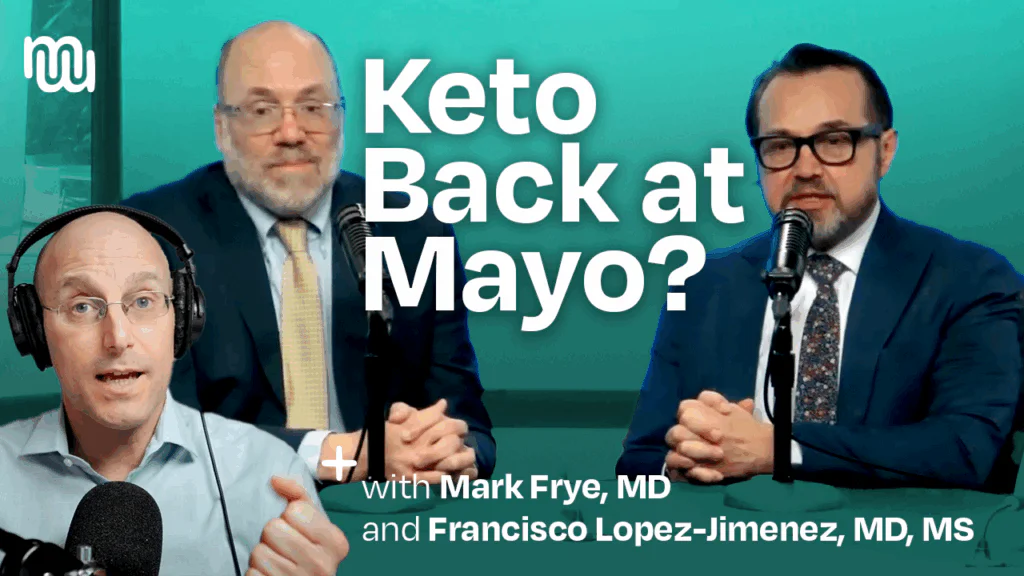
Can ketogenic therapy improve both cardiovascular and mental health? A new study at Mayo Clinic is exploring that question. This research marks a powerful full-circle moment: the ketogenic diet was first used to treat epilepsy at Mayo Clinic over 100 years ago. In this episode, we sit down with two leading physician-scientists from Mayo Clinic: Dr. Mark A. Frye (Psychiatry) and Dr. Francisco Lopez-Jimenez (Preventive Cardiology). Together, they explore how nutrition—particularly ketogenic therapy—can play a role in treating bipolar disorder, improving cardiovascular health, and addressing shared metabolic pathways that impact both heart and brain health.
Read more

$3.3 million gift from Baszucki Group fuels transformative bipolar disorder research and precision nutrition clinical service. Learn more here!
Learn more
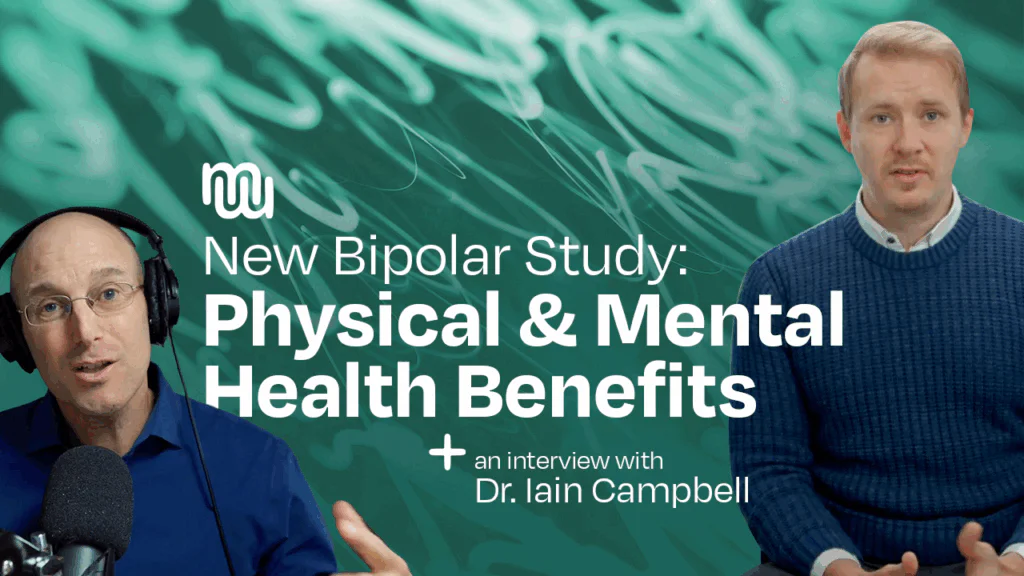
Ketogenic therapy for bipolar disorder shows promise: in a University of Edinburgh pilot led by Dr. Iain Campbell, daily tracking linked higher blood ketones—especially above ~2.0 mmol/L—to better mood, energy, and lower anxiety/impulsivity. Brain MR spectroscopy also showed notable glutamate reductions, hinting at a mechanism. The study and a new Metabolic Psychiatry Hub highlight growing evidence that targeted ketosis may aid mood stabilization while improving metabolic health.
Learn more
Subscribe to this YouTube podcast where Dr. Iain Campbell and Matthew Baszucki host peers and experts on the use of ketogenic therapy for bipolar disorder. View Channel
Learn more
Can ketogenic therapy improve both cardiovascular and mental health? A new study at Mayo Clinic is exploring that question. This research marks a powerful full-circle moment: the ketogenic diet was first used to treat epilepsy at Mayo Clinic over 100 years ago. In this episode, we sit down with two leading physician-scientists from Mayo Clinic: Dr. Mark A. Frye (Psychiatry) and Dr. Francisco Lopez-Jimenez (Preventive Cardiology). Together, they explore how nutrition—particularly ketogenic therapy—can play a role in treating bipolar disorder, improving cardiovascular health, and addressing shared metabolic pathways that impact both heart and brain health.
Read more
$3.3 million gift from Baszucki Group fuels transformative bipolar disorder research and precision nutrition clinical service. Learn more here!
Learn more
Ketogenic therapy for bipolar disorder shows promise: in a University of Edinburgh pilot led by Dr. Iain Campbell, daily tracking linked higher blood ketones—especially above ~2.0 mmol/L—to better mood, energy, and lower anxiety/impulsivity. Brain MR spectroscopy also showed notable glutamate reductions, hinting at a mechanism. The study and a new Metabolic Psychiatry Hub highlight growing evidence that targeted ketosis may aid mood stabilization while improving metabolic health.
Learn more
Subscribe to this YouTube podcast where Dr. Iain Campbell and Matthew Baszucki host peers and experts on the use of ketogenic therapy for bipolar disorder. View Channel
Learn more