New Results: First RCT for Schizophrenia & Bipolar Disorder. Learn more.


Listen, Watch & Subscribe on:



How One CGM Changed This Cardiologist’s Life
Listen
About the host
About the guest

Jaimela:
Patients lost weight and my cholesterol dropped a little bit. So, it all seemed good. And then I started looking at the parallel to the patient population. I started seeing normal weight people start to have elevations in their hemoglobin A1C. And it’s like yeah, this just is not adding up.
I was seeing what I wanted to see, extreme human bias as far as the plant-based diet seemed to be a good thing, and I was looking for things to make it to be a good thing
Bret:
Welcome to the Metabolic Mind Podcast. I’m your host, Dr. Bret Scher. Metabolic Mind is a non-profit initiative of Baszucki Group, where we’re providing information about the intersection of metabolic health and mental health and metabolic therapies, such as nutritional ketosis as therapies for mental illness.
Thank you for joining us. Although our podcast is for informational purposes only and we aren’t giving medical advice, we hope you will learn from our content and it will help facilitate discussions with your healthcare providers to see if you could benefit from exploring the connection between metabolic and mental health.
Welcome back to Metabolic Mind. So, how are we supposed to eat? A plant-based diet, we’re told that is the best diet, especially within the cardiology world. As a cardiologist myself, I hear that all the time. I personally don’t believe that. I think there is no one best diet, but I’m really curious to hear from others about their journey.
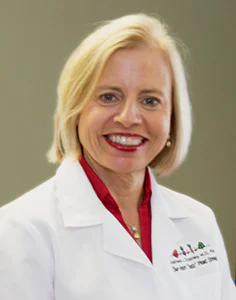
So today, I’m joined by Dr. Jaimela Dulaney. Now, Dr. Dulaney is a cardiologist. She went to medical school at West Virginia University and then did her residency and cardiology fellowship at the University of Pittsburgh, and now she lives in Florida where she has a private practice. But here’s the kicker.
Her practice for years has been a plant-based practice. She herself is plant-based, and she designed her medical practice to be a plant-based practice. But as we’re going to hear in this interview, through her own experiences, through endurance running and just through her personal health, she realized the plant-based wasn’t working as well for her. And she ended up transitioning to a low carb ketogenic diet, both for herself and now starting to institute it into her practice as well.
So, I’m really curious to hear about her experience and why she made that change, what she’s seen in that change, and how that changed her focus in general about this concept of metabolic health, LDL, cardiovascular health, nutritional interventions, and do we really know the one best way?
So, with all that as the setup, I hope you enjoy this interview with Dr. Jaimela Dulaney. Many of the interventions we discuss can have potentially dangerous effects if done without proper supervision. Consult your healthcare provider before changing your lifestyle or medications. In addition, it’s important to note that people may respond differently to ketosis, and there isn’t one recognized universal response.
Dr. Jaimela Dulaney, welcome to Metabolic Mind. Thanks for joining me today.
Jaimela:
Thank you very much for having me. It’s a honor to be able to speak with you and live.
Bret:
That’s great. Yeah. No, I’m excited to have another cardiologist on. This is a, it’s a treat for me, for sure. And I really want to get into your story because I think it’s such a great story. And we can talk about all the different dietary interventions, how they affect people personally, how affected you and professionally, and what it means for metabolic health and what you think optimal medical care is.
We’re going to get into all that, but like I like to start, tell me something that you think medicine gets wrong that you really wish were different.
Jaimela:
I think we don’t take time to actually listen to the patient and individualize care. Over the course of my 30-year practice, more and more algorithms and just menu doctoring. And I have always maintained that I love physical exam. I love talking to people, and individualizing care, and I think that’s really what’s lacking today.
Bret:
Yeah. You know what? It’s so funny. You’re spot on, I think, with that. And I can remember all the way back to my residency, and one of my big mentors in residency, as we’re rounding, he said, “I see the path of where this is going, that we just have order sets.” There’s an AFib order set.
There’s an acute MI order set. And you just don’t even think about what’s in the order set. You just know it’s the treatment plan. And you end up treating everybody as if they’re an average rather than really thinking about it. So, your answer just brought me back to that. That he was spot on.
He was spot on, that’s really what we have to fight against, right? So, you’ve probably seen that evolution in your practice as well. And have you felt like you’ve been fighting against that for so long?
Jaimela:
We have, and that’s partly what led me to change my practice to be more of a membership practice aimed at wellness through nutrition and lifestyle changes so that we could get away from that.
And it’s always frustrating. I don’t have to go to the hospital very often because we have a small practice. We take care of people. They don’t have to go to the hospital. They don’t get chest pain or heart failure. But when I do, for whatever reason, the “Are you on all these different medications?” before you can discharge somebody is always very frustrating because a lot of times it’s not really what they need.
Bret:
Yeah, and then if they’re not on it, it’s almost more of a headache for you because you have to document oh so much more, and sort of defend not putting them on a medication as opposed of defending putting them on a medication, showing that they have a specific indication for it.
Jaimela:
Absolutely. Yeah.
Bret:
So, let’s get into your background a little bit. Tell us the story about your personal journey. And then, how that impacted your professional journey.
Jaimela:
I always tell people that I wouldn’t be a physician if it wasn’t for my family history. Diabetes everywhere. Both grandparents died from it.
I had a grandmother die at 57, a grandfather die at 48 of heart disease. Another grandmother died at 72. My parents both had diabetes, and it drove me into medicine, but it also drove me personally to run away from those two big diagnosis. And I decided that I was going to start running to try to avoid getting these.
I was going to send a message that exercise is so important. So, I started doing marathons. And I’d hang my marathon posters up everywhere to try to motivate everybody, and it never did. But nevertheless, it was running that led me to hear about a plant-based diet with Dr. Esselstyn. And I came up in the in the era of low-fat.
Everything was low-fat. American Heart, everything low-fat, low-fat, low-fat. Even raised that way for the most part. And so, that resonated with me. I’m of Irish and Italian descent. So, bread and pasta and potatoes and vegetables, that all sounded great. And so I kind of went headfirst into that kind of, thought I can really implement this into my practice.
And I did it myself and lost a little weight. Some things cleared up. Patients lost weight. And my cholesterol dropped a little bit. So, it all seemed good. And the practice went along. Actually, we’re 10 years into a membership practice that was based originally on plant-based diet and exercise and mobility and things.
And my running, in the same parallel, my running actually progressed. We did Ironman, and then I started doing ultras. And the ultra-running, I started having bonks, like highs and lows. So, the longer you run, the more you have to eat. And typically, runners eat carbohydrates, and they eat these gels, and every 30 minutes you start eating these gels.
And all of a sudden, I would start to have these you feel good, you feel bad, you feel good, you feel bad. And then, you feel just bad because you can’t take any in. And even after some long runs, I would come home and say, we have a breakfast and a big bowl of fruit, maybe vegan pancakes. And I would get so tired that it’s like, and I thought, I just ran 20 miles, but I almost need a nap.
And it’s wait a minute. And then, I started looking at the parallels to the patient population. I started seeing normal weight people start to have elevations in their hemoglobin A1C.
Bret:
Yeah, so high blood sugar. And it’s like despite doing “everything right?”
Jaimela:
Yeah. Despite doing everything, normal weight, little bit of a belly. And increasing hemoglobin A1Cs and some of those same symptoms of insulin resistance. The fatigue after meals or the fatigue before meals. The other thing, the chink in the armor, we started measuring DHA levels, and anybody that didn’t eat fish or supplement had terribly low DHA levels.
And as we all know, our brain or, a large part of our brain, our retina is DHA. So I said, “There’s some chinks in the armor here about what we’re doing.” And right about that time, Dr. Noakes and Dr. Koutnik published that paper looking at the low carb athletes and not doing any worse.
I just still need to back up a little bit. I love Dr. Noakes. I followed the Lore of Running, all of his books. And when I heard he went keto a few years ago because of glucose intolerance, I was like, “Man, the man has lost his mind.”
Bret:
Yeah, so a lot of people probably don’t know that Dr. Noakes started strongly in the carb camp, that you needed carbohydrates for performance. And, he was, because of his personal journey, that’s what brought him over to keto.
So, yeah. So, you saw that transformation and said, “He’s crazy. What’s he doing? Oh, geez, doc.”
Jaimela:
Yeah. “Dr. Noakes has lost his mind. I can’t believe it. The guy should be eating plant-based.” And of course, then fast-forward, I’m starting to have these symptoms. And they come up with this paper, and I’m going to try it my next ultra.
I’m actually going to try to fuel low carb. And I did. I, instead of taking a gel every 30 minutes after the first hour, I would drag that gel over an hour and a half. So, very low carbohydrate intake, just electrolytes, and I bonked. I felt wonderful. But what happened the next day was even more surprising.
I get up and I walk down the stairs, and I’m not sore a bit. And it’s like, what is going on? So, Andrew and I had, I was like, “I understand that I didn’t bonk because I didn’t have the insulin spike,” but I said, “The lack of soreness, this blows my mind. I want more.” And it was a lecture of his talk. It never hit me, insulin is a storage.
It seems stupid as a physician that it didn’t hit me, but it seems so stupid now. But insulin is a storage hormone, and no wonder I couldn’t metabolize my own fat stores because I had this insulin all over the place.
Bret:
So interesting, you came at it from the athletic and the sort of like elite performance side of things. And then, how did it then translate into sort of general health, and then to your medical practice?
Jaimela:
So, I fueled low carb. And of course, I wasn’t going to go low carb. I wasn’t going to change my diet. That would just be crazy. And then I, like I said, I felt better. And then, I started thinking, it’s like I’m having insulin resistance. I am just having insulin resistance symptoms.
And I was like, “Oh, I just ran before I did it that way.” And it’s like, “No, I am insulin resistant.: And that’s what led me to start looking at the practice, and starting to see that it was all over the place. And again, we have a small practice. So, I was able to go through our whole practice numbers and review hemoglobin A1Cs. And I was starting to see these markers tick up.
And then, we started looking at symptoms and insulin levels. And it’s oh, we’ve got problems. So, we started to, I did the whole thing as far as, and as you kmow, I heard you talk about, on one of your talks, that you were trained alongside Dean Ornish and back in the day and he was around. And you were plant-based.
And so, when you’re plant-based, it becomes a religion for some people. And for me to, all of a sudden, hey, this was a huge change.
Bret:
Yeah. So, that’s right. My training program, it was an Ornish-based program. So, it wasn’t actually with Dean Ornish, but it was an Ornish-based program.
So yeah, I was trained that was the right way. And so, it was a big adjustment for me to realize that no, that’s not the only way. And in fact, it might not be the best way, and that there are other ways to do it. So, how did you feel? Did you feel like you had been misled or duped or was there any of that?
Jaimela:
Yes. I guess the first thing is like egg on my face that I missed, I’d missed this concept. And I went back around, after I actually read Dr. Noakes’ book, The Lore of Nutrition, and about his journey with him being raked across the coals when he changed his views.
And in that book, I was still somewhat, it’s oh, this is bad. And he referenced, you have to read this book Nina Teicholz, The Big Fat Surprise.
Bret:
Yeah. Nina Teicholz, yeah.
Jaimela:
Teicholz. And so, I read the book. And actually, I listened to the book. And part of it was while running, and I was actually starting to swear as I was running because it was like, I cannot believe I fell for these things.
It’s like I likened it to getting off one side of the seesaw and getting onto the other side and seeing things from a whole different perspective. And it’s, yeah, this just is not adding up. I was seeing what I wanted to see. Extreme human bias as far as the plant-based diet seemed to be a good thing. And I was looking for things to make it to be a good thing, and maybe some of the evidence wasn’t near as strong as I had hoped it was.
Bret:
So, you start to see your patients’ A1Cs ticking up. Your own blood sugar’s ticking up. You have the athletic experience with low carb. So, what was it like then going low carb yourself, and how far did you go? Did you go to a keto diet? How was it eating meat right away? Give me some of those details.
Jaimela:
It’s even a little bit more complicated because my dietician is actually my daughter for the practice. And she has pretty much been vegan since she was in high school. And so, she’s been plant-based from the get-go, so to speak. So, we had to have some family meeting mediations-type of talks.
And we sat down, and we talked. And it’s like, “Listen, I am insulin resistant. I have this terrible family history. My parents started getting diabetes in their 50s. I don’t want diabetes. I don’t want to go down this road. I have to make some changes.” So, we had added fish back because of the DHA.
So, we were eating fish, and tofu is low carb. So, that kind of worked. And it’s but, if I pull out, beans are very high carb, a protein source, so that’s not going to really work. So, if I pull out beans, and I pull out grains, and I pull out potatoes, I’ve got to put something back in.
I’m running 60 miles a week. Something’s got to give here. I’m not going to meet, I’m never going to recover. So, I said, “I’m definitely going to, I’m going to add eggs back in.” And I’m going to add eggs back in, but in the back of my mind, I knew I was going to add eggs, and I was going to add bacon was coming, and butter was coming. And it was really a pretty much a slippery slope at that point. It was eggs and bacon. And then, it was beef. And I got a continuous glucose monitor. And the first thing that happened that really pushed me into the deep end was I put the glucose monitor on, and I went and got a poke bowl with white rice, and edamame, and salmon. And my glucose shot up to 160.
Maybe their white rice has sugar in it? So, I’ll try another place’s poke bowl, and it’s like, no. Yeah, and I was a big sourdough baker. So, I tried a piece of sourdough bread, and it’s oh, that was awful. And the other thing that was really interesting with the glucose monitor was when I, sometimes before I would, when I would run, if I ate something before, so it was, let’s say I had a piece of toast, and I went out and ran.
About a mile or two into it, I’d have a crash to the point where I’d get a little shaky, a little sweaty, And I thought initially my glucose was tanking. And it’s like you have high insulin levels, that’s just part of your genetics and you’re tanking. When I put the glucose monitor on, I was shocked that it wasn’t when it was low that I felt the symptoms. It was after it peaked and right as it went down. Like that rollercoaster, the top of the hill coming down, that’s when I would have the symptoms.
And I had that repeated a couple times, and it’s like, okay, I’m out. It’s over. It was over. I don’t want those symptoms. And so, I pretty much went whole in, full on Dr. Noakes. And one of his books has a little guide there, the green things, you know, that you, the Banting diet little map.
And so I said, “I’ll keep my greens in, my salad in, broccoli, some cauliflower. But then, everything else, I’m going to add animal products back in.”
Bret:
So, you made these changes for your own personal health. How did you feel then translating that to your medical practice? Because here all these patients came to see you pretty much for a plant-based approach, right?
Now, you’re making these personal changes, and how did you feel about now having this discussion with your patients?
Jaimela:
It was, again, it was like, “Oh, this is going to be a little bit difficult. But I’ve always been very transparent. And with having a small practice, I really know my patients.”
And so, there’s a relationship with them. And we do lectures every week, nutrition lectures, dietary lectures, just general health lectures. And I did a lecture. It’s here it comes. Addie and I, she’s my daughter, a dietician, we did a kind of a town hall and introduced the whole thing in full transparency that this is what I am seeing in myself.
This is what I’m seeing in the practice. I’ve tried this. I’ve done the glucose monitoring. I’ve tried this on myself, and I think that some people would benefit from it. And this is another tool in our toolbox. It certainly doesn’t mean everybody in the practice needs to do this, but if they are having some of these symptoms, then perhaps it would be something that we could try.
Bret:
And was there, were people hesitant? If you sat down with a patient, and said, “Look, you came to see me for a plant-based approach, and we’ve been doing that. But now your A1C is going up, and I’m worried that you’re becoming insulin resistant. I think we should lower your carbs and add in animal foods.”
Were a lot of people just shocked, and “No, I’m not doing that. I’m plant-based. That’s the way to go”? Or were people more open to it through the discussion?
Jaimela:
I was afraid when I transitioned my practice from a general practice, we went way down, and then built back up. And it’s okay. Here we go again.
But actually, everybody was very, the majority of people, were very appreciative of my openness and my willingness to review the literature and do a deep dive and then present this evidence to them. And they say, “Hey, if you’re in, we’re in. Just what do we need to do?” There were some, who had been doing well, and it’s “I want to stay plant-based.” And it’s like, “Fine.”
There were very few people that were angry. And typically, there were a few women that wanted their husbands to be plant-based because they had significant cardiovascular disease, and they were resistant. And by kind of bringing them into the practice, the peer pressure had made them more plant-based.
They thought that I was really pulling the carpet out from under them, and it’s now we don’t have any support for us wanting to our husbands, to be, plant-based, and that was really the biggest pushback. And obviously, again, I preach the gospel of plant-based nutrition, of all the things that plants have, phytonutrients and antioxidants, and all the different views that are, for the large part, associations and not necessarily causations.
And when people adopt a plant-based diet, when people adopt any diet somewhat radical, whether it’s keto or plant-based, and they give up Twinkies and apple pie and all these things and lose weight and start exercising, they get healthy for a while. Now, I think you mentioned in a podcast, was it the plants or was it the exercise and the lack of smoking and the lack of processed foods that made people better?
And when we started really looking at some of the people that came with significant vascular disease, they were probably insulin resistant to start with. And maybe they lost weight and got a little better for a time. And then, it started to shift the other way again.
Bret:
Yeah. So, I guess you answered this, but I wanted to ask you with cardiology being so plant-based focused, what was his name?
Kim Williams saying there are cardiologists who are plant-based and cardiologists, who haven’t read the literature. Like which is just, I don’t know. Anyway, I won’t put my opinion in there. But it’s so plant-based, and you were in that. So, what was wrong about that?
Jaimela:
I believe that most of that data came at a time where people just looked at a fasting glucose, and we all know anybody can pass a fasting glucose if you fast long enough.
Hemoglobin A1Cs weren’t really measured all that much in those, some of those, studies. Insulin certainly wasn’t mentioned. Not unlike all of cardiology pretty much put diabetes in its own category. If you have it’s a bad thing. But we’re going to ignore it, and let the endocrinologist handle it. And we’re just going to focus on cholesterol.
So, I think it was largely ignored. Again, when you start looking at it, how many of those people got better just because they got rid of a lot of other bad things? Again, bias there that we’re not going to, people are getting better, so why change?
Bret:
Yeah. And what about just the concept of metabolic health?
Like when you were, think back to 10 years ago, 15 years ago in your practice, was there even this concept of metabolic health? Because like you already mentioned, and I chimed in there, it was like you had diabetes or you didn’t, and there wasn’t an in between of metabolic health.
That’s how I feel like we were trained. I’m curious if you felt the same, and if now focusing more on metabolic health, you think has been benefiting the patients more? So, give me your thoughts there.
Jaimela:
Traditional diabetes, or metabolic health to me, was high triglycerides, increased waist-to-hip ratio.
You had the typical shape, right? The more apple-type shape, increased waist-to-hip type, thin arms, thin legs, big in the middle. Those were pre-diabetics or diabetics. That’s something you got to, it has to be addressed, so to speak. And it typically, you looked at it as weight loss.
You need to lose weight. You need to be on a plant-based diet. And unfortunately, some people didn’t lose weight, or they couldn’t lose weight eating a high carbohydrate diet because they couldn’t restrict themselves enough to actually get significant weight loss.
But if that didn’t work, that’s pretty much. You know, they got a diabetic medication if they were true diabetics. But otherwise exercise, do what you can, and that’s all we have.
Bret:
Yeah. And so now though, that you’ve changed the dietary approach, do you feel like metabolic health has become more of the focus and seeing more movement in metabolic health as opposed to just focusing on LDL or just focusing on fasting blood sugar or more rudimentary markers?
I’m curious how you’ve adapted there.
Jaimela:
Absolutely. I believe that really the metabolic health is the driver of all of them. I’ve always been of the mindset that nothing happens in a vacuum. No one just has a heart attack because they have high cholesterol. Certainly diabetes is, diabetes trumps everything.
So, if you have diabetes and you smoke, you’re really in trouble. If you have diabetes and high cholesterol, you’re really in trouble. But if you have one of these other factors, if you’re a little over, you might dance around it for a little bit. So, we started measuring insulin levels in people to see, and of course, and actually asking people about their symptoms.
I would tell them my story, and they would be just nodding, and it’s “Yeah, I have to go sit down and I doze off after breakfast,” or “I doze off after a high-carb meal.” or other things, “My energy or inflammation.” So, the inflammatory markers, we check high sensitivity CRP and the HDL and triglyceride markers. And going back and looking at those specifically, it’s amazing because it all.
You can go back and you can track, insulin starts to go into that resistant range. The Quest Laboratories will say it has to be over 18, right? But we know that insulin resistance is much, much lower. So, they have a insulin level, fasting insulin level of eight, triglycerides twice what their HDL is, and a hemoglobin A1C that’s creeping up over the years.
And it’s like, whoa, this all goes together now.
Bret:
And they can all still be in the normal range, right?
Jaimela:
Yes.
Bret:
Like HDL goes from 48 to 42. Triglycerides go from 90 to 130. And like you said, insulin goes from eight to 14. Those are all, quote-unquote, “normal,” but clearly showing signs of a metabolic dysfunction, insulin resistance progressing that way.
But if you’re not testing it, if you’re not following it, or if you’re only using the, quote-unquote, “normal range,” then it’s so easy to miss. And I don’t know, to me, I could get on my soapbox for days about this. Medicine really is shortsighted that way because it’s more prevention. It is more the upfront, the upstream treatment, and not the waiting for a disease to happen to treat, which is not how we’re really structured.
So, I don’t know. I don’t know. There’s no question there. I’m just venting. But what do you think about that?
Jaimela:
What I found was, so the people that in my practice, there’s several, but that maybe had their, they’ve had bypass. They’ve had stents. They’ve had significant vascular disease.
They’re 70 years old. This started when they were 50. When I looked back over their labs, say from 2022 to 2026, some of those people always had low HDLs, but their triglycerides started creeping up. And again, like you say, not in the really terribly abnormal range, but that ratio.
We saw right away when we added fish back into the diet, because I was afraid. I’m plant-based. I’ve drank the Kool-Aid all the way and it’s, “Oh my gosh, when we add fish back in, I’m going to see people’s cholesterol skyrocket. They’re going to string me up.”
And so, and it’s like all of a sudden, their HDL went up and their triglycerides went down with the fish. And it’s like, wow, this is a good thing. Because again, when you read the plant-based literature review from that, it’s like, ugh, it’s not going to work out so well. Then, I also, I have a family history of dementia. So, I started looking into some of the metabolism of cholesterol and LDL with regard to brain health. And it’s and again, glucose and it’s like this is not necessarily what we should be aiming for.
Metabolic health is more of the situation.
Bret:
Let’s talk about LDL for a minute here. The diet to lower LDL is a plant-based diet. You will likely lower your LDL. Now, that’s very different than saying that’s the best diet for dementia or for metabolic health or for cardiovascular disease.
It’s saying, it’s true to say that is the diet to lower LDL. So, in transitioning to more of a low carb, omnivore-style diet or even a keto diet, a number of things can happen to LDL. It can go down. It can stay the same. It can change from the small dense to the larger LDL, or it can go up.
So, how do you handle that as a cardiologist and with your patients if you see LDL go up in the setting of metabolic health improving and other improvements?
Jaimela:
I think that metabolic health is so much more important that I’m willing to watch that marker, and like you say, if we’re going small, fluffy LDL, do particle size.
If that’s in the right direction, great. If HDL and triglyceride ratio are better, then I think we’ve made progress. I’m not to the three-month mark in myself or a lot of patients. But when I have prepared myself just because of a family history that I’m probably going to see my LDL rise, and I’m not going to blink over it.
Bret:
Yeah. Okay. Very good. So, how do you feel? What’s changed for you? What would you point to some of the biggest differences since you’ve changed your personal life?
Jaimela:
Again, it’s taken with the glucose monitor, it’s taken three or four weeks to get that glucose to stay down, and get into levels that make me happy about.
But the biggest thing is how I feel. Energy level’s better, but it’s the day-to-day. I’m 63 years old. I run about 60 miles a week. So, if I go out and run seven or eight miles in the morning, I come to the office, I sit down, I get up and you’re a little stiff. And I’m just like, I’m 63. That went away. All of a sudden, it’s like I don’t have those stiffness. Again, after long runs, I don’t. I put all this in play abruptly. I did a challenge that was 267 miles in 16 days. And so, you had 16 days or less than 90 hours, to complete 267 miles.
Had to be documented on Strava outside. I think there were 144 people entered. You could do it anywhere. It wasn’t at a location. Do where you live. And I think 73 people completed it. But I, in order to work and do it, I was getting up before 5:00 and running 17, I averaged 17 miles a day. And I started it at the same time that I started keto.
Bret:
Oh, wow. Okay.
Jaimela:
So I, so one, I wanted to see fueling 17 miles every morning on, basically 15 grams for the three hours and 40 minutes for the most part, of carbohydrate. That’s all I took in, plus electrolytes. So, it was a drink that had four grams of carbohydrate over, and there were two or three of those.
That’s all I used for fuel. And I ran 17 miles every morning before I went to work. And I thought that the, at some point, the wheels are going to fall off. I’m going to wake up, I’m going to be sore. Something’s going to ache or whatever. And I just kept waking up and running 17 miles. And the pace, I didn’t slow my pace down.
I thought I was going to have to walk. I thought I’d be so buggered up that I’d have to walk or do something or spread it out and over the day. Got up and did the 17 miles every day. And at first, I was afraid. I carried some gummy bears with me that if I like bonked, I thought, I’ll take a gummy bear.
And I just ended up carrying the same five gummy bears. So, that really sold me because I had never completed that many miles in a 16-day period. And I’m actually, and I actually used it as a mini-training camp because in July, I’m doing a mountain race in Leadville, Colorado, a 50-miler, and then I’m actually going to do the Leadville 100 in August.
So, I figured that would be a good training camp if I could survive that and still go to work and function, that’d be, help me to get ready.
Bret:
Wow. Leadville with the altitude and the elevation gain and the mileage, goodness. That’s a challenge. That’s remarkable.
Jaimela:
And living in, and living in Florida.
Bret:
Yeah. You’re not exactly training at elevation to get ready for it.
Jaimela:
No, Leadville. I have to go up the stairs in my house to get 13 feet.
Bret:
Wow. All right. What advice do you have for other cardiologists, who are plant-based or other, any physician who’s plant-based and believes, truly believes, that they’ve been trained for that is the right way to go? The evidence supports it, that’s what they, that’s how they help their patients the most by helping their patients be plant-based.
What advice do you have for them?
Jaimela:
Metabolic health is so important. Ten times the risk of increased risk of cardiovascular disease versus probably 1.3 times with LDL. I think that we have to, as cardiologists, focus on metabolic health, and we have to address that, regardless of how you practice, whether it’s plant-based or not.
I don’t know too many plant-based cardiologists actually in town where, in the town where I live. I’m the only one that addresses nutrition. People just say, “We’ll fix, we’ll put another stent in if you need it.” That’s how it’s approached for the most part. But I look around to even my colleagues, that are in the hospital with their own physicians with their own stents. It’s like, “Hey, metabolic health is something that we should all be aware of.” And not just even for cardiovascular disease, but just risk for an inflammation, cancer, and quality of life.
I think that it’s huge. I think more people should pay attention to it. But again, the way medicine is, like we talked about at the very beginning, it’s all a matter of how many people can you get through your office in a day as opposed to, and just treat the symptoms, and people don’t want to hear it.
The only thing I will say about my patient population is there were a lot of people relieved. It’s almost like, yeah, it’s like, “You mean I can eat? I can go out with my friends now, and I could order off a menu now, for the most part, instead of just getting a salad?” And so, a lot of people have actually embraced it.
This gives them a little bit more freedom in their nutrition. So, I do think that it’s been a good thing. I know it’s been a good thing in my household. You convince yourself that you’re okay doing what you were doing. But our family has actually embraced the way we felt.
My son-in-law’s a strength and conditioning coach. And he does jujitsu, like Andrew, and he was trying to make weight, and he’s plant-based. And as making weight plant-based to go down a class, he was having trouble. And he adopted the diet along with us, and he made weight very easily. And so, he was in the, and recovered well. So. You know, I think when people are trying it, just people want to feel good.
Bret:
How about your daughter? is she still plant-based?
Jaimela:
Yeah.
Bret:
Or is she?
Jaimela:
Yeah. No, she’s in, and she realized that she was too was having some insulin resistance symptoms, some crashes with high carbohydrate meals, and some allergy symptoms that went away. They’re still very, they’re in their 30s. So, 30-year-olds can do a lot of things without noticing much. But in general, they both feel better.
It makes her feel good to see people doing well so.
Bret:
And actually, we should say that you could be a plant-based. You can eat a plant-based keto diet.
Jaimela:
And we have people.
Bret:
Carnivore keto diet or everything in between, the Mediterranean keto diet, right? It’s low carb, and ketosis does not dictate the absolute foods you have to eat or the type of diet you have to eat.
So yeah, there is a range there. Although it can be more challenging, of course.
Jaimela:
Yeah. And we’ve worked with some people that want to stay plant-based. That they’re doing a version of that or incorporating at least lowering the carbs a little bit, more of a tofu-base rather than cutting back on some of the beans and things, or more of a pescatarian aspect of things, and it’s helped.
Could I ask you a question?
Bret:
Absolutely.
Jaimela:
With ketosis, I’ve been following not only a continuous glucose monitor, but I follow ketone levels. How important do you think that is to, and what levels? I hear the numbers of 0.5 to 1.5. And quite frankly, I hang out at 0.3 to 0.4 a lot of the times.
And it seems to be, and even though I’m basically, I’m not eating any fruit at this point, just eating the vegetables we talked about. The one time that I hit 0.6, I had a lot more fat in my diet that day.
Bret:
Yeah, so you know, I think it all depends on what your goals are, like why you’re eating this way?
And so, here at Metabolic Mind where we talk a lot about the mental health benefits, treating serious mental illness for the brain-based therapies, it seems that a ketone level is important. So, trying to get to the 1.5, the twos. It’s going to vary for everybody, but there does seem to be a signal. Higher ketones means greater effect for improving metabolic health.
I’m not so sure that’s the case. I don’t think we have those same signals. So you know, being very low carb and being in, quote-unquote, “light ketosis.” So, 0.3, 0.5, 0.6, whatever, that might be all you need, right? That you may still get tremendous benefits, metabolic health benefits and feel better, and even be able to think more clearly.
All that can still happen at that low ketone level, which is very different though than treating sort of a serious brain disorder or brain diagnosis. So, I think we have to really draw the line in terms of like what are our goals. If someone comes to me and says, “I just can’t get my ketones up.” My first question is always, “Why do you need your ketones up?
Maybe we don’t need them up?” Right? So, I think that’s the right way to see it from my standpoint.
Jaimela:
When I spoke with Andrew, I think I listened to a podcast that was on with the Ketone-IQ people. And so, I did use those in my last two ultras, and I used them on long runs. I’ve used them on long runs.
Bret:
The exogenous ketones, the drinks.
Jaimela:
Yeah. The exogenous ketones. And they definitely make a difference. You can, we do loops if we’re here and running from home. And we’ll do eight or nine miles. Come in, get more water, and go back out. And when you have the ketones, it’s a definite perk.
And again, the day I had, .6, I definitely felt it. So, there’s definitely something to it.
Bret:
I’m super curious to see how research and experience in ultra-endurance athletes, how that would translate to the everyday person just trying to be more focused at work, or just be more present with their family or get to the gym more often, right?
How do you, if it helps in one, it might help in the other? What’s the connection there? I’m really curious to see if we get some research and more clinical experience on that. But anyway, there’s a lot to be told. But thank you so much for joining me today and sharing your story and your journey.
I think it’s fascinating. if people want to learn more about you and hear more about what you’re doing, where can we direct them to go?
Jaimela:
I do a podcast, Jaimela Dulaney Wellness Podcast. That’s on all the different channels. And my website is doctorrdulaney.com, all spelled out, D-O-C-T-O-R-D-U-L-A-N-E-Y. and I’m JaimelaDulaney on Instagram.
I try to post there a fair amount, as well.
Bret:
Very good. Very good. Thank you very much. I really appreciate you joining me today.
Jaimela:
Thank you so much for having me. It’s been a great pleasure.
Bret:
I have got to admit, I was excited to have Dr. Dulaney on because I see a lot of similarities, right?
I was trained in a very plant-based, vegan dietary approach. And through my own experience, personally and with my practice, eventually evolved to focus more on cardiometabolic health and metabolic health in general. And that led me to a low carb approach. And Dr. Dulaney had a very similar approach, but she was a little bit different in that she practiced in her own practice that she developed as a plant-based approach.
And to undo that actually takes a lot. I guess I didn’t get into it as much with her, but I can imagine she must’ve been very anxious and nervous to make that change in her practice, but it sounds like it’s gone well so far. And really, the focus on metabolic health and that there isn’t just one diet to achieve it, and this, quote-unquote, “best diet,” plant-based diet really is not the best diet for everyone. And it’s really letting the people’s lab markers and their experiences and their symptoms and how they feel direct what is best, and that low carb definitely has a place for that.
And that’s what Dr. Dulaney is experiencing for herself and her patients. And so, I really appreciate her sharing the stories. And to be continued, right? Maybe we’ll have her back in a year to see how things have progressed for a year? But I think it really shows that the broader concept of, we hear so much about the one diet, the one best diet, that everybody needs to eat this way, and that’s just not the case.
And we really need to focus on how people are doing individually, how they’re feeling, and are they living their best lives? And not that low carb and keto is the one diet for everybody either, right? I would not say that either. But I think we can clearly see that the impact metabolic health and the impact how people are feeling in a subset of the population is going to be the right approach.
So, we have to be aware of it and willing to go where the evidence directs us, both the scientific evidence and the anecdotal evidence. And that’s what Dr. Dulaney did. All right, that’s enough for my soapbox for today. I hope you enjoyed this interview, and we’ll see you here next time at Metabolic Mind.
Thanks for listening to the Metabolic Mind Podcast. If you found this episode helpful, please leave a rating and comment as we’d love to hear from you. And please click the subscribe button so you won’t miss any of our future episodes.
And you can see full video episodes on our YouTube page at Metabolic Mind. Lastly, if you know someone who may benefit from this information, please share it as our goal is to spread this information to help as many people as possible.
Thanks again for listening, and we’ll see you here next time at the Metabolic Mind Podcast.
Listen, Watch & Subscribe on:
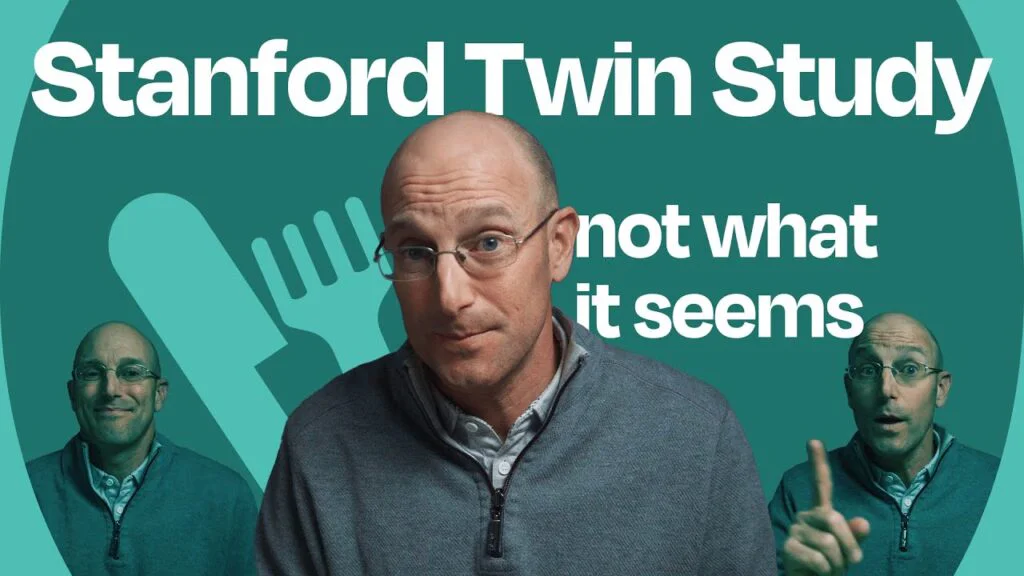
Dr. Bret Scher unpacks the Stanford Twin Study comparing vegan and omnivore diets, revealing why the media’s claims that “vegan is healthier” oversimplify the science. In this episode, he explains the study’s design limitations, short duration, and focus on two high-carb diets, noting that calorie differences—not food type alone—likely drove the results. The discussion challenges popular narratives around plant-based diets, explores issues of sustainability and long-term health, and invites Stanford researchers to collaborate on a new, more comprehensive trial comparing vegan and ketogenic diets to advance nutrition science and public understanding.
Read more
Using ketogenic and other metabolic therapies for mental health recovery is powerful. Thousands of people tell stories of suffering for decades without relief, feeling like they’d lost years…
Learn more
Dr. Bret Scher examines a new Translational Psychiatry study finding that poorer metabolic health, measured through blood glucose, insulin, and lipid markers, correlates with higher rates of suicidal ideation, attempts, and death, even after adjusting for confounders like age and mental health diagnosis. While the study can't prove causation, he argues it strengthens the case for treating metabolic and mental health as deeply connected rather than separate domains in psychiatric care.
Learn more
In this Metabolic Mind episode, Dr. Bret Scher addresses the claim that ketogenic diets are bad for heart health. He explains why many studies misrepresent keto, how cholesterol responses vary, and how ketogenic diets can improve key markers like triglycerides, HDL, insulin resistance, and blood pressure. Learn why metabolic health is central to heart health and how keto may play a role.
Learn more
Dr. Bret Scher unpacks the Stanford Twin Study comparing vegan and omnivore diets, revealing why the media’s claims that “vegan is healthier” oversimplify the science. In this episode, he explains the study’s design limitations, short duration, and focus on two high-carb diets, noting that calorie differences—not food type alone—likely drove the results. The discussion challenges popular narratives around plant-based diets, explores issues of sustainability and long-term health, and invites Stanford researchers to collaborate on a new, more comprehensive trial comparing vegan and ketogenic diets to advance nutrition science and public understanding.
Read more
Using ketogenic and other metabolic therapies for mental health recovery is powerful. Thousands of people tell stories of suffering for decades without relief, feeling like they’d lost years…
Learn more
Dr. Bret Scher examines a new Translational Psychiatry study finding that poorer metabolic health, measured through blood glucose, insulin, and lipid markers, correlates with higher rates of suicidal ideation, attempts, and death, even after adjusting for confounders like age and mental health diagnosis. While the study can't prove causation, he argues it strengthens the case for treating metabolic and mental health as deeply connected rather than separate domains in psychiatric care.
Learn more
In this Metabolic Mind episode, Dr. Bret Scher addresses the claim that ketogenic diets are bad for heart health. He explains why many studies misrepresent keto, how cholesterol responses vary, and how ketogenic diets can improve key markers like triglycerides, HDL, insulin resistance, and blood pressure. Learn why metabolic health is central to heart health and how keto may play a role.
Learn more