New Results: First RCT for Schizophrenia & Bipolar Disorder. Learn more.


Listen, Watch & Subscribe on:



Exogenous Ketones Explained – Dr. Dom D'Agostino
Listen
About the host

About the guest


Dom:
Where ketones shine is in the context of if there’s a deficit, if there’s a metabolic deficit, if there’s a brain energy metabolism bottleneck. I view exogenous ketones as a powerful tool to further augment the therapeutic efficacy of a ketogenic diet.
Bret:
Welcome to the Metabolic Mind Podcast. I’m your host, Dr. Bret Scher. Metabolic Mind is a non-profit initiative of Baszucki Group, where we’re providing information about the intersection of metabolic health and mental health, and metabolic therapies, such as nutritional ketosis as therapies for mental illness.
Thank you for joining us. Although our podcast is for informational purposes only and we aren’t giving medical advice, we hope you will learn from our content and it will help facilitate discussions with your healthcare providers to see if you could benefit from exploring the connection between metabolic and mental health.
Let’s talk about exogenous ketones. So, endogenous ketones, your body naturally produces them, and exogenous ketones are basically things you can drink that provide ketones for your body. And I’m joined by Dr. Dominic D’Agostino. So, he goes by Dom. He’s well-known within the ketone world. He’s a very well-known scientist, researcher.
He’s a professor at University of South Florida School of Medicine. A lot of his research focuses on metabolic health, on ketones, on ketogenic therapies. He’s done a lot of work with the Department of Defense and safety in divers and military and hyperbarics. And all this exciting, really fascinating work in how do ketones play into this, really with the goal of being how to treat medical conditions. How to make things safer for a lot of individuals in a number of different areas.
And he knows so much about exogenous ketones, which is why I was really thrilled to have him join us to talk about this. Now, he gets into a lot of detail. He knows so much that he gets into a lot of detail, but we try to cover the overarching parts of what are exogenous ketones, why would you use them, which ones would you use. And of course, none of this is medical advice.
This is just what he knows about it, all the research and all the knowledge. And we hope it’s helpful, and we hope you enjoy this very thorough discussion on exogenous ketones with Dr. Dom D’Agostino. Many of the interventions we discuss can have potentially dangerous effects if done without proper supervision.
Consult your healthcare provider before changing your lifestyle or medications. In addition, it’s important to note that people may respond differently to ketosis, and there isn’t one recognized universal response
Dr. Dom D’Agostino, welcome back to Metabolic Mind. It’s great to see you again.
Dom:
Great to be here. Thank you, Bret, for having me.
Bret:
Oh, my pleasure.
Dom:
Yeah.
Bret:
It’s always a pleasure to talk to you. You, know so much in this just field of metabolic health and ketones and metabolic interventions.
So, before we jump into the interview, I always like to ask, what is one thing that you think medical science or medical practice gets wrong that you wish were different?
Dom:
Yeah. I have to say the idea that changing your metabolic physiology can change your brain energy metabolism and also the neuropharmacology of your brain.
So, just appreciating that. That’s not a controversial statement. You can look at the literature supports that. For example, a ketogenic diet has neuroprotective anti-seizure effects. We should appreciate that, and then want to understand fundamentally why that happens so we can apply that to other disease states.
Bret:
That’s very well said. Thank you. There’s so much we can talk about. But today, I really want to drill down on exogenous ketones. So, endogenous ketones, the ketones our body produces, and exogenous ketones, that we can take, ingest in some form. And it seems like, I remember, when exogenous ketones were just started, there was salts and esters and barely any products. And people would come with little baggies full of white powder that you would be like, “Try this.
Check out, check out this ketone.” Now, it seems like everybody is promoting their own form of ketone, and podcasts are talking about it, and commercials about it. And so, it seems to have exploded. So, I think we just need to take a step back, and say, what are exogenous ketones?
How are they similar or different from endogenous ketones? How can we use them? So, let’s get the ball rolling with that, and just give us your sort of high-level view of what is the basics that we need to know about what exogenous ketones are.
Dom:
Yeah. And I think people listening to the podcast already know what ketosis is, right?
And there are different ways to achieve ketosis, and different ways to achieve and maintain sustained ketosis. And at the very, we all know about fasting, short-term fasting, long-term fasting. That’s not sustainable, right? There’s intermittent fasting. That’s one way to achieve it.
The ketogenic diet, of course, which is the standard of care for drug-refractory epilepsy, over 100 years history. And so, there’s at least 10 ways to get into ketosis. So, that’s two. And then there’s ketogenic fats. I’ll go down the line. So, a ketogenic fat would be a type of a lipid or fat that you consume.
in this case, we’d talk about, medium-chain triglycerides, which are typically from coconut oil or palm kernel oil. And these are typically eight carbon or 10 carbon. We consume them, and some of these on clinicaltrials.gov. If you type in ketone supplement, you get about 150 hits. So, it’s important to acknowledge that some of those hits of a ketone supplement are actually MCT oil.
That’s a medium-chain triglyceride oil. So, these MCT oils are often added to ketogenic diets to further augment and enhance therapeutic ketosis.
Bret:
The big difference there is what separates them from other fats is just that they are converted in the liver much more quickly to ketones.
Dom:
Yeah.
Bret:
Is that correct?
Dom:
That’s right.
Bret:
Is that a correct statement? Okay. Whereas, like saturated fats and other polyunsaturated fatty acids aren’t converted that efficiently in the liver.
Dom:
Yeah, that’s right. And I would go a little bit further than that. So, MCT oil is a saturated fat. So, that’s important because that can elevate LDL, and that’s another story like coconut oil.
And so, it is a saturated fat. But unlike long-chain fats, MCT oil goes right to your liver. And the liver does not have the capacity to use ketones as an energy source. It lacks an enzyme, succinyl-CoA transferase, that actually helps, evolutionarily speaking, the liver’s not going to be greedy and suck up nutrients like it does everything else, like amino acids and glucose for glycogen.
But it spares the ketones. So, it produces ketones. Those ketones get into circulation, and then via the monocarboxylic acid transporter, the ketones get into the brain. Similarly, when you consume exogenous ketones, which we can get to, they do go to the liver, and they’re minimally processed by the liver, excluding another category I’ll talk about. And then, they get into circulation, and then they become, super fuels.
They become a source of energy for peripheral tissues, for the heart, and for the brain. Skeletal muscle does use some, too, the kidneys and different organs. And so, there are different classes of ketones. So, can we just drink ketones? So to do that, so the ketone in its simplest form is beta-hydroxybutyric acid.
And if we were to consume, and this was like the first thing I looked at, is just just buy beta-hydroxybutyric acid. Yeah, try to drink it. It’s highly acidic, and it doesn’t, it’s not super bioavailable. And if you were to consume about 10 grams of beta-hydroxybutyrate acid, which there are supplements coming on the market that do have acid as a formulation, it needs to be diluted.
But if we just consume hydroxybutyrate acid, it’s quite acidic. And a 10-gram dose would transiently cause a metabolic acidosis that would be compensated for in healthy people through respiratory and renal compensation. But if you consume a large amount, and we’ve seen this in our animal models, you could have a pretty big anion gap of typically, it’s four to 12. And we’ve seen it in 15, 20, like approaching diabetic ketoacidosis if you titrate the levels up.
So, that may be something that people don’t think about. So, from my perspective, it’s very important to deliver exogenous ketones in a buffer and also make it more stable. And the next category, so we have ketogenic diets, MCT oil, ketogenic fats, beta-hydroxybutyrate or acetoacetate. So that’s something we’re also looking at.
And then, there’s beta-hydroxybutyric acid salts, BHB salts, and acetoacetate salts we could talk about because they might have applications for seizures. So, a ketone salt that’s sold in the little packets that people are pushing to replace the ketogenic diet, and there’s many. And they do have a lot of emerging science behind them.
So, that would be in a category of bioavailable natural ketones.
Bret:
And so another version we hear about is an ester. So, just real briefly, how is an ester different?
Dom:
Yeah, okay. So, an ester, I think of an ester, a ketone ester, as I actually think of it as a drug, a ketone ester, especially the ones that are commercially available right now.
So, a ketone ester is, you take a ketone and you combine that to a molecule with an ester bond. So, that could be glycerol. You could put three, like a triglyceride. You could have a, you could have a triester. You could have glycerol acetoacetate triester. We’ve working with that. You could glycerol beta-hydroxybutyrate triester.
So, you drink it. The glycerol gets, it gets hydrolyzed off. And then, the ketones go into circulation. But one that is potentially problematic is the one that many people are using. It’s 1,3-butanediol, beta-hydroxybutyrate monoester, which we have used. We’ve published on that in different studies.
And also 1,3-butanediol, acetoacetate diester. So that 1,3-butanediol is like a pro drug for ketones, and it’s a ketone alcohol. It’s technically a glycol or dialcohol. So, when you consume 1,3-butanediol, is also being sold as a ketone ester. It takes up a large portion of the market share right now.
And what’s interesting to know, and we’ve done quite a lot of work with it and had positive results with it and negative in some. And we’ve published a paper. Ben Bikman just published a paper that replicated kind of our results. 1,3-butanediol on a per gram basis has the same, the liver has to work just as hard on a per gram basis as it does with ethanol.
So, what does that mean? For a person that’s consuming 34.5 grams is the FDA generally recognized as safe level. And if they were to consume that in one dose, about 40% of people experience dizziness. And there are no really long-term studies on this. There’s a paucity of long-term studies.
There’s one case report by Dr. Mary Newport. It’s actually her husband had Alzheimer’s with a beta-hydroxybutyrate monoester, and I think one 28-day study that was actually published by the group that makes it. And they reported dizziness, nausea, things like that with consuming this dose. And you do need 34.5 grams pretty much per day to keep you in a mild state of ketosis.
So, that makes 1,3-butanediol a bit problematic. In our context, we were using it for military operations. You take a shot of this stuff, and then, before you go diving. And we never envisioned 15 years ago, we never envisioned that people would be like buying this and using it as a supplement.
Bret:
So, that’s a really good point, though. So, you’re talking about the salts, the esters, and then the sort of precursor esters. And those are the ones that are most available probably right now. But also potentially most problematic, which leads to, like you said, a paucity of long-term research on these.
So, let’s step back again, and say, what are people using them for and what do we know? So, we see them marketed for weight loss. We see them marketed for brain cognition. We see them marketed for physical performance. What do you see as the most proven clinical benefits of the exogenous ketones?
Dom:
Yeah. I still have the stance, broadly speaking, I still have the stance. In our studies, we use them independent of the ketogenic diet. And for example, we did studies yesterday, we’re doing them today, too, in the lab, where we acutely administer them. And within 30 to 60 minutes, animals are put inside a hyperbaric chamber. And at five atmospheres of oxygen, it causes a very powerful tonic-clonic, grand mal, seizure.
And if you’re in a state of high ketosis, independent of following a ketogenic diet, this can delay seizures from 200% to up to 600%. And that, in our experience and from all the research published, the anti-seizure neuroprotective effect is above any anticonvulsant drug that we know of. So, an exogenous ketone, I always thought that getting into this before metabolic psychiatry and everything, that why are people not using this for seizures?
So the research that was being funded was the Warfighter Dominance Program by DARPA.. And there was some compelling data to show that ketone esters could enhance exercise performance. Not much, but it tends to enhance exercise performance. Not so much in healthier people, but in older people.
The new research is showing that. They’re less robust that we thought it would. And I tend not to talk about performance stuff. I talk more about the therapeutic effects. But where ketones shine is in the context of if there’s a deficit, if there’s a metabolic deficit, if there’s a brain energy metabolism bottleneck.
I view exogenous ketones as a powerful tool to further augment the therapeutic efficacy of a ketogenic diet. So, in the context of 95% of most applications, the diet is really going to do the big lifting. And then through precision, personalized, prescriptive diets, for the individual because everybody’s a unique metabolic entity, we can then titrate the level of ketosis by having them drink a fruity drink, that tastes good, or a chocolate drink, or whatever that has the ketones in it.
And ideally not 1,3-butanediol or a 1,3-butanediol base ester. And then adjust the diet from there.
Bret:
I’m glad you brought up the diet. So, let’s talk about the diet for a second. When you’re on a ketogenic diet, you’re producing ketones. And you are frequently improving your metabolic health by reducing your carbohydrates and getting into the fat burning mode. And it changes your metabolic switch.
So, you’re really doing both. Producing ketones, and improving your metabolic health. If you just drink ketones and are eating a high carb diet, you’re getting ketones. But does the ketone itself do anything for your metabolic health or are you now completely missing that part?
Dom:
Yeah. So, the people that sell ketones will say it is definitely improving your metabolic health. Consuming exogenous ketones does have beneficial effects. It’s very context dependent, but it’s also dependent upon the state of the individual. And as we age, like these things probably have a better effect.
And there’s also the different types of ketones. If your beta-hydroxybutyrate, D-beta-hydroxybutyrate levels are off the charts that is, I used to think, that was where you wanted to be. But our research that was basically showing that more ketones are not better, and maybe could it actually induce like a manic state because I’ve had my ketones up high.
I’ve experimented with every, probably taken more exogenous ketones than anybody. And they do have subjective effects, and they have effects on objective biomarkers. And I think that if your ketone levels are high and your glucose levels are normal, that represents a potential energy toxicity.
And if your ketone levels get high, that can cause reductive stress. And reductive stress over time is not good. And that’s why you want to balance.
Bret:
Yeah, it presents us a scenario that has really never existed in natural evolution and natural state for forever. To have high glucose, high insulin potentially, and high ketones all at the same time.
So, it sounds like you’re saying it could trigger things like a manic episode. Are there other things that worry you about that combination, though? Eating a high-carb diet, having metabolic dysfunction, high insulin, and taking exogenous ketones?
Dom:
The science has not really, the human RCT science and just the human even case reports, have not shown that.
For example, the longest administration is the case report by Dr. Mary Newport. Steve Newport, who I knew well and was actually, he was part of our guest speaker in 2008 and ’09. So, my first observation of him consuming MCT and then exogenous ketones was that he became more animated and talkative. And it was very clear that when his ketones went down, he lost that cognitive function. And then, it would be quickly restored, like acutely, with when he would get into hyperketonemia that is not pathological.
So, a normal physiology has the potential, the capacity ,to compensate for the mild metabolic acidosis that drinking exogenous ketones cause in healthy individuals. It’s also important to acknowledge, too. And we’ve had posters on this. We haven’t formally published it but others have.
When you acutely elevate your ketones two millimolar or higher, that stimulates the pancreas to release insulin. And when the ketones will go up, your pancreas releases insulin. And then, the ketones get burned and go down. And two to three or four hours later, you could be hypoketotic and hypoglycemic because the ketones. When we’re on a ketogenic diet and our ketones get high, we have ketonuria to reduce the amount of circulating ketones. But then, the ketones also stimulate the pancreas to release a little bit of insulin. And that decreases beta oxidation of fats in the liver, which turns down, not off, but turns down the production of ketones. And that’s our counterregulatory mechanism.
When we chug a ketone ester, this does not happen with the ketone salts because they’re self-limiting by the mineral load. So, you can only absorb, to really get into that one to two range. And if you consume even a large dose of ketone salts, you don’t have any change in insulin.
But if when you consume a large dose of a ketone ester, that can pop up insulin. So, that becomes potentially problematic, I think. Yeah, in that state, that is a state that we want to avoid. So, you could potentially mitigate that by taking smaller doses of exogenous ketones or taking it with food or just simply using different formulations of ketones.
And the simple thing that we have done is just, you combine exogenous ketones with MCT oil. And then, the oil delays gastric absorption. As the ketones are delivered to circulation, you’re also delivering a ketogenic fat that stimulates endogenous ketones while you’re titrating slowly the exogenous ketones into circulation.
So, MCT oil, you know, fat, fiber, protein, and MCT oil all make exogenous ketone administration safer. And I think that’s probably an important message for people because you don’t, some people are fasting and they break their fast. You don’t want to break your fast with a large dose of the ketones, if you’re already ketotic.
So, there’s lots of important considerations to understand before jumping into this.
Bret:
Yeah. then that’s a really important point to make. And so then, let’s go back to what you were saying, how you see the primary use clinically of exogenous ketones is augmenting a ketogenic diet.
And we talk a lot about using ketogenic interventions to treat symptoms of mental illness or to treat epilepsy or to treat dementia, but also to treat type 2 diabetes, PCOS, fatty liver. Lots of things that those, I guess, we have to differentiate. What I’m trying to get at is the brain versus the not brain, right?
Is that it seems like ketone levels may be more important for brain-based disorders than for more systemic disorders, liver, ovarian, et cetera. So, do you see a potential for using the exogenous ketones then? If someone’s ketones are at one or 1.5 and they’re trying to treat a brain-based disorders, to use those exogenous ketones to bump them up into the three range or something to see if that benefits clinically?
Dom:
So, that’s going to be very context-dependent on the individual. I could say in the context of epilepsy, sometimes it’s important to achieve and maintain a ketone level between three and five. And when things get below, and when ketones get below two and down to one range, you can have breakthrough seizures.
We know that for pediatric epilepsy. On the other hand, there’s some disorders and situations where when people get above two or three, they just do not feel good. And that’s for different reasons. They start to feel a little bit loopy. They get dehydrated. So, I think, we have to use subjective measures, and we have to use objective measurements depending on what you’re treating, whether it’s cognitive function, whether it’s the PHQ-9 or the GAD-7 test or whatever.
And then, those tests should be taken in the context of knowing what your ketones are and knowing what your glucose is, too. And you could use the glucose ketone index, for example, too. And I think that’s going to be important, and it could be unique to individuals. It could be unique to individuals even with the same psychiatric disorder or pathology.
But in the context of things like cancer growth and metabolism, which is something that we also study. We recently got an NIH R01 grant to use ketone metabolic therapy with immune checkpoint inhibitors, enhances the adaptive immune response to these drugs. And you want to achieve like low levels, like one to two millimolar, but you don’t want to really get above that.
But therapeutic levels are typically, 0.5 and above is clinical ketosis. And you are definitely getting benefits at one millimolar There was an RCT that just came out using just two grams of beta-hydroxybutyrate, the D and the L enantiomer, and they showed levels, or showed performance increases in the psychomotor vigilance test, and also some, maybe some, strength improves with the grip test.
And that’s just two grams. And I think these molecules, what was more with the L beta-hydroxybutyrate. So, when you consume the L, it gets metabolized much slower. And then, independent of its energetic effects, it has signaling effects on the body, in particular the brain because you just get more levels in the brain.
So, that’s an emerging area of science. And I know there’s a couple grants and a couple papers that are going to come out that actually looked at the two different enantiomers. And I think that’s probably important for metabolic psychiatry, too, to have different formulations of ketones and to understand so the pharmacokinetics and what it’s doing to the brain.
Bret:
Like I’ve heard that the brain prefers to take up the L more than the D when it’s exogenous, but a lot of this seems like it’s very early and still needs to be, studied more.
Dom:
Yeah.
Bret:
But I guess, let’s again take a step back. So, if somebody is following a ketogenic diet and trying to treat their psychiatric symptoms, and they wanted to experiment with an exogenous ketone, is there one product you would recommend?
And I guess, we don’t need to talk brand names, but whether it’s the salt, whether it’s the ester. It sounds like it’s not the 1,3-butanediol ester. What would you recommend is probably the most effective, safest, easiest to help them experiment to see if they want to bump up their ketones?
Dom:
Yeah, for just bumping up your ketones, probably the safest thing to use is what has been used for over half a century, which is MCT oil. The only problem with that is that you don’t want to take MCT oil on an empty stomach because I tolerate it well. But if I wake up fasted, put it in my coffee, there’s going to be problems.
There’s going to be digestion. But you want to take, the registered dieticians know that, know this, too. If they incorporate MCT into the food, and have it with a meal. Then, you’re usually okay, but about 20% of people really can’t tolerate it. And I would say quite a lot more, I’d say it’s almost intolerable if you consume it on an empty stomach.
It’s my opinion. I haven’t, you know, the literature may say only 40% of people, but it just seems like it’s higher than that. And then, the next level would be the beta-hydroxybutyrate salts, right? And I do have, I don’t know if you call this a conflict of interest because I’m in no way, shape, or form associated with the company, but my wife has a company, Audacious Nutrition, and it’s a DL beta-hydroxybutyrate supplement.
And it’s the formulation that we’ve been working with in the lab, the two different enantiomers. So, there are ketone salts that are on the market that are D and L. And I am firmly of the opinion, and I’ve stuck to this for 15 years, where some, I think, for energy, maybe the D beta-hydroxybutyrate is more energetically favorable.
Although if you look at the ATP levels using various methodologies, the ATP generation in the cells are the same between the D and the L. So, the next w– MCT, and then the beta-hydroxybutyrate, the D and the L salts, and they’re relatively cheap. You can get them on Amazon. And then there’s, I guess I have to stop there.
And then there’s the ketone acids, too. The beta-hydroxybutyrate D and the L acids are now being marketed, and I’ve experimented with them. And they actually work great if you mix up DL beta-hydroxybutyrate salt. Actually, I have that right here. And then, you get five to 10 grams of that, and then mix in the acid, and the DL acid, and you drink it.
And as I’m wearing a continuous ketone monitor, you can elevate that and sustain levels for hours at a time. And I think the acids, too, are a player. I just would, I’m of the opinion, that exogenous ketones as a monotherapy, as an individual molecule, as a monotherapy is not very good. It’s much better when you combine different forms, like when you take, if you can mix MCT with a DL beta-hydroxybutyrate salt ,and then maybe titrate in a little bit of acid. So, we’re talking about formulation here.
But you never see that in the peer-reviewed journals because everybody has a commercial interest. There’s a particular molecule that’s used, and it’s used specifically only that. But what we do, what we’ve always done is we combine these things in a kind of agnostic way.
We just take what works. And then, some ketones have no effect. Some ketones have absolutely no effect on seizures. Some ketones have no effect on anxiolytic effect. But some formulations are remarkably effective when others have little or no effect, and I think that’s important to know.
Bret:
Yeah, and since you’re talking about the research, there’s obviously so much fascinating research being done, including in your lab.
A majority of it is, seems to be, rodent models. So, when it comes to human research and human clinical trials to use exogenous ketones clinically to treat what various medical conditions, do we have any strong evidence to point us in a direction that it is safe and effective clinically in humans, or are we still waiting for a lot of that data?
Dom:
Yeah, I think we’re patiently, or impatiently, waiting for that data. There are a number of RCTs out there, clinical trials out there, but typically a smaller population. The sample size is pretty small. But what we could say is that, I think I’m comfortable saying that if you elevate your ketones using exogenous ketones within the one to two millimolar range, you’re going to get subjective and objective benefits to that. And that probably, you’ll achieve that independent of the diet for in specific contexts.
And I think if you’re on a ketogenic diet, and you’re not in a state of ketosis, you can further enhance your ketone levels and augment the effects of the diet. A very strict ketogenic diet caused some, what is viewed by the medical community as, an atherogenic effects on my lipid profile.
Luckily, I’m highly responsive to acetamide because I have a genetic mutation for the MPC1 L1 receptor. So, a little bit of acetamide drops that down. whether that’s problematic or not, elevated ApoB and LDL is still under investigation. And we know that ketogenic diets tend to vastly improve cardiometabolic biomarkers across the spectrum independent of LDL.
LDL sometimes goes down in people if it’s up before. It’s not always the case, as know Bret, very well. but one trend that I think is worth considering for a clinical trial is a low-carb Mediterranean diet that has a variety of different foods but caps carbohydrates at 60 to 80 grams per day with one-third of the carbs in the form of fiber.
So, just fruits and vegetables, probably fruits, which I consume quite a lot of. And I’m always hovering on that 0.5 line of ketones throughout most of the day. And then I just elevate, I bump it up, to one millimolar on most days. And that could be achieved with MCT, or just two or three servings of a ketone salt taken with meals.
And then, I’m getting the benefits, potential benefits, of ketones. And we know there’s anti-inflammatory effects. There’s the brain energy, and there’s across the board,
Bret:
Yeah. So, you’re talking about how you use them. So, let’s get into that a little more. I’m curious about the Dr. Dom regimen. So, what do you take? When do you take it? And why do you take it, if you don’t mind sharing?
Dom:
Yeah, I don’t tell people to do what I do. But I can tell, I can say over the years, when I started studying the ketogenic diet, I had Jeff Volek’s book, but I also had Eric Kossoff’s book, and the late John Freeman.
So, they were authors on the first ketogenic diet book, and I did it the standard protocol. And I’ve gravitated over the years to titrating in a little bit more carbohydrates. So, I do a low-carb diet that’s on the borderline of being ketogenic. And it is, if I do intermittent fasting.
But in regard to exogenous ketones, I supplement a very low-carb diet. Some days, it’s very low carb. And others days, it’s just like very moderately low carb, meaning it could be 100 grams or below. And if I’m 100 grams of carbs from a couple pieces of fruit, some broccoli, some nuts, a little bit of dark chocolate, and I’m very active, I could be in a state of ketosis, a mild state of ketosis.
But I bump it up with exogenous ketones, and I do that typically first thing in the morning. DL-beta-hydroxybutyrate salts with some creatine monohydrate, which also is a form of metabolic therapy. I also think of exogenous ketones, kind of like creatine. When creatine came out in 1992, I was using it. And in 1995 or ‘6, I wrote about it in my exercise physiology and my final exam.
We had to do an ergogenic aid, but the science was not there. So. I didn’t get any credits for that. But it took about, it did take about 10 years of research. And I think there was a 600 randomized controlled trials or more with creatine monohydrate to get acceptance. It took about 200 peer-reviewed studies to get acceptance for sports and performance. And now, we have about 600 clinical publications with creatine monohydrate.
And now, it’s actually exploded because it jumped out of the sports world and out of the muscle head bodybuilding world. And now, people are using it for depression and, sleep deprivation and cognitive function in elderly. So, I see ketones maybe taking that track, too. And I think for that to happen, of course, we need good peer-reviewed studies that are human randomized controlled studies.
But what’s a little bit different with exogenous ketones is that there’s all these different formulations. And also, to make matters a little bit more complicated is that we have lots of different exogenous ketones that I’ve not even talked about yet that look great on paper. And they look great in cell-based assays and animal models and pharmacokinetic studies and some disease models, but no one even knows about these molecules yet.
Bret:
Let me ask another question about how you use them then. You’re known, obviously, for your research and your intellect but also for your power lifting. You’re a big guy. You lift a lot of weights. You’re very strong. Do you think ketones help you with that, or do you take them completely for other reasons not to do with your weightlifting and athletic performance?
Dom:
Yeah. To be honest, I just got into ketogenic diets and exogenous ketones during a time where I had to do intense amount of work in the office, transitioning to a tenure track position. And I think I also got really into fasting and intermittent fasting, and I spent long days in the lab and at the desk in a state of ketosis, and I feel that it gave me that sustained energy to do very long days, to do grants and experiments, and doing what you have to do to make it through academia.
So in that, it gave me an advantage. I think over the years, it has helped me reduce the massive amount of food that I would typically eat when I was really into power lifting. I could eat a fraction of what I typically eat, stay in ketosis, and it would maintain my strength and also my blood work and longevity markers. I think look better, too.
At the conference, Lily did the CIMT scan, the carotid intima-thickness scan. Yeah, Dr. Johnson, Lily Johnson. And my vascular age was 34, and there was like nothing. No plaque at all to be seen. I was a little bit nervous because I had went many years on a ketogenic diet where my ApoB was like 160 for a long time.
My LDL was in the 300s for a very long time. And I was a little bit concerned because my my Lp(a) also a bit high, but hs-CRP is non-detectable. Triglycerides super low. Hemoglobin A1c.
Bret:
And your metabolic health was perfect, right?
Dom:
Yeah.
Bret:
Your metabolic health was ideal during that time.
But so, that’s telling us a lot about the balance between ApoB, LDL, and metabolic health, inflammation, et cetera.
Dom:
And that’s me. But at the same time, there’s so much information, and I’m in a conventional medical, and we teach “LDL bad” like this. And some people could be worse than others.
So, I was a little bit, like today, I got blood work back, and I was a little bit nervous to get that blood work. When I’m opening up that file, and I didn’t know what to expect. You know, my vascular age could’ve been 60 or something. And then I would’ve quickly went and got a CT angiogram done and maybe jumped on maybe a lipid-lowering drug.
But just as this is my case, and I’m just saying that I had a very high LDL and ApoB for many years. And with a ketogenic diet, and I’ve changed my diet to more of a low-carb Mediterranean diet, and some things have balanced out a little bit. And it looks like on paper, more I’m sure the average doctor would urge me to get on a statin.
But everything, LDL and ApoB, have went down. And I’m also using exogenous ketones for a decade and a half now, and everything that I see in my blood work indicates that I’m doing really well. And I’ve done some pretty advanced testing with metabolomics and various other markers, too. And I’m reviewing some of that data today, and everything looks really good.
My omega-3 levels are also very high, and I think that’s beneficial. The ketogenic diet that I eat is very high in fish and maybe a little bit too high. Like maybe a pound or two of fish per day for many years. But I check heavy metals and they came back either low or non-detectable. But I do stick to sardines and mackerel.
But I think if I may just have a good detoxification or just I clear these things faster. But when people favor diets that are like super high in fish like I’m eating, six to eight servings per day of fish at least every day, for a decade now. And that could be rather extreme, but I think that a ketogenic diet is rather extreme. So, that’s why I tell people that when you jump, if your normal diet, if a ketogenic diet is quite different than your normal diet, you do want to get your comprehensive metabolic panel, CBC, and just standard blood work, and just stay up on all the tests to ensure because some people will have different responses.
Bret:
Yeah. No, that makes sense. That makes sense. And really interesting to hear you’ve been on exogenous ketones for a decade and a half because, I’m sure, people will quickly point out, “Oh, there’s no long-term research,” and that’s true. There isn’t long-term research. But to hear clinical cases like yours of someone who’s been taking them for so long with no untoward effects is certainly reassuring.
But I think it’s fascinating to think of all the potential uses of it, for raising ketone levels in so many different disease states. We don’t know what it will do. So, a lot of it does have to be individual experimentation with, hopefully in conjunction with, a clinical team for safety and efficacy if you’re using it to treat a specific condition.
But the science, the basic science research, the rodent research, all that is coming out hopefully will transition to human research so we can continue to learn more. But I really appreciate all your information and your knowledge and sharing it with us. So. Where can people find more from you, and where can they follow you to learn more about the work you’re doing?
Dom:
Yeah. Thanks for asking. I guess the best place is PubMed. You can go and just look at what we’re publishing but also our website. The website that I have is ketonutrition.org And that’s an information website. There may be some products on there, but I don’t have any products.
I don’t sell any products, myself. But there’ll be some maybe products on there that I’ve used or recommend. And then there’s the Metabolic Health Initiative, which is an ACCME-accredited online platform that you can get CME credits. There are various courses on there that people can take.
And also we have the Metabolic Link Podcast, which is under that umbrella of Metabolic Health Initiative, and ask people if they want to learn as your podcast, if you want to learn more about these topics and deep dives into various subjects of metabolic-based therapies to stop there
Bret:
Great.
Great. We will definitely link to all those in the description, and I thank you again for taking the time to share your knowledge with us today.
Dom:
Thanks for having me, Bret. Appreciate it.
Bret:
I just love talking to Dom. He is so smart. He has so much information in his brain, and he just loves to talk about it.
So, with exogenous ketones, I guess in a way he might know too much about it, right? Because where do you draw the line of how detailed to get? But he gave so much great information. And I think that the key take-homes are one, the type of exogenous ketones. The salts seem like being his go-to.
The ester as being popular, but with some concerns. Don’t just jump into them without paying attention to your overall health and health markers, if someone’s taking it. And of course, none of this is medical advice. This is just his opinion on and what he knows about them.
But also, what are you taking them for? And as he likes to talk about using them to augment a ketogenic diet as being one of the most effective ways of doing it. And how he uses it personally is really interesting. That doesn’t mean everybody should use it that way, but certainly a model for how to think about it.
And then, of course, the research really does need to catch up with human research. So, we’re learning a lot from mechanisms from rodents, but getting bigger human trials, would be so interesting. So, I think their potential role in brain-based disorders is tremendous, right? Because we’re learning that there’s a sweet spot of a ketone level for individuals, and ketones vary throughout the day. So, how to use exogenous ketones to maybe smooth out those peaks and valleys during the day? How to raise the level to get to one individual’s sweet spot?
I think there’s a lot of room for use there, and we’re going to learn more as the research and clinical experience catches up. But I’m thankful for Dr. Dom D’Agostino, and I hope you enjoyed this interview. And we’ll see you here next time at Metabolic Mind. Thanks for listening to the Metabolic Mind podcast.
If you found this episode helpful, please leave a rating and comment as we’d love to hear from you. And please click the subscribe button so you won’t miss any of our future episodes. And you can see full video episodes on our YouTube page at Metabolic Mind. Lastly, if you know someone who may benefit from this information, please share it as our goal is to spread this information to help as many people as possible.
Thanks again for listening, and we’ll see you here next time at the Metabolic Mind Podcast
Listen, Watch & Subscribe on:

Explore metabolic therapies with Steven who put his bipolar 2 disorder into remission. Discover tips for beginners & pros on diet, lifestyle & wellness.
Read more
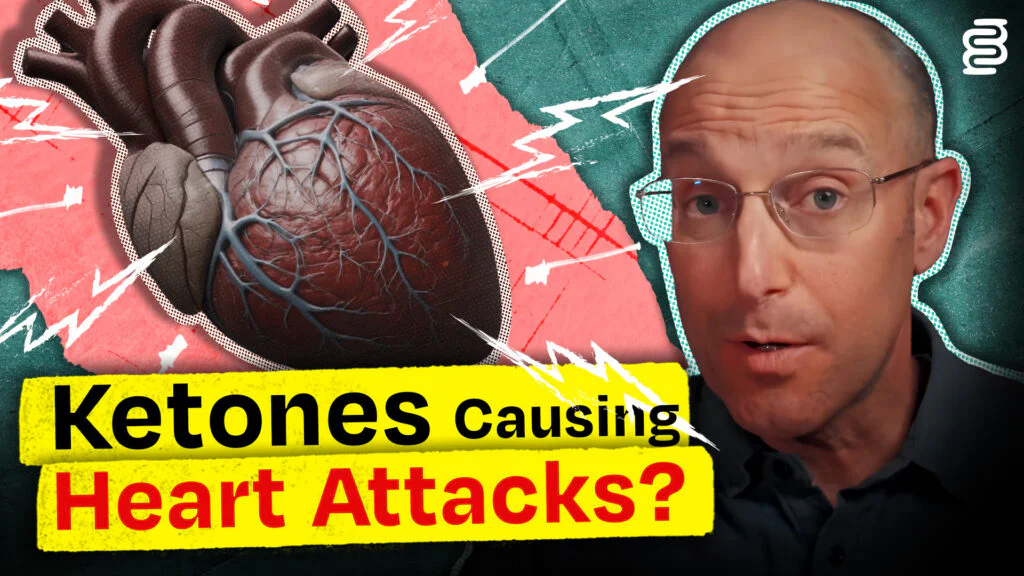
Can higher ketone levels really increase the risk of heart disease? Dr. Bret Scher takes a closer look at a recent study behind concerning headlines about ketones and cardiovascular risk, revealing why the findings don’t actually apply to nutritional ketosis or ketogenic diets—and why the distinction between correlation and causation matters when interpreting this research.
Learn more
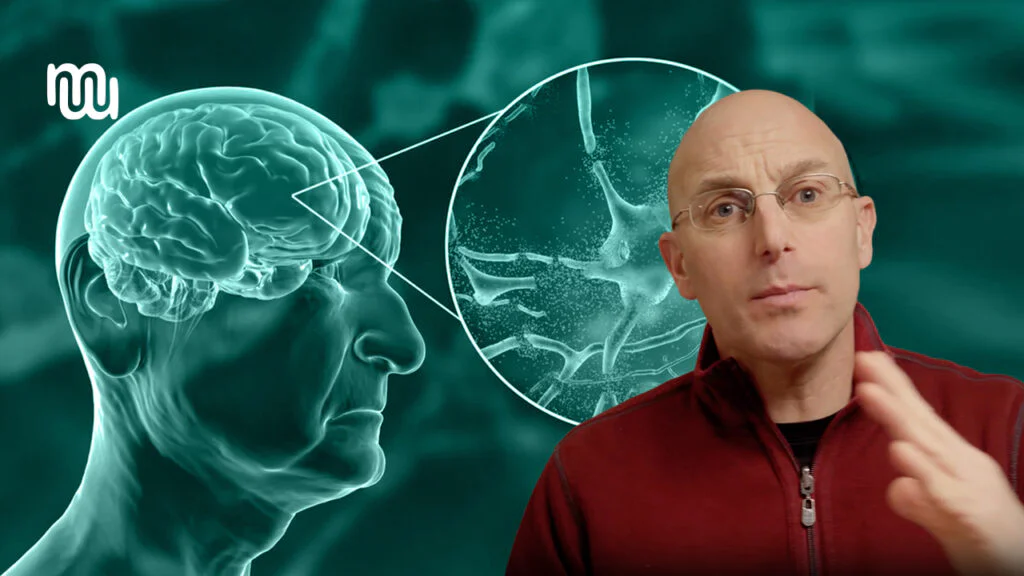
Alzheimer’s and other forms of dementia are among the most feared consequences of aging, impacting nearly 7 million adults in the U.S. today, a number expected to double…
Learn more
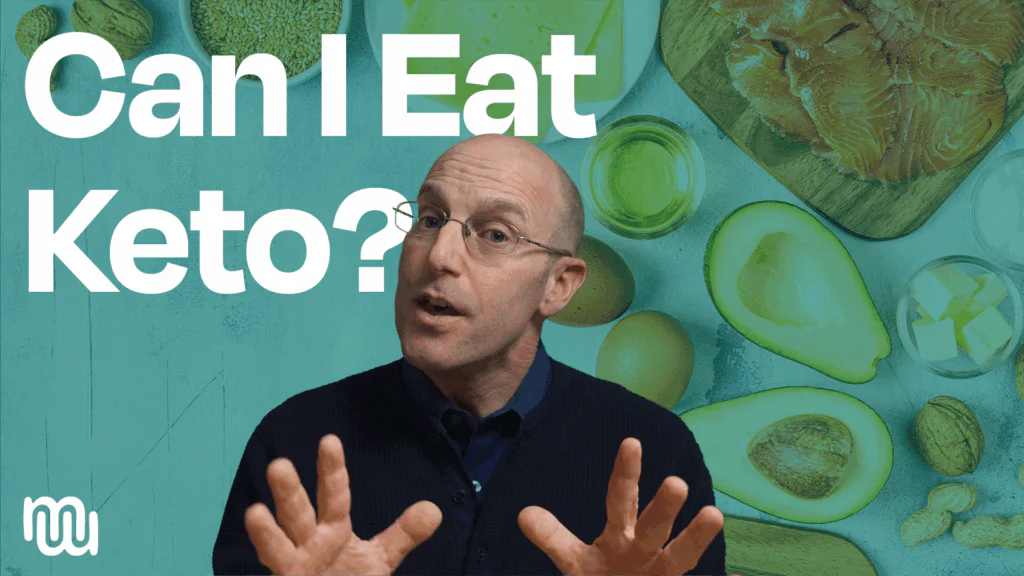
Worried keto isn’t safe with no gallbladder, gout, kidney issues, bariatric surgery, or high LDL? This Metabolic Mind episode explains why ketogenic therapy is often safe—and sometimes beneficial—when supervised: how to ramp fat without a gallbladder, manage early uric-acid changes, balance protein for kidney health, and individualize plans for cholesterol and heart disease.
Learn more
Explore metabolic therapies with Steven who put his bipolar 2 disorder into remission. Discover tips for beginners & pros on diet, lifestyle & wellness.
Read more
Can higher ketone levels really increase the risk of heart disease? Dr. Bret Scher takes a closer look at a recent study behind concerning headlines about ketones and cardiovascular risk, revealing why the findings don’t actually apply to nutritional ketosis or ketogenic diets—and why the distinction between correlation and causation matters when interpreting this research.
Learn more
Alzheimer’s and other forms of dementia are among the most feared consequences of aging, impacting nearly 7 million adults in the U.S. today, a number expected to double…
Learn more
Worried keto isn’t safe with no gallbladder, gout, kidney issues, bariatric surgery, or high LDL? This Metabolic Mind episode explains why ketogenic therapy is often safe—and sometimes beneficial—when supervised: how to ramp fat without a gallbladder, manage early uric-acid changes, balance protein for kidney health, and individualize plans for cholesterol and heart disease.
Learn more