Announcing the new McLean Center for Metabolic Psychiatry Learn more.


Listen, Watch & Subscribe on:


Do We Really Eat Too Much Protein?
Listen
About the host


Bret:
This is Metabolic Mind Bitesize. I’m Dr. Bret Scher. A new review published in the journal, Cell Press, is getting attention in mainstream and social media with the conclusion that I think deserves some serious pushback. The conclusion is we all eat too much protein. Cutting protein extends life. Have you seen those headlines?
As a cardiologist focused on metabolic health, I find this framing not just oversimplified, but potentially harmful. And I want to walk you through exactly why, because the, I guess you could say, the gap between what this research shows and what the headlines are claiming, it really matters for the decisions we make about what to put on our plate and what to eat.
So first, here’s something not often mentioned in the headlines. And the author themselves in this paper explicitly caution against protein restriction for older adults, for athletes or for any active individual, and for pregnant or lactating women, and people recovering from injury or illness. Now, think about who that excludes from the low protein recommendation.
Older adults, anyone who exercises regularly, anyone recovering from an illness or an injury. That’s not like a narrow carve-out. That’s probably most of the people likely to be reading the headlines, and possibly, changing their diet based on their headline. So, that’s a big problem. And if our goal is helping people live longer and better, maybe the conversation we should be having isn’t how to restrict protein, but how to help everyone become more physically active and metabolically healthy. Because that’s where the clearest human evidence points.
Now, that’s not to say there’s no credible science in this paper. No, not at all. The cellular biology and the proposed mechanisms are definitely worth noting but with caution and context. The longevity argument in this paper rests primarily on two cellular pathways: mTOR suppression and FGF21 activation.
So, mTOR, mechanistic or formerly called mammalian target of rapamycin, is a cellular signaling pathway that regulates growth and metabolism. Lower mTOR activity is associated in certain animal models with longer lifespan. Protein intake, particularly leucine and some other essential amino acids, activates mTOR.
So, the argument goes that eating less protein lowers mTOR activity and may extend lifespan. That’s the argument. FGF21, or fibroblast growth factor 21, is a metabolic hormone that responds to protein restriction and has been associated with various metabolic benefits in animal research. So, these are real mechanisms worth studying.
I’m not dismissing them. What I’m questioning is the leap from those potential mechanisms in rodent studies to population-level protein restriction for humans. Now, that just doesn’t make sense. And here’s why that leap is problematic. The dose, the timing, the context of mTOR activation in humans differs from rodents.
And critically, mice in controlled laboratory cages, they don’t get the real world consequences of inadequate protein intake like us humans do, right? They don’t develop frailty or fall and fracture a hip and lose the ability to live independently. The biological context is simply too different to translate directly into humans.
You’ve probably heard this term sarcopenia. The progressive loss of muscle mass and function that accompanies aging. It’s one of the leading drivers of physical disability, loss of independence, and all-cause mortality in older adults. It’s extraordinarily common, and I think probably under-appreciated in how we talk about healthy aging or health, in general.
And here’s what makes protein restriction particularly dangerous for this population. Aging muscles develop what researchers call anabolic resistance. This means older adults require more protein per meal, not less, to stimulate the same degree of muscle protein synthesis that when they were younger. So, the biology of aging demands more protein.
The clinical evidence on this is really consistent. For adults over 65, the daily protein intake in that range of 1.2 to 1.6 grams per kilogram of reference body weight. That’s linked to human clinical trials to greater muscle strength, lower rates of frailty, and better survival outcomes. Not theoretical longevity benefits extrapolated from rodent models. Actual measured survival in actual aging humans.
And remember, protein intake in that range is moderate, not high. It’s not excessive. It’s moderate. So, characterizing this as eating too much protein really misrepresents what the evidence actually shows about optimal intake for health. And next, you’ve probably heard people reference the protein RDA, saying that’s what we should all target, right?
But ah, remember the 0.8 grams per kilogram per day protein RDA was established as the minimum required to avoid protein deficiency in sedentary adults. It was derived from a sample population for maintaining neutral nitrogen balance, neither building nor losing muscle. It was never intended to define optimal protein intake for metabolic health, for muscle building, for physical activity, or active aging.
We should not confuse this deficiency floor of the RDA with health optimization. Skeletal muscle is our primary site for glucose utilization. Maintaining and building muscle through adequate protein combined with resistance training is one of the most powerful tools we have for preserving insulin sensitivity at any age.
So, sacrificing that metabolic foundation for theoretical benefits of mTOR suppression is, I don’t know, I think it’s a poor trade-off for actual human longevity. In my opinion, at least. Now, that’s not to say there aren’t some populations who may benefit from protein regulation. So, let’s take if someone in their late 40s. They’re overweight. They’re metabolically unhealthy. They’re sedentary.
Could higher protein intake correlate with poor health outcomes? Sure, it might. And that’s actually where I think the Cell paper has some legitimate credibility. In that specific context of poor metabolic health and inactivity, the associations being described may be real, although it may be driven by confounding variables too, but that’s another story.
But here’s the key insight. What happens when that same person improves their metabolic health and increases their physical activity? Suddenly, their protein needs go up. And the potential harm goes down. The relationship between protein and health outcomes isn’t fixed, right? It depends entirely on the metabolic context, and that’s how context changes everything.
And that’s exactly why blanket population-level protein restriction advice is simply the wrong approach. And also, remember, if we’re interested in these cellular outcomes, the reducing mTOR activation or promoting autophagy, there are plenty of other interventions with human evidence, right? Like intermittent fasting, regular exercise, maintaining lower insulin levels.
Each of these addresses the same cellular pathways without requiring us to sacrifice the muscle mass, the metabolic health benefits of adequate protein intake. That’s the research I’d actually like to see done head-to-head, which hasn’t been done. So, do we all eat too much protein? No, definitely not. The evidence does not support that conclusion for most people.
And actually, the evidence actively contradicts it for older adults, active individuals, and people focused on metabolic health. So, what the evidence does support is individualization, right? Protein requirements scale with age, activity level, and metabolic health status in ways that we need to pay attention to.
A blanket population-wide reduction isn’t evidence-based dietary guidance for the majority of humans. So, I’ll leave you with this question. What do you think will have a greater impact on human health and longevity? Telling people to lower their protein intake or helping them become more metabolically healthy through adequate protein, regular resistance training, and lower circulating insulin levels?
I know where I stand. And yeah, is that a straw man? Maybe, but lowering protein can prevent those latter points that I’m making.
Listen, Watch & Subscribe on:
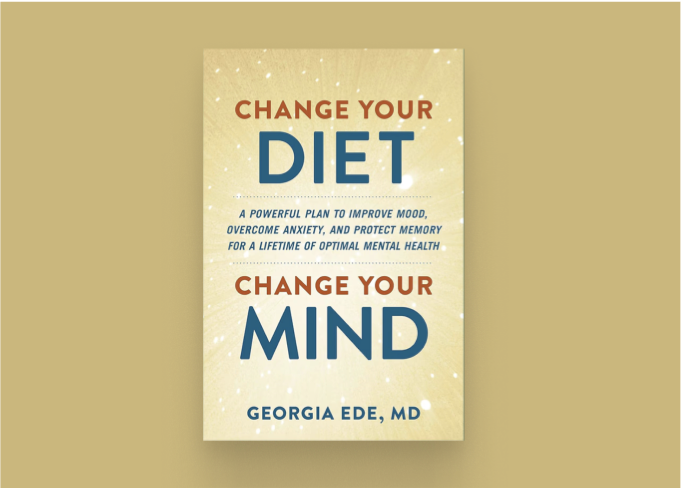
A powerful plan to improve mood, overcome anxiety, and protect memory for a lifetime of optimal mental health.
Read more
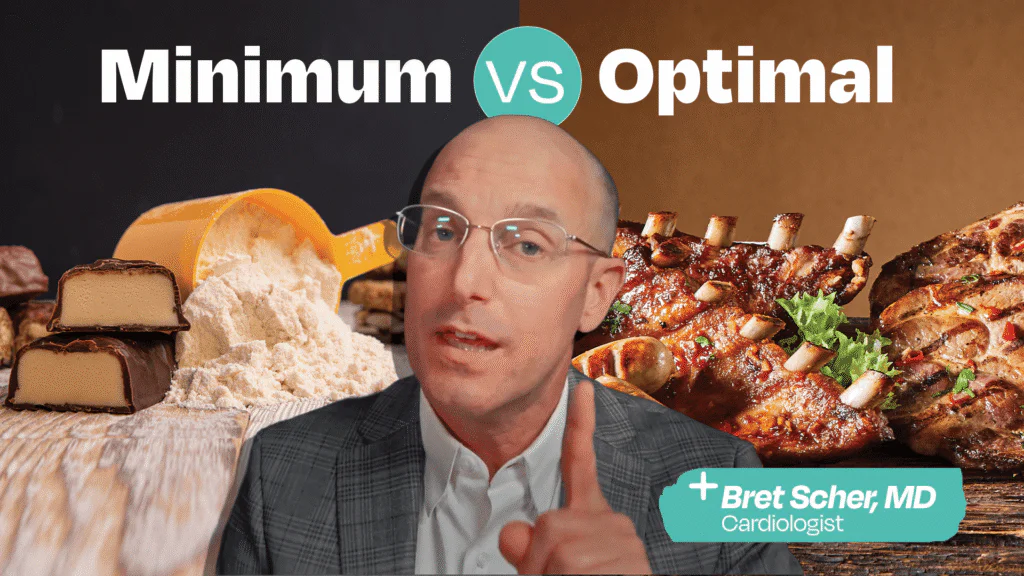
Dr. Bret Scher responds to criticism of new federal protein guidelines that would roughly double current recommendations, arguing the old 0.8 grams per kilogram standard was only designed to prevent muscle loss, not support optimal health. He makes the case for 1.2 to 1.6 grams per kilogram from whole food sources, addressing concerns that higher protein targets might push people toward processed protein products, and emphasizes better food literacy as the real solution.
Learn more

(I was excited to be invited to participate in the Nutrition Network and Metabolic Health India collaborative training, Vegetarian Low-Carb Lifestyle. This course includes ten expert-led modules and covers…
Learn more
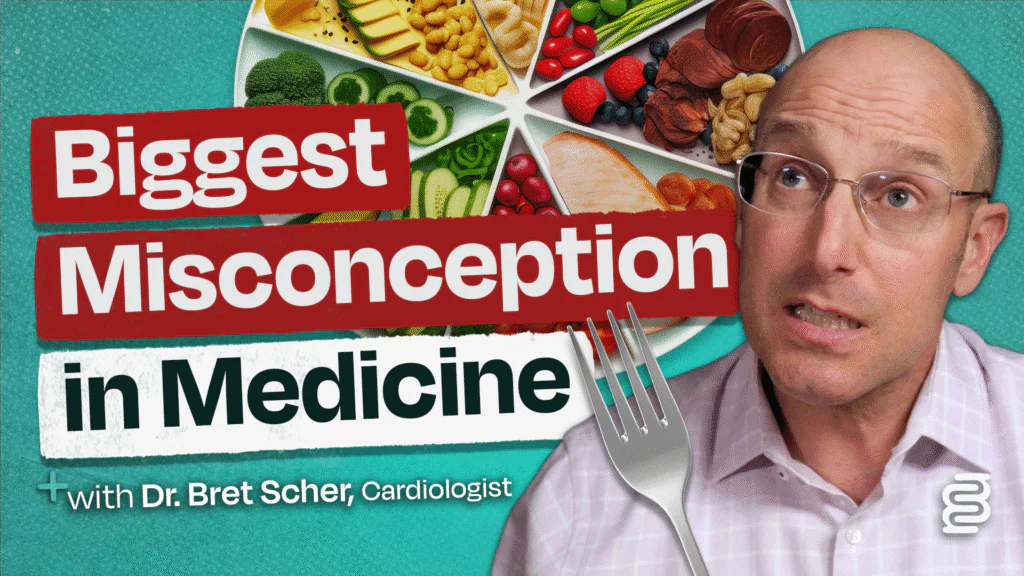
Dr. Bret Scher challenges the idea that one low-fat, high-carb diet works for everyone, arguing it rests on weak evidence and has hurt collective metabolic health. He explains that people respond differently to different diets, and for those with insulin resistance, low-carb and ketogenic approaches can be especially effective. Rather than one "best" diet, the episode calls for personalized nutrition that helps each person find a sustainable approach that works for them.
Learn more
A powerful plan to improve mood, overcome anxiety, and protect memory for a lifetime of optimal mental health.
Read more
Dr. Bret Scher responds to criticism of new federal protein guidelines that would roughly double current recommendations, arguing the old 0.8 grams per kilogram standard was only designed to prevent muscle loss, not support optimal health. He makes the case for 1.2 to 1.6 grams per kilogram from whole food sources, addressing concerns that higher protein targets might push people toward processed protein products, and emphasizes better food literacy as the real solution.
Learn more
(I was excited to be invited to participate in the Nutrition Network and Metabolic Health India collaborative training, Vegetarian Low-Carb Lifestyle. This course includes ten expert-led modules and covers…
Learn more
Dr. Bret Scher challenges the idea that one low-fat, high-carb diet works for everyone, arguing it rests on weak evidence and has hurt collective metabolic health. He explains that people respond differently to different diets, and for those with insulin resistance, low-carb and ketogenic approaches can be especially effective. Rather than one "best" diet, the episode calls for personalized nutrition that helps each person find a sustainable approach that works for them.
Learn more