
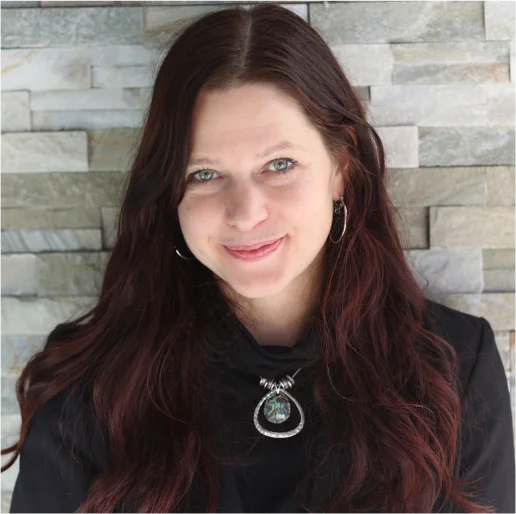

(I was excited to be invited to participate in the Nutrition Network and Metabolic Health India collaborative training, Vegetarian Low-Carb Lifestyle. This course includes ten expert-led modules and covers topics ranging from autoimmune disease and diabetes to endurance, muscle building, women’s health, and more. My module was published in its entirety on the Metabolic Mind YouTube channel, so it’s available to watch for free. At the end of this article, I have included the Resource List that accompanies the course.)
Why I Became a Vegetarian
I remember the sinking feeling in the pit of my stomach when I first came to understand that the meat on my plate was once a living, breathing animal. I couldn’t believe it. I thought about how I had unknowingly consumed animals I loved: chickens, pigs, cows, turkeys, and deer. I felt nauseous. I was only three years old. After that realization, I was adamant that I would never eat an animal again. I was so young and clueless that I didn’t really understand what was and wasn’t meat. I clearly recall a moment at a mall when I learned, to my disappointment, that the corndog I always ordered on visits there was meat and something I could no longer eat now that I was vegetarian. My parents were kind enough to humor me, certain it was a phase I would grow out of: now, at 42, I think it is safe to say it isn’t.
This visceral feeling of disgust I get at the thought of eating a dead animal has never been a moral judgment on anyone else’s decision to eat meat, but it has undoubtedly felt like an intrinsic part of who I am. I understand intellectually that you can love animals and eat them; I even have a friend who only eats animals when she has hunted and killed them herself. She sees the hunt as a way of honoring the animal and connecting with the sacredness of the circle of life, and I can respect her perspective. But for me personally, eating meat still feels unnatural, inherently unaligned with my own orientation toward life.
Discovering ketogenic therapy as a treatment for my bipolar 1 disorder, I never considered reintroducing meat into my diet; I only thought about how to make a vegetarian ketogenic approach work for me. While there are always exceptions to any rule, for the most part, there is absolutely no reason someone needs to compromise on their vegetarian or vegan dietary preference to be successful with ketogenic therapy.
Working in the field of metabolic psychiatry for the last few years, I definitely feel like a bit of an odd one out as a vegetarian. I am Community Engagement and Advocacy Manager at Metabolic Mind, where we shout it from the rooftops that ketogenic therapy is not “one specific diet,” but a very versatile method of eating that gets one into the state of ketosis. However, I am definitely mostly surrounded by people who celebrate meat consumption, including lots of passionate carnivores, and only a sprinkling of other vegetarians and vegans. I do believe this will change rapidly as metabolic psychiatry increasingly gains mainstream recognition.
Whether or not one believes it is optimal for one’s health to eat meat, I find the idea that health is defined solely by biological mechanisms too reductionistic. Humans are complex, and we are more than our physical bodies. I prefer to think of my health in terms of a psychosomatic dance, where there is a feedback loop between my biology and consciousness, self, soul, whatever you want to call it.
For many people, eating meat is clearly healthy. But for someone like me, who became a vegetarian as a child due to deeply felt emotions, I truly believe that eating meat would harm my health from a holistic perspective; if I altered this essentially lifelong personal value, it would take a psychological toll and create a sense of disharmony that would surely outweigh any purely physiological benefits.
While I didn’t understand it as a child, I would classify my desire to be vegetarian as a spiritual orientation of sorts. Many individuals like me choose to be vegetarian based on spiritual, religious, or ethical reasons. It is important to honor those subjective decisions and to highlight that ketogenic therapy is still an option. For those of us drawn to this path, vegetarianism and ketogenic therapy can work as a harmoniously integrated, ongoing lifestyle. I also find it interesting that many religious traditions, including strands of Christian mysticism, Buddhism, and Hinduism, pair meat abstention with intensive fasting, prayer, meditation, and contemplation, inducing a state of ketosis through a practice that is both meat-free and deeply spiritual.
Evolution of My Metabolic Therapies and Approaches: Humility and Openness
Metabolic therapies are not a static protocol. They are a dynamic process that evolves with you over time. I’ve been implementing them for over five years, and I’ve run plenty of experiments along the way. This year’s biggest change has been really committing to heavy strength training for the first time in my life: four days a week in the gym, compound movements like barbell back squats and deadlifts, and upper-body work like bench presses. I’ve been really enjoying the process of getting stronger. It’s also meant intentionally optimizing my protein intake in a way I never have before.
That’s what got me tracking in Cronometer for the first time in my metabolic therapies journey. In my first article on vegetarian keto, I wrote about not needing to track macros. Given how much tracking has helped me, I now recommend integrating it right away if you feel capable and have the bandwidth. If you don’t, a simple, intuitive approach guided by progress over perfection can still be highly effective. Initially, I paid attention to carb limits, ate intuitively, and measured my ketones. It worked beautifully and put all of my bipolar 1 symptoms into remission. But once I started tracking to optimize protein for muscle-building, I was also able to see micronutrient targets, and this led me to an unexpected revelation: I’d been heavily immersed in the metabolic health space for three years, surrounded by carnivore-leaning and meat-centric content, and it had clearly shaped me more than I realized. Without noticing, I had gradually started eating fewer vegetables, subliminally susceptible to messaging that wasn’t actually in my own best interest.
When I consciously increased my vegetable intake again to hit my micronutrient targets in Cronometer, I started feeling better almost immediately and enjoying my food more. My HRV also improved dramatically. That experience taught me to pay even closer attention to my subjective experience and biomarkers, and to be more deliberate about how I guard against subconscious influence from outside information. Community has real power, but it also carries the risk of groupthink. Ketogenic therapy has had such an undeniable impact on my life that it’s tempting to tip from enthusiasm into dogmatism. So at this stage, I’m making a conscious effort to keep exposing myself to different ideas about health and nutrition, rather than settling into one echo chamber.
My relationship to food, and arguably to life in general, has increasingly become about focusing on what I enjoy and relish rather than what I’m avoiding. I explored this in more depth in an earlier piece, 3 Neurogastronomy Tips for Happy, Healthy Holidays in Ketosis (especially relevant heading into this year’s holiday season), which looks at how language shapes our perception of food, and how framing choices in indulgent rather than restrictive terms improves dietary satisfaction. For me, this means that instead of fixating on what I’ve cut out of a meal (no sugar, no dairy, meat-free, etc.), I focus on its deliciousness: thinking in terms of “rich and creamy,” flavorful, colorful, delectable. The same instinct applies to the ingredients themselves. I find it works better for me to embrace the positive, medicinal properties of a dish—the polyphenols, antioxidants, and nutrients—than to think about what I am avoiding.
That said, positive framing is still a balancing act shaped by individual physiology. My own approach to ketogenic therapy has largely been dairy-free vegetarian (I do eat eggs). I experimented with reintroducing dairy and noticed subtle but real mental and physical symptoms, so I’ve chosen to steer clear of it. Vegetables, on the other hand, clearly suit me.
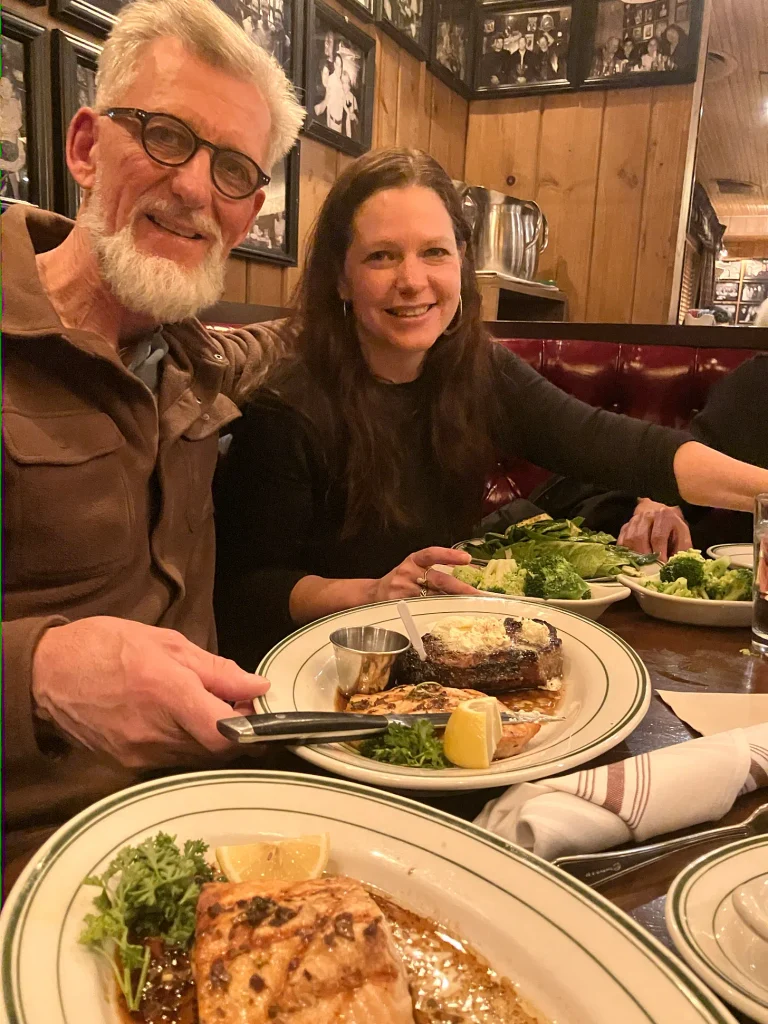
I have many friends who are carnivore or carnivore-adjacent, and I’ve seen firsthand how well that approach can work for them. For some, it’s the right fit because of sensitivities or autoimmune responses to certain vegetables; for others, it’s simply the way of eating that makes them feel their best. But I’ve learned I don’t need to extrapolate other people’s results onto my own path. I love the taste of vegetables and how they make me feel, and one person’s anti-nutrients are another person’s mitohormesis, a micro-stressor that actually confers benefits. Understanding and embracing your own path is what matters most for your own health.
This is a strange and interesting time to be navigating personal health, with so many individuals and influencers pushing conflicting narratives. Until now, I’ve largely shied away from sharing nutrition specifics beyond the raw power of ketosis itself, because I hope we’re moving toward a future of precision metabolic psychiatry, one where care is built around an individual’s phenotype, their particular response to specific foods, and their own values and preferences. I never want to proclaim any one approach is the end-all, be-all for everyone, and I believe these conversations deserve individualization and nuance. For now, I’ll keep basing my decisions on what feels subjectively right to me, tested through my own experiments and data.
Humility and Curiosity as a Path Forward
One of the most important things ketogenic therapy has taught me is humility—the reminder that you can’t know what you don’t know. Before I discovered ketogenic therapy, I believed all the usual stereotypes: that keto was an unsustainable fad-diet, bad for your heart, and unwise long-term.
What first opened me up to a ketogenic diet was noticing how amazing I felt during extended fasting and eventually realizing that feeling came from a state of ketosis. That discovery made me receptive when I later came across Dr. Christopher Palmer’s brain energy theory and the concept of metabolic psychiatry.
When I learned firsthand how powerful ketogenic therapy can be for psychiatric conditions, it was incredibly humbling. It taught me to stay receptive to new information and to remember that even engrained preconceptions, the ones so tightly held that they feel like simple truth, can be wrong. Now, I hold my beliefs a bit more loosely, knowing I may look back and see them differently. That’s liberating, in a way: it frees me to take the next best step based on what I understand right now, with the constant disclaimer “based on what I understand today…”—and the willingness to change my mind when I understand more tomorrow.
If there’s one thing I hope you take from this piece, it’s permission to treat your own approach to optimal health as an ongoing experiment rather than a fixed identity. Whatever dietary path you’re drawn to, or whatever values shape your choices, know that metabolic therapies are an ongoing adventure, and that you’re allowed to keep learning, adapting, and growing as you go.
Vegetarian & Vegan Keto for Metabolic and Mental Health
Course References
- Abram, S. V., Kyner, J. M., Vu, A., Naeem, Z., Sethi, S., Jacob, M. S., Fryer, S. L., Mathalon, D. H., & Ford, J. M. (2026). Metabolic improvements with a ketogenic diet correlate with symptom improvement in psychosis: A randomized controlled trial. Schizophrenia Bulletin, 52(4), Article sbag082. https://doi.org/10.1093/schbul/sbag082
- Brietzke, E., Fabe, J., Bambokian, A., Breda, V., Chaves, C., Shelp, J., Terpstra, A., Koning, E., Groll, D., Milev, R., McIntyre, R. S., Mansur, R. B., Soares, C. N., & Gomes, F. A. (2025). Medically supervised ketogenic diet as an adjunctive treatment for moderate to severe depression: A pilot study. Journal of Affective Disorders, 399, Article 121079. https://doi.org/10.1016/j.jad.2025.121079
- Calkin, C. V., Chengappa, K. N. R., Cairns, K., Cookey, J., Gannon, J., Alda, M., O’Donovan, C., Reardon, C., Sanches, M., & Ruzickova, M. (2022). Treating insulin resistance with metformin as a strategy to improve clinical outcomes in treatment-resistant bipolar depression (the TRIO-BD study): A randomized, quadruple-masked, placebo-controlled clinical trial. Journal of Clinical Psychiatry, 83(2), Article 21m14022. https://doi.org/10.4088/JCP.21m14022
- Campbell, I. H., Needham, N., Grossi, H., Kamenska, I., Luz, S., Sheehan, S., Thompson, G., Thrippleton, M. J., Gibbs, M. C., Leitao, J., Moses, T., Burgess, K., Rigby, B. P., Simpson, S. A., McIntosh, E., Brown, R., Meadowcroft, B., Creasy, F., Mitchell-Grigorjeva, M., … Smith, D. J. (2025). A pilot study of a ketogenic diet in bipolar disorder: Clinical, metabolic and magnetic resonance spectroscopy findings. BJPsych Open, 11(2), Article e34. https://doi.org/10.1192/bjo.2024.841
- Clarke, C., & Neidler, S. (2022, September 30). A comprehensive guide to the vegan ketogenic diet (with meal plan). Ruled.me. https://www.ruled.me/comprehensive-guide-vegan-ketogenic-diet/
- Cole, W. (2018). Ketotarian: The (mostly) plant-based plan to burn fat, boost energy, crush cravings, and calm inflammation. Avery.
- Danan, A., Westman, E. C., Saslow, L. R., & Ede, G. (2022). The ketogenic diet for refractory mental illness: A retrospective analysis of 31 inpatients. Frontiers in Psychiatry, 13, Article 951376. https://doi.org/10.3389/fpsyt.2022.951376
- Decker, D. D., Patel, R., Cheavens, J., Hayes, S. M., Whitted, W., Lee, A. J., Buga, A., Robinson, B. T., Crabtree, C. D., Kackley, M. L., Stoner, J. T., Sapper, T. N., Chebbi, A., & Volek, J. S. (2025). A pilot study examining a ketogenic diet as an adjunct therapy in college students with major depressive disorder. Translational Psychiatry, 15, Article 322. https://doi.org/10.1038/s41398-025-03544-8
- Derseweh, N. (2019). The vegan ketogenic diet cookbook: 75 satisfying high-fat, low-carb recipes. Rockridge Press.
- Dietch, D. M., Kerr-Gaffney, J., Hockey, M., Marx, W., Ruusunen, A., Young, A. H., Berk, M., & Mondelli, V. (2023). Efficacy of low carbohydrate and ketogenic diets in treating mood and anxiety disorders: Systematic review and implications for clinical practice. BJPsych Open, 9(3), Article e70. https://doi.org/10.1192/bjo.2023.36
- Ede, G. (2024). Change your diet, change your mind: A powerful plan to improve mood, energy, and focus. Grand Central Publishing.
- Ede, G., & Metabolic Mind. (n.d.). Dr. Georgia Ede’s guide to ketogenic diets & psychiatric medications. Metabolic Mind. https://www.metabolicmind.org/resources/topics/keto-and-psych-meds/
- Ede, G., Bernstein, M., Calabrese, L., Campbell, I. H., Laurent, N., Palmer, C. M., Sethi, S., & Zupec-Kania, B. (2026). Awareness and best practices in using ketogenic therapy to treat serious mental illness: A modified Delphi consensus. Frontiers in Nutrition, 13, Article 1749406. https://doi.org/10.3389/fnut.2026.1749406
- Frank, G. K. W., Scolnick, B., Beckwith, C., Shott, M. E., Kilty, S., Swindle, S., Lutter, M., & Rho, J. M. (2026). Symptom impact and safety of ketogenic therapy in adults with anorexia nervosa: A feasibility trial. Communications Medicine, 6, Article 315. https://doi.org/10.1038/s43856-026-01644-0
- Gao, M., Kirk, M., Knight, H., Lash, E., Michalopoulou, M., Guess, N., Stevens, R., Browning, M., Weich, S., Burnet, P. W. J., Jebb, S. A., & Aveyard, P. (2026). A ketogenic diet for treatment-resistant depression: A randomized clinical trial. JAMA Psychiatry, 83(4), 331–340. https://doi.org/10.1001/jamapsychiatry.2025.4431
- Kubala, J. (2018, June 12). Vegan keto diet guide: Benefits, foods and sample menu. Healthline. https://www.healthline.com/nutrition/vegan-keto-diet
- MacDowell, L. (2018). Vegan keto: 100+ plant-based recipes to low-carb, high-fat living. Victory Belt Publishing.
- MacDowell, L. (n.d.). Meat free keto shop and plant-based ketogenic resources. Meat Free Keto. https://meatfreeketo.com/vegan-keto-shop/
- Metabolic Mind. (2023a, February 14). Dr. Chris Palmer on personalized mental health care with the THINK+SMART model [Video]. YouTube.
- Metabolic Mind. (2023b, May 10). Protein on keto: How much is too much? With Dr. Bret Scher [Video]. YouTube.
- Metabolic Mind. (2023c, November 28). Carnivore vs. vegan keto: Can both work? [Video]. YouTube.
- Metabolic Mind. (2026, September 16). Vegan keto and bipolar disorder: Dyane Harwood’s story [Video]. YouTube.
- Metabolic Mind. (n.d.-a). Clinician training and CME courses in ketogenic therapy. Metabolic Mind. https://www.metabolicmind.org/for-clinicians/trainings-courses/
- Metabolic Mind. (n.d.-b). Navigate your care: Resources for peers and families. Metabolic Mind. https://www.metabolicmind.org/peers-families/navigate-your-care/
- Metabolic Mind. (n.d.-c). Research database: Peer-reviewed studies in metabolic psychiatry. Metabolic Mind. https://www.metabolicmind.org/resources/science/research-database/
- Metabolic Mind. (n.d.-d). THINK+SMART: Free metabolic psychiatry education program. Metabolic Mind. https://www.metabolicmind.org/thinksmart/
- Miller, V. J., Villamena, F. A., & Volek, J. S. (2018). Nutritional ketosis and mitohormesis: Potential implications for mitochondrial function and human health. Journal of Nutrition and Metabolism, 2018, Article 5157645. https://doi.org/10.1155/2018/5157645
- Palmer, C. M. (2022). Brain energy: A revolutionary breakthrough in understanding mental health—and improving treatment for anxiety, depression, OCD, PTSD, and more. BenBella Books.
- Picard, M. (n.d.). The science and experience of energy [Substack newsletter]. TSE Energy.


