Announcing the new McLean Center for Metabolic Psychiatry Learn more.


Listen, Watch & Subscribe on:



Cholesterol Results Explained: Beyond the LDL Number
Listen
About the host


Bret:
This is Metabolic Mind Bitesize. I’m Dr. Bret Scher. You just got your labs back. And there’s a big red flag next to your LDL number, and your stomach drops a little bit. Here’s what I want you to know in that situation. That red flag is telling you almost nothing about you. I’m Dr. Bret Scher. I’m a cardiologist, a lipidologist, and I’ve seen this exact moment play out hundreds of times in my practice.
A patient comes in anxious about a number on a sheet of paper, and the big red flag next to it. And what they actually need is a conversation, and not the big red mark like you failed an exam, right? So, that’s what this video is. It’s a conversation about how to read a cholesterol panel. We’re going to go number by number and talk about what they mean, what the 2026 guidelines say, and I’ll tell you the places where I think a little extra perspective is warranted beyond the guidelines.
Now, we’ve got to get this out of the way from the beginning. I know some people dismiss LDL as unimportant. I don’t believe that. I think it’s clear that LDL and ApoB are part of the atherosclerotic process. But I do believe we need to put them into context, and that’s what I want to help you better understand with talking about how to read a lipid test.
So, let’s start with the most important thing. LDL is not the whole story. LDL is one line on a sheet of paper that also gives you triglycerides, HDL, total cholesterol, and non-HDL cholesterol. Reading LDL in isolation as good or bad is looking at a fraction of the picture, and it’s the wrong way to read a lipid panel.
So, here’s what I mean. Let’s take potassium, for example. Potassium pretty much has a universal range. Below a certain level, your heart can have serious arrhythmias. Doesn’t matter who you are. If you are below a certain level, you’re in trouble. Hematocrit’s another one. It has a fairly universal normal below which we know oxygen delivery in the blood is impaired.
LDL is not like that. Not at all. What your LDL means depends entirely on the rest of you. So, a healthy 32-year-old with no family history, and a 72-year-old with two cardiac stents can both walk into my office with an LDL of 130 milligrams per deciliter. Same number, but completely different clinical picture.
So, interpreting LDL requires a discussion and a broader evaluation. If your potassium is 2.5, I don’t care about your metabolic health, your family history or any of that. I care about getting your potassium up. But for your LDL, I need to know all that and more to make sense of it. Now, there is one exception that the 2026 guidelines make.
An LDL above 190 is flagged as high-risk, regardless of who you are. And you go on a medication because that’s often associated with familial hypercholesterolemia. It’s a genetic condition affecting roughly one in 250 people that does increase the risk of cardiovascular disease at a young age. But here’s my pushback.
There’s plenty of data showing people with LDL at that level who don’t have heart disease, and plenty who have high LDL without having FH. So, even there, I don’t accept an automatic high-risk label, like the potassium or hematocrit, right? Instead, I take note, and I have a thoughtful conversation, and I evaluate it more.
And if you go that route, make sure you’re talking with a clinician who knows how to properly diagnose FH because not every LDL above 190 equals FH. Now, whether or not that affects the treatment, treatment still may be the right answer. But it doesn’t have to be an automatic assumption of a genetic abnormality.
Okay, so that’s that caveat. Now, before we go into LDL targets, though, I want to talk about triglycerides and HDL because I can’t tell you how many patients have told me their doctor never even mentioned those numbers, and they only looked at LDL. Now, whether or not that’s true, I guess doesn’t matter because it was the patient’s experience, which means that’s mostly where the conversation went or didn’t go.
So, let’s go there now, right? So, for triglycerides, the lab report probably calls anything under 150 milligrams per deciliter normal. I’d say 150 is normal for a metabolically unhealthy population. But in my patients, I want to see triglycerides under 100. I know that’s aggressive, but I think it’s important.
But even more than the raw number, I care about the triglyceride-to-HDL ratio. I like it under 1.5. And again, that’s aggressive according to published studies. Most published insulin resistant cutoffs sit between two and three, but I’m not trying to optimize for average. I want to see metabolic health optimal, not just pretty good.
And I know the term “optimal” is tough to define and squishy, but that’s a discussion worth having. And I want to move towards that benchmark of a triglyceride-to-HDL ratio below 1.5. Now, one important caveat, the ratio doesn’t behave the same for everyone. So, for example, Black patients tend to have lower triglycerides at the same degree of insulin resistance. So, the cutoff may need to be interpreted differently, but that’s exactly why these numbers require context and not an absolute cutoff.
Okay, so what about HDL? You may have heard that HDL really doesn’t matter because multiple trials of drugs that raised HDL failed to prevent heart attacks. But that’s a misinterpretation of the data. Failing to prevent heart attacks with a drug is not the same as saying HDL completely doesn’t matter.
Low HDL is a very reliable marker of metabolic dysfunction and still tracks with higher cardiovascular risk. In fact, in the early Framingham data, HDL was a better predictor of heart disease than elevated LDL. So yes, HDL matters. And the general cutoffs are, you don’t want it below 40 for men or 50 for women. But here’s the distinction I always make. Raising HDL with a drug that does nothing to address the underlying metabolic dysfunction is very different from having HDL increase because someone changed their diet, started exercising, lost visceral fat.
In that case, the rising HDL is a signal that the underlying problem is getting better. And that will absolutely reduce cardiac risk. So, that’s the trend I want to see. Now, one more HDL caveat. Genetically very high HDL, like 90 or higher for your entire life, is not necessarily beneficial, unfortunately.
Some people in that range have genetically high HDL that’s actually dysfunctional. So again, the number matters less than why the number is what it is. Two more things to discuss. One is Lp(a). Lp(a) is not on the standard lipid panel. But the 2026 guidelines now recommend that every adult have their Lp(a) measured at least once in their lifetime.
It’s a separate kind of genetic risk factor, you can think of, that can refine your overall cardiovascular risk picture. And despite it being in the guidelines, you may still need to ask your doctor specifically for it. The second thing to discuss is ApoB. And in reality, we shouldn’t even be talking about LDL.
We should be talking about ApoB. But ApoB is still underused, and LDL is the most common lipid test on the standard lipid profile. But don’t be afraid to ask your provider for an ApoB test. And if you want to learn more about the difference between ApoB and LDL, we have an entire video that you can watch on this topic that I recommend.
Now, let’s get into what I promised in the beginning. What’s your LDL number actually mean? So remember, it means almost nothing on its own. So, to put it in perspective, the 2026 guidelines use a new risk calculator, called PREVENT. The older calculator, the pooled cohort equations, they really overestimated risk. So, people were being told they were at higher risk than they actually were.
Now, I find this interesting. So, there’s this concern, which is legitimate, that medicine keeps moving the goalposts with lower thresholds to put more people on more medications. And in this specific case, though, it’s kind of the opposite. The new calculator actually goes the other direction. The risk estimates came down, and that’s worth noting.
Although we’ll circle back to this later because the targets do continue to get lower, but so we’ll talk about that. But remember, the calculators are evidence-informed estimates, not absolutes. They are estimates, and therefore, should spark a conversation rather than absolutely dictating care. And I think that’s where the medical practice often breaks down.
We miss that last stage of translating a population-based estimate to you as an individual. So, the calculator uses factors, like age and blood pressure and body mass index, kidney function, smoking, diabetes status, and of course, your lipid profile, and puts you into one of four categories: low risk, borderline, intermediate, or high-risk.
And from there, it adjusts what are called risk enhancers. Things like family history and obesity, inflammatory conditions like lupus or rheumatoid arthritis and others. And based on this analysis, it gives a recommendation for treating or not treating LDL and how aggressively to treat. And I need to stop here again for a personal clarification.
We’ve been talking about LDL. But high LDL, by itself, doesn’t cause heart attacks or strokes. Arterial plaque causes heart attacks or strokes. So, LDL isn’t the disease. Vascular disease is the disease. And the guidelines recognize this to a degree, and they include coronary calcium testing for those at borderline and intermediate risk.
So, coronary calcium score is a quick non-contrast CT scan that looks at calcium in your actual arteries. Not a formula estimating your risk of having disease based on population data, but actually screening you, as an individual, for vascular disease. Now, CT scans for coronary calcium aren’t perfect. But for men over forty and women over forty-five, it is a good test to refine cardiac risk.
And of course, I believe a coronary CT angiogram is even better. But those are more difficult to get, and are therefore, not included in the guidelines. And again, we have a video dedicated to explaining the difference. So, check that out for more information if you’re interested. All right. I keep talking about other things rather than LDL, which I guess says a lot about my perspective, namely that LDL is only a small part of the picture.
But let’s talk about the targets. And this is where it gets a little more controversial because this is where the goalposts have moved the most over the past few decades. Here’s where the 2026 guidelines land. For someone who is borderline or at intermediate risk, the goal LDL is under 100.
High-risk or established heart disease, it’s LDL under 70. And very high-risk, LDL over 55. Now, in reality, most patients with established heart disease end up with this under 55 target. And for high-risk patients, the guidelines still want at least a 50% reduction from the baseline number on top of hitting that goal number.
Okay? So, for a lot of people looking at that, that’s pretty low. And these targets have continued to get lower and lower over time. But here’s an important perspective. These goals aren’t completely made up. They are derived from studies demonstrating a reduction of cardiovascular events at those levels.
So, it’s accurate to say it’s evidence-based. But it’s not enough to simply call them evidence-based. We still need to know more, like how much of an absolute benefit is there at these lower targets? Because there’s definitely diminishing returns. And what about mortality? Are we just talking about cardiac events, or are we talking about all-cause mortality?
And which people benefited the most? And as you push drugs higher and higher to get to those lower doses, are there higher side effects at the higher doses, right? Those are all fair questions that make the recommendations far less absolute in my mind. For instance, is it really worth starting a drug for someone with borderline risk with an LDL of a hundred and twenty but no plaque?
Again, for me, that’s a discussion, not a reflex prescription by any means. Remember, not everyone wants to take a medication, and that’s someone’s right to choose. Some people will value their own agency and their bodily autonomy more. They value present certainty over the future possibility, right?
And for some, the psychological burden of giving that up degrades their quality of life. So, who are we as clinicians or guideline writers or whoever to say that they’re wrong or they’re worse off? We need to respect that. Numerical guidelines don’t capture that aspect. That’s up to us as humans to incorporate, right?
Here’s another example. What about someone with coronary disease whose LDL is 65, and they’re already on multiple medications? Is it worth adding to the growing polypharmacy for a small absolute event reduction to get them below 55? Again, that’s a really important conversation and not a reflex prescription.
So, you can see how LDL, by itself, means nothing, needs to be put into context. And in my mind, really, all this even takes a backseat to making sure someone’s metabolic health is being addressed. Lowering someone’s LDL as low as you can get it while not aggressively addressing their insulin resistance, to me, is like using Scotch tape to plug a leaky dam, right?
It might make you feel better for a little bit, but it isn’t going to solve the problem. After all, looking at even the best LDL-lowering trials, the further you get LDL can reduce cardiac events by a small absolute amount. But it does not eliminate them. Not even close. So, it’s clear there are other issues to address, and I think metabolic health really rises up there to the top.
Okay, I’m going to take a little breath here because I know that got a little complicated, but it should be complicated, right? We do all of us a disservice when we try to simplify LDL to a number or an equation. It’s good or it’s bad. Remember, the key message is that your LDL isn’t a clear normal or abnormal like for potassium levels.
So, when you get your labs back, and you see a flagged number, don’t panic. But don’t ignore it, right? Look at the whole panel. Ask your doctor about your triglycerides, about your HDL, your triglyceride-to-HDL ratio. Ask about your Lp(a) or your ApoB. Ask what your PREVENT score is, and whether a calcium scan or maybe even a CT angiogram makes sense for you.
It’s complicated, but it should be. You have more agency over your health than most people realize, and you can have access to more information that helps make better decisions than any one single number on a lab sheet can.
Listen, Watch & Subscribe on:

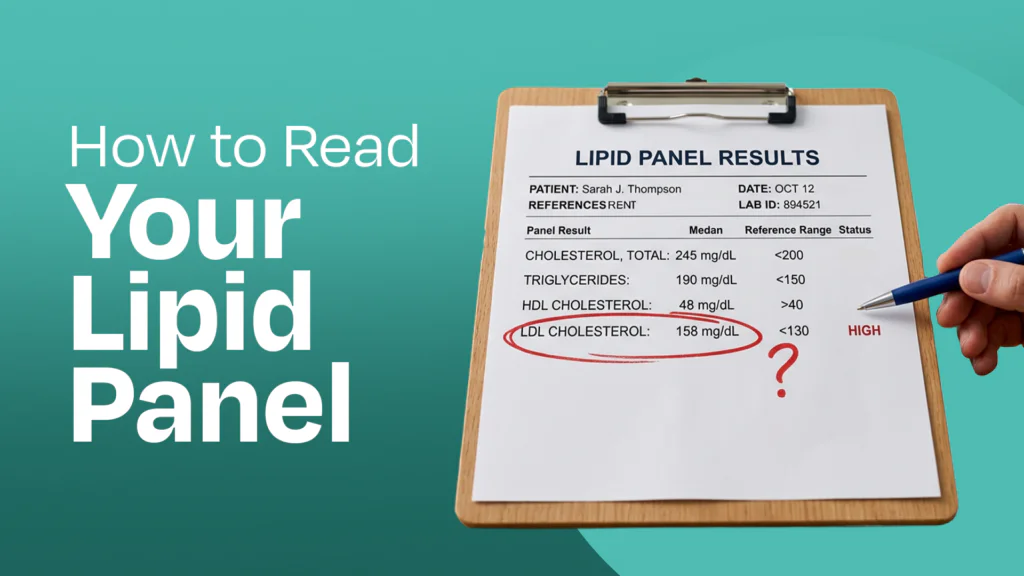
You open your latest lab results and see your LDL highlighted in red. Your stomach drops. You haven’t even met with your doctor yet to go over the…
Read more
In this Metabolic Mind Bitesize episode, Dr. Bret Scher tackles a new study claiming ketogenic diets worsen fatty liver disease, a finding that appears to contradict prior research showing keto helps treat fatty liver. He breaks down why this retrospective cross-sectional study from China is deeply flawed, from never verifying ketosis to ignoring reverse causality and baseline differences, then contrasts it with a much stronger body of randomized controlled trial evidence showing the opposite conclusion.
Learn more
Dr. Bret Scher examines a new trial showing the drug olezarsen dramatically lowered triglycerides and ApoB, yet produced zero reduction in coronary artery plaque. He uses this as a case study for a broader point: lowering a lab number with a drug isn't the same as fixing the underlying metabolic dysfunction that caused it, drawing parallels to blood sugar, blood pressure, and weight management medications.
Learn more

In this video, board-certified cardiologist (and Metabolic Mind’s Medical Director) Dr. Bret Scher dives into the latest science of triglyceride-rich particles and their impact on metabolic health. Learn…
Learn more
You open your latest lab results and see your LDL highlighted in red. Your stomach drops. You haven’t even met with your doctor yet to go over the…
Read more
In this Metabolic Mind Bitesize episode, Dr. Bret Scher tackles a new study claiming ketogenic diets worsen fatty liver disease, a finding that appears to contradict prior research showing keto helps treat fatty liver. He breaks down why this retrospective cross-sectional study from China is deeply flawed, from never verifying ketosis to ignoring reverse causality and baseline differences, then contrasts it with a much stronger body of randomized controlled trial evidence showing the opposite conclusion.
Learn more
Dr. Bret Scher examines a new trial showing the drug olezarsen dramatically lowered triglycerides and ApoB, yet produced zero reduction in coronary artery plaque. He uses this as a case study for a broader point: lowering a lab number with a drug isn't the same as fixing the underlying metabolic dysfunction that caused it, drawing parallels to blood sugar, blood pressure, and weight management medications.
Learn more
In this video, board-certified cardiologist (and Metabolic Mind’s Medical Director) Dr. Bret Scher dives into the latest science of triglyceride-rich particles and their impact on metabolic health. Learn…
Learn more