New Results: First RCT for Schizophrenia & Bipolar Disorder. Learn more.


Listen, Watch & Subscribe on:



“Can Drinking Ketones Help Treat Mental Illness?” featuring Dr. Karin Huizer
Listen
About the host
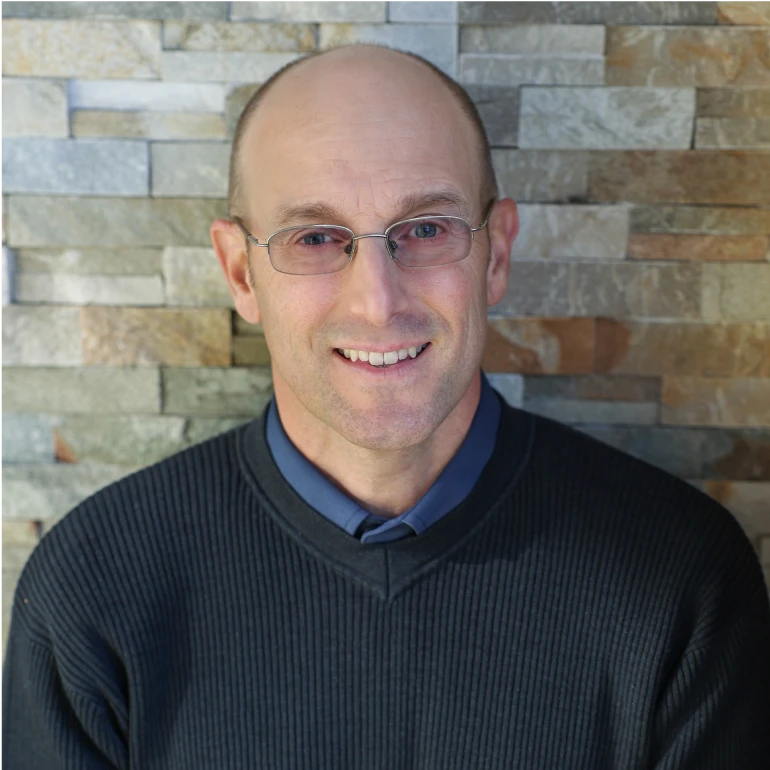
About the guest


Karin:
For a lot of these patients starting a ketogenic diet. Can be super challenging. So we thought a supplement could actually be a way to achieve ketosis that is more achievable for more patients.
Bret:
Welcome to the Metabolic Mind Podcast. I’m your host, Dr. Bret Scher. Metabolic Mind is a nonprofit initiative of Baszucki Group. Where we’re providing information about the intersection of metabolic health and mental health and metabolic therapies such as nutritional ketosis as therapies for mental illness.
Thank you for joining us. Although our podcast is for informational purposes only and we aren’t giving medical advice, we hope you will learn from our content and it will help facilitate discussions with your healthcare providers to see if you could benefit from exploring the connection between metabolic and mental health.
We’ve heard a lot about the benefits of ketogenic therapy based on a ketogenic diet and the impact it can have on symptoms of mental disorders. But what about drinking ketones, exogenous ketones? Dr. Huizer from the Netherlands is starting to study this and it’s early with pilot studies, but so fascinating to consider.
Will drinking ketones have similar effects to eating, ketogenic diets and metabolic therapies. So let’s hear from this interview from Dr. Huizer, not just the experience she’s doing, but also her personal experience and this community of metabolic psychiatry in the Netherlands.
All right Dr. Karin Huizer, thank you so much for joining me at Metabolic Mind.
Karin:
Thank you for having me, Bret. It’s it’s a pleasure to be here.
Bret:
Yeah. And I’m so excited to talk to you and hopefully I got your name pretty close. We talked about the Dutch pronunciation, which I’m not so good at, but that’s part of what part of what I want to talk to you about is the Netherlands.
This, small little country is really making a name for itself within metabolic psychiatry, and you’re certainly part of that and you’re involved in so many. Interesting trials and you have such an interesting sort of personal background. So I want to talk about all that. But before we do please tell us, about you, give us your background so everybody knows who you are.
Karin:
Yeah, sure. So I’m a medical doctorate in the Netherlands and I’m currently doing my psychiatry residency. I’ll be due to finish it in about a year and a half. I’m doing that at Persia Hoop, which is the largest mental healthcare organization in the Netherlands. And aside from my clinical work, I love to do research.
I’ve loved doing research from the moment I fit foot and university actually. So I started out with a Master of Neuroscience in Almos Medical Center. At ultrasound where I also did my medical degree. Then I got into a little bit of clinical genetics research wise. And then I moved to pathology both clinically after I became a medical doctor.
And in research. So I did a PhD in neuropathology where I looked at blood vessel formations in brain tumors. Then I moved to psychiatry, which for me is the best choice that I could have possibly made. It like the integration of everything that I find interesting and fascinating, both clinically and in terms of research.
So my research background has been more on the fundamental side and. It’s only recently that I’m starting to move into the field of clinical trials for instance. So that’s new for me.
Bret:
Yeah, so really interesting as a medical doctor, but with such an extensive research history. And I love to hear that you found the perfect mix for you in psychiatry, both clinically and research.
And you’re not new to research and certainly not new, to metabolic psychiatry. ’cause I remember reading from you that back in 2005 you had written a protocol to study a ketogenic diet and schizophrenia, which would’ve been a landmark trial back in 2005, but, eventually did not pursue it.
So I wanna hear about that background in 2005.
Karin:
Yeah. Okay. Yeah. Yeah, so in 2004, 2005, I was doing my Master of Neuroscience in at Osmos Medical Center. And I was doing it in the field of schizophrenia, so it was a collaboration between neuroscience and psychiatry. So I started reading about schizophrenia and for some reason I came across.
That one paper from, I think it was 1969 it was a case report on a woman with schizophrenia who responded to, who responded well to a ketogenic diet. And then I started reading about the ketogenic diet for epilepsy mostly, and what it can do and the major impact that it has that it can have on treatment resistant epilepsy.
Then I felt like there’s something here. There, there is something there where theoretically a ketogenic diet could work for schizophrenia as well. If only when you’re looking at the glucose metabolism problems that patients with schizophrenia have, if you’re only looking at that ketogenic diet could possibly help for that.
I wrote, ’cause my supervisor at the time I’m working with him again now. That’s a funny coincidence. But he was excited about the idea. So he he told me he should try and write a small grant for it. And we applied for a small grant from Nutricia Foundation. We didn’t get it. I was reaching the end of my master’s degree and I was about to go into my clinical rotations for my medical doctorate degree.
And then we dropped we dropped the idea, so that’s where we left it. And funnily enough, i’m doing my psychiatry residency now and my supervisor from back then who was doing his PhD then at the time is now my supervisor for my psychiatry residency. And he told me like, yeah, but that was a nice idea.
Maybe we should, we should consider starting doing something with that again with keto interventions. And at that time, ’cause that was a few years ago, I had read about. Ketone Ester ketone salt being available. And I thought I think for a lot of the patients that we’re dealing with that are struggling with either an acute episode acute psychotic episodes, or they have like chronic treatment resistance, schizophrenia, they may be addicted to drugs, which a lot of patients regretfully end up struggling with addiction and with other psychiatric problems. They may be indebted. They may not even have a house. They may not even have a home. For a lot of these patients starting a ketogenic diet. Can be super challenging.
So we thought a supplement could actually be a way to achieve ketosis that is more achievable for more patients. And that’s how we started on actually focusing on esters for the trial that we’re currently doing. Yeah, this current trial basically has a 20 year history.
Bret:
Yeah, it’s amazing.
A 20 year history runup. But so interesting to transition to the ketone esters and the exogenous ketones for exactly those reasons. Not everybody’s going to be able to start. A ketogenic diet, but if the ketones help, then use them as a medication, as a supplement. So yeah, I think that’s super interesting to look into and something that we’ve been talking about a long time at Metabolic Mind, ’cause we get a lot of these questions.
What about exogenous ketones? What about ketone ester? A ketone salts? And we just say we, there’s, there’s no data on it, but it makes sense that it could help. It just needs to be studied that’s why I’m so excited that you’re doing it. So tell us a little bit about the structure of the trial and how you have it set up.
Karin:
For this, it’s a pilot study. We managed to obtain funding from neuroscience from a proof of concept current, so it’s not a very large one. So it’s sufficient to cover a pilot study. It doesn’t cover personnel costs. So basically everyone who is collaborating is doing it like, because they’re motivated to do the study is set in Amsterdam University Medical Center in the Department of Early Psychosis, which is headed by Professor Han and he has a tremendous track record and a lot of experience in doing research into this patient group early psychosis. ’cause they’re not. It’s not easy to include this patient group in research study, so that requires a lot of experience on its own, and that’s a logistics that it’ll set up there.
Making this study so far yeah, we’re doing well with inclusions, but that’s because that framework already exists and because it is a pilot study, we decided to go for a single injection. So we’re, we designed it as a crossover study. Randomized controlled subjects are randomized to either receiving the ketone drink, ketone ester drink first, then there’s a washout period, and then they receive an IDOC caloric carbohydrate controlled drink, or the other way around, first to controlled drink.
And then the ketone ester, it’s triple blinded, nobody knows who is getting what drink until after everything is done and analyzed. And because we’re focusing on a single injection, we’re obviously limited in terms of outcome measures that we can reasonably look at. Like looking at clinical effects.
Yeah, that’s highly unlikely that you’re gonna see something after single injection. So we decided to focus as a primary outcome measure on event related potentials. Those are measures that you can measure using an EEG cap or an EMG. And specifically we look at pre pulses, inhibition of the startle reflex.
And the reason we look at that actually because of a paper from Professor Sanjay from this community. He looked in a mouse model of schizophrenia and he found that. Proposed inhibition of the start with flex, which is in schizophrenia and disrupted in this mouse model was restored after a single ingestion of ketone ester.
So that why we thought, okay, if we can repeat that in human subjects with schizophrenia, that would be extremely meaningful. And for the rest we’re looking at a ton of other outcome measures like cognitive functioning we expect can improve after a single ingestion. We’re looking at, we’re using indirect calorimetry to look at like substrate energy, substrate utilization, resting energy expenditure.
We’re asking patients how they feel, of course do you notice any effect on your mood or on your ability to focus? And we’re looking at a lot of like metabolic and immune outcome measures. Like we’re we’re looking at key from body levels in blood, obviously. And if we have the funding for it, we would like to look at some inflammatory markers as well.
Oxidative stress. And one other thing that I’m pretty excited about in this study is we’re using a wearable device that is really new. So I’m collaborating with the University of Texas, Dallas and with and license that’s it’s a startup that was also started by the professor in, they’re in, they’re specialists in NATO technology.
So they developed a wearable device that can measure biomarkers in PEs sweat. So you basically have a device that you stick on your skin. It’s a sizeable watch. You put it on your skin with a sticker. You wear it for a couple days and then you need to change the sender while the person is wearing it every three minutes.
There is a measurement point for biomarkers in IC sweat, and we are looking at cortisol melatonin because when you have those two combined, you can actually gain insight into the circadian rhythm of the person who is wearing the device. And we’re looking at interleukin six. Interleukin six, and TNF alpha to important pro-inflammatory cytokine.
They’re also involved in schizophrenia and bipolar disorders, and these data are gonna be. Completely novel as well, because usually you don’t have the dynamic profiles of these biomarkers. You just have a single time point. So we’re also really curious to see first of all, just the profiles that we’re gonna find in, in, in this patient group.
But also if an ingestion of ketone ster influences these biomarkers or not. Yeah, we’re doing a lot of data collection in this study. Heavy in that regard. Yeah.
Bret:
Wow. That is a that sounds like a lot of data that you’re collecting. Really impressive. Just the breadth of investigation that you’re having.
And I can see so many different potential outcomes. But since it’s a onetime ingestion, and it’s a pilot trial, it’s really going to feed future research and future research ideas which I think is super fascinating. And, hopefully we’ll be able to get more funding for longer trials, longer, terms of ingestion.
But I am curious about one thing, one practical question. You said it’s blinded, ketone esters taste awful. So I’d imagine there’s a taste. So what are you doing to try and ma I shouldn’t say they taste awful, but they’re not the most pleasant tasting thing most of the time I do. So how are you masking the taste to try and make it similar to the carbohydrate drink?
Karin:
Yeah, we’re actually, we’re not masking the taste. Not in the sense that we’re not trying to make it taste the same, because I think that’s really difficult. And if you wanna do that, you would need to add like a bittering agent or something to the controlled drink. Not a hundred percent sure. Like the moment you start adding agents to a drink, yeah, that can have a biological effect as well.
What we did do is we used a controlled drink that is considered really unpalatable as well. The taste is different. I tried both drinks and I find them like almost equally unpalatable. So they’re, they definitely taste different, but they’re both just pretty foul to be honest. The way we further stimulate, blinding is like in the subject information we described, that both drinks have an unpalatable flavor and texture, which is true.
So they, they are slightly different, but we don’t give away, which might be, which also the investigator involved in the trial doesn’t know. She deliberately didn’t try either of the drinks and we didn’t tell her how they taste it or anything. So she doesn’t, even if she would. She could maybe gauge a reaction from a subject on how it tastes, but then she wouldn’t know how to interpret it.
So yeah, that’s how we go about blinding in this study. And blinding is, it’s never gonna be perfect, but this is the method that we chose for this particular study.
Bret:
Yeah. Now I guess you might not be able to answer this next question until you have your results, but what do you hope or think would be a next step after this to, to further the research?
Karin:
Yeah. After this it’s gonna depend on our results of course, but if they are even. Remotely positive or even if they’re negative and we can explain why they might be negative. Regardless, we obviously wanna do a follow up trial. And obviously that would be with a longer period of supplementation.
And we’re looking for funding for that. So we applied for two grants at this stage to, to see if we can manage to do a follow-up study with then a two week depletion period, four times of ketone esra a day, and a similar design, also crossover placebo controlled blinded, then we can look much more into the real clinical effects, like we could look at psychotic symptoms. Symptoms that I’m really interested in and that are now treatment resistant generally are negative symptoms in schizophrenia, which is more the loss of motivation. Loss of interest, social withdrawal just affect flattening and these symptoms are extremely debilitating for people with schizophrenia and we don’t really have a good answer for them.
So I would love to see if ketones can actually improve those symptoms that we don’t have an answer for. The same with cognitive problems, that’s another area that people with schizophrenia are. Really limited by they, they experience a lot of cognitive deficits, which prevents them from being able to continue their studies or holding a job.
So if those could be improved that would be absolutely amazing. So those would be the areas that I would love to focus on. Also with the longer trial, like one of the grants that we wrote would also include FMI and MIA to look at the mechanism, of course, like how do ketones work, how do they affect the brain in these patient groups?
So yeah, that’s the general direction that we’re hoping to be able to go into in the future.
Bret:
Yeah, it’s ambitious and I love that I love ambitious research plans. And so I guess the next question though, which I hinted at the beginning is this metabolic psychiatry, ketone psychiatry research community within the Netherlands that seems to be popping up.
I’ve already had a, I’ve been fortunate enough to have an interview with Dr. Elene Deter, who’s also in the Netherlands, and then of course you, what is it about the community and the culture and why do you think the Netherlands, and, what is, what has been hot and popular in that area about ketone research and psychiatry?
Karin:
I’m not even sure if it’s starting to become popular, but I think that’s mostly in reaction to the work that is funded by Baszucki Group and the papers that are coming out. Yeah, so it’s starting to, it’s starting to develop into something really serious. I’m really lucky to have run into Aer, like she reached out to me on LinkedIn actually when I posted about this trial that I just mentioned.
And since then we’ve think we’re talking a lot like we’re collaborating already and we wanna extend our collaboration more and more into the future because we just have similar aims and and different things to bring into this field as well. So I honestly do feel that we’re starting something very meaningful in the Netherlands.
And one advantage of the Netherlands is it’s a tiny country. It’s also the most densely populated country in all of Europe. So the logistics are easy to manage. Everyone is relatively close by. I can go to Alina. Be with her in 45 minutes and she’s in a different city, and that’s, I think, an advantage in the Netherlands in general that the lines are short because we’re so many people in such a tiny space. Yeah, and I’m just really lucky to have the opportunity to collaborate with Amsterdam University Medical Center, which has a tremendous track record when it comes to research into early psychosis and then bipolar disorders.
So finding strong collaborators like that, that’s what. A project succeed or fail, so I was lucky enough to yeah, to find these collaborations and to be offered these collaborations and that’s what makes the project successful to the date in terms of including subjects and everything and data acquisition.
Bret:
I think that’s fascinating and I’m really excited to see the research that’s gonna come out of your community. Before we continue, I wanna take a brief moment to let our practitioners know about a couple of fantastic free CME courses developed in partnership with Baszucki Group by Dr. Georgia Baszucki and Dr.
Chris Palmer. Both of these free CME sessions provide excellent insight on incorporating metabolic therapies for mental illness into your practice. They’re approved for a MA category one credits, CNE nursing credit hours, and continuing education credits for psychologists, and they’re completely free of charge on my cme.com.
There’s a link in the description. I highly recommend you check them both out. Now, back to the video. But now let’s transition to the clinical side, right? You’re a psychiatry resident. You’re also, in addition to doing research, you’re taking care of patients, the research is emerging, but what, from what you know at this point, when you are taking care of patients, are you putting people on ketogenic diets?
Are you giving them ketone, EERs, or exogenous ketones? Do you think it’s at a point now where it can be used in the right setting with the right, with the right monitoring and the right advice and coaching and so forth. Do you think it’s at a point where you can, and are you using it clinically?
Karin:
I’m not using it clinically myself, but that’s also because I’m still in my residency, so I do rotations in different areas. I have different supervisors and the status, like the way it is seen at least within psychiatry in the Netherlands with the people that I’ve talked about ketogenic diet, ketogenic interventions with it is seen as an experimental treatment.
Which I do understand, like there there is a lot of evidence, but we still don’t have kind of the gold standard evidence that we would need to convince yeah. Psychiatry in general to put this into as a treatment in, into their guidelines. So I think it’s important that, those are ongoing, right?
Those trials. So we’re gonna get there. That having said you’re, it’s possible to use experimental treatments in patient care, it’s possible to do that under the right circumstances, right? You you explain to the patient that, yeah, there’s some evidence, but it’s not like crystal clear yet. You explain the disadvantages, the possible advantages.
You need to know what you’re doing as a clinician. So you need to be trained as a clinician. Then you can embark on a journey with a patient to just try something new and see what happens. There’s no guideline that tells you that you are not allowed to do that. Obviously you need to know what you’re doing and you need to do it for the right reason and with the right arguments.
And I think also be humble while you’re doing it. Say, just basically admit like we’re not sure yet like we but it maybe it’s worth a try. Maybe we can do this together.
Bret:
Yeah. And it’s so interesting to think about it because it’s nutrition, it’s a diet, right? Everybody’s got to eat. It’s not a pill.
It’s not something that is, that you either take or you don’t, right? Like you either take a pill or you don’t take a pill. But for diet you have to eat. So I find it so interesting, like where’s the threshold for different people to say you can start eating this way. And then, still take your medications and follow you and see what happens.
And obviously there are things that can happen with medicine potentiation and whether it’s the keto flu or different changes that happen with ketosis, but like you said, if someone’s aware of that. But for an attending, so for you, you’re in a really interesting spot being a resident, right?
Because you know all about this, but your attendings probably don’t. So in that case. You can flip the script a little bit where you’re the educator and they’re the student, and I’m just curious, like, how would you feel in that type of situation? Because with the power dynamics and the authority and things like sometimes, the resident may not want to educate the attending because it can seem, like you said, you have to be humble.
Maybe it seems like you’re being arrogant or something, even if you’re not. So I’m just curious how do you feel about that?
Karin:
Yeah, it’s like I think in. Since I’m also lucky the organization where I work, it’s not very hy logical. So there’s a lot of openness. Like you’re allowed as a psychiatry resident to, to give your own opinion, right?
And state how you see things and nobody is gonna look badly upon your own. The contrary actually. So I do find they’re at interest, but also skepticism when I bring up this subject, which I think is healthy, that I feel that’s a healthy response. But also because our trial is going pretty well and there’s like more and more exposure for this subject I know that there’s other groups that are interested in like looking into ketogenic diet and the effect of it in psychiatry.
And also of course, the group that I’m working with in, in Amsterdam and in Ashia Hoop. And one thing that I’m really excited about is I’m gonna start a policy vocation is what we call it, like to as a psychiatry resident to look into all the policy that is required for psychiatric care.
So I’m gonna do a policy rotation at, in a clinic that is basically dedicated to psychiatric care for the chronic treatment resistant patients out there, like the ones that are not included in trials right now because they have comorbidities and they are some of them are addicted and some of them have intellectual impairments.
All those millions of exclusion criteria, basically that usually are in place for clinical trials. So these patients are, in terms of research, the forgotten group. And what we wanna do during this policy rotation is actually see if it is at all possible to start a metabolic psychiatry expertise center at Peria hoop.
And that will be combining care patient care. With research, like at a high level, dual collaborations with academic centers and nutritional ketosis would be one of the treatment options that we would like to offer in the metabolic psychiatry expertise center. And for that, like people will need to be trained, we will need to attract dieticians.
So there’s a lot of things to figure out and it can not happen in 1,001 ways . It can go wrong. But I know that for NAIA Hoop is interested in this in this idea and in, in seeing if it’s possible to set this up. So I think that’s very hopeful and exciting, honestly. Yeah,
Bret:
That sounds very exciting.
And I just hope other, whether it’s a medical student or resident. That they see what you’re doing and they learn from your experience and the example you’re setting to say, Hey, I can do something similar within my institution. ’cause really, I think. The, the stereotypically the younger physicians might be a little more curious or a little more willing to experiment.
The older physicians a little more set in their ways. Totally stereotypical not true for everybody, but maybe, more than 50% of the time it’s that way. To get the earlier career. Physicians to be a little more curious and try things like that I think is a fantastic example. And I really love the work you’re doing and I’m excited for it.
Where can people find out more about you? Where can they follow you to learn more about your work?
Karin:
Mostly on LinkedIn. I would say that’s the place where I post updates on research. So that’s the best place actually to yeah. To see what’s going on.
Bret:
Yeah. Great. Great. I, for one am definitely gonna follow you on LinkedIn and and keep up with all the work that you’re doing.
And thank you so much for joining me at Metabolic Mind. I really appreciate you taking the time.
Karin:
Thank you so much for having me be, it was my pleasure.
Bret:
Thanks for listening to the Metabolic Mind Podcast. If you found this episode helpful, please leave a rating and comment as we’d love to hear from you.
And please click the subscribe button so you won’t miss any of our future episodes. And you can see full video episodes on our YouTube page at Metabolic Mind. Lastly, if you know someone who may benefit from this information, please share it as our goal is to spread this information to help as many people as possible.
Thanks again for listening, and we’ll see you here next time at. The Metabolic Mind Podcast.
Listen, Watch & Subscribe on:

A Practical Guide to the Ketogenic Diet, Why Formulation Matters, and How a Nutrient-Dense Approach Can Unlock Its Full Therapeutic Potential. As research continues to uncover the therapeutic…
Read more

$3.3 million gift from Baszucki Group fuels transformative bipolar disorder research and precision nutrition clinical service. Learn more here!
Learn more
Keto Mojo is a brand of blood ketone and glucose monitoring kit designed for individuals following a ketogenic diet. It provides a convenient way to track ketone levels…
Learn more
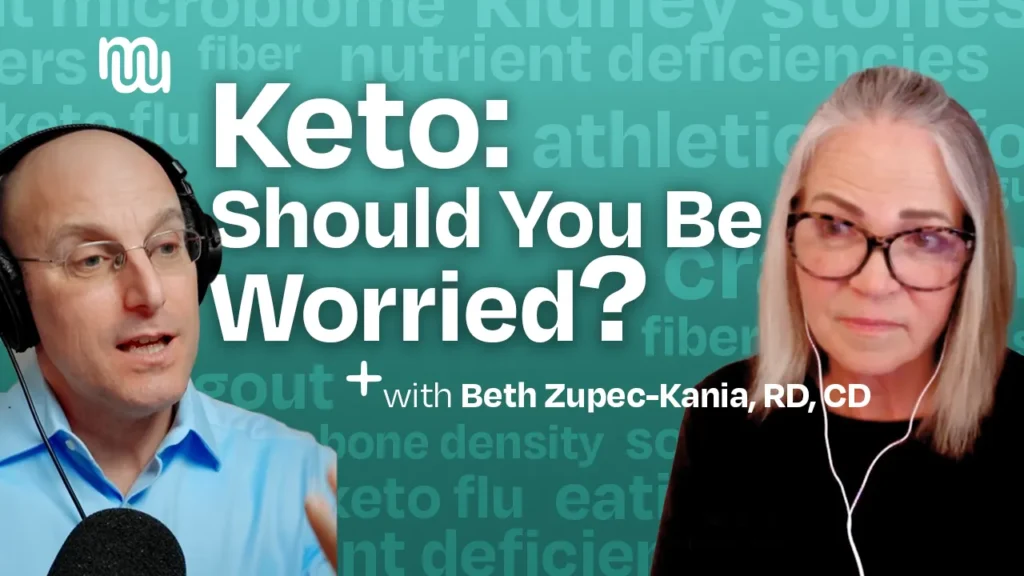
Are ketogenic diets dangerous? What about nutrient deficiencies, gout, gut health, keto rash, bone density loss, or kidney stones? In this video, registered dietitian and ketogenic therapy expert Beth Zupec-Kania, RDN, CD, shares insights from over 30 years of clinical experience to address the most common concerns and misconceptions about ketogenic therapies.
Learn more
A Practical Guide to the Ketogenic Diet, Why Formulation Matters, and How a Nutrient-Dense Approach Can Unlock Its Full Therapeutic Potential. As research continues to uncover the therapeutic…
Read more
$3.3 million gift from Baszucki Group fuels transformative bipolar disorder research and precision nutrition clinical service. Learn more here!
Learn more
Keto Mojo is a brand of blood ketone and glucose monitoring kit designed for individuals following a ketogenic diet. It provides a convenient way to track ketone levels…
Learn more
Are ketogenic diets dangerous? What about nutrient deficiencies, gout, gut health, keto rash, bone density loss, or kidney stones? In this video, registered dietitian and ketogenic therapy expert Beth Zupec-Kania, RDN, CD, shares insights from over 30 years of clinical experience to address the most common concerns and misconceptions about ketogenic therapies.
Learn more