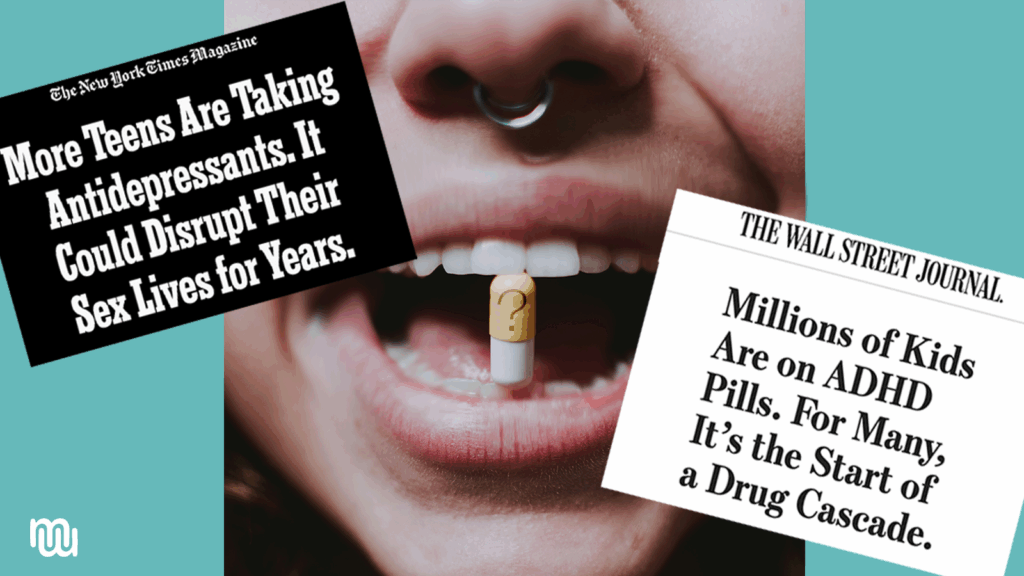
Recent headlines from the Wall Street Journal and The New York Times have spotlighted a growing concern: youth and teens are being prescribed psychiatric medications at unprecedented rates, often before safer, more foundational approaches are even considered.
Psychiatric medications can be an important part of mental health care and, for some young people, even lifesaving. Yet for many children, these drugs also bring significant challenges, including acute and chronic side effects and, at times, little to no improvement in symptoms and difficulty tapering off.
What if there were another way? A way that addresses root causes and builds mental health from the metabolic foundation up? We’ll explore that, but first, we need to better understand the problems parents and children are facing in today’s mental healthcare landscape.
The Rise in Prescriptions and the Hidden Costs
Psychiatric drug use in children and adolescents has surged.
According to the latest CDC report in 2021, around 8% of children aged 5-17 had taken psychiatric medication in the last 12 months[*].
These reports include stimulants, antidepressants, and, to a lesser extent, antipsychotics.
Antidepressant prescriptions have especially skyrocketed. According to a large study published in the Journal of the American Academy of Pediatrics in 2024, the SSRI prescription rate among 12- to 17-year-olds rose by nearly 70% between 2016 and 2022[*]. Today, it’s estimated that around 2 million children in the United States, ages 12-17, are taking an antidepressant.
Again, it’s important to acknowledge that these medications do have a place in psychiatric care. At times, they can be life-changing and in some cases lifesaving.
But there are also significant risks, considerations, and side effects, most of which are often underdiscussed. From weight gain and metabolic dysfunction to emotional numbing and sleep disturbances, powerful psychiatric medications can impact the body in far more ways than most clinicians or parents realize. Benefits often also wear off over time, leading to higher doses and untested polypharmacy.
The New York Times article highlights one of the most under-discussed symptoms of SSRIs: impaired sexual maturation and function.
Many teens prescribed these medications experience changes in sexual function during and even after medication use has been discontinued, a side effect well-established in adults but seldom discussed in young people, known as Post‑SSRI Sexual Dysfunction (PSSD).
Highlighted in the article is:
- Marie, who began Prozac at 15 for an eating disorder, says she still experiences complete sexual numbness decades later: “It’s just an empty dark space.”
- Liz, given an SSRI at 16, experienced a loss of libido and her creative connection to music. Now 45, Liz reports not “feeling anything down there at all”.
- Ruth, whose daughter was prescribed Zoloft at 11, has lived with unresolved sexual side effects for over a decade, a fact Ruth only learned recently.
- Guin, who was put on an antidepressant at 17, experienced an immediate “dulling” of her sexual feelings, struggled in relationships through college, and now, after being off medications for six years, still reports not having the “capacity for romantic relationships.
- Sean, who was prescribed a standard SSRI in college and experienced “numb genitals” within an hour, and even despite stopping the medication almost immediately, still experiences sexual dysfunction 3 years later.
And these cases are just a small snapshot of the larger issue. The New York Times article notes that there are more than 500 case reports in the academic literature on the experience of PSSD.
What’s the mechanism that drives SSRI-induced sexual dysfunction?
While brain chemistry and emotional blunting certainly play a role, research suggests that SSRIs may also cause physical damage to sexual organs. Dr. Irwin Goldstein, a clinical professor of urology at UC San Diego, conducted a study on men aged 16 to 43 who experienced sexual dysfunction after SSRI use. Examining penile tissue, he found that SSRIs can lead to an overproduction of oxygen radicals, resulting in tissue scarring and impaired function.
As Dr. Goldstein explains, “The physiological effect of SSRIs within the penis looked closely akin to the impact of aging and diseases that are well-established contributors to erectile dysfunction.”
Despite these long-term consequences, informed consent remains rare. While prescribing physicians often discuss some of the side effects of the medications they are recommending, they also miss some and often fail to acknowledge the potential for side effects to persist long after the medications have been stopped.
Why is this? Especially considering it’s well understood that sexual dysfunction is a potential side effect of antidepressant use in adults?
In the case of sexual dysfunction, it’s because this connection hasn’t been studied in young people, and the current DSM guidelines barely acknowledge PSSD as a potential outcome from SSRI medications.
Because of this, many clinicians don’t know about and thus don’t regularly discuss sexual side effects with teens or their families before prescribing.
Medicate First, Ask Questions Later
These news stories also reveal a troubling pattern: psychiatric medications are often prescribed quickly, sometimes within minutes, and frequently before any behavioral therapy, nutritional intervention, or root-cause evaluation is attempted.
The WSJ report looking at children prescribed ADHD medications reported that 63% of kids were prescribed medication before behavioral interventions were tried.
In The New York Times article, one mother shares how her 11-year-old daughter was placed on Zoloft by a psychiatrist after a single humiliating incident at school left her feeling anxious.
“I guess I thought that was a good thing,” Ruth says, as she describes her “blind trust” in psychiatry, a trust she now deeply regrets after her daughter remained on the medication for a decade and continues to struggle with chronic side effects.
And then there’s Liz, a 16-year-old girl who met with a psychiatrist to help her process the bullying she was experiencing in school. Liz recalls being prescribed an SSRI just 15 minutes into her first appointment after the psychiatrist sketched a simple diagram on a Post-it note explaining her “low serotonin,” and sent her home with a prescription.
Now 45, Liz has spent decades trying to taper off the drug and continues to struggle with the long-term sexual side effects she attributes to that decision.
What if, instead of rushing to medicate, these young women had been given access to safer interventions that addressed the root causes of their conditions without the risk of chronic side effects?
Too often, we are medicalizing normal human distress without asking why it’s happening in the first place and without giving the brain and body the support they need to heal.
When Meds Don’t Work, the System Adds More
Once a child starts down the path of psychiatric medication, it’s often not a single prescription; it’s a cascade. One drug leads to another: to manage side effects, to “treat” new symptoms that emerge, or to amplify the effects of the first medication.
A WSJ analysis of 166,000 children who started ADHD medications in 2019 found:
- These children were 5x more likely to be prescribed additional psychiatric medications four years later.
- 39,000+ kids were on two or more psychiatric drugs.
- Over 4,400 were on four or more medications, including antipsychotics, which carry their own serious risks.
It’s important to point out that this analysis was of Medicaid-insured children, highlighting how pronounced the prescription cascade is in lower socioeconomic groups.
For these families with limited access to therapy, nutrition support, or school accommodations, the path to psychiatric polypharmacy is often paved with pressure and few alternatives. These children are being placed on complex and risky treatment regimens before basic, lower-risk interventions are even offered.
Polypharmacy often spirals when side effects are mistaken for new symptoms, leading to additional prescriptions. In one example, Easton, who was placed on medication at age 3, cycled through six psychiatric medications before age 6. His story, like so many others, began with daycare pressure and ended in confusion, side effects, and a complicated treatment history.
Withdrawal: The Often-Ignored Chapter of Psychiatric Medication
An often-overlooked yet critical dimension of youth mental health care is psychiatric medication withdrawal. While much attention is given to initiating treatment, far less is paid to what happens when a young person tries to stop.
Withdrawal refers to the physiological and psychological symptoms that emerge when psychiatric drugs are reduced or discontinued. Contrary to common assumptions, it is not always “brief and mild.” In fact, withdrawal can be protracted, severe, and deeply destabilizing, especially for youth who were started on medications at an early age and remained on them for years.
This problem plays out on two levels. On the patient side, children are frequently placed on medications quickly, sometimes within a single, short visit, often without first attempting evidence-based therapies or addressing root causes such as trauma. Once on these medications, many young people experience not just acute side effects (such as emotional blunting or sexual dysfunction) but also withdrawal symptoms that make it incredibly difficult to stop. This creates a vicious cycle, where the child feels tethered to medication, not always because they are truly “better on it,” but because coming off feels intolerable.
On the clinical side, withdrawal is poorly understood and frequently mischaracterized. Many families are initially reassured that medication is a temporary tool and that their child won’t have to be on it forever. But when withdrawal begins, which can be marked by mood swings, anxiety, insomnia, agitation, or physical symptoms like dizziness and fatigue, they’re told the original problem has returned. As a result, withdrawal is commonly mistaken for relapse, and the solution offered is to reinstate medication or increase the dose.
This misdiagnosis can create lifelong dependency. Liz’s story illustrates this clearly. She has been trying to discontinue her medications for several decades. While she has now successfully tapered to a very low dose, her journey has been marked by frustration and grief as doctors repeatedly mistook her withdrawal symptoms for returning depression.
Like so many others, Liz wasn’t warned about the possibility of long-term withdrawal or persistent side effects, and now, at 45, she finds herself grappling with outcomes she was never told to expect.
Stories like Liz’s are too common and point to a systemic failure to educate families about the risks of withdrawal and to support safe, informed tapering protocols when there is a desire to stop medications.
Until withdrawal is treated as a legitimate and potentially serious phase of psychiatric care, we will continue to fail young people by keeping them in a medicated limbo. The absence of robust tapering guidance, research, and clinical literacy leaves families to navigate a dangerous path alone, often at great psychological and physiological cost.
If you or your child is taking psychiatric medication and you’re exploring the possibility of reducing or stopping it, we encourage you to listen to our interview with Danish psychologist Dr. Anders Sørensen to learn about the importance of medication tapering. His book, Crossing Zero, offers valuable guidance for parents navigating the complex journey of medication reduction.
A New Standard of Care: Root Cause, Not Reaction
Psychiatric medications can play an important role in mental health care, especially in times of crisis or when other interventions fall short. But for too many young people, medication has become the first and only solution, rather than a single tool in a broader, more holistic care plan.
This rush to medicate often bypasses critical foundational supports like behavioral therapy and metabolic interventions that may address the root causes of distress and build long-term resilience.
Every child deserves access to evidence-based behavioral therapy; care that helps them build coping skills, process emotions, and navigate life’s challenges with support. They deserve nutritional and metabolic support that strengthens brain function at its core, giving the body what it needs to regulate mood, energy, and focus. And they deserve a thoughtfully sequenced care plan; one that doesn’t rush to medicate when it’s not an emergency, but instead explores the full picture before choosing the most appropriate intervention.
These priorities are especially urgent in under-resourced communities, where structural barriers often limit access to high-quality therapy, nutritious food, and consistent care. In these settings, families are more likely to be offered quick-fix prescriptions and less likely to be offered sustainable solutions.
We owe our children more than symptom suppression. We owe them care that asks why before answering with medication, and that supports their bodies and brains from the foundation up.
Metabolic Psychiatry: A New Way Forward
Metabolic psychiatry is an emerging field that explores how disruptions in brain energy metabolism, including mitochondrial dysfunction, insulin resistance, and inflammation, may underlie many psychiatric conditions. At its core is the idea that restoring metabolic health can help stabilize mood, cognition, and emotional regulation.
One of the most promising tools in this approach is ketogenic therapy, a clinically supervised dietary intervention that shifts the brain’s primary fuel from glucose to ketones — a more efficient energy source for the brain. Long used to treat epilepsy, ketogenic therapy is now being studied for its potential to support serious mental health conditions, including depression, bipolar disorder, and schizophrenia[*][*][*].
While metabolic psychiatry is still an emerging field, hopeful early results are coming from young people.
Earlier this year, Dr. Jeff Volek and Drew Decker from The Ohio State University published the results from their KIND Trial, a first-of-its-kind study looking at ketogenic therapy for depression in college students.
In this study, college students with major depressive disorder followed a well-formulated ketogenic diet for 10–12 weeks. All study completers experienced clinically significant improvements in depression symptoms, with 37% average improvements and an average 69-71% reduction in depression scores reported in just 2 weeks[*]. Students also demonstrated improvements in cognitive function and body composition.
And more research is on the way.
At the Children’s Mental Health Resource Center, Elizabeth Errico is leading a year-long intervention using ketogenic therapy in youth ages 6-17 with bipolar disorder. While the study is ongoing, parents are already reporting notable improvements in their children’s emotional stability, focus, and overall well-being, all without the side effects of conventional psychiatric medications[*][*].
Another clinical trial underway at the Child & Adolescent Bipolar Network is investigating a ketogenic diet for adolescents with depressive or mixed phases of bipolar disorder. Investigators across four study sites (UCLA, University of Cincinnati, University of Colorado and University of Pittsburgh) aim to determine if combining standard of care pharmacological treatment for bipolar disorder with a 16-week ketogenic diet is well-tolerated and associated with improvements in depression, inflammatory and metabolic indicators, and executive functioning.
Beyond the data and upcoming studies, personal stories are bringing science to life, showing what’s possible when metabolic therapies are introduced with care, support, and the right tools:
- Kristina Cook’s family turned to ketogenic therapy after exhausting conventional options for the multiple chronic conditions she and her family were experiencing and being medicated for. Over time, seven chronic health conditions across multiple family members have dramatically improved. Today, the entire family is medication-free and thriving, with Kristina now educating others on the power of food as medicine.
- Kristina’s daughter, Genevieve, was diagnosed with bipolar disorder, OCD, and ADHD. After trying nearly every treatment available, including medications that worsened her symptoms, she turned to ketogenic therapy. It has helped stabilize her mood, reduce intrusive thoughts, improve focus, and, over time, allowed her to stop taking medications entirely.
- Adnan began experiencing debilitating anxiety, OCD, and panic attacks in high school despite a supportive home and access to care. Hospital visits became frequent, and daily life felt overwhelming. Rather than starting with medication, Adnan and his mom, a dietitian, chose a food-first approach. What began as a shift to whole foods evolved into a ketogenic lifestyle. The results were life-changing: he lost 70 pounds, regained mental clarity, and saw his anxiety symptoms fade. Today, Adnan is thriving and sharing his story to inspire others to explore the power of metabolic health.
- Joe, a college student from the KIND trial, was diagnosed with depression at the age of 14 and describes how every day felt like a challenge. After just a week of ketogenic therapy, he began waking up with energy and motivation. By the end of the study, he felt like himself again: hopeful, resilient, and reconnected to life.
- Sarah, another KIND participant, had battled depression since age 14. After trying multiple medications with no lasting benefit, she joined the study. After two weeks, Sarah reported that, “my depression symptoms were gone. They were gone.” For the first time in years, she could ride her bike, take care of herself, and thrive in school.
Together, these studies and stories reflect a growing movement: one that prioritizes root-cause care, honors the brain-body connection, and gives young people a new path forward.
Our Kids Deserve Better
We can no longer normalize symptom management while overlooking side effects, or delay safer interventions while jumping straight to prescriptions. It’s time to rethink what mental health care for young people can look like, starting with the foundation: metabolism, nutrition, sleep, and mental resilience.
Imagine a model of care where:
- Signs of brain metabolic dysfunction are screened and addressed before psychiatric medications are prescribed
- Behavioral Therapy, nutrient-dense food, quality sleep, and other metabolic tools are first-line treatments
- Informed consent includes both the risks and the full range of alternatives
- Medication tapering plans are taken as seriously as prescribing plans — with support, structure, and informed guidance every step of the way
Our children should not be the unwitting participants in a decades-long medication experiment.
They deserve care that addresses why symptoms are happening, not just how to suppress them. They deserve options rooted in long-term healing, not dependency.
And the good news? That shift has already begun.
Across the country, families, clinicians, and researchers are embracing metabolic therapies and watching young people regain their vitality, clarity, and hope.
Now it’s time to bring this change into the mainstream:
- Into pediatric and psychiatric clinics
- Into school and daycare systems
- Into medical training programs that prepare clinicians to both recognize the risks of overmedication and harness the power of metabolic healing
The tools are here, and the momentum is growing. What our kids need now is access.
Learn More
Curious about how to begin exploring metabolic mental health for yourself or a loved one? These resources can help you take the first steps at your own pace and in partnership with your care team.
- Start the THINK+SMART Email Course: Begin building your personalized metabolic mental health plan with our free, evidence-informed email series. Includes a downloadable eBook, interactive worksheets, and step-by-step guidance.
- Visit Our Youth Mental Health Hub: Explore age-appropriate tools, educational content, and practical strategies for applying metabolic therapies in children and teens.
- Learn from the Children’s Mental Health Resource Center (CMHRC): Discover community-based efforts supporting safe, structured ketogenic therapy in pediatric mental health.
- Find Peer & Family Support:Join the Metabolic Collective, a growing community of families, clinicians, and individuals navigating this path together.
- Browse Our Clinician Directory: Looking for a provider familiar with metabolic psychiatry? Our directory connects you with clinicians trained in metabolic and nutritional therapies.
- Join a Clinical Trial: Explore whether your child may be eligible for a supervised clinical trial using ketogenic therapy for bipolar disorder.