Announcing the new McLean Center for Metabolic Psychiatry Learn more.


Listen, Watch & Subscribe on:


Vegan Keto and Bipolar Disorder: Dyane Harwood’s Story
Listen
About the host
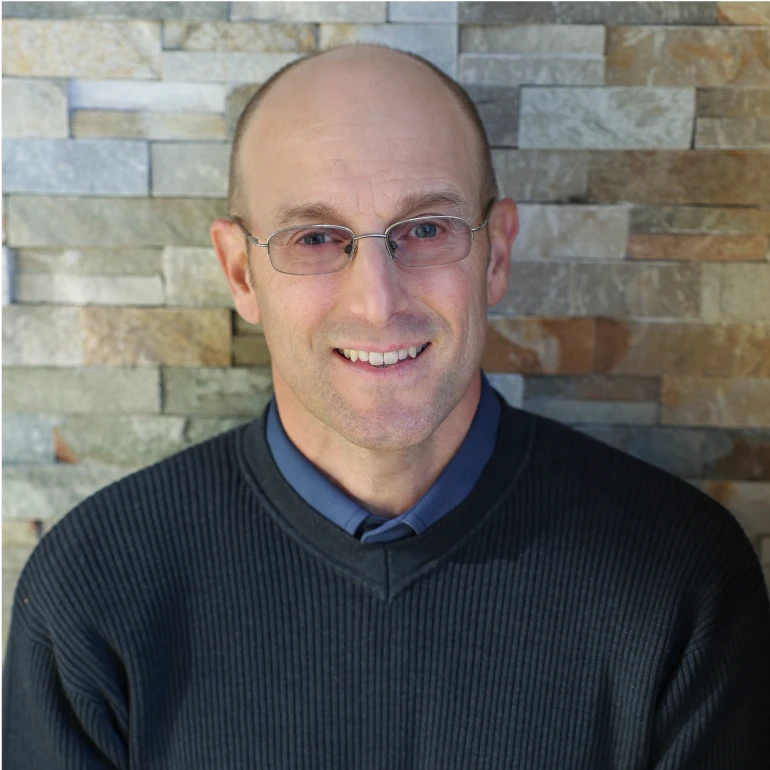
About the host
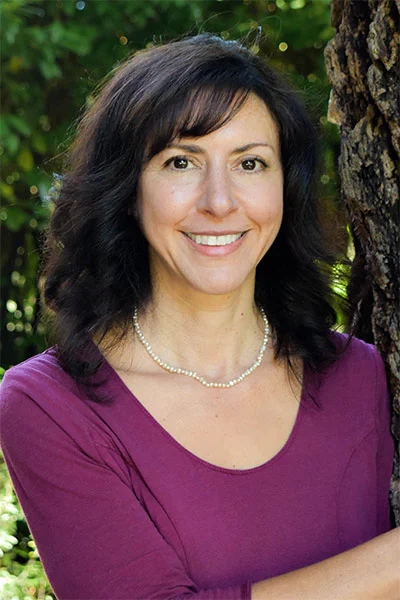

Dyane:
So, it was like a domino. It created a domino effect. And that’s why I want people to know about this. I don’t care what you eat. Eat whatever you want as long as you can experience the ketones, right? I’m keto first and vegan second. I just want people to be happier and healthier, whatever path that they choose
Bret:
Welcome to the Metabolic Mind Podcast. I’m your host, Dr. Bret Scher. Metabolic Mind is a non-profit initiative of Baszucki Group, where we’re providing information about the intersection of metabolic health and mental health and metabolic therapies, such as nutritional ketosis as therapies for mental illness.
Thank you for joining us. Although our podcast is for informational purposes only and we aren’t giving medical advice, we hope you will learn from our content and it will help facilitate discussions with your healthcare providers to see if you could benefit from exploring the connection between metabolic and mental health.
Vegan keto. For a lot of people, those words just don’t go together. Just can’t be done. Turns out, it can be done. It’s really a thing. And today, I’m joined by Dyane Harwood, who has transformed her life and treated her bipolar disorder with a vegan keto approach. And today, she shares her practical experience, how to make this work because it can be intimidating for people who want to embark on this.
But as you’ll hear from Dyane, really maybe it doesn’t need to be. She has some really good practical advice on how she makes it work. And the most important message is don’t let perfect be the enemy of good. Continue to iterate and get better, but hit the goals that are most important for you. And I think that’s what she really shares in this interview.
So, I hope you enjoy this interview with Dyane Harwood.
Many of the interventions we discuss can have potentially dangerous effects if done without proper supervision. Consult your healthcare provider before changing your lifestyle or medications. In addition, it’s important to note that people may respond differently to ketosis, and there isn’t one recognized universal response.
Dyane Harwood, thank you so much for joining me today at Metabolic Mind. It’s great to see you.
Dyane:
It’s great to see you, Bret. And last time I saw you was actually in person. Do you remember that?
Bret:
It must’ve been at a conference somewhere, right?
Dyane:
I could see the wheels cranking. Yeah, it was quite a long time ago. It was at the Ellenhorn Metabolic Psychiatry Conference.
Bret:
Oh, that’s right. Of course.
Dyane:
And you were so great. You, I think, you were like the emcee, and we were among all the greats in metabolic psychiatry. So, that was a really fun way to meet you in person.
Bret:
Yeah, that was a great weekend.
I remember that, yeah. So, we’re here today, though, to talk about you. And just to give you complete, like an inadequate summary, is that you have used a a keto vegan diet to be part of your treatment for bipolar disorder, postpartum bipolar disorder, that has worked wonderfully. And you’ve shared your story so honestly and openly on your THINK+SMART page at Metabolic Mind, and on the Bipolar Cast podcast, which is now Keto Bipolar Podcast.
So, to start with, anybody who wants to hear more details about your story, I really encourage them to go there because it’s a remarkable story. And I thank you for sharing it so openly. But today, I want to talk about a vegan keto diet. Because when people hear those terms together, a lot of people say, “Wait, what?
That’s a thing? A vegan keto diet’s a thing? Like, how, is that?” A lot of people are really caught off guard by it. So, let’s start just from the beginning. Why? Why did you pick a vegan keto diet instead of a omnivore keto diet or a Mediterranean keto diet or carnivore, whatever? Why vegan?
Dyane:
Or alien diet.
First of all, I should mention that I lived most of my life not as a vegan but as a full-on meat eater. And I didn’t become a vegan until I was 48 years old. I’m 56 now. And I wasn’t hoping to become a vegan. I just had broken my jaw walking with looking at my cellphone. Don’t advise that.
And I tripped. I was walking my dog. I tripped. I fell on my face. And long story short, when I was recuperating, I watched a documentary called What The Health about veganism, and I went from being a meat eater to a vegan in two hours.
Bret:
Oh, wow.
Dyane:
And yeah, it was pretty dramatic. It was pretty extreme.
Bret:
But when you make up your mind to do something, you do it.
Dyane:
Sometimes.
Bret:
Yeah.
Dyane:
So, that happened eight years ago. And then, so fast-forward to the beautiful stage of life for women called perimenopause, and I noticed that I suddenly looked like I was maybe a couple months pregnant,. And I didn’t really want to look pregnant because I already had two children, and I was in my 50s.
So, I wanted to lose the weight and I mentioned this stomach, this belly, that I had to one of my best friends, Christine, who also was going through the same thing. And she just said, “I’ve started a keto diet, and I dropped the weight very quickly.” And I, a long time ago, I was a ACE certified personal trainer, and I had heard the word keto tossed around, like the heavy duty weightlifting community.
But and then it became, as social media took off, it became a fad. Keto seemed like a fad. So, when I heard the word keto, it had really negative connotations to it. But when my best, when one of my best, friends is using it and she’s lost that belly, I thought, but then I was like, “Wait a minute.
I am a vegan. There’s no way I could do keto because doesn’t it rely on meat?” So, but just for the heck of it, just on a, I don’t know, I just was inspired to Google vegan keto, not really expecting anything to come up. And lo and behold, not only did vegan keto come up, but I saw it mentioned with bipolar disorder.
And then I, you could have blown me over with a feather because, I would never have guessed that in a million years. So ,that was the start of my going down a deep rabbit hole about exploring vegan keto, not just for the weight loss, but for how it could help my postpartum bipolar disorder symptoms.
And that started the adventure.
Bret:
So when a lot of, like I said, a lot of people are surprised by it, and can’t even fathom what you eat on a vegan keto diet. Or so what are, give us some of your go-to meals, and your main things that you eat.
Dyane:
Sure. just being a vegan alone, it’s kind of a joke now, but everyone says, “Do you get enough protein?”
And when I was just a vegan, I actually got too much protein all the time. But no, that’s a valid concern. But as a doing a vegan keto diet, for me, it’s really easy. But there’s a lot of room for improvement, even though I’m four years into this. So every day, I pretty much have the same breakfast, and I enjoy it.
As soon as it gets old, I’ll start, I’ll do different things. But I have, I did, a little picture for everyone. It’s my vegan keto smoothie, and isn’t that beautiful? And of course, it has to have chocolate in it because I’m a chocoholic. And it’s based on a vegan protein powder. So, that’s the linchpin of the nutrients.
it gets you your protein, I think it’s 16 grams, and then you get a full spectrum of amino acids. Boom. So you get that. I just add some almond milk that I soak chia seeds in it the night before. Chia seeds, they have omega-3s in them. And then, I throw in some cacao nibs just to make it crunchy and psyllium husk, which has a lot of fiber, and just a couple other things.
And of course, I’m spacing out. Oh, the all important MCT oil is such a great way to boost the ketones. So, I only put a tablespoon of that in because we all know that if you go a little bit too haywire with MCT oil, you might not feel so great afterwards. So, that’s it. That’s it. And it sounds boring, but every day I just love this thing. And it starts my day off right, along with a cup of coffee.
Bret:
Yep. Great.
Dyane:
I know you like coffee.
Bret:
That is true. One of the essential food groups in my mind
Dyane:
Yeah.
Bret:
I want to hear other meals. But first, I’m curious what you meant by too much protein, when you said you were getting too much protein. Did you mean because of the way it affected your ketones, or did you mean something else by that?
Dyane:
Oh, that’s such a great question because I thought, oh, it might not be that big of a deal to get a little bit too much protein, but it was affecting my ketones. So, I wasn’t getting those higher readings. So, that was a huge. And the reason you’re probably wondering, how did you know that? I have had the amazing good fortune to work with Dr. Shebani Sethi as my psychiatrist.
I work with her team of nutritionists. And her nutritionist, Danielle, took a look at what I was eating, because I track it using Cronometer, and she noticed the protein. And she said, “You need to lower that so that you can get your ketones higher.”
So, that’s what I did. And I really did notice a boost in my ketone readings. I use a, not to be totally overwhelming, but I use a Keto-Mojo, my best friend. I’ve had this for four years, Keto-Mojo, ketone meter. And I’d get in the mid twos, which for me is wonderful. I was just getting, .5 at first, and that was really a discouraging thing.
Bret:
So, what protein level were you at? Were you quantifying it?
Dyane:
Yeah. I’m embarrassed to say it. For protein, I currently get around 60 grams a day of protein. But before, I think I was getting over 100. Well over 100.
Bret:
Yeah, and how tall are you?
Dyane:
I’m 5’6″.
Bret:
Okay. All right. So, that’s interesting.
Definitely on the lower recommended range, but that’s what some people have to do to get those ketones up. So, that’s an interesting example of that, depending on what your goals are. So that’s really, I love that example because for your goals, a higher ketone level is certainly important.
You’ve learned that to be important.
Dyane:
Yeah.
Bret:
So you adjust your diet. So, that’s great. So, we know what you eat for breakfast. How about other meals?
Dyane:
Okay.
Bret:
Give us like, two other meals that are your go-tos.
Dyane:
Because my appetite’s been reduced, thanks to this whole vegan keto diet, I actually don’t really eat anything until dinner.
It used to be like three meal, three meals a day, the standard SAD diet. But at dinner, I have, and I’m going to say it again, there’s room for improvement, but I love Beyond Burgers. I love tofu. So, I’ll either have a Beyond Burger or tofu. And then, I’ll have, and again, this sounds extreme, too, but I’ll have half an avocado to a whole avocado every night, which is hilarious because I grew up in Los Angeles, a beautiful part of West LA, Pacific Palisades. And my dad, he was a gardener, and he loved to try to grow avocado trees, and they would always die.
And I thought avocados were disgusting. Now, I love them. I don’t know what happened, but I love them. So, the avocado’s kind of like a big part of my dinner. It really boosts the fat and just has so many good things in it.
Bret:
Dyane, you and I are kindred spirits. When I grew up, my house where we grew up, we had this enormous avocado tree, and I did not like avocados at all.
Now, I would kill for that avocado tree because I spend so much money on avocados. If I had that tree, I eat them all the time now. And I didn’t appreciate it growing up. So, we are kindred spirits when it comes to avocados.
Dyane:
We are kindred spirits. And coffee. Don’t forget the coffee.
Bret:
Yeah.
Dyane:
So yeah, I have that. And I then’ll have I like, condiments to jazz things up. So, I’ll have spicy sauce. And then, I also have to have my pickle, my pepperoncini. And it just, it doesn’t. And then, oh, I forgot one more thing. So, at first, I learned, made mistakes along the way, and I know you want to know about them. And one of them was I was having a ton of spinach. Just spinach every night.
I was having four to five cups of spinach. And then, I went on a podcast and I was being interviewed by someone who was very well-versed in nutrition. And she said, “That’s a lot of spinach. You should look into oxalates.” And then, I was like, “That’s not what I should be doing.” So, I tweaked it to have a variety of different greens, like kale.
Low carb, of course. kale, bok choy, arugula. Not every night even, but just mix it up. And then, let’s talk about the most important meal of the day, okay? It’s called dessert, okay? And this is very important because it does give me a ton of nutrients and fat. And so every night I make, I call it, my divine nut butter.
Something, I need to jazz up the name, but I’ll have a couple tablespoons of low-carb-ish, nut butter, like almond butter, macadamia nut butter. And then, I’ll mix it with some chocolate, some more chocolate, cacao nibs. And then, what else do I put in it? I put vanilla allulose syrup.
I don’t know if you’ve tried allulose syrups, but that’ll just, and then, I’ll put a little protein powder, again. Just a little bit, though, like a tablespoon and a half. So, that makes it into this yummy, nut buttery, wonderful dessert. So, that satisfies me.
Bret:
Oh, that’s great. So, you’ve clearly found what works for you.
Now, you know the diet wars, you can say, or just the being critical of all aspects of the way people eat is, pretty rampant. So, some people will look at that and be like, “Oh my God, so much processed foods.” The protein powder and the Beyond Burgers and processed, processed, processed., Do you care? Do you care about that?
Dyane:
Oh, yeah. I do. That’s why I’m embarrassed to tell people because what I’m doing is not perfect, by any means, but it’s a starting point. Even four years into this, I consider I’m still at a starting point. I’ll show you, one of my good friends, her name’s Liz McDowell, wrote a bestselling book, Vegan Keto Cookbook.
There’s all kinds of wonderful, easy recipes in here that have great low carbs. I just am not at that point. I’m just, I’m going to say it, I’m too lazy to expand. I’m happy where I’m at, but that’s a goal for me. That keeps it exciting.
Bret:
And that’s why, I love this example. I didn’t bring that up to be accusatory. I brought it up to hopefully highlight the point that this works for you. Everybody’s going to have their checklist of the most important things. And then, a checklist of some things that would be nice but maybe aren’t the most important things.
And so, you’re hitting the checklist for the most important things for you. And perfect does not have to be the enemy of good. And like you said, you’re working on it. You’re improving all the time, but you found something that works for you. And I think that’s the key that maybe, when we’re critical of other people, we’ve got to understand where they’re coming from. And what their goals are, and what they’re accomplishing before being so critical.
Anyway, that’s my soapbox about that.
Dyane:
Thank you. Thank you. And I don’t, I didn’t feel, I don’t feel accused at all. I feel like you’re very inclusive of all of us. And you never, you’re not trying to pit us against each other. And when I say us, I’m talking about just the different dietary approaches, the different communities.
Your colleague, Hannah Warren, said something that I really love. I just read it the other day. She said, “It’s important for the metabolic health community to be inclusive,” and that says it all. Hannah’s such a great writer. She could write anything, and it’ll sound very eloquent, yeah.
And she’s been very supportive, too, because she’s a vegetarian. I think she used to be vegan. And but in her position at Metabolic Mind, she is welcoming of all the different ways to eat. And I wasn’t like that at first, but along the way, like I have friends, some of my closest friends, are carnivores. What am I going to do? Oh, I’m not going to be friends with you if you’re, if you start being a, you know what I mean? So, that’s, I think that’s, the best way to go because I’m not in this to try to change anyone to become a vegan. I just want people who don’t, I didn’t know it was possible to do this.
Bret:
Yeah, and so you gave us some great examples of what you do at home. How about eating out? Eating out can be a challenge for anybody who’s trying to eat healthy.
Dyane:
Yeah.
Bret:
But then add in vegan. And then, add in keto, and it could be a challenge eating out. So, how do you steer around that?
Dyane:
Yeah. And it is, and thank you for acknowledging that. Sometimes, I feel like, I don’t know if you’ve heard of this famous book called, The Scarlet Letter, where the protagonist had like an A on her chest or something.
I feel like I need a V, a VK, on my chest, vegan keto. But to answer your question, I do go out. I go out and meet friends. I take my kids out to coffee shops, and I just have a coffee, And everyone knows now not to mess with mama. Don’t try to, they all want to pressure me to eat, and I’m like, “I’m fine.
Don’t worry about me.” And I go through phases where I will always, I’ll always carry, a vegan keto-type of energy bar just in case during the day. You never know. Once in a while, like recently, I went to Lake Tahoe with my family, beautiful place. And something about the altitude increased my appetite that I was hungry during the day, whereas here, I’m never hungry during the day.
I had my bars. But it’s a little bit of a challenge. I think it’s more of a challenge for the people around me than it is for me.
Bret:
Okay. That’s good to know. That’s, again, you find what works for you. Now what about supplements? Keto diets to be done correctly usually do require some degree of supplements. So, what are the essentials for you?
Dyane:
You, I believe you, absolutely have to take supplements, and it doesn’t have to be a big deal. It doesn’t have to be break your bank account. Every vegan knows that you need to take a B12 at the very least, a vitamin B12 supplement. So if you’re vegan keto, that applies to you also. Then, I take a multivitamin just to cover my bases. And let’s not forget the omegas, DHA and EPA, omega-3s.
That’s the most expensive one I take, but it’s well worth it. It’s an investment. You, absolutely have to make sure those are good.
Bret:
And do you get that from like an algae source to keep you vegan?
Dyane:
I do.
Bret:
Yeah, okay.
Dyane:
I do. And I look for deals. I go, I look for the cheaper ones. But I do want to make sure they’re good quality because there’s a lot of stuff out there now.
Thanks to Dr. Georgia Ede, who I also had the honor of meeting in person, she impressed the importance of acetyl, I don’t know if I’m saying it right, Bret, acetyl L-carnitine. I take that every day because that’s good for, if you’re on, a vegan diet. And I know I’m forgetting one.
At ,night I take magnesium glycinate because that helps with sleep. And then, oh yeah, just one more. D3.
Bret:
Very good.
Dyane:
Is that enough?
Bret:
Yeah. I can juggle them. And again, same sort of thing. Some people would say, would be judgmental and say, “Any diet you need to supplement is an incomplete diet.”
Or someone who’s doing it says, “I take these supplements and it works for me, and what’s the problem here?” Right? So, two different ways to look at the same issue. The way you describe it doesn’t sound all that difficult because you’ve been doing it. You’ve got your pattern. You know what works.
But tell me what you’ve heard maybe from other people. Because I’m sure people have reached out to you and been like, “I can’t believe you’re doing this. I’m trying it, and I’m having a hard time doing it.” Where do people struggle?
Dyane:
I think, nowadays, it’s so much easier, Bret, because I think when I started this four years ago, I didn’t know about Metabolic Mind.
I don’t know if Metabolic Mind existed. Now, people can just, the very first thing I say is just, go to Metabolic Mind because there’s everything there you need to get started. I haven’t had that many people reach out to me saying that they’re concerned about the difficulty about it.
I’m nothing but positive because this has changed my life 100%. So, even if it’s a little bit difficult, comparatively speaking, it’s worth any bumps. So, I don’t say, “Oh God, it’s so hard to do this,” and “Oh, I’m going to be, I’m going to be thinking good thoughts for you.”
it’s more like, “Whoa, this is not, it’s not that hard to do, like you said.” And just go to, some good, get some good, resources under your belt. Oh, and then what really helps too with anyone nowadays is to get some kind of mentor, a professional mentor. And it doesn’t have to be a psychiatrist because I know that money is a concern for most people, and health insurance is a concern.
So you can go to Dr. Georgia Ede’s clinician directory. You can go through everyone there, ranging from a coach to a nurse practitioner. And then, something I did along the way, not just with clinicians, but with even with conferences and courses, was to ask if there’s a sliding scale. Ask if there’s a scholarship.
And a lot of times, you’re going to hear no. But you never know. You might get a yes, especially with a sliding scale. So try. There’s also some great meetup groups. And then, I know that information is on Metabolic Mind. And then, oh, there’s also Nicole Laurent’s wonderful non-profit, Brain Fog Recovery, that people should check out, if they’re on a limited income to apply for educations.
Bret:
Yeah, those are great resources. I recently had an interview with Dr. Matthew Phillips, and he was talking about extended fasts. But I think it applies to here. He’s saying the hardest part about extended fasting is thinking about extended fasting, not actually doing it.
Dyane:
Yeah.
Bret:
So, the hardest part of a vegan keto sounds like thinking about vegan keto and not actually doing it.
I think that maybe still applies.
Dyane:
Oh, that’s brilliant. And also dealing with people’s reactions. You have to just put up a shield, be a Marvel character or something, just deflect. Deflect the negativity because, as you know very well, it’s all about your mindset.
Bret:
Yeah. Very good. Very good.
Now, when do you count your carbs, or do you just follow your ketones and whatever keeps your ketones in place? Tell us about the calculations and the monitoring that goes on.
Dyane:
I’m really into monitoring. I find it fun. I remember at the very beginning, I did get the urine strips, and that was fun seeing them change colors. But then, as I learned, that wasn’t the most accurate way to do it.
And at that point, I was still flying blind. I didn’t have Dr. Sethi yet. I had to get on her wait list. So, I wasn’t sure what I was doing. But I really, I did find out about the Keto-Mojo monitor, and I felt like that would be really helpful to know exactly what my ketones and glucose levels were.
So, I got that. And then, I also was a big believer in tracking. So, I started with Carb Manager for tracking the carbs. Because yeah, for me, and I’m glad you brought this up, because for me, there’s a sweet spot with my net carbs every day, and it’s really amazing. I know for some people, like Dr. Iain Campbell, he says for his ketone level, he has a sweet spot, like I think, 2.0.
But for me, it’s all about net carbs. And as long as I’m under 20 net carbs a day, like 15 or so, all the benefits happen. But then, if I get above that 20 number, I start relapsing. I start craving stuff. So, some people are more fine-tuned, I’m going to call it fine-tuned, not neurotic compared to others.
I forgot to mention, I did invest in one session with Denise Potter, who is a wonderful, metabolic dietician, who is like a superstar, and she did analyze what I was doing, too. And yeah, I just, for me, I know it’s a lot of work for some people, but it’s not a big deal just to have my phone and enter my daily meals.
And for me, it’s really easy since there’s not a whole lot of variation in them. And then, yeah, so it’s a good, it’s a blessing. And maybe not so much, and then I do use my Keto-Mojo. I like to hold it. Yeah. I should have it on. They should make like a necklace. If in a perfect world, I would buy a continuous glucose meter and a continuous ketone meter.
But I don’t need to do that, I can just, this is good enough.
Bret:
They’re coming. Maybe CKM’s will be available and covered by insurance someday, right? That we can, always dream and hope. That’d be nice. So. Over the four years, how has your, how have you changed?
Just give us some examples of how your opinions have changed. How your activities have changed, your approach to nutrition. Just what’s changed over the past four years?
Dyane:
For the activities, that was what was so dramatic because I was so sedentary at first. And I talked about a little bit about this in the THINK+SMART profile. But I was just, every afternoon, I had this weird crushing fatigue where I had to lie down for a couple hours, and that was like anathema to me.
So. As soon as I started doing this ketone, this keto vegan keto-thing, that stopped. And that was, that was amazing enough. But I lost the belly. I no longer looked pregnant, and I was able to start going out and hiking and walking again, which was in nature. So, it was a domino, it created a domino effect.
And that’s why I want people to know about this. I don’t care what you eat. Eat whatever you want, as long as you can experience the ketones, right? It’s like, I think I said during my talk at the Ellenhorn conference, I said, “I’m keto first and vegan second.” Because at this point, I’m not out to change the world to everyone become vegan.
I just want people to be happier and healthier, whatever path that they choose. But back to your question, my activity level just went from, night to day. And then, each year I’ve gotten a little more inclusive about other people’s dietary approaches and less militant.
A cat came into our lives, and she’s technically not my cat. She’s my daughter’s cat, and she’s an obligate carnivore. And so, I feed her chicken every day. Now, some vegans, they’re going to look at me and say, “You’re not a vegan.” And I’m okay with that now. Like, whatever.
Bret:
Well, because it’s not a religion, right?
Not a religion. it’s not you are or you aren’t 100%. It’s the way you choose to eat, and it works for you. And why does it have to be so dogmatic? So yeah. That’s right. I think that’s a great approach.
Dyane:
And another reason I should tell you this, that’s exactly right. This is very ironic.
I reached out to two of the largest vegan societies in the world about doing vegan keto, and they both basically ghosted me. I wrote a whole article for one of them. And they at first, they acted like they would publish it. I’m not going to name any names here, but they rejected my article about the magic of vegan keto for bipolar disorder and menopause.
And I was like, once they did that, my heart closed a little bit. And then, the other association is in California and I thought they would be open to it. So, I don’t know. It’s like vegans, I don’t even like to use that word. I want to invent a new word for myself. But for now, we’ll stick with it for now, right?
Bret:
So, how do you see the difference between vegan and plant-based? What do they mean to you?
Dyane:
That’s a good question. And there’s so much confusion about it, and I’m still, I feel like I’m caught in a wave, crashing wave. And I don’t really know exactly what it is. For me, vegan means absolutely no animal products. No eggs. Just no animal products.
But plant-based, it sounds like you can incorporate some. What have you heard? You’re the cardiologist. You and you used to be plant-based.
Bret:
What I think what has happened is plant-based has become synonymous with vegan for so many people. But I don’t think that’s how it was intended, I don’t think that’s how it.
So then, you have to change and say, okay, plant-forward. So, if you’re plant-forward, that suggests you will eat animal products. If you’re plant-based, maybe now that suggests you don’t eat animal products? Oh, God. So, I think because I think that’s how it’s evolving, but it can be confusing if you’re not clear.
That’s why I think plant-based is a terrible term.
Dyane:
Yeah.
Bret:
Because you don’t know what it means. I think you have to be more specific about what it means to get your point across. But anyway, I really appreciate you joining me and sharing your personal experience.
I hope a lot of people will watch this and listen to this. And so, if they have that fear of vegan keto, and can I do it? How hard is it? Does it work? They’ll listen to this and be like, “Hey, okay. If Dyane’s setting the way, maybe I can follow.” So, any last comments, and then where can people find you?
I know you’ve got a book and so forth. So, tell us all about that.
Dyane:
Okay. I’ll try to make it succinct because I know everyone has something to do. But first of all, I wanted to answer a question that I’ve heard you ask everybody. Do you remember what that question is at the very beginning?
Bret:
Oh, yes. So, I did not ask you that. So, what is one thing that you think modern medicine gets wrong, and that you wish were different?
Dyane:
Okay, because I put a lot of thought into this question, Bret. Because recently, I’ve experienced, I’ve been having to go to different doctors for non-mental health problems, challenges.
Nothing major. But I’ve noticed that these doctors, they have so much pressure on them to get through so many patients a day that I feel rushed in every single appointment. A lot of them seem, and I don’t mean to be rude, but they seem really burned out. One of them even strongly implied that she was burned out after 25 years of practice.
And I just, so that, to me, as a client or a patient, that’s how I feel. I wish, I hope, that the pressure on physicians will subside and that less people can be seen a day so they can get better patient care and more holistic comprehensive care in just your regular office.
Bret:
That’s a great point.
I’m glad you brought that up because that is so important for the structure of healthcare. If we truly wanted to prioritize patient outcomes and patients getting better, that would be a first step, for sure. And all right. Good. Now that we’ve got that any last last words, and where can people find you?
Dyane:
Before I tell you where you can find me, I have one more question for you. I’m turning the tables on you. But do you think you’re ever going to write a sequel to this book?
Bret:
I need to because it’s so outdated. A lot of the stuff still translates to today. But I think a lot has changed in my thought process and my approach. If I had the time.
Dyane:
If you had the time.
Bret:
I would write it. Maybe. Maybe I need, what I need to do is dump that whole book into AI and say, “Okay. Now, update this with my latest stuff and see.
Dyane:
You could.
Bret:
And see what it.
Dyane:
I actually read it. I read the whole thing. And I was thinking, you had it published the same year my first book was published. And for both of us, so much has changed.
I wrote this book 10, what? Wait. Same year you had yours published, about 10 years ago. And this was before I became a vegan. It was before keto. So, I am writing the sequel to it. It’s taking a while to do it, but people can find me, basically, on Instagram, Dyane Harwood. And then, there’s going to be hopefully in the show notes some other places they can find me.
But I am writing the sequel. And my first book was Birth of a New Brain: Healing from Postpartum Bipolar Disorder. And my second book is called Birth of a Keto Brain: An Exploration of Metabolic Psychiatry. I’m going to interview you in it. You’re going to be in it. And I have a forward by Dr. Shebani Sethi.
She’s agreed to write the forward.
Bret:
Yeah. Amazing. Oh, that sounds great. I really look forward to that. Thank you. Thank you again for all the information and for all you do. Really appreciate it.
Dyane:
Thank you. Thank you so much.
Bret:
I really appreciate Dyane, she’s really sharing her experience and in the practical aspect of her experience.
So, if someone is intimidated and feels like vegan keto is too hard to do, she shows that it’s not. For her, she’s absolutely able to make it work. And I love her message that she’s continually trying to work on it and get better. And she knows it’s not, quote-unquote, “perfect” if you look at it on paper. But it works for her, and that’s the important part.
The way she has transformed her life and helped her, healed her brain, and helped her mental health is so dramatic that you really. I don’t care what she eats. I’m so excited that she has improved her life this way. And if there are ways to improve it even further, she’ll continue to work on that.
Don’t let perfect be the enemy of good. I love that message from her. And I hope this is really helpful to you to better understand vegan keto know it exists. And if it’s something you want to try to see how one person does it to see what you can learn from that. So, if this was helpful, please share it. And we’ll see you here next time at Metabolic Mind.
Thanks for listening to the Metabolic Mind Podcast. If you found this episode helpful, please leave a rating and comment as we’d love to hear from you. And please click the subscribe button so you won’t miss any of our future episodes. And you can see full video episodes on our YouTube page at Metabolic Mind.
Lastly, if you know someone who may benefit from this information, please share it as our goal is to spread this information to help as many people as possible. Thanks again for listening, and we’ll see you here next time at the Metabolic Mind Podcast
Listen, Watch & Subscribe on:
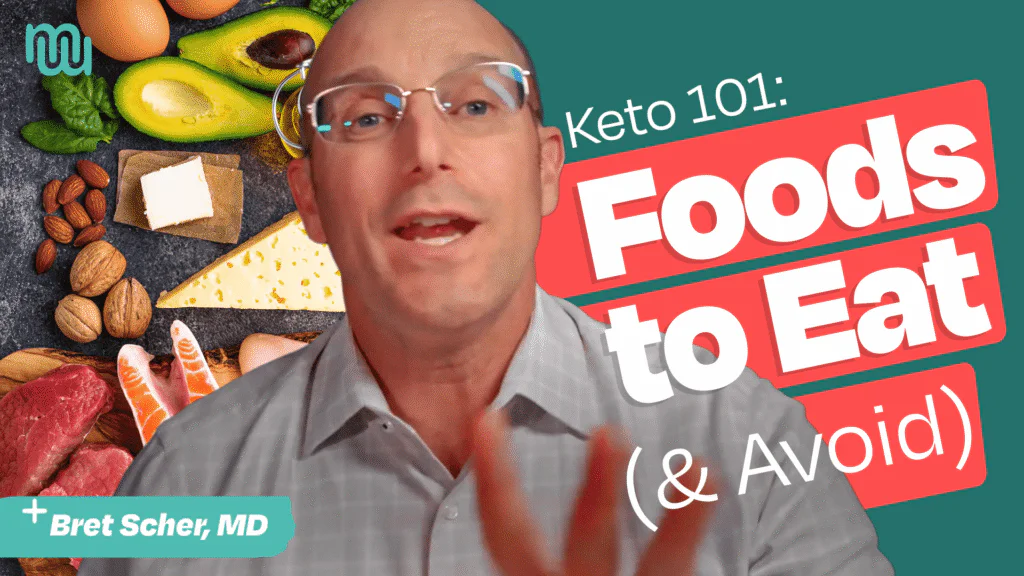
Dr. Bret Scher walks beginners through the practical basics of starting a ketogenic diet, covering which foods to eat and avoid, sample meal ideas, and keto-friendly snacks. He explains why he prefers describing foods as "compatible" with ketosis rather than strictly "keto" or "not keto," and emphasizes that lifestyle factors like sleep and stress also play a role in achieving and maintaining ketosis.
Read more
(I was excited to be invited to participate in the Nutrition Network and Metabolic Health India collaborative training, Vegetarian Low-Carb Lifestyle. This course includes ten expert-led modules and covers…
Learn more
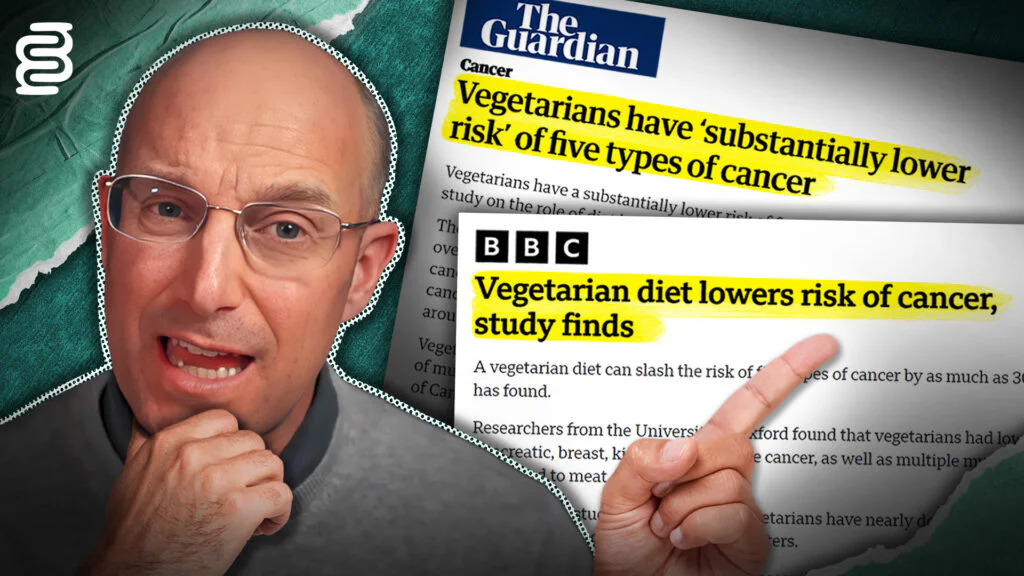
In this episode, Dr. Bret Scher examines two recent studies and highlights key limitations in their observational data, arguing that overall diet quality, calorie intake, lifestyle, and metabolic health may tell us far more than simply labeling meat as “bad” and plants as “good.”
Learn more
Did you know that thousands of people are already using ketogenic therapy to treat serious mental illnesses and even put them into remission? Transcript: Can Ketogenic Therapy help…
Learn more
Dr. Bret Scher walks beginners through the practical basics of starting a ketogenic diet, covering which foods to eat and avoid, sample meal ideas, and keto-friendly snacks. He explains why he prefers describing foods as "compatible" with ketosis rather than strictly "keto" or "not keto," and emphasizes that lifestyle factors like sleep and stress also play a role in achieving and maintaining ketosis.
Read more
(I was excited to be invited to participate in the Nutrition Network and Metabolic Health India collaborative training, Vegetarian Low-Carb Lifestyle. This course includes ten expert-led modules and covers…
Learn more
In this episode, Dr. Bret Scher examines two recent studies and highlights key limitations in their observational data, arguing that overall diet quality, calorie intake, lifestyle, and metabolic health may tell us far more than simply labeling meat as “bad” and plants as “good.”
Learn more
Did you know that thousands of people are already using ketogenic therapy to treat serious mental illnesses and even put them into remission? Transcript: Can Ketogenic Therapy help…
Learn more