New Results: First RCT for Schizophrenia & Bipolar Disorder. Learn more.


Listen, Watch & Subscribe on:



The Link between Insulin Resistance and Depression – An interview with Dr. Natalie Rasgon
Listen
About the host


Bret:
Welcome to the Metabolic Mind Podcast. I’m your host, Dr. Bret Scher. Metabolic Mind is a nonprofit initiative of Baszucki Group where we’re providing information about the intersection of metabolic health and mental health and metabolic therapies, such as nutritional ketosis as therapies for mental illness.
Thank you for joining us. Although our podcast is for informational purposes only and we aren’t giving medical advice, we hope you will learn from our content and it will help facilitate discussions with your healthcare providers to see if you could benefit from exploring the connection between metabolic and mental health. Welcome back to Metabolic Mind, where we’re discussing this intersection of metabolic health and mental health and the use of metabolic therapies as mental health therapies.
And today I’m joined by Dr. Natalie Rasgon. Now. Dr. Rasgon is an MD ,PhD and a Professor of Psychiatry and Behavioral Sciences at Stanford University. And she has done quite a bit of research about this connection between metabolic health and mental health. And today, I want to talk about one specific trial that’s pretty impressive about showing the connection between insulin resistance and the development of major depression.
And what Dr. Rasgon, and her colleagues, were able to do was to look at the Netherlands study of depression and anxiety. which is a, as she’ll describe, is a large study following patients for over nine years. But what she did was, she didn’t look at the subjects who had depression. She looked at the controls ,and she and her colleagues associated the diagnosis of metabolic dysfunction, such as triglyceride to HDL ratio, increased waist circumference, fasting blood sugar, and an increased likelihood to develop depression. But the question is, is that just an association or is it causative? So then, they looked at the timing of things and saw that those who didn’t yet have depression but had insulin resistance, they were more than twice as likely to eventually develop depression.
Dr. Rasgon’s going to go into more detail about the study, but what I want to highlight is how in our discussion, she talks about the study and then she talks about the clinical implications. Because that’s what’s really important, right? How do you translate these research findings to what it means to you as an individual or a loved one or you as a clinician for your patients? So, with that as the intro, let’s get into this discussion with Dr. Natalie Rasgon.
Dr. Rasgon, there’s this big discussion about insulin resistance, metabolic dysfunction, and serious mental illness. One of those being, major depressive disorder. And we’ve talked a lot already at Metabolic Mind about this connection. But I want to hear from you ,what you know about this connection, how you learned about it, and how that impacted your decision to investigate this Dutch study, specifically for that interaction?
Natalie:
Yeah, so that’s a great question, Bret. Let’s go back in time to mid-90s when I was at UCLA. And one of the serendipitous findings in clinical neuroscience was that patients with bipolar disorder had certain reproductive dysfunction. And part of this reproductive dysfunction was related to the insulin resistance.
That’s what started my interest. So ,my very first study was actually on bipolar women who were receiving lithium or Depakote mono therapy, and we were looking at their metabolic and reproductive function. And in that, it’s a first study, a threshold study, we found that, actually, reproductive dysfunction was not necessarily related to the depression and bipolar illness as much as was the metabolism.
And so that kind of spurned the decades, now, of work in my lab, both at UCLA and for the last 22 years at Stanford, where we were continuing to understand, try to understand, what is behind that metabolic dysfunction, as a part of the platform of developing mood disorders. And when we talk about mood disorders, we talk about both unipolar and bipolar depression or bipolar disorders.
And not going into too many details of that, but basically, there is a conceptual framework to say that very overlapping similar networks in the brain, mediating the effect of liability and the cognitive performance are involved in both unipolar and bipolar depression. So, the neorological differences are not that important as it is a kind of a system wide dysfunction, which yields an individual to the risk of developing mood disorders.
So, with that, the notion we were looking at two sides of the coin, so to speak. And one was, so if metabolism is impaired in patients with mood disorders, what happens if you treat one or the other? And we were very fortunate to show that if a patient has primary metabolic dysfunction, say such as polycystic ovarian syndrome, treating their insulin resistance will improve their mood and vice versa.
In women and men with mood disorders, bipolar and unipolar, treating their insulin resistance will improve their mood. So, we were arriving at that kind of nexus of crosstalk between the metabolic dysfunction and mood disorders. And a number of studies, which we’ve done over the years, were suggesting that actually what is needed is the large cohort to study, more comprehensively, various subtypes of depression and bipolar illness.
And the network, which I started about seven years ago with now late Bruce McEwen, it’s called, Psychopathology and Allostatic load across the Lifespan, which is abbreviated to spell, PALS. We had 15, we still have 15 centers across the United States and Europe. And one of them is the Dutch cohort called NESDA, N-E-S-D-A, which is Netherlands, Study of Depression and Affective Disorders.
And they are based in Amsterdam, and the University of Amsterdam, and Brenda Penninx is one of our collaborators in the very solid part of our group. And so, what basically we were able to reach as the wealth of information in that NESDA database. Now the database is going back 12 now, almost 14 years. So, it’s a long-term longitudinal, naturalistic study of depression, bipolar illness and controls.
And the number of subjects is incredibly impressive for those of us who do translational neuroscience research, and that is specifically 3,360 subjects. So, it’s a very reputable amount of people, very well described with every single variable you may want to check, including their clinical and demographic characteristics, the length of their illness.
The, all the potential corresponding variables ,like trauma, diet, exercise, alcohol and other substance use. All the biochemical and endocrinological data, which we could potentially want to have. So, it’s a real wealth of information. And so, what we did in collaborating with them, we asked them to collaborate on two specific questions.
Question number one, in their cohort was depression or bipolar and or bipolar disorder associated with metabolic dysfunction? The question number two was, if so, what is the temporal relation between the metabolic dysfunction and mood disorder?
Bret:
Yeah. I want to stop you there for one second.
Natalie:
Sure.
Bret:
If I can just interrupt because I think it’s really important to differentiate those two questions. Because when you’re dealing with a cohort study like this, a lot of the times, you can draw associations. But you don’t know what came first or what came second or what caused one or the other.
And so, asking that second question, the temporal relationship, I think, is important. And that’s one of the main questions I have as we review the findings of this study, is that there was this association between markers of insulin resistance and depression. But how do you know if it’s just the lifestyles that people lead that cause one, that cause the other?
Or if there was a more sort of causative or direct effect? So, how did you look through the study or design the study to try and get to that question as well?
Natalie:
Yeah, there’s actually other satellite studies or unrelated studies, which I can mention a little later, but specifically tA.
Okay, let me take a few steps back.
Bret:
Okay.
Natalie:
Chicken and egg question, of what precedes what? Metabolic dysfunction or mood disorder is still not quite answered. There are data suggesting certain temporal relation, but with a caution, full caution. It’s not fully elucidated yet specifically to NESDA to address that isolated question.
What Katie Watson, who is the first author and our incoming faculty at Stanford in my lab is, has done is to look at the subjects at NESDA cohort who did not have mood disorder at the baseline, but were metabolically impaired or not. And we tracked them for period of eight years at that time.
And what we found, what she reported in the American Journal of Psychiatry, I guess that’s the article you are referring to, is that those subjects who were not depressed, but had insulin resistance as the representation of metabolic dysfunction had twice the risk to develop depression at a two year follow-up.
So, what it translates to, in simple English, is that if a person has metabolic risk factors, such as insulin resistance, so it could be obesity, hyperlipidemia, increased waist circumference, all kind of various surrogate. Not necessarily, we’re not necessarily asking everyone to look at the very deep scientific biomarkers.
It’s something which could be available to the population at large and to physicians, providers in the community. So, the findings, which we reported, and you are highlighting today ,are very easily extrapolatable to the general population. And so, those subjects, who had those metabolic markers of metabolic dysfunction, had doubled the risk. And in fact, they did develop depression at a two year follow-up.
It’s an important finding, and a scary finding at the same time. Because if you think of that, so that means that if I am overweight and I have hyperlipidemia, and I don’t have depression, I have a significant chance to develop depression in two years, in comparison to say, a friend of mine, who does not have the same risks factors.
So, just based on that, that’s a very important finding. How does it relate to cause and effect? It does suggest that if we were to do more in-depth study of what in the behavioral correlates, right? What was the lifestyle of those patients, who were, or people who were not necessarily depressed but metabolically challenged, led them to potentially develop depression?
Now, we’re going back to the childhood. And Stanford actually has a privilege of having a wonderful study, which is in part being published, in part still ongoing. And that is a study of adolescence, who had metabolic dysfunction, such as insulin resistance and mood disorders. And that study, was also imaging studies, very much another study we’re doing in adults in my lab.
And they looked at kids ages nine to 18. Now, we’re looking at children and looked at what their brain biomarkers look like if they have the metabolic dysfunction of insulin resistance. And actually, the paper was published, I don’t know, about four, probably, years ago, four, four years ago. I can give you the reference on that. Saying that in fact, the insulin resistance kids had already unbiased deficiency in connectivity between the limbic system and prefrontal cortex.
So, these are neuroimaging biomarkers, which are not subject to interpretation, except the research interpretation that they had that early on. What does it tell us? I think that the main question is, whether a child who is not necessarily yet depressed, but is overeating or has heavy carbohydrate diet, is more prone to develop depression versus a child who is initially depressed very early on, and then retrieves to the carbohydrates as a soul food, so to speak, a comfort food, right? And then develops ensuing metabolic dysfunction.
Bret:
Yeah.
Natalie:
Those questions remain to be answered.
Bret:
It is, so it’s really interesting the way this Dutch cohort study was set up looking at the controls people who did not have depression.
I think that’s a very important point you made. And also looking at easily accessible markers, like triglyceride to HGO ratio, waist circumference, and fasting glucose. But then, if we go to the results, like you said, that there was an, they were twice as likely to develop depression if they had markers of insulin resistance.
So, what do you hope, or what do you think could be a take home for one patient and two clinicians from this study? Do we want people with insulin resistance walking around thinking, oh, I’m going to get depressed, so I need to do something? Or do we want physicians to be screening for it?
Like, how would you say this data, where it stands now, should impact clinical practice?
Natalie:
That’s a great question. The answer is both. I want patients with insulin resistance to think if they have a certain lipid dysfunction or they’re overweight, obese, or they have difficulty consuming carbohydrates and not stopping, that’s one of the highlights of the behavioral difficulties with insulin resistance.
I want them to think very clearly that they need to be assessed for their mood and anxiety, and to see if there is anything behaviorally, which could be adjusted to help them with their diet and lifestyle choices. Furthermore, with these just staying with patients, I want them to understand that having insulin resistance is only, in part, leading to in to depression.
It may also lead to early brain aging. It may also lead, and clearly leads, to diabetes and cardiovascular disease. And do they really want that? So, the beauty of diagnosing early metabolic dysfunction is that the attribution, such as changing lifestyle and diet, could actually be transformative, and they can reverse.
Highlight, reverse, the metabolic condition for the physicians and any provider on any level. Doesn’t have to be an MD dealing with those patients. I would suggest very clearly to be a very mindful that if a person is, has any metabolic risk factors, they need to be assessed for depression. And furthermore, if they are metabolically challenged, it has to be aggressively managed long before they become prediabetic or diabetic.
Because unfortunately, in the clinical community, we’re dealing with the, well, you’re not there yet. Yeah, whatever The not there yet, is a notion which has to be abandoned as possible
Bret:
Yeah, and it comes from both sides, really, that not there yet. So, for the physician, you don’t meet these prescribed criteria for type two diabetes, so don’t worry about it. And for the patient, they don’t feel bad. They don’t have depression. They don’t have limitations yet. So, neither side is really jumping on it in this scenario.
So, I think the way you’re communicating this is very important that we have to elevate it to the discussion of not there yet. Doesn’t exist now, or we’ve lowered the bar for not there yet. So now, it’s just markers of insulin resistance, which I mean so much of the population in America has, which really widens the spectrum of now who is on the radar for potentially developing mood disorders, for developing these cardiovascular complications and being addressed early.
But we don’t address it usually with a drug. It’s a lifestyle intervention. So, what do you think should be some of the first lifestyle interventions to be to target these people with?
Natalie:
So, there are two of them. One is truly an exercise, and the point of the exercise, we heard it ad nauseam, right?
We all know, everyone says that the bottom line is that specific to the pathophysiology of depression exercise, especially aerobic exercise, improves the hippocampal function. Hippocampus is the main part of the limbic system, which is responsible for the emotional regulation and memory. And there are number of studies done, both in animals and in humans, to suggest that sustained aerobic exercise in a certain dose.
And frequency is very beneficial for the hippocampus, even in the depressed subjects. But in a non-depressed, you do almost like a primary prevention for the hippocampal integrity. The second thing is diet. None of things we discussed today, Bret, are new. None at all. What I think is really important to emphasize is that when you provide the kind of a mundane, trivial messages or exercise and diet.
People don’t take it necessarily with a lot of trust because everyone says that. But we now have profound number of studies. literally. impressive amount of data, to provide the mechanism why it is important. So, in a diet, the dietary part, limiting the carbohydrates is truly important because carbohydrates in excess metabolically become fat. And that fat is not necessarily metabolized as the fat which derives from fat.
So, the food composition, then, of course, in the diet part. The question is the food frequency, the food preferences. That is a huge part of neuroscience, which is not necessarily well tied to the emotional dysregulation and the metabolism from the standpoint of triangulating it. But it’s truly very important because you could have very thin person who is profoundly depressed and metabolically challenged, and you can have a very fat person who is completely happy and not metabolically challenge.
So, none of these connections are ultimate a hundred percent links. And therefore, there’s a need for the nuance and individualized approach to each category of patients. For example, I can name three buckets for the kind of conclusion of our discussion. Number one, patient, people who are, who love to eat and don’t necessarily bother with food composition and food amount they consume. They just do what they want, what they think is appropriate.
Patients who have depression or bipolar illness, who have a very specific emotional state, which would regulate into a large extent what they eat and how they eat it. And then there are people who have the primary metabolic dysfunction, which dictates sometimes their food intake, but mostly dictates their anxiety and depression. And how all three of those could be taken together and researched appropriately by people themselves and their providers, so they can arrive at the comprehensive multifaceted approach to treat their condition.
So, instead of treating, is isolated concepts or constructs of syndromes. We should really approach treating a person.
Bret:
I really like that summary of treating the person. I like how you were able to tie in the research to the clinical applications to sum it up with that. So, I think that was perfect.
So thank you so much for joining us and walking through the study and for all that you’re doing in this field to help further the science. So, thank you. So, I like how she said the question of the chicken and the egg isn’t completely answered yet, but we certainly are moving in that direction.
And the time-based element of her study that she did, shows that maybe it is that insulin resistance that happens first and can directly cause or contribute to depression. Now from a scientific, a purely scientific description, yeah, we need more research to understand this. But from a clinical implication, knowing that people are at risk, knowing that individuals are not just at risk for cardiovascular disease and type two diabetes, maybe even cancer when you have metabolic dysfunction, insulin resistance, but also at risk for mood disorders, why wouldn’t we take this more seriously?
Why wouldn’t we want to address these markers of insulin resistance early? Be able to detect them early, be able to treat them early? And treatment of course is lifestyle, right? How you live your life, the food you eat, the way you sleep, the way you exercise, the way you manage your stress. And the problem is, for a lot of clinicians and for a lot of individuals, we’ve become jaded that, ah, that doesn’t work.
People can’t stick to it. But part of it is the message. And so, that’s what we want to, we want to tie up certainly with this interview to impress upon you as an individual, you as a clinician, how important it is to recognize and address insulin resistance. And that there are things we can do about it, whether it’s a low carb or keto diet, whether it’s some form of structured exercise program.
Working on your circadian rhythms and your sleep. It works and it can impact people’s future risk. And so, that’s what we need for more studies to more clearly delineate that so we can state that with confidence. But in the meantime, what can we do to help these people? Maybe it’s something that we can try.
And I think it’s something we should consider, and that’s what a lot of our videos here at Metabolic Mind are designed to do. To educate you, as an individual or as a clinician, for how to think about using a ketogenic diet to treat serious mental illness or any type of psychiatric diagnosis, how to do it safely and effectively.
So, if you haven’t seen those videos, please go back and see them. Please share them with your clinician. Discuss with your clinician about what you can do as a proactive step. And then. As one last thing, just remember, please, that this video is for informational purposes only. We’re not establishing a doctor-patient relationship or giving direct healthcare advice or medical advice. And any changes that you make to your lifestyle, to your medications, anything you use to treat yourself should be discussed with your healthcare provider.
So, please, take this information, learn from it, share it with your healthcare provider, but do not take any steps to treat yourself unless you’ve discussed it with your healthcare provider, and that they’re on board and supporting you. And we have a whole video about how to discuss with your healthcare provider so you can help get the care you need.
Alright, thanks a lot everybody. Hope this was helpful. If it was, please click the thumbs up and subscribe and leave a comment as we’d love to hear from you, and how we can continue to help you here at Metabolic Mind. Thanks for listening to the Metabolic Mind Podcast. If you found this episode helpful, please leave a rating and comment as we’d love to hear from you. And please click the subscribe button so you won’t miss any of our future episodes. And you can see full video episodes on our YouTube page at Metabolic Mind.
Lastly, if you know someone who may benefit from this information, please share it as our goal is to spread this information to help as many people as possible. Thanks again for listening, and we’ll see you here next time at The Metabolic Mind Podcast.
Listen, Watch & Subscribe on:
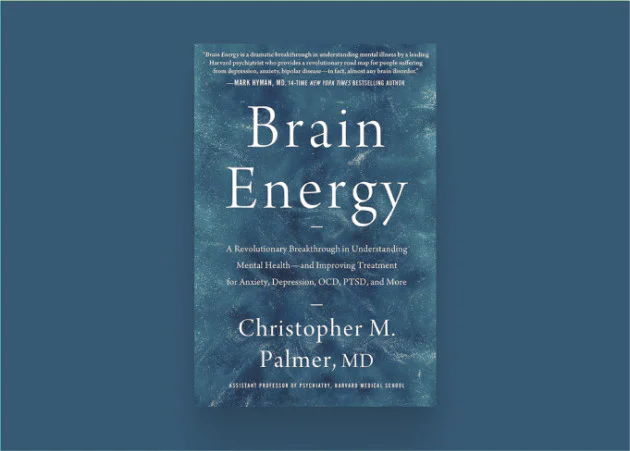
Harvard psychiatrist Dr. Chris Palmer outlines a new understanding that unites our existing knowledge about mental illness within a single framework.
Read more
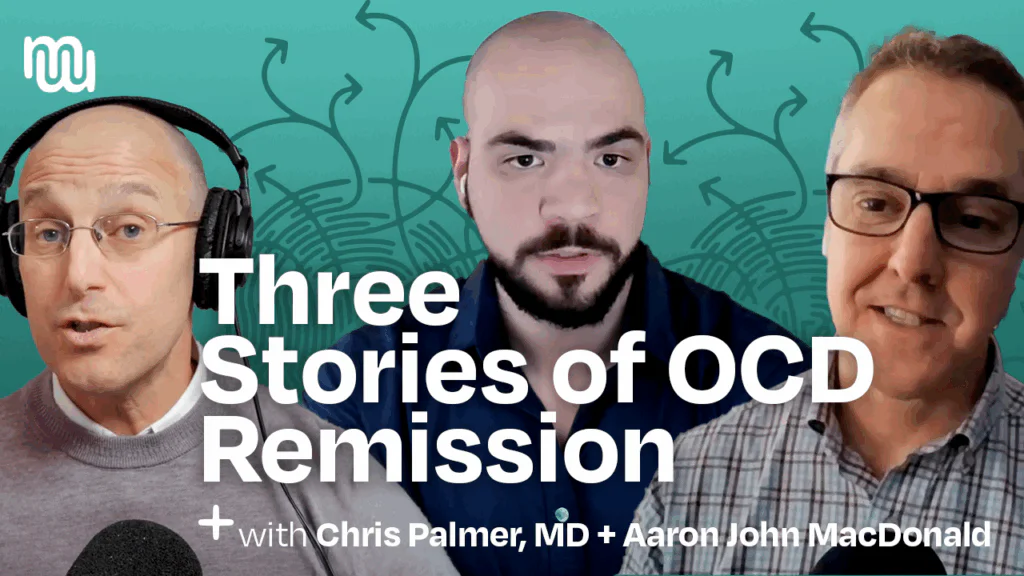
Can ketogenic therapy help reduce or even resolve symptoms of obsessive compulsive disorder (OCD)? Dr. Chris Palmer and research assistant Aaron MacDonald join Metabolic Mind to discuss one of the first published case series exploring metabolic and ketogenic interventions for OCD.
Learn more

This episode of the Metabolic Mind Podcast features Dr. Lily Mujica Parodi, a Baszucki Endowed Chair of Metabolic Neuroscience, and Dr. Kirk Nylen, Managing Director of Neuroscience at Baszucki Group. Together with host Dr. Bret Scher, they explore groundbreaking research on insulin resistance in the brain and its link to dementia and cognitive decline. The conversation highlights a critical age window for intervention, the stabilizing role of ketones on brain networks, and the potential of ketogenic diets and lifestyle changes to prevent or slow neurodegeneration. Listeners gain both scientific insight and practical takeaways on how metabolic health influences long-term brain function.
Learn more
Harvard psychiatrist Dr. Chris Palmer outlines a new understanding that unites our existing knowledge about mental illness within a single framework.
Read more
Can ketogenic therapy help reduce or even resolve symptoms of obsessive compulsive disorder (OCD)? Dr. Chris Palmer and research assistant Aaron MacDonald join Metabolic Mind to discuss one of the first published case series exploring metabolic and ketogenic interventions for OCD.
Learn more
This episode of the Metabolic Mind Podcast features Dr. Lily Mujica Parodi, a Baszucki Endowed Chair of Metabolic Neuroscience, and Dr. Kirk Nylen, Managing Director of Neuroscience at Baszucki Group. Together with host Dr. Bret Scher, they explore groundbreaking research on insulin resistance in the brain and its link to dementia and cognitive decline. The conversation highlights a critical age window for intervention, the stabilizing role of ketones on brain networks, and the potential of ketogenic diets and lifestyle changes to prevent or slow neurodegeneration. Listeners gain both scientific insight and practical takeaways on how metabolic health influences long-term brain function.
Learn more