Announcing the new McLean Center for Metabolic Psychiatry Learn more.


Listen, Watch & Subscribe on:



Targeting Cancer Metabolism With Ketogenic Therapy and Fasting
Listen
About the host

About the guest


Matthew:
If you do standard of care, you have about a 9 to 10% chance of making it past three years. If you do the metabolic treatment, based on the data from this trial, that could be around 30%. That’s a three times, a 3X, maybe a 4X survival increase. That’s potentially powerful.
Bret:
Welcome to the Metabolic Mind Podcast. I’m your host, Dr. Bret Scher. Metabolic Mind is a non-profit initiative of Baszucki Group, where we’re providing information about the intersection of metabolic health and mental health and metabolic therapies, such as nutritional ketosis as therapies for mental illness.
Thank you for joining us. Although our podcast is for informational purposes only and we aren’t giving medical advice, we hope you will learn from our content and it will help facilitate discussions with your healthcare providers to see if you could benefit from exploring the connection between metabolic and mental health.
Could metabolic treatments be the new frontier of cancer treatments? It’s certainly possible, and I’m joined today by Dr. Matthew Phillips to talk specifically about a study he did in patients with glioblastoma multiforme. Now, yes, it’s a specific study on a specific type of cancer. But really what excites me is not just what it did for these patients, but what it tells us about cancer therapy in general, and what the future may hold for cancer treatment.
Now, if you don’t know Dr. Phillips, he’s actually joined us here before on Metabolic Mind. He’s a clinical and research neurologist based in New Zealand. You can find him at metabolicneurologist.com, and he really is seen as like the pioneer of this emerging field of metabolic neurology. And we talk not just about this specific paper, but really what it means in the broader scheme of cancer therapy. And also the GKI, the glucose ketone index, and why that might be important for treating patients with cancer.
And not just so they can survive longer, but also their quality of life, which is such an important part to consider for cancer therapy. So, I hope you enjoy this interview as much as I did with Dr. Matthew Phillips. Many of the interventions we discuss can have potentially dangerous effects if done without proper supervision.
Consult your healthcare provider before changing your lifestyle or medications. In addition, it’s important to note that people may respond differently to ketosis, and there isn’t one recognized universal response.
All right, Dr. Matthew Phillips, so good to see you again at Metabolic Mind. Thanks for joining me.
Matthew:
Yeah, awesome to be here, back here again, Bret. It’s been three or four years, I think.
Bret:
Yeah, it’s been a while since we talked about your studies using ketogenic interventions in Alzheimer’s and neurodegenerative disease.
Now, you have one specifically for glioblastoma. And so, there’s a lot to get into about this study. But I want to talk about the broader scope of ketogenic and metabolic therapies in cancer, talk about GKI. But before we get to all that, as I like to start, what is one area of medicine that you think just modern medicine really gets wrong and you wish were different?
Matthew:
Yeah, that is a awesome question to start with. So, I work as a clinical neurologist in a fairly big hospital. And what I notice is when we see patients on the wards or in the clinics, it’s basically trying to improve their function and their quality of life with medications that don’t really address the root cause of the disorder they have. And so, what I find frustrating is that we often end up trying to patch them up a bit or just try to improve the symptoms a bit, like tinker with the medications for someone with Alzheimer’s or Parkinson’s or what have you.
But we don’t really get at the whole core of the disorder, which really is where you start talking about true healing. And so, I wish medicine, we would have a more open mind to treatments and strategies, metabolic treatments, metabolic strategies that are aimed at true healing. I wish we just had more of a lens on that, and realized that although we can still do the other stuff, it shouldn’t really be the main game.
It should be part of what we do.
Bret:
Yeah, such an important point. I’m really glad you brought that up. And I would say probably, and especially with neurodegenerative diseases, so much of it is, “Eh, we don’t really know what causes it. We really can’t reverse it. So, let’s just try and stem some of the symptoms.”
But is that true? Do we really not know how to reverse it or what causes it, or have we just been looking in the wrong places? And with metabolic therapies, maybe we can open up a whole new world of treatment that’s just been, when you compare the work and the attention and the money given to drug therapy versus metabolic therapy, it’s black and white.
It’s completely dwarfed by it. But maybe we should reverse that? So now, I’m going on my soapbox, but yeah.
Matthew:
No, I agree. I agree. We focus on medications, but we also focus on other things, supplements and applying some kind of drug or chemical or supplement or something, but we really should be thinking more broadly.
And the metabolic strategies, like the fasting, ketogenic diets, and other ones are really more comprehensive in how they change the body over time and potentially can improve the disorder at a deeper level.
Bret:
Great point. Great point. All right, so now if we shift gears. And before we get into the details of your specific study that you recently published, let’s take a step back though and talk about metabolic therapies for cancer, in general.
So, where do you think we are in terms of knowing the efficacy of metabolic therapies, and why is it important in your mind to be studying this and trying to advance it?
Matthew:
We are at a very early stage in terms of looking at the efficacy of these therapies in cancers, most cancers. And obviously, it’s very important because we don’t have good outcomes in many cancers, particularly the most aggressive ones, things like glioblastoma, which is the most common form of primary brain cancer, advanced pancreatic cancer, and a few others.
They, many metastatic cancers, have very poor outcomes. So, we need better treatments. That’s why it’s important. I think we’re at an early stage because, although I’m a fan of them, ketogenic diets have stolen a lot of the limelight when it comes to treating people with cancer, and there are quite a few studies out there.
They’re all small and heterogeneous. So, mixed in how they approach the cancer. And I think ketogenic diets to me is just one mode that we have to leverage in order to get more powerful outcomes. And that’s what we’re going to talk about in the last clinical trial that we just published because we used three different modes, not just one mode, of metabolic therapy.
So, ketogenic diet was one of them. But the other two were prolonged fasting and intermittent fasting. So, I think we need to realize that we’re still at a very early stage, and before we can get those really large trials with powerful, consistent results, I think we need to go deeper in the therapies we’re applying and go past just using ketogenic diets.
They are good, but I don’t think on their own they are enough for most cancers.
Bret:
And that really shows with the way you designed this trial using eight different 5-day fasts plus intermittent fasting. Basically, eating within a one-hour window ,but eating the ketogenic diet, 30% protein, 60% fat or so within that one-hour window.
So like you said, extended fast, intermittent fasting, and ketogenic intervention. So really, hitting metabolic therapies from pretty strongly, I guess you could say, compared to just a dietary therapy. But why do you think this would work? What is the theory about why metabolic therapies would help cancer and glioblastoma specifically?
Matthew:
Yeah. good question. So, the whole point of using the fasts plus the keto diet was to get what you mentioned at the start of the podcast, the GKI down really low. And you can get it lower when you throw in big fasts, plus the ketogenic diet versus just a ketogenic diet. The GKI is the glucose ketone index. So, glucose sugar in the blood, ketones, energy molecule from fat in the blood, as probably everyone in your audience knows.
And it’s the ratio of those that is important, and you want to get it low. A low GKI means you’ve got a lower glucose and a higher ketone. So, you want lower GKIs when you’re treating cancer, and maybe even other disorders like Alzheimer’s and Parkinson’s and so on, in theory. Why is that?
Because for cancer, anyways, cancer cells need a lot of glucose to thrive and grow, whereas there’s really no convincing evidence that they can thrive on ketones. It can, some of them may in some cancers, maybe can limp along and use ketones a little bit but not thrive. So. If you get the GKI down, that is low glucose, high ketones, then that makes an environment in the body that is a little difficult for cancer. But normal cells are very happy to use the ketones.
In cancer, another thing I guess that we do, is we wanted to try and see if we can improve the effectiveness of the standard treatments, the chemo and radiation. And there’s some evidence that in animals and people, that if you get a low GKI, what happens is the normal cells go into a sort of a stress-resistant mode and become more resilient against the chemo and radiation, which is good because then you’ll get less adverse effects and less damage to the body from those.
At the same time, the cancer cells don’t seem to be able to enter that stress-resistant mode. So, they remain stressed because you’re choking their glucose a bit, and yet you’re also exposing them to the chemo and radiation. So, those are two of the mechanisms why a low GKI might help someone with cancer, and there are quite a few others.
I guess, ultimately, the third thing to think about why it might be useful in cancer is that if we view cancer as a disorder of impaired mitochondrial biology. So, the mitochondria, there’s a few hundred or couple thousand in most of our cells. The little organelles that produce energy and have important signaling functions and help mediate a lot of things actually.
Then, if you can use the fasts and the ketogenic diet to try and help them renew and repair themselves, then that ultimately might be a very good way to help someone with cancer, and also prevent recurrences in the future. Because that’s ultimately what you have to do, is not just take care of the tumor that you can see, but make sure that no more pop up.
That is actually much more of a long game and much more important. And I think that’s where you’re going to get your long-term survivors in cancer if you’re using that approach.
Bret:
Yeah, really interesting theory about the mechanisms there. But I want to go back to what you were saying about the side effects from the chemotherapy and the radiation. Because yes, living longer, tumor suppression, those are very important outcomes, but so is quality of life. Because quality of life can be so diminished with chemotherapy and radiation.
So, it looks like you designed this trial with a couple different secondary outcomes reflecting that, right? With survival and with exercise capacity and quality-of-life measurements. And so, tell us about how important those were for you to investigate beyond just survival, which is obviously important.
Matthew:
Yeah. So, one of the main aims, obviously, was to get the GKI down low and sustain it, and we did that. And then, that was the primary outcome. The most important outcome. But the secondary outcomes, as you say, included adverse effects and then things. Like quality of life and survival. In terms of adverse effects, it’s super important to look at those (a) because I was working with a lot of clinical oncologists in this trial, my colleagues, who are very, understandably, might be concerned about applying an intensive fasting protocol to people with one of the worst cancers that there is. Because in general, the cancer field doesn’t have a good, a favorable, view of weight loss, right?
And if you’re going to do a lot of fasting, you’re going to lose a lot of weight, logically. So, and that’s because in their treatments, when a person is losing weight and unable to sustain it, that is indicating that you have something called cancer cachexia, where the muscle and bones and other things are starting to break down. And it’s a bad, it’s a bad feature.
It means that the cancer’s probably getting away on you. So, they don’t like that. We had to design the fasts properly, and monitor all these adverse effects very carefully. And it was really good to see that they used this scale, this formal cancer scale, called the CTCAE. And it was good to see that all the adverse effects from the metabolic therapy were mild or moderate.
There were none that were serious or very serious. Conversely, there were a few serious ones from the chemo and radiation, but that’s known to happen, and they weren’t very. They may have been not as common as they might otherwise have been. So, there’s some anecdotal evidence that maybe the metabolic therapy sort of reduced the normal adverse effects the patients might have received. But definitely, the metabolic therapy did not induce any significant adverse effects of its own. And that’s super important when you’re getting cancer patients to do 5-day fasts repeatedly and a ketogenic diet and all these other things.
Bret:
Yeah, and it is important to recognize how counterintuitive this is for most oncologists and for standard of care treatment, which is typically, if you’re losing weight, go eat whatever you want. Go have your ice cream and your cookies and your candy, right? Whatever is going to help you put on weight because weight loss is a big concern.
But what you’re saying is not all weight loss is the same, and you can design metabolic therapies to mitigate some weight loss as well. And if it’s purposeful, metabolic, quote-unquote, “healthy weight loss,” it’s very different from cancer cachexia and weight loss from side effects of chemotherapy.
So that, I think, that’s really important to emphasize. And it was good to see that you found that in your trial. That it really looked like the people who lost weight sort of needed to lose weight because they were overweight. So, it brought them down to a, quote-unquote, “healthy BMI,” and the others did not have profound side effects of weight loss or anything reflecting cachexia.
So, from that standpoint, it seems like it was a success from the side effect standpoint. Would you agree?
Matthew:
Definitely. In fact, one of the most interesting findings was that the people that lost the most weight had the best survival outcomes. Now, that’s very interesting, and I did not anticipate that.
But I guess it makes sense. If you have more weight to lose, you can get a lower GKI. And in the trial, a lower GKI was associated with a better result, better survival. So, you just have to be very careful here because what the findings from this small trial, but well-conducted trial, would suggest is that if you’re in a structured metabolic protocol fasting ketogenic diet for cancer, intentional weight loss might not be a bad thing as opposed to unintentional weight loss.
And in fact, intentional weight loss could be viewed favorably because it’s a fact that our long-term survivors in this trial, people living over three years all and all still alive, lost the most weight. So, that’s just a very interesting finding. And I think we have to keep an open mind here and remember that unintentional weight loss may be very different from intentional weight loss.
Bret:
Yeah. Super important point. it’s so interesting we’re getting into the findings, and I haven’t even set up the trial yet so it’s like.
Matthew:
Oh, sure. Yeah.
Bret:
I got a little ahead of myself. My mistake. So, you enrolled 18. So you had 32 who were eligible. But 18 enrolled, and everybody was getting chemotherapy and radiation.
But then, 18 enrolled in the metabolic therapy. So like we said, the eight 5-day fasts timed specifically around when they were getting their treatments. And then on, when they were eating, it was one or two meals within a one-hour window that was a ketogenic meal.
Matthew:
Yes.
Bret:
So, I guess that was the setup. And then, we already talked about some of the findings in terms of the adverse events. But the primary endpoint, like you said, was GKI.
Basically, is it even feasible for these patients to get their GKI down? And it was remarkable. The average GKI was 1.88. So, what do you reflect on that in terms of what that means for this treatment?
Matthew:
Yeah. In theory, it means you were really stressing the cancer cells in a very powerful way and for a very long time.
It’s been said, if you get a GKI under six in animals, you start to get favorable effects on tumor growth and survival. And if it’s been proposed in humans, although it’s been very difficult to get humans down this low, that around two. There was a paper that Dr. Tomas Duraj and Dr. Thomas N. Seyfried and quite a lot of us actually put out a few years ago suggesting that a GKI around two might be optimal for people with cancer.
And that’s what we aimed for, but getting that down and sustaining it in a group of people is not so easy. Getting it down in one person who’s motivated is not that difficult. We’ve done it before. Other people have done it before in case reports and case studies.
But getting it down in a group of people is very difficult. The different things about our trial compared to previous ones is we only looked at the wild-type glioblastomas, which is the sort of worst version of them. It’s most of them, but it’s the worst ones, and not none of the mutants. And then, we did use a multimodal protocol, as we’ve already discussed, not just keto diet but also fasting.
And then, I guess having that intensive low GKI for a very long time was something that hasn’t been achieved very often, as we just discussed. And I guess what you alluded to there with the 32 patients is we had a control group. So yeah, 32 people were eligible, and 18 said, “Yes, I’ll do this.”
Fourteen did not. They all had the same standard treatments. All of them. They had the same baseline characteristics. The control group was not sicker. If anything, it was the opposite. If we use calculators, our metabolic group should have had a lifespan of 13 months, whereas the control group should have had a lifespan of 14 months. So, a little more favorable in the control group, actually.
And then. We followed them through, and It was not a randomized trial. It was a non-randomized trial. But they were contemporary controls treated by the same treatment, same oncologist, same center. And those 14, people might ask, “Why didn’t they enter the trial?” Some of my patients in the trial said, “Why would you not?”
About half of them, maybe 40% of them, didn’t get offered it for a few reasons early in the trial. Some of the oncologists and other people involved in recruiting were maybe a little more hesitant about it. And so yeah, some of these patients contacted me later, unfortunately, like weeks or months later, said, “Oh, can I enroll?”
And unfortunately, due to the enrollment criteria, I could no longer enroll them. But they would have done it. And then another, the rest of the patients, most of them were just not interested. I think the 5-day fast, the idea of it was a bit daunting.
Bret:
I can see that, yeah, for sure. Yeah. that’s daunting for anybody who hasn’t,
especially if you haven’t, done fasting before. So, I could really see that.
Matthew:
It is. It is. And then others were just, some people, a few people just they accepted the prognosis and just wanted to keep enjoying life and doing, eating whatever they wanted. So, that was why those 14 didn’t enroll in the trial.
But then, yes. We had 18 that did the trial, and they did very well keeping that GKI down, as you said.
Bret:
So, like you said, it wasn’t randomized, but it’s as close as you can get without actual randomized. So, there’s some self-selection bias that could come in there.
Matthew:
Yeah.
Bret: But then you look at the results though, and the average survival was 21 months versus 14 months between the two groups, which I guess you could look at and say, “Seven months isn’t really that big of a difference,” or this is, unfortunately, such a difficult to treat cancer and such a poor prognosis that you’re basically giving them a 50% increase in their survival. That’s the other way to look at it, with improved quality of life.
So I mean, in a way, you’ve got to say it was a huge victory and a huge success for those who did it.
Matthew: I should also say, I think another way to look at it is if it was the long-term survival rate was really interesting because with the standard group, the long-term survival rate, which is people living over three years, was 7%, and that last person passed away just after the three-year mark.
We know that about 9 to 10% of people with GBM live past three years as long-term survival, some bigger trials. So, that was consistent with previous trials. But in the metabolic group, we had a 27% three-year long-term survival rate. All those people are still alive. There’s another guy at two and a half years who’s probably going to make it as well.
So, it’s going to be over 30%. So, if you look at that, you can see that’s a 4X, that’s four times as many long-term survival. So, if I’m an oncologist, and I’m sitting down with a patient saying, “Okay, if you do standard of care, you have about a 9 to 10% chance of making it past three years. If you do the metabolic treatment, based on the data from this trial, remember it’s a small, smaller trial, non-randomized, that could be around 30%.”
That’s a three times, a 3X, maybe a 4X survival increase. That’s potentially powerful and more motivating perhaps than saying you might get an extra six, seven months. So, that’s another way to look at it that I think is pretty important.
Bret:
Yeah, very important. And it brings up the question, whenever you have a novel, we’ll call it novel, treatment for a really awful disease without great treatments, it makes you wonder, what will it take to institute this more widely, right?
Of course, it’s not going to be guideline-based care until there’s a randomized controlled trial. That’s just how guidelines usually work. Not always but almost always. But if I was an oncologist treating patients with glioblastoma and I knew the, unfortunate, poor outcomes that most people have, and I saw this, no matter how small the study is, I would be interested.
I would really want to start talking about, to my patients about it. So, what do you think will be or should be the sort of uptake of this type of a treatment for someone with a really terrible terminal diagnosis?
Matthew:
Yeah. An excellent question. So, the uptake to me, I think, I hope, even in the most hardened skeptics, it at least sparks interest and makes mainstream oncologists think about the possibility that there might be other ways to approach this terrible disorder, glioblastoma.
So, that’s why I aimed for the journal, I aimed for Neuro-Oncology Advances, which is, that and the journal, its mother journal, Neuro-Oncology. They are the two most sort of mainstream journals that neuro-oncologists read. So, that is why we aimed for that journal in particular rather than another one.
And I think the uptake is that maybe there’s something to this, and maybe we need to consider adding these metabolic interventions to the standard of care. I think oncologists, many of them, would be okay with that if they could add, implement the intervention in a way that isn’t too arduous for them.
The way I designed that intervention was that so it was implemented without a dietician or any nutrition specialist. It was just, yeah, just myself essentially. So, now I have a lot of, I guess, metabolic nutrition knowledge just because of, by virtue of what I do. But I guess ultimately we need to get to a point, I think, where an oncologist could present this program to a patient in 5 to 10 minutes, give them the materials. And then, maybe some online support, things.
So, I had some online supports, mainly emails, a regular sort of email series that guided them through it. And then, you could have dietetics or nutrition support as well. But if you’re going to see this thing adopted in a broader scale, then beyond the larger controlled trials that you mentioned, we’re going to need to have it able to be implemented in a way that’s not too difficult for a standard oncologist, who maybe doesn’t know that much about metabolic therapy, to actually introduce it to his or her patient and say, “Look, why don’t you try this?”
So yeah, those are some of the things you need to go. But I hope the takeaway is just it sparks interest in the most skeptical of my oncology colleagues. And then other people, perhaps, like in the metabolic crowd and patients, maybe it sparks more than interest. And I know that some people will try things along these lines.
I guess, I always have to say if you’re doing 5-day fasts and you have glioblastoma, at this point in the game, it’s still very early days for the evidence. So, I would recommend guidance for that from someone who knows what they’re doing before you just embark on it.
Bret:
Yeah. And that’s a good point.
This is something that could go south pretty quickly, especially if there’s not enough clinical guidance. And I can definitely see your average oncologist, your average dietician, again, who doesn’t know a lot about metabolic therapies would read this protocol and say, “That’s crazy.”
Matthew:
Yeah.
Bret:
“There’s no way a patient could do that or should do that.” But then, if they see the results of your study, hopefully, that’ll be enough to make them say, “Huh, maybe it’s not crazy? Maybe I should look into this more?” But that initial, if you just tell them the design, I’d guess 99 out of 100 are going to tell you’re crazy.
Matthew:
Yes. As you know, Bret, the hardest part of the 5-day fasts is the thought of them. Once you start them, they’re not so bad. If you have the guide and you have some material and you know what to expect, they’re not that hard. You just take it day by day, hour by hour. And you shouldn’t feel bad on them if the guidance is correct and every single patient of the 18 did all eight 5-day fasts.
Nobody cut one short. Nobody missed one. Yeah, it was incredible. So, they found those easier than the ketogenic diet actually on average. It’s the thought of the fasts that is the hardest thing because yeah, you think initially, “Oh, that’s crazy.” But it’s the difference between thinking and acting. Once you start it, it’s not that bad.
Bret:
Yeah. Now, next question is extrapolating this to other cancers. We can’t talk about cancer as if it’s one thing. There’s not just one cancer, right? Breast cancer is different than brain cancer than kidney cancer than leukemia than. They’re all, they’re different types of cancers.
So granted, from a science standpoint, you can’t say anything about other cancers based on this study. But knowing what you know about mechanisms and knowing what you know about just the broader scope of things, what do you think the adaptability or the applicability would be to other cancer therapies?
Matthew:
Yeah. That’s a very nice comment because I’m working on a paper right now with another guest you’ve had, Dr. Martin Picard. And we’re working on a paper, we’ve collaborated before, as that sort of looks at most cancers as having a similar mechanism and lumps them together. And we discuss a multimodal metabolic protocol beyond what we did in this trial that might be applicable to most of those cancers.
So yeah, most cancers, they vary in the tissue of origin. So, something like a lung cancer starts in lung tissue. A glioblastoma starts in the glial cells of the brain. And different skin cancer starts in the skin. So, different cancers have different tissues of origin. But if you look past that difference and other differences, like there are genetics and things like that.
There are many more similarities one could argue between all these different cancers. Certainly metabolic similarities, and ultimately, they all demonstrate abnormal metabolism. They generally rely more on glucose, some more than others. And they all have impaired mitochondrial biology, and all the things that come with that energy impairment. And from Martin’s perspective, increased energy resistance is present in these cancers.
So really, a metabolic therapy protocol should be applicable to most, I won’t say all, but certainly the vast majority of cancers. We know that about 10 or 15% of cancers have a stronger genetic basis, but 80 to 90% do not. I think the applicability is high, and you can just view cancer as having many more similarities between different cancers than differences.
I think that broader sort of lens is really important if we’re going to make progress. So yeah, I cannot say that this protocol would help someone with prostate cancer or lung cancer or anything. I cannot do that because the evidence is not there. We didn’t look at those tumors. But in theory, there should be overlap. And I think it’s going to be really important to do more clinical trials in these other tumors in future, obviously, to see if we can get similar results.
Bret:
Yeah. And that’s really the best use of a study like this is for people to say, “Huh, that’s super interesting. I want to try it over here, and study it this way. And I want to try it over here, and study it that way.” And it’ll be the seed from which this whole tree of other research studies comes from hopefully.
That’s one of the reasons I think this is so interesting and really need to shout it from the rooftop so people hear it and understand it and want to learn more about it. It’s fascinating. I applaud you for the work, and I can’t believe you got it through the ethics committee, too, because I’m sure the ethics people probably thought it was crazy protocol.
But as you’ve shown, absolutely not, and I keep coming back to that. But I think it’s important to break down that barrier, which you’ve done so well. But I want to give you the floor for any last comments and then where people can follow you to learn more.
Matthew:
Okay. Yeah, I’ll just say with the ethics, I guess, if you view the 5-day fast, you’re just focusing on the fast itself, and think it’s difficult, then that makes it hard. But if you focus on it as a tool to get the GKI down, and that getting the GKI down could be very important in glioblastoma. That’s what I did, and we didn’t have any problems with the ethics committee, particularly since my oncology colleagues were supportive.
Getting the support took years. It took a few years to get the support from my oncology colleagues. But it’s just they got to get to know you and understand that you’re not just some crazy guy that’s coming in saying, “Let’s try this.” There’s a lot of theory, and you work hard. And that I have good results in neurology and other areas.
So, that was where that came from. I guess, final comments this study has a nice design. it offers things in the design that I mentioned earlier. Only looking at the wild type glioblastomas, the worst ones, using multiple modes of metabolic therapy, getting the GKI down super low for super long time. And then, of course, having a contemporary control group.
So, that’s where the study’s interesting, and I think the results are promising. But we can’t use them as definitive evidence because the trial’s two main weaknesses are it’s on the smaller side. Thirty patients might sound like a lot, but you need studies with hundreds to really convince people, other oncologists.
And it was non-randomized. I can say, generally speaking, if you look at the results from a broad lens, a third of the patients, I call them responders. They are long-term survivors. They are all alive. They are all at home. And many of them without any visible evidence of tumor. That is awesome. However, I would say a third I would call partial responders.
Those are people that lived definitely longer than standard of care but still succumbed. And then, there are the third that we don’t talk about as much, but I mention them explicitly in the paper because I think it’s really important. I call them non-responders. People that didn’t, I’m not convinced, did any better than standard of care.
And I think we have to look at all three of these groups, not just in this trial, other trials. I saw similarities in our Alzheimer’s and Parkinson’s trials, and I’m going to explore this later in future. We have to look at these other groups and say, “Why did they not respond as well to the metabolic therapy?
And is there something we could change to help them respond better?” Of course, we also have to look at the responders and say, “Why did they respond so well?” And so, I’m going to be looking at that more in the future because I’d like to be able to, obviously, get more responders because it’s such a difficult, devastating disorder.
And the people did it well. They’re just so happy, and they’re grateful, but they did all the work. But there’s just, it’s so nice to see. Whereas, the people that didn’t respond, that was tough. They’re still, they might not be doing it quite as well.
They’re still doing it, and I’m helping them through it. But it was tough to see them still succumb. So, we just need to be realistic here and keep working and trying to improve our therapies and yeah. Thank you for having me on the podcast once again.
Bret:
Yeah, very important perspective. So, thank you.
And I’m excited to see the paper that you and Dr. Picard are working on, too. So, thank you for all your continued work, and I look forward to hearing more from you here at Metabolic Mind. Take care.
Matthew:
Thanks.
Bret:
I find that study so remarkable on many different levels. And I don’t want to keep harping the point, but it seems like something so extreme and so dramatic, the eight 5-day fasts and the one meal a day.
And from our standard medical care, it really is. And that just sort of enforces or reinforces even more the thought that maybe we’re on the wrong path. And just like Matthew said in the beginning, that we’re working more on putting band-aids on symptoms rather than addressing the root causes.
And it takes this type of shift in your thinking and ingenuity in your protocol design to really say, “We’re going to hit what we think is more of the root cause even harder, and hit the cancer cells even harder than it’s ever been done before with this specific metabolic intervention.” I just find that so groundbreaking and so encouraging.
And yes, it was a small study, non-randomized in a very difficult to treat disease. But oh my goodness, for those people who are now still alive at three years, can you imagine the change? And even just the quality of life for those people who are going through the chemotherapy and the radiation and the treatment, improving the quality of life is so important.
So, being able to apply this on a broader scale, especially with further research, I just find so encouraging. And my hat’s off to Dr. Phillips and his whole team for making this study happen, and hopefully, we’ll see more of it. ,So I hope you enjoy this interview, and I hope it’s inspiring to you as it is to me.
All right, take care. We’ll see you here next time at Metabolic Mind. Thanks for listening to the Metabolic Mind Podcast. If you found this episode helpful, please leave a rating and comment as we’d love to hear from you. And please click the subscribe button so you won’t miss any of our future episodes.
And you can see full video episodes on our YouTube page at Metabolic Mind. Lastly, if you know someone who may benefit from this information, please share it as our goal is to spread this information to help as many people as possible. Thanks again for listening, and we’ll see you here next time at the Metabolic Mind Podcast.
Listen, Watch & Subscribe on:
A scientist reveals the groundbreaking evidence linking many major diseases to a common root cause—insulin resistance—and shares an easy, effective plan to reverse and prevent it.
Read more
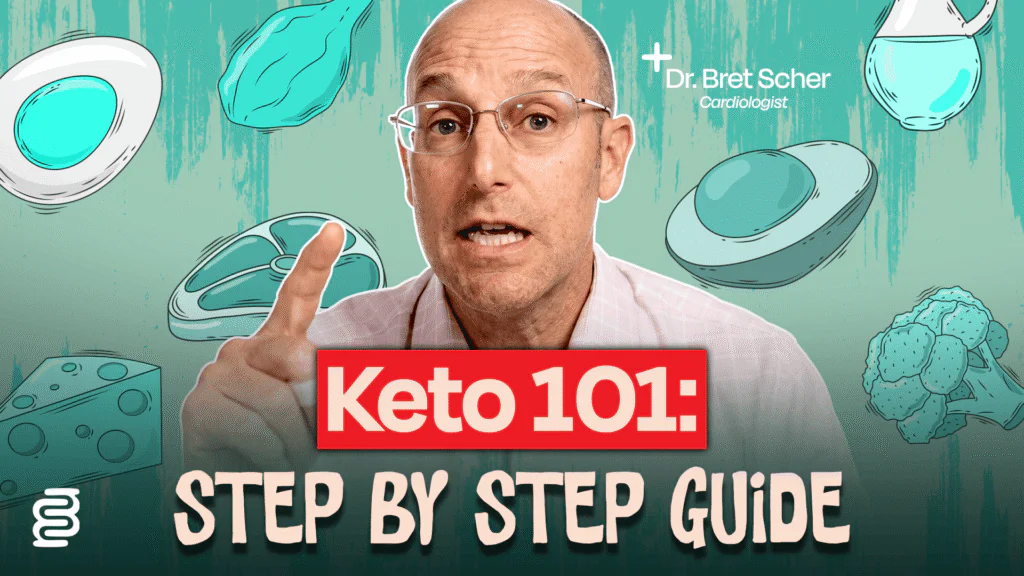
Dr. Bret Scher walks through the basics of starting a ketogenic diet, covering how to set carb, protein, and fat targets, why keto is actually a moderate-protein diet rather than high-protein, and how to avoid the "keto flu" through gradual transitions and proper electrolyte intake. He also explains when and how to test ketone levels and stresses coordinating with a healthcare team if using keto to manage a medical condition or psychiatric symptoms like depression or bipolar disorder.
Learn more

(I was excited to be invited to participate in the Nutrition Network and Metabolic Health India collaborative training, Vegetarian Low-Carb Lifestyle. This course includes ten expert-led modules and covers…
Learn more
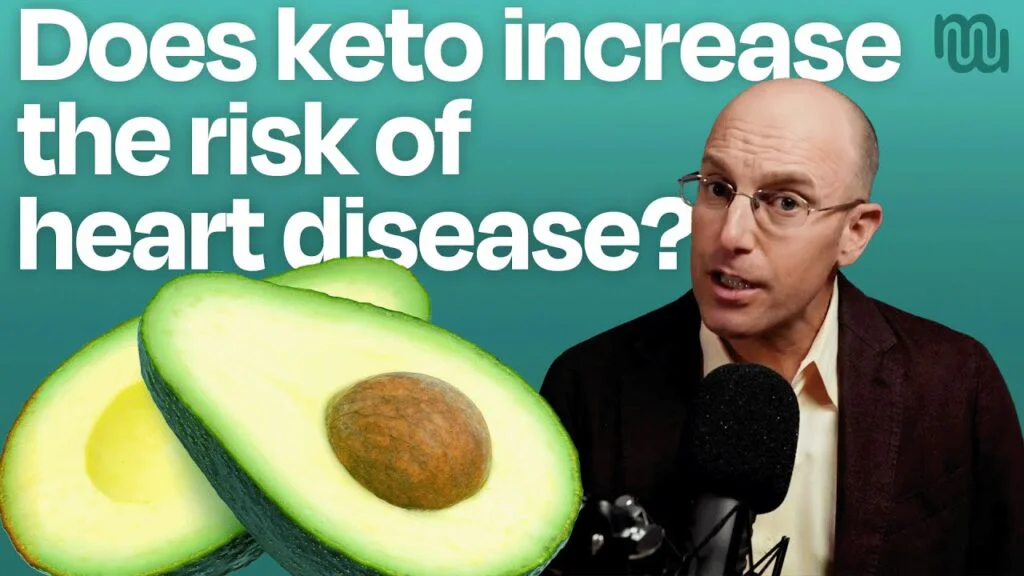
In this Metabolic Mind episode, Dr. Bret Scher breaks down whether nutritional ketosis increases cardiovascular risk and explains why common claims about keto and heart disease are not supported by evidence. He clarifies that no clinical trials have ever shown ketogenic diets to increase heart attacks or strokes, and that the observational studies often cited against keto do not involve people in nutritional ketosis and are plagued by poor data and healthy-user bias. Dr. Scher also discusses how LDL cholesterol should not be interpreted in isolation, why full metabolic health markers matter more, and what current research reveals about lean mass hyper-responders who experience large LDL increases on keto. This episode offers a clear, science-based look at how to assess cardiac risk while using nutritional ketosis therapeutically for metabolic, neurological, or psychiatric conditions.
Learn more
A scientist reveals the groundbreaking evidence linking many major diseases to a common root cause—insulin resistance—and shares an easy, effective plan to reverse and prevent it.
Read more
Dr. Bret Scher walks through the basics of starting a ketogenic diet, covering how to set carb, protein, and fat targets, why keto is actually a moderate-protein diet rather than high-protein, and how to avoid the "keto flu" through gradual transitions and proper electrolyte intake. He also explains when and how to test ketone levels and stresses coordinating with a healthcare team if using keto to manage a medical condition or psychiatric symptoms like depression or bipolar disorder.
Learn more
(I was excited to be invited to participate in the Nutrition Network and Metabolic Health India collaborative training, Vegetarian Low-Carb Lifestyle. This course includes ten expert-led modules and covers…
Learn more
In this Metabolic Mind episode, Dr. Bret Scher breaks down whether nutritional ketosis increases cardiovascular risk and explains why common claims about keto and heart disease are not supported by evidence. He clarifies that no clinical trials have ever shown ketogenic diets to increase heart attacks or strokes, and that the observational studies often cited against keto do not involve people in nutritional ketosis and are plagued by poor data and healthy-user bias. Dr. Scher also discusses how LDL cholesterol should not be interpreted in isolation, why full metabolic health markers matter more, and what current research reveals about lean mass hyper-responders who experience large LDL increases on keto. This episode offers a clear, science-based look at how to assess cardiac risk while using nutritional ketosis therapeutically for metabolic, neurological, or psychiatric conditions.
Learn more