New Results: First RCT for Schizophrenia & Bipolar Disorder. Learn more.


Listen, Watch & Subscribe on:



Q&A: Are Seed Oils Bad? Plant-Based vs Keto? Dawn Phenomenon & More
Listen
About the host

About the guest


Bret:
Why are we even talking about seed oils?
Erica:
Can you elaborate on ketoacidosis and therapeutic levels of ketones in non-diabetics?
Bret:
What is anhedonia?
Erica:
What is the dawn phenomenon, Dr. Scher?
Bret:
Welcome to the Metabolic Mind Podcast. I’m your host, Dr. Bret Scher. Metabolic Mind is a non-profit initiative of Baszucki Group, where we’re providing information about the intersection of metabolic health and mental health and metabolic therapies, such as nutritional ketosis as therapies for mental illness.
Thank you for joining us. Although our podcast is for informational purposes only and we aren’t giving medical advice, we hope you will learn from our content and it will help facilitate discussions with your healthcare providers to see if you could benefit from exploring the connection between metabolic and mental health.
Many of the interventions we discuss can have potentially dangerous effects if done without proper supervision. Consult your healthcare provider before changing your lifestyle or medications. In addition, it’s important to note that people may respond differently to ketosis and there isn’t one recognized universal response.
Welcome back to another Metabolic Mailbag episode here at Metabolic Mind. And again, I am joined by our producer, Erica. Thank you so much for joining me today.
Erica:
Thank you, Bret. Great to be here.
Bret:
And as I’ve said on, if you heard our last episode, Erica is far much more than just a producer. She’s also got her own personal experience with ketogenic therapy.
And she really has a good, her finger on the pulse of kind of what people are looking for and asking for, what kind of questions they’re asking about ketogenic therapy. But today, we’re going to answer the questions that you all sent in, whether it was from Instagram or our website or YouTube or whatever, people have been submitting questions for us, and we are very happy to address them.
So, why don’t we jump in and get started?
Erica:
Yes. We have some great questions from you guys today. So, the first question is about seed oils. And I am just so excited to ask you about this because in the zeitgeist, it seems like all of a sudden we’re hearing about seed oils like crazy, like never before.
And they’re the devil. They’re terrible. We should avoid them at all costs. Can you speak to seed oils or-
Bret:
Yeah.
Erica:
You know, what the danger, what the concern is there?
Bret:
So, I try to step back from the seed oil debate. And my first question is, why are we even talking about seed oils? The only reason we’re talking about seed oils is because there’s this fear of saturated fat.
So, there’s this fear of, whether it’s butter or ghee or lard or whatever the case may be, even coconut oil, right? For other sort of oils or cooking fats, and if we get past that fear, if we realize that if we’re eating a whole foods, low carb diet, that there really is no evidence that saturated fat is concerning or a risk, then seed oils disappear.
There are basically no need for seed oils anymore. Now, I realize that’s considered niche. And in the world we live in, kind of seed oils are everywhere. So, I think that’s where I want to start, but I’ll get into it a little bit more. With seed oils, where do you get your seed oils from? Well, highly processed, ultra-processed foods are full of seed oil.
So, if we get rid of those ultra-processed foods, we’re getting rid of the majority of the seed oils. Victory.
Erica:
Can you name some of those? Is it those that come to mind immediately?
Bret:
The seed oils? Like safflower oil?
Erica:
Yeah.
Bret:
Yeah, so safflower oil, sunflower oil, even, I guess, peanut oil is considered a seed oil.
Canola oil, right? All the, quote-unquote, vegetable oils, and there are a number of them. So, cut out the ultra-processed foods, and you get rid of most of them. Now, if you eat out, a lot of food is cooked in seed oil. So, if you eat out once or twice a week, the seed oil that you’re getting is likely pretty minimal.
That’s my take, and I think it’s not something to really worry about it. If you’re eating out all the time, okay, then that changes it a little bit. But again, if you’re eating whole foods, not ultra-processed foods, then you’re getting rid of the majority of your seed oil. So again, step back. Why is there even a concern about seed oils?
There’s a lot of data, mechanistic data, so not necessarily human outcome data, but mechanistic data about them being inflammatory and oxidizing. And really, the mechanistic data looks pretty bad in terms of the impact they can have on our health. Now, what’s interesting is when you look at observational studies, large, 100,000, et cetera, observational studies, it usually shows that people who are getting more seed oils are healthier, which is a head-scratcher, right?
And look, they’re observational studies. They don’t prove cause and effect. They’re usually healthier at baseline, and that’s probably why it shows them to be healthier. But it really makes you ask how bad they can they be if people are having less health problems with more seed oils, even if it is because they were just healthier at baseline?
They’re not bad enough, the seed oils aren’t bad enough, to negate that healthy baseline. So, that’s one approach. There are a couple studies, older studies, that aren’t perfectly done that show poor clinical outcomes with more seed oils. Now, I think those need to be replicated, and they need to be better controlled. But there’s that concern about those studies.
And you’ll hear like the Minnesota Coronary Experiment and those types of studies. So, we do have that data, and I don’t want to ignore that, but we also have to acknowledge they weren’t perfectly controlled. So, it’s a mishmash, like with anything, right? We don’t have one perfect study telling us everything we need to know.
I think there’s definitely a concern that they could be harmful. How harmful are they? If you’re getting rid of all of the ultra-processed foods and you’re eating a whole foods, low-carb diet, it’s probably not going to come to a lot, as long as you’re not cooking with them yourselves. And don’t be afraid to use avocado oil even, if you want, or coconut oil or other saturated fats, then you can just get rid of this whole debate about seed oil.
So, that’s my approach. We can talk about specific studies and what this study shows, what that study shows. But I think it’s more important to take the broad approach, and the overall, why are we even talking about this? So anyway, hopefully that was helpful.
Erica:
Yeah, that’s helpful. Thank you for that.
When you are using olive oil for cooking, which I think many of us primarily do, we know that it’s not always recommended for high-heat cooking. But something like grapeseed oil was the go-to for many chefs when it came to high-heat cooking. But for me, at least personally, I’ve started using avocado oil for my high-heat cooking instead.
Would you say that maybe we should just start doing that?
Bret:
Or just start using butter.
Erica:
More butter.
Bret:
Yeah.
Erica:
Butter. There’s always butter.
Bret:
Yeah.
Erica:
And we love butter.
Bret:
Exactly. Awesome. Tallow.
Erica:
Okay. Thank you.
Bret:
Lard, any of those. Yeah.
Erica:
This question is from Svetlaka, and it is related to anhedonia. So, Svetlaka wants to know, “What about when the anhedonia is iatrogenic caused by the antidepressants?”
Bret:
Yeah. Good question.
Erica:
In her case, she’s also tapering off of antidepressants, did so cold turkey, and is really struggling. Her anhedonia is at an all-time high. What do you say for that, Dr. Bret?
Bret:
Yeah, and so it’s a good question. And, so first of all, what is anhedonia? So, anhedonia is, it’s considered a, quote-unquote, negative symptom.
So, just you don’t have any enjoyment in anything. You don’t have your normal feelings of joy and pleasure, and engagement in the world. And it’s very common with antidepressant treatment. It’s very common with a number of different psychiatric diagnoses, whether it’s bipolar disorder or schizophrenia, that there is this negative symptom of anhedonia.
And one of the reasons why I really this question is, one, because she asked about it being iatrogenic. And you talked about in our previous episode about how you’re using ketogenic therapy, excuse me, to help taper off antidepressants. And so, that is one way certainly to potentially address the anhedonia is to safely and carefully under clinical guidance taper off the antidepressant with another therapy lined up to help that, which is ketogenic therapy.
So, a lot of people are doing that. Unfortunately, we don’t have studies on it, but there definitely is some clinical practice, some clinical experience. And when working with an experienced clinician, that probably can be pretty helpful. So, that’s one thing to consider, again, with an experienced clinician.
The other thing, however, is there have been a couple published studies recently, one looking at schizophrenia and bipolar disorder, one looking at depression. And as part of the results that they measured, they actually looked at anhedonia. And in those studies, anhedonia significantly improved with ketogenic therapy, and that was the only intervention was ketogenic therapy, and anhedonia significantly improved.
And that has been a big challenge for psychiatry, how to address anhedonia, because the treatments frequently exacerbate. I should say, the pharmaceutical treatments frequently exacerbate the symptoms of anhedonia. So, if ketogenic therapy could potentially reduce that is huge for so many individuals who are living with anhedonia, like this individual.
Now, we need more studies before we can know for sure, and who it’s going to work for. But again, if nothing else is working and we’re just talking about a dietary intervention, why not consider it with your clinician? You know, working together with your healthcare team. So, definitely something to consider and definitely something that seems encouraging for what we have, the evidence we have, at the moment.
Erica:
That is very encouraging. And yes, like you said, what do you have to lose, right? There’s significant upside and very little downside to giving it a try. And if you can feel more joy in your life, that’s an encouraging indicator that things can change, and there is hope and to keep going and that progress is possible.
Bret:
Yeah.
Erica:
Thank you for that answer. All right. Our next question is one of my favorite debates that I like to hear because we’re talking seemingly smart people on both sides of this debate. This question comes from Kelly, and the question is, “Why is it that plant-based and keto experts can’t come to an agreement on the best diet?
If the evidence is in, why do both sides see it so differently, and how is a person expected to know which diet is the best? It’s so confusing.” Yes, it is confusing. Dr. Bret Scher, why is it so confusing?
Bret:
Yes. It’s confusing because nutrition science is really bad. That’s just the way it is. That’s just the way it is.
But let’s get into that a little bit more. So first, plant-based and keto, they can be one in the same. You can do plant-based keto. So, if you are using a ketogenic intervention to treat a medical condition and you want to be plant-based, go for it. You can 100% do that. So, it’s not an either/or. Now, where we get into the debate is that where plant-based say that is the only healthy diet, right?
Where a lot of people say you have to be plant-based, that is the one and only healthy diet. And that’s why we can’t agree because that is just wrong. That is blatantly wrong. There is not one healthy diet, and I wish more people recognized that. Can you be healthy eating plant-based? Absolutely, 100%. If it is whole foods, plant-based, and you are adequately supplementing and getting enough protein, you can 100% be healthy eating plant-based.
Can you be healthy eating keto? Absolutely, 100%. If it is a whole foods ketogenic diet, you can 100% be healthy eating keto There is no debate. You can do it both. So, the problem is when we want to know what is the best diet for everyone, and that’s just, you’re starting with the wrong question.
It’s what is the best diet for me? And then, it’s okay, what are you trying to address with your diet? What foods do you like? What foods don’t you like? Do you have time to cook? Do you not have time to cook? Do you, all these other questions. But the main thing is what are you trying to address?
What, how are you trying to improve your health? In what ways? And what is going to be an enjoyable and sustainable diet for you to address what you’re trying to improve? So, with those questions in mind, that could be plant-based vegetarian. It could be keto. It could be carnivore. It could be Mediterranean, right?
But as long as it’s whole foods, you’re starting from a great starting point. And then, the rest is details. But again, the problem is to say, “what is the best diet for everybody?” is just a faulty question, and we should just get rid of that question. Oh, and so, the other part, though, is nutrition science being bad.
I want to follow up on that. When we’re relying on observational nutrition epidemiology studies, they’re essentially worthless when it comes to you as an individual, and we’ve covered this so much. But with healthy user bias and really poor data collection and really small effect sizes and the definitions of foods that they have in these studies is so poor, when it comes down to what does this evidence mean for you as an individual, it’s essentially worthless.
So, that’s where we need to get into intervention trials, even non-controlled intervention trials, to say how do different diets work to try and figure out what it might mean for you and which group you fit most with. So, it is complicated. You’re absolutely right. It’s complicated. But the reason why it’s so confusing is we, some people, pretend that they know there is one healthy diet for everybody, which is simply untrue.
Yeah.
Erica:
Great. Yep. So, this next question is from Reb, is about something called the dawn phenomenon. And it seems like there’s been a lot of talk about claiming success with this approach. What is the dawn phenomenon, Dr. Scher, and is it something that we should consider?
Bret:
Yeah. So basically, dawn phenomenon is when your blood sugar rises first thing in the morning.
Now, the first important thing to recognize for dawn phenomenon is it is basically defined and studied only in people who are eating high-carb diets and have type 2 diabetes or even type 1 diabetes, but mostly in type 2 diabetes eating the standard American, high-carb diet. That’s where it’s been defined and studied.
So, if your blood sugar is rising, and it’s thought to be like you could say like your body’s sort of, quote-unquote, preparing for the day by releasing more cortisol and increasing blood sugar. That’s like the amorphousizing, what is it, anthropomorphizing?
Erica:
Anthropomorphizing.
Bret:
I don’t even.
Erica:
Yes.
Bret:
Thank you. That type of approach. So, in that setting, people will say, “You gotta eat more carbs late in the day to get more of sort of an insulin response, and that can help lower your morning blood sugar.” And again, in the setting of type 2 diabetes with a high-carb diet. Okay, that seems reasonable for a lot of people.
Now, what does it mean when someone who is low-carb, who is eating low-carb or keto, sees a high fasting blood sugar? Is that the same thing? We still call it the dawn phenomenon, but it is completely different because in that individual, you’re usually not insulin resistant. You’re usually not overloaded with carbohydrates, and many people will find that morning blood sugar is their highest of the day.
But if we go back to the person with type 2 diabetes, it’s usually not, and it goes just higher and higher throughout the day. But for someone who is eating a ketogenic diet and is now metabolically healthy and they see a rise in their morning blood sugar and it is their highest of the day, 110, 115, and the rest of the day it is 90s and 100s, we have to ask ourselves is that a problem?
Beause it’s a completely different physiology, completely different impact. And for most people, I think that is not a problem in that scenario. And actually, I remember back in my Diet Doctor days, I wrote a detailed article that which still is at dietdoctor.com for dawn phenomenon, which I encourage people to read for more details.
We don’t have time to get into all the details here. But I think the first thing is who are we talking about, right? Are we talking about the high-carb diet? Are we talking about the low carb keto diet? Because it’s a different physiology. And then, what is your blood sugar the rest of the day, is so important to know what kind of impact that dawn phenomenon will have.
Now, if someone, even someone who’s low carb or keto, if they wanted to reduce that dawn phenomenon, having a snack later in the day, later at night can still help reduce that dawn phenomenon. The only question is, do you need to? Is that clinically beneficial? Is there any reason to do that? And that’s going to vary from person to person.
But that’s how I see this question about dawn phenomenon.
Erica:
Great. Thank you, and we will link to that article on dawn phenomenon from Diet Doctor in the show notes so you can access it there. All right, last question for today. Can you elaborate on ketoacidosis and therapeutic levels of ketones in non-diabetics?
The online information seems to lag behind the latest science, and it’s scary. And this question is from louisapdjones from YouTube.
Bret:
Yeah, so this question’s really interesting. So, elaborate on ketoacidosis. So, when I first saw this question, I thought, okay, what is the, are they asking what level of ketones is, consistent with ketoacidosis?
And this made me think of, I was at the American Diabetes Association conference, and I was with Dr. Caroline Roberts from Virta Health. She was giving a poster presentation. So, I walked by to see her poster presentation, and it was about measuring ketone levels in people on ketogenic therapy.
And one of the ADA endocrinologists, who was instrumental in writing the guidelines for defining ketoacidosis, came by and was aghast at the poster presentation because he said, “We know any ketone level above 3.5 is consistent with ketoacidosis.” And I was just like, “Wow, you’re gonna just draw the line in the sand right there?”
And again, it’s like our last question. If you’re talking about people with diabetes, either type 1 or type 2, eating standard American high-carb diets, then yeah, you got to be worried about a ketone level of 3.5, absolutely. Because why would the level be that high if you’re not eating a ketogenic diet, right?
There’s a reason your level is that high, and that’s going to be concerning. Now, reverse that, and you’re eating a ketogenic diet. Now, you have a perfectly good reason why your ketone level would be high. That is a completely different physiologic state. So, I think if someone is eating a keto diet, you absolutely cannot define ketoacidosis by a ketone level now because ketoacidosis is a clinical diagnosis.
You are sick. You are acidotic. You are not feeling well, right? And most importantly, you’re acidotic in your blood. So, that is the key, not a ketone level by itself. Now, personally, if I see someone with ketone levels of seven, eight, nine, I’m worried. I don’t care if you feel well,. I’m worried, and I want you to get evaluated, right?
So definitely, if you have ketone levels in that range, you want to check it with your clinician. But ketoacidosis is not defined simply by a ketone level in somebody who is eating a ketogenic diet. All right? Now, therapeutic levels of ketones, again, it depends on what your goal is. If you’re just looking to improve your metabolic health and lose weight, you may not even need ketone levels.
If you’re looking for a brain-based intervention, you may want higher ketone levels. It’s going to vary from person to person, and we have videos and more information about this that I encourage you to check out. But there is not one set this is a therapeutic ketone level and this is sub-therapeutic, et cetera.
It depends on what your goals are. So, I’m sorry I can’t give one answer, but I think it’s really important to not be looking for that one answer.
Erica:
Yes, I love how so many of your responses are, “Hey, there’s actually some more nuance here than meets the eye.” Because we all do just want you to tell us what is that number that we need or what are we trying to hit?
Bret:
Yeah.
Erica:
But it depends, and we’re all different as you consistently say. So, I hope that answers your question, Louisa. And thank you all for these wonderful questions. Keep them coming. We love hearing from you. You can leave them in the comments on our YouTube channel, or you can send them to us by DM on Metabolic Mind on Instagram, or you can send it to us directly on our website: metabolicmind.org/questions.
And while you’re there, you can sign up and receive all the latest and greatest news and information from us right to your email inbox. Such great content to read and enjoy from the team every day. Any last words from you, Dr. Bret Scher, today?
Bret:
This was great. Thank you, Erica. Really appreciate you joining and helping out with the mailbag episode today.
Erica:
Always happy to be here. See you next time.
Bret:
Thanks for listening to the Metabolic Mind Podcast. If you found this episode helpful, please leave a rating and comment as we’d love to hear from you. And please click the subscribe button so you won’t miss any of our future episodes. And you can see full video episodes on our YouTube page at Metabolic Mind.
Lastly, if you know someone who may benefit from this information, please share it as our goal is to spread this information to help as many people as possible. Thanks again for listening, and we’ll see you here next time at the Metabolic Mind Podcast.
Listen, Watch & Subscribe on:
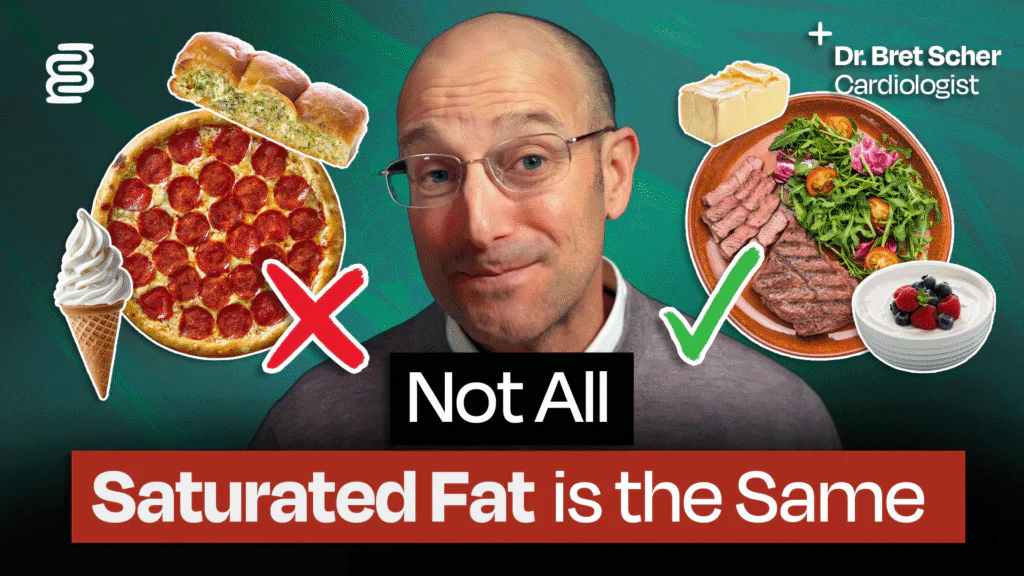
In this Metabolic Mind episode, Dr. Bret Scher analyzes the latest dietary guidelines and the science behind saturated fat. He reviews observational studies, randomized trials, and keto research to explain why saturated fat from whole foods may not be harmful in a low-carb context, and why focusing on overall diet quality and metabolic health matters more than strict saturated fat limits.
Read more
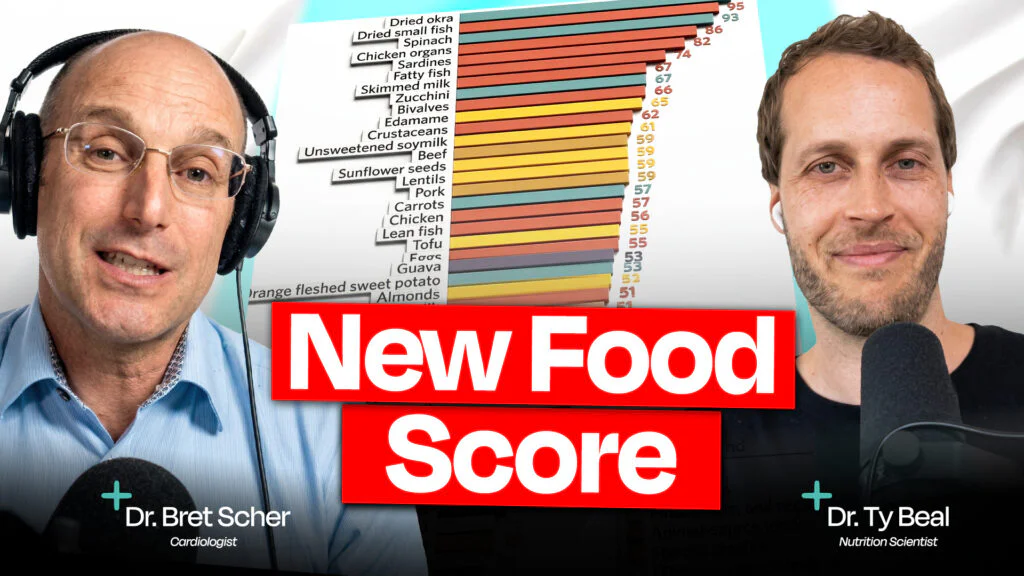
On this episode, Dr. Ty Beal introduces his new Nutritional Value Score, designed to account for nutrient density, protein quality, chronic disease risk, processing, and more. He explains why familiar rankings of foods like meat, eggs, whole grains, and processed cereals can change dramatically depending on what a scoring system chooses to measure.
Learn more
Ketogenic therapy has emerged as a cutting-edge, effective treatment for various psychiatric conditions, including severe depression, bipolar disorder, and schizophrenia. It also has demonstrated efficacy in treating and…
Learn more
A cautious, and nuanced editorial about elevated LDL cholesterol while on a keto diet. Read more here!
Learn more
In this Metabolic Mind episode, Dr. Bret Scher analyzes the latest dietary guidelines and the science behind saturated fat. He reviews observational studies, randomized trials, and keto research to explain why saturated fat from whole foods may not be harmful in a low-carb context, and why focusing on overall diet quality and metabolic health matters more than strict saturated fat limits.
Read more
On this episode, Dr. Ty Beal introduces his new Nutritional Value Score, designed to account for nutrient density, protein quality, chronic disease risk, processing, and more. He explains why familiar rankings of foods like meat, eggs, whole grains, and processed cereals can change dramatically depending on what a scoring system chooses to measure.
Learn more
Ketogenic therapy has emerged as a cutting-edge, effective treatment for various psychiatric conditions, including severe depression, bipolar disorder, and schizophrenia. It also has demonstrated efficacy in treating and…
Learn more
A cautious, and nuanced editorial about elevated LDL cholesterol while on a keto diet. Read more here!
Learn more