New Results: First RCT for Schizophrenia & Bipolar Disorder. Learn more.


Listen, Watch & Subscribe on:



Psychiatry Research Priorities: Keto, GLP-1s, Exercise & Mental Illness
Listen
About the host

About the guest

About the guest

About the host
About the guest
About the guest

Toby:
It’s humbling because it really suggests that patients and carers have a far greater integrated view of mental illness than we, the researchers or we the clinicians, currently do.
Dina:
I think that’s a major shift in the perspective.
Bret:
Welcome to the Metabolic Mind Podcast. I’m your host, Dr. Bret Scher. Metabolic Mind is a non-profit initiative of Baszucki Group, where we’re providing information about the intersection of metabolic health and mental health and metabolic therapies, such as nutritional ketosis as therapies for mental illness.
Thank you for joining us. Although our podcast is for informational purposes only and we aren’t giving medical advice, we hope you will learn from our content and it will help facilitate discussions with your healthcare providers to see if you could benefit from exploring the connection between metabolic and mental health.
Many of the interventions we discuss can have potentially dangerous effects of done without proper supervision. Consult your healthcare provider before changing your lifestyle or medications. In addition, it’s important to note that people may respond differently to ketosis and there isn’t one recognized universal response.
Here at Metabolic Mind, we talk a lot about metabolic treatments for a serious mental illness, whether it’s treating the psychiatric symptoms themselves or the metabolic consequences of the diseases or the treatments. It’s really a crucial part of psychiatry in this field of metabolic psychiatry. But how do we know what we really should be studying, what we really should be focusing on?
Dr. Dina Farran and Dr. Toby Pillinger had a similar question, and they set out to find the answer with a PSP, a priority setting partnership, which is a big process where you get all the players, the individuals with lived experience and family members and the clinicians and researchers, get everybody together and ask them and find out and go through processes to find out the 10 most important questions that they want answered.
So, it was a big undertaking, and I’m glad to be joined by both of them today to talk about this. So, Dr. Toby Pillinger is a physician scientist, and he works at the intersection of physical and mental health. He’s a senior lecturer in psychiatry at King’s College of London, and he’s a consultant psychiatrist at the Maudsley Hospital in London as well.
And Dina Farran, a PhD, she has a PhD in applied artificial intelligence, which we talk about a little bit. And she’s doing her postdoc at King’s College in London as well. So, I’m really excited to be joined by both of them to talk about this exciting new project to learn what should we really be focusing on, what does the world want to know about metabolic interventions for serious mental illness?
Thank you both for joining me. It’s great to have you here today. And I really want to get into the priority setting partnership that you both work so hard on and published, and what we can learn from it. But first, as I’d like to start, Dr. Pillinger, let’s start with you. What is something that you think medicine gets wrong that you really wish were different?
Toby:
First of all, Bret, thanks for having us on. It’s a real pleasure. I think in the context of what we’re going to be talking about today, I think it’s important to recognize that I think medicine often treats mental and physical health as though they’re separate systems, when in reality, they’re deeply interconnected.
So in psychiatry, we’ve historically focused on the brain while other specialties have focused on the body. But when you actually look at the evidence, people with severe mental illness die 15 to 20 years earlier than members of the general population, mostly from physical diseases. And at the same time, we’re increasingly discovering that metabolic processes, inflammation, insulin signaling, et cetera, cardiovascular health may actually influence mental health symptoms themselves.
So, that distinction between mental and physical health is often much less clear than our healthcare systems assume.
Bret:
Yeah. I think that’s very well said, and that definitely plays into our discussion for today. How about you, Dr. Farran? You have more to add or something else to think?
Dina:
Yeah, I think, nowadays, we’re not very sure what really matters to people with severe mental illness.
Of course, we have a lot of metabolic interventions that have been studied for effectiveness in the general population. But specifically in people with severe mental illness, particularly people with schizophrenia, bipolar disorder and major depression, we’re not very sure which interventions work best, who benefits most, how these interventions work biologically, for example, how sustainable they are, and how to implement them in real world care.
So, here came the idea of doing this priority setting a partnership to get these uncertainties, to discover what matters most to people with the severe mental illness, and perhaps guide, hopefully, research, future research in this field.
Bret:
Yeah, that’s a great setup for what these findings show, and what it means for future research.
But let’s just take a step back for people who aren’t sure what a PSP is. So Toby, explain briefly what a PSP is and what led you to want to do one, specifically for this subject. And then Dina, you can give us some of the nuts and bolts of how it was done and what we found.
Toby:
Absolutely. So, I think historically, a criticism of research is that the research questions are very much driven by people in the ivory towers of universities with their own ideas of what’s important to look at, or maybe even worse, by what pharmaceutical companies are most interested in. But either way, it’s either direction has the potential to ignore actually what is important to people living with the condition that, you know, of interest or people who care for those individuals.
And so, really that is the reason behind a priority setting partnership, which in the UK have historically been run by an organization, a charitable organization, called the James Lind Alliance. And what a priority setting partnership is designed to do is to bring together people with lived experience. So, people with a given condition, the carers, and then people who care for them, i.e. clinicians, to bring them all together and to find out what is important to those individuals with regards to a particular outcome.
So, a priority setting partnership can be held in any given medical condition. It doesn’t have to be a psychiatric one. So, there have been James Lind Alliance priority setting partnerships for a whole range of different medical conditions over the years. So, ranging from asthma through to prostate cancer.
And what Dina, myself, and a whole group of other researchers at King’s Edinburg University and beyond, chose to focus on was a priority setting partnership focusing on specifically on metabolic interventions for people with severe mental illness. And by severe mental illness, we’re talking about conditions like bipolar disorder, major depression, and schizophrenia.
Bret:
And you’ve been a practicing psychiatrist and a researcher. So, what specifically led you to this field to say, “I want to know more about metabolic interventions for serious mental illness?”
Toby:
Yeah. So, I’ve been really interested in this field for a long time now. I’ve had a, something of a portfolio medical career, it could be said. So, I didn’t immediately go into psychiatry. I did several years in general medicine first, jobs like cardiology, endocrinology, and similar sort of acute medical specialties.
And then, when I moved into psychiatry, I initially had this grandiose plan that I was going to learn everything about mental illness through brain imaging. And that’s what I did initially., But I got increasingly interested in this sort of metabolic health. And I think my heart was was attracted to this broader multi-system approach just to psychiatry, looking at glucose metabolism in people with early stage severe mental illness. So, first episode psychosis, as we call it.
Been doing a lot of, I think they’re really interested in cardiac health in people with severe mental illness. And it’s led up to now to the work we’ve been doing now, which is, okay, we’ve done a lot of work which has shown there might be a relationship between metabolic disturbance and severe mental illness. But actually, what do we do about it?
And trying to move into translating these sort of observational data into data that could actually help people, be it from improving symptoms to improving physical health outcomes, or ideally, both at once.
Bret:
Yeah, good. Thank you for that explanation. Now, Dina, you have a PhD in applications of artificial intelligence, which is fascinating in its own right. But how’d you find your way into this field?
Dina:
Throughout my PhD, I was really interested in improving the physical health of, the physical health outcomes of people with severe mental illness. So, I developed an electronic clinical decision support system that will help us as a screen for stroke-risk among patients with severe mental illness.
And my whole project was basically about testing the effectiveness of this intervention, and checking the perspectives of clinicians, if it’s something they would use. If it’s something they find useful. And I think this is, this project is, a continuation, if you want, to this, to my PhD, because it allows me, first, it’s the same type of projects.
It’s all about improving the physical health conditions of people with severe mental illness. So, that’s one. But it will allow me, it allows me to understand the perspective of patients rather than only clinicians. So that, I think, is really interesting.
Bret:
Yeah, so that really fits into how this whole paper was structured using both the average individual living with mental illness, their supporters and caretakers, and the clinicians, and the researchers are everybody coming together.
So, I know it was a very long, drawn out process with a lots of rounds of going back and forth, but give us sort of a summary of how you came up with the top 10 things that people wanted to learn more about with the Metabolic Interventions for Serious Mental Illness.
Dina:
Yeah. So, we started by forming a steering group committee, which included 22 members.
And the role of the steering group committee was, basically, to oversee all the priority setting partnership activities, from what’s in scope, what’s out of scope, designing the surveys, designing the promotional materials for the surveys, analyzing the results as well, everything.
And we then ran an international survey where people with lived experience, carers, and clinicians submitted uncertainties they wanted researcher to answer. We received more than 1400, submissions from more than 450 participants. And then, we had to analyze all these submissions.
So, we grouped the ones that were very similar to each other. And then, we removed the ones that were considered out of scope, and we ended up with a shorter list of 49 summary questions, which we then sent again to the public through another international survey. And we asked people to choose their top 10.
And we got this time, more than 300 participants, I believe. And from this, we were able to create a shorter list of 19 questions, which we took to a final workshop. So, we held a structured consensus workshop where lived experience participants and professionals discussed and agreed on the top 10 priorities.
Bret:
Yeah. How long did all this take? It sounds like such a pretty big process getting all these people together and all these questions and statements. How long did it take?
Dina:
Around eight, nine months probably, right?
Toby:
I think from beginning to end, it was about a one-year process. But yeah, a lot of herding of sheep, as you can imagine.
I mean that in the most pleasant of ways. It was just a lot of., And I’m one of the sheep that Dina was herding, it must be said. So, really, hats off to Dina for an amazing job in leading this and getting it done because it really was a huge amount of work.
Bret:
Yeah, and I really like the motivation behind it. Like you said, Toby, did not have the research be dictated by pharmaceutical companies or just someone, quote unquote, “in the ivory tower.” But by the people living it and the people treating it, and what they really want to know. So, let’s jump to the conclusions here.
What were some of the statements or questions that people really wanted investigated?
Dina:
The number one question was whether different dietary approaches, and particularly ketogenic diet, can improve psychiatric symptoms. So, ketogenic diet was very popular. We got a lot of submissions about it.
Also, we got question, a question about combinations of diet and exercise and their impact on psychiatric symptoms. We also got questions around GLP-1 medications. So, people were interested in knowing whether these medications would improve their psychiatric symptoms and whether these medications can be used to manage or prevent weight gain associated with the psychotropic medications.
So, that was really interesting. We got also questions about nutrient deficiencies, gut health and their impact on symptoms of mental illness. Also, what’s interesting is that people wanted to know the brain changes that occur when metabolic health improves in people with severe mental illness.
So, I think these questions were really interesting.
Bret:
Yeah. So, from nutrition to exercise to GLP-1 medications to gut health to brain imaging changes, pretty wide variety there. Very good. So Toby, what stood out to you? Was there something about these results that really jumped out that maybe even surprised you or reinforced something you’re already thinking?
Toby:
Yeah. I think, as a clinician, it was quite humbling, actually, because it was clear that, and really made me think about my own practice, but research questions that I posed, because it was really clear from the top 10 priorities that came out that people want metabolic interventions because they might improve mental health, not just physical health.
And I think that, for me, was the most striking finding. Historically, we’ve tended to think about metabolic interventions in psychiatry as a way of reducing cardiovascular risk, obesity, diabetes, premature mortality. Now, of course, that is massively important. But actually, what was really clear from this piece of work was that most of the final priorities actually focused on mental health outcomes, rather than physical health outcomes.
Eight of the final 10 priorities actually were essentially asking, “Can metabolic interventions, improve psychiatric symptoms?” As Dina was saying, the number one priority was all about whether different dietary approaches improve symptoms of severe mental illness, which approaches work best.
And that’s a very different question from how much weight do people lose on a given intervention? So, it really does suggest that patients and carers increasingly view metabolism as potentially relevant to the illness itself and not merely its complications. And I think that, yeah, as I said, it’s humbling because it it really suggests that patients and carers have a far greater integrated view of mental illness than we, the researchers or we, the clinicians, currently do.
And so, there is something, certainly something, to learn from that.
Bret:
Yeah, and we could sit here and hypothesize why that is, why they were so interested in the psychiatric impacts of metabolic care. And there could be a number of reasons, right? Like maybe because the evidence is already there for impacting metabolic health and improving outcomes from that standpoint? And that’s been talked about a lot.
Or living longer is 30 years down the road. Managing your psychiatric symptoms is right now, today and tomorrow. So, maybe that immediacy of it plays into it. Are there other things that you though about, about why people might have been more interested in that?
Dina:
Yeah. I think, many studies have previously focused on, weight loss, blood sugar, cholesterol, which are obviously important, as Toby said. But what participants in this study asked is, “Will this specific intervention improve psychosis or will this specific intervention help me recover faster?” for example.
So, this suggests somehow that there is a mismatch, if you want, between what research has traditionally focused on and what patients actually want to insert. And what’s interesting is that, as Toby said, historically metabolic issues, in psychiatry were often viewed mainly as side effects to manage, but participants in this study were asking something much bigger. “Could metabolism itself be part of the treatment pathway for mental illness?”
And I think that’s a major shift in the perspective. In terms of why they ranked, for example ketogenic, why they wanted more information about the impact of ketogenic diets on mental illness, I think there are many reasons. One of them could be that they are, it’s a hot topic, they are hearing anecdotal stories about ketogenic diet. And there’s emerging research evidence suggesting potential benefits for mood and cognition or psychosis symptoms.
Second, I think this could, a ketogenic diet or any dietary intervention, in general, could be relatively easier for some people like compared to other types of interventions. So, if it turns out to be something that’s effective in reducing the psychotic symptoms so that’s a game changer, I believe.
And finally, I think, as Toby said, people with a serious mental illness are often dealing with major physical health burdens and medication-related metabolic side effects. So, any intervention that might help both the mental and physical health outcome, improving the mental and physical health outcomes simultaneously would be something they would welcome or happy to know more about.
Bret:
And do you have more to add to that, Toby?
Toby:
I think it was more reflection that if you are really struggling, and again, that sounds a bit patronizing, but if you have really severe symptoms is what I’m getting at, it is understandable that you will be desperate for anything that can help them.
And maybe, so yes, absolutely, you want an intervention that could help side effects in the future. But actually, really, if you got a severe mental illness and your mood is as low as it can get, maybe you’re not quite as worried about the weight gain. Really, what you’re worried about is, “Can I face getting through tomorrow because my mood is so low?”
And so it’s, I think, I guess comes back to, it’s obvious, really, that someone would, if you’ve got a severe mental illness, the number one priority for most people is going to be, “Can I get these horrible mental health suffering to go away?” I think it makes sense just from a suffering perspective.
Bret:
Sure. What do you hope the next step is? Now that this is out there, what do you hope happens from these insights and from all this information?
Toby:
I think the whole purpose of these priority setting partnerships is not to provide any answers to these questions. It’s to provide the field, the metabolic psychiatry field, with a menu of questions that now need to be addressed by research.
And we now have a roadmap, essentially, of questions that are important to people with lived experience. Important for people who care for people with severe mental illness that can now be followed by researchers. In the UK, we’re really lucky in the National Institute for Health Research. So, you can imagine it as the sort of research arm to the NHS, essentially, and it funds research through various grants.
They actually now specifically offer funding for priority setting partnerships. And indeed, if it’s not a specific funding call for a research question posed by a priority setting partnership, there is still a lot of weight is given to whether a researcher is asking a question that is pertinent or that has been raised by a priority setting partnership.
So really, the research, sort of infrastructure, is very much focused on looking at these projects, and then trying to be guided by it. So, I think that’s a rather long-winded answer to the question and now we’ve just got to get on with doing the research to answer these questions.
Bret:
Yeah. So Dina, I guess similar question though. So, people need to start doing research on this. You have any projects that you want to tackle that you want to take on? Was there one that stood out to you that said, “I want to look at this one”?
Dina:
Yeah, we’re interested in the ketogenic diet one and the GLP-1 question. So, that’s basically the next step would be developing an intervention on that.
Bret:
So, comparing the two, comparing ketogenic diet and GLP-1s?
Dina:
No, it would basically look at the effect of ketogenic diet on the symptoms of mental illness. And then another one, another project would be the effect of GLP-1 medication on psychiatric symptoms and on preventing a weight gain on people on antipsychotic medications.
Bret:
It’s encouraging that there are studies ongoing looking at ketogenic interventions for psychiatric symptoms, and I’d be surprised if there weren’t GLP-1 studies as well. But this is a call for even more of that to really help answer the question. And I’d love to see a comparison study down the road, too. But maybe that’s getting ahead of ourselves here.
Toby:
Yeah. I think from a ketogenic diet perspective, I think the key thing is that a lot of the questions, ketogenic diet was reflected on as an important intervention that people are interested in, but actually was broader dietary interventions as well was also a key focus. So, I think we have to be careful not to be too laser-focused. But based on our own sort of research interests, et cetera, which is specifically the reason why you do these priority study partnerships is not to be the person in that ivory tower doing all of the, making the decisions.
But I think, this is such an amazing field to be in at the moment. It’s a really exciting time, this field of metabolic psychiatry. Even if you went back five years, if you said the word metabolic psychiatry to the average clinician or psychiatrist, academic psychiatrist, they go, “What are you talking about?”
And yet, five years later, you would argue quite a significant proportion of individuals would go, “Yeah, this is really interesting, really interested in all these dietary interventions, et cetera.” And so, we’re lucky that there is this explosion of research that’s happening with keto.
There’s this really big trial that Danny Smith’s just got funding for in Edinburgh, looking at eight million pounds from the Welcome Trust. Randomized controlled trials, so gold standard evidence, looking at bipolar depression and whether ketogenic diet can help symptoms compared to a sort of healthy living diet, generic NHS healthy living diet.
So, that’s really exciting. I think what I’ve reflected on is that there’s been quite a lot of research in the ketone world in mood disorders, maybe less so in conditions like schizophrenia, et cetera. So, I think that’s certainly something that we might be interested in looking at. And then, I think a really key thing that came out of the top 10 research priorities was a focus on prevention. And this very much aligns with actually where the NHS is trying to go in the UK with. It’s got a 10-year plan, and prevention is a key part of that 10-year plan, which is you’re trying to prevent problems before they happen.
So, prevention rather than treatment. Of course, we are very much invested in developing new treatments. But whilst we’re doing that, we will still continue to use treatments that do have deleterious effects on metabolic health. And so, what I’m really interested in potentially doing, which very much aligns with some of the top 10 research priorities, is: are there preventative strategies that we can instigate alongside more traditional psychiatric interventions, like antipsychotic treatment, for example, where you can mitigate metabolic risk, at the beginning?
And a classic example of that would be if you’re going to start a highly metabolically active medication, an antipsychotic medication, like clozapine, which is the only treatment available that has an evidence-based for use of people with treatment-resistant schizophrenia, is if we were to co-initiate clozapine with a treatment like a Mounjaro, Wegovy, et cetera, could you actually just wipe out the metabolic risk associated with it?
Because those drugs are some of the most metabolically active treatments in medicine, let alone psychiatry. And if you could suddenly remove that risk, that would be a huge game changer for psychiatry whilst we’re still trying to develop those interventions that help mental health as well.
Bret:
Yeah, I like that perspective of really trying to approach it early with the preventive side of things.
Yeah, that makes a lot of sense. This is great. I’m glad you, you took this year-long project and did all this work. And Dina, it sounds like it was really quite a bit of work getting all this together and getting these research priorities for the whole world to see and say, “Okay, this is what people want to know. So, let’s dig in.”
If people want to know more about your work and what you’re doing, and so Dina, start with you. Where can they find you?
Dina:
Yeah. I’m currently working at Kings College London with Toby. For this project specifically, we submitted a manuscript to the Lancet Psychiatry, and it was accepted there.
So, we’re hoping to publish the results soon. So yeah, they can learn more about the projects and the findings in the paper. I’m also on LinkedIn. So yeah.
Bret:
And Toby, where can people find you and learn more about your work?
Toby:
Yeah. it sounds awful, but if you just Google Toby Pillinger, I think there’s only one of me out there.
And I’ve got a King’s College London webpage. You can get in contact with me there. I’m on LinkedIn as well where I typically post jobs that people might be interested in. We’re starting a whole metabolic psychiatry clinic in South London at the Maudsley Hospital.
We’re going to be recruiting for that soon. We’re going to be recruiting a whole host of multidisciplinary team members, physiotherapists, dieticians, psychologists, endocrinologists, research assistants. You name it, we’ll have you. So yeah, if you’re interested in this field, please do get in contact. We’re delighted to have a chat with you.
Bret:
Great. And I love that multi-modality approach that you’re talking about. That’s just really gives the highest level of care, I think. Thank you both so much. I really appreciate you joining me, and I look forward to hearing more from you in the future.
Toby:
Thank you.
Dina:
Thanks for having us.
Bret:
I’ve got to be honest, that was the first time I’ve heard of this priority setting partnership, and I really like the idea. Not to belabor the point, but to say, not just guess about what the world needs to know about this, but what do clinicians treating these disorders need to know?
What do individuals living with these disorders want to know? And I just think that’s so cool to let’s just ask the question. Let’s make it formal. Let’s make it objective. And then, researchers can take this and run with it and start studying these. And some of these were general, right?
Ketogenic interventions for serious mental illness. We know that’s important. We’ve been studying that, but nice to have it reinforced. And the same for GLP-1s and exercise and different diets and different lifestyle interventions. I encourage everybody to check out this paper though and really see the details about what people wanted to know.
And certainly, if you’re a researcher looking: what to look into? Yeah, you’ve got your roadmap. Pick something and go with it, and the world will thank you. So, hope you enjoyed this interview, and we’ll see you here next time at Metabolic Mind, a non-profit initiative of Baszucki Group. Thanks for listening to the Metabolic Mind Podcast.
If you found this episode helpful, please leave a rating and comment as we’d love to hear from you. And please click the subscribe button so you won’t miss any of our future episodes. And you can see full video episodes on our YouTube page at Metabolic Mind. Lastly, if you know someone who may benefit from this information, please share it as our goal is to spread this information to help as many people as possible.
Thanks again for listening, and we’ll see you here next time at the Metabolic Mind Podcast.
Listen, Watch & Subscribe on:

What is Ketogenic Therapy? As rates of both mental illness and metabolic disease continue to climb, there’s an urgent need to rethink how we understand the brain-body connection….
Read more
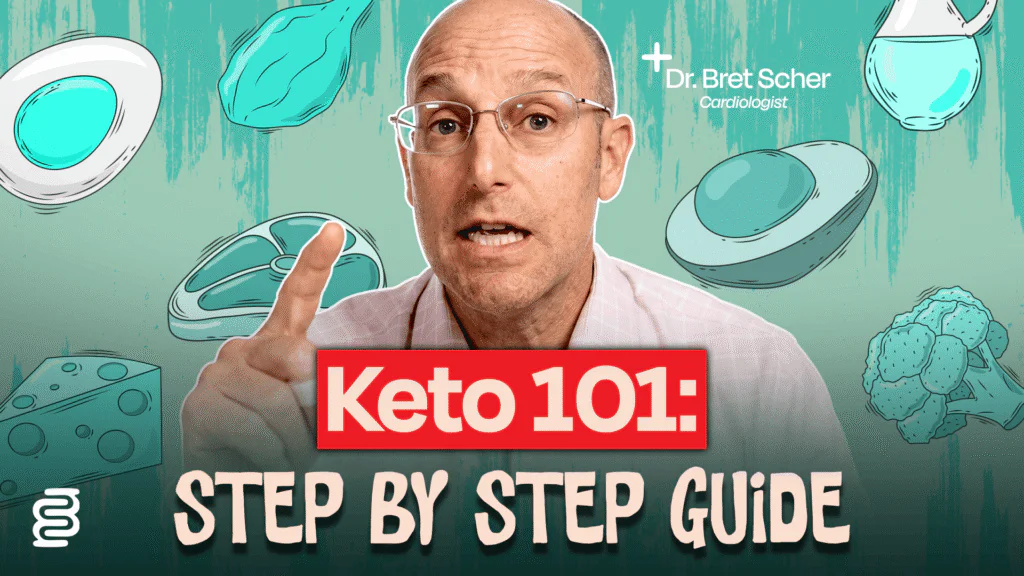
Dr. Bret Scher walks through the basics of starting a ketogenic diet, covering how to set carb, protein, and fat targets, why keto is actually a moderate-protein diet rather than high-protein, and how to avoid the "keto flu" through gradual transitions and proper electrolyte intake. He also explains when and how to test ketone levels and stresses coordinating with a healthcare team if using keto to manage a medical condition or psychiatric symptoms like depression or bipolar disorder.
Learn more
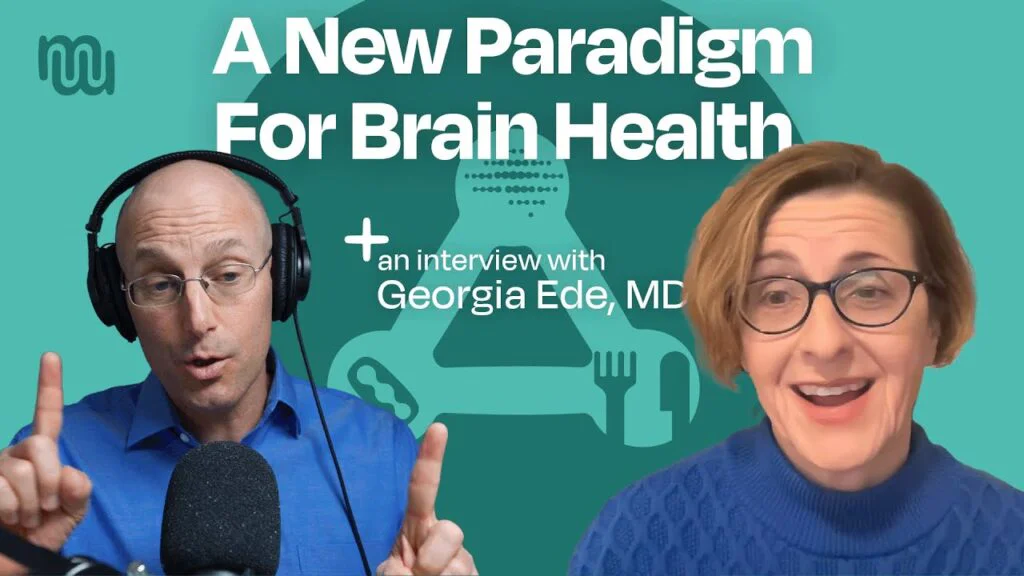
Harvard-trained psychiatrist Dr. Georgia Ede joins Dr. Bret Scher to cut through “brain superfood” hype and lay out a science-first framework for eating to improve mood, reduce anxiety, and protect memory. Drawing on clinical experience and rigorous evidence, Ede explains how unstable blood sugar and chronically high insulin drive brain inflammation and oxidative stress—and why restoring healthy metabolism (sometimes with lower-carb or ketogenic strategies) can sharpen thinking and stabilize emotions. She clarifies common nutrition myths, from the limits of observational food studies to the debate over seed oils and saturated fat, and makes the case for whole-food patterns—including some animal foods—to supply essential brain nutrients. Practical takeaways include using continuous glucose monitors, simple labs, and symptom tracking to personalize your plan. If you want clear, actionable guidance for lifelong brain health—beyond clickbait and diet wars—this episode is your roadmap.
Learn more

For many, the ketogenic diet conjures up images of “keto bros” flexing their muscles and obsessively avoiding carbs. But keto is a serious therapeutic approach for brain disorders…
Learn more
What is Ketogenic Therapy? As rates of both mental illness and metabolic disease continue to climb, there’s an urgent need to rethink how we understand the brain-body connection….
Read more
Dr. Bret Scher walks through the basics of starting a ketogenic diet, covering how to set carb, protein, and fat targets, why keto is actually a moderate-protein diet rather than high-protein, and how to avoid the "keto flu" through gradual transitions and proper electrolyte intake. He also explains when and how to test ketone levels and stresses coordinating with a healthcare team if using keto to manage a medical condition or psychiatric symptoms like depression or bipolar disorder.
Learn more
Harvard-trained psychiatrist Dr. Georgia Ede joins Dr. Bret Scher to cut through “brain superfood” hype and lay out a science-first framework for eating to improve mood, reduce anxiety, and protect memory. Drawing on clinical experience and rigorous evidence, Ede explains how unstable blood sugar and chronically high insulin drive brain inflammation and oxidative stress—and why restoring healthy metabolism (sometimes with lower-carb or ketogenic strategies) can sharpen thinking and stabilize emotions. She clarifies common nutrition myths, from the limits of observational food studies to the debate over seed oils and saturated fat, and makes the case for whole-food patterns—including some animal foods—to supply essential brain nutrients. Practical takeaways include using continuous glucose monitors, simple labs, and symptom tracking to personalize your plan. If you want clear, actionable guidance for lifelong brain health—beyond clickbait and diet wars—this episode is your roadmap.
Learn more
For many, the ketogenic diet conjures up images of “keto bros” flexing their muscles and obsessively avoiding carbs. But keto is a serious therapeutic approach for brain disorders…
Learn more