New Results: First RCT for Schizophrenia & Bipolar Disorder. Learn more.


Listen, Watch & Subscribe on:



New Study from 25-Year Eating Disorder Expert
Listen
About the host

About the guest


Guido:
I have not seen any intervention working as well as ketogenic nutrition in this population, in anorexia nervosa
Bret:
Welcome to the Metabolic Mind Podcast. I’m your host, Dr. Bret Scher. Metabolic Mind is a non-profit initiative of Baszucki Group, where we’re providing information about the intersection of metabolic health and mental health and metabolic therapies, such as nutritional ketosis as therapies for mental illness.
Thank you for joining us. Although our podcast is for informational purposes only and we aren’t giving medical advice, we hope you will learn from our content and it will help facilitate discussions with your healthcare providers to see if you could benefit from exploring the connection between metabolic and mental health.
An eating disorder psychiatrist states that this treatment works better for anorexia nervosa than anything he’s ever seen before. What’s the treatment? A ketogenic diet. And that psychiatrist I’m talking about is Dr. Guido Frank, professor of psychiatry at UCSD School of Medicine, and an eating disorder expert both as a clinician and researcher.
And he joins me today to talk about his study using a ketogenic diet to treat patients with anorexia nervosa. And one of the things that’s so interesting about this is how it’s completely contrary to what mainstream care supports. In fact, most would say it’s contraindicated. But Dr. Frank’s study, which is a single-arm pilot study in 22 individuals, suggests that not only should it not be contraindicated, but maybe it has a role in standard therapy and standard of care.
Now, of course, further studies need to evaluate it and replicate it. But the question remains, what do we do to help these individuals now? That’s why I’m pleased to be joined by Dr. Guido Frank to discuss this controversial topic, but at the same time, encouraging topic, and put his study, albeit small single-arm pilot study, put it into perspective of the standard of care now and the care that these individuals require.
So, I hope you enjoy this interview, and I hope you come at it with an open-mind, with Dr. Guido Frank. Many of the interventions we discuss can have potentially dangerous effects if done without proper supervision. Consult your healthcare provider before changing your lifestyle or medications.
In addition, it’s important to note that people may respond differently to ketosis, and there isn’t one recognized universal response.
Guido, welcome back. I’m so glad you could join me again here at Metabolic Mind.
Guido:
Thank you so much, Bret. It’s fantastic being back with you.
Bret:
Yeah. We’ve done a couple interviews before about the concept of ketogenic therapy for treating anorexia, which as we’ve talked about also, it can be pretty controversial.
But now you’ve got this amazing pilot study that we can learn so much from. But first, before we get into the details of the study and the results and everything, I want to hear from you what really brought you to ketogenic therapy as something to study as a potential treatment for anorexia?
Guido:
Yeah. So, anorexia nervosa is a severe psychiatric disorder and has one of the highest mortality rates in psychiatry and among the psychiatric disorders. And despite that, it has been extremely difficult to find any biological interventions that are really effective. And that’s really striking because, since people starve themselves literally to death, you might think there must be a motivation for people to recover.
Yet, it seems like there is a constant pursuit of weight loss. It almost has an addictive quality to this self-starvation where people feel like they want to do more of the same. And they have maybe a certain goal weight that they want to reach in terms of losing weight, but that’s never enough. So, it’s something that drives people further and further, and we never have really understood why that is the case.
And the primary focus of treatment for anorexia nervosa is weight restoration and treatment. And the idea is people then are fed to go back to a normal weight. This is usually with a lot of pressure and distress. And when people weight normalize, that doesn’t mean really that their fears around eating, body shape, and weight gets necessarily better.
In fact, it often gets worse. And once people are at the normal weight, they are really preoccupied with shape and weight. And that then often drives relapse. And the relapse rate is very high, especially in the six to 12 months after high level of care, such as in-patient hospital or residential treatment.
So, clearly a problem that we haven’t solved. And a few years ago, I was introduced to the idea of ketogenic nutrition. Barbara Skolnik’s niece recovered from anorexia nervosa on a ketogenic diet, or ketogenic nutrition, that was focused on weight stabilization. And then, a small pilot study afterwards in five folks, who had weight normalized from anorexia nervosa, then also supported that ketogenic nutrition has an important impact in normalization of these thoughts, in normalization of the sort of the cognitive emotional impact the disorder has.
And that’s how I got involved,. And being personally rather frustrated with the limited impact we have on those thoughts and feelings, I got really curious how this could be. And then, we started exploring that more from a theoretical level and taking the available research. And then, created a model around this approach: why a ketogenic diet could be helpful in helping folks with anorexia nervosa do better, feel better, and recover.
Bret:
Yeah. And it’s so interesting how you point out that it’s not just a weight condition, right? It truly is a brain-based thought disorder that certainly impacts weight, and people focus the treatment on the weight and maybe less so on the thought disorder. But that’s where ketogenic therapy can come in to really kind of help with both.
And when I was introducing this with you, I called it a pilot study. But really, it was that five-person study was the real pilot study. That was the first one. So, I’m glad you brought that up. So, that’s what led you to this. And I remember in some of our other discussions, you didn’t come at this as a keto person.
You weren’t in the keto crowd. You were treating and studying anorexia, looking for something better because you realized there really needs to be something better. And as you described, you came to it through that way. So, I find that so fascinating, which led you to this study.
So, quickly give us sort of the run-up. What was the structure of this study? And then, we’ll get into the pretty exciting results.
Guido:
Yeah. So, and I want to add to what you mentioned. You said that I didn’t come from the keto direction, so to speak. And it runs a lot of skepticism. And I was a skeptic myself.
But the structure of the study is that folks who contacted us, they were then carefully screened for their eating disorder history. We were looking for individuals, who had a history of underweight anorexia nervosa but had weight normalized at the point of study entry. That’s also to be safe, and start with individuals, who are not in a dangerously low weight state at the moment.
They had some lab values drawn to make sure that their health status is in a good place. And then, folks then over two weeks, they had a ketogenic nutrition induction phase. So, where they switched over from their regular eating to ketogenic nutrition, which is comprised of 70% of fats, 20% of protein, and 10% of carbohydrates.
And they were then supposed to get to a ketone level of above .5, 0.5 during those two weeks, and then maintain this level for 12 weeks. And we had weekly meetings with the dietician. They had a weekly meeting with me. So, we were assessing ketone levels, how it’s going with the transition because it’s a huge mind shift, right?
To go from one type of nutrition to another that involves friends, loved ones, family, right? And that’s not always easy. Going to a restaurant is often complicated, and they need a lot of just discussion. How can they prepare to make the right food choices? And so, after the 12 weeks then of ketosis, then the study ended with assessments again at the end. And then, testing how did our intervention work out.
Bret:
And how many people did you end up enrolling?
Guido:
So, we enrolled 22 people. It sounds like a small amount of individuals, but the study was actually well-powered based on the data that we had from the smaller pilot trial. We had 18 study completers, and 4 individuals who dropped out of the study along the way.
Bret:
Okay, which for a diet intervention study in this population is probably not that bad actually. It’s probably pretty good, 18 out of 22. And was there a control group?
Guido:
There was no control group. And that’s, you could say, a weakness. And we need to figure out a way of a good control group in the future.
For us, it was most important at the moment to replicate the five individual small pilot in a larger group. So, we really wanted to make sure that we have good indication to carry this further. And as you just pointed out, it is difficult to motivate people to do a diet intervention that they may have tried already and that has not helped them to feel much better.
Most people have been on a regular diet. Many people with anorexia nervosa, they had all kinds of fasting-related diets or whatnot. With the keto diet, we felt we have something that we feel very positive, feel very good about, that would be not a promise, but the likelihood of being helpful to them would make sense.
And so, we would have from an integrity-level of place, we would have a good reason to say this is a good idea to do. \But yeah, so it was a single arm study.
Bret:
And like you said, it could be considered a weakness. And I’m sure detractors might say it wasn’t a randomized controlled trial.
But it totally makes sense why you did it this way, especially since it’s controversial, goes against guidelines and recommendations. And you really wanted to be sure you could replicate the small pilot study before going on to an even bigger randomized controlled trials. That just makes total sense from the timeline.
But so, let’s not bury the lead any further. What did you find as the main results?
Guido:
So, we had several assessments that we took over time, the beginning and the end and throughout the study. And they were mostly focused on eating disorder-specific behaviors, such as food restraint, eating concerns, shape concerns, weight concerns, or how much people were afraid of gaining weight, and so forth but also depression.
In the beginning, it was quite hard for them to switch to the ketogenic diet because fat has the highest caloric density, right? And fat is what people avoid the most typically with anorexia nervosa. So, making the shift was not easy. We could see that in kind of a bit of an uptake in weight concern in the beginning.
But we see over time that there was a very steady decrease of symptoms over time in the eating disorder-related questionnaires and assessments as well as depression. And in fact, what we noticed first is usually people felt more energetic. They felt having a better mood in folks with anorexia nervosa, they often have higher level of depression as well as anxiety.
And then, along with this improvement, there was also an improvement in food restraint, eating concerns, weight concerns, and so forth. So, that was very striking. And it was to the point that on average, the study participants, who completed by the end of the study, they were below the cutoff point of the eating disorder questionnaire for anorexia nervosa.
So, there’s a certain cutoff point below you would say you don’t have this problem, if you wish. And above that, there’s a very high likelihood that you have anorexia nervosa or another eating disorder. And so, they were below this cutoff point. So, it’s a dramatic decrease that happened over time.
People could clearly notice that. They were often extremely surprised. “Oh my gosh, I wished I had known that, years ago.”
Bret:
So, when they’re below that cut point. Sorry to interrupt, but I just want to really double down on this point. If they’re below that cut point, would you term that as remission of their anorexia?
Guido:
Yeah, you could look at it that way.
Bret:
Yeah.
Guido:
Yep. Very much so.
Bret:
Now, obviously, not a cure. You don’t use the words cure because it could always come back. But the fact that they no longer met criteria for anorexia is really remarkable. And in the diabetes world, we would call that remission of type 2 diabetes.
Or so to see that with anorexia and just to put it in perspective, do you see remission of anorexia very often in the patients you treat?
Guido:
Not really. Just to give you a little bit of a comparison. So, one of the main outcome measures we used is the eating disorder examination questionnaire. And the global score in our sample was 4.1, and that’s very comparable to other studies who look at folks with severe anorexia nervosa.
For instance, a larger study that looked at partial hospital programs level of illness severity, they had, for instance, a mean score of 4.08. So, also 4.1, essentially the same. And whereas the outcome after many weeks and maybe months of being in partial hospital, the end score was 3.1 on discharge.
Our level was 1.7. So. It was really remarkable.
Bret:
That sounds remarkable. And you’ve already alluded to what some of the people were saying that “I wish I knew this sooner.” And what was your impression? You were meeting with the patients. You were seeing them on a regular basis.
What was your impression on how they changed? And again, how does that compare to your regular practice where you’re not using ketogenic therapy?
Guido:
Astounding.
Bret:
Astounding.
Guido:
It was.
Bret:
I want to hear that again. Astounding. Wow.
Guido:
It was astounding. I’m quite self-critical. And I don’t want to sell anything or whatnot, and I don’t want to make anything look better than it is. But it was just fascinating to observe how for most of the individuals in the study, how things improved and how much things improved.
And the thought that came to my mind was liberation. And this idea of being always in this cage of, “Oh my gosh, I’m going to get fat, and what’s my next meal going to be? And can I eat something or not?” This takes up so much brain space. This is so limiting. It limits people from going out to eat with friends.
People cannot feel comfortable going to the beach and all that type of stuff. And that dramatically has been helping people to feel better, to feel more relaxed. And you really want to think about separating them as a person from these eating disorder thoughts. And it did feel to me that people had more energy.
They somehow had more, yeah, they had more ability to separate maybe feeling less tired out by what’s happening because life is stressful. And the folks with anorexia nervosa, they tend to be more on the anxious perfectionistic side. Those folks tend to work very hard and so forth, and that takes a lot of energy. And that also aligns with the basic science model that we used to build our overall model upon, that some people just get tired out or cannot use energy as well when they’re stressed and anxious.
And it seems like the ketogenic diet help people feel calmer. People often feel like, “Okay, there’s a lot going on, but I’m just, calmer. And I’m just going through these things more easily.” And it seems to me that really helps to then give the eating disorder less room to come in because there’s a lot in sort of the literature about control and having control around eating and food. And that’s sort of something that is often important for people with anorexia nervosa.
And this may be true. And maybe people need this sense of control because things feel out of control? And you could think about if you don’t have enough energy, then you might not feel in control. And having a better energy source helping you feel calmer, and then you don’t need this other control anymore.
Bret:
Yeah, such an interesting idea about the energy and about the energy it takes to have these constant thoughts and to have to pay attention to them when you really, you’d pr- probably prefer, not to. But you feel like it’s not in your control. And I remember my interview with Caroline Beckwith, who was that initial N-1 case, where she said those thoughts and voices just went away.
And not like hallucination voices, but she called the thoughts and kind of voices in that they just went away. And how remarkable that was that there was nothing that she had tried that made those thoughts go away, which is really astounding, as you said. But I think another really important concept is if you Google ketogenic diet, you’re going to find a thousand things about weight loss and about how it’s a weight loss diet.
And in population living with anorexia, weight loss is the last thing that you want. So, I can see why so many people might be a little skittish about it or even outright, just outright, contradictory that you can’t do this. But what did you find from a weight perspective?
Guido:
We didn’t have much of a problem at all. There was a couple of people came in, who came at a rather low weight. So, they came in at a BMI, body mass index, of about 18. And people could not go below 17.5, and as there’s like certain weight fluctuation most people have over time. And couple of people, they dipped briefly under, but then we said, “Okay, look. You really got to add some fats.”
It’s as simple as that, and you need to add those things. And there was not a single person that relapsed. And when you look at the BMI graph over time, week by week, it’s entirely flat. It’s entirely flat. So, that was very reassuring. And I get sometimes personal emails where people are very concerned, to say the least, about what we’re doing here and whether this is the right thing to do or not.
But from my experience, I only can say it has been incredible. And we’re now, it’s been taking us about a year, to find a path forward to move this in people, who are somewhat in the underweight range. So, we’re very cautious. Safety first. Do no harm, absolutely. But we want to go into a more underweight range and see whether we find a similar pattern that people can benefit.
Yeah, we do want to help them get to within a normal weight range. Although, we have been staying away from specific weight goals. It has to be a such and such weight because it’s not a easy-to-prove target why a certain weight will make somebody well.
Bret:
Yeah. And it makes sense. A ketogenic diet is not by definition a weight loss diet.
it just puts you into ketosis. So, somebody may lose a little bit of water weight initially with the initial diuretic effect, but if it’s a well-formulated ketogenic diet, if you don’t have weight to lose, you’re not going to lose it. But that’s a concept that I think the nutrition and the medical world hasn’t quite grasped yet. But a study like this will certainly help highlight it.
But you mentioned some of the emails you get that people are very concerned, and maybe even a little confrontational, because if you look at guidelines, any restrictive diet is contraindicated, right? You’re just not supposed to do it. I don’t know if the guidelines use the word contraindicated, but I think the perception certainly is that it’s contraindicated, that there’s no, quote-unquote, “restrictive diet.”
And, yet that a lot of people see that as exactly what you’re doing. So, I’m curious about the level of pushback you may be getting. I know you’ve talked about this at some conferences, and I’m sure you’ve talked to colleagues about it. So, what is the level of “Wow, this is amazing” versus “What the heck are you doing?
This is terrible. How could you do this?” What’s the balance there?
Guido:
It’s interesting. The people who find it amazing, they tend to be outspoken and share their excitement with me. The people who are concerned, they typically send me then an email, or I don’t always get into this discussion.
I often wish we could get more into a face-to-face discussion to really talk about the problem and how we approach it. And sometimes, I’m also surprised how come that we don’t have a more face-to-face discussion about the controversial parts. It seems like for many people, the idea that all food is good food for anorexia nervosa is just a given, and I have no judgment about any food.
I want to start with that. But my point is that for some people under certain circumstances, maybe not all food is the most healthy food? And much more, we may have to cater to an individual’s needs. And if you think about personalized medicine, then I think we also should look at nutrition. And why should all type of nutrition automatically be good for everyone?
So, I’m very much open to this discussion. And because, as I said, so I think it’s important that we have an open discussion about that. And that’s the only way I think to move things forward, but it is a struggle. And I think we’re still in that and really gathering data to convince people that this is an important new treatment direction.
Bret:
Yeah, it’s interesting how you phrase that. It’s just a given that all foods are good foods. It’s accepted, it’s assumed. And does that make it science or more towards just belief and religion, right? Has it actually been studied to show, to demonstrate that “all foods are good foods” is the best dietary approach?
My guess is it probably hasn’t been studied, but it’s been believed. And now, you’re presenting an opportunity for it to be studied. I would hope people would embrace it rather than push against it, but it sounds like you’re getting a mix. But do you think a next step could be to study it, randomized controlled trial, head-to-head with all foods are good-type of approach?
Guido:
I totally agree. I totally agree. That should be our next step. We are currently conducting a study that compares folks with anorexia nervosa history and controls using brain imaging. We use an imaging modality, called positron emission tomography, where people have a glucose injected in their blood. And then, we can see how it travels in the brain and how it goes into the cells. And then, see how does that compare with healthy controls because the last studies really on that is about, I don’t know, 20, 30 years ago with very small samples. And by, now outdated technology. So, it’s quite interesting.
Nobody has done that since. So, we compare that. And then, we compare in the folks with anorexia nervosa before and after the ketogenic diet, and see how that changes brain metabolism, glucose metabolism because we really want to bring a biomarker. And we want to tie that to a biological measure that’s not subjective.
So, that’s our current study in weight normalized anorexia nervosa, aside from the group that I just mentioned where we start recruiting folks who are underweight. And then, as you said, a randomized controlled study with a controlled diet is really a key next direction.
Bret:
I mean I guess you could say science moves slowly with these types of things.
You have to prove the concept. You have to look at the mechanism. You have to replicate it. Then, you have to move to randomized controlled trials. And so, the path to more global acceptance is slow. But there are people living with anorexia right now, who are not responding well enough to standard treatment, who are possibly desperate for another treatment to change and improve their lives.
So, where would you say this falls in for, where would ketogenic therapy, fall in for those people? And how could they go about implementing it given that there aren’t many practitioners, who are using it at this point?
Guido:
I want to say with good conscience, people who are weight normalized and have a history of underweight anorexia nervosa and still are preoccupied a lot with shape and weight, and distress in different ways usually triggers these thoughts, makes them worse. They most likely will benefit a great deal from a well-implemented ketogenic nutrition where the weight is stable and they are within a ketosis range, meaning they are in ketosis.
And chances are very good that those people will have a lot of benefits. Having said that, and with the underweight group, first do no harm, right? I’m a physician, and my patients doing well is my utmost goal. So, I want to wait until we have done the study. And until we can say, how is it when somebody is at a low weight?
Are there any blood sugar issues? So, we’re implementing, every one or two weeks, lab values that we want to take. So, we want to take a really safe approach. And then, hopefully, we can suggest that as well. But again, I want to be cautious. There’s one important thing I wanted to mention.
Seventy-two percent of the people who completed the study, they did super well. They had a great improvement in their outcome data, both with the eating disorder-related scores as well as depression scores. There were five individuals who did not so well with the eating disorder-related thoughts and behaviors.
And they also had quite a bit improvement in depression, I have to say. They also did well there. But the eating disorder-related thoughts were much harder to go down for them.
Bret:
Did they get worse or did they just not go down?
Guido:
They did not go down much. So, in two of those five, it essentially was flat.
It was the same as on entry, on exit. And in three it went down, but not as dramatically or not as drastically. And then, we did an analysis what could be related to that, and we found that poor self-esteem was a main hurdle in improvement. And that was a very interesting result. And there is some literature about how self-esteem is related to anorexia nervosa.
And so, what I want to say is with any treatment, nothing is 100%. That some people didn’t respond as extremely well as the vast majority is expected. And yet, we found a very strong reason for it. So, meaning if we use this ketogenic nutrition, if you use this as a treatment intervention, maybe for some people, you also very clearly need to look at other things. At self-esteem, maybe certain temperament character traits that get in the way, and to help them also do better.
Bret:
And so, it’s clearly not just go eat a keto diet and forget everything else, and you’re going to be perfectly fine. By no means is that what we’re saying. And because anorexia is such a serious condition, people should be following regularly and closely with their clinical care team. And not everybody is going to respond necessarily.
But certainly seems to be worth a try in the right setting for the right person, with the right supervision, given how little other treatment works. So, let me just ask you point-blank. In your career for treating eating disorders, have you seen anything work as well for anorexia as ketogenic nutrition worked in your trial?
Guido:
I have not seen any intervention working as well as ketogenic nutrition in this population in anorexia nervosa.
Bret:
And that’s remarkable. You’ve been doing this for a while now, and you’ve seen a lot of treatments come and go. So, that is remarkable. That statement gives me chills.
Like that’s got to give you hope. Like more hope than you’ve had for treating your patients.
Guido:
Yeah, it is simply wonderful. That’s all I can say. Sometimes, I have these associations. It’s like a awakening or things like that. People who had for 10, 20 years struggled with that. And all of a sudden, things are just so much better and things are so much lighter. And people feel like, as somebody said, “I have my life back.” That I believe her, that’s how it felt. So, I think that is just incredibly, yeah, making me hopeful, making me happy. And I always like to tell people, or when I hear that from folks in the study, I’m like saying, “Look, what’s most important to me is that you so clearly see the benefit. That you so clearly notice it.”
So that’s very striking. And because we can have a significant change in a rating, and if you have enough people, you have a significant change in a certain illness-related rating. But that people really feel their life is different, that is not that easy to get. And that, I just have seen and heard over and over again how much this is beneficial.
So it’s really striking. We’re also a little bit branching out into bulimia nervosa and exploring that group. And it seems like ketogenic diet also helps people with curbing their binge eating purging episodes. And they often feel energetic. And they feel full in a good way, and have less of these then dips where they feel like, “Oh gosh, I’m all empty and I just have to eat and eat to get back some energy and strength.”
So, it’s very striking. So, I do strongly believe there is a metabolic component that’s very central to eating disorders.
Bret:
Yeah, and we had a separate interview where you really went into depth about your thoughts on the potential mechanism. So, I encourage people to go back and listen to that interview.
But I just hope this gives people hope that there is something else out there. But I also hope that when they take this information to their psychiatrist, to their dietician, that they don’t just get turned away and say, “No, it’s a restrictive diet. You can’t do it period.” But that this helps people open their eyes and open their ears to learn more.
So, what would you, what message would you like to give to the psychiatrists out there, the dieticians out there who don’t think that this should even be considered?
Guido:
I think it’s important to go to the data and try to avoid opinions. Or if you have an opinion, that this is based on good data. And that is what also what I’m doing in my regular clinical work.
When I propose a medication, maybe I’m not proposing that because I think so, but it’s more like I have a certain evidence. And the most important thing is that people notice for themselves that something is going well or not. And then, why you might want to try something new and something different?
And just look at the data. That’s really all I would suggest. And the data look very strong.
Bret:
Yeah. thank you so much. I really appreciate you taking the time to join me today and share this remarkable study, and the plans for the future. So, if somebody wanted to reach out to you or learn more about you or follow you, where can we direct them to go?
Guido:
They could go to the UCSD, University of California, San Diego, website and look for a ketogenic nutrition, ketogenic diet, or just search my name and do keto. And then, that should come up. Or just email me at gfrank@ucsd.edu. So, I’m happy then to respond or forward it to my collaborators in this study.
Bret:
Wonderful. You’ve already mentioned another of, a number of other studies you’re working on. So, I’m sure we will have you back to learn more about those results as well. So, thank you again.
Guido:
Thank you so much, Bret. Great being here.
Bret:
Thank you for watching. If you want to see more, check out these recommended videos.
Also if you haven’t already, don’t forget to subscribe to our channel to stay up to date with our content and help us expand the movement. And if you want to sign up for our newsletter, access our resources, read the latest research, or check out the THINK+SMART framework, click here to visit our website.
See you on the next video.
Thanks for listening to the metabolic Mind Podcast. If you found this episode helpful, please leave a rating and comment as we’d love to hear from you. And please click the subscribe button so you won’t miss any of our future episodes. And you can see full video episodes on our YouTube page at Metabolic Mind.
Lastly, if you know someone who may benefit from this information, please share it as our goal is to spread this information to help as many people as possible. Thanks again for listening, and we’ll see you here next time at the Metabolic Mind Podcast
Listen, Watch & Subscribe on:

Behind the smiling selfies and busy school schedules, an alarming truth is unfolding: today’s youth are struggling with mental health challenges at unprecedented rates. Rates of depression and…
Read more
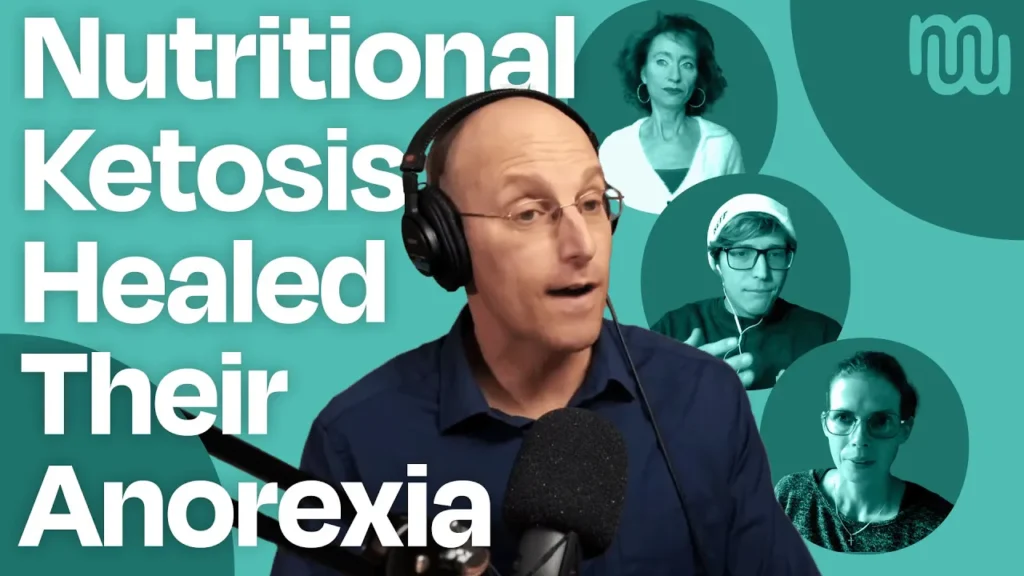
In this powerful Metabolic Mind episode, host Dr. Bret Scher shares five deep, personal interviews with people who battled severe anorexia nervosa—some nearly dying, others cycling through conventional treatment for decades—who ultimately found remission after incorporating therapeutic nutritional ketosis into a broader healing journey. They describe how shifting to ketogenic or carnivore-style diets improved brain energy, reduced obsessive food thoughts and crippling anxiety, and allowed therapy, relationships, and life to finally take root. While not a one-size-fits-all cure and never something to attempt without expert supervision, these stories challenge the idea that anorexia is a lifelong sentence and highlight ketogenic metabolic therapy as a promising, hopeful avenue to explore with experienced clinicians.
Learn more
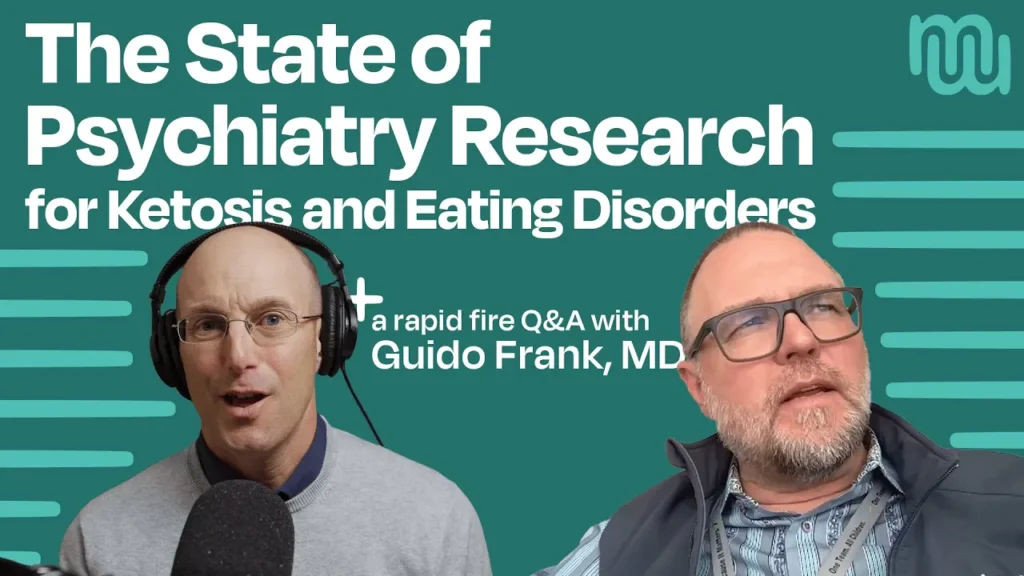
This episode of the Metabolic Mind Podcast features Dr. Guido Frank of UC San Diego, a leading researcher in eating disorders, discussing why anorexia nervosa remains one of the most lethal psychiatric conditions and why standard treatments often fall short. Dr. Frank explains how stress and impaired brain glucose metabolism may intensify restrictive behaviors and why therapeutic nutritional ketosis could provide a new metabolic pathway to stabilize brain energy and reduce obsessive thoughts about food and weight. He also outlines his upcoming clinical trial investigating ketogenic therapy for anorexia, offering cautious but meaningful hope for those seeking new science-based treatment options.
Learn more
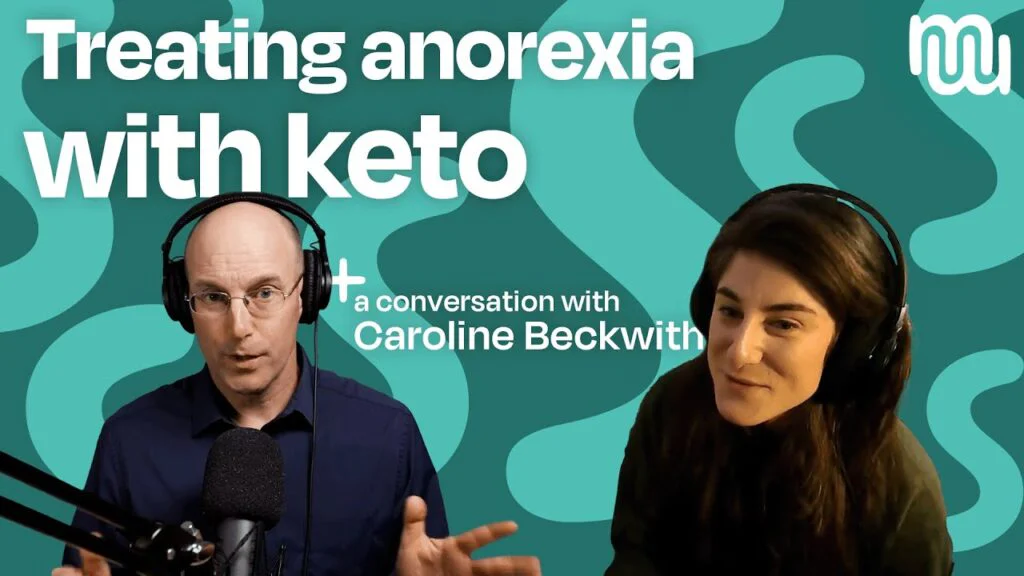
This Metabolic Mind episode shares the remarkable recovery of Caroline Beckwith, who battled severe anorexia nervosa for more than fifteen years and found lasting remission by combining a medically supervised ketogenic diet with ketamine infusions. After years of ineffective standard treatments, obsessive exercise, and even substance use, shifting to therapeutic nutritional ketosis changed her brain chemistry, quieted the relentless anorexic voice, and allowed her to rebuild a full life. Her story challenges the assumption that all restrictive diets are dangerous in eating disorders and instead positions ketogenic metabolic therapy, when carefully supervised, as a promising new option for people with anorexia who have lost hope.
Learn more
Behind the smiling selfies and busy school schedules, an alarming truth is unfolding: today’s youth are struggling with mental health challenges at unprecedented rates. Rates of depression and…
Read more
In this powerful Metabolic Mind episode, host Dr. Bret Scher shares five deep, personal interviews with people who battled severe anorexia nervosa—some nearly dying, others cycling through conventional treatment for decades—who ultimately found remission after incorporating therapeutic nutritional ketosis into a broader healing journey. They describe how shifting to ketogenic or carnivore-style diets improved brain energy, reduced obsessive food thoughts and crippling anxiety, and allowed therapy, relationships, and life to finally take root. While not a one-size-fits-all cure and never something to attempt without expert supervision, these stories challenge the idea that anorexia is a lifelong sentence and highlight ketogenic metabolic therapy as a promising, hopeful avenue to explore with experienced clinicians.
Learn more
This episode of the Metabolic Mind Podcast features Dr. Guido Frank of UC San Diego, a leading researcher in eating disorders, discussing why anorexia nervosa remains one of the most lethal psychiatric conditions and why standard treatments often fall short. Dr. Frank explains how stress and impaired brain glucose metabolism may intensify restrictive behaviors and why therapeutic nutritional ketosis could provide a new metabolic pathway to stabilize brain energy and reduce obsessive thoughts about food and weight. He also outlines his upcoming clinical trial investigating ketogenic therapy for anorexia, offering cautious but meaningful hope for those seeking new science-based treatment options.
Learn more
This Metabolic Mind episode shares the remarkable recovery of Caroline Beckwith, who battled severe anorexia nervosa for more than fifteen years and found lasting remission by combining a medically supervised ketogenic diet with ketamine infusions. After years of ineffective standard treatments, obsessive exercise, and even substance use, shifting to therapeutic nutritional ketosis changed her brain chemistry, quieted the relentless anorexic voice, and allowed her to rebuild a full life. Her story challenges the assumption that all restrictive diets are dangerous in eating disorders and instead positions ketogenic metabolic therapy, when carefully supervised, as a promising new option for people with anorexia who have lost hope.
Learn more