New Results: First RCT for Schizophrenia & Bipolar Disorder. Learn more.


Listen, Watch & Subscribe on:



About the host

Bret:
Today on the Metabolic Mind Podcast, we’re going to hear five interviews, each with a dramatic story of illness and recovery from anorexia nervosa. We’ll hear about the serious and potentially catastrophic psychological and physical health issues that accompany anorexia, the difficulty of gaining insight and the shortcomings of conventional treatment, and how each of these individuals was told they would struggle with their eating disorder forever without the ability for remission.
But by going outside of conventional treatment, each of these individuals was able to achieve remission. One common theme among their paths to recovery was the use of nutritional ketosis to help heal and put their anorexia into remission. Now, ketosis wasn’t the only treatment as other aspects of their lives needed to be addressed, as happens with many psychological and psychiatric illnesses.
But for each of them, therapeutic nutritional ketosis was the cornerstone of their therapy. This doesn’t mean everybody with an eating disorder should try ketosis. But what these individual stories can do is give hope to the many living with eating disorders and struggling to find an effective treatment.
We hope this information will encourage those individuals to discuss nutritional changes with their healthcare provider or seek out experienced clinicians to help them heal. Before we get on with the interviews, please remember our channels for informational purposes only. We’re not providing individual or group medical or healthcare advice or establishing a provider patient relationship.
Many of the interventions we discussed can have dramatic or potentially dangerous effects if done without proper supervision. So, consult your healthcare provider before changing your lifestyle or medications, and this is exceptionally pertinent for eating disorders and anorexia. And traditionally, any quote unquote “restrictive diet” is deemed to be contraindicated in anorexia in other eating disorders.
But as you’ll hear in these case interviews that maybe that’s not the case. And we emphasize this strongly, it needs to be done under proper supervision. So now, let’s get on with these interviews. Our first interview is with Michelle. Michelle is a dietician and a runner. But she struggled with anorexia for years, and it affected all aspects of her life and affected her professionally.
And it was only by overcoming and going against everything she had learned, both as a potential treatment for her anorexia and his education for a dietician, only by going against those teachings was she able to heal herself. And as you’ll see, it’s a pretty dramatic journey, but one that fortunately ends well for Michelle.
So let’s start by going back and getting a little personal, if you don’t mind, about your personal journey with food and nutrition and eating disorders. And tell us how all this came about.
Michelle:
When I was 12 years old, I was diagnosed with anorexia nervosa. I was about five feet tall and 57 and a half pounds.
Had a BMI of a little over 11. For people who aren’t familiar, anything under 18.5 is considered a dangerously underweight. I was put in in-patient treatment immediately. I actually passed out the school. That’s how they found out that I was so sick. I was given about a 10% chance to survive. And I was immediately put on a 24-hour tube feeding system and fed the standard American diet.
I was away from my parents for two months. I was in a place in Wickenburg, Arizona. And during that time, I did regain weight, but I was put on seven different medications as a 12-year-old. Everything from, I had severe anxiety, I had depression, I had a severe GI issues, diarrhea, constipation, going back and forth, my racing thoughts around food.
But I was told as a 12-year-old, this is your lot in life. People do not recover from eating disorders. And for the most part, that was correct throughout my adolescence, even though I did regain weight. And I did go back to school. I was able to participate in athletics. I was constantly thinking about food.
I relapsed a few times in high school and relapsed, lost quite a bit of weight. But I decided to become a registered dietician because I thought okay, I went from you’re probably going to die to now you’re alive. So, maybe I can help other people? Maybe there’s something in nutrition that I’m missing?
And I was a student, but I’ll never forget walking into the ICU and flipping over the tube feeding. And I was like, oh my God, this is the same stuff I was fed as a 12-year-old. At that time, I was 24. Because the number one ingredient when we’re tube feeding patients, and you’re getting tube feeding if you’re not able to eat by mouth or you need extra calories, is maltodextrin corn syrup, solid soy protein, and canola oil.
So once again, I would just propose wow, is that the best thing to feed somebody who’s, been in a traumatic car accident, maybe has cancer? I was told it’s just calories. Stop asking questions.
Bret:
So, as you’re going through your dietician training and learning all this about the carbohydrates and about the balanced diet and all that, and you had this natural curiosity and questioning about it. But with your background and with your history of an eating disorder, when you’re focused around food all the time from a professional life, and then you have to eat in your personal life, what was your thought process like then?
Was it getting better at that point or did all this focus on food worsen it? I’m just curious how you responded.
Michelle:
Yeah, I think I was able to compartmentalize to some degree as somebody who was also very athletic. But yeah, I wouldn’t say it was either better or worse.
Things were just pretty, pretty terrible. I like to say I felt like I was standing on the sidelines of my own life quite a bit. You’d go out somewhere and what people were eating, I was always very careful to try to pack foods or eat before. And of course, the nutrition guidelines encourage everybody to eat in moderation.
I desperately wanted to be that person who could eat cookies or eat something and not suffer anxiety or not feel dizzy and shaky, but that wasn’t my reality. And as someone with an eating disorder, we’re told you’ll know you are well when you can eat all things in moderation.
And I couldn’t do that. I noticed whenever I had a cookie or a piece of cake, even though once again, I was very athletic. I’m a lean human. I would have such severe anxiety. And then, it wasn’t until 2019 that I completely lost my health. Like I went from being able to, I was training trying to qualify for the Olympic trials, and I was running 15, 20 miles a day. And all of a sudden, I couldn’t run two. I’d go out and I’d break out in a sweat.
I was so anxious that I had to call into work. it just felt like my life was falling apart. And like many people, you go to doctors, you get your blood test. Like what’s going on? You get prescribed Xanax. You try a few unconventional things. Some things are illegal in my state that may not be illegal in other states.
And just nothing helps.
Bret:
And what were you eating at that point?
Michelle:
Very high carbohydrate diet. Over 400 grams of carbohydrates a day. That’s what led to my, what I like to call, my come to Jesus moment where I just had a really bad day in the hospital as a dietician. We had a patient pass away.
I covered oncology, a young patient. I came home early, fell asleep on the couch, and woke up at two in the morning, and I just felt like my body was on fire, And so finally, I got my car keys, I drove to 7/11. I got 30 pounds of ice. I put it in the bathtub, and I’m just sitting in an ice bath at three in the morning crying.
And that’s when my wife said, hey, you know what? I think we should do something different. I’m 36 years old at that point. And I said, yeah, I’m done running. This is ridiculous. Like clearly my running days have passed me. I’m tired of thinking about food all the time. And so, it’s interesting because like, I’m sure many people, you don’t think these like very horrible moments in your life are going to be a springboard for change. And so it was that a few days later that I ended up saying, shoot, I’m not running so much. And I’ve heard that ketogenic diets can be very beneficial for mental health. So, why not just roll with that for a minute and just see if that helps?
Bret:
As you’ll hear, Michelle heard about a keto diet and knew about it, but it wasn’t easy for her to start.
In fact, psychologically, it was very challenging. Everything she had been taught was essentially the opposite of a keto diet, and everything she was taught both as a patient and as a dietician. So, there was a substantial hurdle and obstacle for her to overcome to even consider starting nutritional ketosis.
Michelle:
I was terrified of a ketogenic diet. I was taught as a dietician that the fat will kill your heart. You will not have enough glucose for your brain.
And I was like, okay, this will be a very short-term thing, and maybe a few weeks, maybe a month? And then, I stumbled on the carnivore diet ,and I was in so much pain, just my muscle pain, that I thought you know what? Why don’t we just do this for a few weeks?
Like, I’ll give it a few weeks. And of course, you bring that to your partners. I’m sure anyone with an eating disorder, if they’re living with their family or a significant other, she was like, F no, this is an eating disorder. This will only set you back. Absolutely not.
Bret:
It’s so interesting how Michelle had to overcome her own fear, and the fear from her wife, to even begin.
It shows the importance of family, and everybody being on the same page, which is not always easy. But as you’ll hear, once she started, there was no turning back.
Michelle:
No one has taught me how effective they are in reducing A1C. No one has taught me about how ketones are anti-inflammatory. And you’re a little bit shocked.
You’re excited. And long story short, I did the carnivore. I ended up doing full carnivore for 30 days. But at week three, my muscle pain started getting better within a week. But I attributed that to, oh, I’m not running. But week three, I remember coming home. I came home a little early, and my wife was sitting on the couch. And she said, hey, I need to talk to you.
She’d beat me home, which is unusual with her work hours. And you never want to hear that, oh no, did someone die? Am I in trouble?
Bret:
Nothing good starts that way.
Michelle:
Yeah, that’s not good. Like oh, geez. And she said, I don’t know if I like this way of eating yet or not, but this is the best your anxiety has been in the 11 years that I’ve known you.
And we both were just like, whoa. Like it was true. Like I wasn’t, I was calm. I didn’t have to eat every two hours. I was finally getting enough saturated fat and enough vitamins. I also, and we could do a two hour podcast about this, about bioavailability. I just don’t think in my life I’d ever had such bioavailable nutrition.
As a dietician, they’re telling me to eat all these grains and all this vegetables. And so, yeah. So, then I, once again, perhaps naively, I thought wow, all of my coworkers are going to be so excited about this. The hospitals going to want to implement this, these low carb diets. And so I brought all this research and wrote a proposal to our clinical director, and he doodled the whole time.
It was just like, how interesting. Well, do we want to implement this? Oh, no, like we can’t do that. No, we just do the nutrition guidelines. But I found when I was able to nourish my body once again and getting that really highly bioavailable nutrition, I wasn’t constantly spiking and crashing my blood sugar with so many simple carbohydrates, that I yelled.
Bret:
Michelle didn’t just benefit mentally and psychologically from her eating disorder, but she got back her love of running. And she benefited dramatically physically. And we’re not just talking about running 5Ks or 10Ks, but ultra marathons, an extreme stress on the body that not everybody can do.
You need to be in fantastic shape, I would say, both physically and mentally, to be able to accomplish it. And that is something she got back in spades.
Michelle:
It made so much sense, especially for the ultra distance. Can I teach my body to burn more fat for fuel even at faster paces? Because it doesn’t matter if you’re a high carbohydrate athlete or a low carbohydrate athlete.
Everyone’s goal is to preserve muscle glycogen. Because we’ve all, if you’ve been a marathon runner and you’ve hit the wall, you started to tap in your muscle glycogen. And so I found I was very successful. I’ve run four ultra marathons distances from six hours to a hundred kilometers, 62 miles.
Yeah, and done really really well.
Bret:
So, eating this way didn’t even, didn’t only heal your brain, it healed your entire body. So for, yes, from a mental and a physical aspect, but there’s got to be still that fear of, if I have an eating disorder and I focus on food so much, why are you going to give me a restrictive diet that focuses on food so much?
So, how do you respond if someone comes to you and has those thoughts or those feelings?
Michelle:
Yeah, and that’s a great question. What I like to start saying is, I like to apply to common sense. I think sometimes we outthink our common sense. And so first of all, I like to say okay, every species has a species-specific diet.
Most people can get that. I have a dog, named Jackson, and I have a tortoise, named Gertie. They eat very differently. Jackson, obviously, more carnivorous, the livers, the meats, the fats. Gertie, kale and lettuce. If I fed, if we flopped it, both species die. Humans have a species-specific diet, which we thrive off of. And I believe evolution, you look back at evolution, humans were designed to eat animal protein and fat.
Our system digest it, uses it, really well. Our brain functions really well. We have very high bioavailability with those things, meaning we can absorb and utilize those nutrients. We do not absorb and utilize the nutrition from plants very well. What has happened is we’ve ended up in a society that 93% of us are metabolically unhealthy, right?
And I say, I like to use the example, when it comes to eating disorders or mental health, that it’s my hypothesis that some people just don’t utilize glucose in the brain very well.
Bret:
Next, we’re going to hear from Caroline. And she has another dramatic story of the rapid onset of anorexia and her struggle with the voices and with food control for years. And as she says, it was out of control. But fortunately, with the love of her family and with a change in her diet, she was able to find healing.
So Caroline, I had the pleasure of interviewing your Aunt Barbara and hearing about this case report that she put together with Dr. Lori Calabrese and Dr. Guido Frank. And the way she tells the story was, it started as a labor of love, thanks to you, really. And the journey that you were on and how you helped her get into this field and see what was possible.
I want to hear from you to go back in your history, and when you started having symptoms of anorexia. When you started experiencing that and hear from you. What was going on?
Caroline:
I became anorexic when I was 14, going on 15. And I ran cross country. It was a very short timeframe of, I was normal and a kid. And then, became anorexic in a month, basically.
And I wanted to like go on a diet, like I did have that idea. I wanted to go on a diet and lose a couple pounds. I didn’t think I was fat at all. I thought I looked like too muscular. That was my feeling. So, I started going on a diet, and then I had read about diets. I was 15. I was like a kid reading about diets, and then just thought like, why not just not eat?
That seemed so much easier than all of this. And I didn’t know how to cook. And it was just like, that seemed too overwhelming. So, that seemed like the solution, or it didn’t strike me as dangerous or crazy to do. And then, within a couple weeks, it was out of control. And I didn’t, I sensed it, but I didn’t, I obviously didn’t know how hard it is to get out of.
I just thought like, alright, this feels uncomfortable and not in my control, but I’ll definitely stop when I want to. This is still what I want to be doing. It took years to realize that, like I didn’t realize that for a really long time. I went to Johns Hopkins in-patient, and I had tried the Maudsley method with my parents.
I went to this outpatient place in New Jersey, where it was like three days a week, you eat in a group. I cut all these corners. I brought 40 calorie bread instead of the bread that they wanted me to eat. And it was just this game. And I felt, like then, I was like I know this is crazy.
I’m not following the rules. This isn’t going to work because I’m not showing what I’m supposed to be doing. But then, when I went to in-patient, it was a relief of, okay, there’s no way to cut any corners. And I’m just going to follow the rules and see, like I’ll actually get better. And so, I gained weight, like I gained enough weight to come out.
I didn’t leave the same weight I was before all this started. I was still underweight. And I came out into like senior year in high school, and everyone told me like, you’re better. You’re back to being healthy weight. And I, so I like knew in myself that I wasn’t, but it was just this confusing.
Everyone’s telling me I am. So, I guess this is what I’m supposed to be like? And this is what being better is. It doesn’t feel like it. Like at the time, I wouldn’t have said, I heard a voice. But looking back on this entire thing, I definitely heard a voice. Like I’d wake up in the morning and have these rules of how much to exercise before I do anything else.
The first thing to do is burn a certain amount of calories and that wasn’t me. I don’t think like that now.
Bret:
And actually I should ask, during this whole process, how low did your weight get?
Caroline:
So, I started off at one, I think I weighed 140. Maybe it was like high 130s? And then I went down to, so in like, low 90s.
And I had two seizures before going to Johns Hopkins, but at the time, that didn’t scare me at all. That was like the peak. My mind was not there at all. It was just like, it was just like, whatever happens, happens. I did not share. And then after all this, I felt, wow, that was really scary.
And I felt like I know I should take better care of myself. I felt like this need to, but there was no structure of how to. I like wanted to get better, but there was no path of how to do that.
Bret:
So, a number of people that we hear from who battled anorexia say it was something that they control, and their life seems so out of control. But this was something that they could control.
Did you feel that or was it a different? A different tug or different pull for you?
Caroline:
I am not sure how to think about that. Because I think at the very beginning, for like two weeks, it felt like that. Like I get, like that was the start of this good feeling coming from that, of I’m successfully losing weight, and I had never done anything like that before.
So, that was like the reward of feeling like you have something in your life that’s in your control. But it was such a short time and two weeks out of 15 years, just not like, overall, it didn’t feel like it was in my control, and it didn’t feel like the whole rest of the time.
There was no like positive feeling from controlling what I ate. Because it was just the rule is coming to me. I wasn’t making it.
Bret:
Next, Caroline talks about the lure of drugs and alcohol and how that affected her. And this is, unfortunately, common with eating disorders and with mental illness, in general. The mind altering effects of drugs and alcohol are seductive but, ultimately, very harmful in the long run for many.
Caroline:
I still had held onto this feeling of like, when I really want this to go away, I’m going to do it. And then, that’s when I realized that is not possible.
Bret:
Yeah, so just like when you got out of the in-patient treatment, you felt that you were going to be normal and it was going to go away? And it didn’t, and then it came back again in college.
So, then it was like, really, this is not going to go away. So, what was your next step? What could you do to try and gain some control?
Caroline:
I drank and did drugs for a long time, and that helped in a way. Like overall, I, obviously, wish none of this happened. But I don’t look back on that and think wow, that really made everything worse because it did not make anorexia worse.
it gave me like another thing to focus on. And it felt it just felt like the same feeling of anorexia, of you don’t have to think about anything. You’re just following rules on autopilot, is the same feeling of addiction or like any of that. It’s just like you wake up in the morning, and this other thing in your mind tells you what to do. And there was like relief in that, and that it wasn’t the one I had known for so long.
And then that, obviously, that’s not sustainable. And then there, it became this cycle of realizing that it’s either, I could drink and use drugs and have the anorexia be quieter or get sober and be anorexic. There was no other anything. So, there was no, there was no relief.
Bret:
Yeah, I mean to have those as your only two options;. That’s got to be so difficult and so frustrating. And how’d you break out of that? That seems like a cycle that would be so difficult to break free from.
Caroline:
I went to different treatment for substance abuse, and I had gone to treatment. So, this is now, I was 29, and I had a year of sobriety.
Like I got out of treatment, stayed sober. This was all right before COVID, basically, and was back to being anorexic because that’s what happened. I like knew that was going to happen. And it was just, had been so many rounds of this, and I had spoken to my aunt throughout this whole time. I think that she had told me, I think that she had told me, different things at different times that I just couldn’t hear.
She gave me suggestions that I was never able to listen to. And this time was just like, alright, like I’m turning 30. This is going to be half of my life. I felt like I really don’t want this to be more than half of my life. It would feel even more hopeless. I like didn’t want that to happen, of turning 30, and then, it’s like then the rest of your life is just adding onto this.
Then I only had 15 years of being free. So, she suggested trying the keto diet .And I didn’t know, I mean I did, I knew about every diet because in my free time, I would read like nutrition information and read about diets. So, it wasn’t like unfamiliar. But she had told me to try that. I think that she had before, and I just didn’t want to.
And was just like, I’m not, I don’t, this is not going to work. But it felt like more, I just felt like I got to do something. And I trust her more than anybody, and I’m going to try this. And the first thing, like I had truly only been eating peanut MandMs and sucking on them, and spitting out the peanut and just eating the chocolate as my breakfast, lunch, and dinner for a really long time leading up to this.
And so, that was like where I was. The comfort of going on a diet, a lot of people think, ha, like it’s insane to give anorexic people a diet and food restrictions. But obviously, I was really restricted. It wasn’t like food restrictions were new to me. So that wasn’t, that didn’t matter.
And then, the knowing that this is something that people use for weight loss felt a lot less scary than the meal plans that treatment centers give me. It was like, okay, like, worse that happens is I’ll lose weight. That doesn’t seem that bad. So that felt more doable. And I just, it was like this, the same way that you have to get sober or do any of these things is like, just do this 100%. And I’m just going to start, and try my best to get through the day and not let being scared of being fat stop me.
Bret:
And, what did you notice in terms of your thoughts? You said the voice, you know that in retrospect, you heard a voice and you had thoughts that were pervasive about restriction. And so when you started eating more fat, more protein, whole foods, a keto diet, did you, what happened to your thoughts?
Caroline:
At the beginning, I was real, I was obviously really nervous. And I thought, like looking back on all of this now, like it was all moving forward. But it felt scary. And when I was like 15, 16, before going to treatment, I like measured. I like would go like this around my arms, like 100 times a day.
And then, I stopped doing that in treatment. Like they successfully knocked that out of me. And then, when I started eating keto, I started doing that again because I was so scared of gaining weight. I was like, I need some way to make sure I’m not fat. And then, like that, I was like, this can’t be good.
I don’t know. I haven’t done this in 10 years. And this is like back to old habits, and maybe it’s crazy, but I just kept going. I was like, alright, whatever this is, I’m just going to measure my arms again, and I hope that this gets better. And then, after sticking with it for a while, I felt, it was like I would talk to Barbara, and we would check in about it.
And there was one day that I saw my friend. And normally, I could only hang out with people if it was like, if we would go for walks. That was the only thing I could do. I couldn’t sit in someone’s apartment ever. And I went to her apartment to go for a walk, and it was raining. And she was like, oh, do you want to just hang out?
And I sit down, and it wasn’t hard, like in that moment. I didn’t have anxiety. It was just like, actually felt like my immediate response was just like, yes, this is what I want to do. And it was, and we spent the whole day. I wasn’t exercising and able to talk. And then after that day, I was like, alright, this is, this is working.
Bret:
So, at some point, though, you went from not only eating a ketogenic diet, but then to also seeing Dr. Calabrese and getting ketamine. So, tell us about that.
Valerie:
So yeah, I had been doing the diet, and then Barbara told me, I have another idea for you. So, she sent me this study that was like, in 1999, that was giving ketamine infusions to patients with anorexia, that were in in-patient treatment.
And I read it. And so, I just couldn’t believe it. Because I had never read anything, I’ve read so many memoirs of people that say, and then one day, I just got better. And it’s just like, how did you get better? I don’t understand.
Bret:
Yeah.
Caroline:
And this was like a drug, and they got better. And it felt like I had never seen anything like that. This is like an actual thing I can do. And then there’s hope, that is better.
Bret:
So, fast forward now. What are you doing now and how are you doing? And what are you eating and what’s your life like?
Caroline:
My life is really good. I’m still not anorexic. I haven’t been at all. I’ve been 100% not, every morning I’ve woken up and not been told what to do.
I think things like, after doing keto for a long time, I started to have dessert and want to, and after COVID, I wanted to I like go out to eat. And I thought for so long, I thought if I’m not anorexic anymore and people invite me out to dinner, like I’m going. And then during COVID, I never got that opportunity.
So, finally like I wanted to do that, and it’s been okay. Like I think that it is easier being in ketosis. Like it doesn’t torture me to not be, and it’s fine. But it just, it is. I feel like I thought more clearly and wasn’t like, I can get, I will get obsessed with anything I touch. And that can turn anything into an addiction.
And I felt like safe from that. Eating stricter than, and now I don’t. And it’s fine, but so I don’t know. That’s like the compromise. I want to have a whole, like a full life, and not say no to opportunities. I didn’t do anything for so long.
Bret:
Now, sharing your story can be very uncomfortable, but you obviously seem very comfortable discussing this.
What do you hope other people will hear from this or learn from you?
Caroline:
I hope that people can be like hopeful that they can get out of this. I feel like I never met anyone or heard anyone say that they actually got better in like a convincing way. Never. I always felt, and not that everybody’s lying, but it just didn’t make sense to me.
Or I felt like you don’t have anorexia the same way then or something. Because I know, I knew that it was not possible. It was just like, how could you do this? And I’m so stuck. It felt impossible. So, I hope that hearing this, people can feel like they can do it, too.
Bret:
And the next interview is with Trevor. And what he exemplifies is anorexia is not always young women with trauma or seeking control, which is stereotypically what a lot of people think. But as a young male and an athletic young male, anorexia really snuck up on him. And he really had a lack of insight, needing others to recognize it for him, and show him in order for him to realize what was going on.
And it shows how the pattern of anorexia is so easy to fall into and how it could be difficult to come out of. But fortunately for him, he did have a dramatic path to recovery.
Now, Trevor, I’d like to hear your story about the background. What led to your battle and your journey with anorexia? But one part in particular is with some of our other stories, we hear about traumas starting in childhood and the feeling of need to control something, but your story sounds a little bit different as that.
That kind of wasn’t the case. So, lead us through the buildup of what happened and when you first started noticing you had an issue.
Trevor:
Yeah, it’s pretty fascinating, I think, from my experience working with other people who have gone through an eating disorder and also my own, I think there’s always an element of control.
There certainly was for me, but it wasn’t the stereotypical storyline that I think we hear in the media. For me, it was really an attempt to better myself around 18 years old, my senior year of high school. Actually, my life was pretty good. It all came crashing down really fast for me, and it opened up a bunch of childhood traumas that I didn’t realize still existed that happened years prior.
I moved around a lot as a kid, and so, I had just lost my friend group. I was about 14, lost my friend group, had to start over. We moved to Salt Lake City and completely different social environment. That was a trauma that led to the development of anxiety-type disorders, like just being anxious and having to call my mom halfway through the school day, and her checking me out. And all this sort of stuff.
For me, it was a little bit about control because I was trying to take back my life. And so, I was like, okay, I’m going to use this opportunity, or try to shape it as an opportunity, to better myself. So, I really got into health and fitness because I thought that was like a good way to focus, and not focus on just this breakup I just had with really my first love.
So, that was like really difficult for me because first love’s really hard when that ends. So, I started doing that. And at the time, I was already, I’ve always been a pretty slender build guy. But subtly, I started developing body dysmorphia and just body image issues. I would, after this breakup, I started looking at myself in the mirror.
I was starting to go to the gym or look, and I just was like, man, I’m not looking like these sort of fitness influencer-types I’m seeing online. And I started to do a cut. I didn’t even think about weight as a factor in that cut. Because in my head, there wasn’t a connection to cutting and losing weight.
It was just like losing body fat. I was trying to do this whole thing where you gained muscle and burn fat at the same time or whatever because that’s like the marketing you hear online all the time. But what ended up happening is I got perpetually stuck in this cut of eating 800 calories a day, being in an extreme deficit and working out two to three hours every single day, seven days a week. Walking 12 to 15,000 steps on top of being in the gym doing weights.
And the way I did weights is it was a cardiometabolic weightlifting session where I would exercise with very limited rest periods so my heart rate would go up. So, I’d still get some cardio benefit. And next thing I know, almost overnight, seemingly to me, I was 88 pounds.
Bret:
Wow. 88 pounds.
Trevor:
I didn’t, I wasn’t even the one to realize it. My dad actually caught me getting out of the shower one time, and he was like, dude. He had to take pictures and show me because I just didn’t believe how skinny it was.
Bret:
And so, once your dad brought it to your attention and took pictures, did you start to get some insight or did you start to seek treatment at that point?
Trevor:
I did. I never was put in a facility, and it took me a while because I knew I was in a rough spot. Like I knew there was a problem almost immediately after that. But it took another event to actually make me realize that, oh, I actually need to start acting on it. I was filming, I was taking digital media courses at the time because that was my major.
And we had to film a scene outside, and I had to jump into camera frame off a one foot ledge. And I remember really distinctly like jumping off that ledge and collapsing under my own weight. Like I couldn’t, I didn’t have enough muscular strength to hold myself up from that fall. And that was my wake up call to this. This is like a huge problem.
But then came the conundrum of, okay, I need to gain weight. I need to do it the right way. And so that it was really like a slow climb out of that. And I started seeing a therapist, started going to a standard nutritionist. I really was combative with both. They were very unhelpful at the time. I was also very unwilling to listen.
And even after I weight restored, I think actually after I weight restored, is when I felt the worst physically.
Bret:
And what foods were you eating to weight restore?
Trevor:
So, I was eating like lots of oatmeal, lot of like protein powder stuff, lot of drinks. And then, actually a personal trainer of mine, who I was working with at the time.
Not physically training, but we’d meet once a week and talk about food and stuff like that. He was the one that actually convinced me to just eat anything to gain weight. And he told me to do like these crazy 5,000 calorie weekends where I’d eat 5,000 calories like Friday, Saturday, Sunday. Almost, basically, becoming a binge eater.
And this is actually where I became like a binge restrictor. Because I would basically just eat as much crap as I could on the weekends to gain weight. And this is where I really started experiencing extremely bad mental health and like crazy bad energy swings, was when I started doing this stuff and started to attack my fear foods.
Because my therapist really wanted me to start eating foods that I was afraid of. So, like pizza and processed foods and all this stuff. I started incorporating these things back in, which I thought was like a good thing because I’m fighting my mentality against them. But I just started feeling like, physically I felt bad. But like mentally, I was just having these crazy, almost bipolar, mood swings throughout the day.
And this was about a year or two, I weight restored up to 130. and I was still doing these like crazy, like eating like tons of crap just to try and mentally get over it. And it seems like mentally, I was getting worse. I was put on two drugs, I was put on Lexapro, but because it takes so many weeks to kick in, they also put me on Klonopin.
Bret:
Yeah, and I’m curious how you identified with having an eating disorder because, stereotypically, it’s young women with eating disorders. And the statistics match it. Now, clearly, not a hundred percent. There are males who get it clearly, but definitely a minority.
So, how did you identify with that? Did you feel differently or did you feel shamed or tell us a little bit about that?
Trevor:
I felt shameful, but not in, not for the reason of being a dude that has it. I quickly realized that more men have, and statistically, me and my friend used to do a podcast about eating disorders because we were both male quote athletes.
He was a footballer. So, he actually was an athlete. But we were both athletes that had eating disorders. So, we started a podcast about it, started talking about it and stuff like that. And what I realized is like going to the gym, many people had body dysmorphia.
It just maybe didn’t manifest as extremely as me. But for me, the shame was in the fact that I let it get this far. I couldn’t., I was very angry with myself that through good intentions, I destroyed my body. And I started identifying not necessarily as an a person with an eating disorder, but as just a broken person.
Bret:
So, you mentioned recovery. So, give us an idea of your path to recovery through this.
Trevor:
Yeah, so the way I’ve looked at it is, I’ve kind of looked at it in two phases. One of those phases is the physical part where you weight restore, and you can look in the mirror and feel normal and not ,oh man, I’m getting fat, or that sort of body dysmorphic thought.
That’s like a phase one. And I think I got to that by around 2020, 2019. But what I didn’t realize is that there’s a whole other part of recovery that I didn’t realize. And start of, until I started getting off of, sort of the standard American diet or bodybuilding diets and all that sort of stuff that are like higher carbohydrate and still contain some processed foods and stuff for sake of calories.
Yeah, and that side is the mental aspect. And like the anxieties, and like the, I was still having panic attacks after I weight restored. But I would go to the doctor, and they’d be like, oh no, you don’t have anorexia anymore because you look normal. And there’s like this whole side to it that you can have an eating disorder and be completely normal weight-wise.
And I think in retrospect, based on my experience now with the way I eat, I think the foods I was eating were perpetuating my anxieties throughout the day. Because it would happen in succinctness with when I ate. But after I started getting autoimmune issues and which practically happened overnight, I remember the day it happened, it was July 25th, 2019.
I started getting tingling in my hand, thought it was carpal tunnel. Within a month, it had spread to my whole body. Started going to doctors, they had no idea what was going on. Within a couple months, just through my own like fruition because every doctor was trying to get me to just calm down and say it was in my head, basically.
I got a skin punch biopsy in November of 2019, and they confirmed a diagnosis of small fiber neuropathy. Then they did some blood tests and found out that it had an autoimmune component, but it led to a dead end. And that’s when I started seeking out, I discovered functional medicine, and like food is medicine-type stuff.
And that’s when I started like getting a keto mojo and tracking my ketones. And that’s when everything really shifted for me, was about 14 months ago really. I really started getting, I thought I was doing good, but I really never realized a calmness like I had. And I got off Lexapro, I got off Klonopin, and I have been drug-free ever since.
My sleep improved. I was able to start sleeping like completely through the night. I didn’t wake up to pee in the middle of the night or anything. I would, I tried to double take with myself, and I was like, am I just trading eating disorders? Because the way I was treated for anorexia was that all foods fit.
I decided that, honestly, at the end of the day, it didn’t matter because I felt better. Once I started thinking about it logically and thinking about like how the human body is designed, I was like, man, like this actually makes sense for how we are meant to be. Like why is it normal to eat pizza and cookies and cake just because they exist?
Or why is it normal to eat these foods that didn’t exist in my grandparents’, grandparents’ time? How is, why is that all of a sudden normal just because everybody does it? And so, I decided that the real eating disorder was the way I was raised to be a slave to food. You really got to look at society as a whole and determine like who’s really in charge.
Are you making your decisions for what you deem to be normal? Or are you being told what normal is and is that really right for you?
Bret:
Right. Now we mentioned earlier that you felt the shame that you had let it get to such an extreme point, but yet despite having felt that shame, here you are being public about it and talking about it and being very brave to do that.
So. What do you hope other people will walk away from by hearing your story and hearing your experience?
Trevor:
I want other people with eating disorders, who suffer from eating disorders, no matter what it is under the umbrella, to know that they can be free of it. And not just have to be healthier, but live with the mental consequence of having an eating disorder.
Because I was told that it’ll always be a part of me. Like I will always have to deal with those fears and stuff like that, and that I’ll never get over it. But I really believe now, especially after speaking to other people who have gone through a similar experience as me now, that you can really be free of those anxieties and not identify with it.
And that’s why I think the second part to recovery is really not identifying with any of those anxieties or labels. I think once you get to that, that’s when you know you’re really past that hurdle. And the only way I look at my eating disorder now is as a way of helping other people by relating to their story and letting them know this is how I got to where I am now.
And also just as a way to remember how far I’ve come.
Bret:
Next, we’ll hear the story of Claire. And what Claire’s journey shows is the importance of relationships and the importance of insight in helping to heal yourself. And Claire had severe complications and near death experiences actually with cardiorespiratory arrest requiring resuscitation, which is super dramatic, right?
It can’t get any more dramatic than that. But still, it was difficult for her to gain insight. And it shows a cure isn’t just a drug or changing your diet or developing ketosis, but those things have to be done in conjunction with your surroundings and your environment in order for you to allow yourself the space to heal.
So, let’s hear from Claire.
Claire:
I have had eating disorder since my childhood. Some traumas during my teenagehood brought me more and more into the eating disorder. It was only a restrictive eating disorder. So, I was always counting my food, restricting the food, counting the calories. And it was a way to control my life, was controlling my food.
Then, I got into a marriage, which was really on the one side. My ex-husband was really, was what we called here, a pervert narcissist. And he was putting me down and down with food restriction. He was telling me that I was too fat, even if my, when I met my ex-husband, my BMI was around 18. I was fluffy.
And so, he asked me to start exercising as crazy, and I started exercising as crazy. And I lost weight, around 10 pounds, really quickly. And then, I wanted to conceive. And so, I had a lot of trouble being pregnant, of course, because I was already underweight. And I was still already undereating.
And then, I had all this fertility treatment. And of course, it was failure .And then I went through a couple of IVF. And one IVF time worked, and I got pregnant with my son. And I was not really restricting during the pregnancy, but because I was underweight, my pregnancy was just a nightmare.
I finally deliver after at 34 weeks of pregnancy, and I lost the twin of my son in the middle of the pregnancy. So, I only had one baby. And then the delivery as well was just a nightmare because I didn’t have enough strength to deliver. So, finally, it was a c-section. And from there, I started breastfeeding my son.
And within four days after delivering my son, I was back to my previous weight before pregnancy. From this point, I started frustrating more and I kept breastfeeding my son. And when you’re breastfeeding, you’re able, if it’s on demand, even if you’re not eating enough, you’re able to have enough milk.
It’s what I learned during it. I was not eating enough, but I had a lot of milk. I had a huge milk supply, and my son was taking all my nutrients and everything. And I lost a lot of weight. When I stopped breastfeeding him, it was the point I started being around, BMI around 12, something like this.
So, I was really underweight. In 2015, they started to put tube feeding into my nose.
Bret:
Let me hold you there for a second because there you’ve had such a journey already. And I want to, we’ll pick up at 2015, but I’m curious, when you were going through the in vitro and the pregnancy counseling, did anybody address what you were eating or give you any advice on how to improve your eating for fertility?
Claire:
Okay, the thing is that at this time, I was not living in France. In France, it wouldn’t have been possible to go through the IVF process with the weight I was. But at this time, I was living in the UAE. And in the UAE, as long as you’re paying, you get whatever you want.
Bret:
So, someone who doesn’t really understand eating disorders or hasn’t been in that position would say, this is wild.
You almost lose your child. You could hardly get pregnant in the first place. Why didn’t you just change what you ate? Like someone could say that, right, someone could think that if they’re unfamiliar with it? How would you talk to somebody about that who’s unfamiliar with this concept?
Claire:
I always thought all the time I was sick. I always thought I was controlling something. Controlling my food was the way to control my life. And I was even, okay, I had a really depressive behavior. And I was really sure that I was controlling my life, and I was controlling the time I will die. In 2017, I got my second pneumonia, my second flu, and I died for six minutes.
And then they resuscitate me .And at this time, I realized, and it was the first time my entire life, I realized that I was not controlling the time I would die. And this was huge for me. It changed totally the way I was looking at life. I decided that I wanted to live. But I was so scared after this episode, for the first three months, I reintroduced the food I was eating.
I stopped being a vegan, and I was in reintroducing a little bit of eggs, lean meat. And I really wanted to leave and my ex-husband at this time. I was still married. I gained three kilos, seven pounds, and he was telling me how many kilos are you going to take? Is it going to continue? Are you going to gain more and more? When this will be stopping?
So I say, okay, I need to please him, and I need to show him that I can start restricting again, and I can stop the gain weight. So, I started restricting again in July, 2018. One of my blood work showed that I was having a liver failure because when you totally un-nourished, I had the, my gamma were exploding.
My transaminase were exploding, and I had a total liver failure. The doctor say, you have to go to the hospital right now. Otherwise, you will die. And at this time, I asked my parents to take my custody and to take their responsibilities and to decide in my behavior because I knew that I was that weak that I would not taken the good decision.
And I cried in my place in where I’m living to be sent to a specialized eating disorder unit that is close to my parents’ place. And I was sent in the center for six weeks. You being sent in the hospital, your son being with your parents, his dad being away and not close to you, enjoying his holidays.
And I started realizing that what he was doing to me was not good. But by September, 2018, I went back to my place living with my ex-husband. And he say the same after this six weeks, you gain weight and when is this going to stop?
And I started restricting for months. And my psychiatrist told me like, okay, now it is going to kill you.
So, you have to do something and I took my son, I left the place and I lost almost everything. But I wanted to leave and so I didn’t want to die. And after six months, I was officially divorced. And from this point, living alone with my son, because I got at this time the full custody of my son.
I really wanted to have enough energy and to be living. And I wanted to have my life back, right? But my restrictive behavior were not over. And so, I managed to stabilize my body weight to have a BMI around 13, 14. But I was not able to heal. I was eating enough. I was making sure that every single day I was eating around 1000 per hundred calories, a little bit more, every single day.
But it was always only lots of vegetables, lots of lean meat. When you have been sick for 30 years, you know what it is to be sick. You know what it is to be sick, but you don’t know what it is to be healthy. And I was totally scared and freaking out about what would be my life if I was healthy?
Bret:
What was the next step for you though?
How did you make that jump from where you were at that point to fully healing and recovering?
Claire:
I started going back to work so it gave me just a little bit of confidence. And during this winter, I was always freezing cold because I was too skinny, very skinny. So, I was still freezing cold. And when you are cold, you can put, you heat some stuff in the microwave and then you put on your legs to put it warm.
And I was that cold that I ended burning myself, third degree.
Bret:
Oh, wow.
Claire:
And then, I wasn’t living. I was surviving. And I was not that bad, and my blood work was better and everything, but it was not life. And I started looking for some kind of diet who could help with eating disorder, with mental health.
And I found about, a lot of information about depressive behavior healed by ketogenic diet. And so at this time, I was looking for this, and I looked at Georgia Ede studies. I looked at Amber O’Hearn, and I learned a lot. And I wanted to try the ketogenic diet, but it was all about counting macros.
And I wanted just to stop counting something. I didn’t want to go from counting calories to counting macros. And then, I found out about carnivore, and I tried carnivore for three months. But my carnivore, the one that was not freaking me out. So lean meat, very lean meat, and zero fat yogurt. I got an appointment with a coach, and she was, she say to me, okay, Claire, you have the solution.
If today you have a flu, you go to see a doctor. And he say to you, okay, take a pill. And you are healthy tomorrow. If you take half of the pill, you will be healthy in a week. If you take a quarter of the pill, you will be healthy in a quarter, in a month. How much pill do you take? And I say, I want to be healthy.
I want to get rid of the flu. So, I take the full pill and she say, so jump to carnivore, real carnivore, high fat carnivore. Start eating as crazy. You have nothing to lose. Just try it. As soon as I started and my body was that weak, I was thinking that it won’t be able to handle the fat. I was eating so much fat and so much meat.
I was eating mainly ground beef, butter and yolks. Mainly this, only things really easy to digest, and I couldn’t stop. I was eating, I was feeling so great. My body, I describe it like, as body happiness. I was looking at my body changing, and I was really scared. And I was taking picture every month, and each time I was taking a picture, I was like, oh, you’re so fat.
And then, when I was looking the months after the previous months, I was like, oh, you were so skinny at this time and now you’re so fat.
Bret:
So the body dysmorphia continued even though you were feeling better and eating better?
Claire:
Yes. Yeah, and I had a very fast weight gain. And then, it stabilized, and now I’m still gaining some. But for, I will ,say a year earlier and a half, I almost, I gained six pounds.
So very slowly compared to 20 pounds in three months. And still, now body dysmorphia is still ongoing. I’m speaking to you right now, and if you look at myself, you are thinking that I’m not a fatty girl. But if I’m looking at my legs, I’m still feeling like my legs are already really fat, but I’m not able to restrict anymore.
This is something I cannot do.
Bret:
Now, you said before that anorexia and eating disorder is a disease of hiding, and you’re not going to hide anymore. So, tell me more about what you hope your experience, in talking about your experience, will bring to others or help others.
Claire:
I want to show that there is a solution.
I want to say that eating a carnivore diet, some people are saying you went from a disorder to another one because it’s a restrictive diet. And what I want, the word I want to spread is, this is not true. I got food freedom when I switched to carnivore. And when you have been thinking about food 23 hours per day for your entire life, being carnivore, nourishing your body when I’m hungry, I’m eating.
And that’s why I really want to see that even if for some people it looks restrictive, restrictive it is not. It’s not the term because it’s freedom. I’m free of. And so something that is very important for me to share and to say is that family, relatives cannot force you to heal. The person has to decide on his own.
Even the doctors with all their diet plans and everything, if you don’t decide to heal, you won’t heal. You have to decide, you have to take the step for yourself. No one can convince you.
Bret:
So, as you heard from Claire, you have to take the step for yourself. At least, the initial step.
And you also need insight, which can be really difficult to achieve as you heard from her story. But once she started eating meat and natural fats, it’s amazing how she instantly felt better. It was so dramatic in her case. Now, it may not be that dramatic in every case, but just the potential and the healing that happened in Claire is so dramatic that I love to hear that story.
And for our last interview, now we’ll transition to Amelia. And I think Amelia’s story kind of helps highlight the failure of conventional treatment. And how experiencing a complete remission is something she was told by many professionals she would never do and was not possible. But now that she has experienced it, she definitely wants to share it.
And for that, we’re thankful. So Amelia, I want to start off by thanking you for being brave enough and courageous enough to share your story and your journey. But I want to start by asking you, why did you want to share this? Some of this sounds like really painful and traumatic for you to go through. So, I’m curious why you wanted to share this with the world.
Valerie:
The reason that I want to share my story and help others is because it was such a dark period. I struggled on and off, mostly on for almost 30 years. And I did everything that I feel that conventional medicine offers and nothing helped. I shouldn’t be alive for what I went through and how low and my weight was and how much starvation I was in.
But when I have now found the absolute freedom that I’ve found and how much my brain is working. Now, I just want to help others. And even professionals sometimes say, you can get control of it, but it will never be gone. And I’m here to say that it can be gone, completely gone. You can have complete freedom, healing, remission, however you want to phrase it.
Bret:
But it was a rough road getting to recovery and started with her early childhood trauma, which led her down the path to her eating disorder.
Valerie:
I felt unworthy, abandoned, neglected, unloved. And at 14, I was starting to have some body image issues. And my brain told me that maybe if I lost weight, that he would love me.
And that’s where it started. Because of some of the events that happened with my dad, I felt very out of control in life, in general.
And that was one way that I could feel that I had a sense of control over my life. That I couldn’t control how he treated me. I couldn’t control the environment I was in with him when he finally did come around.
But I could control what I put in my mouth.
Bret:
It’s amazing how the brain can trick you into thinking these things in a way. Or you can convince yourself that, oh, this is it. If I can do this, everything will change. Or if I can control this, everything will change.
Valerie:
At first it was pretty easy to be secretive.
I would say I ran out of time to eat breakfast in the morning because I’ve got to do my hair and get to school. And then, the next meal to go was lunch. No one in my family knew that, but I was going in the bathroom, and sitting in the bathroom with the closed stall during lunch period so I could avoid lunch.
But then I would still have dinner with my family. But they didn’t know that I had skipped the other two meals. And then I started having brain issues. I started having severe auditory voices screaming at me 24 hours a day to not eat.
Bret:
And so, tell us about how you came to understand there was an issue, and then how the treatments either helped or didn’t help you along that progress.
Valerie:
Okay. The first treatment I had was actually in-patient at 16. I was placed in a four week in-patient treatment program at a hospital, in Ohio, in the actual eating disorders unit. And I knew I had a problem. I knew that I was starving on purpose, but at that point, I wanted it to be gone. But I wasn’t at a place where I wanted to give up what I was doing.
I was still actively participating in the starvation, and I wanted everyone to leave me alone. What they were serving me in the hospital, looking back on it now, nothing they were serving me to eat or feeding to was anything that was going to help my brain. And then, the foods that were consumed, that were provided in a group setting with the other in-patient girls, it was all pasta, pancakes, cereal.
It was all very carb-heavy, sugar-heavy, nothing that was going to restart the brain so that I could think clearly and choose to not starve myself anymore.
Bret:
So, next we’re going to hear about the struggle she faced after leaving her treatment. She was eating, but what she was eating, her carb-heavy diet, really started to take its toll on her health.
Valerie:
I was eating and my weight was higher, and I was functioning. I was working full-time and enjoying being a newlywed. And then, continued on and was functioning. But I still, with the foods that I was eating, I was not eating any protein or any saturated fat. I was eating pasta and a lot of fruits and vegetables, which is what had been pushed on me by the dieticians.
That it didn’t matter what I ate ,as long as I ate. My thoughts weren’t right. I had problems with anxiety and depression. I was married and then my older daughter was born in 97. And at that time, I was caring for my pregnant body the best that I could, but I was compensating in other ways. I ended up with a condition, called trichotillomania, where I was hair pulling in order to deal with the foods that I was consuming that I felt out of control. And I was also cutting and doing self harm.
And I could not get control of those. I would say every day when I got up. Okay, I’m not going to do that. I’m fine. I’m better, and I’m not going to deal with my feelings or my problems in that way. I’m pregnant. I have a daughter coming into the world. I need to be better than this. And then in 2006, when my younger daughter was three and my older daughter was nine, I was having some physical pain, and I was going to a chiropractor.
And he wanted to rule out whether gluten could be affecting my physical neck pain. And instead of me eliminating, and that was a big thing for me because I was living on bagels and pasta and bread and English muffins. And everything I ate, except for the fruits and vegetables, was going to have to be cut out in order to see whether this was going to work or not, whether it had any bearing in my physical pain.
Instead, and if I had a free functioning brain, what I would’ve done was take those foods out and put others in. What I did was I just took those out. But there’s a lot of things that my family can bring up now about conversations that were had or different activities.
And I, actually, don’t remember them. My brain was so badly functioning that I don’t remember saying certain things, going certain places. It was extremely bad. So, then between 2017 and 2018, I began, we ended up getting better computers, and a little bit better internet because we live out in the country, and we still had dial-up back then.
And we were able to have what they consider smart TVs that had YouTube. And I began to come across people that were talking about how much protein your brain needs. And it was way higher than what I had ever thought. My thoughts were better. Some of the OCD symptoms were lessening.
Some of my anxiety and my depression were lessening, and I was also beginning to notice some other changes that, as adding protein that pushed out some of the fruits and vegetables I was eating, and my irritable bowel syndrome was getting a little better. The very first time I sat down and ate a six ounce steak, it was actually a physical experience.
I got about halfway done, and I actually could feel myself relax. And I’m like, whoa. What, what is this? What is going on with my brain and with my body? And it was exciting. It was fascinating. I think there is enough research. I think there is enough evidence, but I think it gets pushed back upon because of maybe big pharma, or the way that the food industry is in hospitals and prisons and schools.
That whole messaging has to be changed. And the food companies that sponsor and provide food for those institutions that is doing a detriment to anyone with any kind of mental illness, not just anorexia or other eating disorders.
Bret:
Great, thank you so much for taking the time, and being courageous enough to share your journey with us. And I hope others listen and learn from it.
So, thank you.
Valerie:
Thank you. I really appreciate the opportunity to speak, and I’ve vowed to live the rest of my life being a voice to try to help others. Because I don’t want anyone to ever go through what I went through.
Bret:
That concludes this episode of The Metabolic Mind Podcast, and It’s a particularly dramatic episode for one, that I think it just gives me chills. And it’s on the one hand, exciting to see how people who were basically told it will have eating disorder their entire life and never achieve remission, were able to do. And they did by using a treatment that they weren’t taught, that they had to find on their own. Now again, this doesn’t mean everybody can use nutritional ketosis to treat every eating disorder. That’s not what we’re saying. But what we are saying is it can give people hope. And when done in the right circumstance, under careful clinical guidance, there is hope and there’s now research going on.
And I hope you can hear our podcast episode with Dr. Guido Frank talking about his upcoming research study. So, the science is going to catch up, but what do you do now if you’re looking for help? And that’s where we hope you will seek out experienced experts to help see if this is even a treatment option because it may not be for everybody. But these five dramatic case series, hopefully, give hope, give inspiration.
And here at Metabolic Mind, that’s what we want to share. We want to share the message of hope, but also the message of caution and making sure people do this appropriately and safely. So, thank you for joining us. And we’ll see you here next time on Metabolic Mind. I’m your host, Dr. Bret Scher. Thank you for joining us.
Listen, Watch & Subscribe on:

University of California San Diego has begun enrolling participants in a clinical trial evaluating ketogenic therapy for the treatment of anorexia nervosa. The study is supported by a philanthropic gift from Baszucki Group.
Read more

Learn how the new AnorExit program is pioneering the medically supervised use of ketogenic therapy for anorexia by combining expert nutrition guidance, peer support from someone in long-term recovery, and coordinated care with physicians and therapists. In this Metabolic Mind episode, dietitian Denise Potter explains why nutritional ketosis, once considered inappropriate for eating disorders, may actually help correct underlying metabolic and psychiatric factors when applied safely in a structured, multidisciplinary setting. This discussion explores early case-study success, the science behind ketosis, and how individuals can explore this emerging therapeutic option under expert supervision.
Learn more
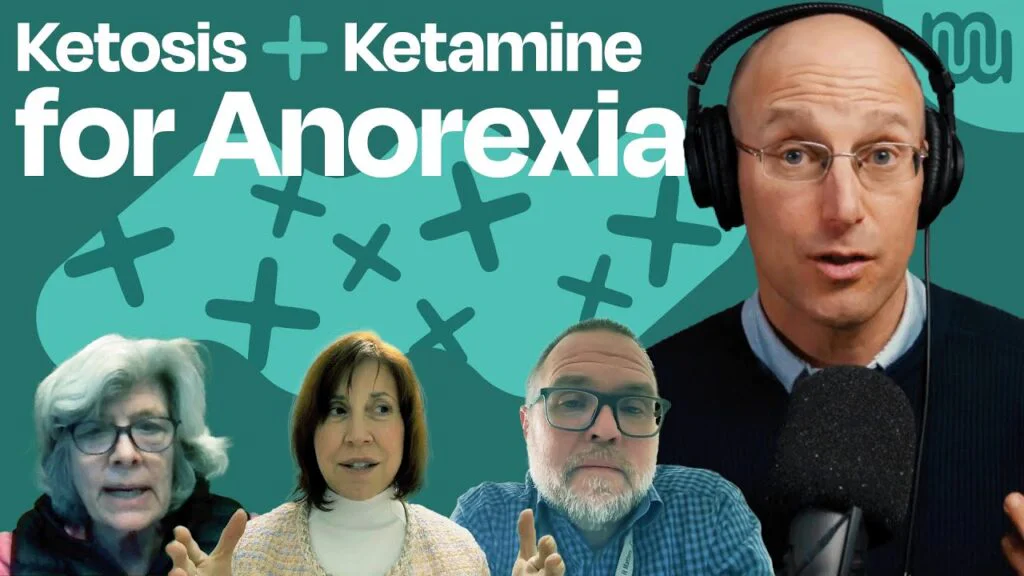
This episode explores a groundbreaking pilot study using a ketogenic diet and ketamine infusions to treat chronic anorexia nervosa, a condition with one of the highest mortality rates in psychiatry. Dr. Bret Scher talks with Dr. Barbara Scolnick, Dr. Guido Frank, and Dr. Lori Calabrese about how therapeutic ketosis, carefully supervised nutritional support, and targeted ketamine therapy helped five adults achieve meaningful and sustained relief from anorexic thoughts and depressive symptoms. The conversation highlights the metabolic mechanisms behind anorexia, why ketosis may stabilize the brain, how ketamine can expand cognitive flexibility, and what careful clinical oversight is required to replicate these results safely. This emerging metabolic-psychiatry approach offers hope for a population often left without effective options.
Learn more
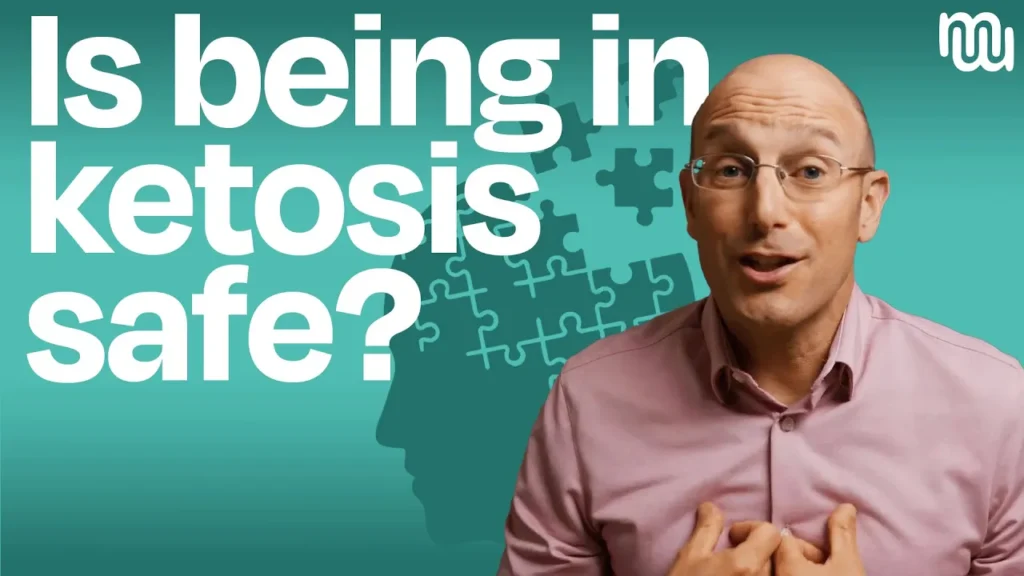
In this Metabolic Mind episode, Dr. Bret Scher explains why nutritional ketosis is a safe, natural metabolic state and not to be confused with life-threatening diabetic ketoacidosis. He breaks down how the body alternates between burning glucose and fat, how ketones fuel the brain, and why ketogenic therapies are emerging as powerful tools for improving mental health. This clear explanation helps viewers—and their clinicians—understand the science behind ketosis, its safety, and its potential benefits for conditions like bipolar disorder, depression, and schizophrenia.
Learn more
University of California San Diego has begun enrolling participants in a clinical trial evaluating ketogenic therapy for the treatment of anorexia nervosa. The study is supported by a philanthropic gift from Baszucki Group.
Read more
Learn how the new AnorExit program is pioneering the medically supervised use of ketogenic therapy for anorexia by combining expert nutrition guidance, peer support from someone in long-term recovery, and coordinated care with physicians and therapists. In this Metabolic Mind episode, dietitian Denise Potter explains why nutritional ketosis, once considered inappropriate for eating disorders, may actually help correct underlying metabolic and psychiatric factors when applied safely in a structured, multidisciplinary setting. This discussion explores early case-study success, the science behind ketosis, and how individuals can explore this emerging therapeutic option under expert supervision.
Learn more
This episode explores a groundbreaking pilot study using a ketogenic diet and ketamine infusions to treat chronic anorexia nervosa, a condition with one of the highest mortality rates in psychiatry. Dr. Bret Scher talks with Dr. Barbara Scolnick, Dr. Guido Frank, and Dr. Lori Calabrese about how therapeutic ketosis, carefully supervised nutritional support, and targeted ketamine therapy helped five adults achieve meaningful and sustained relief from anorexic thoughts and depressive symptoms. The conversation highlights the metabolic mechanisms behind anorexia, why ketosis may stabilize the brain, how ketamine can expand cognitive flexibility, and what careful clinical oversight is required to replicate these results safely. This emerging metabolic-psychiatry approach offers hope for a population often left without effective options.
Learn more
In this Metabolic Mind episode, Dr. Bret Scher explains why nutritional ketosis is a safe, natural metabolic state and not to be confused with life-threatening diabetic ketoacidosis. He breaks down how the body alternates between burning glucose and fat, how ketones fuel the brain, and why ketogenic therapies are emerging as powerful tools for improving mental health. This clear explanation helps viewers—and their clinicians—understand the science behind ketosis, its safety, and its potential benefits for conditions like bipolar disorder, depression, and schizophrenia.
Learn more