New Results: First RCT for Schizophrenia & Bipolar Disorder. Learn more.


Listen, Watch & Subscribe on:



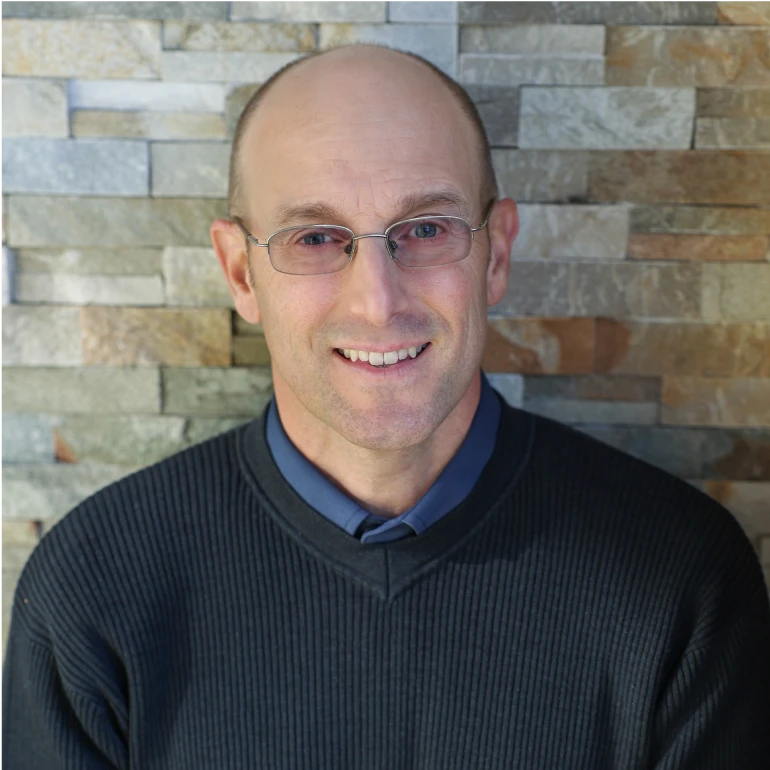
Meet Dr. Bret Scher: The Host Behind Metabolic Mind
Listen
About the host
About the host


Erica:
Was there any fear in becoming known as the Low-Carb Cardiologist? Like, how did your colleagues respond, and how did you navigate that?
Bret:
Yeah, there was always a tension with my colleagues, for sure. And I guess there was, yeah, there was a little fear. There was a little, “Are people going to think I’m wacko?”
But on the other hand, it’s kind of don’t care if I’m helping people
Welcome to the Metabolic Mind Podcast. I’m your host, Dr. Bret Scher. Metabolic Mind is a non-profit initiative of Baszucki Group, where we’re providing information about the intersection of metabolic health and mental health and metabolic therapies, such as nutritional ketosis as therapies for mental illness.
Thank you for joining us. Although our podcast is for informational purposes only and we aren’t giving medical advice, we hope you will learn from our content and it will help facilitate discussions with your healthcare providers to see if you could benefit from exploring the connection between metabolic and mental health.
Many of the interventions we discuss can have potentially dangerous effects if done without proper supervision. Consult your healthcare provider before changing your lifestyle or medications. In addition, it’s important to note that people may respond differently to ketosis, and there isn’t one recognized universal response.
Erica:
Hello, and welcome to Metabolic Mind. And we are doing something a little bit different today. So, you’re hearing my voice. My name is Erica Gerard. I’m the producer here at Metabolic Mind, and I’m here with our beloved host, Dr. Bret Scher. Say hello, Bret.
Bret:
Hello, Bret. Oh, I mean hello, everybody. How are you? It is weird to be on this side of the mic, but I’ll take it. And thank you, Erica, for the idea of putting me on the hot seat today. And thank you all for listening. And let’s have some fun.
Erica:
Yes. I’m really excited about our conversation today. But before we get into it, I just have to ask you, have you always been a morning person? Because I’m on the East Coast, and you’re on the West Coast, and sometimes I’m truly blown away at how early you’re responding to my Slack messages.
Bret:
Yeah, if we’re pulling back the curtain, I guess I always have been a morning person. But the flip side is trying to keep me up past 10:00, and forget about it.
That just doesn’t happen.
Erica:
I knew it. I knew it.
Bret:
Yeah.
Erica:
All right, Bret. So, you’re usually the one asking the questions here at Metabolic Mind. You’ve interviewed researchers and clinicians and patients and really thought leaders from all over the world, and I’ve had the privilege of working alongside of you and watching you interview so many remarkable people.
And one of the things that I’ve noticed is that you’re very careful not to insert yourself into the interview. You tend to keep the focus on their work and their stories. But today, I want to tell yours. I want people to get to know the person behind the questions, the experiences, the turning points, the moments that shaped you, and how you think about medicine and science and health and even hope.
And so, since we’re turning the tables today, I thought it would only be fitting to start with the first question that you ask all of your guests, which is what is the one thing that you think medicine gets wrong that you really wish were different?
Bret:
Yeah. There are so many here, which is unfortunate, right?
I feel like medicine does get quite a lot wrong, but I think the biggest thing is that what medicine gets wrong is that guidelines are indeed a guideline, not a ultimatum for how to practice. And guidelines are geared towards the general population, but we don’t see a general population. We see individuals.
So, there has to be a deep-level of thought about how this general suggestion of a guideline applies to the individual that I am talking to today. And I think that is something that medicine gets wrong, that the guideline is the standard of practice that applies to everybody. And even though people may not say that out loud, that is how it often is represented in the practice of medicine.
So, if I was to pick one, I think that’s the one that stands out for me.
Erica:
I love that. That makes sense because if you’re practicing within the boundary of a guideline, what you’re doing is defensible at all costs. But it doesn’t necessarily mean it’s the correct approach. It just means that it’s defensible because it’s in the guidelines.
Bret:
And look, I understand the point of the guidelines. If you’re a busy clinician trying to see 20 patients plus a day and you want to know what the standard of care is for this condition that you’re seeing, from that point it’s helpful. But that’s not where it ends is the problem.
That is the suggestion for the general population. Then, the next question is, how does this apply to the individual sitting in front of me right now? And I think that’s the misperception that gets missed, that the guideline is the end.
Erica:
All right. Great answer. Okay. So, every journey has an origin story.
So, we know the physician, the educator, the interviewer. But before all of that, there was just Bret. A kid growing up in Southern California.
Bret:
Yeah.
Erica:
Who had no idea where his life would eventually take him. So, I want to go back to the beginning a little bit. Can you tell me about the backdrop of your childhood?
Bret:
Wow.
Erica:
And what kind of kid were you?
Bret:
Oh my God. I don’t think I’ve ever been asked that before. That’s going back pretty far. When I was a kid, I was just sports, sports all the time, 24 hours a day. If I wasn’t playing it, I was watching it on TV or I was playing my Intellivision with, or Atari with, just all sports games.
I started off with baseball. And then, worked my way into triathlons at a young age, which was a little unusual. Here I was, this 14-year-old, lucky enough to work out at a gym where there were some kind of early professional triathletes here in San Diego. And they took me under their wing and helped me learn how to be a triathlete.
So, I started competing in triathlons pretty early. So that consumed my life. I was swimming, biking and running and going to school. And then, of course, going to the beach as much as I could being in San Diego. So, those were my days. Just active all day long, which is, kind of, I don’t know.
I look back on them like, ah, I long for those days. I wish I could have them again. Those were good days.
Erica:
Oh, yeah. I love that you just gave a shout-out to Atari also. Most of the people listening, dating myself for sure, will know what that is, thankfully.
Bret:
Yeah.
Erica:
So looking back, what experiences growing up do you think shaped the way that you approach people today, not just as a physician, but as an interviewer?
Bret:
Wow. First, I’m taking notes. You ask good questions. I got to start asking some of these good questions. You ask good questions. How did it shape the way I interact with people? I think I was just always curious about how other people did things. I wanted to learn how to do things better.
I was on a quest to do things better, whether it was how to swim faster or bike faster or run faster, how to train faster, how to fuel my body faster, which obviously I do very differently now than I did back then. But I was always curious how to learn from others. So, I think that’s what sort of set things up.
And I was one of those kids in class who wanted to ask questions of the teacher and wanted to learn more. Like not just what they were trying to teach us, but the stuff that I was most interested in to kind of learn more about it. So, I think I was always a bit of a question asker to try and learn from others.
There’s the old saying, “Everybody’s got to learn by doing to some extent,” but you can try and learn from the experts as much as possible to make it easier to do what you’re doing, and hopefully, fail less at what you’re doing. So, I think maybe that was the background that may have influenced my podcasting eventually.
Erica:
So, as someone who knew 18-year-old Bret, what would surprise them most about the person that you’ve become?
Bret:
Yeah, I think what would surprise people the most, who knew the 18-year-old Bret, is that I’m considered kind of rogue and controversial within the medical field. I was a rule follower. I was such a rule follower, and I did the things I was supposed to do.
And so, certainly as an 18-year-old in high school, I did everything, quote-unquote, “right.” And then, fast-forwarding to how I started practicing medicine, I was “by the book” practicing medicine. So, to see where I am now, contrary to what medicine believes is, quote-unquote, “right” I think that’s probably what would surprise people the most.
Erica:
That makes sense, yeah. Fascinating.
Bret:
Yeah.
Erica:
And when did you realize that medicine might be your calling?
Bret:
I guess the funny way to tell the story is I realized it one Saturday morning with some unfortunate person throwing up all over the radiology trailer. That’s the hook way to say it.
So, my dad’s a radiologist. And occasionally, he would take me with him if he had to go monitor a CT scan on a weekend. I would go with him. And it was, to me, it was magical. But so the one of the first experiences though, the IV contrast that they used back then, this was, gosh, I don’t know, 40 plus years ago, the people had more reactions to the IV contrast than they do now.
So, a lot of people would get sick and throw up. So, my first experience, they’re in this little trailer with a CT scanner. He has to be there to inject it. And about, I don’t know, five minutes later or whatever, the guy just gets up and throws up all over the place. And it was not very pleasant to see.
But then, seeing the after effect, to look at the CT scan and how my dad was able to compare the CT scan they just did now to the CT scan he had a number of months ago, and see how his tumor had shrunk, that the treatment that he was getting. And it was like even I could see it, he had this big, huge sort of orange-sized tumor on one CT scan. And like almost nothing on the other CT scand that was just magic.
One, that you could see that. Two, that someone could do something to this person to get rid of this cancer, this tumor. That was just magic. So, that sort of set the stage for yeah, I wanted to be part of that magic. So, the unfortunate vomiting aside, it was a magical experience.
Erica:
And how old were you?
Bret:
I was probably like eight years old or something like that.
Erica:
Wow.
Bret:
Yeah. But then from there, whether it’s chicken or the egg, I was good in the sciences. I was most interested in the sciences, and I was an athlete interested how the body works. And so, it all just fit that I was going to go into sort of health sciences of some sort.
Erica:
So, that’s the foundation.
Bret:
Yeah.
Erica:
Okay. And then in the years that followed, you graduated from Stanford with a degree in biology. You earned your medical degree from Ohio State. You completed your residency in San Diego. And then you stayed on and served as chief resident.
So, it got me thinking about that role of the chief resident role because it’s so much more than about patient care, right? It’s about teaching. It’s about mentoring.
Bret:
Yeah.
Erica:
It’s about leading other physicians. So looking back, do you think that’s when you first discovered your love of educating others?
Bret:
Yes and no, even before then. So, I remember as a visiting sub-intern, so I’m a fourth-year medical student at Ohio State, and I know I want to get back to San Diego.
I’d had enough of the Ohio cold. I want to get back to San Diego. So, they are, luckily enough, in your fourth year, you can do some visiting rotations. So, I did a internal medicine rotation at Scripps Mercy Hospital, which is where I eventually did my residency. So, I was what’s called a sub. So, I’m a fourth-year medical student pretending to be an intern, basically.
And I remember I had the opportunity to give a presentation at their noon conference. And so I prepared my butt off, and I did everything. I really worked so hard on this, and I gave this presentation. And to see people who are frequently falling asleep, interns and residents falling asleep, they were actually engaged in what I was saying, and they were learning. And then, it came up a couple days later, and they’re like, “Oh, yeah, and as Bret said, this is…”
It was like, wow. Like I actually had an impact on what I was doing here. So, I think that was maybe the start of it. But then when as a chief resident, that’s where it really flourished because that was my favorite part of that job. And the biggest part of that job was as a teacher, as an educator.
So, that was when I knew whatever I did in the future, I really wanted it to be something about educating others and teaching others. And presenting information in a way that was engaging and that was interesting and that was helpful and because we get a lot of lectures. We’ve been taught between medical school, residency, fellowship, we got a lot of lectures, and not all of them were all that good.
So, it really was this charge to be like, again, how do we do this better? And I think maybe I can help with that, yeah. So, that was a big part of being chief resident.
Erica:
And then fast-forward, you complete your cardiology fellowship, and that was in 2005, and then you entered private practice.
But when you entered private practice, you weren’t always the Bret Scher that our audience knows today. You, in fact, admittedly, were operating under some pretty old beliefs, many of which cardiologists still recommend today. So, here are just a few of those old beliefs, okay? Saturated fat should be limited because it raises LDL cholesterol.
A low-fat, calorie-focused diet is generally the healthiest approach. And if patients weren’t succeeding, it was often because of adherence, not the recommendations that were the problem. So, in other words, you were practicing mainstream preventative cardiology. I’m curious to know what the first crack in that foundation was that led you to re-evaluate your belief system. Was it a patient? Was it a study? Was it a conversation? When did you think, “Maybe I’ve been all wrong about this?”
Bret:
Yeah. It was, at first, it was the frustration level of not seeing people get better. These people who want to get better. They don’t want to be sick, and I wanted to help them.
I think it really started with just a frustration in my practice that people weren’t getting better the way I thought they should be. Or that I thought I should be helping them get better, and they don’t want to be sick, right? They don’t want to be frustrated and taking more medications and feeling like they’re not making progress. And I saw that as a failing on my part.
Why couldn’t I help these people feel better and prevent heart disease and treat their heart disease? So, for my first step was, we just need more time with them. So, what I’m going to do is start this wellness center with a couple friends of mine. One’s a physical therapist.
One’s a health coach and personal trainer. We’re going to start this wellness center where we can just dive in deep and spend time with these individuals, and really help them adopt all these lifestyle changes that I’ve been taught are the right lifestyle changes to make them healthier. And but fortunately for me, my friend Dustin, who is the health coach and personal trainer, he said, “Have you ever tried a ketogenic diet on any of your patients?”
And of course, my first response was, “Heck, no. That’s crazy. That’s like the opposite of healthy. Why would I do that?” And he’s kind of pushed back a little bit and said, “Have researched it? Have you learned about it? What do you know about it?” And I had to sit and think. And actually, I know nothing about it, right?
All I know is fat is bad. Low-fat is good. And then, when I found out there were actually research studies done on this, on a ketogenic diet for treating type 2 diabetes, for helping people lose weight. And like actual research, and then whole books about it. And I said, “Huh, maybe there’s more here so let me look into it.”
So, once I learned about it, I was like, “Okay, let’s try it.” I tried it on myself, tried it on my patients, and saw results I’d never seen before. And one of those things, you have to shake your head and be like, “Wait, what?” They’re losing weight easily, not struggling. Their blood sugar is normalizing. And their triglycerides are coming down, their HDL is going up.
And they feel better and have more energy. Things that are the opposite of what I’d seen over and over again in my practice. And it started with a small sample. I’m like, okay, maybe it’s just because we’re really spending all this time with these patients and it’s just a small sample. But then I expanded it into my regular practice, too, and I just saw it multiplying. And that’s what’s really kicked me off to say, “Wow, I was taught there was one way and the only way, and that’s completely wrong.”
That’s completely wrong. Not only is there, is it not just one way, but that way might be a lot harder than other ways. And look, I don’t preach that low-carb or keto is right for everybody. But for these individuals who I was seeing who were struggling with their weight, with their metabolic dysfunction, with their blood sugar, with their inflammation, and with their heart disease, for them it was absolutely the right approach because they’d been struggling for so long. And this is what helped them see success.
Yeah, there’s the old saying, “Once you see it, you can’t unsee it.” And it was remarkable.
Erica:
So, how did that impact the way that you’d been practicing? Did you completely change your approach to practicing medicine at that point?
Bret:
Yes and no. It wasn’t an overnight change because there still is the world of medicine, right?
If I was doing this on my side as Dr. Bret Scher at Boundless Health, on my wellness center, that was one thing. If I was doing this as part of my large multi-specialty group with multiple partners with lots of checks and balances, that’s another thing. So, I was a little sheepish to completely dive in my regular practice, but definitely started dipping my toe in, doing a little more, doing a little more. And then eventually, it just became the way I practice.
And then, people started to know me as the Low-Carb Cardiologist. And if you wanted to break outside of the standard and try something different, you go and see Dr. Scher. And so, it eventually built up to that point.
Erica:
So, you started seeing your patients have real world results that didn’t match the guidelines that you were taught in your training.
Bret:
Yeah.
Erica:
And your beliefs and your entire belief system started to change. So, we talked about those old beliefs. Now, I’m going to go through some new beliefs. And I’m going to say the new belief, and then you tell me true or false, okay?
Bret:
Okay.
Erica:
So, true or false: insulin resistance is a major driver of many chronic diseases.
Bret:
Oh my goodness. Yes, yes, true.
Erica:
Okay. Carbohydrate restriction can be an effective therapeutic intervention and not just another diet.
Bret:
1000% yes.
Erica:
All right. Nutrition should be individualized instead of one-size-fits-all.
Bret:
You’re making these too easy. Absolutely. Absolutely.
Erica:
All right. Just a few more.
Many people improve metabolic health even while eating more saturated fat.
Bret:
100%.
Erica:
Looking beyond LDL alone to other metabolic markers gives a more complete picture of cardiovascular risk.
Bret:
Yes. You’ve been paying attention. I’m impressed.
Erica:
And lastly, lifestyle interventions can sometimes produce results medications cannot;
Bret:
Yes, and yes.
Erica:
All right. So, do you think I’ve gotten to know you a little bit over time?
Bret:
I think so. I think so. You got the message. You definitely got the message.
Erica:
Yes. I love when I get a good grade, when I pass.
Bret:
Yeah, and so reflecting back on the old ways and so how those have changed. And one thing you said is we should avoid saturated fat because it raises LDL.
The fact that saturated fat can raise LDL in people, in some people, not all people, but definitely in in a proportion of people, is true. But that’s not where you stop, right? And that’s the problem. Like X equals Y. Therefore, stop. No. Then again, it goes back to, okay, how does this apply to the person in front of me?
And then, what is the full dietary context? What are we using? What are we trying to treat? What are the results we are seeing, right? So, like A and B can be true, but that doesn’t mean you draw the conclusion that’s right in front of you or seems to be right in front of you.
Erica:
Well said. Well said. All right, so let’s talk a little bit about how your career evolved after that.
You went from helping one patient at a time to helping educate millions of people as The Diet Doctor.
Bret:
Yeah.
Erica:
Yes?
Bret:
So, as the medical director for Diet Doctor.
Erica:
Okay.
Bret:
So, Andreas Eenfeldt is, was The Diet Doctor.
Erica:
Pardon me.
Bret:
But I was the medical director at Diet Doctor.
Erica:
As the medical director. Yes.
Bret:
Yeah.
Erica:
It seems to me that this wasn’t just a career move for you. It was a completely different way of thinking about your impact and the impact that you could have. Would you say that’s true?
Bret:
Yeah. So again, just to rewind for a second. So there, again, an old friend of mine in the hospital had a podcast, and I’d listen to his podcast. And he was so good.
He was like, in college he was a radio host. Like he just had the voice, and he had the experience. I listened to his podcast. It was so good. I remember talking to him about “How do you do this? What do you do? What kind of mic do you do? How’d you get so good at it?” Da-da-da-da. And so, I started the Low-Carb Cardiologist podcast. And I loved it. I loved doing it. I had maybe 1,000 downloads per episode or something, right? Like nothing earth-shattering. And then, Andreas Eenfeldt approached me to see if I would host the Diet Doctor podcast. So, to go from a audience of 1,000 to an audience of hundreds of thousands, I was like, “Hey yeah, let’s do it.”
I was able to do that to expand the audience and just get more experience doing it. And from there, was what he brought me on as the medical director. So, it was a bit of a stepwise transition, but it was great because it’s that impact of reaching so many people.
So, as the Low-Carb Cardiologist podcast, I was able to reach some people. As the Diet Doctor podcast, I was able to reach even more people. And then as the medical director of Diet Doctor as a whole, even more people. So, just to have that stepwise impact on the number of people, and I never wanted to give up medical practice. So, I still had my own Boundless Health practice where I could still see someone one-on-one.
But that combination of seeing somebody one-on-one and being able to have a message that could affect hundreds of thousands, millions, whatever people, it was, it’s a little intoxicating to know that you can really help that many people. And it’s not something most doctors know or are taught or believe or anything like that.
Erica:
Was there any fear in becoming known as the Low-Carb Cardiologist? How did your colleagues respond, and how did you navigate that?
Bret:
Yeah, there was always a tension with my colleagues, for sure. And I guess there was, yeah, there was a little fear. There was a little, “Are people going to think I’m wacko?” But on the other hand, it’s like don’t care if I’m helping people. And I’m so much happier as a doctor seeing the impact I can have on people this way.
And look, if people want to go the standard route, there are plenty of doctors they can see. If somebody wants to go this route, there aren’t many doctors they can see. So, to be able to be that person to help people in that way helped me quickly get over any fear or reservation.
And again, I don’t believe that low-carb, keto is, I don’t believe that’s right for everybody. I still see people who follow a more standard Mediterranean diet or a more standard, you know, low-fat diet. I will still take care of people and try to help them as best I can. There isn’t just one way. But no question the majority of the people I see are with low-carb and keto because I’ve got that experience. Because they can’t get that from many people elsewhere.
So, I see the role I can play. And so that helped me get over the fear or the concern pretty quickly I think.
Erica:
Yeah, I’ve noticed that you’re much more interested in following the evidence than defending a particular dietary philosophy. Has that always been true for you or has your thinking continued to evolve?
Bret:
I was always critical of evidence, I guess you could say, right? And this goes back to the teaching part and the chief resident. Like from the beginning, I wanted people to understand that not all evidence is built the same. And that’s another teaching that I think is maybe a little lost.
So many people just say, “The evidence shows, the evidence supports.” But we don’t take that next step to say, “What kind of evidence? What quality of evidence? What level of evidence?” And again, “How does this apply to the individual in front of me?” So, I think I’ve always been a little critical of evidence from that standpoint, that we need to learn more about it.
And that’s why I think, keto and fat, in general, has been really discounted because of this low-quality evidence that we don’t take the next step to think more about. So, that’s why I think a proper analysis of the evidence is so important, and the end goal is so important. Because right now, you know, in medical practice, you’re referring to a dietician or giving healthcare or giving nutrition advice, it’s like checking the box, right?
We did it. We referred to the dietician, check the box. I talked to them about reducing their calories and lowering their fat, check the box. It’s not about what impact does this have? What outcomes are we measuring? What is the end result and did it work or did it not? It’s about the, okay, I did the diet thing.
I want to flip that on its head and say, “What are the end results?” And there are different ways to get there. There are some people who don’t have a lot of food noise, who don’t have carb addiction or carb cravings, and they can eat a high-carb diet and still maintain their calories and maintain metabolic health.
Those people exist. And then, there’s this huge population, who cannot do that at all, no matter how many dieticians they see. No matter how much you counsel them, they simply cannot do it because their brain is wired with the food noise and the carb addiction, and it just does not work. So, we have to realize that those people aren’t getting the results from us checking the box. So, we need another approach to go this other way.
So, it’s the outcome-based approach rather than the let’s just say we’ve done it approach.
Erica:
When did check boxes ever really work for anything truly? It’s like dating, right? Like the “on paper” person who checks all the boxes isn’t really the person that you end up with.
Bret:
The best thing about checks boxes is when you have a list of things to do. And like you already did something, but you’re like, “Oh, I’m going to write that down and put the check next to it that I already did it.” It’s so satisfying.
Erica:
It makes you feel so good. All right.
Bret:
Yeah.
Erica:
So, we have those years at The Diet Doctor, which prepared you for your next chapter, where you took everything that you learned about interviewing experts and communicating science and evidence, and you applied it to an entirely new field, called metabolic psychiatry.
Bret:
Yeah.
Erica:
And now, a cardiologist finds himself helping to lead conversations about mental illness and Alzheimer’s disease and brain health. So, what was it about metabolic psychiatry that grabbed your attention and made you realize, “Hey, this is something special here?”
Bret:
First, I guess my work at Diet Doctor really was about metabolic health, and then all the impacts metabolic health has.
So, if you think of metabolic health as the hub. And then the spokes of the wheel go to heart disease, diabetes, high blood pressure, fatty liver, fertility, and dementia, and mental health, and cancer, right? So many other fields that metabolic health impacts. So, I remember at Diet Doctor, I worked with Georgia Ede, Dr. Georgia Ede, on a number of different projects for her to write things, and I would medically review them.
And I’m reading them going, “Wow, this is amazing,” like this connection. And then, I was fortunate enough to meet Jan Baszucki, and she asked me to moderate a discussion at this conference she had in Santa Barbara.
It was the first metabolic psychiatry conference that she put on. And the group of researchers, clinicians, patient advocates at this small, maybe 50-person conference, to hear what they were doing and the impact they were having and to see how they were going to change the field of psychiatry. And to hear Jan’s story and her family story and feel her passion, again, for just wanting to change the field and so that no family had to go through the struggles that she and her family went through to try and provide the research, the education for other people.
I was just blown away. And I was like, “Show me the wall to run through to help support these people. I will do it.” This was amazing. And so, as I got to know her and her team and what they were trying to do, it was like, “Okay, I am totally going to help you find the person to run this because I want this to succeed. So, let me help you find that person.”
And then as I thought more about it, I’m like, “Huh. They need someone who knows about ketogenic therapy for metabolic health as a medical intervention, who can communicate that to clinicians and a general audience, who can talk about the safety and the practical implications. And wait a second, maybe that’s me?
That’s me.” And yeah, and so I was so fortunate that they were able to see that, too. That no, I’m not a psychiatrist, but I could fill this role. And part of my job then is to work with these amazing psychiatrists who are doing this, whether it’s Georgia Ede or Chris Palmer or Matt Bernstein or Shebani Sethi or Lori Calabresi, and the list goes on and on.
So, to be able to help them share their stories, to be able to help them share their information. And then, also provide the backdrop for ketogenic therapy as a whole, I think it turned out to be pretty good four years later. I think we’ve done quite a lot in this field and to see how it’s grown. And again, just the commitment of Jan and the Baszucki family and their dedication is just so inspiring every day.
I’m just thrilled to be a part of it. Pinch myself every day that I’m a part of this movement. And to see how the field has grown. Like four or five years ago, metabolic psychiatry was maybe known by a handful of people. Now, completely different, right? Now, there are talks at the major APA conference about this that are standing room only.
This was, Chris Palmer gave a talk about metabolic psychiatry in a large conference room at the American Psychiatric Association, and I was shocked. People were standing in the hallway. I was squished like this because there were so many people standing near me. It was, think about where we’ve come in five years.
It’s pretty dramatic.
Erica:
So, looking ahead then, in the next five to 10 years, what do you think or hope will be different because of the field of metabolic psychiatry?
Bret:
Yeah. What I hope will be different is that metabolic health is health. That is just we stop talking about metabolic health because it’s just what we know is health.
So everybody, whether you are seeing someone for a fatty liver, whether you’re seeing someone for diabetes, whether you’re seeing someone for bipolar disorder, schizophrenia, depression, anxiety, you get your fasting insulin checked, you get your HOMA-IR checked. A psychiatrist isn’t going to say, “Oh, that’s metabolic health.
I don’t know how to do that.” A psychiatrist says, “Oh, yeah, metabolic health impacts mental health so I need to know your fasting insulin, your HOMA-IR, your triglycerides. I need to check your inflammatory markers. I need to ask you what you are eating, how you are sleeping, how you are moving your body and exercising.”
Those are just as important questions as what medicines are you taking, what side effects are you having, right? Those are just as important, and I’m going to intervene in a way that is going to help your metabolic health. That is the shift I want to go. Not “Oh, wow, this doctor talks about lifestyle.
This doctor asks about how I’m doing, and how I’m eating and checks my metabolic health. This is amazing.” But rather, that’s just what happens. We no longer are amazed by it because it is part of medicine.
Erica:
From your lips to God’s ears, may it be.
Bret:
Yeah.
Erica:
All right, so we’ve talked about your career. But careers are really only one part of who someone is.
I’d love to spend a few minutes getting to know Bret, the person. And I have done a little something behind your back. I asked your colleagues here at Metabolic Mind and Baszucki Group if there was anything that they wanted to know about you. And here is what they asked.
Bret:
Oh, boy.
Erica:
Aaron asked, “I’d like to know if he wasn’t doing what he was doing, i.e. doctoring, what other career would he want? Baseball player?”
Bret:
Ah.
Erica:
“Librarian, stuntman?”
Bret:
That’s an easy one. I would be a cattle rancher. I would be a cowboy.
Erica:
Wow.
Bret:
I would have.
Erica:
I would have never expected that to come out of your mouth.
Bret:
I would have a regenerative ranch where I’m on my horse every day under the blue sky, in the fresh air, moving cattle around, taking care of them to make sure they’re as healthy as possible. Taking care of the land to make sure it is healthy as possible. Having the chickens running around for our fresh eggs,. And growing vegetables as part of that as well, and just open land, open space, blue skies all day long.
Erica:
And a really good cowboy hat.
Bret:
And a really good cowboy hat.
Erica:
Yeah.
Bret:
I got my boots. I got my hat. So, a friend of mine, an old friend of mine has a ranch outside of San Luis Obispo, in a town called Shandon. And the time I’ve spent on that ranch, I wish it was way more that I have spent, but the time I’ve spent on that ranch was pretty magical.
And I remember it’s, “If I’m going to the ranch, I need the cowboy hat. I need the cowboy boots. I got to do it.” And that was some of the most fun shopping I ever did. And then, I just love how dirty my cowboy boots are now. They are just so dirty, which means they’ve gotten good use.
Erica:
That’s so great. I love that.
Bret:
Yeah.
Erica:
All right. Hannah has a couple of questions. They’re both really good. “I’m interested to hear more about his hobbies. What are the things that he enjoys entirely unrelated to work?”
Bret:
I guess this all hearkens back to how I first answered the question about when I was a kid, just outdoors all the time. Sports all the time.
So unfortunately, through some injuries over the time by beating my body up, I guess it’s not quite the same as it used to be. But still swimming, still hiking, still getting outside, getting in the gym and working out for sure. Just moving my body, being healthy as much as humanly possible.
And then, life moves on. You have kids. So, doing whatever I can with my kids. My 13-year-old is still at the age where he wants to spend time with me. So, just doing anything with him is a complete joy. Going surfing with him is my favorite thing in the world. Here in San Diego, it’s awesome.
I’m five miles from the beach. So, we can head to the beach and go surfing whenever we want, which is incredible. Yeah. Yeah.
Erica:
Yeah.
Bret:
Those are my hobbies.
Erica:
You’re an outdoors lover through and through.
Bret:
Yeah. And actually funny though, I’m an outdoor lover. I love spending as much time as I can outdoors. But my older son is a high school wrestler, where it’s all indoors all the time.
You’re in these wrestling tournaments that take 10 plus hours indoors as much as possible. So, I still love going to those, but I always between his matches, I have to go outside and go for walks and get some sun.
Erica:
All right. We’ve had a couple of people ask the same question, which is very interesting, and it’s an interesting question.
And the question is, “I would be curious how Bret copes with stress. Many people turn to food, alcohol in times of stress. So, some people I speak to, who use metabolic therapies, turn to mindfulness practices like meditation or breathwork, journaling. What do you do when you’re stressed?”
Bret:
Yeah. I’m going to sound a little bit like a broken record, but I get outside. I go for a walk, and I put on some music.
So, it’s sun therapy, it’s movement therapy, and it’s music therapy. Those are the three. But even if it’s raining and cold, I’m doing it.
Erica:
Do you meditate? Do you meditate?
Bret:
I don’t meditate. I have, and I’m embarrassed to admit that because I talk to my patients so much about meditation. And I certainly have meditated in the past, and I maybe I’ll come back to it. But I just, yeah, I kind of, I guess I just struggle with the sitting still in a way.
But for me, I also believe meditation can take different forms. So going outside, walking, just listening to your breathing is a form of meditation. Listening to some very relaxing music while you’re walking and just letting your mind wander is a form of meditation. It’s not the traditional meditation. But for me, I think it has a similar impact.
Erica:
Chris would like to know what supplements do you take?
Bret:
What supplements I take? I take magnesium. I will intermittently take vitamin D, depending on how much I am outside. Occasionally, I’ll take an electrolyte supplement. Sometimes, I get cramps or something in my calves or my feet, I’ll take electrolyte supplements.
And that’s really it. I believe if you eat a balanced omnivore-kind of diet, that you probably don’t need a whole lot of supplements. I get tons of fresh vegetables, plenty of animal-source proteins and fats. So, I think that helps a lot.
Erica:
All right. Rachel asked, “I know that Bret has completed a few Ironmans before. “I’d like to know, one, if you’d do it again? And two, what’s the biggest lesson that you’ve learned from your different races/physical activities?”
Bret:
Ah. Thank you for that question, Rachel. Would I do it again? 100%, if my body would let me.
So, Father Time and many miles have caught up with me. So, I don’t believe my body would let me do one again, but absolutely I would. And the lesson I learned is just, you can accomplish things you’re not sure if you can accomplish. If you’re unsure if you can really accomplish something, but you tell yourself you can, then you can.
You put your mind to it. You commit to it. What was the quote? “Stop hoping to accomplish something if you’re not willing to live the life you need to accomplish it,” or something like that? I totally destroyed that quote. But if you want to accomplish something, you commit yourself to it. And understand what you have to do to accomplish it, and live that life.
So, I think that’s kind of what I learned. Because I remember, I started off in the sprint triathlons. And then moved to what used to be called the Olympic distance triathlon, and then went to the half Ironman triathlon. And if you would’ve asked me when I was doing the sprint triathlons if I would do an Ironman, I’d be like, “What are you, crazy?
I’m not going to do that.” But as I worked my way up and learned what it took to get to the next level, to get to the next level, I realized I can do that. Of course, I can do that, and I’m just going to commit to it and do it.
Erica:
All right. Last question. I hear you’re a huge Padres fan. If you were on the team. And you could choose a baseball walkout song, what would your song be?
Bret:
Oh, that’s a tough one. That’s a tough one. I don’t know why, and I’m probably will regret this and want to change it, but the first thing that popped into my head was, “Who Let the Dogs Out?” I don’t know why that popped into my head, but I also love dogs. I love it. So, maybe that’s why?
Erica:
Yeah, that’s great.
All right, Bret. Before we wrap up, I want to do something a little different. I’m going to start a sentence and then I’d like you to finish it with the first thing that comes to your mind, okay?
Bret:
Okay.
Erica:
Don’t overthink it. Just finish the sentence. Yeah, okay?
Bret:
Okay.
Erica:
All right. The metabolic health trend I’m most excited about is…
Bret:
Metabolic health becoming mainstream and becoming what medicine is.
Erica:
The trend I think gets more attention than it deserves is…
Bret:
Low-fat, plant-based diets.
Erica:
One thing the public still doesn’t understand about metabolic health is…
Bret:
How important it is for just about every aspect of your health. That it isn’t one thing. That it is connected to just about everything in our health.
Erica:
The research area I’m watching most closely right now is…
Bret:
The research area I’m watching most closely right now is the research area of metabolic psychiatry, and the impact that ketogenic therapy can have of giving people their full lives back. Not just treating some symptoms, but giving them their full lives back.
Erica:
One misconception I spend the most time trying to correct is…
Bret:
Nutrition epidemiology tells us how we should eat and how we should each people to eat.
Erica:
What do you mean by that?
Bret:
That because a nutrition epidemiology study from the UK Biobank, from the NHANES data, looking at 100,000 people, showed that those who ate more red meat were more likely to develop heart disease means you should not eat red meat.
That is what I spend the most time debunking or trying to correct.
Erica:
One piece of advice I’ll probably still be giving patients 20 years from now is…
Bret:
ow you feel is just as important as what your labs show.
Erica:
I hope Metabolic Mind is remembered for…
Bret:
Changing the way we think of metabolic health and making metabolic health mainstream.
Erica:
I love that answer. And I think it actually perfectly leads into my final question, which is: you spend so much of your time talking with people whose lives have been transformed, people who found hope after years of struggling with mental illness with metabolic disease. After everything you’ve learned, every patient that you’ve cared for, every expert that you’ve interviewed, what gives you hope today?
Bret:
Really, what gives me hope is seeing what we’ve been able to accomplish at Metabolic Mind. To see what Jan Baszucki and the Baszucki family have been able to spearhead and accomplish and build the team to accomplish. That it doesn’t have to come within the field of medicine, and sometimes it’s more important that it doesn’t come within the field of medicine.
Philanthropy, individuals, the N-of-1 science, the people who take their own experience and run with it to create documentaries, to create studies, to create content, that is just so inspiring to see how one person, one individual, one group can impact the way we practice medicine. The way we think about medicine.
Erica:
Dr. Bret Scher, thank you for sharing a bit more about yourself with all of us and those who are listening. I’ve been thinking a lot lately about the difference between influencers and educators, and I believe that the best influencers are truly educators at heart. And that’s what you are.
So, thank you from all of us around the world who have been changed by your teachings, and who continue to learn from you every week.
Bret:
Thank you, Erica. This was a lot of fun. You are a phenomenal interviewer, and I have a lot to learn from you. So, I appreciate it. Thank you for the wonderful questions.
Thanks for listening to the Metabolic Mind Podcast. If you found this episode helpful, please leave a rating and comment as we’d love to hear from you. And please click the subscribe button so you won’t miss any of our future episodes. And you can see full video episodes on our YouTube page at Metabolic Mind. Lastly, if you know someone who may benefit from this information, please share it, as our goal is to spread this information to help as many people as possible.
Thanks again for listening, and we’ll see you here next time at the Metabolic Mind Podcast.
Listen, Watch & Subscribe on:
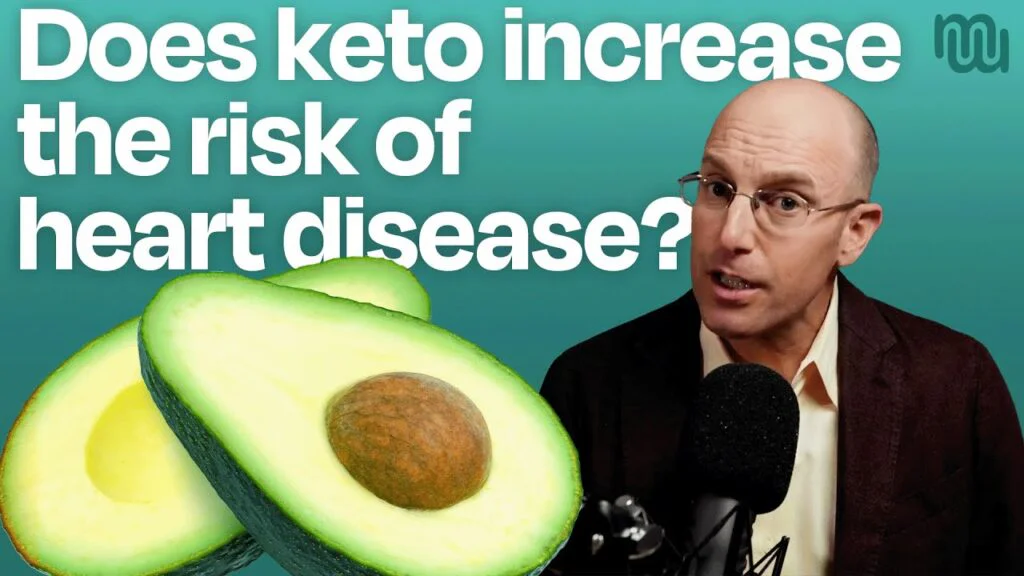
In this Metabolic Mind episode, Dr. Bret Scher breaks down whether nutritional ketosis increases cardiovascular risk and explains why common claims about keto and heart disease are not supported by evidence. He clarifies that no clinical trials have ever shown ketogenic diets to increase heart attacks or strokes, and that the observational studies often cited against keto do not involve people in nutritional ketosis and are plagued by poor data and healthy-user bias. Dr. Scher also discusses how LDL cholesterol should not be interpreted in isolation, why full metabolic health markers matter more, and what current research reveals about lean mass hyper-responders who experience large LDL increases on keto. This episode offers a clear, science-based look at how to assess cardiac risk while using nutritional ketosis therapeutically for metabolic, neurological, or psychiatric conditions.
Read more
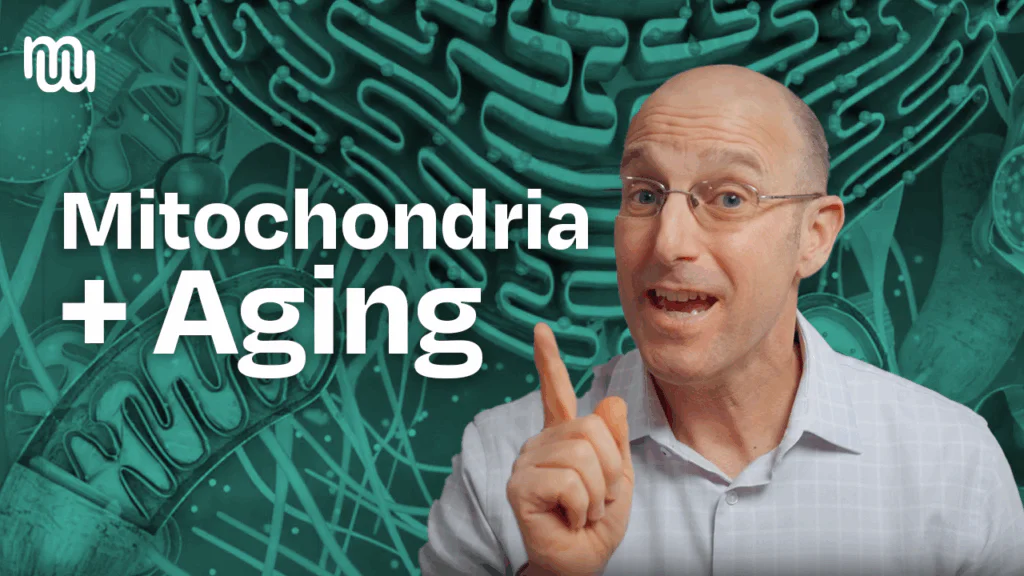
Remember mitochondria: the “powerhouses of the cell”? It turns out, they’re not just high school biology trivia. Mitochondria are vital for transforming the energy your body needs, but…
Learn more

For many, the ketogenic diet conjures up images of “keto bros” flexing their muscles and obsessively avoiding carbs. But keto is a serious therapeutic approach for brain disorders…
Learn more
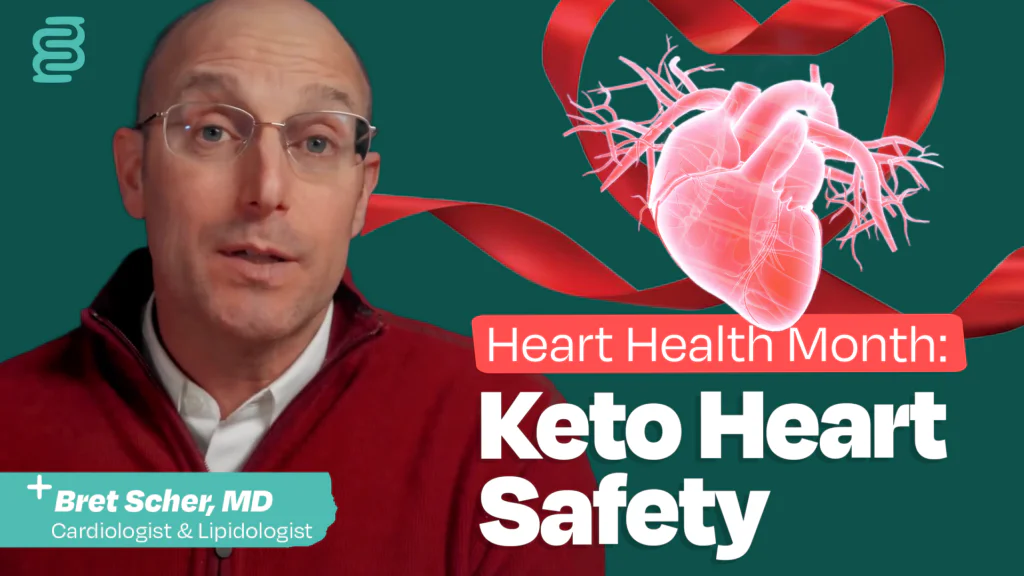
In this Metabolic Mind episode, Dr. Bret Scher addresses the claim that ketogenic diets are bad for heart health. He explains why many studies misrepresent keto, how cholesterol responses vary, and how ketogenic diets can improve key markers like triglycerides, HDL, insulin resistance, and blood pressure. Learn why metabolic health is central to heart health and how keto may play a role.
Learn more
In this Metabolic Mind episode, Dr. Bret Scher breaks down whether nutritional ketosis increases cardiovascular risk and explains why common claims about keto and heart disease are not supported by evidence. He clarifies that no clinical trials have ever shown ketogenic diets to increase heart attacks or strokes, and that the observational studies often cited against keto do not involve people in nutritional ketosis and are plagued by poor data and healthy-user bias. Dr. Scher also discusses how LDL cholesterol should not be interpreted in isolation, why full metabolic health markers matter more, and what current research reveals about lean mass hyper-responders who experience large LDL increases on keto. This episode offers a clear, science-based look at how to assess cardiac risk while using nutritional ketosis therapeutically for metabolic, neurological, or psychiatric conditions.
Read more
Remember mitochondria: the “powerhouses of the cell”? It turns out, they’re not just high school biology trivia. Mitochondria are vital for transforming the energy your body needs, but…
Learn more
For many, the ketogenic diet conjures up images of “keto bros” flexing their muscles and obsessively avoiding carbs. But keto is a serious therapeutic approach for brain disorders…
Learn more
In this Metabolic Mind episode, Dr. Bret Scher addresses the claim that ketogenic diets are bad for heart health. He explains why many studies misrepresent keto, how cholesterol responses vary, and how ketogenic diets can improve key markers like triglycerides, HDL, insulin resistance, and blood pressure. Learn why metabolic health is central to heart health and how keto may play a role.
Learn more