Announcing the new McLean Center for Metabolic Psychiatry Learn more.


Listen, Watch & Subscribe on:



Ketogenic Therapy for Serious Mental Illness: Trial Authors On New Results
Listen
About the host

About the host

About the host

About the host

About the host
About the host
About the host
About the host

Shebani:
At a high level, we really want to know whether targeting metabolism is going to help outcomes in serious mental illness.
Juliette:
They’re looking for improvement in symptoms that are often not helped by current medications.
Judy:
I think my first takeaway is how happy I am that it worked, and that people did the diet. They stuck to it. They were encouraged by it.
Bret:
Welcome to the Metabolic Mind Podcast. I’m your host, Dr. Bret Scher. Metabolic Mind is a non-profit initiative of Baszucki Group, where we’re providing information about the intersection of metabolic health and mental health and metabolic therapies, such as nutritional ketosis as therapies for mental illness.
Thank you for joining us. Although our podcast is for informational purposes only and we aren’t giving medical advice, we hope you will learn from our content and it will help facilitate discussions with your healthcare providers to see if you could benefit from exploring the connection between metabolic and mental health.
A new study was just published looking at ketogenic diet intervention for treating individuals with schizophrenia spectrum disorder and bipolar disorder. And it’s, as with a lot of studies, it’s really interesting to see what we found and maybe how the design of the study could have been done differently to explore even more.
And so, I’m joined by the author is Juliette Ward, who’s the research assistant, and Dr. Judy Ford, who’s a PhD and professor of psychiatry, and by Dr. Shebani Sethi, who is a MD board-certified in psychiatry and obesity medicine on staff at Stanford and at Metabolic Psychiatry Labs, where she practices. And she was involved as a clinical consultant on this trial.
So, to talk about the setup, the design, what they found, and basically, what are the clinical implications. And with a lot of early trials, what we’re seeing is it looked very promising, and more needs to be done to get this really strong research base, but really promising direction. And so, I hope you enjoy this interview where I discuss with all three of these individuals what they found and what this means.
So, thank you for watching us here at Metabolic Mind. Many of the interventions we discuss can have potentially dangerous effects if done without proper supervision. Consult your healthcare provider before changing your lifestyle or medications. In addition, it’s important to note that people may respond differently to ketosis, and there isn’t one recognized universal response.
Dr. Judy Ford, congratulations on having published the first randomized controlled trial to assess the effects of a ketogenic diet in people with schizophrenia spectrum disorder and bipolar I disorder. And I want to hear from you, what really inspired you to do this study, and how you went about setting it up?
Judy:
I love to tell the origin story, Bret. So, thank you for asking that question. I had heard a lecture some years ago at one of my scientific meetings by a metabolic psychiatrist, who gave a talk on intermittent fasting. And I was sold because it makes you smarter, it makes you thinner, et cetera.
So, I started doing intermittent fasting,. And then, I thought maybe it would be a good idea to actually write a grant proposal and see if it would help other people, who might want to get a little thinner and a little smarter. And, so I tried, this was during the pandemic, and I tried to find somebody at UCSF who knew about, metabolism certainly more than I did.
And ultimately, I found Ethan Weiss. Ethan Weiss is an MD cardiologist, and he had just completed a national study on intermittent fasting. And as he told me in our first meeting, that the day they unblinded the study, was the first day he had eaten breakfast in over a year. And the results were not very encouraging. And he had been hoping that this would be a big weight loss strategy for patients, his cardiology patients, and it did not actually work.
I think the intermittent fasting people maybe lost one pound more than anybody else. And he said, “Why don’t you try a ketogenic diet?” He said, “I think that this is a diet that would really help my cardiology patients.” His whole goal was to make them healthier and make them more cardiovascular fit.
And we looked into it and found out what I already knew, which was people with schizophrenia have a shortened lifespan because of metabolic syndrome. That they have problems with diabetes. They have problems with their hearts. They have a lot of metabolic problems. And so, I also knew from all of my work with people with schizophrenia that they also had cognitive deficits.
So, I thought we could kill two birds with one stone with a ketogenic diet. We could make them healthier, and we could make them smarter. And so, Ethan Weiss and I worked together and to write this proposal. Got input from Dan Mathalon, who’s a psychiatrist. He was, helping recruit people, and also talking to people in the study, as we went along.
But with the three of us, we wrote this proposal. And it went to, it’s again during the pandemic, and we didn’t have pilot data. So, we went for an R21 mechanism, which is a mechanism that NIH has where you don’t have to have pilot data. So, we submitted it. And remarkably, it was funded on the first round. Got a great score, and we were off and running.
And then, partway through, I got a call from Jan Ellison Baszucki, who said that she had looked into whether NIH had funded any ketogenic diet studies in people with psychosis, and I was the only one that they had funded to do this kind of work. And so, she asked if I could use any additional help.
And I said, indeed, I could. Because one of the problems with the mechanism that I had, the R21, it’s just a very small budget. And you’re limited in what you can do. And one of the first things I discovered early on in the study was that we sell the study. We advertise it. It’s a ketogenic diet study, and this could be a great study.
You might really want to join it. But then, it was hard when we randomized them, and they didn’t get randomized to the ketogenic diet arm. They got randomized to the diet-as-usual arm. And so, I told Jan I felt really bad about that because here we’ve advertised it. This is a great opportunity. But then we say, “Sorry. You’re in the diet as usual arm.”
So, what Jan offered then was for the diet as usual people, after they had been in the study, the randomized control trial part of the study for one month, that they could be in a four-month ketogenic diet study. So, that right away changed everything. Recruitment had been a little, I was worried about recruitment, but this really changed it.
Jan also thought that the one-month trial would not be enough, and suggested that the people who had been in the ketogenic diet arm of the RCT should be offered three more months of a ketogenic diet. And with her help, we did that.
Bret: So, Dr. Sethi, come on in here. So, let’s talk about the duration of treatment.
So, what do you think about that just from the standpoint of four weeks, four months? What do you see clinically, and what do you think is the sweet spot for a study like this?
Shebani:
Yeah. Thank you for the question and for having me on here today. I just, to take a quick step back, it is the simple view here is that at a high level, we really want to know whether targeting metabolism is going to help outcomes in serious mental illness.
So, we know that people with schizophrenia and bipolar disorder have high rates of metabolic dysfunction, like insulin resistance and prediabetes. But that’s partly driven by medications, but also appears to be part of the illness of the biology itself. And so, that’s why I think it’s really fascinating and exciting what Dr. Ford’s study was focused on.
Also, the cognition piece that we were not necessarily focused on in the pilot study. So looking at cognition and also the neuroimaging and changes in the brain. It’s the first randomized controlled trial to do that. So it’s a very, very exciting study.
Bret: Yeah, thank you for that. And so yeah, so as you said, the core of the question was, will a ketogenic intervention improve metabolic health and mental health outcomes in these individuals with a diagnosis of schizophrenia or schizoaffective disorder and bipolar disorder with psychotic features?
So, Juliettete, why don’t you come in here and tell us a little bit about how the individuals in this study did just with adhering to a keto diet, with checking their ketones. Because we often hear, “Oh, in this population of people, they can’t stick to a diet. That’s not going to work,” right?
People just dismiss it out of hand. What did you find with working with these individuals?
Juliette:
Yeah. I think that’s a really important piece of this study. Because with resources, everyone that we collected, daily ketones, the daily ketone recordings for the vast majority of participants, kept their levels well above the threshold for ketosis.
And I think it’s really important so that we are not dismissing this population as if they can’t endeavor to take on some intensive treatment that might help their symptoms. I think a lot of the people who came in were really determined to try out this treatment, even though they knew it was going to be difficult, because they’re looking for improvement in symptoms that are often not helped by current medications.
So, I think the cognitive piece is really exciting. There’s a lot of people who have had their lives disrupted by the cognitive deterioration that comes with the onset of symptoms. So, people being able to take classes again or just think about going back into a field or a career that seemed inaccessible to them because of their symptoms, I think that’s a really exciting piece, and really important to say that people who are more severely symptomatic can follow a strict protocol with the correct resources.
So, I think providing meals for them is the big thing that this study was able to do and made it possible for them to follow the diet.
Bret:
So, for the four-week study, were all the meals supplied to the individuals?
Juliette:
Yes, and for the four-month study so.
Bret:
And for the four-month study?
Juliette:
Yeah.
Bret:
Okay.
Juliette:
And they were prepared meals. So, people didn’t have to cook. They didn’t have to shop for groceries. They didn’t have to pay for the ketogenic diet. The makeup of it is expensive, especially right now. That’s a pretty large burden for people. ,So I think just considering how we can make resources available to people to follow these kinds of treatments rather than considering the limitations to be their motivation or ability to follow protocols.
That didn’t seem to be the limitation with our study.
Bret:
Although interestingly, the old adage, give someone a fish or teach them to fish, right? Was there any instruction about how to maintain a ketogenic diet? How to prepare a ketogenic diet for those who wanted it, or was it just the delivery of the food?
Which I understand, when you’re setting up a trial, you don’t want to introduce too much variables. So, there’s a difference between what you do in a trial and maybe what you do in the, quote-unquote, “real world.” So, I’m curious how you handled that.
Juliette:
Yeah, we provided a coaching session to tell them about the goals of the ketogenic diet, and what they could eat as part of it.
They weren’t restricted to only eat the meals that we delivered. So, I think that kind of opened it up for people to eat dinner with their family once in a while or cook a meal that they were excited to eat. So, I think that makes it a little bit more exciting to follow the diet when you get to make it your own while you have the support of these meals that are prepared.
But we definitely wanted to make this as accessible as possible to people. And sometimes, that needs to allow for people’s different lifestyles, different demands. So, we just wanted to make sure people knew what they could and couldn’t eat. And then, based off of the daily ketone recordings, people were able to take that information and follow the protocols on their own.
I think those daily ketone levels that were only possible with the support of the Baszucki Group,. That was a huge boon for our study.
Bret: Yeah, I think that’s a great point, how important it is to have those daily ketone measurements for the reassurance that you’re still on track. And I guess not everybody in your study was able to do that. But those who were, it sounds like really did very well with it.
So, let’s jump to the findings here. So, even after just four weeks, there was a statistically significant improvement in a lot of the metabolic markers. So Judy, Juliette, why don’t one of you jump in and tell us about those?
Judy:
Yeah, they improved in their BMI, which is body mass index. They improved on their hemoglobin A1c, which was surprising to me because it was a short study, and usually it takes longer to see improvements with hemoglobin A1c.
Let’s see, Juliette, what else improved during the first four weeks?
Juliette:
Yeah, we also saw a decrease in HOMA-IR. But even though they weren’t statistically significant differences, we saw a trend that was then improved in the four-month diet. So, I do think it’s important to note that the decreases in depressive symptoms and psychotic symptoms. While they weren’t statistically significant, they were following the trend that would later become very significant with four months.
So, I think we don’t have the values to report there, but I think we can report that quantitatively people were already getting better.
Bret:
Yeah, so a trend towards improvement at four weeks, which then continued to improve even more so out to the four months. So, you talked about positive symptoms and negative symptoms. So, tell us real quickly the difference between positive symptoms and negative symptoms for those who don’t know, and how medications tend to address those versus what you saw in this study.
Shebani:
So, positive symptoms generally are referring to symptoms, like delusions, psychosis typically in schizophrenia, yeah, hallucinations.
When we think about negative symptoms, we’re thinking about symptoms that include affect and behavior, anhedonia/ those types of symptoms that we classified them differently based on the scale that you’re using. And Judy can talk more about what was actually used in the study.
Bret:
And so Judy, what scales did you use for the positive and negative symptoms?
Judy:
We used two scales that we’ve used traditionally in my career studying schizophrenia, and that’s the SANS and the SAPS. The SANS assesses negative symptoms. So, their lack of motivation in getting up and go.
And then, the SAPS is the positive symptoms. And as Shebani said, those are the hallucinations, delusions, thought disorder. And we found improvement in both of those domains. Also, I think one of the, one of the surprising things we found was how much improved they were on depressive symptoms.
But we have to keep in mind these were not depressed people. They just had some dysphoria, some probably negative symptoms. And we found that, in fact, even in the four-week study, we saw improvement in the depressive symptoms. But once you correct for multiple comparisons, that wasn’t significant.
But it remained significant. Got more significant after four months on the diet.
Bret:
We hear that often from people at Metabolic Mind that, who leave us comments that says, “The medications helped a little bit with my psychosis or my mania, but really did nothing for any of the depressive or so-called negative symptoms, and the ketogenic diet really addressed those.”
So obviously, anecdotes, clinical experience, that’s what we hear. But now it seems like your study seems to be bearing that out as well.
Judy:
Yeah. They are happier. They’re happier than before. So, that’s good. And they’re also smarter. So, one of the things that we know about schizophrenia is that it’s, they have cognitive deficits. Not huge cognitive deficits, but significant and meaningful ones.
And after four months on a ketogenic diet, we actually brought them up to almost normal levels of cognitive function. So that was, I think, one of the more remarkable findings was getting them almost up to the line of normalcy in the neural psych test, the Matrix test.
So, I thought it was great.
Bret: Yeah. So Juliette, we can talk about this scale and that scale and the percent improvement. But you’re working with these individuals on a daily basis, and you probably get a lot more of the qualitative or the subjective improvements that they saw. What were some of the things that you noted that really stood out to you for how people changed during the course of the study?
Juliette:
Yeah. I think one of the most moving pieces for me was, people often, their families would be supporting them in some way. Sometimes, they would be bringing participants to their visits, and I think talking to family members provided a lot of insight into how people are doing. I think day-to-day, sometimes people don’t notice these slight improvements. But family members really reported that their children often were re-engaging with the family, with their life, slowly picking up maybe a part-time job. Just engaging with old hobbies that they had stopped participating in, and felt like they were really seeing their children again after a long time of not really being able to connect with them and feeling really stuck with these symptoms.
And I think that was really special to me. And of course, a lot of participants also self-reported that they were feeling better. I think metabolic improvements are also really involved with people feeling like they can get up. They have the energy to go out, to meet people, to exercise, all that kind of thing.
So, all of the improvements are linked together. And so, you see this overall improvement across so many different scopes of people’s lives. So, that was all really exciting to see during. And yeah, a lot of my most special moments in my life have been interacting with these participants. So yeah, really wonderful stuff.
Bret:
Oh, that’s great to hear. Yeah, that’s so wonderful. And that’s what we can lose in when we talk about, P values and numbers and stuff. You lose like the real individual life-changing moments, which are equally as important as the P values, if not more. Which brings me to where this study stands in the whole scheme of metabolic psychiatry.
So Shebani, you published the first pilot trial for a ketogenic intervention for a serious mental illness. And now, we have the first randomized controlled trial, that was four weeks of a randomized controlled trial plus the four-month extension. So, you know, no one trial is going to be the perfect definitive trial.
But where do you think, how do you think this fits into the evidence framework for metabolic psychiatry, and what do you think needs to come next?
Shebani:
Yeah. It’s all a stepping stone in building that foundation. But in the mechanistic side of things, the other trials that we’ll have in the future are going to be also focused on what exactly is changing while on a ketogenic intervention and why.
And I think that’s going to be a very exciting area to look at and explore further, whether it’s mitochondrial metabolite testing or whether it’s deep omic profiling. That’s something that we’re planning in the works at Stanford, and we’ll start pretty soon. So, I’m excited for all the data that’s really coming together, and that we’re collaboratively working together to answer these questions.
And I think that’s where the field is going to move further with respect to ketogenic dietary interventions. But there are also a lot of other interventions within metabolic psychiatry that target metabolism. And I think that’s really an interesting piece of this, is that the idea is that we’re really looking at how mental health and metabolism are connected and what are the tools that we have today to be able to target those to improve mental health outcomes.
And that’s where I think the future of the field is going. And I did want to just mention, to what Juliette was saying earlier about patients. And one of the patients that I saw in the trial was one of the more complicated, I think both Judy and I agree, one of the more complicated treatment-resistant schizophrenia cases that we’ve seen.
And it’s a patient I’m still seeing today. It takes time. It’s not always going to, you’re not always going to get like a hit after four weeks. And It takes time to be able to see improvement. And I could say with this particular case, the caregivers and what they say about the patient is really important and enlightening.
So, in this case, the mother had shared that she was more lucid. This patient was more lucid, more conversational. As I’ve seen disability, going out to a shopping mall, actually, was a big deal. Going outside of the house. Going to a mall. Going to eat something outside, and to be able to even express to the other individual that they liked this food, was a big win for the family.
And so, when you see that, you’re thinking about quality of life, right? And are we really helping people? Are we really improving the quality of life? That’s the thing I think is really key and important here, at least for clinicians. That’s going to be something that we really care about, and we want the research to show us that is the case.
And so, that’s why this moving forward in the field, I think quality of life is going to be really important in a transdiagnostic fashion. And so, that’s what we’re working on, and we will continue to do.
Bret:
Yeah, that’s such an important point. Thank you for making that. And then, Judy, I’ll give you the last word here.
Now that you’ve published this and you’re reflecting back on it, what are your takeaways and what’s next for you?
Judy:
I think my first takeaway is how happy I am that it worked. And that people did the diet, they stuck to it. They were encouraged by it. I think that the fact that they do better cognitively, they are happier, and they have an improvement in their positive symptoms and their negative symptoms, I think all of those things were are terrific.
And they’re also, their metabolic health is improved. I think we can’t overlook that. Getting healthier is really important in this population. They tend to have a much shorter lifespan because of their metabolic problems. So, that we can help metabolically, that we can help psychiatrically, and we can help cognitively, I think is all very good and it makes me very happy that I was involved in this.
I’m glad it’s working. I’m like, I’m glad it’s working for people.
Bret:
Very good. Very good. Juliette Ward, Dr. Judy Ford, Dr. Shebani Sethi, thank you all for joining me, talking about this trial, and I look forward to hearing more from all of you as we progress in this field and continue to learn more about how all this works and how we can help patients with it.
So, thank you.
Shebani:
Thank you.
Bret:
There you have it. Another publication that demonstrates ketogenic interventions for serious mental illness has a role, and this was the first randomized control trial. But as with a lot of early trials, there’s a lot of play, a lot of things that could be done differently, and probably will be done differently in the future.
So four weeks, probably too short to see a pretty significant impact as we heard from Dr. Sethi. But so great that they were able to extend it for that extra four months. And that over that four months, they continued to see improvement in both positive and negative symptoms. And I think that’s such a key going forward, is the negative symptoms in addition to the positive symptoms improving, quality of life improving as we heard from everybody, and cognitive function improving.
So, really pretty impactful results. And great to have this published as the first RCT, and encouraging that there are even more RCTs going. Larger, longer with different brain imaging, different mechanistic studies. So, we’re going to have an explosion of data continuing to come in this field of metabolic psychiatry and ketogenic interventions for serious mental illness.
But as the data grow and the clinical experience grows, we’re going to see more and more people benefiting. So, I’m really encouraged by this, and I’m very thankful for Dr. Judy Ford, Dr. Shebani Sethi, and Juliette Ward for joining me. And I hope you enjoyed this interview, and we’ll see you here next time at Metabolic Mind.
Thanks for listening to the Metabolic Mind Podcast. If you found this episode helpful, please leave a rating and comment as we’d love to hear from you. And please click the subscribe button so you won’t miss any of our future episodes. And you can see full video episodes on our YouTube page at Metabolic Mind.
Lastly, if you know someone who may benefit from this information, please share it, as our goal is to spread this information to help as many people as possible. Thanks again for listening, and we’ll see you here next time at the Metabolic Mind Podcast.
Listen, Watch & Subscribe on:
An online community led by Lauren Kennedy West for people using metabolic therapies to treat their mental disorders.
Read more

Metabolic Mailbag with Dr. Bret Scher and producer Erica tackles five listener questions in rapid fire: whether seed oils are truly dangerous, what anhedonia is and how it connects to antidepressants and ketogenic therapy, the ongoing plant-based versus keto debate, why the dawn phenomenon means something different for a type 2 diabetic than for someone in ketosis, and how to actually define ketoacidosis versus a high but benign ketone reading. Bret brings his usual skepticism toward nutrition epidemiology and healthy-user bias into each answer, while keeping the advice practical for everyday listeners.
Learn more
At 45, Dr. Eric Rodgers was used to thinking of himself as healthy. He was an optometrist, an avid runner, running one or two marathons every year. So…
Learn more
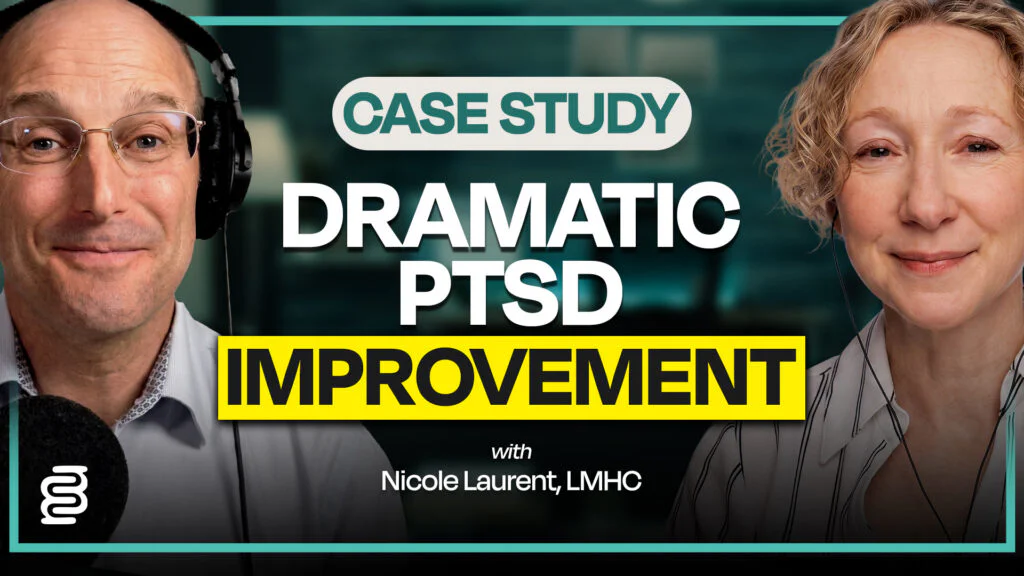
Dr. Nicole Laurent discusses her case report on a 45-year-old woman with treatment-resistant PTSD, tied to military sexual trauma, who had tried nearly two decades of psychotherapy with little success before starting ketogenic metabolic therapy. After 25 weeks, her PTSD, depression, and anxiety scores dropped dramatically, changes far beyond what's typically seen with conventional treatment. The episode explores possible mechanisms, individualized ketone targets, and the importance of professional monitoring throughout treatment.
Learn more
An online community led by Lauren Kennedy West for people using metabolic therapies to treat their mental disorders.
Read more
Metabolic Mailbag with Dr. Bret Scher and producer Erica tackles five listener questions in rapid fire: whether seed oils are truly dangerous, what anhedonia is and how it connects to antidepressants and ketogenic therapy, the ongoing plant-based versus keto debate, why the dawn phenomenon means something different for a type 2 diabetic than for someone in ketosis, and how to actually define ketoacidosis versus a high but benign ketone reading. Bret brings his usual skepticism toward nutrition epidemiology and healthy-user bias into each answer, while keeping the advice practical for everyday listeners.
Learn more
At 45, Dr. Eric Rodgers was used to thinking of himself as healthy. He was an optometrist, an avid runner, running one or two marathons every year. So…
Learn more
Dr. Nicole Laurent discusses her case report on a 45-year-old woman with treatment-resistant PTSD, tied to military sexual trauma, who had tried nearly two decades of psychotherapy with little success before starting ketogenic metabolic therapy. After 25 weeks, her PTSD, depression, and anxiety scores dropped dramatically, changes far beyond what's typically seen with conventional treatment. The episode explores possible mechanisms, individualized ketone targets, and the importance of professional monitoring throughout treatment.
Learn more