New Results: First RCT for Schizophrenia & Bipolar Disorder. Learn more.


Listen, Watch & Subscribe on:



High Cholesterol on Keto? Here’s One Psychiatrist’s Approach
Listen
About the host

About the guest
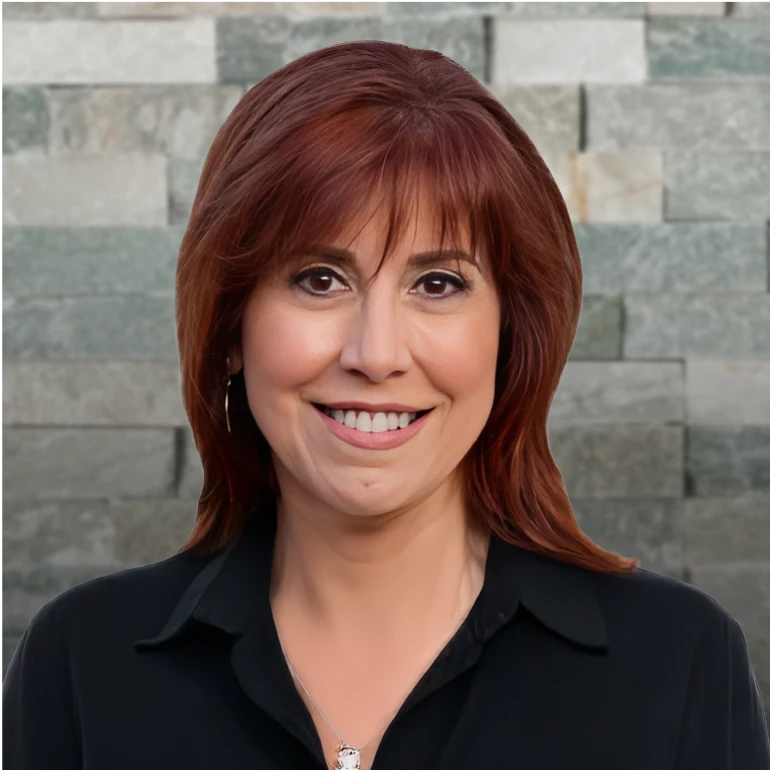

Lori:
So, this intersection of ‘she’s great psychiatrically. Metabolically she’s looking so good. Uh-oh, this little outlier here. Like what do we do about it?’ Really just gives her such a different future. It’s a future possibility than she otherwise might have had
Bret:
Welcome to the Metabolic Mind Podcast. I’m your host, Dr. Bret Scher. Metabolic Mind is a non-profit initiative of Baszucki Group where we’re providing information about the intersection of metabolic health and mental health and metabolic therapies, such as nutritional ketosis as therapies for mental illness.
Thank you for joining us. Although our podcast is for informational purposes only and we aren’t giving medical advice, we hope you will learn from our content and it will help facilitate discussions with your healthcare providers to see if you could benefit from exploring the connection between metabolic and mental health.
We’re starting to see some pretty impressive results from ketogenic therapy to treat serious mental illness, bipolar disorder, schizophrenia, major depressive disorder and others. But there can be one little caveat. What happens if LDL cholesterol goes up? And today I’m joined by Dr. Lori Calabrese, who’s a board-certified psychiatrist and the Founder of Innovative Psychiatry, who started instituting ketogenic metabolic therapy in her patients for the past few years and has seen dramatic improvements in her patients.
But she presents a case report of an individual she was treating who had a significant rise in LDL, which is not unheard of for some people, especially if they’re lean and metabolically healthy. But her psychiatric symptoms improved. Her metabolic health improved, but what does she as a psychiatrist do about the elevated LDL?
So, we walk through her thought process. So, we hope this will be helpful for individuals if this happens to you, or even clinicians, on the steps you can take. Because it’s not necessarily stop the diet. This is terrible and dangerous. And it’s not ignore the LDL, doesn’t matter at all.
There’s definitely probably a more appropriate middle ground, which Dr. Calabrese kind of walks us through what she does. So, I hope you enjoy this interview, and that this case report is helpful to help you internalize how we can balance the benefits we see from a ketogenic therapy with any potential risks, and how to further clarify those risks.
Many of the interventions we discuss can have potentially dangerous effects if done without proper supervision. Consult your healthcare provider before changing your lifestyle or medications. In addition, it’s important to note that people may respond differently to ketosis, and there isn’t one recognized universal response.
Dr. Lori Calabrese, welcome back to Metabolic Mind. It’s great to see you again.
Lori:
Oh, thank you. It’s great to be back, Bret. Thanks for having me.
Bret:
Yeah, and I’m excited to talk about this case report that you presented at this conference about a ketogenic diet can clarify cardiovascular risk, not create it.
It’s a very interesting title, and I want to get into the details. But first, before we get into the details, I want to hear from you. What is one big misconception that medicine as a whole kind of gets wrong that you wish would change?
Lori:
I think one big one is that we as individuals, people as individuals, have the power to change their biology. And one of the most exciting things that I’ve learned is that we have the power to turn on genes that are have otherwise been quiet, and to shape our futures by that.
Bret:
Yeah. It’s huge. That’s a great one. Yeah, I think for so long there has been this, just this conception that your genes are your genes. They’re your destiny, and you just have to live with them. But it is amazing what we’re learning about how we can turn on and turn off genes.
Lori:
Yes.
Bret:
It opens up a whole new world and very empowering, too.
It’s nice to know that we do have some agency over that. So, that’s a good one. I’m glad you picked that up. So, now let’s get into this case report. \We can set the stage, right? You have a busy psychiatry practice. You’re treating lots of people, and a good number of them you’re treating with ketogenic and metabolic therapies.
So, walk us through what happened in this one case report. And then, we’ll get to how this clarifies cardiovascular risk, and what you as a psychiatrist, how you navigated this maybe concerning, initially concerning, cardiovascular findings.
Lori:
So, this is such a lovely story because it’s such a story of a wonderful, really wonderful response to ketogenic treatment.
I began treating a 29-year-old woman, who had a long history of schizophrenia and who had been treated after many hospitalizations with Clozaril. And the Clozaril gave her some degree of improvement, but created a number of side effects. Excessive sedation, slurred speech, tiredness, fatigue, and it really was limiting her life.
So, when she came to see me, she was interested in seeing if she could get a better overall response, in general, to her symptoms, and if she could potentially start to decrease her Clozaril or Clozapine, the generic for Clozaril. And so we started. I obtained baseline laboratories, which she had drawn by, or which she had done by her treating doctor, and her lipids were elevated.
Her cholesterol was high, and that had been high for a while. The total cholesterol was over 200, and it was assumed to be due to Clozaril. And so, I accepted that and I thought, okay, so maybe this is how we start, and it’s due to Clozaril. We did a lipid panel, and we started treatment with a ketogenic, total ketogenic approach.
She had other things that were also elevated. She had inflammatory markers that were up. Her triglycerides were up. And as we started ketogenic treatment, she got dramatically better. Her symptoms got dramatically better. She was excited to taper the clozapine. We started tapering, and I followed her labs.
What emerged was thyroid that needed to be corrected. So, we corrected her thyroid, and I started seeing her lipids climb. And I thought, okay, sometimes we see this on a ketogenic treatment. I’m not going to worry too much about it. And then, we saw them climb more. And then, we saw them climb more.
And all the while, all of her metabolic markers were just becoming beautifully perfect. She just had every single other thing show a beautiful resolution to metabolic therapy. So, the inflammation was down. The liver was down. The insulin was down. The triglycerides were down. All this is beautiful. And the LDL goes up, and the total cholesterol goes up.
But so finally, I thought, you know what? This is not looking like I expected at all. And her doctor said, “What you’re doing is, look at how it’s raising your cholesterol.” And her mom said, “Look at what this is doing to you.” And she said, “I have never felt so good in my life. Please don’t make me stop this.
Please, let’s figure out what we can do.” And so, as her markers were rising, I started getting other cardiac studies. So, I started looking at her oxidized LDL. We looked at small, dense LDL particles. And ultimately, as this rose, her HDL was a little out of sync here. And I looked it up, did some more looking, and thought, I think she’s got the picture of someone who has familial hypercholesterolemia.
Bret:
So, let me pause you for a second here. This is great. So, give me an idea of the timeframe now from when she started to when you were starting to do all this.
Lori:
So, typically, I like to look at full lipid profile with all the breakdown markers, not just the simple ones, at two months, at three months.
In her, I actually did several serial ones because the rise was much more than I thought. So, over the course of just the first four to six months, her LDL got up to 329. And yeah, and her total cholesterol rose quite high.
Bret:
And so you said her HDL didn’t quite follow suit. What did you mean by that?
Lori:
So, what happened was with her, her HDL particles remained low. I would have thought they’d be going up. Her triglycerides fall. HDL goes up. I thought, she’s lean. She’s going to look like a lean mass hyper-responder. And we’ve seen that.
Bret:
Okay, so she’s lean. That’s important, too.
Lori:
Yeah. And so as I was looking I thought, this doesn’t follow that pattern.
And as we looked at all of the other things, her Lp(a) risk was very low. Her LDL size was beautiful. It was small. Her small LDL was small. And in this sort of wonderful metabolic, we can’t ever say metabolic perfection, but I thought, this is like metabolic perfection where she’s metabolically so great.
Glucose is low. Insulin is low. Everything is low, but these are climbing.
Bret:
And most importantly, her psychiatric symptoms sound like they were dramatically better in ways that she hadn’t seen before, despite being treated for many years in the standard-of-care, right?
Lori:
Yes, and what it allowed us to do was taper the clozapine to the point that she actually didn’t have the side effects that she was having with clozapine either.
So, here’s this incredible benefit, and this elevated risk that we saw.
Bret:
So also, here you are, a psychiatrist, talking about advanced lipid testing, about metabolic markers, right? Now, were you doing this on your own? Were you doing this with guidance from anybody? And second question is, should psychiatrists be considering these types of tests on their own?
Lori:
I think absolutely. We have a responsibility to consider these kinds of tests because when we’re really looking at things that can affect lipids. We have a responsibility to know and to do and to monitor and to follow through on. So, I was doing this because it’s part of what I standardly do. I look at metabolic markers, and I look at a full lipid panel at the beginning. And then, I watch it because I want to see what happens so that I can help the patients that I treat, and the members of my practice really know what their true risks are as we’re going.
And it’s one of the things that people worry about. What if my cholesterol goes up? What if my LDL goes up? In this young woman, when we saw the rise happen, I started looking for other signs of trouble. So, other advanced cardiac labs. They all looked good. They all looked good except for that little bit of HDL that was an outlier, and I thought, what should I do next?
What should I do next? So, we went looking to see if there was any plaque anywhere. And so my next step was to order coronary artery calcium scanning in a 29-year-old, and to get that test done to see if there was any plaque burden. So, here she is with high cholesterol, high LDL. Her CAC score was zero. So, that was good because it told us that there was no plaque so far, but it didn’t tell us what was going to happen down the road.
Bret:
So, in fairness, a calcium score in a 29-year-old is less reassuring than in someone who’s older, for sure. But very different, if it was abnormal, very different course. So, at least it was zero. And so, you had a starting point. Was she being told by some of her other doctors that you just have to stop eating this way?
You just have to stop.
Lori:
Yeah, she was.
Bret:
Despite all these benefits and.
Lori:
She was being told by a number of people, “Oh, no. This is really dangerous. Oh, no. Maybe you should do something different? Oh, no. Maybe your diet is doing this?” Here’s what I would tell you, and this is what was so exciting and the message that I gave to her.
Her going on a ketogenic diet really exposed the fact that she had a problem clearing lipids. Not making them, clearing them. She might not ever have known that because she might have stayed on with a little bit of high cholesterol due to clozapine for a long time in an inflamed state. Accumulating side effects. Accumulating risk, and accumulating the risk that can go along with that in an inflamed state.
Treating it, getting the inflammation going down, showing this whole pattern let her see that she might have an inherited hereditary hypercholesterolemia. And we asked them for genetic testing. And it’s very expensive to do. So, at that point, the family said, “It’s really expensive. Is there something else we can do?”
And I said, “I’m going to this conference, going to go to this conference. It’s a cardiology conference. I would love to present this case and really showcase the way to start thinking about this, and to really talk to the cardiologists at the conference about this, and to really find you and put you in the best possible hands of a lipidologist, who can help you strategize and try to plan what should be your next strategy based on what these numbers are saying because you’ve got a beautiful psychiatric response.
You have an incredible opportunity to stay uninflamed as you go, and to not bury that high cholesterol, like it might have otherwise been buried, and to think about what you can do now to help with clearance and to help with the overall particle burden that you have.”
Bret:
So, interesting the jump to, okay, she’s having trouble clearing her LDL particles. Because when someone’s LDL goes up on a ketogenic diet, it can be a couple of things.
It could be the lean mass hyper-responder, like you said. It could be unmasking a familial hypercholesterolemia, which I would say is probably less common but definitely can happen. And the genetic testing, you could probably get it for $300, $400, something like that, from a lot of places.
But without that genetic testing, what was pushing you towards thinking this was FH? Did she have the family history? Did she have first-degree relatives with heart disease at an early age or high LDL, et cetera?
Lori:
So, numbers like this prompt family to start talking to each other, right?
So, sometimes at the beginning, you don’t hear so much about cardiovascular disease. And then, when other family members start hearing what the numbers are, they say, “Oh, but your aunt, your uncle. There are many relatives.” And the numbers might never come out, but it turns out in this young woman’s case, she had family members with a history of elevated cholesterol and heart disease.
And so, it just pushed a little bit more towards, okay, what’s the decision? Do we treat? Do we not? Would I treat with a statin? But would I refer her for statin treatment, or refer her for cardiac consultation, or refer her for another intervention? And it was this beautiful opportunity to see that, gee, the ketogenic diet showed us very beautifully month-by-month, or every couple months, what her lipids were doing while she stayed uninflamed, while her metabolic status was excellent. And I think that’s what changes everything because this is not classically high cholesterol in somebody who also has high blood sugar and fatty liver and a number of other metabolic things.
She was so metabolically fine-tuned. It was just this.
Bret:
Yeah. So, was there any point where you were uncomfortable though, and you thought, ah, maybe I’m doing the wrong thing? Maybe she does need her LDL to come down right away? Or maybe we do need to change, or were you pretty resolute that you’re doing the right thing because she’s improving so much, and you could take your time to figure out the LDL?
What was your thought as her treating psychiatrist?
Lori:
I think this was a, I think this was a decision that we made together, which was to really take a look and see if there was a pattern that was changing. And when we saw it jump, and then we saw it jump again, and then for finally when we saw it jump for the third time and said, “Okay, so now we need to not just do more labs with each successive round, and make sure that we figure out all of the other things that we need to figure out. But now we need an expert.
Now, we need help. Now, we need to make this really a conversation between me and primary care and a cardiologist who can really give you the lipidology piece to it.” So, it was really a beautiful example of pulling all of this together. And then, finding the resources for her and talking on this level of getting out of our silo.
So, I needed to get out of my psychiatric silo and into other places. And the cardiologist who is seeing her will, I’m sure, recognize that she’s really committed to doing what she’s doing because it’s made her whole life’s trajectory so much better and so much different.
Bret:
Yeah. So what was the reception when you presented this at the conference?
Lori:
So, it was really great in two different ways. Many people walked up to the poster, and really stared at it. Stared at the numbers. And when I said, “Can I tell you something about it?” They said over and over, “My numbers are like this. I have numbers like this. What can you tell me about this?”
Bret:
Yeah.
Lori:
“Because I’m like this.” And I thought, oh my gosh, this is a little fear that some people are carrying around not knowing what to do with this because they don’t want to give up their own ketogenic diets, their own low-carb lifestyles because of this. So, it was a great opportunity to explain it.
And I think it was a little bit unbelievable to see a psychiatrist doing this, right? It was a little bit unbelievable. And so, what I’d love to really talk about is the fact that this is one of the reasons that we need to know so much more than just what we know, and why there is this never-ending learning that happens with it.
I was so excited to be hearing all of the expert cardiologists from around the country, lipidologists, researchers teaching me. And so happy that I could present a case where my own, our own patients teach us, right? So, this was a case where she really taught me to go looking in a deeper way.
Bret:
Yeah, and so how did it conclude? Did she end up getting testing for FH, or did she end up treating the LDL? Or what transpired when she met with the cardiologist and got the consultation and moved on?
Lori:
That was last week.
Bret:
Oh, okay.
Lori:
It took a little while to organize it.
Bret:
Okay.
Lori:
That was last week. And so, I am literally still waiting for the phone call and the follow-up to that in terms of what the recommendation is going to be for future coordinated treatment for her. But I know that she’s very, she’s still on a ketogenic diet. She’s still continuing her KMT ratio. She’s still working on moving towards less and less clozapine and more and more life, in general.
And I think she’s excited about having a coordinated effort because people in the treatment world understand her.
Bret:
I think it’s really laudable that you were able to take the ball and run with it to the point where you said, “Okay, I’m outside of my realm, and I need help.
We need the cardiologist.” But it wasn’t like, you didn’t cut bait at the first sign of trouble, which is unfortunately often what happens. LDL goes up, and someone says, “I don’t, this is out of my realm. Stop the diet. Go see your primary doctor. Reset.” As opposed to taking the time to say, “Okay, let’s weigh the benefits and the risks.
Let’s dig a little bit deeper and make sure we’re making the right decision. And then, when we’re really at the limits, then let’s bring the specialist in for more information.” But not panic, not cut bait, not drastically change things that’s improving your life so much. I think that’s a great example of how you handled that.
I think that’s wonderful.
Lori:
It was with a lot of, it was with a lot of help from my friends, right? The whole community of other people that are doing this work, were very helpful to me. She was very helpful. Her mom played a big role in terms of saying, “Let’s see and let’s look and let me see what else I can find out in my family.”
And so, it was really a beautiful step-by-step process. It drove me to do a lot of looking and learning and a lot of reading about lipids that I otherwise never would have understood. There’s so much that we don’t know, right? So, this was a chance for me to really learn all about what it looks like, what it might look like to have the phenotype of familial hypercholesterolemia without having the genetics.
And that really was the missing piece. I wish I would’ve been able to get the genetic testing, and maybe the cardiologist that she’s seeing will be able to do that for her.
Bret:
Yeah, if he doesn’t, call me. I want to see her genetics. I’ll make it happen. We can do this. Yeah, and this is such an emerging field right now with studies being done on it and documentaries on it. And with the whole question of what does it mean to have elevated LDL in the setting of metabolic health, but also what is the reason for the elevated LDL?
And it seems like that could certainly make a difference, but that’s very different than saying, “LDL doesn’t matter. We can ignore it. We know if you’re on a ketogenic diet or metabolically healthy that your LDL means nothing.” That’s not the case either. So. I’m glad to really see the middle ground, to say we need to learn more.
We need to understand this better, but we’re not going to discount it. And we’re not going to say it’s the most important thing as if LDL itself is the disease, which it is not. I think that’s a really reasonable approach. And that you took the time to make a case report, to make a poster out of it, to present it on a cardiovascular day of this conference, is remarkable from a psychiatrist.
Maybe it’s something we need to see more of? Like you’re saying, if you’re prescribing the medications, if you’re prescribing the interventions, you need to be aware of the common side effects, the common changes and alterations, and how to do the basic evaluation of those, which is exactly what you did.
So, you set a great example for that.
Lori:
So, I think it’s so important to really be able to sit at the intersection and understand the various pieces of what we’re doing in metabolic psychiatry, right? Just like we really need to learn how to understand, or we need to learn to understand how glucose and insulin work.
We really need to learn to understand how this works, how lipids work. And I think to the extent that we can get out of our narrow lanes, we’re just going to be doing such a better job at taking care of people. So, this intersection of ‘she’s great metabolic. She’s great psychiatrically, metabolically she’s looking so good.
Uh-oh, this little outlier here. What do we do about it?’ Really just gives her such a different future. It’s a future possibility than she otherwise might have had.
Bret:
Great. Yeah, thank you very much for taking the time to tell us about this interesting case report, and I’m curious to see what transpires next. And maybe we’ll talk offline, and see if I can help?
But I think this sets a great example for other doctors that you’re not just a psychiatrist. If you’re prescribing metabolic therapies, you need to step into the shoes of a metabolic physician and know how to manage that. And you set a great example for that. So, thank you. I really appreciate it.
Lori:
Oh, thank you so much, Bret. Beautifully said, really. Thank you.
Bret:
I hope that was helpful. Of course, I wish there was a conclusion, that we knew the end result, but it’s almost better that we don’t, right? Because we can see, even without knowing the end result, we can see Dr. Calabrese’s progression. How she thought of it, how she wanted to maintain the benefits this individual saw. And it sounds like there were many, without worrying too much about something that’s unclear, right?
What is happening with the LDL and what does that mean? So, let’s take our time to figure this out while maintaining all these clinical benefits. And I think the big take-home is that you don’t necessarily need to be a cardiologist to do this, right? She got to the point where she definitely wanted to get a cardiologist on board, but in the beginning, rather than saying, “This is dangerous. This is harmful.
Stop the diet,” she had a discussion with the patient, with the family, to clarify the benefits and say, “Okay, let’s figure this out,” rather than giving up the benefits. And I think that’s a very reasonable approach. And I’m glad she took the time to present it as a poster presentation, and I’m certainly curious as to what comes next and how the patient is managed from there.
But I think this is good to highlight how a psychiatrist can certainly start this management. And how if you’re using metabolic therapies, you need to step into the shoes of a metabolic physician. All right. Thank you for joining us. We’ll see you here next time at Metabolic Mind.
Thanks for listening to the Metabolic Mind Podcast. If you found this episode helpful, please leave a rating and comment as we’d love to hear from you. And please click the subscribe button so you won’t miss any of our future episodes. And you can see full video episodes on our YouTube page at Metabolic Mind. Lastly, if you know someone who may benefit from this information, please share it as our goal is to spread this information to help as many people as possible.
Thanks again for listening, and we’ll see you here next time at the Metabolic Mind Podcast.
Listen, Watch & Subscribe on:

Across decades in clinical practice, I’ve noticed a glaring pattern: when people improve their metabolic health, their mental health often improves too. Their moods stabilize. Their anxiety eases….
Read more
A new clinical trial reveals semaglutide does not improve cognition in Alzheimer’s disease, challenging earlier observational findings. This highlights the complexity of dementia and suggests metabolic improvements from drugs alone may not be enough. Emerging research points to ketogenic therapy as a promising approach, offering the brain an alternative fuel source when glucose metabolism is impaired.
Learn more

In February, Robert F. Kennedy Jr., the US secretary of health, made a characteristically bold claim. A doctor at Harvard University, he proclaimed, “has cured schizophrenia using keto diets”. If you happened to be passing Harvard University that day,…
Learn more
Connecticut psychiatrist Dr. Lori Calabrese shares a new case series showing rapid, full remission of depression and anxiety using ketogenic therapy. In conversation with Dr. Bret Scher, she explains how personalized keto nutrition, monitoring, and community support can transform brain energy, reduce symptoms within weeks, and offer a powerful, real-world path to metabolic mental health.
Learn more
Across decades in clinical practice, I’ve noticed a glaring pattern: when people improve their metabolic health, their mental health often improves too. Their moods stabilize. Their anxiety eases….
Read more
A new clinical trial reveals semaglutide does not improve cognition in Alzheimer’s disease, challenging earlier observational findings. This highlights the complexity of dementia and suggests metabolic improvements from drugs alone may not be enough. Emerging research points to ketogenic therapy as a promising approach, offering the brain an alternative fuel source when glucose metabolism is impaired.
Learn more
In February, Robert F. Kennedy Jr., the US secretary of health, made a characteristically bold claim. A doctor at Harvard University, he proclaimed, “has cured schizophrenia using keto diets”. If you happened to be passing Harvard University that day,…
Learn more
Connecticut psychiatrist Dr. Lori Calabrese shares a new case series showing rapid, full remission of depression and anxiety using ketogenic therapy. In conversation with Dr. Bret Scher, she explains how personalized keto nutrition, monitoring, and community support can transform brain energy, reduce symptoms within weeks, and offer a powerful, real-world path to metabolic mental health.
Learn more