Announcing the new McLean Center for Metabolic Psychiatry Learn more.


Listen, Watch & Subscribe on:


Carnivore vs. Vegan Keto: Can Both Work?
Listen
About the host

About the host


Bret:
Welcome to the Metabolic Mind Podcast. I’m your host, Dr. Bret Scher. Metabolic Mind is a non-profit initiative of Baszucki Group, where we’re providing information about the intersection of metabolic health and mental health and metabolic therapies, such as nutritional ketosis as therapies for mental illness.
Thank you for joining us. Although our podcast is for informational purposes only and we aren’t giving medical advice, we hope you will learn from our content and it will help facilitate discussions with your healthcare providers to see if you could benefit from exploring the connection between metabolic and mental health
Denise:
We found that it was working for people. That people that came in and they were really happy with it. They were very pleased. They were feeling better. Their mental health was better. Their physical health was better, often times losing weight. And so, you can’t ignore that.
Bret:
Today, we’re talking about carnivore keto diets and vegan keto diets.
So in a way, I’m really just trying to upset everybody because there are those who are vehemently opposed to carnivore diets and those who are vehemently opposed to vegan diets. But the point is, people are finding health benefits in a variety of different ways, and as a clinician, I want to celebrate that. But I also want to make sure we’re thinking about this and talking about it appropriately with the appropriate risk-benefit analysis.
And today, I’m joined by Denise Potter to talk about this. Now, Denise has been on our channel before. She’s a registered dietician with over 30 years of experience, about 20 of that with ketogenic medical therapies, and you can find her at advancedketogenictherapies.com and all over the web. But she has so much experience of using ketogenic interventions for neurology, for mental health, and for general health, that I wanted to bring her on to get her perspective about carnivore diets, about vegan diets, about what we hear about their risks, their deficiencies, and whether those are, one, real, how she thinks about them, but also what are the practical aspects to approach them to, make it not such a big deal?
Because I think the take-home message really is whatever your concerns with the two dietary approaches, they’re absolutely solvable, either testable or supplementable or with specific approaches. They’re absolutely solvable. Neither one should be an absolute contraindication to following. But the key being if you’re using it to treat a specific medical condition, it’s very helpful and very important to have an experienced clinician of some sort, physician, dietician, health coach, et cetera, helping you through this, and that’s, I think, a perspective that Denise gives.
So hopefully I didn’t turn everybody off by covering both carnivore and vegan at the same time. Hopefully we can come together to realize people are improving their health with different approaches, and even if it doesn’t fit our assumptions of what healthy is, we can celebrate their success and help change the conversation to how everybody can succeed rather than absolutely not.
All right, I’ll get off my soapbox. Here’s the interview with Denise Potter.
We’re doing something we’ve never done before at the Metabolic Mind Podcast, our first ever giveaway, and there’s a reason behind it. As we plan future episodes of the Metabolic Mind Podcast, we want to hear from you. What topics are you most interested in?
What do you want to hear more about, and how can we make the podcast more useful for you? So, we’ve put together a short listener survey. And as a thank you for taking a few minutes to fill it out, you’ll have a chance to win our Metabolic Mind grand prize package worth around $250. It includes a Keto-Mojo glucose and ketone meter and test strips, sugar-free Liquid IV, Metabolic Mind swag, Archer Meat Sticks, and copies of Brain Energy by Dr. Chris Palmer and Change Your Diet, Change Your Mind by Dr. Georgia Ede, plus a few other goodies. We’ll choose one grand prize winner, and then also five runners-up will each receive a $50 Amazon gift card. The survey is open through September 15th. So, if you’re watching on YouTube or listening on the podcast, you’ll find the survey link in the show notes.
And if you’re following us on Instagram, just head to the link in our bio. But most importantly, your feedback will help us shape where the Metabolic Mind podcast goes next. So, please take a few minutes to fill it out, and good luck. And we’ll announce the winners on September 18th.
Denise Potter, welcome back to Metabolic Mind. It’s great to see you again.
Denise:
Thanks for having me, Bret.
Bret:
Yeah, it’s my pleasure.
Denise:
Thanks.
Bret:
I’m really excited to get into this, the practical details of carnivore diets, of vegan diets, because we hear so much from both sides, very strong opinions. One’s good. One’s bad. One’s complete. One’s incomplete.
You can’t be healthy with one, when in reality, people find a way to be healthy with both. But they have to be done appropriately and intentionally. And so, that’s what we’re going to talk about today. But before we do, as I like to start, I want to hear from you. What do you think something medicine, as a whole, just really gets wrong that you wish were different?
Denise:
Wow. One thing that really, I think, bothers me a lot is when they, and I say they, medicine in general, takes a look at a therapy, the ketogenic therapy, and looks at that or a carnivore ketogenic therapy, and looks only at the side effects and doesn’t compare risk-benefit analysis, and saying, “But look at the risk and the benefits of the different medications versus this diet with its risks and benefits.” Because there are risks and benefits to all things we do.
And so, I think without weighing them side by side and taking a look, because I would dare say that very often that our metabolic therapies have a much, much lower risk profile than many of the medications.
Bret:
Yeah. I think that’s a great point, and really not understanding the benefits. I remember there was a quote in an article, I don’t know, maybe a year or so ago, from a prominent nutrition researcher, who was talking about the potential increase of LDL with keto diets and said, “So it’s clear the risks outweigh the benefits.”
And I was like, time out. You’re not, you didn’t mention any benefits.
Denise:
Yeah.
Bret:
You didn’t talk about, do you even know the benefits, right? So, it’s like this automatic assumption. So, I totally agree with what you’re saying. I think that’s so crucial and very key. Yeah.
Good. Thank you for bringing that up.
Denise:
Yeah.
Bret:
All right, let’s dig into this. You’ve been helping people design their nutritional approaches for a long time. So, you’ve seen lots of different versions come and go. And I want to talk about vegan diets. But first, I want to talk about carnivore diets. Probably one of the most controversial, the most controversial nutritional approach, that I’ve seen in a long time.
The reaction is so visceral. And people say you can’t do that and be healthy. But first, just tell us some of the things you’ve seen people improve in their life with carnivore diets.
Denise:
Before I even go there, can I jump back, and just say as a dietician kind of how I’ve evolved?
Because I really have, as a clinician and dietician, because in general, the first gut reaction is, “Oh my gosh, that’s inadequate. We should get more things in. We should get a better variety of foods. We should cover all the nutrients.” And so, my gut reaction, let’s say, 10, 15 years ago, would’ve been, “Oh, no. That’s not a great idea.”
And we always supported them with a carnivore therapy. But just by default because they were people were already doing it. And we found that it was working for people. That people that came in and they were really happy with it. They were very pleased. They were feeling better. Their mental health was better.
Their physical health was better, often times losing weight. And so. You can’t ignore that as a clinician and just say that this isn’t true. This isn’t real. This isn’t helping some people in some ways. So, it took me some time as a clinician to look at that. And then, just like we say, a well-formulated ketogenic diet, we also need to look at and say a well-formulated carnivore ketogenic diet.
And I think one other thing, too, and as we’re talking we’ll say carnivore. But I think we both mean carnivore ketogenic diet because it’s really two different things, right? You can eat a carnivore diet and never be in ketosis potentially, depending on how you ate.
Bret:
So, actually real quick, carnivore ketogenic.
Tell us the main differentiating factor that could make somebody not be in ketosis eating a carnivore diet.
Denise:
Yeah.
Bret:
But actually, before you do that, I want to just circle back. I’m so glad you said what you said about your evolution because it totally mirrors mine. When I first started practicing and using ketogenic therapy, I was totally like, “Yeah, but we’re not going carnivore.
We can’t do that because that’s just not healthy.” Because just these biases of what we’ve been taught and doesn’t fit like the world that we live in. But then, as you get to know it and see it’s wait a second. I need to reevaluate my assumptions here because that’s totally not true.
So, it totally mirrors it.
Denise:
Yeah. But I have one more thing because this, ever since I met with someone last week and it hit me knowing that this discussion was coming up. And this person wasn’t on carnivore. It’s someone who was just about to start a ketogenic therapy, or is actually just looking into starting a ketogenic therapy.
And I met with them, and they have severe tardive dyskinesia. So, their tongue is, and there are different forms of that, but their tongue wants to protrude all day long. And they were on three or four psychiatric medications plus a medication for the tardive dyskinesia, which was moderately controlled but not really.
It was obviously very discomforting for that individual the whole time that we were talking, which means every moment of their life, they’re dealing with this side effect that was from a medication they used years ago. That they’re still suffering from the side effect, and on another medication that has its own side effects.
And so, as we have this discussion about whether or not a carnivore diet is harmful or inadequate, we also need to talk about the medications and the potential side effects, and again, the risk-benefits that could happen with these medications. And what if someone is able to perhaps use less medications over time, avoid medications?
I know not everybody’s getting off all their meds, and I don’t ever want to promote that. But sometimes on these therapies, they can be on fewer medications, and controlled and occasionally, off medications, which we love. But anyway, so yeah, it was heartbreaking to see them struggle so much as a result of medications and versus potential nutrient deficiencies, which we’ll talk about. I’d I think it’d be easier to manage a vitamin C deficiency and treat scurvy than to treat TD, which can be lifelong.
Bret:
That’s that’s a great point.
Denise:
So, my blood pressure’s up right now. And my blood pressure’s, it’s on the ceiling.
Bret:
That perspective right there, though, I think is one that no clinician would ever think of. They’re going to be like, “Oh, no. You can’t eat carnivore because there’s no vitamin C.” But they wouldn’t say treating scurvy with vitamin C supplements is a lot easier than treating tardive dyskinesia.
Wow. That’s a that’s a refreshing perspective, for sure, different perspective. But let’s rewind for a second. There’s so much to talk about. I feel like we’re a popcorn machine here jumping around, which is great because there’s so many things to talk about. But what makes a carnivore diet keto or not keto?
Denise:
Okay. So ketogenic diet, ketones are produced based on need. Our bodies were created to run on different energy sources like a hybrid vehicle, we often say. As clinicians, we kind of compare that and help people understand. And so, if you’re getting enough glucose, you don’t need ketones. And when we eat, kind of extra protein beyond the body’s immediate needs, some of that’s going to convert to glucose. And then, your body just says thank you.
That’s how I tell patients. They’ll say, “Oh, thank you. I don’t really need ketones right now. I just had a 10, 12-ounce steak or 14-ounce steak.” And you have no need for ketones. And so, when you’re running in that state, so you could be perfectly carnivore, and maybe that has benefits for people being only carnivore. But they may potentially not have ketosis because of that glucose conversion.
Bret:
Yeah, it’s a good point. So, if it truly is the elimination diet benefits, then you’re going to get benefits regardless. If it’s the elimination plus ketosis, then maybe you’re not going to get the same amount of benefit. So, different things to be considered depending on what you’re trying to treat, what your response is.
So, that’s a good point.
Denise:
And that can be even, also a lot of people slide into keto over time, and we actually like them to go into ketosis gradually, oftentimes, unless there’s a real need to do it quickly. So, that’s a way that someone could not restrict their protein intake over time, and go into ketosis more gradually, by then gradually restricting and adding more fat to the diet.
We need to add fat to the diet to get that. I usually tend to try to get people to a 1.5-to-1 ratio of fat to protein and carb and that being about 77% fat. When you’re counting macros, that’s easier way to look at is 75, 77% fat. And to do that, just real generally, that’s about five ounces of cooked protein at a meal, three meals a day.
Just real loosely, about two of that five ounces of protein, you generally have to add about two tablespoons of fat. It’s a real, it’s a generality. And that’s to hit, oh, 17, 1,800 calories. But as a generality, that will get people close. Now, if someone can get ketosis on seven ounces of meat and one serving of fat, great.
That’s fabulous, but some people might find they have to hit that 75% to get good ketones.
Bret:
Very good. Yeah, that’s good insight. So, you already brought up scurvy. So why isn’t, Shawn Baker, why isn’t are his gums bleeding? Why doesn’t he have scurvy? He’s been carnivore forever, not to just use him.
Denise:
Yeah.
Bret:
But all these other individuals who we see have been carnivore for years and years, and they’re not bleeding out of their gums. They don’t have scurvy. How is that possible?
Denise:
I don’t know. No, so no, but a couple theories, questions: are needs potentially changed or different?
Is the uptake of a nutrient more better and more improved when that nutrient is less? Is it better absorbed from meat than it is, say, iron, for example. The iron in meat is better absorbed than the iron in vegetables and plant foods. Is it something like that? Is he including, and one of the foods that’s high in vitamin C is chicken liver.
Does he eat a lot of chicken livers? I don’t know. Perhaps getting a variety of things. And one thing, and honestly, beef liver is not so high in vitamin C, because people say liver. Beef liver’s not as high as chicken liver. So, it’s something to rotate in the procession there.
Bret:
Yeah,
Denise:
So It’s interesting that people, we don’t really know. There’s no good studies.
Bret:
There’s lots of theories. There’s lots of studies. Yeah, there’s theories, but no good studies. And I think that’s important to bring up. So, there is definitely the theory about the competitive uptake, and that you’re just, you need a lot less of it ,and, when you’re basically zero carbs.
So, there’s that theory, not proven, but maybe that’s why even people who don’t eat organ meats aren’t having vitamin C deficiencies? But the easy answer, just if you’re missing something, you supplement it. Chicken liver’s not that hard to get pretty cheap and inexpensive. And an easy source of vitamin C. So that’s an easy workaround.
Denise:
Yeah, absolutely. And then, just as a general category of supplements. And this is me as a dietician, and I think it’s hard for me to get past that. Sometimes, I like to have people on some level of supplementation just as a “cover your butt” situation.
Just to say, “You know what? If you’re not opposed, let’s just take a low-level multi, high quality multivitamin just to cover, just in case.” And then, we hit a lot of these nutrients that we’re a little light on, it doesn’t hit. We’d have to talk about electrolytes, of course, and sodium and iodine.
But at least, unless someone has a real big opposition or a real bad tolerance, because sometimes we run into something like that where there’s a tolerance, I’ll tell people even some of these, some vitamins, might be take four a day to get your 100%, or take two a day. And some might say, “Let’s take one a day out of the two, or let’s take one out of the four.” And just have this low-level coverage going on.
That makes me feel better on a carnivore situation, and I can’t argue that against someone who’s done it for five years and, or 10 years and has no deficiencies. But also have they checked, right? Without the long-term studies, I’d rather err on the side of caution. And I think this, it is a place where it would be great to see some research.
I don’t know of any keto carnivore studies in the hopper. Do you? I don’t know if there are any.
Bret:
Not that I’m aware of, but it seems like it should be an area that people are fascinated with and wanting to study.
Denise:
I think it would be.
Bret:
Yeah.
Denise:
I think it would be great. It would be really, it’d be really easy to do. And that comes down into the reasons why people like it sometimes because it’s technically easier to do.
You don’t have to do so much planning and so much math and how many carbs do I get? We’re just eating meat and fat, and it narrows down the choices.
Bret:
So you brought up iodine. Now, if someone’s including fish in part of their plant-free nutrition, then they’re going to get the iodine there.
But a lot of times, they don’t.
Denise:
Yeah.
Bret:
And it’s a meat only, no fish, too. So, how do you address iodine there?
Denise:
I would just have them use iodized salt ,if they’re not getting it from a food. And often, on a ketogenic therapy, I’ll have people use a potassium salt. To get one of the blends that has potassium and sodium, and they can just easily sprinkle that on food. And it serves as an electrolyte supplement, and it gives lots of potassium because they also may not be getting enough potassium on a carnivore therapy.
And now, we’ve covered both, and the taste is pretty good on those. And now, we’ve just covered both bases with that with just salting your food, which you probably would want to do anyway.
Bret:
And yeah. A lot, especially when you’re into ketosis, you’re going to usually want to, going to need some salt.
Use some electrolytes and some salt, right?
Denise:
Yeah, for sure. For sure.
Bret:
Now, interesting though, the trend for a decade now has been the Himalayan pink salt, right? The real salt. But that doesn’t have the iodine. So, that’s an important differentiation, isn’t it?
Denise:
So, you do need an iodized salt in order to get that.
And people take iodine supplements. It’s cheaper to take. It’s cheaper to use the salt. It’s much cheaper. And sometimes, I’ve had people where they’re taking too much of an iodine supplement. I think that’s something to be cautious about because of over-supplementation, and that’s not great either.
Bret:
Yeah, so an iodized salt is going to be hard to overload your iodine. But a more purified iodine supplement, you could easily overdo it.
Yeah.
Denise:
Absolutely.
Bret:
All right.
Denise:
Absolutely.
Bret:
Good point. All right. So, we talked about potassium. We talked about sodium. We talked about iodine. What about fiber?
That’s the one you hear all the time. We need fiber, right? Our gut microbiome needs fiber. Our gut health needs fiber. We’re destroying our guts. You see this all over the place. And yet, people who are carnivores, happy as can be, they’re healing. Not, obviously not, everybody. But a lot of the ones that we see and hear from are having tremendous health gains, including some GI health gains.
So, how does that work?
Denise:
We have the fiber recommendations, but I don’t know. We have to say, based on what we know with keto, that they don’t apply to everybody, is all I can say, is because we have people who are on keto for years and years, and they have great gut health.
We have, I have patients who are on even, I’ll say, forms of keto, that I don’t even love, say, formulas, for many years. I have someone who’s been on a keto formula for 20-plus years, longer than I’ve been doing this. I’ve seen this patient most of that time. And yet, that’s what they have to do, and that’s what works for them. And he’s had incredibly little fiber, and his gut health is fine.
So, yes. We can’t, we don’t, the microbiome is, it’s not really a new field. But it feels pretty new as far as what we’re learning and what we know. And I don’t know that we know enough to say, “Oh, you should supplement or you should do probiotics or you should do that with it.” I don’t have anything to substantiate that we should do anything.
We know a low-residue or low fiber diet is helpful for people with severe gut issues, and we’ve got the case report with the 10 cases of people with Crohn’s and ulcerative colitis using a carnivore ketogenic therapy that had full resolution of symptoms and their, I say, full or reduction.
I’m not sure if we say full. Improvements in symptoms, and many of them on the diet five years and more. Quite a few of them on the diet for a long period of time. So, I think we have to look at that and say, “Wow, here’s someone who had gut, severe gut, issues where they cut part of your gut out,” that type of severe gut issues, “and yet, they thrived on no fiber.”
So, I certainly don’t want to claim that I understand why that works, but it certainly is helping a lot of people. I have someone, a dietician I know quite well who, her family healed their gut with a temporary carnivore diet. And then, went back and could eat foods that they had to restrict previously.
So, there’s some benefit to letting the gut heal. It’s healing for, we do it, we’ve been doing low-residue diets for years in nutrition, in general.
Bret:
Yeah, and that’s a great point. If you have a disrupted gut, that doesn’t mean it’s going to be that forever. You could treat it with a carnivore diet.
Doesn’t have to be forever. And then, start re-instituting other foods.
Denise:
Yeah.
Bret:
That’s a great point. And I think it’s also important to reflect on all the original data showing health benefits in fiber were in the context of high carb diets. So, like you’re saying, what we’re learning from low carb diets is it doesn’t apply equally to everybody.
Now, what about the concept of someone, like they go on a carnivore diet,. Now, they’re having a bowel movement every three days. And a lot of people would say, “That’s unhealthy. You can’t do that.” And ,yet they feel totally fine, right? Do you have any issues with that when your, if your clients report that?
Denise:
Not at all. And I don’t have issues with that if they eat fiber, have fiber included, in their diet, and they have a comfortable bowel movement every three days. Because we can get really detailed on that, but you don’t define a bowel movement as in how much it is. What’s the volume? How much does it weigh? You had one every day, congratulations. Was it big, small, whatever? We don’t get down to those details. And so, one every three days might be great for them. I really, we have to look and see how people are feeling. Just some of the studies or reviews where they’re looking at carnivore, they’re talking about placebo effect and things, which I’m sure to a point when you make a change, there’s a placebo effect, of course.
But when that placebo effect lasts five years, I don’t think it’s a placebo effect anymore. I think we’re, I think we’re past that. So, yeah. I just think we have to look at how people are feeling, and if their gut feels fine at that, then absolutely. And if it’s a problem, that’ll play out eventually because you can have constipation. And this happens with people, especially with people with a lot of neurological damage or disorders where they’ll have a bowel movement every day, but they’re backing up.
So, it’s also highly overrated, where they’re backing up. And then, all of a sudden, you have someone who just is full of stool, and they’re having a huge issue. And you think, they’ve been going every day. Yeah, but it’s not been adequate.
Bret:
Do you recommend regular magnesium use to help with that and for supplements with a carnivore diet?
Denise:
In general, magnesium would be, it’d be a good idea. When someone’s having sleep issues or bowel issues, we like to use some magnesium, for sure. And I think that’s on the list of things that it’s hard to hit the numbers with the magnesium.
Bret:
Okay. Yeah, and then the microbiome is really the Wild West trying to determine what does it mean for health. And there isn’t, it’s clear, there isn’t one healthy microbiome. But it seems like if you use that definition of a variety of different, like a diverse microbiome, there was a recent study to suggest people eating carnivore diets still have a diverse microbiome, just shifted in a different way. So, is that healthy?
Is that less healthy? As a dietician, what do you make of all that data that’s clearly evolving, and still trying to draw the connections between it and health?
Denise:
I like to land in the middle a lot of times. I think running over and living on one extreme or the other, often gets you in trouble. And you’re old enough to know that things settle often in the middle.
And with the gut, I think that that’s, I think that we just know not even the tip of the iceberg. I think we’re just touching the very tip of what we know there. And you have, when you just start looking at the diversity of people around the world and around the diets, and go from the Eskimos and go all the way to the vegans and how people eat. So, we’ll never completely study and understand that.
So to me, I’d rather, we need to know. We need to keep learning. But I’m going to look at how they’re doing right now. Because what I know right now is their immediate clinical picture of their recovery from whatever they’re working on, whether it be mental health or migraines or whatever that person’s working on.
So, I can’t answer where we’re going with that because I feel like the field is just so huge. I think we just keep learning and as much as we can evaluate. But yeah, I feel like this, the gut, it’s only, gosh, it feels like it’s only the last 10 years at the most that it’s been a big topic.
I’m sure it has been longer than that, but I guess in my world and seeing it.
Bret:
And that’s actually a great answer, right? Because people would say “No, it is clear, it is unhealthy microbiome.” Well, why? How are you defining it? What does that mean? Where’s your evidence that leads to poor health outcomes?
A lot of that isn’t there. So, I think it’s appropriate to take sort of the middle ground and yeah, especially where we are now.
Denise:
And that’s a good point that you say that. There’s no evidence, again, because there’s no evidence against carnivore diets either, right? We don’t have sufficient evidence for, but we don’t have sufficient evidence against. And yet, we have evidence of improvements.
And I know we’re going to going to get to this, but since we’re going along that topic, I want to bring up the cancer risk. Because some people are saying, “Oh my gosh, you shouldn’t eat red meat. That’s causing cancer.” And there’s a relationship. I’ve took the liberty of pulling up a couple statistics because it’s colorectal cancer. That’s the biggest risk factor that they have with the red meats, and 0.4% of Americans, I just looked at Americans, 0.4% of people have either had or have colorectal cancer.
But then, when you get into the numbers, and I had some written down of psychiatric conditions, I believe it was six or 8% with serious mental illness. But then, when you get up into any mental illness, you’re getting up into the 20s percent of people with depression and mental illness.
So again, when you start saying risk-benefit of medications and of things that don’t work and the potential of carnivore, or you know, or ketogenic therapy helping somebody, we’ve got to say that’s only an association with cancer. It’s not that nothing, but it’s an association based across people’s recollection of what they ate over many years.
And also, when we look at the amount of meat we’re eating on a carnivore keto diet, it’s not a tremendous amount. Five ounces at a meal, I dare say, a lot of people are eating a lot more than five ounces at a meal on a regular diet. So, it’s not this excessive amount. We’re not eating three ribeyes a day, although that sounds fabulous.
Bret:
And I think, yeah, I think maybe a lot of people have that perception though because you see someone who’s prominent on social media sit down with an enormous ribeye and eat the whole thing. But what they don’t say is maybe that’s their only meal of the day or maybe they’re only having two meals a day, right?
They’re not, it’s not like they’re having that three or four times a day compared to that ribeye plus the baked potato plus the chips plus the soda, pl- right? Like what you get in it, plus the mac and cheese that always comes with your, at a lot of these steak places.
Denise:
Absolutely, yeah.
Bret:
So, that’s very different. And to assess a cancer risk in that diet versus a meat-only diet, you got to admit that’s different. And then, how is it cooked, right? If it’s a steak that’s charred on the grill that has tons of the hexamines and all those compounds, maybe that’s what’s causing the, or contributing to the higher risk of cancer, right?
There’s a lot of layers beyond saying it’s just the meat, which I think is really important to understand, and I wish we had better data to pinpoint it. But I think we have to be honest that we don’t. Do you agree with that statement?
Denise:
Oh yeah, for sure.
And yeah, I feel like it’s, I think it’s important to look at because I don’t think we should throw that out either. I don’t think we need to say, “Oh, there’s nothing there,” because there’s something there. There’s an association there. And then, we have processed meats being worse, right?
So, on a carnivore diet, I would highly recommend not being excessive about processed meats. But in all honesty, do I tell people don’t eat any? No, I don’t. Because I feel like that, in small amounts, can that be included? Probably. When you start looking at the metabolic health improvements that people have, they’re tremendous.
They’re tremendous, and you start saying, “Wow,” with your metabolic health, “oh, you lost 30 pounds. Now your cancer risk just went down because you lost 30 pounds.” And so, we have a lot of differences and benefits that are happening, as you know, along with a metabolic therapy like this. So again, not throwing the baby out with the bathwater.
But the means that we get there, sometimes the means to is, the means is worth the end or the end is worth the means.
Bret:
All right, couple more to hit on. Lack of phytonutrients and antioxidants. The blueberry effect, right? You get all the phytonutrients and antioxidants from blueberries so everybody needs to eat their blueberries.
I pick on blueberries just because they seem to be talked about all the time. But without that, we’re deficient in phytonutrients.
Denise:
Man, I don’t think, and just, I don’t think we should throw that out either, right? I don’t think we should say, “Oh, they don’t have any benefit.” And but nor do I think that we should say you have to have them.
Because again, if this therapy is working for somebody, then I think we do it. Just like we’ll look and we’ll say, “Okay, somebody has cancer, and they’re using chemotherapy. And there are risks associated with chemotherapy.” Yet we do it. And so, if the risk is some nutrient deficiencies, if it’s we’re not getting enough phytonutrients or antioxidants, are we going to take that for a period of time?
Absolutely, we’ll take that because we can make adjustments. So, I think we always have to pay attention to that and not, and sometimes I’ve heard, and on your podcast sometimes, “Oh, if someone’s having cravings.” Then, maybe they need that? Maybe they should pay attention to that?
And also, is this for forever for everyone? And I think that as we look at it when you say, what if you had to do without these things for a period of time? Clearly, and this is terrible, but people have lived in severely adverse conditions for years and years. You go back to World War II or even now, I’m sure you can find parts of the world where people living in serious adversity.
But think about even concentration camps and where people lived with virtually nothing and virtually no food and no nutrients, and they survived and they came out and they, and maybe it’s a terrible comparison, but it’s real. Our bodies are very flexible and very adaptable, and they can survive adverse things.
And that’s when people go on chemotherapy, they can come out looking like they’ve been in a concentration camp, right? Yet, we do it. And yet, some of them are healed from the cancer, at what risk, right? So again, comparatively with the medications that we’re dealing with, and many health conditions that we treat with keto, I just don’t think it compares to say we can’t, we shouldn’t, do this without because we’re missing X, Y, or Z.
Bret:
Right, and your need for antioxidants depend, kind of depends, on your pro-oxidation environment. And a lot of the times, if you’re improving your health, you’re reducing that oxidative environment. So, you’ve got to consider that as well. So, two things can be true at the same time. Yes, you are missing out on the phytonutrients and antioxidants. But at the same time, it doesn’t mean you need those and are still going to benefit from those if you don’t have that type of environment, basically.
So, both those can be true at the same time.
Denise:
And one thing I think is super interesting, and I think we just don’t know, because almost all research on diet is done, with the exception of keto research, it’s done in a carb-burning metabolic state. And so, we don’t have that, and I think of that specifically, and this isn’t really anything to do with carnivore, but I think of that with thyroid.
When we see the benefits with thyroid, and then we think, “Oh, okay, we should…” I’ve had this with patients where I say, “Oh, we should recheck their thyroid in six weeks because we reduced their medicine because they had less need.” I don’t know. Have you ever done this with anybody in ketosis before?
Because maybe, we should recheck them every week? Maybe we should recheck them at least in two weeks because you’ve been treating patients on a carb-burning diet? I have no idea. I don’t claim to know, but I know the metabolism’s entirely different. So, we’ve got to look at this differently. And so, all the things we know about medications and adjustments and changes, they were all done with carb-burning metabolism.
So I just, I’d just rather say, “I don’t know .”And then, address that and address things individually than pretend it’s the same as on another metabolism.
Bret:
All right. And then, that’s a great summary. And then, of course, we can’t ignore the LDL and heart disease, which I feel like I’ve talked about a lot. And do you find people concerned about that when they’re starting a carnivore diet?
Denise:
Yeah, absolutely. They’re a healthy concern, and I always. First of all, let’s see if there’s an issue, because they may have no issue. There may be no issue at all. Yeah, let’s see. Let’s see what’s going on. Even when it does go high, the first thing I like to do is get a coronary artery calcium scan and just take a like real low-level look at that and see if we should get worried, and go on to the next level of testing, of course, or send them to a cardiologist or their doctor to evaluate that.
I’m a dietician. I have to be careful about staying in my lane. But these things all, they come up. And so often, we end up sending them back. But what’s frustrating is sometimes, their doctors or their physicians aren’t always supportive. And so, they find themself in this tricky balance.
And it’s real easy to say, “Ask your doctor about this, and do that.” But then, when they go to their doctor and if they’re non-supportive, people very often won’t say anything. They’ll just let it go because they’re afraid of the reaction of their healthcare provider.
So, it’s tricky in our, so we end up having some discussions to just try to send people on and say, “You really need,” or “You need to find a physician that is willing to talk to you about this.”
Bret:
Yeah, you really have to strike a balance. Instead of saying, “No, you should not try that because you will die of a heart attack,” is absurd.
That’s absurd to say it. As opposed to, “Try it.”
Denise:
Yeah.
Bret:
“We’ll measure your LDL. And we’ll follow your metabolic health and all these other health parameters, and see what improves and what doesn’t. We’ll follow it over time because we know things are dynamic and can change. And then, we can evaluate your cardiovascular system more directly.” Right?
There are all these other ways to do it as opposed to, “No, you’re going to die of a heart attack. You can’t do it.”
Denise:
And which is really, it’s such narrow thinking, and yet we see that. It’s very narrow thinking. And what’s unfortunate is sometimes people, they will stop because of that statement from a doctor.
I’ve definitely had people, not with carnivore, but I’ve had people with a ketogenic therapy for cancer, start it, be on it, working through it. And then, go to the doctor, and the doctor says, “That’s bad for you.” And give them their chemotherapy, which is bad for you in some ways. And then, tell them not to do this dietary metabolic change.
So, it’s frustrating. And also, as we weigh out LDL and the risks of that, we know that a lot of medications, that people are treated with for mental health conditions specifically cause a lot of weight gain. And so now, their metabolic health is in serious jeopardy.
And then, we know people die 10 to 20 years sooner. You hear different numbers on how much sooner they die, and a lot of that because of their metabolic health and because of the weight gain and because of the resulting diabetes and heart disease. And so, I think we’re okay to give this a try.
Bret:
So yeah, one other thing I wanted to bring up is this concept that we hear of nose to tail. And I think we already addressed, talked about that a little bit with chicken livers, meaning eating some of the organs. But do you advise people to eat, quote, unquote, “nose to tail”? And if so, what does that mean to you?
Denise:
I won’t say that I have advised that specifically, but I think it encompasses when we say variety. I guess it’s just naming that verbiage I’m using. But if we can get, and I’m thinking, too, are you talking about when someone’s like very specific, say a red meat carnivore or a ruminant animal carnivore?
Because we have different definitions of carnivore. When I think of it, I think of, I think, fish, poultry, beef, pork. I think of kind of all the things. But yeah, I think we need to get a variety. I think if people are willing to cook all the different things, and have people making oxtail soup and they do the different things, which I’ve never made oxtail soup and I’ve never cooked a neck on purpose, but it’s just not something.
So yeah, I don’t feel like I have a great answer other than I want the variety. I want people to be thinking about, and I’d really like to see them tracking on some type of an app that will give them a good nutrient analysis. Because then they can say, “Okay, look, I am specifically missing, wow, my vitamin C has been 10% all week.
I guess I do need a supplement,” or “I do need to eat a couple berries,” or “I do need more chicken livers.” What if you hate chicken livers, right? One of my colleagues gave an example of, they had a patient who was eating only, a beef carnivore diet and had a essential fatty acid deficiency. And treated them with omega-3s and they were fine.
But they, and that was the way it was a rule out. Either these will help you or they won’t.
Bret:
And so that’s- Yeah, I guess
Denise:
we didn’t
Bret:
talk about- … just kind of- … omega-3s, right? So- Yeah … we talked about iodine, but same thing could hold for omega-3s. if you’re eating grass-finished beef, there’s more omega-3s than, than g- grain finished, but still pales in comparison to eating fish.
So if someone is eating a ruminant only diet, do you recommend omega-3 supplements?
Denise:
I think it would be a good ideand that’s honestly just based on my colleague’s experience, who, I think, wow, this is… We have to pay attention to that. We have to say, because it’s not so common. I wasn’t trained in a carnivore diet.
This is, learn as we go and, learn as the research comes out and as we see the evidence. So we’ve got to pay attention to what we’re seeing.
Bret:
All right. Any other, big ticket items that we haven’t covered so far?
Denise:
I think paying attention, we need to pay attention to, yeah, vitamin E, vitamin K.
Calcium, we didn’t talk about calcium, and that you’re not going to get a lot of calcium unless you’re really paying attention and probably eating some sardines or some fish, bonefish. And other than that, not a lot of great ways to get calcium. So, if you’re not opposed to that, I think it’s a great thing to add into a carnivore diet.
And then if you are opposed to that, calcium supplements have their own potential risk. And is this good? Is this bad? Should someone do it? So, I’m very cautious about recommending it, but I think we need to pay attention to bone health. We shouldn’t just ignore that and say, “Yeah, it’s great.” Because some of these people on carnivore diets for 5 or 10 years, I don’t want to find out that now they’re having fractures when they’re 60 because they thought everything was fine.
So, I think just like we do scans for keto for epilepsy. It’s standard to do a DEXA scan. I don’t, I just, this is just off the top of my head, but it might not be a bad idea to do a DEXA scan if you’ve been on a carnivore diet for a period of time just to see. Let’s just make sure.
Let’s just make sure. And then if there is an issue, then you can deal with it. But if you’re fine, then you’re fine.
Bret:
And protein and physical exercise are key for bone health, which most people on carnivore diets are getting a lot of. Not to pretend that everybody’s getting a ton of physical exercise, but it seems like most people are.
So, you’re going to get that benefit for your bones. But like you said, important. Like why, it’s easy enough to get, why not measure it if there’s a concern? And I think a lot of this reflects back to clinicians, too. Like if a clinician has a clear hesitancy of someone starting a carnivore diet because of all these things we’ve talked about, basically every concern has a way to measure it and to follow it and to check or to supplement.
So, none of these are really should shut down a clinician’s approach to this, should it?
Denise:
Yeah, for sure. And then, this is just how I’ve had to evolve my practice, in all honesty. I used to, and like I said, whether this is right, wrong, or indifferent, it’s just what I do. I used to tell people, “You should check with your doctor before you do keto, and you should make sure it’s okay with them.”
And what I realized, and maybe I’ve said this on here before, is then that puts the burden of responsibility on their doctor by saying, “Can I do a ketogenic diet or can’t I do a carnivore diet?” And then, if they say you can or you should and they aren’t familiar with the evidence, they feel like they’re, “Now I am liable for the results of this therapy they’re doing.”
But if you tell your practitioner you’re going to be on a ketogenic therapy or a carnivore therapy, then you’re just notifying them, right? Now if they, if there is a big danger to you that you didn’t, that they see a true danger and they can validate that, then they could stop you, right? And then, you should listen to them and you should mitigate that or see if it was a true reason for not doing it.
But I think asking for everybody to ask their doctor to give them a rubber stamp of approval on these therapies, it’s just not going to happen. And I think you put people in a seat of being uncomfortable, and I don’t know that’s necessary. I think they should be informed. I think with the people with the numerous health conditions, you should tell your physician you’re doing this.
They need to know, but we can’t expect them to know everything. And they could, you could send them the consensus guidelines that Dr. Ede and the colleagues put out and let them see that there is, there are reasons. I know we’re off of specific carnivore with that, but yeah, I just realized that.
Bret:
No, but it’s so important.
Denise:
Yeah.
Bret:
It’s still so important because if you are using this to treat a medical condition, it should be done under the guidance of your healthcare team. But you bring up a great point. A lot of doctors aren’t going to want to take that responsibility to say, “Yes, you can try a carnivore diet.”
A lot of people are going to say, “Absolutely not” without weighing the risks and benefits, exactly like you’ve detailed so well. So that is a, that’s a position a lot of people will find themselves in, and that’s the importance of building a team as best you can with a dietician with a health coach with a therapist. Somebody who has a little bit extra knowledge of ketosis and of carnivore, ideally, a dietician if you could.
Denise:
Yeah, sure.
Bret:
So, I think that is important.
Denise:
We tell people, and we want people to get a team, right? And you’re training professionals, and we have to keep doing that. That’s what is necessary to keep training professionals to bring the number of people up so more and more people are comfortable with this because there aren’t enough people, professionals, to work with people. So we need to keep getting the word out.
But in the meantime, and not everybody can afford, I’m private practice. Not every, I don’t take insurance, not everybody can come to me. So, in ideal space, they have someone who’s totally favorable. But if not, again, notifying and at least that. That’s a minimum. But yeah, we always say work with your doctor, work with your doctor.
But in all reality, that’s not reality for a high percentage of people. So, then we have to say, “Oh, then you shouldn’t do it. You shouldn’t try carnivore. You shouldn’t try keto if your doctor isn’t familiar with it.” We would take out a whole segment of the population, and all these people on THINK+SMART that have, helped themselves with keto.
So, I hope I’m not saying do this alone, because that’s not what I mean. I’m just saying, we have such a scarcity of doctors, which I know that is a huge part of what Metabolic Mind is trying to do to train the professionals.
Bret:
Carnivore took a while to discuss here because it is a little more controversial. But now, if we were going to switch gears to a vegan diet, which you can also do a vegan keto diet, which surprises a lot of people, but it is clearly doable and people have done it. And you can see their THINK+SMART profiles, much more acceptable, much less controversial within the general medical field.
But still, actually, even more so nutrient deficient, all addressable. You can address it. But I would say, we have more data to show the nutrient deficiency of a vegan diet than a carnivore diet, actually. I don’t know if you would you agree?
Denise:
Yeah, absolutely. It’s probably more studied than a carnivore diet. And maybe more acceptable because you have certain religions and people, groups, that eat a vegan diet and have reasons for that or moral, ethical issues. And I think so, maybe that’s just more respected than, “I like meat,” or only want to eat meat. I think it’s just looked at differently. So yeah, we know B12 deficiencies can happen. Iron, of course. If you formulate it well, you can, avoid some of those iron deficiencies. The same thing, iodine, maybe vitamin D. And what’s funny is, as you cut out processed foods, then we have a lot of, enrichment and fortification in our foods. But those are the processed foods, and so you may lose some of that.
But then, one could argue, do we really need that, right? If you have to take a slice of bread, eat a slice of processed food to get your, name it, your niacin or whatever. This just made me think, I do want to mention it because I think it’s important, is folate. We think of folic acid and women of childbearing age, any potential of getting pregnant, they should be on a supplement.
And what happens is when people, women, go on a ketogenic therapy, and they stop eating as many processed foods, their folate intake generally goes down. And I can’t remember if in the research, if it actually shows an increased risk of neural tube defects or not. But we definitely show, have shown, that the folate intake goes down.
And just to be safe, and maybe taking, prenatal is overkill. Maybe it’s too much, but it really is something very largely preventable that we just don’t want to play with that. So, when we’re looking at a carnivore or a vegan diet, I’d rather those women, if there’s any chance of pregnancy, I’d just, please just, take a supplement,
Bret:
Yeah, again. A supplement that is a risk-benefit analysis, right?
Denise:
Right, right.
Bret:
It’s so easy to do. Yeah.
Okay. That’s great. Yeah, i’m glad you brought that up. That’s super important. Yeah, so, but going back to the vegan diet, like an absolute requirement is B12 supplementation. But super easy to do, but absolute, like 100% required, because you can get severe, severely, severe neurologic illnesses from B12 deficiency.
Denise:
And some people, when they’re, some people come in on a vegan diet when they’re interested in keto, and I always I’ll ask them, because if they’re on a vegan diet because they’re very strict, and they, it’s a religious reason or a cultural reason or an ethical reason. But if they were just trying a vegan diet to see if it helped them, sometimes they’re like, “No, I don’t mind. I’ll try anything.” And so, then we’ll try to get them to incorporate some protein. That doesn’t address the vegan-only, but I think that’s an important distinction because if someone was trying vegan.
A matter of fact, one of the, a couple of the people, in the case report analysis with the ulcerative colitis and Crohn’s had tried vegan to help those conditions, and it didn’t help them. Not saying it doesn’t help anybody with those conditions. It didn’t help them. And when they went over to a carnivore diet, it did give them relief.
And so, yeah. So, if it’s a case like that, and someone doesn’t need to be on it, I’d say, “Wow, there are a lot of deficiencies here. Why don’t you add some protein?” But for those that want to stay on it and do it, we find it’s a little harder to get in ketosis. We have to add other carbohydrate sources.
We have to allow them to have more carbohydrates than someone who’s eating some animal protein. And so we, since we do that, we very often always really give MCT oil you maybe could do it without, but I think it’s a lot tougher. Maybe if they ate a lot of coconut oil, they might not need the strict MCT. But in general, we’ll try to get them to more of an MCT-type diet to try to cover that. And then they need.
Bret:
Yeah, so it’s important, the added fats. Yeah, and you mentioned protein. So I want to make sure we spend some time on that. It’s widely known that plant protein tends to be less bioavailable than animal-based protein, and quote-unquote, “incomplete,” meaning adequate levels of all the different amino acids.
But yet again, you can work your way around this. So how do you advise people who are eating the vegan diet to make sure they get adequate amounts of protein?
Denise:
I think one thing, one, we try to make sure they get a variety, and I think doing a little bit of tracking with that also is important. And of course, I’d like to see somebody with three or four days’ worth of data. And then, a few months later, let’s do that again at a minimum to see what they’re missing.
Because generally, they’re going to be missing something. We’re probably not going to get everything in on that diet. Because sometimes, again, they may or may not supplement, or they may or may not add something a different protein source. It’s interesting, the protein needs, and protein’s such a hot topic right now. And I’m, just like everything else. I’m just swinging back and forth and landing in the middle on that because some people are really advocating that you need so much protein. And I think some people do need a lot. But I see a lot of, I want to just call it, workout warriors where people, they work out three, four times a week.
They lift weights. Do they really need extra protein versus?
Bret:
So let’s put some definitions here, though.
Denise:
Yeah.
Bret:
When you’re saying, what do you call adequate? What do you call high? What’s the 1.2 to 1.6 grams per kilo? What do you put definitions on that?
Denise:
Man, so people get stress at the dietician guidelines sometimes. But I will say, we use .8 grams per kilo for RDA as a general. That’s not much. It’s pretty low. But I’ll use that as a basement for people. If I get really desperate, you can go to the WHO guidelines and go even a little bit lower than that, World Health Organization, and go a little bit lower.
And sometimes, you have to when you have someone with a vegan diet, and say, “At least you’re hitting the WHO guidelines. You’re not even hitting the RDA guidelines.” But if they’re on a vegan diet and they’re feeling well, and it’s working for them, and their protein’s on the low end, who am I, right?
If everything’s working, it’s just like on the flip side with carnivore. I’m not going to throw that baby out with the bathwater because it’s working for them. But really, we’re going to try and get that, those numbers up. And if it means we have to add more beans and lentils and things like that have more carbohydrate or different things. So, it was just hemp and just lots of different ways you can get the protein in, but they all involve some carbs.
And so, as we do that, but yeah, so we’re just, we have to look at those numbers, though. These diets have to be close, more closely followed, than others. And doing a little tracking, and people don’t always love to track. But they might need to do a little tracking.
Bret:
Yeah. And what outcomes are we measuring? I think is also really important.
Obviously, if you’re using it to treat a mental health condition, then you measure those outcomes. But then, there’s also the metabolic health. There’s the body composition and the lean mass and the strength. And what does this mean for the future and all those concerns as well? So yeah, sometimes I worry about that when people, when if you talk about the RDA.
But I’m glad you said that’s the basement, like that’s the floor, and you want to build from there if you can. So what are some good low-carb sources of vegan protein that you recommend to your clients?
Denise:
We tend to do, the things that come to my mind are, the hemp and like legumes and things.
Legumes are nice. So, we use legumes, tofu. Those are just standard, easy things that we can use.
Bret:
So what about Omega-3s? So, specifically EPA and DHA, because we know the plant sources of Omega-3s, the ALA, they have a low conversion rate to the EPA and DHA. Apologize for all the initials, but hopefully everybody knows what we’re talking about here with the Omega-3s.
So, do you just routinely recommend Omega-3 supplements, or how do you approach that?
Denise:
I think it’s easier just to do that. I mean, just in case, that it would just be standard. I don’t have it in like in my ed materials as a standard that they must. But it’s a topic of discussion, and I think it’s a good idea.
And then you said, and then trying to get, and get chia and get different things in, and the flax. And we’re going to try to hit as many natural sources as we can.
Bret:
And then, there’s overlap with carnivore, too, with the iodine and the calcium and the D3 and that as well, right? So whichever diet you’re talking about, those three still can be an issue, can’t they?
Denise:
Yeah, and I, same thing. I tend to like to do, not everybody, but in general, a multivitamin with someone on keto. Again, but is it every single day? Is it a small dose of something? Not trying to hit 100%. And it depends on how high of a ratio or how high their fat macro percentage is as to whether or not, what I think.
But with a, so when you go to the extreme ends of carnivore and vegan, then I just rather include it. But I always, I generally include it anyway. But sometimes people are really, really in tune with their diet, and they’re getting a really nice variety. And they’re including different things, and you can take a look and you’re like, “Wow, you’re really.”
If they’re hitting 75% of most nutrients, I’m generally good with that.
Bret:
This has been a good discussion. A lot of, so much, seems to be polarizing and absolute that we see on social media and I think you really brought a good level of like reality check to a lot of that. And so many good take-homes for how people can address these potential deficiencies, and whether they’re even real deficiencies.
Any last words about everything we talked about today? And then, of course, where can people find you to finish up?
Denise:
I think just, since you mentioned deficiency, I think just to remind people that when someone’s embarking on a ketogenic therapy, that we want you to do lab work. You need to do lab work.
There’s lists on Metabolic Mind, on the THINK+SMART. And then, there’s a list in the consensus guidelines. We like it to be pre-keto or at least very early keto. And then, within three to four months, if you’re going to continue, hopefully someone’s had benefit, they’re going to continue on the therapy, they should recheck it. And then, at that point, it becomes maybe it’s every six to nine months at that point to have labs rechecked.
But that’s really important. And then ,pulling in some of these other labs when you’re on a carnivore or vegan diet, and saying, “Wow, I better check maybe not just B12, but MMA and the zinc and just the ones we talked about.” I’ll try and list them all off again. But I think that’s really important, too, that people are doing their labs and paying attention and maybe thinking about the DEXA scans with the, or if they’re, if they’ve been on this a long time, I think that’s a great idea.
Bret:
Yeah, so the importance of working with a qualified professional, especially if you’re using this to treat a medical condition. So important.
Denise:
Yeah. Absolutely. Absolutely. And then you can find me at advancedketogenictherapies.com. And I’m on Instagram at Keto RDN. Potter Keto RDN, I think.
Should know my handles. Yeah, but yeah, we’re on all the social medias. So yeah, on LinkedIn, et cetera, et cetera.
Bret:
All right, great. All right. Thank you so much for joining me. I really appreciate it.
Denise:
Okay. Thanks a lot, Bret.
Bret:
So, I wasn’t exactly sure how that interview was going to go, but I think it went the way I was hoping in that Denise really brought the “let’s take a breath and have the realistic perspective here,” because we do see so much polarization online about carnivore and vegan, about you absolutely can’t do them.
You can’t be healthy with them. They’re too, they’re deficient. When in reality, we have to take a step back and say, “Is that true? And what are the steps we can take to make sure we’re still optimizing our health?” And people have different reasons for wanting to do different diets, and we have to accept that.
And people can find health benefits in multiple different dietary approaches, even if it doesn’t meet our preconceived notions. And certainly as a clinician, I want to support that. I want to support that. So, that’s why I really appreciate Denise’s perspective about a lot of the practical tips. About how to think about this in a broader perspective, and specific steps we can take to make sure we’re achieving our health goals and not putting ourselves at risk. And that discussion of the risk-benefit analysis that seems to happen with drugs to a degree, but with ketogenic interventions, really not so much.
And then the other perspective that whether it’s carnivore or keto, you can design them both to help with ketogenic therapy, if that’s your goal. So, I hope this was helpful, whatever end of the spectrum you’re on or just to give a different perspective of how we think about this and how we talk about this and how we can celebrate people’s victories, even if it doesn’t fit our definition of what we would do.
So anyway, take that as as something to think about.
Thanks for listening to the Metabolic Mind Podcast. If you found this episode helpful, please leave a rating and comment as we’d love to hear from you. And please click the subscribe button so you won’t miss any of our future episodes. And you can see full video episodes on our YouTube page at Metabolic Mind.
Lastly, if you know someone who may benefit from this information, please share it as our goal is to spread this information to help as many people as possible. Thanks again for listening, and we’ll see you here next time at the Metabolic Mind Podcast.
Listen, Watch & Subscribe on:
A powerful plan to improve mood, overcome anxiety, and protect memory for a lifetime of optimal mental health.
Read more
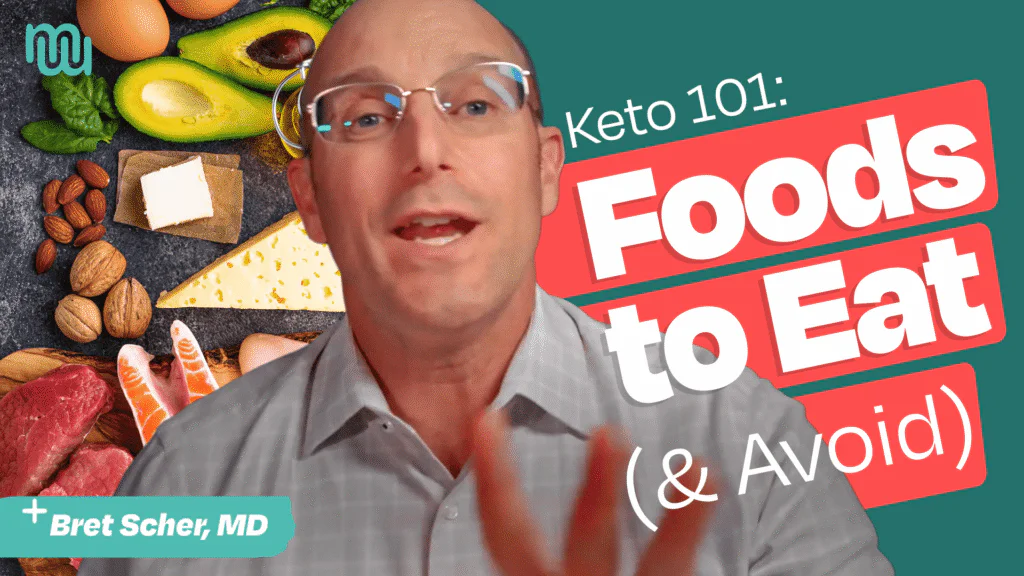
Dr. Bret Scher walks beginners through the practical basics of starting a ketogenic diet, covering which foods to eat and avoid, sample meal ideas, and keto-friendly snacks. He explains why he prefers describing foods as "compatible" with ketosis rather than strictly "keto" or "not keto," and emphasizes that lifestyle factors like sleep and stress also play a role in achieving and maintaining ketosis.
Learn more

(I was excited to be invited to participate in the Nutrition Network and Metabolic Health India collaborative training, Vegetarian Low-Carb Lifestyle. This course includes ten expert-led modules and covers…
Learn more

Key takeaways Sleep is often treated as a passive state, a time when we shut down and let our minds and bodies rest and reset. But from a…
Learn more
A powerful plan to improve mood, overcome anxiety, and protect memory for a lifetime of optimal mental health.
Read more
Dr. Bret Scher walks beginners through the practical basics of starting a ketogenic diet, covering which foods to eat and avoid, sample meal ideas, and keto-friendly snacks. He explains why he prefers describing foods as "compatible" with ketosis rather than strictly "keto" or "not keto," and emphasizes that lifestyle factors like sleep and stress also play a role in achieving and maintaining ketosis.
Learn more
(I was excited to be invited to participate in the Nutrition Network and Metabolic Health India collaborative training, Vegetarian Low-Carb Lifestyle. This course includes ten expert-led modules and covers…
Learn more
Key takeaways Sleep is often treated as a passive state, a time when we shut down and let our minds and bodies rest and reset. But from a…
Learn more