New Results: First RCT for Schizophrenia & Bipolar Disorder. Learn more.


Listen, Watch & Subscribe on:



Trailblazing Stanford Trial Shows Keto Improves Serious Mental Illness – with Dr. Shebani Sethi
Listen
About the host

About the guest


Shebani:
Their energy level improved, their sleep was improving, their quality of life was improving. So, in their mind, they wanted to stick with it. There’s obviously the other reasons of weight loss and so forth, but it was beyond that. It was beyond that for them, and they felt their symptoms were more in control.
I had patients that told me that their voices, just the number or frequency of the voices, per day was smaller. It was reducing. The voices internally were reducing. And I think that’s a huge change for quality of life in an individual. Sticking to a treatment that is helping that, in addition to the medications that they’re on, is a big deal for people. It gives them hope.
Bret:
Welcome to the Metabolic Mind Podcast. I’m your host, Dr. Bret Scher. Metabolic Mind is a nonprofit initiative of Baszucki Group where we’re providing information about the intersection of metabolic health and mental health and metabolic therapies, such as nutritional ketosis as therapies for mental illness.
Thank you for joining us. Although our podcast is for informational purposes only and we aren’t giving medical advice, we hope you will learn from our content and it will help facilitate discussions with your healthcare providers to see if you could benefit from exploring the connection between metabolic and mental health.
Dr. Shebani Sethi, a clinical associate professor of psychiatry at Stanford School of Medicine, just published a groundbreaking new pilot trial about ketogenic therapy in patients with both metabolic dysfunction and serious mental illness, like bipolar disorder and schizophrenia. And the results were remarkable.
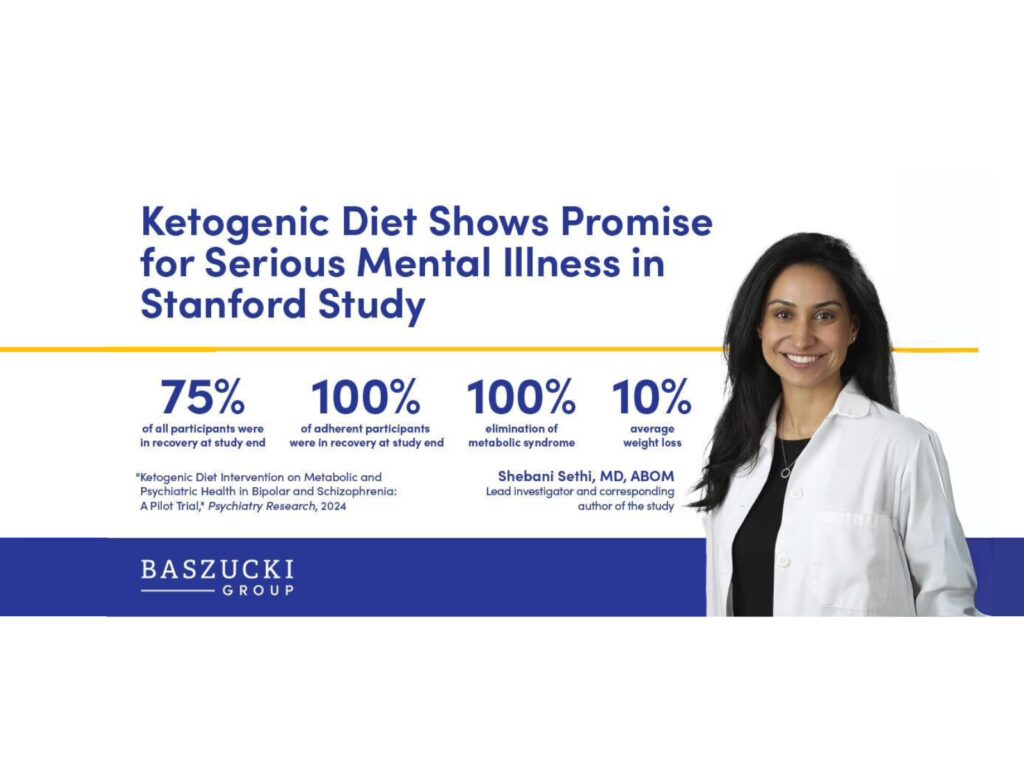
In her study, she found that 75% of all participants were in recovery at the end of the study, and a 100% who had metabolic syndrome had completely resolved metabolic syndrome. So, we’re going to get into all the details in this interview with Dr. Sethi. But Baszucki Group is proud to be a contributing funder to this study and it’s groundbreaking work like this that has helped fuel our ReThink Bipolar Initiative.
ReThink: REsearching Therapeutic Integration of Nutritional Ketosis in bipolar disorder, where we’re now funding multiple other studies to help further investigate this. It’s a proud moment for us to have been a part of this and the beginning of what clearly is going to be a tidal wave of new evidence coming out so we can learn more about ketogenic interventions for serious mental illness.
So let’s hear about this exciting study with this interview with Dr. Shebani Sethi.
Dr. Sethi, welcome back to Metabolic Mind.
Shebani:
Thank you for having me.
Bret:
Yeah, I’m very excited to have you because we get to talk about the results of your paper that was just published. And it was really the first paper about ketogenic diet intervention for a serious mental illness since 1965, which sounds pretty amazing and absurd at the same time, that there was such a long period of time without research in this specific field when there was already a hint that it was something that could be helpful.
So, let’s rewind for a second back to when you designed this trial and wanted to study this. What was your motivation? What led you to want to do this?
Shebani:
Yeah, so there were two things that motivated me. One was patients that I saw during my medical training that were improving while they were on dietary interventions while they were also trying to lose weight. So, I came from the obesity medicine side where I saw patients with psychiatric conditions improving.
So, that got me really curious to basically explore the ketogenic diet, in particular, because it was being used for weight loss as well as epilepsy at the time. And that’s how I learned about that. I wanted to understand why this was working in patients not just with weight, but also with psychiatric symptoms.
The other motivation that I had was a lot of the patients that I treat have problems with metabolic syndrome or insulin resistance or obesity or some kind of metabolic problem. And so, I wanted to understand if this intervention could also help their side effects because the rates of obesity and metabolic syndrome are a lot higher in the patient population with serious mental illness.
So, there are basically two questions that I was trying to understand with this pilot trial and wanted to understand what the signals would be.
Bret:
Yeah, I mean it really is interesting how you can approach it from two different angles. One is the metabolic health angle, which as you mentioned, patients especially on a lot of these medications and with diagnoses of bipolar disorder, schizophrenia have significant metabolic dysfunction, but also from the psychiatric symptom standpoint.
And it looks like ketogenic therapy can help address both of them. So, how did you design the trial to try and answer these questions? And who was involved? And give us some of that background?
Shebani:
Yeah, so the way that I designed the trial, first of all, there wasn’t other studies looking at this.
It was mostly case series or observational data. So, the next step from that, in terms of the evidence, would be a pilot study. So, I thought about doing a pilot study, and it is a one-arm study where everyone gets the intervention. And the inclusion criteria were basically to include those that had a psychiatric diagnosis, like schizophrenia or bipolar as well as having some type of metabolic abnormality, any kind of abnormality, whether that’s cholesterol or sugar or whether that was overweight or obesity or metabolic syndrome.
So, I took anyone that had a metabolic dysfunction as well as a diagnosis in order to answer that question.
Bret:
Yeah, and I think that’s a really important point that it was the combination of a psychiatric diagnosis and a metabolic diagnosis and sort of the patients had those combined.
And that’s what led to some of the pretty dramatic findings, I think, because of this patient population that you saw improvements in both the psychiatric symptoms and the metabolic symptoms. But first, how long was the intervention, and what type of diet was the intervention?
Shebani:
So, it was a four month duration for the study, that each individual would have to do the ketogenic diet for four months.
Actually, a lot of folks decided to continue with that. However, the duration was four months. And the intervention was a ketogenic diet, which was basically or is basically, a high-fat, low-carbohydrate, moderate protein diet.
Bret:
Yep, and so four months, a lot of ketogenic trials are maybe six weeks and 12 weeks. So, four months is, I guess you could say, long for a trial.
But we’ve all seen examples of people who’ve been on ketogenic diets for years and years. So, what did you find about people being able to adhere to the ketogenic diet over four months?
Shebani:
So surprisingly, people actually were pretty adherent to the intervention.
And I think that’s a question that I get a lot. Like how are people sustaining this diet? How are they able to continue on it for a four month period or longer? And the adherence levels were above 80%. Actually, we did analyze the data based on those who were adherent versus semi-adherent and looked at the differences, and we saw there was greater benefit with those that actually were fully adherent versus semi-adherent.
So, that implied some kind of potential dose response relationship to this, which is interesting, I think, to look at moving forward also.
Bret:
Yeah, I think that is really interesting. But just the adherence of over 80%, I think, is so important because so many people, doctors, dieticians, nutritionists, nurses, who aren’t familiar with ketogenic interventions, might just brush it off and say, ugh.
It’s too hard. Nobody can stick with it. But here’s a population with a psychiatric diagnosis with metabolic dysfunction, and they were able to stick with it. And so, do you think part of it is, once you see these benefits and results that you haven’t been able to see with other treatments, that’s motivation in itself to stick with it?
Do you think that it’s something to do with it?
Shebani:
Absolutely, I think that was definitely part of the motivation. When people are seeing, several patients of mine had shared that their energy level improved. Their sleep was improving. Their quality of life was improving. So, in their mind, they wanted to stick with it.
There’s, obviously, the other reasons of weight loss and so forth, but it was beyond that. It was beyond that for them. And they felt their symptoms were more in control. I had patients that told me that their voices, just the number or frequency of the voices per day, was smaller.
It was reducing. The voices internally were reducing, and I think that’s a huge change for quality of life in an individual. Sticking to a treatment that is helping, that in addition to the medications that they’re on, is a big deal for people. It gives them hope.
Bret:
And that’s a great point. In addition to the medications that they were on.
So, first off, these weren’t new diagnoses on no treatment. Like they had all been treated with standard of care medications and still we’re not improving the way they wanted. But two, just because they were starting the ketogenic intervention didn’t mean they could stop all their medications. It was an adjunctive treatment, which I think is a really important point.
But did that sort of surprise you? We’ll get to the results in a second, but obviously, the results were very positive. But did it surprise you that there were such positive results in a group of patients who had already been treated with standard of care medications for so long?
Shebani:
That’s a good question.
I don’t know that I was completely surprised. And that’s because I have seen that during residency training as well as in medical school, I had seen patients improve on this intervention. So, to me, this wasn’t a complete shock. But what did, you know to some level surprise me, was just even the amount of paranoia or delusions that a patient with schizophrenia would have, and then tell me that there’s a change.
I, on one hand, a part of me was surprised, but pleasantly surprised and very happy for that individual. And again, this doesn’t necessarily, it may not be a treatment that’s going to work for everyone. But if quality of life is being improved in an individual, that’s a big deal to any clinician.
When we see that, we’re very happy because that’s what we’re treating at the end of the day. So, medications can maybe help on some level with symptoms, and maybe this intervention’s also providing additional help on top of that?
And so, there’s just more tools in the toolbox. That’s how I think about it. And we’re really treating the quality of life of the individual, and that’s what we want to do.
Bret:
Yeah, such an important point. We’re not treating one lab value or one symptom. We’re treating the patient, and the patient’s quality of life is so important.
So, without burying the lead too much. So, the results as is advertised in the press release, in the paper are 75% of the patients were in recovery with a 100% of the adherent patients in recovery. So, what does that mean in recovery? That sounds so amazing and so dramatic.
Shebani:
So, what we used to measure the outcomes for psychiatric outcomes was something called CGI, which is Clinical Global Impression Scale. And that, we have categories of recovery, symptomatic or recovery or recovering. And so, the idea behind that percent of 75%, when we look at the end result, there’s 75% overall that are in that recovered state.
One way to also look at it is that, if there was at least one point change in the CGI, meaning one point improvement in that skill that is clinically meaningful to us. And so, if we just looked at that 79% of the cohort actually had that improvement of one point change. If we look at the adherent group, specifically all of those individuals ended up in a recovered state by the end of that four months.
And if I look at other psychiatric measures, quality of life, improved sleep, improved PHQ-9, GAD, we measure that, too. BPRS is a symptom scale also for schizophrenia in particular, and that had a 33% improvement. So, we tried to look at, even though numbers are small, we tried to look at schizophrenia versus bipolar with different skills, and we still saw improvement on both ends.
Then we looked at CGI, which works for both, and we saw improvements there. So metabolically, there were also big changes, which was encouraging. And we saw everyone that had metabolic syndrome at start, which was 30% of the cohort, ended up having reversal of metabolic syndrome by end of month four.
So, that is a 100%. Reversal. It is a small number, of course, but it is meaningful, clinically, to see that. And we also looked at visceral fat. So, visceral fat reduction was 36% with at adherent group, and weight was 12% loss. BMI was also 12% loss. Waist circumference, 13%. And overall, there was a about 30% decrease in the insulin resistance marker that we used to measure insulin resistance.
IR 25% drop in triglycerides. Overall, yeah, pretty positive results, metabolically as well as psychiatrically.
Bret:
Yeah, very impressive. A 100% resolution of metabolic syndrome. And I think with communicating the results of the study, something like that, complete resolution of metabolic syndrome.
People like can really internalize that and understand that physicians and the general public. When it comes to the changes in the psychiatric measures, a lot of people, including physicians who aren’t, you know, non-psychiatrists don’t really understand what that means. So, I think that’s where the communication is challenging for the general physician to understand.
But I like how you brought it back to quality of life, and the way you define recovery. And that it was really dramatic. But now here, the next question, you mentioned 12% weight loss. So, some people might say, they lost weight and that’s why they improved. Do we know it was something more than just a weight loss?
And one answer could be, who cares, right? The patients don’t care. They’re feeling so much better, they don’t really care. But for those who want to nail down the mechanism, do you think there’s something to say? Was it the weight loss or was it something beyond the weight loss?
Shebani:
So, my personal opinion, it’s beyond the weight loss.
But I think, you know, we have research and studies that look at me mechanisms with the ketogenic diet, and especially, with epilepsy as well with patients that have not necessarily had weight loss. That wasn’t the aim of the study, but it’s to look at what happens with seizures and reduction of seizures with the ketogenic intervention.
And so, we do know that there are other mechanisms at play here. Obviously, insulin resistance is one thing I mentioned, but that’s also not the whole picture. What’s interesting is that the medications that we do use for bipolar and schizophrenia, are anti-seizure medications. So, some of them can lead to weight gain, in fact.
And so that is an interesting, that’s an interesting clinical scenario where you have a ketogenic diet actually working, maybe potentially similar to the medications, which are stabilizing neural membranes. We think mood stabilization has something to do with that. And so, I think that there are a lot of different mechanisms. And one of the really promising, I think, outcomes of this pilot study in some way, too, is that there are other randomized controlled trials now looking at the ketogenic diet intervention mechanistically in bipolar and schizophrenia, to actually look at that root cause of what those mechanisms are.
Dr. Judy Ford at UCSF is doing in RCT. Dr. Carlo Longhitano is doing an RCT as well.
Bret:
And yes, it is really exciting that your research seems to have spurred so many other studies popping up. And like you mentioned RCTs, whether in Australia and at McLean at UCSF and at University of Pittsburgh, there’s so many randomized controlled trials now.
And that’s the progression of research. Like you said, it started with case reports and then the pilot study and then grows from there. So, now that we have such encouraging results from your pilot study, what do you think it means? What is the impact on clinical practice? Because there are physicians seeing patients now wondering, now that we have the results of this pilot trial, can I start treating my patients this way?
Or do I need to wait for the randomized controlled trial? So how do you, personally and in your communication with other physicians, help them wrap their heads around that?
Shebani:
Yeah, that’s a great question. And so, the randomized control trials are ongoing. I think in terms of the using this treatment in clinical practice, I don’t see what would be the harm.
We actually looked at side effects in the study as well, and every single visit we screened for its side effects to see what came up over the course of the four months. And I’ve also been treating patients for many years with this intervention. And I’m not concerned necessarily for harm with patients.
It has to be done correctly, of course. And it has to be done in the right population, and they need to be monitored. And so, I do think that clinically, it can be done, but it has to be done with folks that are well-versed in ketogenic approaches or also just understanding metabolic medicine. I do maybe have a bias that some of that training is also very useful, and with obesity medicine background, I think that also comes to play where I do feel like that is very helpful for the patient to have different options as well for treating their metabolic dysfunction.
Bret:
Yeah, and you mentioned that you monitored for side effects and adverse effects. And I saw your presentation at ISBD, and I really like how you mentioned there was a small increase in LDL but an overall reduction in calculated cardiovascular risks.
So, that’s a big one that I like to talk about and want everybody to know about. That even a small increase in LDL does not mean necessarily mean increased cardiac risk. So, what were some of the other side effects and adverse effects you monitored for, and what did you see?
Shebani:
Yeah, great point, Bret. As a cardiologist, I love that you pointed that out.
Yeah, side effects-wise, they were minimal. But within the first three weeks, during that keto adaptation period, of course, I did see what I was expecting to see, which was sometimes constipation or headache or fatigue. But those did resolve by week three for patients. And after week three, there was not, very minimal to no, side effects.
Bret:
Yeah, so it’s very exciting to have this trial completed and now published and now doing all the publication or all the press and the education about it. So, what is next for you then?
Shebani:
Yeah, I love treating patients. So, I’m going to focus on patient care, access to care, treatment, and also developing the field further with other research work as well as collaborating with other great scientists.
So, that’s the plan.
Bret:
And do you think the day will come where ketogenic therapy is first line intervention for serious mental illness?
Shebani:
I’m not sure, but I’m optimistic that it will at least be an adjunctive medication or intervention.
Bret: And certainly from these results, it seems like it should be, especially in the population that has metabolic dysfunction.
So, I guess one of the next questions is, does it also apply to people without metabolic dysfunction, which is something that research is also looking at now? But in your clinical experience, do the results also apply to people without metabolic dysfunction?
Shebani:
Yeah, so clinically, I do see benefits for some patients.
So, I can’t speak to, because the research is not there yet, but I do see there’s a lot of research in that area as well. But I’m very hopeful and optimistic about it.
Bret:
Great, thank you for joining us and congratulations on your study. And we look forward to hearing more from you in the future.
Shebani:
Thank you.
Bret:
Learn more by checking out our research page and signing up for our newsletter@metabolicmind.org. Thanks for listening to the Metabolic Mind Podcast. If you found this episode helpful, please leave a rating and comment as we’d love to hear from you. And please click the subscribe button so you won’t miss any of our future episodes.
And you can see full video episodes on our YouTube page at Metabolic Mind. Lastly, if you know someone who may benefit from this information, please share it as our goal is to spread this information to help as many people as possible. Thanks again for listening, and we’ll see you here next time at The Metabolic Mind Podcast.
Listen, Watch & Subscribe on:
Peer-reviewed clinical pilot trial reports dramatic improvements in psychiatric and metabolic outcomes in bipolar disorder and schizophrenia
Read more

When countless people are suffering and lives are at stake, why invest time and money in Randomized Controlled Trials? During a question and answer session with panelists at…
Learn more
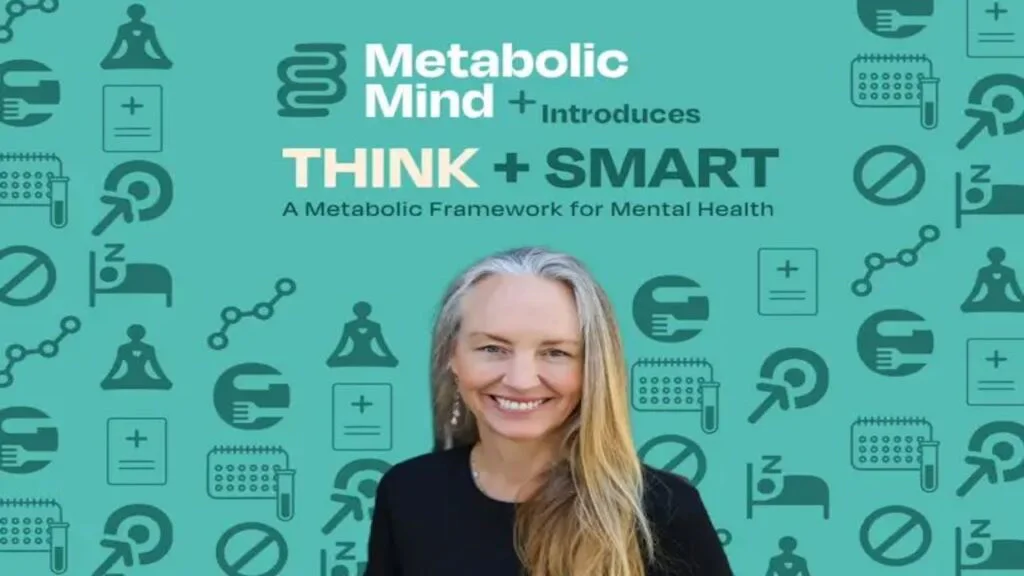
THINK+SMART is a community-inspired resource that provides a framework for ketogenic and metabolic strategies like those that have helped our son and so many others recover mental wellness.
Learn more

Research suggests that metabolic health may play an essential role in mental well-being. After years of therapies, medications, retreats, and self-exploration, Michael, a former nutrition client of mine,…
Learn more
Peer-reviewed clinical pilot trial reports dramatic improvements in psychiatric and metabolic outcomes in bipolar disorder and schizophrenia
Read more
When countless people are suffering and lives are at stake, why invest time and money in Randomized Controlled Trials? During a question and answer session with panelists at…
Learn more
THINK+SMART is a community-inspired resource that provides a framework for ketogenic and metabolic strategies like those that have helped our son and so many others recover mental wellness.
Learn more
Research suggests that metabolic health may play an essential role in mental well-being. After years of therapies, medications, retreats, and self-exploration, Michael, a former nutrition client of mine,…
Learn more