Announcing the new McLean Center for Metabolic Psychiatry Learn more.


Listen, Watch & Subscribe on:



Obesity Medicine Doctor on Metabolic Health and Ketosis
Listen
About the host
About the guest

Jeffrey:
That’s been very rewarding to see people making a difference in their life. But then, I can actually measure it and see it on their own individual blood tests
Bret:
Welcome to the Metabolic Mind Podcast. I’m your host, Dr. Bret Scher. Metabolic Mind is a non-profit initiative of Baszucki Group, where we’re providing information about the intersection of metabolic health and mental health and metabolic therapies, such as nutritional ketosis, as therapies for mental illness.
Thank you for joining us. Although our podcast is for informational purposes only and we aren’t giving medical advice, we hope you will learn from our content and it will help facilitate discussions with your healthcare providers to see if you could benefit from exploring the connection between metabolic and mental health.
Please remember that our channel is for informational purposes only. We’re not providing individual or group medical or healthcare advice or establishing a provider-patient relationship. Many of the interventions we discuss can have potentially dangerous effects if done without proper supervision.
Consult your healthcare provider before changing your lifestyle or medications. In addition, it’s important to note that people may respond differently to ketosis and there isn’t one recognized universal response
Jeff, thanks so much for joining me.
Jeffrey:
Thank you for having me.
Bret:
Yeah. Why don’t you take a moment and just sort of tell everybody who you are, and what kind of medical practice you’re doing.
Jeffrey:
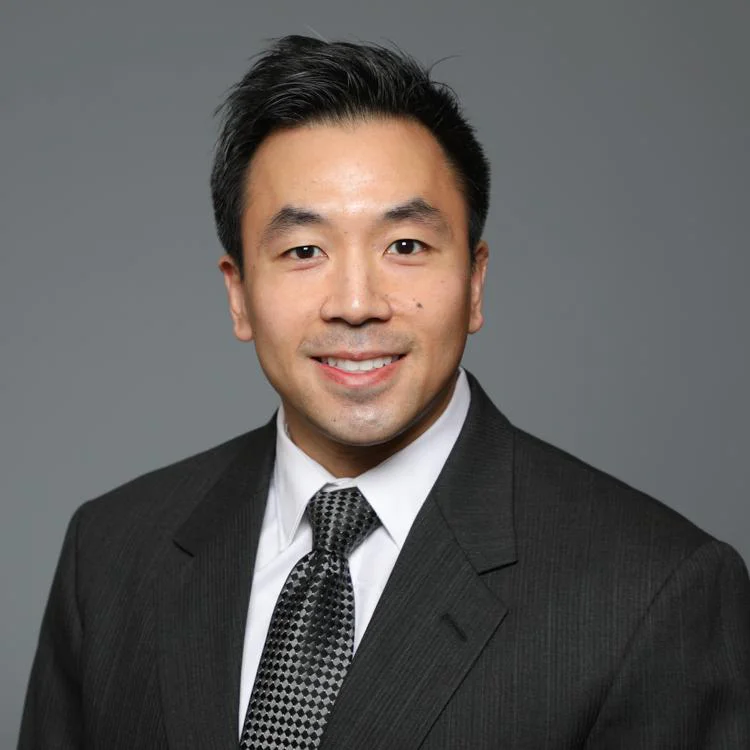
Thank you. So, my name is Jeff Pua. I’m an internal medicine physician and board certified in internal medicine and obesity medicine. So, I practice in the Chicagoland suburbs.
And I’ve been practicing internal medicine from 2009 and through now. But along the way, came across the subspecialty of obesity medicine. So, for the past seven, eight years, I’ve been practicing full-time in obesity management.
Bret:
Yeah. So full-time, seeing patients every day, trying to figure out how to best help the patient in front of you.
Now, we’re here today at the Collaborative Science Initiative, the COSCI conference, where there’s a lot of discussion about the citizen scientist, sort of the N-of-1, the anecdotes. But as clinicians, we were always trained, you look for the randomized controlled trials. You look for the published research, and maybe don’t give as much credence to the N-of-1.
Now, it seems there’s a sea of change about that. So, how do you view that in terms of your day-to-day clinical practice?
Jeffrey:
I think coming out from training, I trained at Rush University, coming out, we like to say that we’re evidence-based practicing doctors. But I think a lot of that, what we learn from medical school and residency training, is probably the concepts that are passed down to us from our mentors from before.
But now, through practicing with obesity medicine and seeing in patients what actually works to help them.
Bret:
Yeah.
Jeffrey:
Help them achieve their health goals or lose weight. Especially in my field, you get a different feel for how to interpret the science. Some studies might be epidemiologic, right?
They might be broad in their associations, but they’re not actually the things that make differences for people. We see those changes. And as a practicing clinician, the thing that has really helped me is if I see a change in someone. They’re feeling healthier. They’re getting healthier. How is that explained on their blood tests, on their data?
They are doing the experiment on themselves, and that’s been very rewarding to see people making a difference in their life. But then, I can actually measure it, and see it on their own individual blood tests.
Bret:
Yeah.
Jeffrey:
Then looking back into the science and looking back at the literature to put those pieces together.
Bret:
Yeah. I think that’s a really good perspective, and I want to just get back to the title of obesity medicine, because to me personally, I think it’s a terrible title. Because I don’t think the weight or obesity is the primary goal. So how do you see that? People come in to you and say, “Doc, I want to lose weight.” But how do you see their progress in terms of their health?
Is it the weight? Is it obesity? Is it other markers? How do you see that?
Jeffrey:
That’s great point that. Obesity medicine, as a field, is a kind of evolving, right? It’s evolving. But now, as a practitioner, we see it as a person is dealing with the disease of obesity. However, the disease has many causes, right? So, understanding those separate causes for the individual person and then trying to address as many as possible.
Bret:
Yeah.
Jeffrey:
For the things that we can change, that part has changed my practice. So, inside of obesity medicine, we have these, they’re called core pillars. The pillars are, there’s a nutrition piece. There’s a physical activity piece. There’s a behavioral piece. And then, for treatments, there’s pharmacotherapies, and there’s surgical or procedures that can help people with obesity. So, understanding those pillars on how we can treat patients with their weight and for their metabolic health, that part allows us tools to deal with something that’s extremely complex, right?
Bret:
Yeah
Jeffrey:
Rarely, we see it in the office, persons with genetic abnormalities that affect their weight.
Bret:
Yeah.
Jeffrey:
But also, the environmental issues that affect their weight. So, we have to meet the patient where they’re at, willing to treat these separate things.
Bret:
And again, there’s the weight. There’s the number on the scale. But then, all the constellation of so many other medical conditions, disorders, whatever you want to call them, that go along with it. Whether it’s a mental disorder, whether it’s endocrine, whether it’s orthopedic, right?
All these things. So, as you help people with their lifestyles, improve their weight, tell us about the constellation of other benefits in your patients.
Jeffrey:
A big focus of my practice is the metabolic syndrome, right? Metabolic syndrome, metabolic health. So yes, the weight is interlinked to that, right?
Interestingly, when we start treating patients for that, all these separate issues start getting better as well.
Bret:
Yeah.
Jeffrey:
We can see it biochemically, when we do their blood tests. That part is extremely helpful. The context is that the majority of my patients, as I I’ve run analysis on our electronic health record system, they have pre-diabetes. They have obesity.
The average patient that comes sees me is a BMI of 44. So ,they’re middle-aged, and 70% of my patients are women, interestingly. The interesting part that I play, is when I’m teaching patients, treating patients, I can see their biomarkers changing with time.
Bret:
Yeah.
Jeffrey:
That part has changed my practice.
So, that part aside, not only is the patient happier that they lost 40 or 50 pounds, but I can see it in them that their mood changes. Their mental sharpness changes.
Bret:
Yeah.
Jeffrey:
So, as a clinician seeing them, and I’m interviewing my patient inside of obesity medicine, in general, we like to see our patients on a more regular basis, at least in the beginning, right?
Bret:
Yeah.
Jeffrey:
We’re trying to make these lifestyle changes for them. We’re trying to treat their issue, help them with their weight. So, we’re seeing them on a very regular basis. The best part is just seeing them change in their mood.
Bret:
Yeah.
Jeffrey:
In their attitude towards, “Oh, I can do this.”
And my job as the doctor or the coach is I’m just giving them these tools.
Bret:
Yeah.
Jeffrey:
Giving them the advice that you, yourself, have taught to so many patients.
Bret:
Yeah.
Jeffrey:
But other physicians, like at this CoSci conference, that they’re teaching on the patients. I’m just giving the tools to them.
Bret:
Yeah.
Jeffrey:
But it’s really rewarding to see.
Bret:
Let’s talk about those tools because we’ve spoken very generally about lifestyle changes, lifestyle interventions. And I think in a way that’s really good to speak about it generally, because there isn’t necessarily one way. But tell us about, specifically about, the role of ketosis in your practice and how that has helped you impact patients, maybe how you weren’t able to before.
Jeffrey:
Yes. So, that benchmark of ketosis is a very important. I want to say goal for patients to achieve. Because when we see patients achieving that, and how we can measure it.
Bret:
Yeah.
Jeffrey:
We can measure it biochemically on their blood.
Bret:
Yeah.
Jeffrey:
But I see more benefits when they achieve that.
Bret: Yeah.
Jeffrey:
So, their insulin resistance levels on their blood testings, on insulin, fasting insulin levels or HOMA-IR, those things are getting better. The patients are clinically improving. So, I see that correlation every single day.
Bret:
Yeah.
Jeffrey:
But how to achieve that, it goes back to those core pillars. So, we want their nutrition plan correct for the person.
As our doctors in our field say, well-formulated.
Bret:
Yeah.
Jeffrey:
You used the term therapeutic nutritional ketosis. This is our goal for the majority of my patients Can they achieve that also with physical activity? I think it helps. It helps for many patients, right?
Bret:
Yeah.
Jeffrey:
They incorporate or start changing their physical activity. And I’m an exercise guy, too, and I like that. So, I’ve personally seen the benefits for myself, too. The last piece is the behavioral part.
Bret:
Yeah.
Jeffrey:
So, I think that ties in with these other pieces together.
Bret:
Yeah.
Jeffrey:
Because many of our patients, with the behavioral part, they’re struggling with the mindset piece.
Mindset piece is that they become discouraged or bored in what they’re doing.
Bret:
Yeah.
Jeffrey:
So, I’m trying to teach them and coach them, and have patients work with other specialists to keep their mindset in a positive way so that they keep seeing the benefits.
Bret:
Yeah, so let’s talk about exercise for a second.
We all have seen the studies and seen the reports. Exercise is so good for cognitive function, and for executive functioning, and brain sharpness, and for depression, and for obesity. But when you have a BMI of 44 and haven’t exercised in five years, or you’re so depressed you can’t get out of bed, you can hear that all you want, and it’s not going to help because taking that first step is so hard.
So, how do you, as a clinician, help somebody in that space get started so they can get to the point where they’re seeing the benefits of physical activity?
Jeffrey:
I like to quote my mentor here, Dr. Eric Westman. I like to quote him when saying that we can get patients to lose weight without exercise.
Okay? So, when we’re talking just their disease of obesity, we know that their nutrition, their environment, their lifestyle, but mostly the nutrition, is it’s got to be, it’s got to be well formulated.
Bret:
Yeah.
Jeffrey:
That is our goal. So, having said that, the exercise piece is most helpful when patients are doing things that activate their muscles, right?
We just know through total energy expenditure and how our muscles use the energy that we make, right? Obviously, if someone has healthier muscles, if they’re activating those muscles, they’re going to get long-lasting benefits from that. But I agree with our mentors and other specialists in the field, that piece doesn’t go without nutrition as well.
Bret:
Yeah.
Jeffrey:
So myself, I practice in this sport called Brazilian jujitsu, right? And if it’s extremely intense on the body and the muscles. And one of the best parts about nutritional ketosis is that my own endurance, but in general speaking from an athlete standpoint, the endurance improves because the human body’s fat stores contain more calories than our glycogen stores.
Bret:
Yeah.
Jeffrey:
So, from the exercise piece, if someone were to choose that path, likely the case that they’ll have much more long-lasting benefits, right?
Bret:
Yeah.
Jeffrey:
And we’ve had this at conferences, like CoSci, and conferences like these where athletes that practice in this way, they’re able to repair their muscles quicker, right?
Recuperate faster. As I get older, I’m looking into those kinds of things, right? But myself, have felt the benefits.
Bret:
Yeah.
Jeffrey:
So, same kind of thing with patients. We’re just teaching them that same thing. That yes, it’s helpful for exercising in the sense that if you walk more every day, right? And patients are jogging more and getting more steps in. They sure can be using those calories for helping their blood sugar control and blood sugar stabilization.
But I think what most people don’t realize inside of exercises, if you are a, quote unquote, “carb burner” and you have insulin resistance, it’s likely the case that person that’s doing that athletic activity or exercise, that they’re just burning through their glycogen stores and not tapping into their fat stores, right?
Bret:
Yeah. Good point. Very good point. Thank you so much for joining me and really giving us the clinician perspective. It’s so important to hear from people who are seeing patients every day and how all this impacts your clinical care for helping them get better.
Jeffrey:
Thank you so much for having me.
Bret:
So, thank you. Yeah, my pleasure.
Thanks for listening to the Metabolic Mind Podcast. If you found this episode helpful, please leave a rating and comment as we’d love to hear from you. And please click the subscribe button so you won’t miss any of our future episodes. And you can see full video episodes on our YouTube page at Metabolic Mind.
Lastly, if you know someone who may benefit from this information, please share it as our goal is to spread this information to help as many people as possible. Thanks again for listening, and we’ll see you here next time at the Metabolic Mind Podcast
Listen, Watch & Subscribe on:

Making Metabolism Make Sense | MD, Harvard & PhD in Metabolism, Oxford & | "Stay Curious".
Read more
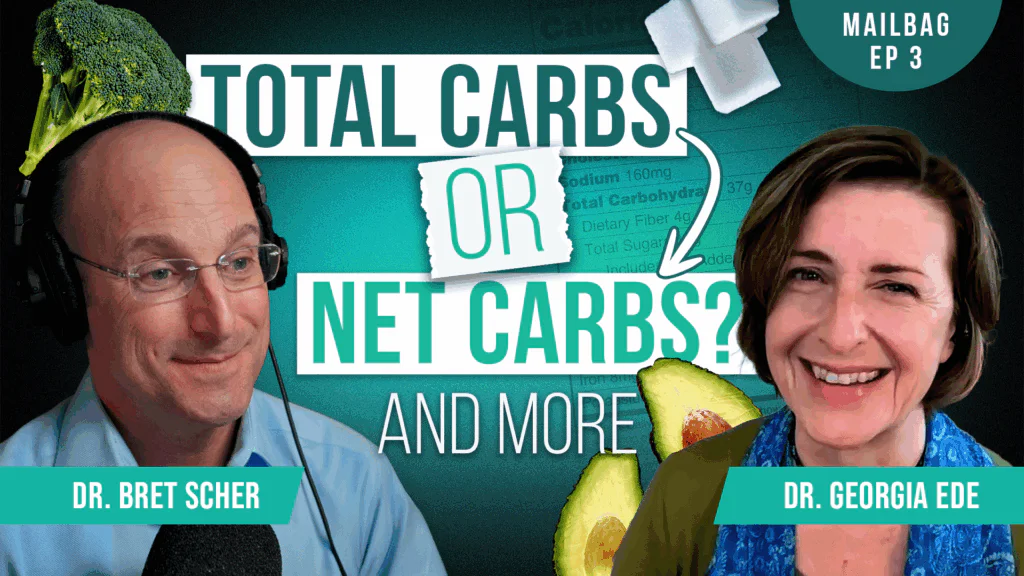
In this Metabolic Mind mailbag episode, Dr. Bret Scher and Dr. Georgia Ede answer listener questions about ketogenic diets, ketone plateaus, and mental health. They explain why blood ketone levels may decrease over time, when it makes sense to aim for higher ketones, and how endogenous ketosis differs from exogenous ketone supplements. The discussion also covers total versus net carbs, hidden carbohydrates in processed keto foods, and practical strategies for managing diet related insomnia during keto adaptation.
Learn more
Embark on your ketogenic therapy journey with confidence! This guide shares 10 essential steps for safe and effective implementation to improve mental and metabolic health. Ketogenic therapy offers…
Learn more
Falling out of ketosis happens, but getting back on track doesn’t have to be complicated. Dr. Georgia Ede explains how factors like food choices, exercise, and fasting can help restore natural ketone production, while offering practical strategies for managing the increased hunger, brain fog, and low energy that can come with losing ketosis.
Learn more
Making Metabolism Make Sense | MD, Harvard & PhD in Metabolism, Oxford & | "Stay Curious".
Read more
In this Metabolic Mind mailbag episode, Dr. Bret Scher and Dr. Georgia Ede answer listener questions about ketogenic diets, ketone plateaus, and mental health. They explain why blood ketone levels may decrease over time, when it makes sense to aim for higher ketones, and how endogenous ketosis differs from exogenous ketone supplements. The discussion also covers total versus net carbs, hidden carbohydrates in processed keto foods, and practical strategies for managing diet related insomnia during keto adaptation.
Learn more
Embark on your ketogenic therapy journey with confidence! This guide shares 10 essential steps for safe and effective implementation to improve mental and metabolic health. Ketogenic therapy offers…
Learn more
Falling out of ketosis happens, but getting back on track doesn’t have to be complicated. Dr. Georgia Ede explains how factors like food choices, exercise, and fasting can help restore natural ketone production, while offering practical strategies for managing the increased hunger, brain fog, and low energy that can come with losing ketosis.
Learn more