New Results: First RCT for Schizophrenia & Bipolar Disorder. Learn more.


Listen, Watch & Subscribe on:



Fell Out of Ketosis? Here’s How to Get Back Fast
Listen
About the host


Georgia:
But I really prefer whenever possible to recommend the diet and lifestyle strategies. The eating a different way and exercising a little more or maybe even not eating at all for a little while to get back into ketosis quickly.
Bret:
Welcome to the Metabolic Mind Podcast. I’m your host, Dr. Bret Scher. Metabolic Mind is a nonprofit initiative of Baszucki Group, where we’re providing information about the intersection of metabolic health and mental health, and metabolic therapies, such as nutritional ketosis as therapies for mental illness.
Thank you for joining us. Although our podcast is for informational purposes only and we aren’t giving medical advice, we hope you will learn from our content and it will help facilitate discussions with your healthcare providers to see if you could benefit from exploring the connection between metabolic and mental health.
Georgia:
The thing about ketogenic diets for no matter what condition you’re trying to manage, whether it’s a mental health condition or any other kind of condition, is that just like any lifestyle change. It’s hard to be perfect about it because we’re human. We make mistakes, or we are still learning how to do something.
And so, it’s really important not to be perfectionistic about it and not to get upset with yourself. If you wake up one morning and the ketones just aren’t there where you want them to be, this is just all a natural part of the learning process. And each one of us are a little bit different. It takes everyone time to figure out how to eat and how to live to keep their ketones in the range that works best for them because the plan that works best for me may not be the one that works best for somebody else.
And this will depend on your age, your activity level, your health status, the medications you’re taking, all kinds of other things. If you fall out of ketosis, if ketosis interruptus occurs, it’s simply information and then you can reflect, “Okay, I wonder what happened. I wonder why my ketones are lower this morning.”
And just adopt a curiosity mindset about it and a practice mindset. It takes practice to get better at anything. And just, okay, let’s see what, let’s see, I wonder what happened yesterday, and I wonder maybe it was that I didn’t exercise yesterday? Or maybe it was that I ate too late at night? Or maybe it was that I tried that new food that I hadn’t had for a really long time that was supposed to be keto-friendly.
Maybe it wasn’t as keto-friendly as I thought it was going to be? All right, so let me experiment and change that variable and see what’s going to get me back into ketosis. And when you adopt that curiosity and discovery mindset, you learn very quickly, and it’s really empowering. So, it’s very common for people to either accidentally or intentionally step away from ketosis. And when that happens, there are some really simple strategies that people can use to get back on track quickly. And the quicker you get back on track, the better off you’ll be.
So, especially if you have a history of food addiction, because sometimes if people fall out of ketosis, it may take them weeks or even months to find their way back to safety. And so, the faster you can get back on track, the better off you’ll be. So, there are some really simple strategies you can use to get back into ketosis, and one of them is, of course, intermittent fasting. Really fasting until you see the ketones back in your personal therapeutic range on your meter.
So, the reason why that works so well is because fasting lowers insulin levels more effectively than any other strategy. So, everything we eat raises insulin to some extent. And so, not eating anything at all, it drops insulin like a stone. And as your insulin levels come down, your ketones will rise. And so, if you’ve had a day off plan, whether that was intentional or accidental, if you wake up in the morning and your ketones are really low, one strategy is to simply fast until your ketones come back into the therapeutic range.
Something else that can help you get back into ketosis is exercise. So, rather than starting your day with breakfast, start your day with a walk or a hike or a bike ride or lifting some weights or dancing. Whatever it is you enjoy doing, or whatever it is you like to do for exercise. And the reason for that is there are three things that need to happen before you can get back into ketosis, for your ketone meter or your blood ketone meter, to start showing at least 0.5 millimole of beta-hydroxybutyrate on your ketone meter.
So, one thing is your blood glucose levels have to come down. The second thing is that your insulin levels have to come down to the fat burning point. And the third thing that has to happen is that you have to burn off a certain amount of the stored starch in your liver, the glycogen in your liver. Because until you burn off some of that stored energy, your body won’t have any incentive to burn fat.
It will think, “Oh, we have this ready-to-use energy right here. We’re going to dip into that first before we burn fat.” So, all three of those things have to happen, and exercise will draw on those starch stores from your liver and will help you get back into ketosis faster by helping with particularly that step.
Another strategy has to do with your food choices. So, if you’ve been eating kind of a standard, a typical ketogenic diet, which may include a mixture of foods, you might want to, especially if you’re feeling very hungry on a day when you’re not in ketosis, this is really common. Ketosis does a great job of regulating appetite.
That’s one of the things a lot of people really love about it. But when you fall out of ketosis, either intentionally or accidentally, your appetite can really come roaring back. And it can make it really difficult to get back into ketosis because you’re unnaturally hungry. So, one of the things that can help with that is, okay, you’re really hungry and you want to eat more than you usually do.
One strategy you could use is to do something called a fat fast. And a fat fast, it isn’t really a fast, but it is eating foods that are naturally ketogenic, meaning that they’re high in fat. They’re low to moderate in protein, and they’re extremely low in carbohydrate. They just naturally fall into that ketogenic ratio without you having to really think about it.
And just for a few days, eat only those foods. You can overeat them relatively safely and get back into ketosis when usually within no more than two to three days because they’re so satisfying, and they naturally meet your ketogenic ratios. So, I like to recommend that people do this with whole foods, and you can do this with plant or animal foods or a mixture of both.
So, for example, if you were doing plant-based fat fast, you would want to focus on things like tahini or unsweetened almond butter or macadamia nuts or avocados and coconut oil. Things that are very high in fat and and don’t have too much protein in them. And it’s very hard to overeat those foods because they’re so filling.
If you were doing it with a carnivore fat fast, you would focus on the animal foods that were naturally higher in fat but weren’t as high in protein as some animal foods can be. So, these could be eggs cooked in fat. These could be high-fat ground beef that was 70% ground beef as opposed to the 90% ground beef that a lot of people think is healthier for them.
You could choose fattier cuts of pork like pork belly or pork butt or pork shoulder. You could make a salmon salad or an egg salad or deviled eggs with healthy mayonnaise that didn’t have any seed oils in it or with a low sugar or with a sugar-free vinaigrette. So, there are lots of different creative ways you can make a high fat lower protein, extremely low carbohydrate plan that you could just eat to satisfaction without having to count or weigh or measure anything.
And when people do this, just limit themselves to those naturally ketogenic foods, then they usually find themselves back in ketosis rather quickly without feeling like they have to limit themselves when they’re feeling so hungry. Some people will use exogenous ketones or ketone salts, ketone esters, pure beta-hydroxybutyrate or MCT oil to raise their ketone levels, to some extent because when they do that. That can help with appetite and urges to overeat, and it can also help with some of the symptoms of being out of ketosis like brain fog and low energy, and difficulty concentrating, those kinds of things.
But some of those strategies are more expensive and they’re not as powerful as actually changing your diet and your exercise patterns to to get your natural ketone production going again. So, those are nice complementary strategies if you can afford it and tolerate those supplements, but I really prefer whenever possible to recommend the diet and lifestyle strategies. The eating a different way and exercising a little more or maybe even not eating at all for a little while to get back into ketosis quickly.
The more information you have about how these different factors affect your metabolism, the more of an expert you’ll get at your metabolic health because nobody else can know your metabolic health and what works best for you than you do.
Bret: Thanks for listening to the Metabolic Mind Podcast. If you found this episode helpful, please leave a rating and comment as we’d love to hear from you, and please click the subscribe button so you won’t miss any of our future episodes.
And you can see full video episodes on our YouTube page at Metabolic Mind. Lastly, if you know someone who may benefit from this information, please share it as our goal is to spread this information to help as many people as possible. Thanks again for listening, and we’ll see you here next time at the Metabolic Mind Podcast
Listen, Watch & Subscribe on:
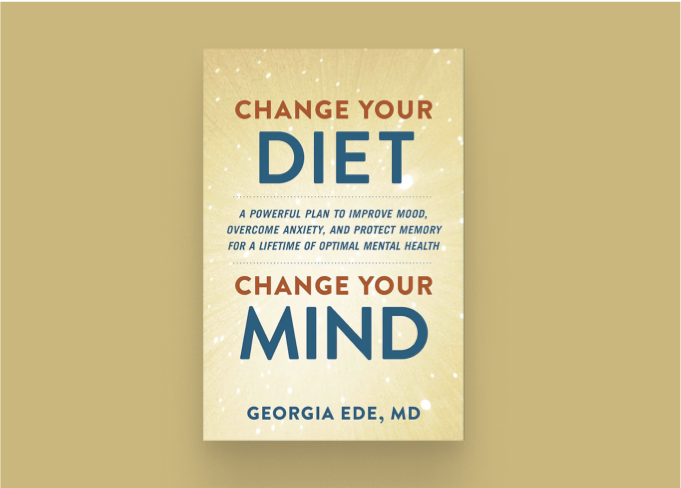
A powerful plan to improve mood, overcome anxiety, and protect memory for a lifetime of optimal mental health.
Read more
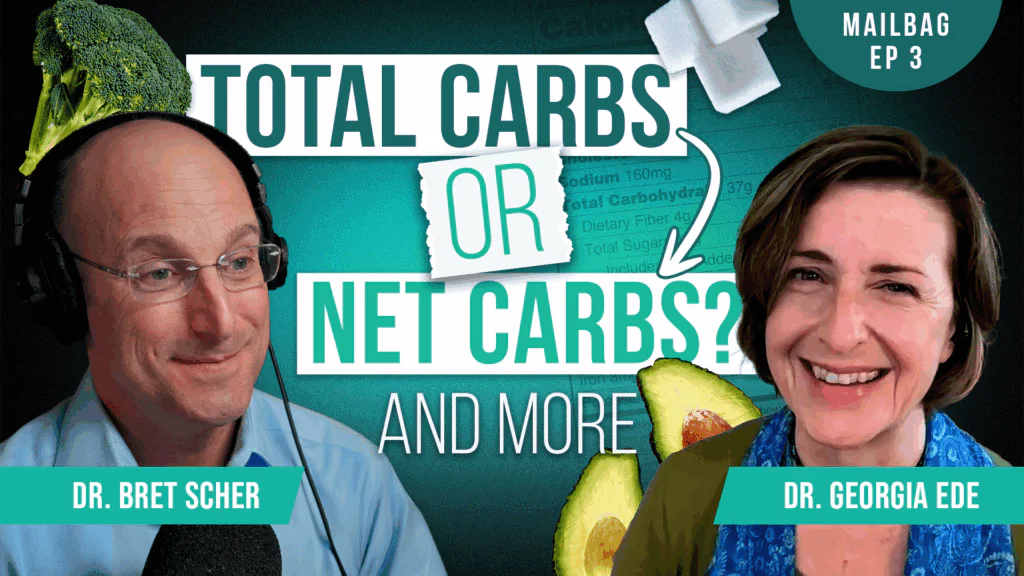
In this Metabolic Mind mailbag episode, Dr. Bret Scher and Dr. Georgia Ede answer listener questions about ketogenic diets, ketone plateaus, and mental health. They explain why blood ketone levels may decrease over time, when it makes sense to aim for higher ketones, and how endogenous ketosis differs from exogenous ketone supplements. The discussion also covers total versus net carbs, hidden carbohydrates in processed keto foods, and practical strategies for managing diet related insomnia during keto adaptation.
Learn more
Using ketogenic and other metabolic therapies for mental health recovery is powerful. Thousands of people tell stories of suffering for decades without relief, feeling like they’d lost years…
Learn more
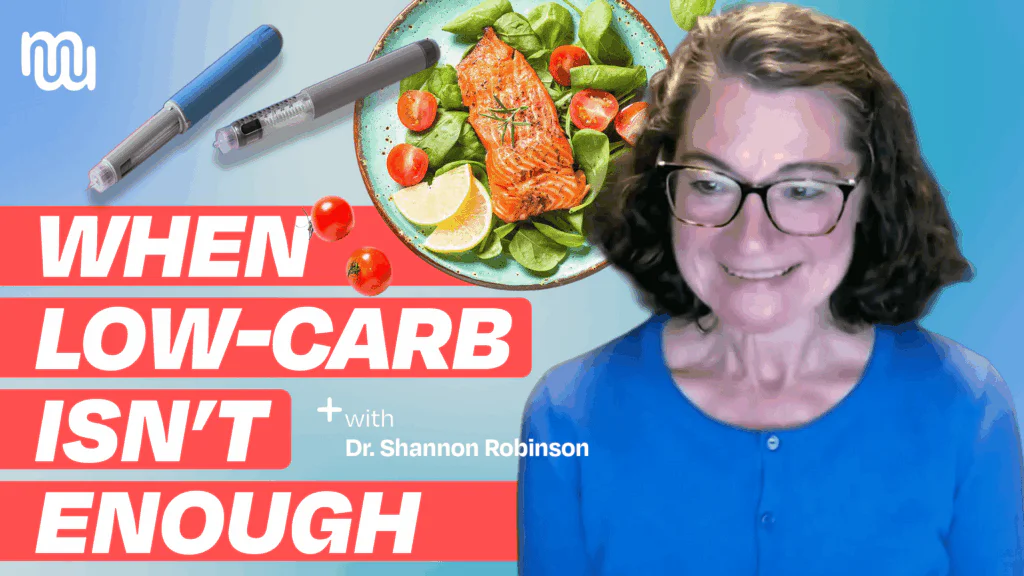
Shannon Robinson, a board-certified psychiatrist and addiction medicine specialist, to explore this overlooked population who could benefit most from GLP-1s. Drawing from both her personal journey and clinical practice, Dr. Robinson highlights why lifestyle alone isn’t always enough, and how medications can sometimes be life-changing.
Learn more
A powerful plan to improve mood, overcome anxiety, and protect memory for a lifetime of optimal mental health.
Read more
In this Metabolic Mind mailbag episode, Dr. Bret Scher and Dr. Georgia Ede answer listener questions about ketogenic diets, ketone plateaus, and mental health. They explain why blood ketone levels may decrease over time, when it makes sense to aim for higher ketones, and how endogenous ketosis differs from exogenous ketone supplements. The discussion also covers total versus net carbs, hidden carbohydrates in processed keto foods, and practical strategies for managing diet related insomnia during keto adaptation.
Learn more
Using ketogenic and other metabolic therapies for mental health recovery is powerful. Thousands of people tell stories of suffering for decades without relief, feeling like they’d lost years…
Learn more
Shannon Robinson, a board-certified psychiatrist and addiction medicine specialist, to explore this overlooked population who could benefit most from GLP-1s. Drawing from both her personal journey and clinical practice, Dr. Robinson highlights why lifestyle alone isn’t always enough, and how medications can sometimes be life-changing.
Learn more