Announcing the new McLean Center for Metabolic Psychiatry Learn more.


Listen, Watch & Subscribe on:


Ketogenic Therapy in College: How to Make It Work
Listen
About the host
About the host


Bret:
Welcome to the Metabolic Mind Podcast. I’m your host, Dr. Bret Scher. Metabolic Mind is a non-profit initiative of Baszucki Group, where we’re providing information about the intersection of metabolic health and mental health and metabolic therapies, such as nutritional ketosis as therapies for mental illness.
Thank you for joining us. Although our podcast is for informational purposes only and we aren’t giving medical advice, we hope you will learn from our content and it will help facilitate discussions with your healthcare providers to see if you could benefit from exploring the connection between metabolic and mental health
Nicole:
Don’t give up your ketogenic diet. If you’ve had treatment benefits from it and you know that you feel better on it, please don’t get in your head and tell yourself you can’t do this and you can’t maintain it because you really can
Bret:
Well, fall is in the air. And for a lot of people, that means back-to-school. And for some people, that means transitioning to college.
Now, when you transition to college, a lot of things change, but a big one that does is food. What food do you have available? What kind of meals? And what kind of say and input do you have in those meals? For a lot of people, that shrinks significantly. Now, if you’re being treated with nutritional ketosis, therapeutic ketosis, medical keto for a mental health condition, this is a big deal. And it’s really important to be prepared ahead of time, to be ready for this, to know you can maintain ketosis, but to have a lot of steps in place from the get-go to make sure that it happens.
So, I’m joined today by Nicole Laurent, mentalhealthketo.com. Nicole is a licensed mental health counselor, and she specializes in ketogenic therapy, and she wrote an article about dorm keto, about these tips, about specific tips and the sort of the bigger picture to help someone maintain ketosis when they transition into college.
And at the same time, though, a lot of these same suggestions apply to just eating better, right? It doesn’t have to mean someone who’s eating a ketogenic diet and having a ketogenic intervention. Just eating better, a lot of these tips people can use, because like we said, a lot of things change, and they’re not always good when it comes to food and college.
So, if you or someone you know is transitioning to college, hopefully, this interview helps you understand a little bit better how do you make that transition. So, enjoy this interview with Nicole Laurent.
Nicole Laurent, welcome back to Metabolic Mind. It’s great to see you again.
Nicole:
Thank you for having me again, Bret. I love coming here.
Bret:
Yeah, it’s so great to have you back on the show again. We can talk about so many different things, whether it’s a paper you published, or today, it’s back-to-school time. And we’re going to talk about how people can maintain their nutritional plans, basically, and their strategies when they go to college. Because you wrote an article about it that I want to get into all the details about it to give people these practical tips.
But before we do, as I like to start with, what do you think medicine gets wrong that you really wish were different?
Nicole:
I think medicine gets wrong, well, we’ve talked about this before, how there isn’t enough education in medicine around the role of nutrition. And I just encounter so many people who do not have the basic nutritional components in place to have a healthy brain or to even expect a good mood and good cognitive function.
There’s a lot of insufficiencies and deficiencies of basic micronutrients that our brains need to function, period. And so, I think that is just something that medicine is really getting wrong, is not asking the question of what is missing here that we could make sure is in an adequate amount for this person to feel well.
Bret:
Yeah, that’s such a great point. And when you look at the training of physicians for nutrition, it’s notoriously very poor. So, you can see how a lot of physicians just don’t even know what to look for. But yet, it’s such a basic component of mental health that really needs to be looked at.
And you know, maybe referring to a dietician and the time it takes and the availability. When you’ve got someone, when you’ve got their attention in the office and you’re seeing them for a specific issue, I think every physician needs to know the basics of looking for micronutrient deficiencies. Asking about their diet, and it’s a shame it, doesn’t happen more.
Now, what do you think, though? Do you think that’s something that physicians can and should take on, or do you think it’s going to require this sort of multidisciplinary approach?
Nicole:
I don’t think it would be a multidisciplinary approach really or need to be. Because, really, a lot of very blaring micronutrient insufficiencies and deficiencies, you can see quite a few of them just with basic blood work.
So, it’s just basically a matter of physicians learning some of that very simple functional nutrition-type of analysis as part of their work with clients, and it’s part of basic functional blood chemistry analysis training. I think if we just pop that right into those medical schools as part of that, to prescribers, I think that could just do wonders.
Bret:
Yeah, and what if you were advising a patient or a friend or a colleague or whoever, and say, “You know what? You should ask your doctor to run these tests.” What are the first couple that pop into your mind, right? Like a B12 level. Everybody who’s having some mental health issue probably should have a B12 level.
What else?
Nicole:
Oh, my goodness. So, I like B12. I like B6. I think anybody who’s going to be doing a ketogenic diet should get a carnitine panel. I think that a vitamin D also is not an issue of just, it’s also the values. So, the ranges that the doctors are using to determine whether something is in a healthy range or not in terms of nutrient sufficiency are, a lot of them are, quite outdated. Or there’s actually been research literature showing that the ranges being used are wrong or were miscalculated.
Vitamin D comes to mind. There was a recent study showing about, talking about B12. How what we think is a normal range of, or normal score, of 500 is actually too low, and there’s actually nerve damage going on. And so, of course, if that is actually too low, and we’re sending people off saying, “You’re fine.” And they’re having mental health symptoms with a low B12 or what we now know is a low B12, that seems like something that needs to be updated in the medical literature.
Bret:
Yeah. Great points. Great points. And so, when we’re talking about nutritional strategies for mental health, that’s such an important issue that’s obviously near and dear to your heart. And now, that it’s back-to-school time and a lot of teenagers, young adults, they’re either going to college for the first time or going to grad school or going back to college, and it can be hard, right?
You’re at home, you have a kitchen. You have family members. You have time to go out more. You can plan more around your meals. And then, you get to college and time gets a little more restricted, and options get a little more restricted. So, I love this article you wrote at Mental Health Keto about dorm room keto.
So, give us some of your sort of overarching philosophies and points that you want people to walk away with. And then, we can talk about some of the specifics.
Nicole:
Yeah. There’s several really important pieces to think about, and the very first thing I want to make really clear is that this is doable.
I work with people all the time, who implement a ketogenic diet over the summer, the spring and the summer. And suddenly, they are able to go to college. Or they were already planning to go to college, and they have every intention of doing their ketogenic diet while they’re in college. And so, this is doable, And it’s really important if some of you are sitting there telling yourself it’s not doable, you need to know it’s doable because lots of people do it in all kinds of situations.
So, that’s really important. And it also can be affordable. So, there’s lots of people going to college that are on limited budgets in their food budget. And we’ve already had some evidence and even some interviews on this channel with Mariela Glandt, for example, who works with low income populations, who’s able to show that this is doable for many people.
So, first you have to get out of your own head about whether it’s doable.
Bret:
And that’s such an important point, right? Because you can really be influenced by the opinion of others, especially if it’s a doctor or a dietician or someone who is considered an expert in the field. And a doctor may not knowingly say, “Ah, God, it’s going to be hard to keep eating keto when you go to college. So, why don’t you try to change your diet to something that’s more manageable,” right?
I could see someone saying that, and truly believing it, having never experienced it before. So, I think that’s why it’s so important for you to say, “Hang on, let’s look at the experience of people who have done this and see that it absolutely is doable.” Now, you’re living in a little room with no kitchen.
You’ve got the cafeteria downstairs. You have limited options. You don’t have a ton of money to spend. What things would you recommend if someone says, “Okay, look, we want some options outside of the cafeteria.” What can someone have in a dorm room that’s going to help them broaden their options?
Nicole:
So, it’s a little bit tricky to speak about this broadly because policies regarding different cooking appliances, and what’s allowed in different dorms by institution vary a great deal.
So, some college dorms will have really strict policies prohibiting different appliances, like hot plates. They won’t let you have air fryers or pressure cookers due to fire safety concerns. But if that’s the case, there’s still some different small appliances that you can have that makes it actually really easy to do keto.
So, most dorm rooms will let you have a mini fridge, and that can be used for storing different perishables, like your dairy and your meats and your vegetables. And then, you almost always have access to a microwave. I have not heard of a dorm room yet that did not allow microwaves, at least on some floor.
And so, that’s a good one. You can get an electric kettle, and there’s things you can do with an electric kettle that are actually pretty inventive. And then, a blender is the other one that’s really helpful because you can make keto smoothies or you can mix ingredients that way and emulsify things.
Bret:
Yeah. It’s funny when you say microwave, All I think about are college days of microwaving leftover pizza or microwaving Hot Pockets or things like that, which of course, would not recommend. But yeah. You can totally use microwaves for good, not for evil, so to speak, for healthier foods. And that makes sense.
And yeah, if you can have an air fryer or hot plate, if those are allowed, then absolutely that opens the door for so many things. But nice to know even if you can’t have that, there are other options that can really help. And what about some specific foods or some specific snacks? Or what do you recommend that people stock to help them maintain ketosis?
Nicole:
Yeah. So, in the article, we talk about these kind of no-cooking prep options. So things like, slices of deli meat, like turkey, ham, roast beef, having some spreadable cream cheese in that little mini fridge is really helpful. Having jars of pickles and olives, cucumber strips. Again, these are all no-cook options.
And you can roll them up, and you can put a good avocado oil mayonnaise on there, or you can dip it in Italian dressing. There’s all these different types of things that you can do. You can have cheese and nuts. Greek yogurt with berries is easy to put in that refrigerator. Canned fish is another one, right?
So, I’ve had clients who have Safe Catch canned tuna or canned chicken. And they literally open the can, drain it, put in their mayonnaise, mix it in a bowl, add some pickles, and that’s another one. And some people will put them on lettuce leaves or whatever if they want to get fancy. But most people just eat it.
You can eat it literally right out of the bowl or a can really. And then, salads are actually really easy too in a dorm room because you have your packaged salad. You can buy the meat already cooked. So, in a lot of grocery stores now, they have cooked chicken breast just ready-to-go, right in the package already cooked, that you can add on top of a salad. And then, you can put in your low-carb good olive oil dressing for your fat source.
So, that’s really good. And then you can also get pre-cut vegetables. The pre-cut celery and green peppers, and you can dip those in guacamole and cream cheese and tahini. You can make little salads and add avocados. And do not say bad things about hot dogs. Because nowadays, at these convenience stores, there’s really some high-quality hot dogs that are at some of the truck stops and good convenience stores, and those are perfect.
A hot dog is a perfect keto macro.
Bret:
Yeah.
Nicole:
So, I don’t expect you to eat them cold, but they are something that you can go to.
Bret:
Okay. Yeah. Those are all good tips. And when you mentioned salad, it really reminded me, pretty much every college dorm cafeteria, is going to have a salad bar, which is interesting, right?
There’s more likely going to be plant-based options than there are going to be low carb and keto options, which shows the nutritional bias in the world we live in. But you can still take advantage of that, right? Because if there is a salad bar, then you don’t need to stock everything for the salad.
You just need to stock maybe some of the higher fat options and some of the protein options, like you said, with the canned tuna, the canned chicken, the avocado mayo, and so forth to help add the proteins and fats to the salad that’s already provided. So, what other tips can you have for someone who is trying to eat in the cafeteria and that’s their main option?
Nicole:
So, in the dorm, in the cafeteria, they actually have quite a few single-serving options that you can take extra on your tray, and possibly, take them back to your dorm room. That can be very helpful. So, many of them have single-serve dressing packets. Some of them have single-serve nut butter packets, peanut butter or macadamia nut butter, different things, almond butter. And there’s also butter pats, often for different reasons, and those can actually be very helpful to bring back to your dorm room for later meal preparation.
Bret:
Yeah. and I think another concept really to talk about with all this is, again the broader picture, is preparation. If you don’t care what you eat really, it requires zero preparation. You just show up to the cafeteria, whatever they have, you eat that day, and you move on. But if you really are trying to maintain nutritional ketosis for your mental health, you need to prepare and not get caught off guard.
So, do you recommend people plan for the week or plan every couple days? How do you talk to people about that for their planning?
Nicole:
So, the planning. So, some people are great at planning for a week and do a great job at that. And some people just don’t think that way, and that’s okay.
So, when you do prepare food, I think for many people, it becomes really important to prepare extra. So, if you’re going to, if you’re going to make a big meal, make sure you make a big meal times three. And have those extra, that extra food, in the refrigerator or in your mini fridge in such a way that you can eat from it.
And also, there’s different cooking options, right? So, some people have friends who are renting apartments, for example, that have a functioning kitchen. And even if you’re living at the dorm, the people that you’re around love you and want you to feel well. And I’m quite sure they will happily lend you their kitchen to do meal prep.
I think that’s really important to ask for help because you are likely loved and people want you to be well. So, I think, make a great friend and go cook together and plan. I think that it can be really nice to do food prep with friends.
Bret:
Yeah, and that’s a great point. If you have friends, who know you and understand why you’re eating the way you’re eating, they are going to bend over backwards to support you.
But what’s interesting is, I think, as you’re making new friends, and then you’re in a new environment, certainly if it’s your first time in college, there are going to be people looking at you a little cross-eyed and saying, “Why are you eating like this? That’s so weird. Why would you do?” They just don’t get it, which can be the case anywhere. But I think maybe a little more magnified in college around a new group of friends.
How do you talk to people about that? About trying to get over that hurdle and bring people in rather than looking at them as someone different,
Nicole:
Yeah, there’s a whole psychology to this that we really haven’t quite studied around it. But it’s interesting because people can feel very judged by you eating differently when it has absolutely nothing to do with them.
And so sometimes, some of the pushback that people experience or the questions or the interrogation or the, it’s really about them feeling uncomfortable and being concerned that they’re being judged by you. And so, how you handle those questions is, and how you affirm what other people are doing in such a way that they don’t feel threatened can actually calm that situation down a great deal.
Bret:
That’s great insight.
Nicole:
Yeah.
Bret:
That’s great insight, that I think a lot of people maybe don’t think of. That it’s less about you, and maybe more about them. That they are feeling judged and threatened and self-conscious. So yeah, you were going to give some examples. I think that, because I think that just concept, is really not something a lot of people think about first and foremost.
Nicole:
And we could go into that can be, that can be a problem at any age. My age, me not choosing to eat the cake, can bring up something in someone else of of a similar age group. So, it’s not just age-specific. But in college-aged cohorts, what peers think of you are very, can be very important or feel very important, particularly if are connected with them in some way.
And so, that part really matters. So, saying things like, “Oh, this is just how I have to eat to feel good,” or “My brain just doesn’t work as well as it should if I don’t do this.” You don’t have to give them the full, if it’s someone who’s not emotionally safe or you don’t know if they are emotionally safe yet, it’s okay for you not to say, “I’m doing this because I have mental illness.”
That you can keep that to yourself. You don’t owe those explanations to people about why you’re eating or not eating something, right? You can say, “I feel better like this. This is what I’m doing because I’m a biohacker, and this is how my brain works best.” Or you can say things, and that’s not being inauthentic That is you holding onto what you’re doing, and why you’re doing it in a way that, honors you. And you don’t have to explain yourself.
Bret:
Yeah, that’s a really great point. Yeah, I like that. Your level of openness is going to be different depending on the depth of friendship and that you have with individuals. And so, yeah, it’s good to know that there are those options, for sure. Now you had also mentioned people getting creative with the money they would be using for the dorm cafeteria in other ways.
So, tell us about that.
Nicole:
Yeah, absolutely. So, I do have people I’ve worked with that have used meal delivery services in different and creative ways. So, for example, some people will do things like they will manage their own breakfast and their own lunch, like we said, those no-cook options, or they’ll get a salad from the food hall.
But really what they do is they’re able to get something from a meal service delivery. Don’t assume that you can’t afford these meal delivery services. And the reason I say that is because a lot of people are eating out, and not that I don’t want you to go and eat out with your friends, for sure, but for people who don’t have access to kitchens, GrubHub and that sort of thing, really eats up quite a bit of your budget.
And so, before you decide that you couldn’t possibly afford a meal delivery service to help supplement your ketogenic diet while you’re going to college, I want you to add up what’s been spent on going out and that sort of thing, and pre-prepared foods anyways from different outlets. So, what some people will do is they will not purchase the meal hall option.
Some colleges allow that, and you don’t do that part. And then, you can take that money and actually hire a personal cook. There’s a lot of local meals preparation services that are available. You can literally say, “Meal service near me” in Google, or “Prepared meal service near me” in Google, and it will tell you different cooks and chefs that will do that for you.
And all of these services, by now, have heard about low carb or keto, and they will work with you often to have more medical macros. Often, they’ll come with a little bit too many carbs for many people on medical ketogenic diets. But you can cushion that with MCT oil, if you tolerate that, or you can work with them to give you more medical macros. And it can be a few rounds of working with them to make that happen.
Bret:
Yeah. I find that super interesting because when you first hear it, it’s “Oh, that’s way too expensive. Nobody can afford that.” But you’re absolutely right. The price is coming down for it for a lot of sort of local providers. And if you’re using the money you would otherwise be spending at the dorm where maybe your options aren’t as good, then maybe that does all of a sudden make it a little more affordable for a dinner service. Not three meals a day, but for one meal a day or something like that.
So, that is an interesting option. So very cool to hear. Now we saw in the KIND trial from the group at Ohio State, how a ketogenic intervention for depression in college-aged individuals can be doable, can be safe. And in this pilot trial, seemed effective. But that doesn’t mean someone has to have major depressive disorder to benefit from a ketogenic intervention.
And when someone goes to college, the anxiety increases. That’s where we start to see more serious mental illness, but also the broader spectrum of psychiatric symptoms and of mental health disorders. I mean, how do you recommend somebody begin?
Nicole:
I would recommend you start thinking about whether what you’re eating is actually food or if what you’re eating is mostly highly-processed food, which is more substance than nutrition.
So sometimes, the very first thing we do is we just move to a whole foods diet. And which I know it can be very confusing because the way they have things packaged, and the whole grains and this and that. But really, if you just start to pull out those highly-processed foods, that is a big first step. And you can totally do this.
If someone is starting to struggle with their mental health in college, they are suffering. And that is hard, and that is a difficult environment to be having those symptoms because you’re there to perform, right? You’re there to achieve. You’re there to connect. And so, there’s a lot of difficulty that comes with those symptoms. And I promise you that getting rid of the Doritos and paying attention to not eating sugar, that is so easy compared to what you are currently going through.
You can totally do it. And I, again, I tell you, reach out and tell your dorm mate, “I’m struggling. I don’t want to eat Doritos tonight. I want to, let’s go do this, or let’s eat this instead.” Or “Can you please help me meal prep? Can you please help me do what I need to do to feel better?”
And so, I think that those are really good first steps.
Bret:
I love that answer. Because look, we talk a lot about ketogenic therapy and the impact it can have, but that doesn’t mean every mental health symptom requires ketogenic therapy to get better. For so many people, eating better, cleaning up your diet, like you said, getting rid of the ultra-processed foods and the alcohol, and maybe even the drugs, and just look at what you’re eating and saying, “Is this real food?”
That is going to be a lot to improve a number of people. Now, if they need to go further for a ketogenic therapy, medical keto, that’s another story. But I love that answer that really just pay attention to if you’re eating real food or not.
Nicole:
It sets them up also because they’d have to do that anyways on their way to ketogenic metabolic therapy.
They would have to do that kind of first step, and it’s completely doable.
Bret:
Yeah. I think this has been a great exploration of the concepts. And so, a lot of the practical information of what people can do as they transition to college as we go back-to-school. Any last words for you? And then, where can people find you to learn more?
Nicole:
No last words other than, there’s so many different ways to do this. And don’t give up your ketogenic diet. If you’ve had treatment benefits from it and you know that you feel better on it, please don’t get in your head and tell yourself you can’t do this, and you can’t maintain it because you really can. And lots of people love you and will help you, even people you wouldn’t normally think would come to the fray for you and assist.
Don’t give up on your ketogenic diet if you’re getting treatment effects. And then, people can find me at mentalhealthketo.com. That’s really the easiest way.
Bret:
Great. Thank you so much, and definitely I recommend people check out your website. And you can check out the blog you wrote about dorm keto for even more information, and a list of all the different things we talked about here.
So, thanks a lot. And, we’ll see you again, hopefully, at Metabolic Mind.
Nicole:
Yep, see you later.
Bret:
Like Nicole said, first and foremost, understanding that this is absolutely doable. No matter what people say, how hard it might be, the transition, the sort of the fear of how am I going to continue to maintain my medical keto way of eating when I go to college, it’s absolutely doable.
She lists a lot of suggestions and options. Check out the blog she wrote. But also, I like her perspective that not everything’s going to require ketosis. So obviously, if you are being treated with ketogenic therapy and working with your clinician, that’s something you’re going to want to maintain.
But for those who are experiencing new mental health symptoms that may not require that, certainly cleaning up the eating. Because, look, when you go to college, that’s a time where you’re probably going to be eating more of the ultra-processed foods and not having full meals prepared by a loving family member, if that’s where you came from before college, right?
So, paying attention to that really makes a lot of sense. But definitely, check out the blog that Nicole wrote. And if you are transitioning to college, good luck. And please join us here at Metabolic Mind for more information. Take care.
Thanks for listening to the Metabolic Mind Podcast. If you found this episode helpful, please leave a rating and comment as we’d love to hear from you. And please click the subscribe button so you won’t miss any of our future episodes. And you can see full video episodes on our YouTube page at Metabolic Mind.
Lastly, if you know someone who may benefit from this information, please share it as our goal is to spread this information to help as many people as possible. Thanks again for listening, and we’ll see you here next time at the Metabolic Mind Podcast
Listen, Watch & Subscribe on:

Heading back to college can feel exciting. But when a student is living with mental illness, there’s more to prepare for than classes and schedules. Sleep changes. Meals…
Read more

For many children struggling with ADHD or depression, medication can be an important tool, but should it always be the first one? In this episode, Dr. Bret Scher examines concerns around psychiatric medication use in children and explores a broader approach that includes behavioral therapy, nutrition, careful prescribing, and emerging research into metabolic therapies.
Learn more

On campuses across the country, college students aren’t pointing fingers at alcohol or drugs as the most significant health threat in their lives. According to a new national…
Learn more
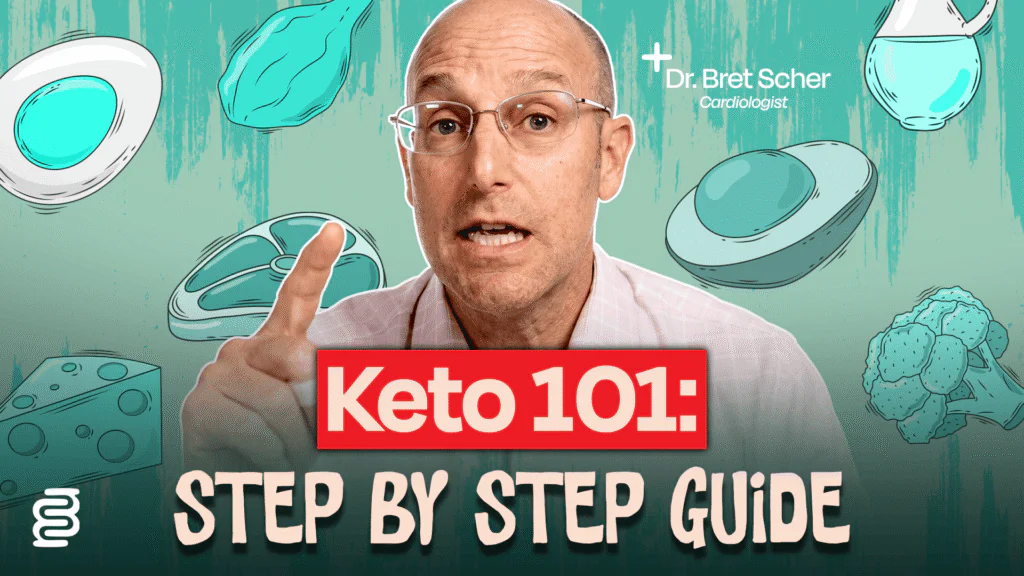
Dr. Bret Scher walks through the basics of starting a ketogenic diet, covering how to set carb, protein, and fat targets, why keto is actually a moderate-protein diet rather than high-protein, and how to avoid the "keto flu" through gradual transitions and proper electrolyte intake. He also explains when and how to test ketone levels and stresses coordinating with a healthcare team if using keto to manage a medical condition or psychiatric symptoms like depression or bipolar disorder.
Learn more
Heading back to college can feel exciting. But when a student is living with mental illness, there’s more to prepare for than classes and schedules. Sleep changes. Meals…
Read more
For many children struggling with ADHD or depression, medication can be an important tool, but should it always be the first one? In this episode, Dr. Bret Scher examines concerns around psychiatric medication use in children and explores a broader approach that includes behavioral therapy, nutrition, careful prescribing, and emerging research into metabolic therapies.
Learn more
On campuses across the country, college students aren’t pointing fingers at alcohol or drugs as the most significant health threat in their lives. According to a new national…
Learn more
Dr. Bret Scher walks through the basics of starting a ketogenic diet, covering how to set carb, protein, and fat targets, why keto is actually a moderate-protein diet rather than high-protein, and how to avoid the "keto flu" through gradual transitions and proper electrolyte intake. He also explains when and how to test ketone levels and stresses coordinating with a healthcare team if using keto to manage a medical condition or psychiatric symptoms like depression or bipolar disorder.
Learn more