Announcing the new McLean Center for Metabolic Psychiatry Learn more.


Listen, Watch & Subscribe on:


Keto vs. Mediterranean vs. Low-Fat Diets for Fatty Liver & Prediabetes
Listen
About the host


Bret:
This is Metabolic Mind Bitesize. I’m Dr. Bret Scher. It turns out reducing carbohydrates matters more than just weight loss. So let’s talk about this. So a new randomized controlled trial just published in Cell Metabolism compared three different dietary approaches for treating fatty liver disease and pre-diabetes. A ketogenic diet, a Mediterranean diet that was higher carb, and a very low-fat plant-forward diet.
So the conclusion, the ketogenic diet won. And not by a little. Won by a lot. And what do we mean by won? We’ll talk about it because it appears to be due directly to the carbohydrate reduction rather than just calories, and that’s something that’s unique here. And that’s the part that I think really matters most because the superior outcomes in the ketogenic diet weren’t explained by more weight loss.
All three groups lost the same amount of weight. So the benefit appears to be specific to the carbohydrate reduction. So I guess to give a little background, one of the most persistent criticisms of ketogenic diet research is that ketogenic diets tend to produce greater weight loss than comparison diets.
So on the one hand, that’s a great victory, right? But it also creates a methodological problem. If participants on a ketogenic diet lost more weight than those on a low-fat diet, how do we know whether the metabolic benefits are coming from the carbohydrate reduction specifically or simply from the weight loss?
That’s a fair question. But this study takes a serious run at solving that, and there are others that have done the same. But this study has strengths that are worth noting. So first, researchers provided 100% of the meals to all participants across all three dietary groups. And they matched the diets to produce identical 10% weight loss.
So there is no self-reported food intake. There’s no confounding from weight loss differences. And they confirmed greater than 95% dietary compliance. So this is about as controlled as a free-living dietary intervention can get outside of an inpatient metabolic ward. But this one lasted four to five months. So it’s much more clinically useful than these two-week studies we see in metabolic wards. And the result is a study that can actually isolate macronutrient composition from the weight loss in a way that most dietary research simply can’t. And that’s why the findings matter.
So let’s dig a little bit more into the results. So first, they measured skeletal muscle insulin sensitivity. And that improved by about 50% across all three dietary groups with no significant difference between them. In a way that’s encouraging, right? Multiple paths to weight loss improved skeletal muscle insulin resistance.
But the liver told a completely different story, and this is where I think the study gets most interesting. So hepatic, or liver, hepatic insulin sensitivity, meaning how well the liver responds to insulin signals, increased two to three times more on the ketogenic diet compared to both the Mediterranean and the plant-forward diet.
Liver fat measured by MRI reduced by 67% on the ketogenic diet compared to 45% on the Mediterranean and plant-based approaches. So both 67% and 45% represent improvements, and that’s important to recognize. So it’s not like the ketogenic diet is the only way to improve liver fat, right? The study doesn’t show that.
But it does appear to be more impactful than the comparator diets, and that’s important. But here’s another big one. Pre-diabetes remission was achieved in 50% of the ketogenic diet participants compared to 29% on the Mediterranean and 7% on the low-fat plant-forward diet. And to be honest, I find that last stat a little troubling.
Only 7% on a plant-forward diet with identical weight loss normalized their pre-diabetes? Yikes. So you know, it’s a small study, but this definitely needs to be looked at more. And it’s important to note this wasn’t like an ultra-processed junk food plant-based diet, right? Not at all. So it definitely deserves a little more investigation.
But here’s the proposed mechanism behind the benefits. So when you reduce dietary carbohydrate enough, the liver experiences a change in the signals it receives. So what’s called hepatic de novo lipogenesis, where the liver converts dietary carbohydrates into fat, that gets suppressed. And this is a key driver of fatty liver disease in metabolically unhealthy people. And its suppression with carbohydrate reduction is quite impressive.
At the same time, the ratio of glucagon to insulin increased by more than threefold on the ketogenic diet. So you can think of glucagon as promoting fat breakdown and opposing fat storage whereas insulin does the opposite. So a higher glucagon-to-insulin ratio creates a liver environment that favors fat burning over fat storage, which is exactly what we want.
And the results were far better than what simple caloric restriction achieved at the same weight loss But there’s another point I want to highlight from this study. The keto diet was more effective at reducing liver fat and reversing pre-diabetes despite having 23% of the calories come from saturated fat.
Now, we often see nutrition epidemiology studies claim an association between saturated fat intake and insulin resistance diabetes, fatty liver. But this study showed the opposite. And it once again highlights the extreme weakness of nutrition epidemiology for drawing meaningful conclusions. A randomized controlled trial is far more effective at showing you a direct effect and is worth believing more.
And this is also highlighted by other RCTs and crossover studies in the literature that ketogenic diets with saturated fat are more effective for improving fatty liver disease. But even further in this study, it’s worth noting that the higher saturated fat ketogenic diet group saw no significant differences in LDL cholesterol or ApoB compared to other groups.
So I’m going to say that again because it really matters. The diet highest in saturated fat did not produce any further increase in LDL or ApoB compared to the Mediterranean diet or the plant-forward diet at equivalent weight loss. And meanwhile, fasting triglycerides, VLDL, and the LPIR, or lipoprotein insulin resistance index, all improved more on the ketogenic group. So that’s impressive and worth noting.
Now, to be fair, the study has some limitations. Every study does. The study was small. There were only 14 people per group, and all participants were in a specific group. They had metabolically unhealthy obesity with both pre-diabetes and fatty liver. The trial lasted four to five months and evaluated active weight loss, not long-term maintenance.
So whether these findings generalize to metabolically healthy individuals or longer time horizons, that’s unclear, right? These are features of an early but well-designed clinical and mechanistic study that establishes a signal worth following with larger and longer and more diverse population kind of trials.
But I think there’s a clear clinical takeaway from this study. If the goal is improving skeletal muscle insulin sensitivity, then successful weight loss through various dietary approaches appear to have good benefits, right? Patients have the flexibility in how they achieve that. So the diet that works best for them can have a good effect.
But if the goal is reversing hepatic steatosis, restoring liver sensitivity, or achieving pre-diabetes remission as efficiently as possible, then the macronutrient composition matters and carbohydrate reduction specifically appears to produce outcomes that other approaches don’t match despite identical weight loss.
That’s a clinically important distinction. It’s also an example of how to design a dietary trial that actually isolates what you’re studying. So I hope to see more trials like this one in larger populations over long time periods, et cetera. And a study like this certainly sets the stage for those trials to happen.
But for patients with fatty liver disease or pre-diabetes who are considering their dietary options, this study provides evidence that reducing carbohydrates may offer benefits beyond what weight loss alone can explain.
Listen, Watch & Subscribe on:


A scientist reveals the groundbreaking evidence linking many major diseases to a common root cause—insulin resistance—and shares an easy, effective plan to reverse and prevent it.
Read more
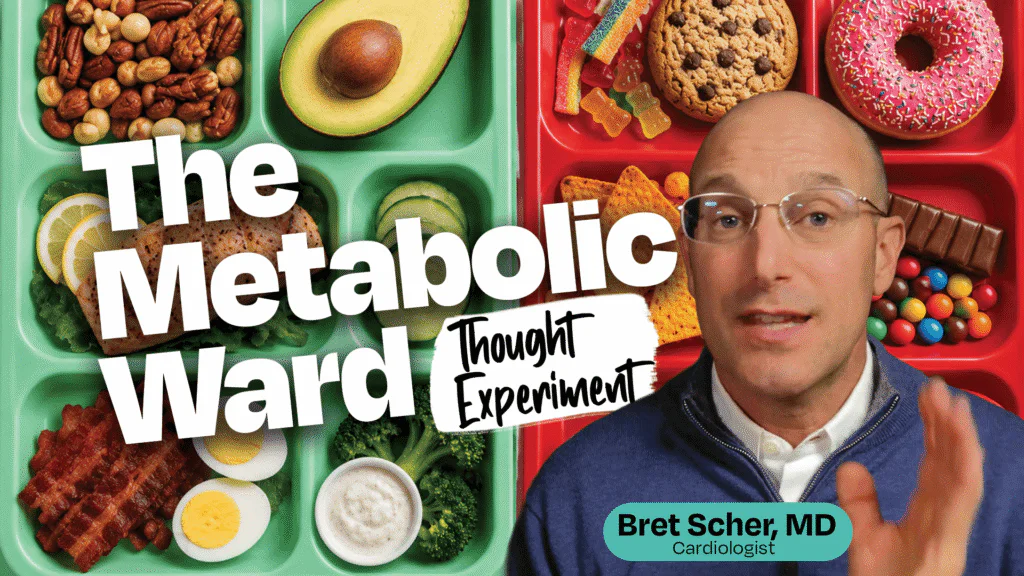
In this Metabolic Mind Bitesize episode, Dr. Bret Scher uses a thought experiment to challenge the idea that patients are to blame for type 2 diabetes. By imagining 100 people with type 2 diabetes placed in a fully controlled metabolic ward versus 100 people with type 1 diabetes under the same conditions, he illustrates why reversibility has nothing to do with personal fault and everything to do with a food environment engineered to drive metabolic dysfunction, arguing for systemic change over individual blame.
Learn more
The question of whether most ultra-processed foods are metabolically harmful is no longer up for debate. This food category, which includes some of the most obvious dietary offenders…
Learn more
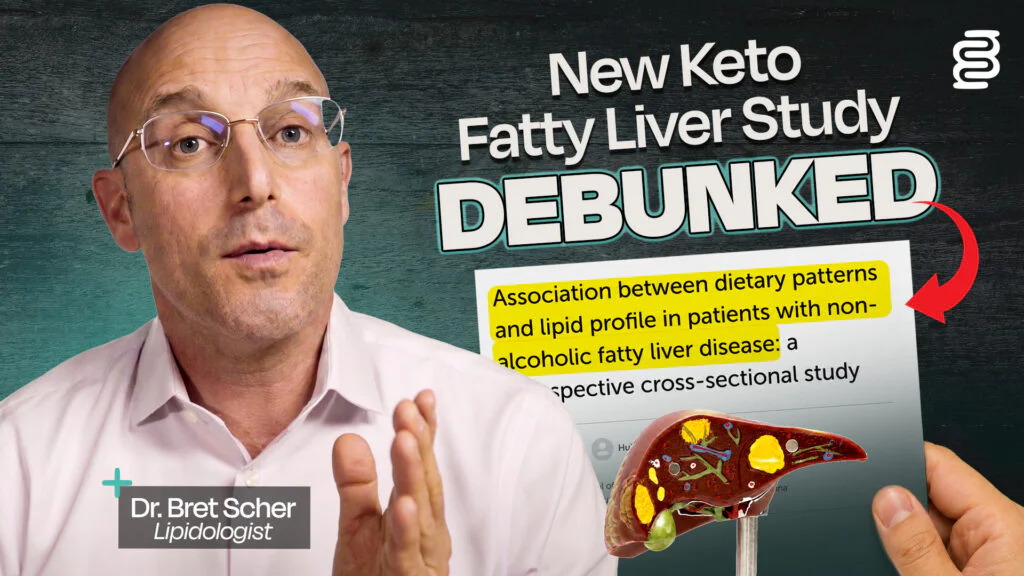
In this Metabolic Mind Bitesize episode, Dr. Bret Scher tackles a new study claiming ketogenic diets worsen fatty liver disease, a finding that appears to contradict prior research showing keto helps treat fatty liver. He breaks down why this retrospective cross-sectional study from China is deeply flawed, from never verifying ketosis to ignoring reverse causality and baseline differences, then contrasts it with a much stronger body of randomized controlled trial evidence showing the opposite conclusion.
Learn more
A scientist reveals the groundbreaking evidence linking many major diseases to a common root cause—insulin resistance—and shares an easy, effective plan to reverse and prevent it.
Read more
In this Metabolic Mind Bitesize episode, Dr. Bret Scher uses a thought experiment to challenge the idea that patients are to blame for type 2 diabetes. By imagining 100 people with type 2 diabetes placed in a fully controlled metabolic ward versus 100 people with type 1 diabetes under the same conditions, he illustrates why reversibility has nothing to do with personal fault and everything to do with a food environment engineered to drive metabolic dysfunction, arguing for systemic change over individual blame.
Learn more
The question of whether most ultra-processed foods are metabolically harmful is no longer up for debate. This food category, which includes some of the most obvious dietary offenders…
Learn more
In this Metabolic Mind Bitesize episode, Dr. Bret Scher tackles a new study claiming ketogenic diets worsen fatty liver disease, a finding that appears to contradict prior research showing keto helps treat fatty liver. He breaks down why this retrospective cross-sectional study from China is deeply flawed, from never verifying ketosis to ignoring reverse causality and baseline differences, then contrasts it with a much stronger body of randomized controlled trial evidence showing the opposite conclusion.
Learn more