Announcing the new McLean Center for Metabolic Psychiatry Learn more.


Listen, Watch & Subscribe on:


GLP-1s + Ketogenic Diet: The Future of Weight Loss?
Listen
About the host

About the guest


Bill:
What I’ve noticed with the medication is its greatest strength is its greatest weakness. If you’re full for longer and get full quicker because of the medicine, guess which macronutrient you tend not to want? The one that makes you full the quickest and keeps you full the longest
Bret:
Welcome to the Metabolic Mind Podcast. I’m your host, Dr. Bret Scher. Metabolic Mind is a non-profit initiative of Baszucki Group, where we’re providing information about the intersection of metabolic health and mental health and metabolic therapies, such as nutritional ketosis as therapies for mental illness.
Thank you for joining us. Although our podcast is for informational purposes only and we aren’t giving medical advice, we hope you will learn from our content and it will help facilitate discussions with your healthcare providers to see if you could benefit from exploring the connection between metabolic and mental health.
GLP-1s are back in the conversation but wait. It’s not a good or a bad. It’s not use them or don’t use them. It’s a suggestion of maybe other ways we can optimize their use to help us better define how to improve health and give someone agency in doing it. So, in this episode, I’m joined by Bill Jensen, who’s a physician assistant who worked with Dr. Ben Bikman to publish this paper called Personalized Combination of a Ketogenic Diet and Low-Dose Semaglutide for Cardiometabolic Health: A Retrospective Case Series.
And as we discussed, this is a case series. It’s not a definitive paper, but really starts to make you think about different ways we can combine ketogenic interventions and low-dose semaglutide or GLP-1s to improve body composition, have people maintain or even gain lean mass, improve their insulin resistance, reduce side effects of the medication, and hopefully, be able to provide for long-term successful metabolic health.
It may not be right for everybody, but there is a subset of the population who this could really work for that Bill talks about in this interview. So, I hope you enjoy this interview and gets you thinking about what are better ways we can use lifestyle medications, everything together to help redefine how we achieve health, how we define health, and how to give everybody agency in their own health.
So, enjoy this interview with Bill Jensen. Many of the interventions we discuss can have potentially dangerous effects if done without proper supervision. Consult your healthcare provider before changing your lifestyle or medications. In addition, it’s important to note that people may respond differently to ketosis, and there isn’t one recognized universal response.
Bill Jensen, welcome to Metabolic Mind. It’s great to see you.
Bill:
Oh, it’s just a joy to be here with you, Dr. Scher. I appreciate it.
Bret:
Yeah, so I’m glad to have you here to talk about this case report that you, and Dr. Ben Bikman, and others published about the use of low-dose GLP-1s and a low-carb ketogenic diet approach. And so many different aspects to talk about.
So, we’re definitely going to get into that. But first, as I like to start these interviews, tell me one thing that you think medicine as a whole really gets wrong that you wish were different.
Bill:
Yeah, I hope not to be too esoterical here, too, but I think I wonder sometimes in our efforts to relieve suffering, that’s a good thing.
We put so much emphasis on the treatment that we’re doing to do that we take individuals’ choice out of the equation. I worked for eight years in bariatric surgery. I think I saw it most potent there. The treatment, unfortunately, as best as we try not to make it that, comes off as a panacea. And we unintentionally, trying to help somebody, we take too much emphasis away from what they can do, the power they have within their choices. And I worry that’s where we’re headed a little bit.
That doesn’t mean I need, everyone needs, just to pull themselves up by their bootstraps. That’s not what I’m saying. But I think we have to be careful and try our best to thread that needle of, “Hey, here’s something that can really help. But also this, you’ve got to keep making these choices and keep trying to do these things that make for long-lasting, improved health.”
Bret:
I’m really glad you brought it up like that because I think that is such an important line to differentiate, right? To say that this shouldn’t be, like the miracle cure for everyone, isn’t the same as saying it’s not really effective and is really going to help some people.
The two can be true together. And the question should be, and what else can we be doing to help people optimize their health? But often when you get the big shiny new thing, that’s where all the attention goes. And it seems like people, if someone’s trying to say, “Yes, and,” it’s almost, assumed that it’s in conflict. That you’re putting something down to suggest that there are also alternatives and adjuncts. And maybe that’s my own bias or what I see too much on social media? But that’s what I take from, your comment there, which I think is really important. Which leads us to, perfectly, this sort of, this case series that you published.
So, tell us just real briefly about the background of this case series because more importantly, I think, is the stuff behind it and what it means and what it means for the future and what you saw. So, give us the background real quick.
Bill:
Again, I worked in bariatric surgery for about eight years. And unfortunately, a lot of people gain their weight back. A lot. About a third or so.
And I had this powerful experience years ago where I first tried one of these GLP-1s. This was back in the ones that had the shorter half-life like liraglutide. And I had a patient say to me, “Bill, this feels a lot like those first few months after surgery where I’m not hungry anymore.” And I was like, “Wow, this is powerful.”
And us in the bariatric surgery, we were very familiar with GLP-1s, right? We knew that when we do these surgeries, the benefit isn’t because we’re making the stomach smaller. That’s really very low on the totem pole. It’s because we see these immediate, right after surgery, change in GLP-1, GIP, PYY, CCK, all these different neurotransmitters and hormones that just really leverage metabolic health.
Bret:
Yeah.
Bill:
And so.
Bret:
And being full, right? Those are the hormones that also make you feel full.
Bill:
Yeah, exactly. So, when I heard that was interesting to me, and it started me down this path of using these more and more. But I also saw, as I had seen in bariatric surgery, if people didn’t really go into it clear-eyed that this is a tool, that we’re not taking away, again, I this word’s a little esoteric, agency from you.
You, these choices, there’s things you still have to do and understand and explore and learn and grow. They didn’t do well. And so, I’ve been of the low-carb mindset for a long time. And I found when I coupled these together, the medicine with a low-carb diet years ago, I could use the tiny, a tiny dose of these GLP-1s and see tremendous benefit.
Better weight loss, less muscle loss because we’re tracking this. We do body composition scale every month on our patients. We’re tracking this. Then, we’d seen with, in the step trials, for those first GLP-1 studies that got it approved. And that was so encouraging to me. And then, I got connected with Ben, and we came up with this idea to do the study.
Bret:
Yeah. That’s great. So, you published a retrospective review of seven patients who used low-dose semaglutide. So, less than one milligram per week, some dose in there.
Bill:
Most of them .5 or less. Yeah.
Bret:
Okay. Most of them .5 or less. That’s important to note, plus a ketogenic diet, and reported that they lost, of their weight loss, 92% was fat loss with hardly any lean mass loss.
Plus, 30% or more visceral fat loss. And all the things you want to see with improved inflammatory markers, improved insulin resistance markers. But the key that’s different is lower side effects, lower muscle loss or lower lean tissue loss.
So, that seemed to be like the main take-home from this case report. Is that about right?
Bill:
Yeah, I think that’s exactly it. And in fact, we had have, and we see this all the time, people put on muscle, which is odd in just the weight loss world to begin with. But yeah, it was really encouraging to see that.
We see it in the clinic. But to put it on paper and study it and have Ben and his grad students really look through, that was really exciting.
Bret:
Yeah, so let’s talk about this concept of muscle loss with weight loss. Just talk about it generally, right? You’ve been in the weight loss surgery world.
There’s also, obviously, severe caloric restriction has been used for a long time. So, a lot of people say, “Look, weight loss comes with muscle loss, period. You can’t differentiate the two. It’s going to happen. It happens with caloric restriction. It happens with weight loss surgery, and it’s going to happen with GLP-1s. And that’s not a problem.”
That’s one take. The other take is, “Look, you want to preserve muscle any chance you can. It’s metabolically active. It helps you with strength and metabolic health and fitness, and is so important long term. So, let’s try to preserve it.” So, how do you make sense of those two? That it just happens with the weight loss or we want to prevent it, and it doesn’t have to happen with the weight loss.
What goes on in your brain for that?
Bill:
Yeah, I know there’s more to it than just this when we look at the mechanisms of why that happens. But basically, if you’re carrying around less weight all day, you’re lifting less weight all day, it’s hard to keep muscle on, right?
You go from 400 pounds to 250, and there’s other reasons, too. But that’s one. However, I don’t think we have to accept that. And we know that, I believe this data point’s accurate, that muscle mass makes up about 80% of our basal metabolic rate. So, if we’re losing a bunch of that, you’re creating this uphill battle to keep the weight off. And generally, been doing low-carb for myself and with patients for on and off for 20 years, we just don’t see that as much.
It can still happen. We have to be careful. But what I’ve noticed with the medication is its greatest strength is its greatest weakness. If you’re full for longer and get full quicker because of the medicine, guess which macronutrient you tend not to want? The one that makes you full the quickest and keeps you full the longest.
And so, if we think we’re working on it, we’ll keep knowing. I think we found this nice little window where if you use a lower dose, and you just don’t wipe out people’s appetites. That’s a little hyperbolic, but if we try to do that, we can get that protein in. And of course, you got to couple that with resistance training and other things, and you don’t see muscle loss. And it’s just, it’s surprisingly uncommon to see people actually maintain or actually put on a little bit of muscle, especially after we get to the third and fourth month of our journey with our patients.
Bret:
Yeah, and I really, I really like how you’re saying that, right? We don’t have to accept the muscle loss. And in fact, what you saw was a preservation or even addition of muscle with weight loss. So, that just flies in the face of this concept of it’s muscle loss just happens, and we have to accept it.
If you believe that the only way to lose weight is with severe caloric restriction or weight loss surgery, then sure, you accept it. But if you acknowledge there are other ways, as you are pointing out, then you don’t have to accept it. Now, the caveat of course, and you were very clear about this in your paper, that this is a case series.
It is a hypothesis-generating observation is exactly how you said it. Exactly. Which is really important, right? We’re not talking about a 10,000 person randomized control trial. We’re not talking about a definitive study. But it’s an example of what people can do in a real world scenario to help their patients with side effects of medications and with body composition changes.
So, what do you hope people will get from reading this case report, whether it’s an individual or a provider? What do you hope they’ll walk away with?
Bill:
I hope they get curious. I think that was our main objective. “Huh, what if I helped my patients that I put on this medication instead of just writing this prescription and seeing them in three months, couple of things.
What if I gave them a protein gram per day goal, and maybe I measure their muscle mass? What difference could that make?” It’s been huge for our patients. It makes all the difference in the world, and they get so excited. And I feel like hopefully we’re using this treatment to empower them more with their agency.
They start to see, “Oh my goodness, I did resistance training last month, and I see that my muscle rebounded a little bit or whatever.” And hopefully, we’re using the medicine to expand their agency, to empower them, as opposed to, “Here’s the medicine that’s going to do all the work for you. Go. See you in three months.”
Bret:
Yeah. Now, what do you find about what people say the impact the medicine has on them in terms of their cravings, or the food noise that we hear people talk about, and the side effects, and not wanting to eat protein and et cetera, when you’re using the .5 milligram dose of semaglutide as opposed to the 2.4 milligram dose? What do you see is the difference in those things? About the nausea, the food restriction, and the food noise and the cravings?
Bill:
Yeah, if I can share two quick stories that I think illustrate that really well. One was a patient that’s well steeped in the low-carb world. She’s been trying. She’s been in ketosis for years and just really still struggled to lose weight. And she came back two weeks after having taken her first dose in tears.
“This is the first time I feel like it hasn’t just been this insurmountable battle to avoid processed carbohydrates, the cravings.” That’s great. You love that. Now again, I’m always like, “Okay, that’s great. But remember, you’re the one making the choices here ultimately, and let’s not get too far from that.”
And she’s on a small dose. In fact, at that point, .25 milligrams, our protocol. The other story was someone that’s been on the medicine for a year. This one was the dual agonist, tirzepatide. No weight loss, and just a guy that’s really struggling. His BMI’s in the 60s. It’s very, he’s in a bad place.
When we measured his insulin and showed him that his fasting insulin, if I remember right, doc, it was like 140. It was really high. And we said, “If we attack that, you’re going to see the medicine work way better.” And sure enough, when we did, all of a sudden he also said, “I feel much more control of my appetite.”
This, the two coming together.
Bret:
Yeah, that’s really great because we think about weight loss as one thing, but it actually is different for each individual. People’s journeys are different. And for some people, it’s going to be that craving, that refined carbohydrates, the sugar, the addiction or cravings. However you want to call it.
And I certainly feel like in my residency training and fellowship, it’s not something we talked a lot about. Luckily, it’s getting more air time now, and people are talking about it more now. But someone’s weight loss journey, who is living with those challenges, is very different from someone’s weight loss journey who isn’t.
And it seems like it’s one of the harder things to address and treat. But in your experience, is this kind of one of the best approaches that you’ve seen for it?
Bill:
Yeah, still a fourth of our patients don’t want to use any medication at all. And we kind of love that. And we’re just like, “Let’s go.
Let’s do it without anything.” But I have to say, as much as there’s some concern out there about the medicines, especially maybe in our world, doc, where the low-carb is a big part of what we do, this seems to actually act like a catalyst for people to believe and understand and utilize low-carb better.
That’s the beauty of this, too. I just, maybe a little hyperbole here, but we just don’t see side effects at .25 milligrams. The side effects we see are the usual fat adaptation things with low-carb. Maybe some cramps. We got to work on their electrolytes. Bowels slow down a little bit. These kinds of things.
And so, I think it’s really exciting. It’s really exciting to think that there’s a tool that can help people make better choices. Again, where I think we’re going wrong with this though is we’re doing the opposite. We’re painting it as a panacea. And if you just get on this, life’s great,
Bret:
It doesn’t always work that way. And but especially, if we present it that way, then if it doesn’t work, if the medication doesn’t work or you have to come off it because of side effects, which happens for so many. And all are commercials of how well it works and people talking about how well it works, like how demoralizing is that to think if that’s doesn’t work? Nothing’s going to work?
You got to, there’s that side of the equation, too, to talk about agency. That’s really taking away agency as much as you can, isn’t it?
Bill:
It is. There’s a sense of shame. And I saw this most powerfully given the eight years I worked in weight loss surgery, when patients would regain their weight there. Boy, they came back, ‘If I failed surgery, I must really.”
And this medicine can be a bridge there, can be. Ben Bikman likes the term a behavioral bridge. I think it can be. We give them ,that and we say, “Listen,” often they haven’t been given much nutritional advice after that surgery, and we couple that with nutrition. And we mourn with them when they’re having a rough day. We celebrate their victories. And then, I’m always quick to point out when they come in like this, the guy I mentioned earlier that had been on the medicine for a year and not lost weight. And he came in, lost 20 pounds in a month, very little muscle loss.
We’re quick, we’re celebrating that, but I’m quick to point out, it wasn’t the medicine that did this. It was your choices, your decision not to eat those foods. You got to remember that. Then, it’s exciting. And I think the future’s bright.
Bret:
Yeah. And when you talk about someone’s choices and someone’s decisions, that’s also a mixed bag because people can often say, “What you got to do is eat more protein and exercise and you’re not going to lose, you’re not going to lose muscle.”
But it’s our job to figure out how can we make that easier for someone to do because it’s not always such an easy thing to do. And so it’s like two sides of a coin. It’s either judgmental, “Oh, you just didn’t eat enough protein or exercise enough.” Or is it our fault because we didn’t help you be able to do this.
So, that’s what one thing I really like about this case report is that’s the focus. It’s how do we help people achieve these goals and these outputs or inputs that we want them to, and that’s what I really think is one of the take homes from this.
Bill:
Yeah. You have to strive for that and when, it’s interesting, it’s not a great business model to be honest. when you start somebody on a medication, try to get them really clear-eyed about what’s going to happen. “Hey, we’re going to work with you and we’re going to teach you, but here’s what you need to change.” We have some patients that are just like, “No, I’m going to go to another doctor because they’re just giving me the medicine and not doing all this coaching.” We meet with them monthly. They’re meeting with our Instant IQ coaches.
They’re coaching them. We lose a few, but I think as we strive to, again, I like this idea of threading that needle of both. That there’s tools that can help be a behavioral bridge to you making better choices. I think you can find success there.
Bret:
Yeah, that’s a good point now.
Bill:
But it’s hard.
You’re right. You tend to, you can, inadvertently, make people discouraged, right?
Bret:
Yeah. So, let’s talk about some of the other details reported in the case report. As expected, triglycerides go down, HDL goes up. LDL, which is what a lot of people would say, “Ah, you can’t go on a keto diet because your LDL is going to go up, and your heart disease risk is going to go up.” Amazes me that people will still think that’s just a blanket truth.
But you saw, heterogeneity as we see in LDL, some go down. Some stay the same. Some go up. But the consistent is the triglycerides go down, the HDL goes up. Do you think GLP-1s are going to impact that at all, or we’re going to just still continue to see that with low-carb and keto regardless of GLP-1 use?
Bill:
Yeah, and if you have a comment on this, I’d love to see this, too. Because you keep hearing about, with these GLP-1s and some of the others, cardiovascular benefits and whatnot. And I just, how can we weed out how much that’s just from you eating better and losing weight as opposed to the medicine? I don’t know how you delineate that when you look at these studies. But yeah, and I’d like to mention one exception to the rule. Yeah, we definitely see triglycerides just plummet. We frequently see, it’s interesting in our females, HDL will go down a little bit at first for the first six weeks to whatever, but then it always rebounds higher. Just consistent. And it’s so fun to show patients that.
We make a report card for them after the first three months when we’ve checked their labs, and you see those numbers side by side. And the ethos and the logos to that just instills in the patient that their choices are making these big changes, not the medicine. So anyways, it’s fun to see insulin just plummet as well from the hundreds, often down to below 10, below 6, below 5.
Brett:
Yeah, that’s impressive. That really is impressive.
Bill:
Yeah.
Bret:
I guess the one last detail to bring up is that you used a bioimpedance scale, not a DEXA.
Bill:
Yeah.
Bret:
Which is which is acknowledged in the paper itself. But when you’re comparing bioimpedance to bioimpedance, and you’re seeing changes using the same metric, that’s still worth noting for sure, even if it’s not the same as a DEXA.
So, I certainly don’t think that invalidates your findings in any way. Put the little caveat that it’s not exactly the same as was used in the GLP-1 studies.
Bill:
For sure. Now, we think we used one of the better bioimpedances, the InBody scale, that a lot of people are familiar with. It’s great, but it’s not DEXA scan.
But to your point, the delta’s still the delta. The change is still there. With some, there’s body water things you got to delineate out a little bit. And it’s interesting when people go low-carb and insulin drops, they tend to diurese better. But we can still sift through that and see truly what’s happening with body comp, much more accurately what’s happening in body composition.
But yeah, want to be straight up front with that. This wasn’t a DEXA scan or some water displacement study in a big chambered room or something that’s really accurate. Yeah.
Bret:
Which also makes it practical. If a doctor wants to do this in their office, this is how they do it, right? So this is, it’s a real world study.
Yeah.
Bill:
Yeah, that’s replicable. Is that a word? You can replicate this in your own office. These scales cost, I don’t know, you drop $10,000 for it. But it quickly pays for itself. And the time when they come in every visit, one of our Insulin IQ nutritionists is quickly getting them on the scale.
We have it at monthly intervals, and it’s very doable in an office setting. Whereas if you had to wait for a DEXA scan and then go get it somewhere else, it’s going to become very cumbersome.
Bret:
And just to reinforce, which is what we’ve already talked about, I think, and is in the paper, like it doesn’t mean this is the one and only way to take GLP-1s.
It doesn’t mean everybody should approach it this way. But it’s a hypothesis worth further investigation and maybe for doctors to try in certain patients in certain segments of patients, but not for everybody. There isn’t one approach for diet or medication for everybody. How do you frame in your mind, who are some of the better candidates to try this specific approach with?
Bill:
Yeah, because once in a while you have patients come in that are obese. And you get their fasting insulin and it’s four, and their triglycerides are 72. And you realize, yeah, we’re going to still emphasize protein, but maybe they don’t need to be in keto. Anyways, yeah, it changes. Now, who’s would be best for, to answer your question more specifically, when we do have somebody come in, and they’re clearly insulin resistance, triglycerides are more than two times higher than HDL, insulin’s up in the 20s, 30s, 40s, 50s. I think, I wonder, I have to wonder, if this isn’t the optimal way to address those patients?
But we’ll see.
Bret:
Yeah, and those with the food noise and the carb cravings.
Bill:
Yeah.
Bret:
It seems like they would be good choices for this as well, huh?
Bill:
Yeah.
Bret:
All right. Great. I really appreciate you taking the time to come on, and review this case series. And talk about what it is, what it isn’t, what it represents, and just the whole concept of weight loss, and how we can help our patients do it well and sustainably and as healthy as possible.
So, I want to give you the floor for any last words and, if people want to follow what you’re doing, where they can follow you for more.
Bill:
Oh, it’s just, it was really exciting to be able to share, and hopefully, create some curiosity here on what we’re doing. And I have to remember when you, when I first saw your response and email to maybe get this set up, I couldn’t help but think COVID, when they had the shutdown.
I remember that first day when everything was shut down. I couldn’t go to the gym, it was closed. And I went for a jog, and it was just dark and quiet. It was really eerie. And I put on my earphones. I remember I listened to a podcast with you and David Feldman. And I’ve just been so appreciative of your approach, doc, to all of this.
Being open-minded, but understanding, when we see a strength of something. Going ahead and sharing that as well. So thank you, just for you to talk about our paper here. We’re really grateful. But my last thing I might just say is, yeah, I think as we continue to learn and understand. Because here comes the triple agonist coming out, the Reta, as they call it.
I think as we continue to put these out there as ways to help people get better at making their own choices and empowering, in that way, the future’s really bright.
Bret:
That’s great. Thank you. First, thank you for your kind words. I really appreciate that. And thank you again for taking the time to join me. And I look forward to seeing more from you in the future.
So, thanks again.
Bill:
Yeah. Thank you.
Bret:
You know, we talk a lot about how to improve metabolic health and what role GLP-1s and lifestyle have, and this is just one more example of how these can be used together. And I really like what Bill was saying and how the paper lays it out that, look, this is a hypothesis-generating case report.
This is something to get us thinking about different ways to use the medications and ketogenic lifestyles. It doesn’t have to be just one way. So, of course, that doesn’t mean this is right for everybody. But it’s interesting to start to learn maybe who are some of the better candidates. And like you said, the people with the carb noises and the food noises and who are more insulin resistance, that this type of approach is really powerful, both from a efficacy and a side effect standpoint.
That’s what I really took out of this and really enjoyed hearing his perspective and seeing this paper published for that reason. But I don’t want people to walk away thinking like, “Ah, you can’t do this in everybody, some people.” Of course not. Of course not. So please, don’t walk away with it with that, but instead be curious.
Say, “What else can we do? How can we be better? And how can we better define what success of treatment is?” So, this is part of that conversation. I hope you enjoyed this interview. Thanks for watching. We’ll see you here next time at Metabolic Mind.
Thanks for listening to the metabolic Mind Podcast. If you found this episode helpful, please leave a rating and comment, as we’d love to hear from you. And please click the subscribe button so you won’t miss any of our future episodes.
And you can see full video episodes on our YouTube page at Metabolic Mind. Lastly, if you know someone who may benefit from this information, please share it as our goal is to spread this information to help as many people as possible. Thanks again for listening, and we’ll see you here next time at the Metabolic Mind Podcast
Listen, Watch & Subscribe on:

Dr. Bret Scher speaks with Dr. Toby Pillinger and Dr. Dina Farran of King's College London about their year-long priority setting partnership, a structured process bringing together patients, caregivers, and clinicians to determine the top 10 research questions on metabolic interventions for serious mental illness. The conversation covers how the project was built, what people actually want researched, and why the results reveal a striking shift in how patients themselves view the role of metabolism in psychiatric illness.
Read more

Dr. Bret Scher examines a new Lancet Psychiatry study on GLP-1 medications and mental health, finding that people with type 2 diabetes on GLP-1s like semaglutide had fewer severe psychiatric outcomes than those on other diabetes drugs. He explains this reflects "less worsening" rather than actual improvement in depression or anxiety, and explores how the findings fit into the broader emerging field connecting metabolic health and mental health, including ketogenic therapy.
Learn more
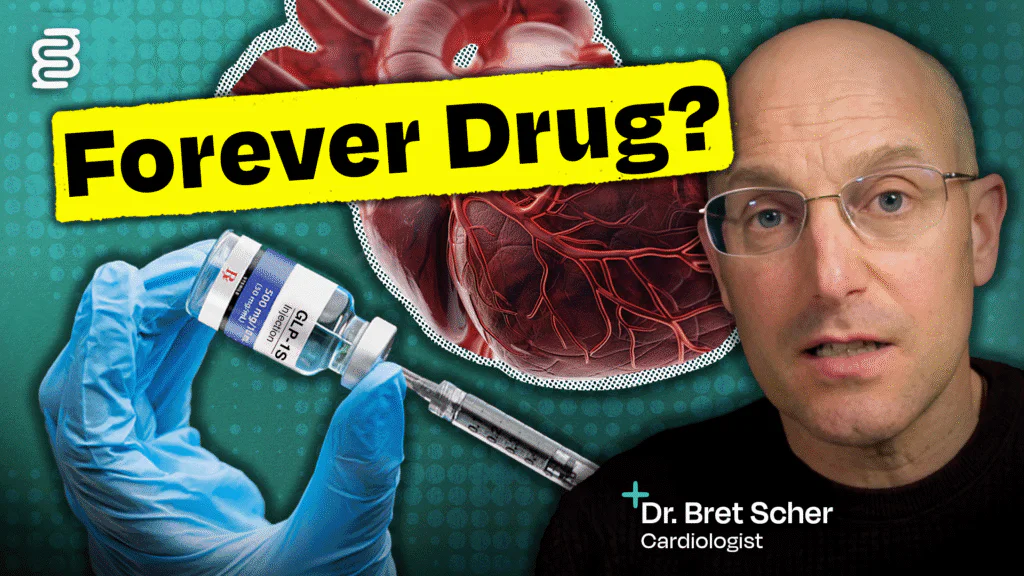
Dr. Bret Scher examines a new BMJ Medicine study showing GLP-1 medications like semaglutide reduce cardiovascular risk, but only after 18 months of continuous use, and those benefits disappear within 18 months of stopping. He argues this reveals GLP-1s manage symptoms rather than fix underlying metabolic drivers, and makes the case for pairing these medications with sustainable nutrition and lifestyle changes rather than accepting lifelong dependence as the default.
Learn more
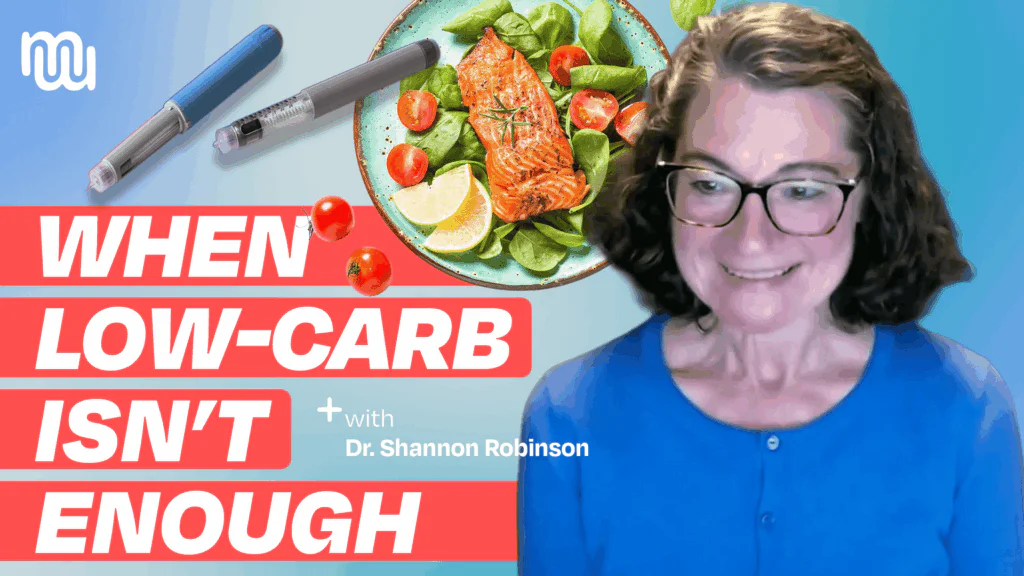
Shannon Robinson, a board-certified psychiatrist and addiction medicine specialist, to explore this overlooked population who could benefit most from GLP-1s. Drawing from both her personal journey and clinical practice, Dr. Robinson highlights why lifestyle alone isn’t always enough, and how medications can sometimes be life-changing.
Learn more
Dr. Bret Scher speaks with Dr. Toby Pillinger and Dr. Dina Farran of King's College London about their year-long priority setting partnership, a structured process bringing together patients, caregivers, and clinicians to determine the top 10 research questions on metabolic interventions for serious mental illness. The conversation covers how the project was built, what people actually want researched, and why the results reveal a striking shift in how patients themselves view the role of metabolism in psychiatric illness.
Read more
Dr. Bret Scher examines a new Lancet Psychiatry study on GLP-1 medications and mental health, finding that people with type 2 diabetes on GLP-1s like semaglutide had fewer severe psychiatric outcomes than those on other diabetes drugs. He explains this reflects "less worsening" rather than actual improvement in depression or anxiety, and explores how the findings fit into the broader emerging field connecting metabolic health and mental health, including ketogenic therapy.
Learn more
Dr. Bret Scher examines a new BMJ Medicine study showing GLP-1 medications like semaglutide reduce cardiovascular risk, but only after 18 months of continuous use, and those benefits disappear within 18 months of stopping. He argues this reveals GLP-1s manage symptoms rather than fix underlying metabolic drivers, and makes the case for pairing these medications with sustainable nutrition and lifestyle changes rather than accepting lifelong dependence as the default.
Learn more
Shannon Robinson, a board-certified psychiatrist and addiction medicine specialist, to explore this overlooked population who could benefit most from GLP-1s. Drawing from both her personal journey and clinical practice, Dr. Robinson highlights why lifestyle alone isn’t always enough, and how medications can sometimes be life-changing.
Learn more