New Results: First RCT for Schizophrenia & Bipolar Disorder. Learn more.


Listen, Watch & Subscribe on:



Are We Biased Toward a Keto Diet?
Listen
About the host


Bret:
At Metabolic Mind, are we biased in favor of ketosis as a treatment for mental health disorders? Yeah, we probably are. And are there doctors biased against ketosis? Absolutely. So, let’s talk about how and why we’re biased, and how you can detect bias both for and against ketosis to help you decide if it’s something to consider.
Welcome to the Metabolic Mind Podcast. I’m your host, Dr. Bret Scher. Metabolic Mind is a nonprofit initiative of Baszucki Group where we’re providing information about the intersection of metabolic health and mental health and metabolic therapies, such as nutritional ketosis as therapies for mental illness.
Thank you for joining us. Although our podcast is for informational purposes only and we aren’t giving medical advice, we hope you will learn from our content and it will help facilitate discussions with your healthcare providers to see if you could benefit from exploring the connection between metabolic and mental health.
At Metabolic Mind, we discuss the concept of therapeutic ketosis, sometimes called medical ketosis, as an emerging therapy for mental health and other brain-based disorders. And we likely are biased in favor of ketosis, but in a way that we hopefully maintain a degree of educational curiosity, and making sure we remain grounded in science and evidence.
And I’ll review pro-keto biases in a bit, but here’s another question. Do traditional or mainstream doctors have anti-keto bias? And I would say, in general, this is a strong yes, and it’s really based on how doctors are taught in medical school. The only thing we’re taught about ketosis is the dangerous condition of ketoacidosis, that’s life-threatening.
It can happen in people with type 1 diabetes, chronic malnutrition, alcoholism, or severe complications of pregnancy. We’re not taught about therapeutic ketosis as a medical intervention. Also, we’re taught that dietary fat is bad. End of story. We’re not taught about the difference between how our bodies metabolize fat when we’re in ketosis versus how we store fat when we eat a high-carb and high-fat diet.
So, with limited education about ketosis, it’s not surprising that doctors have an anti-keto bias. So, what are some ways you can detect an anti-keto bias? First, I’d say if someone is speaking of keto as one diet rather than understanding that ketosis is a physiologic state that we can achieve with almost any style of diet, including vegan and vegetarian and Mediterranean and omnivore, carnivore.
But if all someone sees is bacon-wrapped steaks cooked in butter, then they’re only getting a small sliver of the picture. I just can’t say it enough that ketosis is a physiologic state, not a single diet. Second, anyone who groups all low-carb studies together to use as evidence against ketosis. Studies defining low-carb as 40% or even 25% of calories are not ketogenic studies and should not be used as evidence either four or against ketosis.
If it’s not a ketogenic intervention, it doesn’t apply to ketosis because it’s a unique physiologic state. Third, anyone who uses one or two week dietary trials as evidence against ketosis. Again, this goes back to not really understanding or appreciating the physiology of ketosis. Because you see as our bodies shift from burning carbs to burning fat for energy, there’s this clear transition period that lasts between two and four weeks, and outcomes seen in this timeframe are not likely reflective of the long-term effects of ketosis.
And fourth, when someone claims ketosis is too difficult and therefore you shouldn’t even try it. Come on. Who am I or your doctor, who are we to claim something that’s too difficult for someone else? Personally, for me, an omnivore keto diet is super easy to follow and has been for over a decade.
But a vegan diet, whether it’s keto or not, would be next to impossible for me, but that’s me. And I wouldn’t assume that my experience is the same as anyone else’s. Like for instance, my colleague, Hannah, she follows a vegetarian keto diet and finds it works incredibly well for her. So, we can’t assume our experience is going to be the same as anybody else.
So, I feel this is a clear sign of anti-keto bias. So, if you want to know if you can trust what someone’s saying about ketosis, you may want to check if they have any of these red flags for an anti-keto bias. But now, what about red flags for too strong of a pro-keto bias? Those certainly exist as well.
And one is if someone claims that being in ketosis is proven to be protective from traditional health risk factors. For instance, have studies proven that LDL cholesterol has no health impact if someone is in ketosis? No, we can’t make that claim. We can raise the question suggesting that since ketosis is a unique physiologic state, there’s reason to investigate the impact of LDL. But that’s very different from saying at this point in time, we have proof that ketosis is protective.
Or what if someone says a keto diet is super easy for everyone, right? Just like the corollary, it is for me, it is for many others who follow us in Metabolic Mind. But we live in a carb-centric world and many people will struggle to start and maintain a ketogenic diet. So, a clear bias is if someone claims it’s easy for everyone.
Instead, we need to recognize that everyone has their own personal journey and their own personal challenges. Or what if someone portrays all carbs as evil or dangerous for everyone? And it’s clear that populations have lived with very good health while eating high-carb diets. Now, these carbs tend to be high fiber carbs from whole foods, like fruits and vegetables. And these populations tend to do other activities to promote metabolic health, but it’s clear that the carbs weren’t dangerous to them.
So, to claim that everyone needs to avoid all carbs for our health is a pretty clear sign of bias. And another one is assuming that all benefits from a ketogenic diet are directly from ketosis. Could someone have benefited from cutting out junk food or eating more protein or eating less overall? Sure, these are healthy changes that usually come with a ketogenic diet that serve as confounding variables.
There are some situations where studies and clinical experience indicate that ketosis itself played a key role, but that doesn’t mean it’s the case in all circumstances. So, we should acknowledge the confounding variables that come along with ketosis and not discount them. And look, there may be others.
All the biases I’ve covered are not likely exhaustive, and there may be more. But these are some of the top ones that will hopefully help you decide if someone has a strong bias, either for or against ketosis. And remember, having a bias doesn’t make them wrong. It just means we need to be more careful on how we interpret what someone is saying.
And for me, it means I need to check myself against this list to ensure I’m guarding against my own biases. So, what did we miss? Are there other biases you’ve noticed? Let us know. Thanks for listening to the Metabolic Mind Podcast. If you found this episode helpful, please leave a rating and comment as we’d love to hear from you.
And please click the subscribe button so you won’t miss any of our future episodes. And you can see full video episodes on our YouTube page at Metabolic Mind. Lastly, if you know someone who may benefit from this information, please share it as our goal is to spread this information to help as many people as possible.
Thanks again for listening, and we’ll see you here next time at The Metabolic Mind Podcast.
Listen, Watch & Subscribe on:

Research suggests that metabolic health may play an essential role in mental well-being. After years of therapies, medications, retreats, and self-exploration, Michael, a former nutrition client of mine,…
Read more

When countless people are suffering and lives are at stake, why invest time and money in Randomized Controlled Trials? During a question and answer session with panelists at…
Learn more
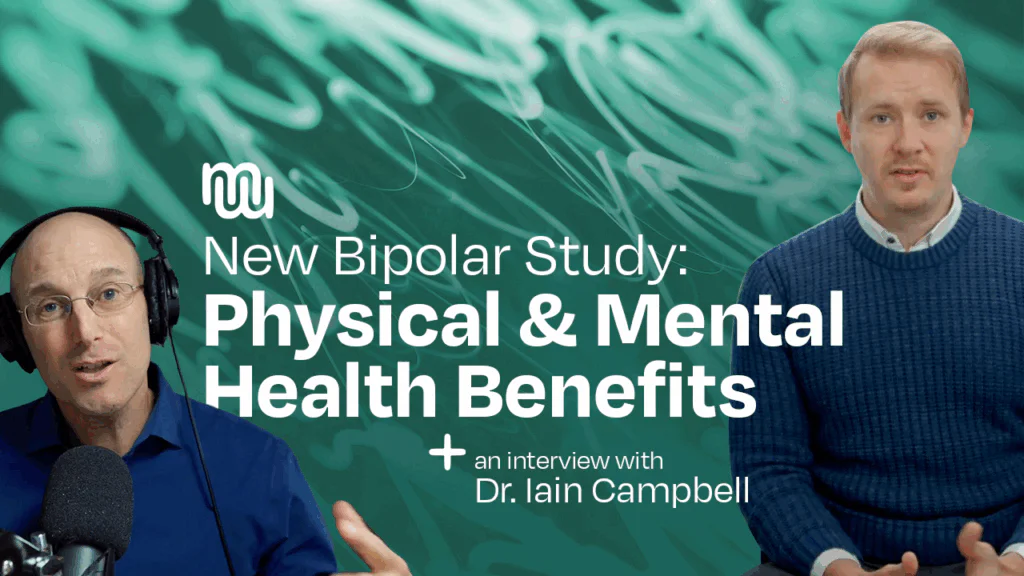
Ketogenic therapy for bipolar disorder shows promise: in a University of Edinburgh pilot led by Dr. Iain Campbell, daily tracking linked higher blood ketones—especially above ~2.0 mmol/L—to better mood, energy, and lower anxiety/impulsivity. Brain MR spectroscopy also showed notable glutamate reductions, hinting at a mechanism. The study and a new Metabolic Psychiatry Hub highlight growing evidence that targeted ketosis may aid mood stabilization while improving metabolic health.
Learn more

Disrupted metabolism, so-called metabolic dysfunction, is a dangerous condition that has been associated with numerous medical conditions, including mental illness, dementia, diabetes, heart disease, cancer, and more. What…
Learn more
Research suggests that metabolic health may play an essential role in mental well-being. After years of therapies, medications, retreats, and self-exploration, Michael, a former nutrition client of mine,…
Read more
When countless people are suffering and lives are at stake, why invest time and money in Randomized Controlled Trials? During a question and answer session with panelists at…
Learn more
Ketogenic therapy for bipolar disorder shows promise: in a University of Edinburgh pilot led by Dr. Iain Campbell, daily tracking linked higher blood ketones—especially above ~2.0 mmol/L—to better mood, energy, and lower anxiety/impulsivity. Brain MR spectroscopy also showed notable glutamate reductions, hinting at a mechanism. The study and a new Metabolic Psychiatry Hub highlight growing evidence that targeted ketosis may aid mood stabilization while improving metabolic health.
Learn more
Disrupted metabolism, so-called metabolic dysfunction, is a dangerous condition that has been associated with numerous medical conditions, including mental illness, dementia, diabetes, heart disease, cancer, and more. What…
Learn more