New Results: First RCT for Schizophrenia & Bipolar Disorder. Learn more.


Listen, Watch & Subscribe on:



David Baszucki: What My Son's Recovery Taught Me About Mental Illness
Listen
About the host
About the host

About the host

About the host
About the host
About the host

Bret:
Welcome to the Metabolic Mind Podcast. I’m your host, Dr. Bret Scher. Metabolic Mind is a non-profit initiative of Baszucki Group, where we’re providing information about the intersection of metabolic health and mental health and metabolic therapies, such as nutritional ketosis as therapies for mental illness.
Thank you for joining us. Although our podcast is for informational purposes only and we aren’t giving medical advice, we hope you will learn from our content and it will help facilitate discussions with your healthcare providers to see if you could benefit from exploring the connection between metabolic and mental health.
Welcome to Metabolic Mind. I’m Dr. Bret Scher. Today, we’re sharing a special episode from the Keto Bipolar Podcast featuring Matt Baszucki and his father, Dave Baszucki. Many of the longtime listeners of the podcast are familiar with Matt’s story. Matt is a mental health advocate living with bipolar disorder, whose personal recovery journey using metabolic therapies has helped inspire growing awareness and research in the field of metabolic psychiatry.
Dave Baszucki is the founder and CEO of Roblox, and alongside Matt and their family, has become a major philanthropic supporter of research exploring the connection between metabolism and serious mental illness through their foundation, Baszucki Group. In this conversation, Matt and Dave speak candidly about Matt’s experience with bipolar disorder, the challenges their family faced navigating the mental health system, and the role ketogenic therapy played in Matt’s recovery journey.
One of the reasons we wanted to share this episode is because it captures something that’s at the heart of this movement: the intersection of lived experience, scientific curiosity, family advocacy, and hope. It’s a powerful reminder of why these conversations matter and why so many individuals and families are searching for new approaches and better answers.
I hope you enjoy this episode.
Matthew:
On the Keto Bipolar Podcast, Matthew Baszucki and Dr. Iain Campbell explore the frontiers of the emerging field of metabolic psychiatry. In episode 29, we welcome David Baszucki, founder and CEO of Roblox. David and his wife, Jan Ellison Baszucki, a previous guest of the podcast, are co-founders of Baszucki Group, a social change venture driving new research in metabolic psychiatry
It’s time to start a new conversation about bipolar disorder. Bipolar disorder is more than just a chemical imbalance in the brain. Let’s talk about energy. The brain is one of the most energy hungry organs in the human body. Bipolar brains have impaired glucose metabolism, and this can cause destabilization of brain energy People with bipolar disorder are at two to three times the risk of type 2 diabetes. Yet, few treatments address these metabolic underpinnings of the condition.
Enter ketones, an alternative fuel source for the brain
Iain:
Thank you very much, David, for making time to speak to us today.
David: It’s really a pleasure to be on the program. And thank you both for creating and hosting the program. It’s a real honor.
Matthew:
Of course. Dad, I can’t believe you’re on this. We have never been on a podcast together, and we got some interesting stuff to talk about.
We could talk about Roblox, if we get there, but this is about keto and bipolar. And I guess two things that would be really fun for us to get into is number one, what it was like for you to see me go through all of this and come and rescue me on the streets of Los Angeles during my last psychotic episode.
This was in 2017. I was 21 years old. And then, also, if we get through that, maybe we could touch on your own metabolic health protocol. Because I know having been your son for a few years now, you are a very metabolically healthy guy. The same way I am. So, just diving into that first topic. You saw me go through all of this as my father. The psych wards for years from 2016, 2017, in and out.
What was the whole experience like from your end? And then coming to get me that last time. What was that like as well?
David:
I think what’s really interesting is mental health issues affect a lot of people in the country, and at the same time, and the world. And at the same time, for those that have not had an immediate family member or relative or friend go through it, I can remember almost my time before this where we have a very naive view on mental health issues.
It’s not clear, I think, to most people whether this is a physical biological issue versus just something that therapy can help. We’re not used to thinking of a mental health issue the same as a broken arm. It’s almost like we think of it as something different based on popular culture and literature and all of that.
So, one of the biggest things in going through this is just learning that mental health issues, for me, are just as biological as a broken arm and just as biological as heart disease or cancer. They are a physical thing. That’s been a real eye-opener. Along the way, when there were some early times when you had your first incidents, and you, came out of your first year at school, that there was a time of trying to figure out how to deal with this. Literally, how to find a doctor, how to go through this. And it was very surprising to me literally how radical the experience can be for someone who doesn’t know what to expect.
It’s hard to get the right medical help, to get a doctor that can coach you of what to do. So, I have a lot of empathy for millions of families around the world who may go through an initial mental health episode and be completely, “What do we do?”
I don’t know if you remember, one night when you were in one of your first manic episodes, my instinct was to track you.
And so, at about 2:00 AM, you went on a walk out into La Terra, out into, I think we went The Dish or Arrastadera or somewhere around our neighborhood.
Matthew:
Yeah. Yeah.
David:
And we just went on a four-hour walk from 2:00 AM to 5:00 AM.
Matthew:
Wow.
David:
And I didn’t know. I wasn’t familiar in what happens when someone goes manic.
I had the instinct to track you. And so, there’s a lot of that crazy learning. Prior to that, ultimately where we are today, which is our discovery of keto, there are many stories and many learnings including, the arguably the scariest one, the LA incident.
Matthew:
Yes.
David:
Where, thank goodness, we found you and were able to bring you in. And arguably, that was one of the major starts, I think, to recovery.
Iain:
This is so interesting to me because this family journey has started a whole field of science, and that is such a rare thing to happen. That a family experience would transfer into being an actual global field of science.
Like just this week, we’ve had Nature Mental Health publishing papers on metabolic psychiatry and all that’s happening, all the trials all over the world, centers starting. This came from the story of you guys and your family. So, I’m really excited to hear from start to finish, how did this come about?
And I think people can get a sense for the spirit of metabolic psychiatry from this. Like why did this begin? Where did this come from? And it really was the kind of care within a family that generated a lot of scientific exploration based on this. So, if you don’t mind, I’d love to hear from the beginning with you guys as a family.
I’ve experienced this journey with my father as well, and one thing that helped me was to know that times could be normal. When I was, when we’re kind of younger, there was times of wellness where I knew what it felt like to be normal. Can you guys remember those times, and what it felt like when times were good, and you felt healthy before experiencing bipolar?
What was that like?
Matthew:
Yeah, things were great. We had an amazing relationship all through middle school and high school. And Dad would drive me, come to Little League, and drive me to all these Little League games. And come to water polo and was participating in all of the school events at my middle school and high school.
And so, we just had this, we had this wonderful relationship, and healthy precocious children going through high school. And then really, Iain, the whole wrench. Dad, what was it like for you when that March in 2016, we had this whole wrench basically thrown into our family’s life?
David:
Yeah, we had, arguably had, in your junior year a little blip, which we’re not sure could have been a very early mini-hypomanic episode. Not knowing anything about bipolar or mania at the time, it self-resolved, I believe, through time and what we thought was therapy when we didn’t really know it was possibly a hypomanic blip. But then, yeah, in March of 2016, freshman year, arguably going through a lot of stressors that could contribute.
In retrospect, Matt, March 20th, that solstice is also peak time for bipolar mania to peak in.
Matthew:
Yes, the equinox. Yes.
David:
That equinox we’ve learned is really a big time. And actually, has some evolutionary and biological connection to spring and coming out of hibernation and all of that.
No, that was, once again, probably a few weeks before that journey we made that one night where you were starting to text in an irregular way. Some of your friends at school said, “Matt is acting in a kind of a strange way.” We came and brought you home, and that’s what kind of kicked off that journey over several years.
incredible work by your mom, Jan, to really just try everything. Many in and outs of the hospital system/ learning what a 5150 is. Getting familiar with all of the different crazy medications. Probably 20-plus types of medications. Having some doctors share just, “Hey, this is the way it is.
Matt will be on four to five medications for the rest of his life. That’s just the way it rolls. That’s what you have to expect.” And then, I would say after all of that and, there’s once again lots of anecdotes we can go through. The way I would characterize it is a traditional stable period on a certain cocktail of meds where you were functional, definitely not yourself, could plod through life in a way.
And then, that key moment where your mom and I were just constantly searching. There’s got to be something else out there in addition to all of the things we tried, and the light bulb went on. Your mom swarmed on it, found resources, both doctor, found resources, dietician. At that point, you had enough insight to say, “Let’s give it a try.”
And that insight is critical because I think at certain other points where you did not have insight. “No, no way. I want to eat whatever I want.” Right? So, you had enough insight to be willing, even though I felt you were not yourself, and you were on this medication cocktail to say, “Let’s give it a try.”
And that was the big breakthrough. And think of it, all the doctors we saw, all of the medical establishment, not one of them mentioned, “Hey, try a keto diet.” So.
Matthew:
Yeah, it’s crazy. I was, I remember just being, I couldn’t even, I was functional, but I was sedated by a cocktail of five heavy-duty medications, mood stabilizer, benzodiazepine, anti-convulsant medications.
And I was functional, but the momentum of my illness just wanted to take me manic. And all of these medications weren’t treating the root cause, which was the metabolic dysfunction. And so, I was somewhat functional, but like you said, Dad, I was not myself. And if we had not found this therapy, I would’ve had a very difficult life on five heavy-duty, soul-sucking psychiatric medications just trying to find my way around. And things would have been very challenging.
And so, the fact that we found this is a miracle. But the fact that none of the doctors even told us about it, and it essentially cured me, is also… it’s tragic. But it’s also remarkable that we were just able to find it.
Iain:
I’d love to hear the story from both your sides because you’ve both individually shared this story. What happened at UC Berkeley, and after that, in San Diego and LA? But I’d love to hear it from both your sides.
So, you’re saying, David, about insight. Matt, when you were texting David, so did you feel like there was something wrong, or did it feel like things were okay and this all made sense to you? You were saying it can be hard to have insight when you experience symptoms. What did it feel like to you from your perspective when you were sending those texts?
Matthew:
I thought I was having a spiritual awakening. And I don’t believe spiritual awakening and manic episode are completely mutually exclusive. I think there were elements of truth in that, but it was out of control. And I thought so for two years. I didn’t develop real insight until 2018, two years after the initial episode when I was at a treatment center in Los Angeles.
I remember I called my mom and I said, “Something’s wrong. I’m very sick. I need to get well.” And then, of course, that was after the 20, the whole Los Angeles fiasco where I had ran away from home. I was running around on the streets of Los Angeles. I slept in a lifeguard tower. I was in South Central taking drugs and doing all this stuff.
And fortunately, Dad, you came down to LA and found me in a Starbucks. And I was a homeless person, and you managed to get me into a psych ward that last time.
David:
Yeah, in retrospect, that was the scariest of the many episodes. So, this was probably your third or fourth manic episode at that point in time.
On this one you had, I think you’d been staying with relatives in Carmel. You got on a bus. It was really scary because you were streaming on social media for a while. And so then, you got down, and then you got down to a town south by San Diego, where there were some relatives present.
So, for a while it was also an “Okay, let’s observe.” I went down one time with your mom and we had a coordinated, tried to get the police to 5150 you into a psych ward. But the law, you were so on it at that point. You convinced the cops you were totally okay.
Matthew:
Wow.
David:
So, we had this big setup.
The cops, me, you all converged. They say, “Yeah, let’s talk.” Say, “Hey, I’m fine. This is great. I don’t need to go anywhere.” And so, we kind of lost our chance. And then, I think then you started having a rougher time. You went and visited a friend in LA. And then, things got kind of scary because deep in your manic episode, you went on a multi-day hike.
I don’t know how you made it from northern LA down through who knows what route you took. And by the end of this hike, I think you’d lost a lot of your stuff. And you were down to a laptop and a phone and sleeping in Starbucks and stuff like this. And thank goodness, it’s a little scary to me for a couple reasons.
Number one, thank goodness your mom and you were able to have that email convo. And I don’t know how you and your mom had this convo, but she just said, “Hey, can you just stay in that Starbucks for a few hours?” And you said, “Sure, I’ll stay in the Starbucks for a few hours.” And behind the scenes, like we launched this super Navy SEAL mission.
it was literally, I’m texting your mom. We got a flight in seven minutes. I’m on the next LA flight, plop down on the ground, pre-arranged rental car, just run to the rental car, drive over to this Starbucks. Probably got there literally in about 98 minutes from the phone call.
Matthew:
Wow.
David:
And I couldn’t believe it.
You were there. And this was peak mania. All of your backpack and all was gone. You just had like a Safeway bag with your laptop in it. Everything else you had given away to people because you were in a manic episode. You were giving stuff away. And so, then the tricky thing was we had memory of the prior attempt at a 5150, and we had, I had the concern in real-time that if the cops showed up and we tried a 5150 again, you’d go running.
And I was thinking, “Oh my gosh, if Matt goes running, this is going to get really bad really quickly.” So, we started working together. I said, “Hey man, we should go buy some cigarettes. What do you think?” And you thought that was a cool idea. So. We went, and bought some menthol cigarettes.
Matthew:
Nice.
David:
And we’re smoking. And then, I’m like while you’re, we’re smoking the cigarettes, I’m texting your mom and everything like, “What should we do? What should we do?”
Matthew:
Yeah.
David:
And we’re like, “Hey, let’s get it. Let’s see if we can go to Uncle Richard’s in San Diego area.” So, because then, we’re going to have a safe place to land.
So then, I’m texting everyone, and we’re smoking like, “Hey, what do you think about we go see Uncle Richard in San Diego?” And you’re just like, “That’d be great, Dad. Let’s go do that.”
Matthew:
Yeah.
David:
So then, we get in the car. Then, I couldn’t believe it. You got in the car with me. And so we got the windows down.
We’re driving south on 5 or whatever. You’re smoking. The car is full of smoke. I’m texting your mom and Uncle Richard and like saying, “Okay, I’m coming in hot. It’s a miracle.” “We’re coming in hot. We got Matt. We can’t believe it. Uncle Richard’s, we’re ready. I’m getting everything set up.”
There’s no one in the house. We’re going to have this little welcome. So, we roll in to Uncle Richard’s. And then, he’s totally chill. “Hey Matt, heard you been on the streets. What’s up?”
Matthew:
Yeah.
David:
So now, we’re thinking, “Okay, you could run at any time. Is there a way we could work with you to get you voluntarily into a psych ward?”
And so Uncle Richard, while you’d been on the streets, I think you’d been punching a wall with your hands or something.
Matthew:
I had bruises all over my wrists. Yeah. I remember they were all bruised.
David:
As part of your manic episode somewhere on the streets. Richard was pretty smart, and he says, “Hey Matt, man, your hands. They look pretty beat up.”
You’re saying like, “Yeah.” And so, we developed this plan like, “Hey, we should go get a big steak at this big restaurant.” And you said, “Yeah, I’d love a steak.” So, we got you buy in. And once again, we were trying to be very respectful that you’re deep in a manic episode so we’re trying to like work with you.
But you went for the steak and then Richard said, “Hey Matt, you know on the way to that steak maybe you should just get your hands checked out. You look pretty beat up. Like what do you think?” And you said yes, and we couldn’t believe it. So then, I’m texting your mom. We’re finding a hospital all of that stuff.
So now, we agree to go get the steak. We hop in the car. You’re rolling with it. And so, behind the scenes, your mom and everyone lined up this is the hospital go to, this emergency room you’re ready to go. So we say, “Oh yeah, let’s just pull into this emergency room check out your hands.” And so, then, we come in, and sure enough, they’ve got a really good psych doctor on call.
They’re like rushing in. They’re going to be like 15 minutes. And so then, Richard and I were like, “Okay, we got 15 minutes. We’ve got to keep it chill in this emergency room because if Matt runs, like we just blown our chance.”
Matthew:
Yeah.
David:
So we’re like, “Yeah, hey, let’s go outside have another smoke. Cool.
It’s a pretty fun place. Let’s go back in.” So then, this super savvy psych doctor says, “Okay let’s take a look at your hands, Matt.” And they were in on the gig a bit, and she said, “Look yeah, your hands are pretty beat up.” But then, in a way she knew how to talk to you and she said, “Matt, it seems like you’ve been having just a rough time on the streets, man.
What do you think about just having a day or two chill out with, us you know, voluntarily admit?” And you said yes.
Matthew:
It’s a crazy story.
David:
It was a miracle.
Iain:
It is.
Matthew:
Yeah.
Iain:
That’s incredible.
David:
And that was in a way linked to possibly you getting that first insight.
Matthew:
Had my first moment of insight two months after that.
Iain:
That must have been such a scary experience. Having a son who’s well and is doing all these things. Going to Berkeley and doing computer science. And is so engaged with life to suddenly have this completely unfamiliar situation. How did you make sense of it? Was it immediately clear to you this was a mental health thing? Or how did you make sense of it at the time when you first realized something was wrong and you went out to find him?
David:
Yeah. That very first thing within a week or two, we did get a doctor, who was a psychiatrist who diagnosed Matt as bipolar going through mania. So, we knew pretty quickly. I think the learning about what is bipolar? What is mania? How does it work, continued over many years, and continues to this day even.
Matthew:
And we tried everything. I remember you and Mom were at every alternative treatment, alternative medicine doctors. And we tried TMS, transcranial magnetic stimulation, where I had these electrode things hooked up to my brain. We tried all these alternative treatments. I went to a treatment center in the Southwest where they had this sauna protocol where we went in saunas for 90 minutes a day. And they fed us this concoction of electrolytes and supplements that was supposedly going to heal me.
And we tried all of this and therapy and the best psychiatrists and the best doctors and all the medications, and none of it worked. And none of it worked. And when we found, I think, Dad, when we found keto. So, y’all found keto in 2020. Mom came to me and said, “Matt, there’s this doctor in Massachusetts, who’s treating people with depression and schizophrenia, bipolar disorder with a ketogenic diet, a metabolic intervention.”
I think when I started it, and maybe this is a good segue, Iain, but when I started it, we knew, I knew because I had been grappling with these manic episodes and taking heavy doses of anti-psychotic. When my sleep normalized, and we went through that March, because I started in January, and we went through the manic season in March, and I didn’t have to take extra medication.
I think we knew within 10 or 12 weeks after I started and did keto that something miraculous was happening to my brain.
David:
Yeah. And the beautiful thing about trying the keto is it can work side-by-side with the existing meds. It’s not like you had to turn off your existing meds. I could see the benefits on top of your existing meds.
Because even with your existing meds, you were compromised to some extent, and I could see that changing.
Iain:
In a few short years, you got to see a lot of the mental healthcare system. You went through so many different treatments, like over 20 different things. Trying everything possible, and you had a lot of capacity to be able to try lots of different things and see across the gamut nothing was really giving the relief to Matt that he needed.
And what was that feeling like? Because you must be used to working with really competent people and systems, who can do things effectively like, and obviously, there are wonderful psychiatrists, but there are some limitations of the tools. What was that like to experience not being able to find a solution within the existing healthcare system?
David:
The metaphor to me would be being in the 1950s black and white TV cigarette ads, and the doctor’s smoking a cigarette, and saying, “This is the healthiest cigarette.” And so, the reason I feel that is a metaphor is that’s a metaphor where there’s a huge system of existing knowledge. Within that system, there’s some very early knowledge that maybe cigarettes aren’t that good for you, the early cancer research.
But the system itself, which makes money on recurring revenue or makes money on meds or makes money, there’s no financial incentive basically to move to purely what you eat. There’s some, I believe, there’s an optimistic future financial incentive where managing diet and helping people and companies actually is an interesting business.
But relative to the pharmaceutical industry, there’s no big recurring revenue business with adjusting how you eat. And so, I think my experience was somewhat, like I said, surprising that with all of the doctors we talked to. We were still early in that curve. It was like the 1955 with a bunch of doctors saying, “That’s going to cause cancer.”
They weren’t saying that. The optimistic hope is that even without a major competing product, like you’re either smoking and spending money or you’re not smoking and no one’s making money off of it. But even without a competing product, my hope is organically as more podcasts like yours, more people learn about this, keto will be to mental health a little like not smoking is to cancer.
It’ll become a publicly knowledged, accepted, well-known practice, and that will be an amazing opportunity and a time, and I think you, what you’re all doing is part of that.
Iain:
I’m really excited to hear your thoughts on what needs to change in the mental healthcare system. And I just want to come back quickly to Matt, your experience with trying keto.
What was that like for you to find something after trying so many different treatments? It must have been incredibly frustrating to not be able to get the help you needed. And what was it like to find something that finally worked? Was there a time that stood out to you as “Oh, this is now really helping me”?
Matthew:
It was a miracle because the pattern had been, my last psychiatric ward was late 2017. From 2018 through 2020, for those three years, I actually managed to stay out of the psych ward. I had insight, and I had a meticulous tracking sheet where I would track my mood elevation in the morning and the evening as well as my sleep.
I had a Oura Ring. I was tracking my sleep and watching my sleep every day. And the pattern was the same. I would try to lower anti-psychotic dose of olanzapine medication. I would begin to wake up earlier and earlier. Wake up at 6:00 AM, then 5:00 AM, then 4:30 AM. I could feel the hypomania coming on. The racing thoughts, the grandiosity, this classic plethora of hypomanic symptoms. And I became intimately familiar with what that felt like through my daily tracking because I had taken an internal register of where my mood was at on a daily basis. I knew what that feeling felt like.
Then after three years, we got the team together, a dietician. I went on keto. I was tracking ketones. My sleep normalized. And that was the first thing I noticed, Iain, that I would wake up at 7:00 AM. 7:00 AM every day. And I had already had a lot of good health protocols in place. I had quit nicotine and drugs and alcohol the previous year.
So overall, my body had fewer of these nefarious invasive substances. And so, I went on it, and two months, three months in. And then, we got to March. And March, of course, is the time during the equinox when the days are getting longer the most rapidly. And I had always gone hypomanic in March. Had an episode every single March, in late March.
And I went through on five milligrams of olanzapine. And I was looking at my tracking log because just recently going through it, I saw that in previous years, I would have to take 20, sometimes 25 milligrams of olanzapine medication in March just to stop these manic episodes from happening and stabilize my mood.
And then, I went through that March on five milligrams every day, and things fell into place. I was able to work. I was able to function. My executive function came back. My brain felt like it could work again. And then, we gradually began the process of tapering medications, and I never had a hospitalization again.
And now, I haven’t had any bipolar disorder symptoms in a long time. It’s almost, it feels like I don’t have the illness anymore. But I’m very strict about keto, exercise, all these. No drugs and alcohol. All these metabolic therapies.
David:
The time I knew, if this wasn’t a fluke, was sometime after you’d gotten on the keto diet.
Going on a trip, a family trip, was always a little dicey when you were on your bipolar meds because there would be time change, travel, whatever, new environment. And so, it was never quite predictable. And on this one trip, I remember it was early in keto diet. We had still been using a chef.
We got to a resort, and I think what we were picking to eat was a good attempt at keto. But I think there’s something about it, like we were eating a lot of avocados or something, and they actually had more carbs than we thought. And so, two or three days into that trip, you started getting a little hypomanic and a little, sleep was getting less regular.
We, you could see some of those patterns. You still had insight. And then, you made an emergency U-turn and you said, “Okay, hardcore keto.” And I think you started every meal in this resort basically saying a little filet of fish and two things of melted butter. And you did this for one or two days, and all of the chefs loved it. And you just said, “Yeah, this a medical diet.
I need a filet of fish and a lot of melted butter.” And then two days later, just U-turn back. Like just boom.
Matthew:
Wow.
David:
Back to stability. That, for me, is when I just knew this was not a fluke. This is like hardcore medicine. More powerful than most of the other medicine you were on.
Iain:
And that’s from the perspective of trying so many different treatments, right?
They helped more than most people would ever experience. So, to look at all of that and to say that this was effective is particularly interesting. Did you, when you were going on a ketogenic diet or when you first heard about a ketogenic diet, David, were you quite skeptical of this?
Because, obviously, it’s completely outside the paradigm of how we think about treatment.
David:
Actually, I was really, excited from a systems theory point of view because I never could quite get my head around all of the supposed cures for bipolar. These are like blocking receptors, and it’s genetic. And like I could never get my head around the notion that this high a percent of the population would be genetically not screwed up or would really need. Like it just didn’t make sense to me.
What I did know at the time was like this March, kind of mania. And fall, September depression had a little alignment with like weird behavior patterns in humans and animals. Like everyone slows down in the fall. Bears hibernate. There’s actually some notion that some low-grade bipolar is a survival instinct.
Way up north, you stop talking and crumple in a ball all winter and don’t eat much. And then in March, the sun is out and you’ve got to go eat and mate and find stuff and go crazy. So, there’s like a biological foundation there. The thing about the keto diet that got me excited is the notion that arguably up till about 10,000 years ago, a lot of humans evolved heavily, not necessarily omnivore, almost slightly more carnivore.
I would say closer to cats than to pigs. Pigs are omnivores. Cats are carnivores. You can measure proportional length of the intestine to the body. You can measure, look at the teeth, and you can try to figure out. Humans definitely, based on intestinal length and other things, are closer to carnivore than omnivore.
And so, that’s a pretty big genetic adaptation to make 10,000 years ago, when over the course of the last 10,000 years, we figure out this amazing technology to scale the size of our culture. Like we figure out agriculture. We can generate more carbs. We can have bigger civilizations. What an amazing achievement.
But humans are not. I like the notion that we’re just not fully adapted to that, and we’re still trying to adapt. And then on top of it, arguably in the last 100 years, even more the sugar, corn syrup, carb ratio has gone up. And I could really get my head around the notion that, for some people with a bipolar tendency, they need that constant energy of a higher fat-based keto source.
That to me seemed like it really made sense. So all of a sudden, to me, it felt like we were trying something that could actually have a systemic scientific foundation. And so, it felt like a giant exciting relief to try it.
Iain:
This is so cool to hear because you worked in like refining mechanical physics of computer systems and making things work on the right principles. And then, you get these amazing emergent outcomes from those things.
And so, what was it that you saw in Matt going into ketosis and the evolutionary piece, the things you mentioned, what did it reveal to you about how the assumptions or the kind of working principles of psychiatry might be misaligned? You’ve refined many kind of complex systems to work within the right frameworks.
What was it you saw would be fundamentally perhaps flawed about the way psychiatry was being approached from this experience of ketosis and evolutionary thinking?
David:
I’m not an expert in psychiatry. So, I had more of a naive outside-in looking view. I do know that generally in the human population, like whatever the percentages are, five, 10, 20% of us aren’t walking around unable to walk.
Unfortunately, some of us can’t walk, but it’s not at a five or 10%. That doesn’t make evolutionary sense that five or 10% of us wouldn’t be able to walk. And so, the percentages of people undergoing, unfortunately, mental health things seems higher than would naturally occur in nature if these are also physically based.
So, I love the notion environmental sources. What we eat, amount of sunlight, how we sleep has more power than we might expect. And it’s a much more of a systems thing to think environmental to me rather than that high a percent are genetically impinged or also that high a percent actually, we actually discovered 14% of all people in the world need this drug to survive.
That didn’t make sense. So, going to environmental, diet, light, social, exercise, sleep just felt fundamentally like it made sense to me.
Matthew:
Yeah. And this expands not only to the mental health, but all of the chronic disease. All of the Alzheimer’s, the type 2 diabetes, all of these diseases that we know. The cancer that we know have a large metabolic component for each of these.
And just going back to the genetic thing, I’ll mention one anecdote I heard or one scientific thing I heard the other day, which is that the Seyfried Lab on the East Coast, here in the United States, did this experiment where the theory has always been that cancer was a genetic problem, and that the problem was housed in the nucleus of the cell.
What they actually did is they put healthy nuclei with damaged cancerous mitochondria in the same cell, and they did the reverse. They put damaged mitochondria with healthy nuclei. And what they found is that it’s the mitochondria, the sickness in the mitochondria, that actually determines whether the cell is going to become cancerous.
So, this is all about, and mitochondria is all about energy metabolism. This is all about ketosis. But I think what we’re going to find as we get deeper into the research here is that all of these illnesses, Alzheimer’s, bipolar, schizophrenia, Type 2 diabetes, the obesity crisis we have. This is not, there’s no world in which this would have happened to a hunter-gatherer tribe where everyone goes obese.
And there’s a reason that it happened in the last 60 years, the last 40 years. It’s because not only the carbs, Dad, you mentioned the carbs, which are a significant problem. Just moving over from a moderate protein, high-fat diet, animal-based diet to high carbohydrates. But now, the last 40 years, we have refined carbohydrates that metabolize more quickly into glucose and cause a more significant insulin response that is driving the insulin resistance.
So, it’s like a double whammy. We had the carbs. But then, we switched to these, all these processed foods. And then, now it’s just a metabolic catastrophe.
Iain:
So, I imagine when you were diagnosed, you were explained that this is a kind of chemical imbalance or a neurotransmitter imbalance. How did this experience change your view of what bipolar is, fundamentally?
How did you view this kind of, neurotransmitter imbalance paradigm from this new perspective of ketosis?
Matthew:
Did we ever have any evidence for this chemical imbalance theory? Were there ever? We’ve observed now, Iain, we’ve observed, the way the brain metabolizes glucose is different in populations with mental health versus healthy populations.
We know that people with Alzheimer’s, the pathways for glucose metabolism are damaged compared to general population of older people. I don’t think we ever had any evidence for this neurotransmitter nonsense. And I suspect the reason is because a lot of the way the medical system is designed right now is to form a paradigm around illness that serves the function of selling a medication.
So, you look at statins, for example, statin medication. We have a medication called a statin that lowers LDL levels. Therefore, LDL becomes the target biomarker that determines your future risk of atherosclerosis and a heart and heart attack when that’s not the case. There are much better markers. ApoB, fasting insulin, et cetera.
So, we had this paradigm. I wonder whether we came up with this chemical imbalance nonsense because we had these medications that had some effect on neurotransmitters, or at least that was the thinking? And then, it became a mechanism to just sell people medication, and they don’t treat the root cause.
And not only that, the medications cause metabolic damage. People gain 30, 40, 80. I’ve seen girls gain 80 pounds on olanzapine when they go on these medications. So, I really believe it’s a spiritual crisis, and keto and metabolic therapies, they don’t work for everyone. But for more people than you might expect, if you’re not familiar with them, can put these illnesses into remission
Iain:
This reminds me of, David, something you mentioned in the Tim Ferriss interview.
You were talking about Finite and Infinite Games, the James Carse book. And I love the idea in that book that there’s this definition of abstract, where you’re taking a part of the whole picture and trying to make it the whole picture. You’re taking neurotransmitters and trying to make it the whole story of mental health. Whereas actually, there’s something much bigger going on.
And he talks about Hegel trying to move from abstract to concrete concepts, and the concrete concepts being the interconnected, more complex, wider reality of a condition. Do you, how do you feel about this neurotransmitter paradigm now seeing a kind of wider picture of metabolism in the picture of mental health?
Do you think this is a more concrete kind of grounding for psychiatry going forward?
David: For me, the more out of the box you get as far as taking a step back and understanding a whole system, there can be additional layers of understanding. And so, what’s interesting is if we climb the tree of detail, okay, there’s bipolar mania. Then above that, there’s general mental health issues, schizophrenia, bipolar, eating disorders, whatever.
Above that layer, there’s a whole collection of chronic issues, mental health issues, chronic disease, diabetes, whatever. What’s interesting to think is if the solutions aren’t down at the bipolar mania level, aren’t even at the mental health level, but are above that. And I always, I was always a little confused on how do you concisely define the difference between bipolar or depression or mania or schizophrenia.
And I was always confused that these were taught as these separate illnesses. I think there were times, Matt, at peak mania, where for me, you might have been schizophrenic.
Matthew:
100%.
David:
Like you were seeing an, an, a set of overlay visions on top of reality. It’s like your 3D simulator was running wild.
You were seeing shapes and talking to people. I just saw that as extreme mania or deeply into it. So, that is what I think when you talk about kind of infinite gains, it would be quite interesting if we started to see multiple things all in a unifying way get solved by good metabolic health, and then it would really be lovely.
I’m not saying this is the case. I’m not a doctor or researcher. If what we see in both bipolar depression or maybe schizophrenia or other things more are symptoms rather than diseases, and they are not separate diseases. They are just symptoms of brain energy issues. But they’re all just various manifestations of that.
And so that would be a lovely infinite game. An even bigger infinite game is we see in addition to mental health, physical health things in common are results of poor metabolic health, issues with insulin sensitivity, that same kind of thing. And it’d be really cool if for certain types of type 2 diabetes, for example, that are highly influenced by diet, those start getting clustered as side-by-side mental health.
They are both the results of your metabolic health.
Iain:
I’m curious from a first principles perspective that you’re describing of how to create this infinite game of psychiatry instead of the limited paradigms we’re currently in. What are the kind of first principles questions you’d like to see answered through research about the metabolic nature of these conditions?
David: You’re doing it, right? People around the world are doing it. I would say we are in the golden age in the last five years, and the next five years of clinically valid AB dietary experiments, bipolar depression, eating disorders, that early data,. Like we’re in the middle of that data coming in real-time right now.
The hope would be, in addition to what I see from afar going on is your podcast, Metabolic Mind, all the people working on that. We’re a little bit in the middle of the groundswell. Get the public to know about it phase. The more that AB hardcore research is funded and comes out, I’m assuming that will help all of the psychiatrists around the world feel more comfortable in recommending metabolic therapy side-by-side the other therapies.
Iain:
From someone who’s been through this care system, what would you like to see change, having been through so much experience of so many different treatments? What would you like to see in five, 10 years change in psychiatry, if you were going in for the first time to get help again? How would you like it to be different based on what you’ve learned?
Matthew:
A good question. I think we need to overhaul the whole system. I think there’s a model that could potentially work for the situation I was in, which was florid manic psychosis, which is a lockdown facility that serves only ketogenic food for six to nine months. Just give the brain time to stabilize.
And the vision I have for this, and maybe we’ll build it someday, I’ve had thoughts of this myself. It’s going to be outdoor. We’re going to be in Montana. We’re going to have a big lot where you can run around and go for runs. We’re going to feed you only steak and broccoli for six to nine months.
Just give the brain a chance to exist in a ketogenic state for some extended period of time in a lockdown facility. That is the critical piece that we don’t have at the moment. And the psych wards, Iain, you would not believe what they were feeding me in the psych wards. They were feeding me root beer and chocolate milk and just all of these carbohydrates.
And like you said, Dad, the more studies we get out. And that’s why I’m so excited about this randomized controlled trial coming out of Australia because that’s the gold standard of medicine where you can isolate the effect of one variable on a single population. Thus far, we’ve had a lot of case reports, which are wonderful. And we’ve had small clinical trials, but without a control group that have, Iain, for depression, for bipolar and schizophrenia, that have showed tremendous outcomes.
We need the RCTs to convince mainstream psychiatrists and mainstream medicine that this is a viable treatment. There are a lot of doctors who you can chuck them anecdotes. You can give them case reports. You can even potentially show them personal stories of people who’ve gone through this, but their brains are not wired to connect the dots between diet and mental health in this way because that’s not the way the paradigm exists.
That’s not what they’ve been taught in medical school. They’re entrenched in this notion of chronic disease, permanent brain disorder, et cetera. So, the more RCTs, the more research we get. And like you said, Dad, this is just accelerating right now. This is the infancy of this movement, but I can feel the momentum.
I can feel people want to get well. And when you also have a demand that’s so profound, when people are so profoundly sick, I think this is going to explode. I really think in the next five years, 10 years, this is going to absolutely explode
Iain:
One of the coolest things about hearing this story is you’re describing going from this family experience and noticing this change in ketosis. And ,then looking at it through systems thinking to look at what could we change about the way psychiatry is working.
And there was someone who did this, called Henri Laborit, in the 1960s. he was the inventor of the very first anti-psychotic. It was the very first anti-psychotic drug. And if you read his textbooks, they’re all about regulation of metabolism, mitochondrial function. And the things that he was testing when he developed the very first anti-psychotic, chlorpromazine, were things that people are looking at for metabolism now, methylene blue.
He developed a 3-Hydroxybutyrate, which is a very, 4-Hydroxybutyrate, which is a very close analog of 3-Hydroxybutyrate, which is the ketones we measure on our Keto-Mojo devices. This was like the earliest pioneer of psychiatry, in the 1960s. And the developer of the very first anti-psychotic had the same perspective that you’re describing from your journey.
So, I feel like we’re returning to something really meaningful about psychiatry, but the problem is the research is not developing new treatments. And I’m really interested from your systems thinking perspective, what do we need to change about the way we’re doing research to get these kind of more inevitable outcomes of good treatments for bipolar?
It feels like the system needs to be fixed so that we can develop these. What limitations are you seeing and how could we make this a really effective way of making new treatments?
David:
I’m not deep into it, but just hanging out with you and Matt, I am optimistic at some point we may see a maybe one lockdown facility in one hospital somewhere in the US that says, “Okay, for three months, we’re going to run an experiment and get some dieticians in here and just see what happens if we run a lockdown for three months with a more keto-leaning diet relative to the results they’ve seen.”
It would be wonderful to get some hard data like that. And I think there’s other areas. I would say what is happening right now in industry, there are companies, who work with the health programs of companies, who are starting to explore literally the money saving of helping educate people about metabolic health relative to the overall health bill.
So, there is a little bit of a free market pressure to take a giant company, pick a big defense company or companies we think about with tens and hundreds of thousands of people. If they nudge their healthcare to include education about metabolic health, their overall health bills may go down.
So, I do think we’re going to see natural forces coming to bear here as the research gets more proven.
Matthew:
Do you think we’ll have companies start to understand, CEOs, executives understand that this is potentially a better brain fuel that could help employees optimize how they work and then start to encourage this in a systems way somehow?
David: I would say at Roblox, we balance freedom. We want our employees to have freedom of choice in what they eat. But we do have jokes because our snack rooms, every single snack is labeled where it sits on both a whole foods index and a good energy index. So that, so employees get a fair amount of visibility.
And there are certain foods at Roblox that are both whole foods and good energy, like organic boiled eggs. There are other foods at Roblox that are neither whole foods and neither good energy, like a Coca-Cola, basically. And so, there is a little education that is happening by kind of the labeling of that at Roblox.
Iain:
I’d love to hear about your personal kind of metabolic health strategies that you’ve come across, both of you. And David, you mentioned applying this in Roblox. How do you view kind of metabolic health yourself? What strategies are you using and finding useful at the moment?
David:
I’ve been in, not as leading adopter of my family or Matt, but I’ve worn CGMs quite a bit. Worn CKM’s quite a bit, was a continuous ketone monitor.
I’ve figured out, for me, my diet that works for me. It’s basically very low carb for me, mix of fat and protein. For me, it’s allowed me to have a, I feel I have a personal feeling where ninety-five percent of the days I do feel an optimism. A waking up, just okay, wanting to seize the day, wanting to go fix stuff and build stuff.
And then five percent, I know what it feels like to not want to fix stuff, to maybe more go hibernate or not do anything. Everything’s broken, and it’s impossible. So, by being aware of those two types of feelings and trying to adjust diet to have that wanting to go out and build and fix and seize the day, I have found that a lower carb diet for me has helped me be in that mode.
Iain:
That’s interesting. And Matt, with in terms of, you’ve talked about using kind of CGMs and CKM’s and optimizing metabolic health. What are the kind of big pillars for you now having been in this for a couple of years of experimenting with different strategies?
Matthew:
Oh, yeah. So, I got my CKM in.
So, Dad is running a smuggling ring to get us these CKMs because they’re for some reason not available in the United States, which is so ridiculous. But for everyone at home, I had my recovery four years measuring ketones with a blood prick twice a day, okay? So, this is completely viable. Get an idea of where your ketone levels are at.
So, yeah. So, Iain, I went carnivore as last year. So, and it’s moderate amounts of cheese and dairy. I’m actually thinking about dropping the dairy completely now. But, yeah. So, it’s just all meat. I eat one meal a day or two meals a day. I love OMAD on the days I don’t lift weights because it limits insulin response.
There is some insulin response from protein. There’s none from fat. One meal a day is great. Go eat a bunch of steak at 2:00 PM or 3:00 PM. That is an incredibly powerful intervention, and it gets me a lot of the way. It for me, it even ranks above sleep and exercise, which are both critical. But if I let up on my diet, I would run into a lot of trouble.
I think diet and abstinence from drugs and alcohol and nicotine and caffeine, those two together are a lethal. Powerful lethal, in a good way, powerful combination. And then, my ketone levels are a result are high. What’s that?
David:
No, it’s fun, right? Because Matt, you and I are riffing on diet, sleep, exercise, sunlight, other things. And we’re always trying to stack rank what is the foundational power, that I used to think for me sleep was the foundational power. I’ve moved to diet is the foundational power. Where if diet is robust, I can handle a fair amount of sleep disruption. Whereas, if my sleep is robust but I have dietary disruption, I will go into la-la land.
Matthew:
That’s exactly right. And I had this protracted withdrawal injury the last two years, and I’ve kept it together because my diet is super strict. And I find I can function at work three, four hours of sleep.
It’s not the end of the world. And Dad, how many nights have we had where we’re out late or we’re doing something, and we just go to dinner, and we both order a steak, and we go out, and we get five hours of sleep and it’s a party and we’re both functional? And it’s because we don’t have all of this inflammation and oxidative stress and insulin resistance.
We’re just running on pure ketones, high octane premium brain fuel, and we’re just functional people. It’s just, it’s so powerful. And when people do make that metabolic shift, I mean people’s levels of thinking, your ability to abstract, your level of complex processing in thought process actually, it can be transformed.
So, I’m with you. Like exercise, sunlight, sleep. But again, without the diet piece, everything just falls apart.
Iain:
This could like really fits with what you’re saying about the kind of evolutionary paradigm of thinking about this diet, sleep, exercise, all these affect the metabolic systems. I wanted to ask, you’re running on ketones now for some period of the day.
How is this helping you with all the cool things you’re doing in the world, building Roblox, building companies, you know, doing advocacy for mental health? How does it feel to run on ketones versus on glucose? Do you feel like it gives you another gear to be able to do these things?
David:
I feel now, it really does help.
I can really tell the difference between two days. I think in the past, 20 or 30 years ago, when I didn’t know about keto, I was having that same variation in my mental attitude day-by-day. I just thought it was the natural thing. When in fact, it was just a random side effect of what I was eating.
So, now that I’m more aware of it, it definitely helps. And I do feel if I changed my diet, personally went high carb, ate a pile of sugar, did that for a few days, I do think I’d be in pretty rough shape. I think I would be having a hard time approaching the day or feeling optimistic about going and solving things, and I feel I would probably move to a more defensive kind of mode.
Matthew:
Dad, what has the, what has your life’s health, I know you were low glycemic and you were experimenting with different things. You were mountain biking. What has that journey of your own personal health been over the last few decades?
David:
Yeah. Now, it’s interesting. Now, I’ve gotten into, I would say 20 years ago, I thought I needed to mountain bike two hours hard.
And I think now where I’m at, is I feel an hour a day of something is enough. I’m into doing things that are more fun and interesting to do while still being the hour. I shared with you how in my three-day-a-week CrossFit, we got the karaoke going and the musical instruments and all of that.
It makes it fun. I’ve also moved from mountain biking to hiking with a weighted vest just because I’m not going to crash. I don’t have to think about not crashing. I can go hike around in the woods. So, I feel I’ve got a really good routine where I like what I’m doing for each hour every day. How about for you, Matt?
Matthew:
I’m the same way. My protocol’s pretty basic. It’s lifting Monday, Wednesday, Friday. heavy, but not too much time in the gym, maybe an hour or so. And then, I’ll go for a walk after dinner those days. And then, Tuesday, Thursday, Saturday, hard cardio, 40 minutes, just burn it down to the ground, high intensity, Nordic training with four minutes all out, elliptical, StairMaster. And then, two or three minutes rest.
I love StairMaster with the weight vest. That’s my new thing. I’ll do that four minutes or seven minutes hard, get the heart rate up in the 160s, low 170s. And then, do a rest period. Great for metabolic health. But I’m the same as you, Dad. I don’t, and I love to hike with my own weighted vest, the one you gave me, actually, which I love.
But I’m the same as you. I don’t need hours and hours in the gym. I just want to get in there for an hour, hit it super hard, and then get out. And the combination of an hour workout, middle of the day, 10:00, 11:00 AM, one massive meal at 2:00 PM, a bunch of steak. And then the rest of the day frees up. And there’s so much time to work and work on projects and see friends.
And another thing, Dad, and Annie, and of my traveling because I did this big road trip this year of going through Los Angeles and up through Vegas and Utah. And Dad, we went, we saw the fight, we did so much fun stuff, is learning that I don’t need to eat all the time. And doing my first three-day fast, and learning that if I go 24 hours with food, 36 hours without food, it’s not the end of the world. And I’m able to metabolize fat. And I have this, all this fuel on me.
I have, I’m storing fuel everywhere. It’s just life opens up because I’m not thinking about it constantly, and it’s just one of the wonderful things of learning to think this way is that life becomes bigger. Food, in a sense, becomes more simplified. But then, the rest of life opens up as well.
Iain:
That’s such a cool present to give to your son, a weighted vest.
My son’s three. So, it’s not time for him yet, but one day. One day, I’ll aspire to that. That’s awesome.
David:
You could get him a little two ouncer.
Iain:
He’s usually on my back being the weight himself, like, but I look forward to that. Yeah, great.
David:
Oh, good weight.
That’s cool.
Iain:
He’s 20 kilograms. So, it’s no joke.
David:
That’s a, that’s a good weight.
Iain:
It seems like a lot of the things you guys are doing are like, you’re talking about having this insight of the spring and the kind of evolutionary piece of it. And it feels like a lot of the things you’re doing are reconnecting to kind of evolutionary signals like sunlight, nutrition, fasting, ketosis, circadian rhythm.
Like all these are kind of deep evolutionary mechanisms in the body. And it feels like from many different approaches, you’re kind of maybe. Am I right in saying you’re trying to kind of optimize from those different perspectives towards a kind of more natural human environment?
Matthew:
Totally. I wear my Vibram.
I wear the toe shoes now with zero support, and they’re just, they’re incredible. They’ve eliminated my ankle pain. The whole mission for me is to become closer to our ancestral environment, fewer toxins, more sunlight, more natural diet. Dad, I think it’s the same for you, right?
David:
Yeah. I try to have lights out at 9:00, not 11:00. So, that’s one.
I now, I don’t know if this thing works, but I definitely am grounded wherever I go, and not mentally grounded, physically grounded. So, I’ve got my, all of my workspaces, I have a grounding pad, which means that when the heel of your hand is touching the grounding pad, it has a wire going all the way to the Earth.
And so you’re not floating relative to the Earth. And so there’s, that one’s a little early, but I do that as well. Definitely try to have complete darkness when I’m sleeping, 100% darkness as well. it just, for me, makes sense that we’ve, evolution’s done a pretty good job tuning these incredible systems we have, and we should first and foremost make sure we’re aligned with what evolution was working on, and try to simulate some of that.
Iain:
It’s so interesting because the psychiatrist I mentioned, Henri, Laborit, who developed the first anti-psychotic, this is the same thing he thought. He thought that we’re in a mismatch from our evolutionary environment, and it’s creating states of hypermetabolism in the brain.
And he saw the whole projects of psychiatry as trying to tune down these states of hypermetabolism. And in his textbooks, he has really detailed experiments showing how these anti-psychotics he was trying to develop were basically turning down these hypermetabolic states. So, when you were mentioning about the spring, and like going into mania in the spring or particularly at the equinox, that was something I found really fascinating because you can see there’s variations in human gene expression that change with the seasons. And they, particularly around these periods, there’s birds migrating tens of thousands of kilometers across the ocean, at the equinox in highly hypermetabolic states.
So, it really feels to me like the experiments you’re doing feel very connected to the kind of the heart of what psychiatry was originally working on. In terms of ketosis, have you thought about how that might tie into this kind of evolutionary piece, and what it could mean? You mentioned it makes you able to work more and have more energy.
Do you think there could’ve been a purpose for ketosis that had that kind of evolutionary grounding that makes sense?
David:
I would say exactly the opposite. The reason it’s arguable based on the diet of humans between 10,000 years ago and maybe 500,000 to a million years ago, we were living in environments with a fair amount of fat, brain food, protein, and that sustained the giant brains we all have.
it allowed us to evolve brains of the size we do. And yeah, it’s interesting to imagine we actually evolved these oversized brains relative to our body size that use a lot of calories because we had enough of that type of food available. And as we’ve gone to more ag, we haven’t fully adapted to different energy source.
We’ve tried to adapt to a glucose energy source more than a fat energy source but are not fully adapted.
Iain:
Do you think, Matt, from like the experience of the spring and the kind of burst of energy, can you see a kind of, or maybe like a, purpose to that at some point in our evolution history that would’ve been useful in a kind of healthy version of it?
Do you think that’s the right way to think about this?
Matthew:
Maybe. I do believe I still have a slight healthy variation in energy where I get a boost. Right now, I’m coming out of getting a boost. But again, this is not hypomanic. I still sleep eight, nine hours a night, but I have energy. I’ve noticed a lot of energy to work since February, March, and now into April, but it’s not hypomanic.
It’s just this burst of the sun is coming. So, I suspect there is some rhythm there. And like you were talking about, Dad, it’s the winter, is the time for hibernation, and it’s cold outside. And especially for humans who evolved in cold climates in the North, in Canada, or in the Arctic or wherever. Essentially, you weren’t going to gather much food.
You were going to prepare all your food, all your meat. You were going to freeze it or you were going to ferment whatever you had. And then, you were going to go and you’re just going to hunker down. And of course, you would still have to hunt and you would still have to find food and you would still have to hunt for game, but it’s going to accelerate in the summertime.
So, I suspect there is a huge evolutionary biological adaptation there. But the modern permutation, which is bipolar disorder, is when that gene expression just runs amok. When it’s like you said, Iain, it’s the glucose hypermetabolism in the brain where the neurons and the dendrites are just firing, firing, overly quickly.
And again, it’s the energy imbalance thing. So yeah, I absolutely agree. And it’s funny, I noticed I’ve even started to pick this out a little bit because I go to large men’s groups in mental health and talk to a lot of people. I think the general vibe, the general zeitgeist, and the milieu of just being with people in social situations, it gets a little extra juice around March, around April. And then, it starts to fade a little bit.
That’s especially true up in Canada and up in Alaska, but even here in Texas or in other places where it’s less, the daylight variation, is less significant. People still get that jolt of energy.
David:
If we could talk to black bears, and we could talk to them in maybe, I don’t know, September, the days are getting shorter, they’d probably go, “Oh yeah, man, I just I’m eating so much.
I just feel so depressed, man. I can’t do anything except eat all day long. I just want to sleep and eat. I feel terrible.” And then, we talk to the black bears in November, “Yeah, I just think I’m going to go to sleep.” And then, we talk to the black bear in March, “Oh my gosh, the snow’s melting. I’m going to go freaking crazy.”
Matthew:
That’s right.
David:
I’m going like they might actually share some of what bipolar people go through when they cycle from either depression to mania.
Iain:
Oh man, they’re going to try and put black bears on SSRIs after this.
Matthew:
No, I hope not.
Iain:
It’s like, that’s super interesting though because there’s so many good analogies with what happens there that the bear is inducing insulin resistance intentionally to suppress its glucose metabolism to conserve energy for the winter.
It is like trying to use less glucose through the winter. And that’s a bit analogous to like having actual broken insulin resistance where you just have that broken all the time. And then, obviously, ketosis is involved in those states. And there’s a really interesting study in bipolar patients in the spring as well where you do see these change in metabolites.
It’s just a kind of small study at the moment, but increasing glutamate, for example, this kind of high energy fuel source in the brain. And I think there’s definitely something there to what you’re saying about the evolutionary pices.
Matthew:
So, you’re saying there’s more glutamate, which is the, it’s the excitatory neurotransmitter, Iain?
There’s more of that in the spring in bipolar cohorts compared to the general population.
Iain:
Yeah. There’s just one small study on it at the moment, but I think it’s more interesting than people realize. Because we always talk about serotonin, dopamine in mental health, but the brain is flooded with glutamate.
If you were filling up a bathtub with the relative proportions of the different neurotransmitters, you’d have a whole bathtub of glutamate filling the brain and a very tiny capful of serotonin, dopamine, that they actually exist in tiny concentrations compared to how much research focus they’re given.
And you see these really profound changes in glutamate over, for example, in the pilot study we did brain imaging, and that was the pilot study you supported. It was the first time we saw when you put a bipolar person in ketosis, it reduces their brain glutamate, and it was by a larger amount than we’d seen in like anti-seizure medications, which is the specific thing they’re often trying to change with anti-seizure medications.
So, I think glutamate is playing a quite a big role in this, and it’s been overlooked in favor of serotonin, dopamine. So, I’m excited to research that. And we will look at that in the RCT coming up next year with 206 patients with brain imaging.
Matthew:
Not the, and it’s not the ketone thing.
People think the brain energy is the whole story. It’s not because the bioavailability of the proteins in plant and vegan diets don’t, and allow you to actually build the neurotransmitters to function to maintain this homeostasis in the brain. So, you actually need the amino acids from eating meat to build the neurotransmitters, serotonin, dopamine, glutamate, et cetera, that can give you the proper functioning for your brain to perform well.
Iain:
That’s right.
Matthew:
That’s why people who go on a vegan ketogenic diet, even if they’re in ketosis, even if they’re producing ketones, they can sometimes still be depressed, not have the recovery, because they literally don’t have the nutrients. So, the keto is a piece of it, but it’s also the neuroinflammation. It’s also the oxidative stress. It’s also getting all the nutrients, which is why I personally recommend eat meat, bro, eat beef, eat steak, eat eggs, eat stuff like this primarily.
And then, you can mix in some plants as if you want, but vegan for metabolic health, generally not my recommendation
Iain:
It’s super fascinating how you’ve applied this systems thinking approach to this, like through a personal experience, trying so many different things, looking at all the outcomes.
it’s really exciting approach. This, I think, it’s what we’ve been missing. I think it’s been so focused on these small paradigms, these kind of like finite games of psychiatry, and we’re now moving into a bigger space because of what you’ve done for the field. So, I’m just super appreciative, and it’s really exciting to hear from your story and how it’s come out of that.
David:
The stars in the show are Matt because he’s lived it. Then, the stars of the show are Jan, my wife and Matt’s mom, because she’s the one who really swarmed on trying to find those solutions. And now, as they’ve become uncovered, in a way this is what a wonderful opportunity for philanthropy because the whole area of metabolic health, what you eat needs less FDA approval than a new drug or a new device.
Most people and most doctors are comfortable adjusting protein-fat-carb ratios, especially with healthy foods. And as we know, there’s just such an opportunity. Just like in the ’50s when the doctors would share what was the best cigarette to inform the public of a new paradigm where this really could be part of the toolkit of any psychiatrist as they explore, mental health.
I would say Matt and Jan are the stars of the show. There’s just, it’s such an amazing field to work in, and it’s like fortunate to work in a field with so much opportunity.
Matthew:
And also the doctors, Iain, y’all and everyone and everyone at Zoltan and everyone who’s working on the studies who are putting these together.
It’s such a, they’re all such wonderful people. Not only the people in metabolic psychiatry, but the oncologists, the cardiologists, Dr. Scher, Dr. Bret Scher. Just everyone involved in this whole metabolic movement, Dr. Ken Berry. They’re the independent thinkers. They’re the people who have questioned the existing paradigm of the food pyramid of low-fat diets, of high carb, of statins, of LDL.
Basically, all of this infrastructure, this built-in stuff we have in medicine. So, going to these conferences, they’re the future stars of the show for me. It’s the new, it’s the people who are doing the research and also all of the med students who are curious about this. And I talk to these kids in medical school, who are so interested in this because they’re not entrenched in decades of diagnose and prescribe.
They want to find treatments that work. So, I’m so excited just to see this. We’re going to have a wave of kids coming out of medical school who are curious about metabolic psychiatrists and want to incorporate ketogenic metabolic therapies into their practice. And the world needs it, and I do think that’s coming.
Iain:
Definitely. You can see it in the UK hugely. this went from being not even on the radar because of what you guys are doing to being like a major field of science. We have a hub for metabolic psychiatry funded by the government. We have this huge RCT with two hundred and six people happening this year. And it’s thanks to you guys, starting this field and I think it’s cool that it’s come from your personal battle with this.
It’s like it makes it more meaningful to me as a patient and someone who’s been through this with my own family that it came from that perspective. It didn’t come from like all these lab experiments with mice and with targets. It came from real human beings going through struggles.
So, I appreciate you working through this, and it must have been incredibly hard to go through all those different treatments and still hold out hope that you could fix this and find a solution. So, I really appreciate your tenacity in working through that because not many people could have done that. And I think it was that kind of determination that yourself, the way you worked through that with David and with Jan and also just sticking it out.
So many people give up. They try three things. I’ve got many friends who’ve been through that, and then they just stop trying. And they just stay on one thing, and it’s a totally different life. So yeah, just really appreciate what you’ve done to make this happen, both as a patient and as a researcher. And I think it’s just amazing that this came from the care of a family, which is something that I’ve experienced from my father and my family as well.
So, I know how much that means when you live with a mental illness. So, really appreciate everything you’re doing. And thank you so much for making the time today to talk about it and share your story. Really excited to see the future of this field. It’s growing every week at the moment. There’s a new exciting, I get these kind of AI updates on metabolic psychiatry, and every week it’s saying, acceleration, growth, which is quite cool to see in a field that’s not happened in psychiatry for a long time.
So, thank you so much. If you could share any advice, Matt, for someone that’s kind of going through this and is struggling with like having this frustration with not finding answers and they’re unwell, and it’s a scary experience, what would you say to someone who might be going through that at the moment?
Matthew:
Oh, if you haven’t already, ketogenic diet, and you would preferably ease into it. If you have bipolar, ease into it over 10 or 12 weeks. There can be some hypomanic symptoms in the beginning. Yeah, try this, guys. Just try metabolic therapies and check out Metabolic Mind, check out my own YouTube channel, all these resources.
Find a dietician or metabolic psychiatrist to help you, if possible. If not, just go for it. People are suffering. And don’t give up. And the last piece of advice would be, if you’re going to do this, do it. Do not cheat. Dad, you told the story about Mexico, right? You’ve got to, you go. It’s like a, it’s like a medication.
Every day has to be in ketosis, at least for nine, 12, 18 months. And then, you can reassess.
Iain:
Thank you for that. And David, what would you say to parents who are going through this and are having a kid who’s going through their first symptoms, and it’s a scary experience and they’re looking for answers in a system that doesn’t always give you a kind of very clear answer?
What advice would you give to someone, a parent who’s going through this at the moment and, looking for answers for their kid that’s experiencing this?
David:
I would say don’t give up. Keep working on it. Keep trying things. Get multiple opinions. It’s a lot of work to find one doctor. Finding several to get opinions or others to get insight is even more work.
I would recommend exploring a wide range of things, including keto under the care of a doctor, rather than, you know. It’s a bigger thing than getting your shirts dry cleaned and going in and picking any dry cleaner. And it’s going to be okay. There is going to be a lot of work to keep working to find the right treatment and the right doctor
Iain:
Thank you so much.
Thank you so much both for making time. It was great to speak with you.
Matthew:
Thank you, dad.
David:
Thank you, Iain.
Matthew:
Thank you for coming on.
David:
Thank you all. That was awesome. I appreciate being on the show.
Bret:
Thanks for listening to the Metabolic Mind Podcast. If you found this episode helpful, please leave a rating and comment as we’d love to hear from you. And please click the subscribe button so you won’t miss any of our future episodes. And you can see full video episodes on our YouTube page at Metabolic Mind.
Lastly, if you know someone who may benefit from this information, please share it as our goal is to spread this information to help as many people as possible. Thanks again for listening, and we’ll see you here next time at the Metabolic Mind Podcast
Listen, Watch & Subscribe on:
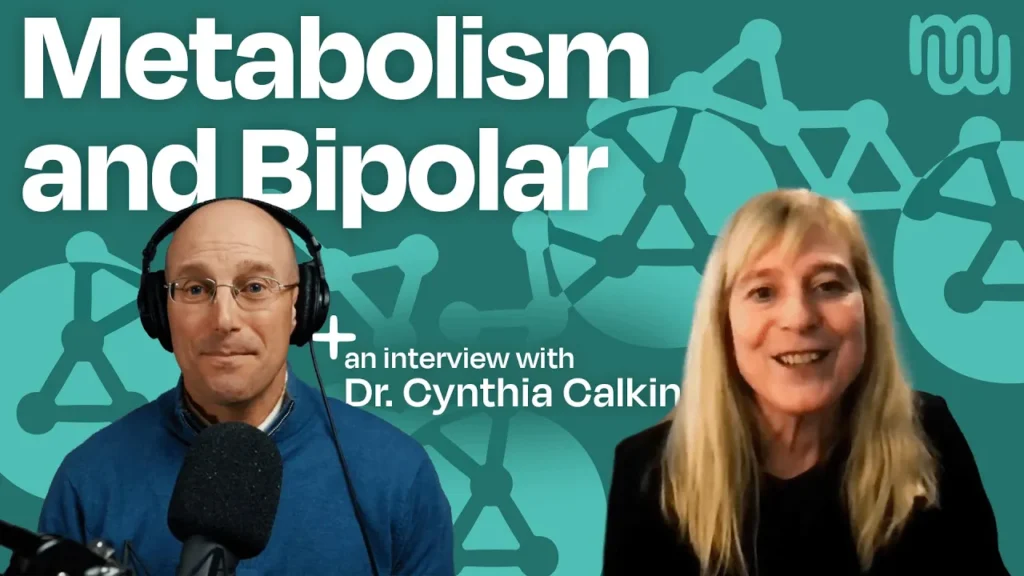
In this episode of the Metabolic Mind Podcast, Dr. Bret Scher talks with metabolic psychiatrist Dr. Cynthia Calkin about her landmark TRIO-BD study, which shows that treating insulin resistance with metformin can rapidly improve long-standing, treatment-resistant bipolar depression. Calkin explains how people with bipolar disorder have dramatically higher rates of insulin resistance, obesity, and blood–brain barrier leakage—and how targeting these metabolic problems can restore mood, function, and quality of life, sometimes after decades of failed treatments. The conversation explores the emerging field of metabolic psychiatry, the role of metformin and other insulin-sensitizing strategies, and the promise of diet and lifestyle (including ketogenic-style approaches) as powerful tools for conditions like bipolar disorder, PTSD, and major depression.
Read more
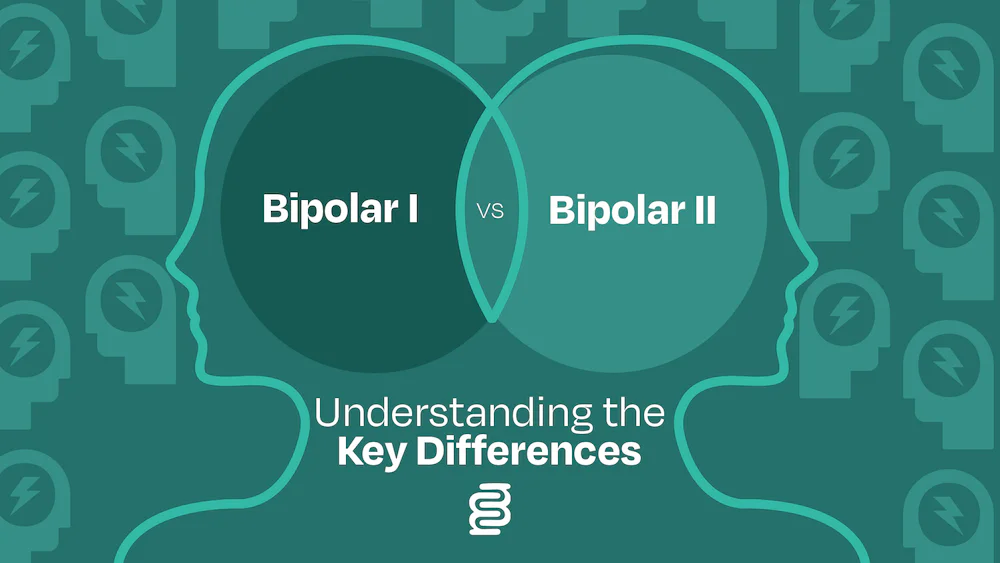
A Nuanced Guide to Understanding Bipolar Mood Disorders, Why They’re Often Misdiagnosed, and How Personalized Treatment Is Reshaping Lives. Bipolar mood disorders are complex and often misunderstood mental…
Learn more

“For the first time in years, I felt like my brain was finally running on the right fuel,” said one of the participants in a new pilot study…
Learn more
Can ketogenic therapy help stabilize bipolar disorder—especially the hard-to-treat depressive side? In this Metabolic Mind episode, Dr. Bret Scher sits down with Dr. Iain Campbell, a Baszucki Brain Research Fellow at the University of Edinburgh who also lives with bipolar II. Campbell shares results from a first-of-its-kind online survey of more than 100 people using ketogenic diets for bipolar disorder: many report substantial improvements, extended remissions (some lasting years), and marked reductions in depression and suicidal thinking. He also previews data from a pilot study of 27 participants showing that higher blood ketone levels correlate with better mood, energy, and lower anxiety—especially above ~2.0 mmol/L—and that objective markers shift in a therapeutic direction, including reduced brain glutamate (on MRS) and lower serum lactate, consistent with improved mitochondrial function. While the team is clear about limitations (self-selection, not a randomized trial), the qualitative stories are powerful, and the quantitative signals are promising. Campbell outlines what’s next: a randomized controlled trial and a new metabolic psychiatry research hub in Edinburgh to accelerate rigorous science. If you’re curious about the intersection of ketosis and serious mental illness—or you’re a clinician looking for emerging, adjunctive tools—this conversation offers data, mechanisms, and lived experience in one place.
Learn more
In this episode of the Metabolic Mind Podcast, Dr. Bret Scher talks with metabolic psychiatrist Dr. Cynthia Calkin about her landmark TRIO-BD study, which shows that treating insulin resistance with metformin can rapidly improve long-standing, treatment-resistant bipolar depression. Calkin explains how people with bipolar disorder have dramatically higher rates of insulin resistance, obesity, and blood–brain barrier leakage—and how targeting these metabolic problems can restore mood, function, and quality of life, sometimes after decades of failed treatments. The conversation explores the emerging field of metabolic psychiatry, the role of metformin and other insulin-sensitizing strategies, and the promise of diet and lifestyle (including ketogenic-style approaches) as powerful tools for conditions like bipolar disorder, PTSD, and major depression.
Read more
A Nuanced Guide to Understanding Bipolar Mood Disorders, Why They’re Often Misdiagnosed, and How Personalized Treatment Is Reshaping Lives. Bipolar mood disorders are complex and often misunderstood mental…
Learn more
“For the first time in years, I felt like my brain was finally running on the right fuel,” said one of the participants in a new pilot study…
Learn more
Can ketogenic therapy help stabilize bipolar disorder—especially the hard-to-treat depressive side? In this Metabolic Mind episode, Dr. Bret Scher sits down with Dr. Iain Campbell, a Baszucki Brain Research Fellow at the University of Edinburgh who also lives with bipolar II. Campbell shares results from a first-of-its-kind online survey of more than 100 people using ketogenic diets for bipolar disorder: many report substantial improvements, extended remissions (some lasting years), and marked reductions in depression and suicidal thinking. He also previews data from a pilot study of 27 participants showing that higher blood ketone levels correlate with better mood, energy, and lower anxiety—especially above ~2.0 mmol/L—and that objective markers shift in a therapeutic direction, including reduced brain glutamate (on MRS) and lower serum lactate, consistent with improved mitochondrial function. While the team is clear about limitations (self-selection, not a randomized trial), the qualitative stories are powerful, and the quantitative signals are promising. Campbell outlines what’s next: a randomized controlled trial and a new metabolic psychiatry research hub in Edinburgh to accelerate rigorous science. If you’re curious about the intersection of ketosis and serious mental illness—or you’re a clinician looking for emerging, adjunctive tools—this conversation offers data, mechanisms, and lived experience in one place.
Learn more