Announcing the new McLean Center for Metabolic Psychiatry Learn more.


Listen, Watch & Subscribe on:



Q&A: Insulin Resistance, Reaching Ketosis, Bone Density, and Rating Popular Keto Products
Listen
About the host

About the guest


Erica:
I’ve heard that sustained deep ketosis can lead to insulin resistance. Following a ketogenic diet can lead to bone loss. Okay, so lightning round. MCT oil, electrolyte powder.
Bret:
Nine. So good.
Erica:
Coffee.
Bret:
Excuse me.
Erica:
Creatine.
Bret:
Quest bar was my dinner.
Erica:
What? I’m shocked.
Bret:
Welcome to the Metabolic Mind Podcast. I’m your host, Dr. Bret Scher. Metabolic Mind is a non-profit initiative of Baszucki Group, where we’re providing information about the intersection of metabolic health and mental health and metabolic therapies, such as nutritional ketosis as therapies for mental illness.
Thank you for joining us. Although our podcast is for informational purposes only and we aren’t giving medical advice, we hope you will learn from our content, and it will help facilitate discussions with your healthcare providers to see if you could benefit from exploring the connection between metabolic and mental health.
Many of the interventions we discuss can have potentially dangerous effects if done without proper supervision. Consult your healthcare provider before changing your lifestyle or medications. In addition, it’s important to note that people may respond differently to ketosis and there isn’t one recognized universal response.
Welcome back to Metabolic Mind. We’re doing another Metabolic Mailbag episode today, and I’m joined by our producer, Erica Girard. Erica, thanks for joining me again.
Erica:
Always a pleasure.
Bret:
Yes, I’m looking forward to digging into all these questions. We’ve been getting so many questions from you, which we really appreciate.
Of course, we haven’t been able to get to all of them, but we’re going to keep trying. We’re going to keep knocking them away. So Erica, remind everybody how they can send us questions. And then, let’s jump right in and start asking them.
Erica:
Yes. Great. So, as a reminder, there’s a couple ways you can send us questions.
You can go to our metabolicmind.org website, and submit it through a form that way. And that’s metabolicmind.org/questions, or you can email us at info@metabolicmind.org.
Bret:
Great. Great, and a number of people don’t want their name being read, and that’s fine. Please let us know. We have no requirements.
We absolutely don’t have to read your names. Although sometimes it’s fun to say, “This was from zzmarcelo3641,” trying to figure all that stuff out, but we certainly don’t have to do that. But anyway, we have a lot of questions to get into, and let’s dig right in. What do you got, Erica?
Erica:
Yeah, let’s jump in.
Okay. So, our first question came through the mailbox, The question is, “I’ve heard that sustained deep ketosis can lead to insulin resistance. Is this true? And if so, how worried should I be about this, and how can it be prevented?”
Bret:
Yeah, this is a question that comes up a lot. So, I want to take a step back and talk about insulin resistance.
And so what is insulin resistance, right? It means parts of your body, cells, so forth, are being resistant to insulin. So, insulin is trying to tell the cells maybe to do something, and the cells aren’t responding as quickly or as appropriately as they should. So traditionally, someone who’s eating a high carb, high calorie diet, they’re metabolically unhealthy. They have insulin resistance.
So, it requires more insulin to do the job of bringing glucose into the cells. So, what you have is this concept of insulin resistance with high insulin levels, and that’s the point I want to make. The insulin isn’t getting glucose into the cells. So, you’re getting more and more insulin. The body’s saying, “We need more insulin to get the glucose into the cells. So, we’re going to keep pumping out more and more insulin.”
So, that’s insulin resistance with high insulin levels. That’s what I call pathologic, or what a lot of people call, pathologic insulin resistance because this is the disease of insulin resistance that is associated with fluid retention and high blood pressure and chronic inflammation and visceral fat. And it can predispose, or make, be associated with higher incidence of cancers and coronary disease, right?
This whole laundry list of complications. That’s pathologic insulin resistance. Now, there’s another version of insulin resistance that’s been termed physiologic insulin resistance. Physiologic meaning it’s happening in our physiology similarly to what I previously described, but it’s not a disease.
And the big difference is insulin remains low. The insulin level remains low so the body isn’t saying, “I’m seeing insulin resistance. We need to crank up the insulin to overcome it.” Instead, the body is saying, “Look,” and of course, this is anthropomorphizing and making it a little simplistic, but the body’s saying, “we’re in a perfectly fine state here.
We don’t need to increase our insulin levels, but we got to make sure the brain is getting all of the glucose it needs. And so, we may show signs of insulin resistance in our muscles and our liver to help make sure that the brain is getting the glucose it needs.” Now, quick reminder, the brain does need some glucose, right?
It can’t run 100% on ketones. But studies show it can run up to maybe even 70% of ketones. But just because it needs glucose doesn’t mean we need to eat carbs or glucose to get it, right? Our body can make the glucose. So that’s sort of the differentiation. So, physiologic insulin resistance, which is not or does not appear to be associated with all those complications because you’re not retaining fluid. You don’t have high insulin levels, right?
You don’t have the visceral fat. You don’t have the chronic inflammation that is associated with pathologic insulin resistance. So, that’s a lot of terms throwing around. But the key is, yeah, is insulin high or is insulin low, right? That is the key. If insulin is high and you have insulin resistance, that’s the pathology.
If insulin is low, then it’s not a pathologic event. It’s a physiologic adaptation, which is still perfectly healthy. It’s also, you may have heard, adaptive glucose sparing is another term that’s been used, that’s been thrown around. And that’s why, so when people who are on a ketogenic diet in, quote-unquote, “deep ketosis”, if they were to take a glucose tolerance test, which is where you drink this horrific 75 gram sugary carbohydrate solution, and they check your blood sugar, you will, quote-unquote, “fail that test” because your body isn’t primed for the carbohydrates. And it’s in this insulin resistance mode.
But what’s so interesting is for the majority of the people, if they would just slowly increase their carbohydrate intake over three days to a week and then take the test, they get a completely different result. So to me, that shows that this is not pathology. This is your body adapting to your dietary intake of low carbohydrates, which you can reverse and undo with adding back carbohydrates.
So hopefully, in my brain this is clear, but now that I say it, maybe it’s not so clear.? So, ask me questions if I need to clarify something, Erica.
Erica:
No, I think I understand what you’re saying. I think the second part of the question was how worried should I be about this. Who should be drinking that horrific drink and taking that test?
Should we all be doing that?
Bret:
No, I think nobody should be doing it, per se. But let me rephrase that. So look, I don’t know the person who’s asking the question. Of course, whenever you’re asking questions, we don’t know all the details about you. If you’re my patient, I would ask you a thousand more questions and get a whole bunch of tests and figure out what’s going on.
So, definitely talk to, everybody should talk to their doctor about it. But what I would say is the key is making sure you know what your insulin level is, and if you have any signs of pathologic insulin resistance versus physiologic insulin resistance. In my mind, if it is true physiologic insulin resistance, that when you’re metabolically flexible and it reverses with adding carbohydrates with low insulin levels, there’s nothing to worry about there from my standpoint.
Now, again, needs to be individualized.
Erica:
Got it. Okay. All right. Moving on. The next question comes again from the mailbox, and this is an anonymous submission. “I have been on the ketogenic diet for about nine months and have experienced quite a lot of mental health benefits.” Great. Love to hear that. “However, it has become quite difficult for me to reach nutritional ketosis, even in periods when I try not to go over 20 or so grams of carbs a day.
I’ve heard from a few doctors that people with insulin resistance might face this problem, and that for them the rules might be stricter. Longer periods of fasting might be needed, and fiber should be avoided even when it comes from whole foods. I wonder if you can comment on that.”
Bret:
Yeah.
Erica:
So having difficulty reaching ketosis even when your carbs per day are very low.
Bret:
Yeah. So first of all, awesome to hear that someone’s improving their mental health symptoms by being in ketosis. That’s wonderful to hear. But I think that the key to this question is, if I were to sum it up, it’s that there is no one ketogenic diet, right?
There is no one diet that is going to get everybody in ketosis the same way. Why is that? Shouldn’t it just be eat less than X number of carbs, and you’re in ketosis? No, because it’s a metabolic shift in our bodies, and that is dependent on our baseline metabolic health. So, there are some people who are incredibly metabolically healthy, metabolically flexible, who can eat 75 grams of carbohydrates per day and stay in ketosis. And there are some people who have to get down to 10 grams of carbs per day in order to get into ketosis.
And the underlying determination of that is likely their baseline metabolic health. There are other factors as well, exercise and fasting and so forth, but baseline metabolic health is a big predictor of that. So yes, somebody who has worse baseline metabolic health is going to need to be stricter.
And then interestingly, that same individual, as their metabolic health improves, they can then be maybe a little more lax and still be in ketosis. So, even for an individual, what defines a ketogenic diet can change over time as their metabolic health changes. So, the person said, “Does that mean the rules have to be stricter?”
Yeah, they do, especially in the beginning. So, like they said, longer periods of fasting perhaps, more strict on the low carbohydrates. And then, possibly, adding things like coconut oil, MCT oil, and making sure you’re getting adequate fat, of course, to help with ketosis production.
So all those things do hold true for baseline metabolic health, I think.
Erica:
Wow, you just blew my mind. I didn’t think that somebody who was metabolically healthy could consume that many carbs and still stay in ketosis. You said, 75 grams?
Bret:
Yeah, and they can still be in ketosis. It’s remarkable.
There was one study, gosh, I forget how long ago it was. It blows my mind how some people can be like, “Oh, this study from 2017 published by so.” And they just like off the top of their head. I can’t do that. I can vaguely see it, but they looked at different levels of carb intake and how often people were in ketosis. And below 50, they were in ketosis, I don’t know, 75% of the time.
I’m just making it up. It was like some percentage. But even at up to 75, 25% of the people were in ketosis. So, it showed that there was this huge spectrum, which just reinforces there isn’t one ketogenic diet. It’s going to be different for each individual.
But less than 25 grams, the vast majority of people were in ketosis. But again, even then it’s not going to be 100% based on your baseline physiology.
Erica:
Yeah. Oh, that’s good to keep in mind. All right. Thanks so much for the question. Our next question is, “I’ve heard that following a ketogenic diet can lead to bone loss.
Is that true for most people or for some people, for any people? And if so, are there ways to prevent that?”
Bret:
Yes.
Erica:
So, bone loss.
Bret:
So, another really interesting question that comes up a lot. So, the theory is a keto diet is a, quote-unquote, “acidic diet.” An acid environment can be detrimental to our bones. Therefore, a keto diet is detrimental to our bones.
Only none of that’s true. So, our bodies are constantly regulating our acid-base status. So, even if we’re producing ketones or we have what’s called, quote-unquote, “acidic diet,” our blood doesn’t reflect that. Our blood balances that out. And so, there really is no acidosis happening.
Now, that’s what happens with ketoacidosis, like the pathologic disease where people are very sick. And that is very different from nutritional ketosis. There you do measure acidosis in the blood. But with nutritional ketosis, you don’t measure acidosis, and it’s not an acidotic state. There was also one study, one that I’m aware of, that showed a rapid turnover of a blood marker, basically, that shows bone is turning over rapidly.
But that was it. There was actually no demonstration of decreased bone density. There’s no evidence to suggest that there’s increased fractures or decreased bone density. In fact, quite the opposite with a lot of certainly anecdotal reports and clinical experience. But if it’s something you’re worried about, measure it, right?
DEXA scans are some of the easiest things to get. There’s a tiny bit of radiation. They’re not all that expensive. They’re pretty prevalent. They’re good at measuring your bone density, and see what happens. And as long as you’re doing some resistance training and getting adequate protein, then most people are going to see benefits to their bone density. And a keto diet’s no different for that.
Erica:
Great. Okay. So, not a threat. Nothing to worry about. But if you are worried, something that you can easily go check.
Bret:
Yeah, something you can easily go check. And if your bone density is decreasing, again, it’s “Am I getting adequate protein?” And not, the RDA 0.8 grams per kilogram. That’s insufficient protein for optimal health.
So, you really want that 1.2 to 1.6 grams per kilogram of reference body weight. We’ve talked about this a lot in the past about adequate protein intake, and doing some form of resistance training, certainly walking. Those are the main factors for bone density. And then, are you taking any medications that can impact it?
Alcohol, smoking, other toxins and so forth, those are all top of my list well before a keto diet in terms of my concerns.
Erica:
All right. So, to close out today’s Metabolic Mailback episode, we’re going to do something a little bit different. Have a little fun lightning round with you, Dr. Scher. Are you ready to play?
Bret:
I’m not sure, but okay. Let’s go for it.
Erica:
Okay, so lightning round. So, the question is for those listeners who are on a ketogenic diet, we would like you to rate these popular items on a scale of one to 10. So, 10 means that you enthusiastically recommend it, and one means you generally avoid it.
Okay?
Bret:
Okay. Ten is good.
Erica:
All right.
Bret:
One is bad. Okay, got it.
Erica:
Ten is good. One is bad.
Bret:
Got it.
Erica:
All right, here we go.
Bret:
All right.
Erica:
MCT oil.
Bret:
MCT oil, I’d say a seven, and it’s because of, it depends. I don’t think everybody needs it. Not everybody’s going to benefit from it necessarily. But those people who want to boost their ketones or are maybe struggling to get the ketones where they want, it is a great sort of easy and effective way to boost your ketones.
On the one hand, it’s a 10 if you really want it. But for the general people, it’s probably, a seven.
Erica:
Okay, a seven. And just a reminder, this is called a lightning round. So, your responses need to be fast.
Bret:
I don’t think I’m so good at that part, but I can work on it. Okay.
Erica:
Okay, second one, electrolyte powder.
Bret: Nine. So good. Prevent the cramps, help with the keto flu, salt your food, use electrolytes. Big fan.
Erica: Okay. Coffee.
Bret: Excuse me.
For me, it’s a 10. That one’s an individual. That one I can’t rate for everybody else. Everybody’s got to rate that one for themselves. For me, it’s a 10, in case you were wondering.
Erica: Maybe caffeine, I should say.
Bret: Yeah. Look, caffeine is probably the best legal drug there is. But make no bones about it, it is a drug.
You can have a dependence on it. It can have brain effects. It can have adverse physiologic effects. And so, getting the right dose for the right person, it’s my drug of choice.
Erica: Love it. Coke Zero.
Bret: One. No. One? I don’t know. Is that harsh? Eh, I guess maybe like a three.
Erica: Okay. Fair.
Bret:
Because if you just really need that like taste of a Coke and you really want, there’s a part of you that just really needs that, I would hope that we can move past that because there is some of that, you know, that sweetness that can be a slippery slope and trigger other things. That’s what I worry about. For some people who just really need that, then okay. Maybe that’s not the end of the world.
But try to avoid it.
Erica:
Fair enough. I’m a Pepsi Zero fan myself. Just admitting the truth. All right. Next one, keto bread. Like brands, such as Hero Bread, are very popular. Things like that.
Bret:
Yeah. I’d say for that one, I’d give it like a five. And again, for people who really feel the need to have some sort of bread, and they really miss it, sure. But you really got to look at the ingredients and see how your body responds.
So, I actually really would like people to be doing it while wearing a CGM or checking their blood sugar. We don’t have home insulin tests, but that would be good too because not all the added fiber is the same .And not all the ingredients are the same. And so, finding one that you like is not the end of the road.
I’d say finding one that you like and does not affect your blood sugar or your body in other ways, or your ketone levels in other ways, would be pretty important.
Erica:
Side note, if it affects your blood sugar but your ketone levels are still roughly the same, is that okay?
Bret:
I guess it depends on how much it affects your blood sugar, right?
If it’s a very small increase, and it’s a short-lived increase. And your ketone levels stay the same, yeah. Then, I’ve got no problem with that. It’d be unusual for it to significantly raise your blood sugar and not lower your ketones. That would be a pretty strange setting. But if that did happen, I would worry about it.
Erica:
Got it. Okay. Creatine.
Bret:
Ooh, creatine. Creatine, I’m at like a nine probably on creatine, especially with all the new evidence about the mental health benefits. So, certainly muscular and physical health benefits, but also mental health benefits. If someone’s vegan or vegetarian, I’d be at a 10 plus on creatine.
For someone eating an omnivore diet and probably getting some dietary creatine, I’d say probably even still a nine.
Erica:
Awesome. Wow. Big fan. Exogenous ketones, such as Ketone-IQ.
Bret:
What I would say, is I give a 10 to my interview with Dr. Dom D’Agostino about exogenous ketones. So, everybody should check that out so because apparently I’m restricted by what I can say here since this is the lightning round.
So, I’d say a 10 for my interview with Dom D’Agostino, and like a six overall because it’s very dependent on the type of exogenous ketone and what you’re using it for. So, check out the interview with Dom.
Erica:
Quest bars.
Bret:
I just got back from traveling to the Bay Area, and Quest Bar was my dinner.
Erica:
What? I’m shocked.
Bret:
I know, right? On the whole, I am anti-bars and anti-processed foods. But my flight was like two hours delayed, and I got in late, and I didn’t want to eat late so I had a Quest Bar in my bag.
So, they’re processed. They’ve got lots of fillers, and it can stimulate that sweetness. But in a pinch, and this is where I was in a pinch. So, I’d give it like a five. But in a pinch, it can really help.
Erica:
Oh my gosh, that just made my day knowing that Dr. Bret Scher ate some sort of processed food in a pinch.
Bret:
We don’t have to be perfect. We can strive for being better.
Erica:
Absolutely not.
Bret:
But we don’t have to be perfect. Yeah.
Erica:
Love that. Intermittent fasting.
Bret:
Ugh. Gosh, it’s so hard to just give one answer for these. I’d say a six. Can be really helpful to help people boost their ketone levels up. Can be helpful for some people for weight loss and improved metabolic health. And can make some people just hungry and craving and want to just binge. And can be bad for mental health for some people.
So, very individualized. So, I’d give it like a six.
Erica:
Fair. Okay, and last one. And then, I’ll let you off the hook. Artificial sweeteners.
Bret:
Artificial sweeteners I’d give a four. It’s a big category, right? If you wanted to say, all right, maybe like monk fruit and allulose? Okay, maybe those go up to a six.
But again, it’s that concern that the slippery slope. How people are going to respond to that sweetness. And for some people, there’s a huge trigger. An addiction-type trigger that even a, quote unquote, “fake sweetener” like that, non-caloric sweetener, can really be damaging. And others, it was enough to just solve what they need for that little sweet hit. And that’s it. And they’re great.
So, knowing who you are, but also how your body responds to it because not all artificial sweeteners are the same. I think we have an episode with Georgia where she, or Dr. Ede, where she went into the artificial sweeteners in more depth. So, I’d recommend people check that one out too.
Erica:
Yeah, that was a good one.
We can link to that one in the show notes as well because I also think that was great all right. We are done with our lightning round.
Bret:
And all right. How’d I do? My answers were a little long.
Erica:
You did well.
Bret:
Did they do okay?
Erica:
You were a little, you were a little long in the tooth. But in general, I think very smart answers and very interesting.
Bret:
All right.
Erica:
Thank you for that. That was a lot of fun. Maybe we’ll do it again on our next mailbag episode?
Bret:
All right.
Erica:
If you’re game.
Bret:
Good, thank you. Thank you for the questions. All of you for the questions, of course. We really appreciate it. We love hearing what’s on your mind and knowing how we can help by providing more information.
So, as Erica mentioned at the top of the show, please keep the questions coming, and we’ll see you here next time at Metabolic Mind. Thanks for joining us.
Erica:
Bye-bye.
Bret:
Thanks for listening to the Metabolic Mind Podcast. If you found this episode helpful, please leave a rating and comment as we’d love to hear from you. And please click the subscribe button so you won’t miss any of our future episodes.
And you can see full video episodes on our YouTube page at Metabolic Mind. Lastly, if you know someone who may benefit from this information, please share it as our goal is to spread this information to help as many people as possible. Thanks again for listening, and we’ll see you here next time at the Metabolic Mind Podcast
Listen, Watch & Subscribe on:
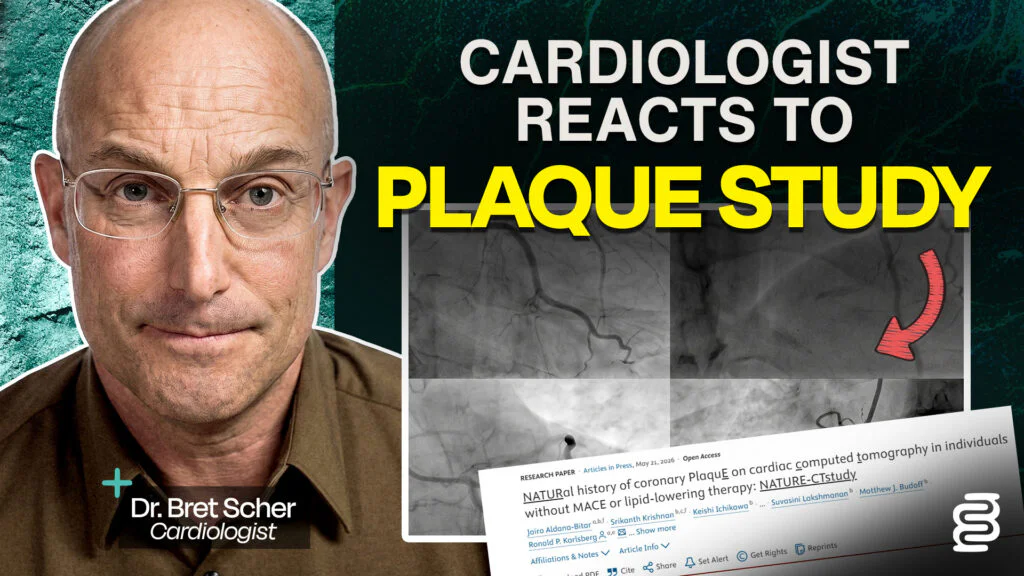
Dr. Bret Scher clarifies confusion around the NATURE-CT study on natural coronary plaque progression, pushing back on social media claims that it proves ketogenic diets are dangerous. He explains this study says nothing about keto specifically, and that comparisons to the retracted KETO-CTA study are scientifically invalid due to methodological flaws and mismatched baseline risk factors between the two very different populations studied.
Read more
Discovering metabolic psychiatry can feel like a door finally opening. For people who have spent years cycling through medications, adjusting doses, and searching for something more, the connection…
Learn more
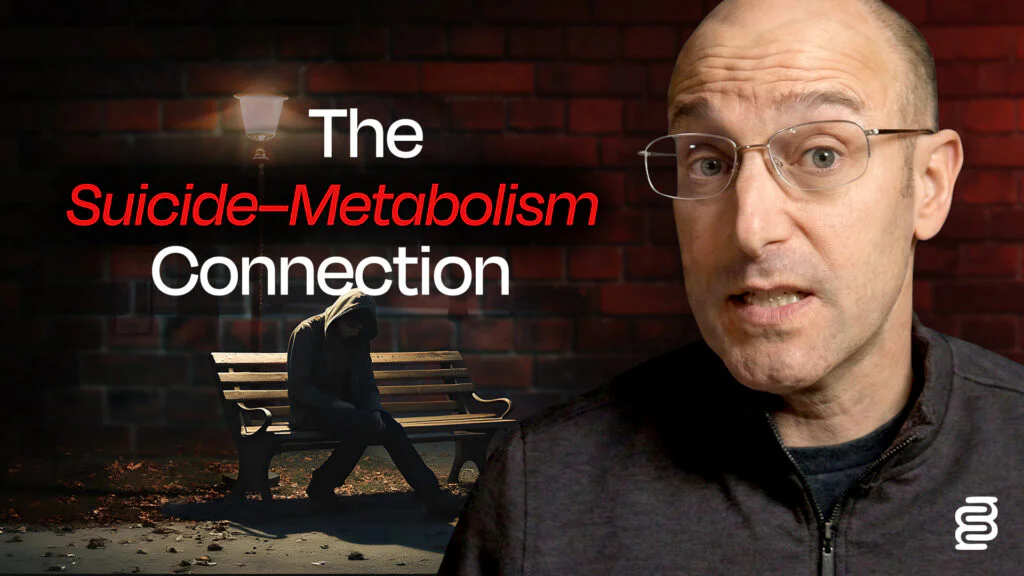
Dr. Bret Scher examines a new Translational Psychiatry study finding that poorer metabolic health, measured through blood glucose, insulin, and lipid markers, correlates with higher rates of suicidal ideation, attempts, and death, even after adjusting for confounders like age and mental health diagnosis. While the study can't prove causation, he argues it strengthens the case for treating metabolic and mental health as deeply connected rather than separate domains in psychiatric care.
Learn more

Obsessive-compulsive disorder can consume hours of a person’s day and reshape life around intrusive thoughts and compulsions that feel impossible to escape. For Tanner, obsessions and physical and…
Learn more
Dr. Bret Scher clarifies confusion around the NATURE-CT study on natural coronary plaque progression, pushing back on social media claims that it proves ketogenic diets are dangerous. He explains this study says nothing about keto specifically, and that comparisons to the retracted KETO-CTA study are scientifically invalid due to methodological flaws and mismatched baseline risk factors between the two very different populations studied.
Read more
Discovering metabolic psychiatry can feel like a door finally opening. For people who have spent years cycling through medications, adjusting doses, and searching for something more, the connection…
Learn more
Dr. Bret Scher examines a new Translational Psychiatry study finding that poorer metabolic health, measured through blood glucose, insulin, and lipid markers, correlates with higher rates of suicidal ideation, attempts, and death, even after adjusting for confounders like age and mental health diagnosis. While the study can't prove causation, he argues it strengthens the case for treating metabolic and mental health as deeply connected rather than separate domains in psychiatric care.
Learn more
Obsessive-compulsive disorder can consume hours of a person’s day and reshape life around intrusive thoughts and compulsions that feel impossible to escape. For Tanner, obsessions and physical and…
Learn more