New Results: First RCT for Schizophrenia & Bipolar Disorder. Learn more.


Listen, Watch & Subscribe on:


Keto as an Adjunct to CBTp? Nicole Laurent Explains
Listen
About the host

About the host


Nicole:
It’s not rocket science to put these two together and be like, “I wonder if this could help people initiate and get through a treatment regimen of CBTp more successfully?”
Bret:
Welcome to the Metabolic Mind Podcast. I’m your host, Dr. Bret Scher. Metabolic Mind is a non-profit initiative of Baszucki Group, where we’re providing information about the intersection of metabolic health and mental health and metabolic therapies, such as nutritional ketosis as therapies for mental illness.
Thank you for joining us. Although our podcast is for informational purposes only and we aren’t giving medical advice, we hope you will learn from our content and it will help facilitate discussions with your healthcare providers to see if you could benefit from exploring the connection between metabolic and mental health.
Here at Metabolic Mind, we share a lot of information and research about ketogenic metabolic therapies for mental illnesses, for psychiatric diagnoses and symptoms. And today, I’m joined by Nicole Laurent, a licensed clinical social worker at mentalhealthketo.com and ketogenic therapy expert, because she published a recent conceptual framework paper discussing ketogenic therapy as an adjunctive treatment to help people with schizophrenia spectrum disorders to engage better with CBT.
So, cBT is often recommended for people with psychotic disorders, with schizophrenia spectrum disorders, but there’s sometimes barriers and a difficulty with people engaging with it. What Nicole has done, based on her clinical experience to make her dive deeper into the science of this, is she’s published a conceptual framework paper about why and how ketogenic metabolic therapy could help with that.
It’s a fascinating topic that will really, I think, open the doors to using ketogenic therapy as an adjunctive treatment in a number of different psychiatric disorders. Not just to treat the underlying symptoms, but to also help people engage with other areas of treatment. So, I hope you enjoy this discussion exploring these concepts with Nicole Laurent.
Many of the interventions we discuss can have potentially dangerous effects if done without proper supervision. Consult your healthcare provider before changing your lifestyle or medications. In addition, it’s important to note that people may respond differently to ketosis, and there isn’t one recognized universal response.
Nicole Laurent, welcome back to Metabolic Mind. It’s good to see you again.
Nicole:
Hi, Bret. Thank you. It’s good to be here.
Bret:
We had a recent interview about ketogenic therapy for PTSD. So, if people haven’t heard that, I encourage them to go back and watch that. And I asked you what’s a misconception in the world of psychology and therapy that you wish were different.
You talked about believing more in the bio model, the bio-psychosocial model, and understanding that the bio part is just as important in the field of therapy as is the psycho and the social. Now, you’re here for another interview. So, I’m going to ask you again, what’s another misconception in your field, in the field of therapy and psychology, that you really wish were different?
Nicole:
This one might be a little bit obvious, but it would be that there’s a huge misconception that restriction of carbohydrates in and of themselves will cause eating disorders in individuals. And that, somehow, ketogenic diets are unsafe for individuals with eating disorders or those even without. And so, that big danger signal that’s constantly put out when people go to their therapist, psychotherapist and ask, “Hey, should I do a ketogenic diet?”
And them being told that it’s somehow going to cause a disorder.
Bret:
Yeah, that one never made sense to me. How is restricting carbohydrates different than restricting animal foods? Different from just restricting calories and cutting calories, or restricting any type quote, unquote “restricting any type of food”?
How is that any different? And it’s just a societal construct. There’s no evidence behind it. There’s no reason it would be different, other than we assume everybody needs to eat carbohydrates. That’s, this is such an interesting one that never made sense to me, especially now that we’re seeing it can actually be a treatment for eating disorders, right?
So, really backwards. Funny how that happens, isn’t it?
Nicole:
The “all foods fit model” would say, Bret, you really shouldn’t be restricting anything. Anything that can go in your mouth is fair game. And if you get into the habit of restricting anything or having even too strong a preferences for one thing versus another, that somehow that is eating disordered behavior.
And so, it’s just a very interesting paradigm. And you are right. It does not consider that eating disorders are documented to have neuroendocrine factors that drive them to some degree. At least there’s that bio pillar again, right? So, if we forget that there’s neuroendocrine factors to eating disorders, then we overemphasize the psychosocial components of treatment.
And so, it just all ties in together.
Bret:
Yeah. Really interesting. Little not on topic for what we’re talking about today, but I’m glad you answered that way because it is such a fascinating topic.
Nicole:
Yeah.
Bret:
And we have interviews with Dr. Guido Frank and all the amazing work he’s doing on eating disorders. I encourage people to check out. But so today, though, we’re talking about your publication in Frontiers in Psychology, Ketogenic Metabolic Therapy as a Candidate Adjunct for CBTp Delivery in Schizophrenia Spectrum Disorders. So, CBTp.
Nicole:
Yes.
Bret:
Cognitive behavioral therapy for psychosis. And you talk in this paper how it’s really not a question of if it works but, or CBTp, but a question of how do you get someone to stay with it and the challenges. So, give us some of the background about CBT for psychosis.
Nicole:
Before I do that, I should talk about, a little bit about, what a conceptual analysis paper is and how it’s a little bit different than a lot of the papers that are published in the ketogenic diet literature.
So, yeah. A conceptual analysis is this foundational theory-building scholarship. So, it’s not a ranked level of evidence about efficacy in any way, shape, or form. So, when we think of that pyramid and the bottom and how we’re trying to get to the top with the RCTs and all that good stuff, a conceptual analysis is off to the side. But it still serves, I feel, like a really interesting purpose. And basically, it’s a form of scholarships.
So, it’s doing a different job, and its purpose is to clarify and define and develop and critically assess topics and concepts that support theory construction and actually help shape the future of empirical research. It’s because it clarifies the questions that need to be studied and how those key constructs can be measured and tested and researched.
And so, it’s actually a really fun, fascinating. I really am enjoying writing these lately. Yeah.
Bret:
Yeah. It’s a really a cool exploration about what could be and the theories behind it. And you did a great job in this paper. And so, first you talk about CBTp. So, the role for CBT in psychotic disorders and for psychosis, and the benefits and challenges to set the stage. And then, brought in how ketogenic therapy could impact that and the biological theory behind it.
So, walk us through the beginning there.
Nicole:
So, this paper was inspired by just thinking about the improvements that people are getting in schizophrenia spectrum disorders using ketogenic therapies. And being a psychotherapist for over 18 years and doing CBT work, I know how difficult and cognitively demanding CBT work can be for people, even those without schizophrenia spectrum disorder. SSDs for short.
And I just started to put together in my head that even if, even if it isn’t about, does this treatment cure schizophrenia or is this an effective treatment for these particular conditions? Could some of the treatment benefits that people are reporting, you know, in the pilot trials, in the observational studies, in the case study literature, these map onto what you hear patients talk about when they discuss having difficulty using CBTp treatment.
And it’s not just the individuals describing it. it’s described well in the research literature that there are these kind of very specific issues that come up for people when they try to utilize these treatments. So, it’s hard to get, it’s hard to get them to go. It’s hard different reasons. But it’s hard to go, and it’s hard to participate.
It’s hard to do homework in between sessions, which is part of that required piece. And CBTp is considered a gold standard psychotherapy for this population. There’s a huge issue in people being able to fully utilize it because they’re getting cognitive issues and symptoms and psychotic symptoms and sleep disturbances. And so, many things are getting in the way.
Bret:
Yeah. And I like how in this paper, you did lay the groundwork about what we know thus far about ketogenic medical therapy for schizophrenia spectrum disorder with the case reports, with Dr. Sethi’s pilot study, with Dr. Danan’s retrospective analysis, and with sort of what’s been published so far. But also, like you just said, the theories about maybe how it can have a direct impact on the symptoms and can have an impact on other treatments that will help with the symptoms.
So, why would ketogenic therapy help someone engage in CBT more if they’ve got a psychotic disorder?
Nicole:
The paper is very careful to differentiate what’s being asked here, and this was actually an issue in peer review to some degree because there was a lot of questions from peer reviewers about, “Wait a minute, we don’t even know if this works for this diagnosis.”
And I would say this, that’s not the question of this paper. The question of this paper is not whether or not ketogenic therapies are an effective treatment for SSDs. The question of this paper is: can this improve the ability for these patients to utilize this treatment, CBTp? And making that very clear.
So, it was a clinically justified, a clinical actionable, I would say question, that was aligned with whether CBTp delivery and psychotherapy delivery, if KMT could improve those limiting factors enough to increase the initiation and the retention and the completion of CBT. And that’s really what we were trying to, what this paper, was trying to ask. And really, ask psychologists to become interested in studying if that potential.
Bret:
And was part of this based on your own clinical practice?
Nicole:
To some degree, yeah, absolutely. But really, these conceptual analysis papers are not just based on my opinion in any way, shape, or form. So, they’re very, there’s very kind of deep narrative literature reviews that happen, pulling these different concepts together to see how best to ask this question or even whether this question should be asked. And I would say it absolutely should.
Bret:
Yeah. And you definitely do a very good job of putting together all what we know, and what we don’t know on this topic. But, I assumed it must have come from, you say, seeing that this happened. You’ve said all along that, I remember interviewing even years ago, that just you’ve seen people on ketogenic therapy able to participate in counseling more, in therapy more than they were before.
And so, that lays the groundwork here with that clinical experience of people being more engaging. So, what are some of, what are some of the theories that you lay out in the paper about why that is? Or why that could be, I should say.
Nicole:
Yeah. So some of the tables in the study are actually very helpful in just simply mapping those pieces.
So, in the research literature for  CBTp , they talk about limiting factors being such things as sleep disturbance, having that make it difficult for them to get to CBTp sessions. It talks about people having low distress tolerance. CBTp is hard work, right? Or CBT, in general, is hard work. And there’s low distress tolerance in this population.
This population has really hard cognitive deficits and impairments. And so, that also makes it very difficult. And then, so you’re looking at that literature saying, these are those types of barriers. There’s other barriers for sure. It’s not just that, but that’s a big piece. And then, you go over here to the ketogenic literature, and people who have their delusions and psychosis go down or disappear.
You have people who are reporting better sleep. You have people reporting resiliency suddenly or less distress. You have people saying their brain is working better. And so, it’s not rocket science to put these two together and be like, I wonder if this could help people initiate and get through a treatment regimen of CBTp more successfully?
And if so, maybe it doesn’t, but if so, what are some of those research pieces that we would need to look at as clinical psychologists and psychotherapists that would actually measure that? Not whether it’s a full treatment for psychosis or schizophrenia. That’s being asked, but really psychologists should be very curious about how some of these new treatments affect outcomes in these different psychotherapy modalities.
Bret:
Yeah, so with that curiosity, do you think they should start using ketogenic therapy as an adjunct to help people engage with therapy? Or do you think this is a call more for researchers to say we need to study this more? Or a little bit of both? Like, how do you see, how do you see that?
Nicole:
I think it could be both, most certainly.
There can be studies that are created just for this purpose of looking at this question. But there can also be embedded designs, right? So, maybe some of the different studies of KMT can have an arm that’s control with CBTp being offered without KMT. And they can add an arm where there’s KMT and CBTp being offered and have that be an extension of existing studies.
And also, clinicians can be, I’m a clinician. I collect data for publication and to write things up. Other clinicians can become more used to doing that and publishing case studies on, and look at this. If you’re a psychologist and you’re not trained in KMT, don’t be thinking that you’re going to manage that part yourself.
You’re going to want to send them out for that, for sure.
Bret:
Yeah, very good point. Very good point. Now, this paper is specifically about SSDs, schizophrenia spectrum disorders. Is there any reason to think that this could also apply to CBT for depression or CBT for OCD or anxiety or other, this trans-diagnostic model?
Nicole:
That’s a very good question. And I would say that if the literature in those areas suggests that there are barriers to completion or barriers to participation or initiation and the ketogenic literature shows or is beginning to show improvements in the things that drive those barriers, then yes, absolutely, that could be possible.
Bret:
And what do you think the reception from your sort of colleagues as a whole, the general state of counselors and therapists as a whole, would be to: one, a nutritional intervention to help with CBT? And two: specifically a ketogenic nutrition intervention to help with CBT? What do you think the reception will be?
Nicole:
The experience I had in peer review with this was interesting because they were really super curious about ketogenic diets. They really wanted me to go into a deep thing about what are the treatment mechanisms and why would this work? And I kept having to say, “No, that’s not this kind of paper, but there’s all these other papers being cited in there that would go into deep understanding of that.”
So, I really like to think that psychologists are very curious humans, and they actually want people to get better. And I think that they actually will be open to it, once they understand the intervention better. And as more outcomes come from different studies, I think that it’s inevitable that this is going to trickle down into the psychology world.
And in the meantime, this is here for them to find when they’re ready.
Bret:
And I like throughout the paper the word “adjunct” is in there quite a bit. So, this is not in lieu of other treatments, but it’s in addition to other treatments to help make other treatments more effective, and the combination and the synergy. And I really like how you laid that out.
So, I think they would be, people should be much more receptive to that than as opposed to saying this replaces what you’ve been doing. But no, it’s going to, what you eat makes a difference. And certainly, your metabolism and all the impacts that we know ketogenic metabolic therapy can have, it makes sense that it could impact the way your brain is working and how you engage with therapy and how you engage with a counselor.
So, certainly makes sense. I hope people would be open to receive that, for sure.
Nicole:
And it’s part of what was promised to us. So, many years ago when I was in graduate school, they told us that sometimes our psychotherapy would be used to help people get on medication because that would help the psychotherapy work better.
And over the many years that I’ve been a psychotherapist, I’m not sure I’ve seen that. And I’m not sure that’s been shown in the outcomes, that’s actually what’s occurring. And although there’s a research literature that says that they go better together, I don’t know if really long-term outcomes are better because of that.
And this is the possibility this might be the biological treatment that meets that promise that was given to the public, and was taught in professional schools and universities about the role of medication to help psychotherapy work better.
Bret:
Very well said. I like how you tied that together.
That makes a lot of sense. Any last thoughts about this paper? And then, of course, where can people find you to learn more about all the amazing work you’re doing?
Nicole:
Yeah, no additional thoughts about the paper. I’m always happy for feedback. And I’m always happy to hear from people about their experience of my paper.
But they can find me at mentalhealthketo.com. There’s an About Me page with my publications, and they can also send me an email if they like. And they can learn about how I work with people through an online program and in-person and/or individual. So yeah, they can find me there.
Bret:
Great. Thank you again for joining.
And I think I said this last time I interviewed you, too. But I’m just so amazed that you are not only busy in your clinical practice, but you’re taking the time to put these in writing and to publish them and go through the whole peer review process, which is not easy to do, and takes a lot of time.
So yeah, thank you for that effort to put this out there for all the rest of us to learn from. I think that’s so important. So, thank you so much.
Nicole:
You’re welcome. I’m happy to do it.
Bret:
I think that’s a super interesting concept, right? We think about ketogenic metabolic therapy and all the direct impacts it can have on brain function, and how that can directly impact symptoms of schizophrenia or other psychoses or even bipolar disorder, depression, the direct symptom effect.
But then, there’s this whole other pillar of how it just changes how you engage with other treatments, and in this case, CBT, which I think is so interesting. Or you can think about how it changes maybe your physical activity, or how it changes your interactions with other people, right?
There’s this whole other section of improvement that maybe is a little bit more difficult to measure. But this paper that Nicole Laurent wrote really walks through the framework of how that could be. And I think that just, again, says this isn’t like a medication that has one impact. Or though, you could say even for certain medications, take GLP-1s, people lose weight and maybe they start to feel better about themselves.
Maybe they start to have a little more energy. Maybe they start to exercise a little bit more, right? So there are, I guess that’s like the equivalent or the analogy of how that could work. So, super interesting and lays the groundwork for future research and maybe for therapists to try this.
Of course, if they’re trained in how to do it, it’s the best. If not, then working with somebody who is trained could be very beneficial. I’m thankful for Nicole for putting this out there, and I hope people really learn from it and engage with it as another potential, all right? So, thank you so much for watching, and we’ll see you here next time at Metabolic Mind, a nonprofit initiative of Baszucki Group.
Thanks for listening to the Metabolic Mind Podcast. If you found this episode helpful, please leave a rating and comment as we’d love to hear from you. And please click the subscribe button so you won’t miss any of our future episodes. And you can see full video episodes on our YouTube page at Metabolic Mind.
Lastly, if you know someone who may benefit from this information, please share it as our goal is to spread this information to help as many people as possible. Thanks again for listening, and we’ll see you here next time at the Metabolic Mind Podcast.
Listen, Watch & Subscribe on:

Subscribe to Laurent’s Mental Health Keto Blog: Because you deserve to know all the ways you can feel better.
Read more
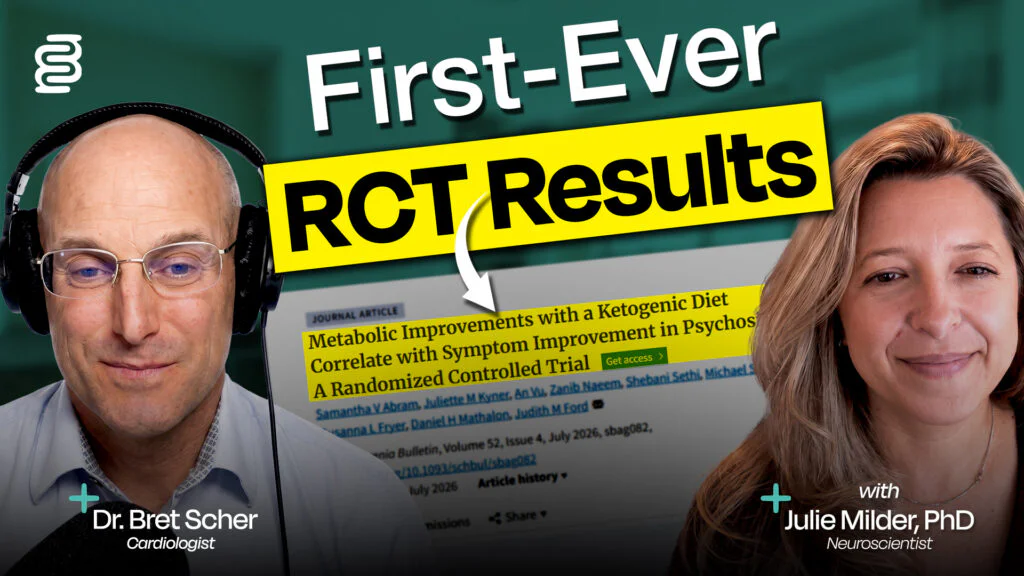
A newly published randomized controlled trial explored whether ketogenic therapy could improve outcomes for people with psychosis spectrum disorders, including schizophrenia, schizoaffective disorder, and bipolar disorder with psychosis. In this interview, Dr. Julie Milder breaks down the study's design, key findings, and why longer-term data suggest ketogenic therapy may improve not only metabolic health, but also psychiatric symptoms and cognition.
Learn more

Recovery from psychosis is a long, grueling process. The last time I had a manic episode was in the spring of 2021. I was a marketing and development…
Learn more
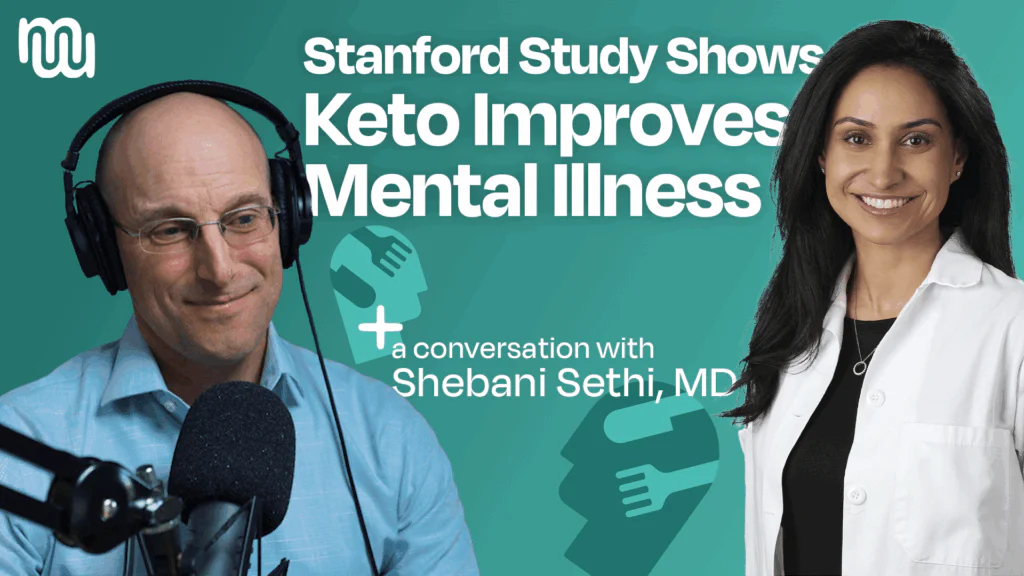
Stanford psychiatrist Dr. Shebani Sethi joins the Metabolic Mind Podcast to discuss her landmark pilot trial showing that a ketogenic diet led to 75% recovery and complete reversal of metabolic syndrome in patients with schizophrenia and bipolar disorder. She explains how improved energy, sleep, and reduced psychotic symptoms transformed participants’ lives, highlights the study’s strong adherence and safety, and explores the growing promise of ketogenic therapy as an adjunctive treatment for serious mental illness.
Learn more
Subscribe to Laurent’s Mental Health Keto Blog: Because you deserve to know all the ways you can feel better.
Read more
A newly published randomized controlled trial explored whether ketogenic therapy could improve outcomes for people with psychosis spectrum disorders, including schizophrenia, schizoaffective disorder, and bipolar disorder with psychosis. In this interview, Dr. Julie Milder breaks down the study's design, key findings, and why longer-term data suggest ketogenic therapy may improve not only metabolic health, but also psychiatric symptoms and cognition.
Learn more
Recovery from psychosis is a long, grueling process. The last time I had a manic episode was in the spring of 2021. I was a marketing and development…
Learn more
Stanford psychiatrist Dr. Shebani Sethi joins the Metabolic Mind Podcast to discuss her landmark pilot trial showing that a ketogenic diet led to 75% recovery and complete reversal of metabolic syndrome in patients with schizophrenia and bipolar disorder. She explains how improved energy, sleep, and reduced psychotic symptoms transformed participants’ lives, highlights the study’s strong adherence and safety, and explores the growing promise of ketogenic therapy as an adjunctive treatment for serious mental illness.
Learn more