Announcing the new McLean Center for Metabolic Psychiatry Learn more.


Listen, Watch & Subscribe on:



JAMA Psychiatry Analysis: What 50 Studies Tell Us About Nutrition For Depression & Anxiety
Listen
About the host


Bret:
A recent publication in JAMA Psychiatry concludes that ketogenic diets improve depression symptoms. Now, if you’ve been following us at Metabolic Mind, this is likely not a surprise as we recently reviewed the results of the KIND study where research used ketogenic therapy to treat major depressive disorder in college students and saw dramatic life-changing results. But what’s different about this most recent paper is that they evaluated 50 studies to reach their conclusions, which at first seemed hard to believe, for me, that there have even been 50 studies on ketogenic diets for depression. And that’s where we need clarification.
These studies weren’t all necessarily designed to treat depression, but they all measured some depression symptoms or markers of psychological well-being. For instance, one trial was actually a cancer intervention study. But the mental health outcomes were measured, and they improved significantly. And it’s also important to note that this paper actually didn’t include the recent studies treating serious mental illnesses with ketogenic therapy.
Like the KIND study from Dr. Jeff Volek’s lab at Ohio State, or Dr. Shebani Sethi’s study from Stanford using ketogenic diets for bipolar disorder and schizophrenia, or Dr. Iain Campbell from University in Edinburgh on bipolar disorder. So, it’s missing a lot of the core literature. But as I said, it’s not a surprise to us that the authors found ketosis beneficial for depression.
And there were some helpful take-homes from the study that I’d like to discuss. So, the first is that even in the randomized controlled trials, ketogenic diets improve depression symptoms. So, across 10 different randomized controlled trials, the ketogenic diets produced a small to moderate reduction in depressive symptoms compared with control diets.
Remember, not necessarily treating major depressive disorder. But the effects were significantly stronger when the study actually measured ketosis, with those studies showing a large improvement. So, I’ll expand a little more on this in just a bit, but it makes sense, right? Advising someone to eat a keto diet versus measuring and proving they’re actually in ketosis are two very different interventions.
And quickly, let’s just review. Why would ketosis be beneficial for mental health or depression? There are a number of potential mechanisms, including providing ketones as an efficient brain fuel, especially in the presence of metabolic dysfunction, but also reduction in neuroinflammation, balancing of the neurotransmitters with an increase in GABA, decreased glutamate, improved mitochondrial health, and many other potential mechanisms.
And you can learn more about these with the mechanisms of ketosis in many of our other videos here at Metabolic Mind. The second finding, though, was that anxiety symptoms in randomized control trials were neutral. Not worse, not better. But in the non-randomized studies, those showed consistent improvements in both depression and anxiety.
So, we need a little more data on anxiety before reaching sweeping conclusions, but it’s encouraging that the non-randomized study showed some improvement. And remember, these weren’t studies designed to treat generalized anxiety disorder. So, that would be interesting to see from the research side. But perhaps the biggest takeaway is that ketosis verification, diet strictness with lower carbohydrate intake, and metabolic health most dramatically influenced the outcomes.
That’s where they saw the biggest benefits. So, the paper found that the benefits were strongest in studies that verified nutritional ketosis with testing, or those that used very low carbohydrate intervention. So, less than 10% carbohydrates compared to the more moderate carb reduction. Or in participants without obesity with underlying metabolic health who were able to achieve ketosis more easily.
So, the bottom line is the more someone was in ketosis, the more they improved. So, that’s a big takeaway for me to help shape future research and clinical care. And then a quick mention on safety. Overall, the safety profile was very acceptable. Most adverse effects that reported were mild and related to the keto adaptation period in the first couple of weeks.
They were short-lived, things like fatigue or headache or maybe a little constipation. But there was one case of euglycemic ketoacidosis, a potentially life-threatening condition, if not recognized and treated right away. And this occurred in a person who was also taking SGLT2 inhibitors, like Jardiance or Farxiga.
So, that’s an interaction that’s been reported previously. And that’s why SGLT2 inhibitors are generally contraindicated with a ketogenic diet, except in rare cases with those who are being treated by expert clinicians or are vigilant about testing their ketones. So, definitely something to keep in mind for clinicians and individuals.
So overall, the paper was very encouraging for the benefits of a ketogenic diet for improving mental health symptoms,. And the more someone was in ketosis, the more they appeared to benefit. And as I mentioned, these findings are supported by the KIND study, which you can learn about in our content covering the study from Dr. Jeff Volek, and his research associate, Dr. Drew Decker, and all the other studies that weren’t included in this paper.
But where does this leave us for treating depression with ketogenic therapy? So, on the one hand, if someone is looking for a novel treatment for depressive symptoms, it appears we have ample evidence for them to discuss ketogenic therapy with their provider now. And likewise, providers should probably consider it a viable option to consider for their patients.
The evidence is there and growing. But this is hopefully also a call for larger randomized controlled trials of ketogenic therapy for depression and other psychiatric diagnoses with an emphasis on using a well-formulated ketogenic diet and documenting ketosis, as those were the features that really stood out.
So, we’ve seen the indications that it’s a safe and effective treatment. Why wouldn’t we want to study it more? And you can learn more about ketogenic and metabolic therapies for mental health in general at our website, metabolicmind.org, and hear from the individuals who’ve shared their experience with us at our THINK+SMART page, metabolicmind.org/thinksmart.
What about you? Have you noticed mental health benefits from ketosis? If so, please leave us a comment. And if this was helpful, please remember to like and subscribe. Thank you very much for watching. I’m Dr. Bret Scher, and I’ll see you here next time at Metabolic Mind, a non-profit initiative of Baszucki Group.
Listen, Watch & Subscribe on:
An online community led by Lauren Kennedy West for people using metabolic therapies to treat their mental disorders.
Read more

What happens when ketogenic therapy moves from clinical research into real-world mental health care? Dr. Erin Bellamy shares results from her practice showing meaningful improvements in depression and anxiety, while exploring the role of personalized nutrition, ongoing support, and community in helping people successfully implement ketogenic therapy.
Learn more
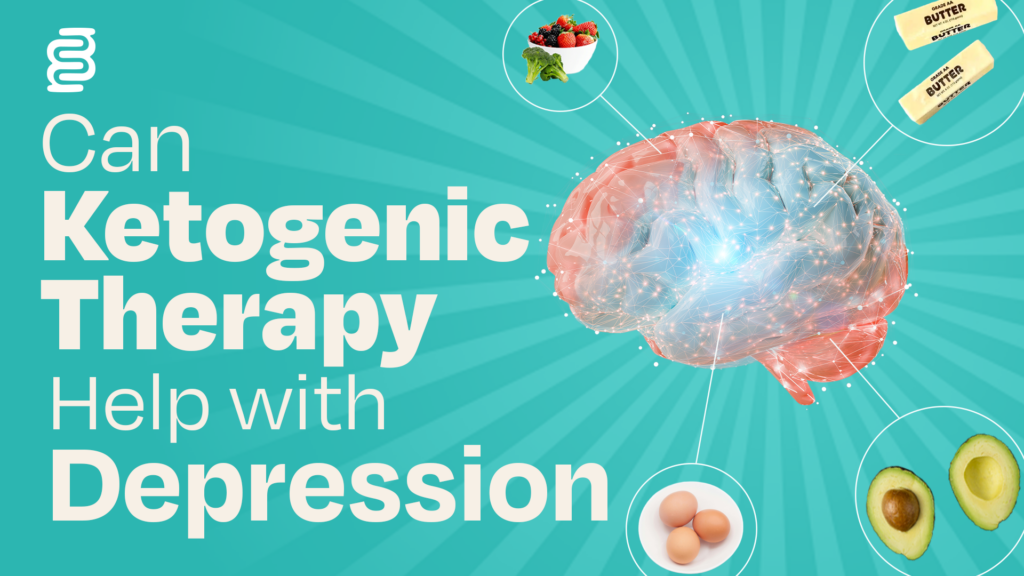
Depression is a complex, often life-altering condition that impacts how a person thinks, feels, and moves day to day. And while many treatments exist, far too many people…
Learn more

This piece was originally published in The New York Times on March 17, 2026. By Alice Callahan and Christina Caron Maya Schumer, 32, a neuroscientist in Belmont, Mass.,…
Learn more
An online community led by Lauren Kennedy West for people using metabolic therapies to treat their mental disorders.
Read more
What happens when ketogenic therapy moves from clinical research into real-world mental health care? Dr. Erin Bellamy shares results from her practice showing meaningful improvements in depression and anxiety, while exploring the role of personalized nutrition, ongoing support, and community in helping people successfully implement ketogenic therapy.
Learn more
Depression is a complex, often life-altering condition that impacts how a person thinks, feels, and moves day to day. And while many treatments exist, far too many people…
Learn more
This piece was originally published in The New York Times on March 17, 2026. By Alice Callahan and Christina Caron Maya Schumer, 32, a neuroscientist in Belmont, Mass.,…
Learn more