Announcing the new McLean Center for Metabolic Psychiatry Learn more.


Listen, Watch & Subscribe on:



Is RFK Right About Saturated Fat? Here's the Truth
Listen
About the host


Bret:
This is Metabolic Mind Bitesize. I’m Dr. Bret Scher. You’ve probably seen the headlines. RFK wants to remove the cap on saturated fat so we can all eat more pizza and ice cream, right? I wish I was making that up, but The Wall Street Journal actually ran an article pretty much claiming exactly that. I’m sure it worked for clicks, but it’s a gross misrepresentation of the debate and the discussion around saturated fat.
For decades, we’ve been told to limit saturated fat, trim the steak or don’t eat the steak, avoid full-fat dairy, and buy everything labeled low-fat. But what if that restriction was unnecessary and maybe even counterproductive? Who knows if it’ll happen or not. And what the government’s going to recommend. But I, for one, would definitely encourage the removal of this arbitrary cap on saturated fat.
Not to promote overconsumption or to give all saturated fat a health halo, but to allow people to construct an overall healthy diet that includes whole nutrient-dense foods that naturally contain saturated fat. There isn’t one healthy diet for everyone. We have to realize that. And people deserve to be able to construct the version of a diet that works best for them without misguided and arbitrary limits on macronutrients.
Removing the cap on saturated fat is a step in that direction. So, here’s the first thing we need to understand. Saturated fat isn’t one thing. It’s a group of fatty acids found in varying amounts of different foods. And for example, the fat in an average steak is only about 45% saturated and 55% unsaturated.
And that surprises a lot of people because it’s often portrayed that steak is all saturated fat, right? It’s not. And even the heart-healthy salmon, Mediterranean-based heart-healthy salmon, it’s got 20% saturated fat, right? So, it’s got some. Now, this tells us something important, right? Foods aren’t isolated nutrients.
They’re complex food matrices. Their health effect depends on the whole food and the whole diet for that matter, and not just one nutrient. That’s why our focus should remain on whole, minimally processed foods. Meat, poultry, fish, eggs, and dairy as close to their natural forms as possible. Yet, what are the most common sources of saturated fat in our diets?
They are sandwiches, baked goods, pizza, even ice cream and pastries. So, is the problem here the saturated fat or the fat combined with the refined carbs and sugars? It’s well established that this high carb, high fat combination is a health disaster driving overeating, metabolic dysfunction, and a host of medical complications.
So remember, removing the cap on saturated fat wouldn’t mean we should eat more fat and more carbs. When you increase food with dietary fat in it, especially from whole food sources, it’s essential to reduce something else. And the best candidate is carbohydrates, particularly the refined ones. When both carbs and fat are high, your body will always burn the carbs first. And the fat you eat gets stored, not used.
But when carbs are lowered and your metabolic health improves, your metabolism can shift and your body can start to burn the fat for energy. And this is the foundation of metabolic flexibility and better long-term metabolic health. So, lifting the restriction on saturated fat would also open the door to discussing low carb and ketogenic diets as legitimate therapeutic options for people with various metabolic dysfunction, like diabetes and fatty liver disease, insulin resistance, and even mental illnesses.
Of course, ketogenic diets don’t have to be high in saturated fat, and that’s really important to recognize. You can eat a vegetarian keto diet, a Mediterranean keto diet, even a vegan keto diet. But some people do eat saturated fats on their keto diet. And when properly designed with real nutrient-dense foods, these low-carb diets full of saturated fats can improve insulin sensitivity, lower triglycerides, support sustainable weight management, and improve body composition.
So, with all that, though, you might be wondering, “Yeah, but what about heart disease, right? I’ve heard saturated fat’s a walking heart attack. It’s going to give you heart disease.” Most of the data linking saturated fat to heart disease comes from observational studies, and there are plenty of contradictory evidence to that.
But remember, the observational studies are low-quality evidence that suffer from healthy user bias with confounding variables, very low effect size, poor dietary recall, and so much more. Just an example, many studies find that people eating more saturated fat also smoke more, exercise less, and are less likely to take a multivitamin.
They’re simply less healthy and less health conscious. They just happen to eat more saturated fat. They aren’t less healthy because they eat more saturated fat. So, it’s a circular argument that doesn’t work. But moreover, most of these studies don’t separate whole food sources, like unprocessed meat and poultry and dairy, from processed foods, such as pizza, lasagna, and pastries.
And that’s a problem because if the study doesn’t differentiate between them, your body certainly will, though. So, when researchers do make that distinction, they try to separate those foods. Then, there are studies showing no increased risk from unprocessed red meat, full-fat dairy, or even dark chocolate.
And finally, it’s true that eating more saturated fat-containing foods can raise LDL cholesterol in some people. In a Cochrane review of randomized trials, reported a very small increased risk of heart disease for those whose LDL went up after eating more saturated fat. But remember, this happened to some people, not all.
So, why should everyone limit their saturated fat when only some will see an increase in their LDL? That just doesn’t make sense. But even then, heart disease is multifactorial. There are plenty of studies looking at low-carb diets that include saturated fat demonstrating no rise in LDL or even a small rise with an reduction in calculated cardiac risk.
We lose that nuance if we have a blanket reduction in saturated fat and assume everybody’s LDL goes up and everybody’s heart disease risk goes up. But that’s not the case. So, if a diet that includes foods containing saturated fat helps someone improve their insulin sensitivity and lower their inflammation and improves all aspects of metabolic health, the net benefit is going to be dramatically beneficial for overall cardiac health.
That’s something that goes against commonly held beliefs and isn’t discussed enough. And lastly and importantly, LDL can be monitored, right? We can test for it, and the diet can always be adopted and altered, if that’s appropriate. So, when we talk about saturated fat, let’s stop isolating a single nutrient. And let’s not pretend it means it’s okay to eat more ice cream and pizza.
That’s disingenuous and purposely misleading. Instead, let’s emphasize whole foods, dietary context, and metabolic health and metabolic balance. And let’s not portray saturated fat foods as a walking heart attack, another disingenuous statement. By removing this arbitrary restriction on saturated fat, we can empower people to eat in a way that they enjoy and can sustain, which also supports long-term health.
So, whatever the government does, whether they address it or not, I think we as individuals can all take charge of our own diet, our own health, and realize these important nuances around saturated fat. So, what do you think? Do you agree? Should we remove restrictions on saturated fat? Leave us a comment and let us know what you think.
And if this was helpful, please like and subscribe. I thank you for watching. I’m Dr. Bret Scher, and we will see you here next time at Metabolic Mind, a non-profit initiative of Baszucki Group.
Listen, Watch & Subscribe on:

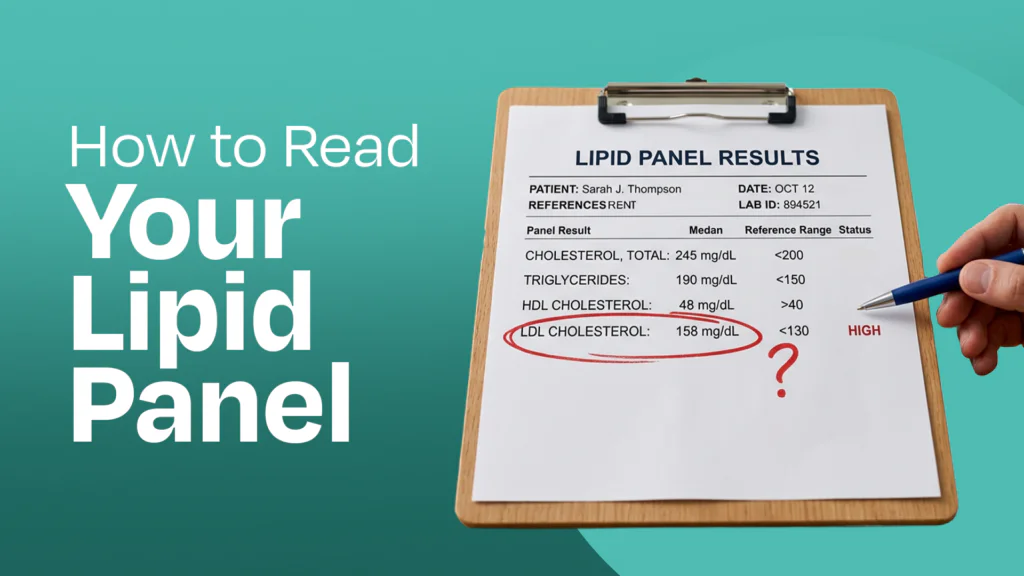
You open your latest lab results and see your LDL highlighted in red. Your stomach drops. You haven’t even met with your doctor yet to go over the…
Read more
Dr. Bret Scher examines a new trial showing the drug olezarsen dramatically lowered triglycerides and ApoB, yet produced zero reduction in coronary artery plaque. He uses this as a case study for a broader point: lowering a lab number with a drug isn't the same as fixing the underlying metabolic dysfunction that caused it, drawing parallels to blood sugar, blood pressure, and weight management medications.
Learn more
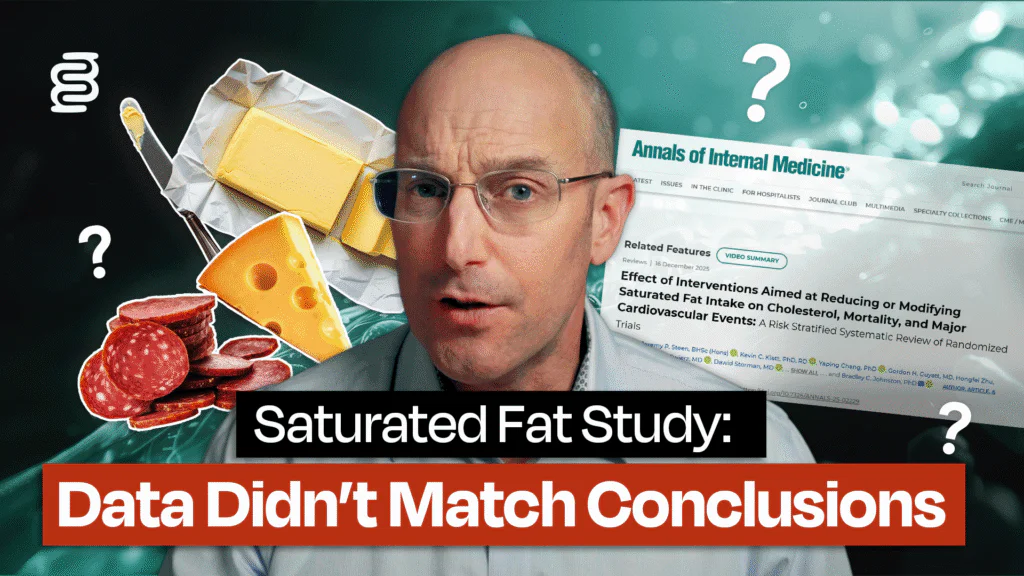
In this episode, Dr. Bret Scher takes a closer look at a new meta-analysis examining saturated fat and cardiovascular health. He breaks down what the study actually found, why its results showed no statistically significant increase in heart attacks, strokes, cardiovascular deaths, or overall mortality, and why saturated fat may need to be considered within the context of a person’s overall diet and metabolic health.
Learn more
In this Metabolic Mind episode, Dr. Bret Scher breaks down whether nutritional ketosis increases cardiovascular risk and explains why common claims about keto and heart disease are not supported by evidence. He clarifies that no clinical trials have ever shown ketogenic diets to increase heart attacks or strokes, and that the observational studies often cited against keto do not involve people in nutritional ketosis and are plagued by poor data and healthy-user bias. Dr. Scher also discusses how LDL cholesterol should not be interpreted in isolation, why full metabolic health markers matter more, and what current research reveals about lean mass hyper-responders who experience large LDL increases on keto. This episode offers a clear, science-based look at how to assess cardiac risk while using nutritional ketosis therapeutically for metabolic, neurological, or psychiatric conditions.
Learn more
You open your latest lab results and see your LDL highlighted in red. Your stomach drops. You haven’t even met with your doctor yet to go over the…
Read more
Dr. Bret Scher examines a new trial showing the drug olezarsen dramatically lowered triglycerides and ApoB, yet produced zero reduction in coronary artery plaque. He uses this as a case study for a broader point: lowering a lab number with a drug isn't the same as fixing the underlying metabolic dysfunction that caused it, drawing parallels to blood sugar, blood pressure, and weight management medications.
Learn more
In this episode, Dr. Bret Scher takes a closer look at a new meta-analysis examining saturated fat and cardiovascular health. He breaks down what the study actually found, why its results showed no statistically significant increase in heart attacks, strokes, cardiovascular deaths, or overall mortality, and why saturated fat may need to be considered within the context of a person’s overall diet and metabolic health.
Learn more
In this Metabolic Mind episode, Dr. Bret Scher breaks down whether nutritional ketosis increases cardiovascular risk and explains why common claims about keto and heart disease are not supported by evidence. He clarifies that no clinical trials have ever shown ketogenic diets to increase heart attacks or strokes, and that the observational studies often cited against keto do not involve people in nutritional ketosis and are plagued by poor data and healthy-user bias. Dr. Scher also discusses how LDL cholesterol should not be interpreted in isolation, why full metabolic health markers matter more, and what current research reveals about lean mass hyper-responders who experience large LDL increases on keto. This episode offers a clear, science-based look at how to assess cardiac risk while using nutritional ketosis therapeutically for metabolic, neurological, or psychiatric conditions.
Learn more