Share your story. Help someone else start theirs. Share Now


Listen, Watch & Subscribe on:



Can Changing Your Diet Change Your Mind?- with Metabolic Psychiatry Pioneer Dr. Georgia Ede
Listen
About the host

About the guest


Bret:
Welcome to the Metabolic Mind Podcast. I’m your host, Dr. Bret Scher. Metabolic Mind is a nonprofit initiative of Baszucki Group where we’re providing information about the intersection of metabolic health and mental health and metabolic therapies, such as nutritional ketosis as therapies for mental illness.
Thank you for joining us. Although our podcast is for informational purposes only and we aren’t giving medical advice, we hope you will learn from our content and it will help facilitate discussions with your healthcare providers to see if you could benefit from exploring the connection between metabolic and mental health.
Today we’re focusing on what is a brain healthy diet, and we’re joined by Dr. Georgia Ede. Now, if you’re new to our channel, maybe you don’t know Georgia Ede, but she’s featured fairly prominently in a lot of our videos because she’s a pioneer in metabolic psychiatry. She’s a Harvard-trained psychiatrist, who specializes in nutritional psychiatry and metabolic psychiatry. So, this intersection of metabolic health and mental health. But now, she’s written a book called Change Your Diet, Change Your Mind: A Powerful Plan to Improve Mood, Overcome Anxiety, and Protect Memory For a Lifetime of Optimal Mental Health. Optimal mental health, right?
That’s something that we can all agree on that I think is a good thing. And that we’re all going to want. As you hear in this interview, there’s quite a bit of maybe misinformation, misunderstanding, and controversy about what really is a brain healthy diet or what are brain healthy foods or if such a thing as superfood actually really exists?
And that’s what’s so important, I think, about this discussion and this book, and that often what we see in social media or the lay public media is really watered down, or clickbait-y, and just they want the clicks. They want to get the attention, and there’s less of an emphasis on what is the quality of the science to support our recommendations.
And that’s where Dr. Ede really digs in. Like how good is this evidence? What is the evidence, and how do we translate that into what is brain healthy foods? And a lot of what she talks about is going to be controversial. A lot of people are going to disagree with what she has to say. But I think if you take the time to listen and to read and to study, you’re going to see where she’s coming from, and you’re going to realize she’s got some pretty good points about a lot of these issues.
And if we can reframe how we see a brain healthy diet, I think we can really improve the overall mental health of everybody really who chooses to eat this way. Anyway, that’s a bit of a long intro, but I’m pretty passionate about this, as is Dr. Ede, who you can find at diagnosisdiet.com. That’s where you can find links to purchase her book, which comes out on January 30th, 2024.
And you can also find her on Twitter or X at georgiaedemd. But before we get in the interview, please remember our channels for informational purposes only. We’re not providing individual or group healthcare or medical advice or establishing a provider patient relationship if you’re changing how you eat or changing your lifestyle specifically to treat a medical condition.
Sometimes it can be dangerous if done without proper supervision. So ,always consult with your healthcare team before drastically changing your diet or your medications. So with that as an intro, please enjoy this interview with Dr. Georgie Ede.
Dr. Georgie Ede, welcome back to Metabolic Mind.
Georgia:
Thank you very much for having me.
Bret:
Yeah, it’s my pleasure. I really enjoy any opportunity to speak with you. And if people have seen our videos here before, I have probably seen you quite a bit. You feature prominently in a number of these videos because you’ve been on the forefront of metabolic psychiatry for a long time now.
And now I’m really excited to announce that you have a book coming out, Change Your Diet, Change Your Mind: A Powerful Plan to Improve Mood, Overcome Anxiety and Protected Memory For a Lifetime of Optimal Health. Now, there’s a lot packed into that title. So, we can tell right away it’s about diet, and it’s about your brain.
So, not just about mental health disorders, not just about psychiatry, but about brain health, overall, which I thought was really interesting about the title. So, I’m just curious though, you’ve been practicing as a psychiatrist for so long. Why now to write this book? What motivated you to do this?
Georgia:
The book has been a long time in. I’ve been researching and thinking about writing this book for more than 10 years. And so, it didn’t just appear. But I’m really happy that it’s finally finished. So, what inspired me to write the book is that, I think like a lot of people who write books, it’s wonderful and also frustrating to be helping one person at a time.
And to be, and at a certain point, you amass enough knowledge and the things that you really wish everybody knew about, about brain food, about ketogenic diets for brain health, about all of the brain food myths that are out there that really stand in the way of people improving their mental health.
I just really wanted to share everything that I had learned over the years. Not just about about brain health and psychiatry and all these wonderful things you can do to improve your brain health that most people don’t know about. But also about nutrition and myths about nutrition that really stand in the way, again, of people really experiencing much better brain health than they have come to expect.
So, I think that’s why I wanted to write it, was to reach more people with these really powerful interventions that most people haven’t heard about yet.
Bret:
Yeah, so you bring up a lot of interesting topics there, right? Myths about nutrition, topics that people haven’t heard about yet, right?
You just use those phrases and you’re absolutely right. There’s a lot of that in your book. Okay, let’s go to Google, and we google brain healthy foods, right? And we get a laundry of lists, nuts, seeds, salmon, dark, leafy green vegetables, beans, berries, frequently whole grains comes in there. And then, sometimes, even eggs, meat.
I saw one site that specifically listed lamb, which I thought was interesting, but they tend to be further down and coffee. But the top few are, fatty fish is frequently up there, but nuts, seeds, beans, and leafy greens and whole grains. So, is there such a thing as a brain healthy food?
If we just google that and start eating those foods, will our brains be better?
Georgia:
This really brings up a, it brings up a maybe a deeper or simpler question in a certain way, which is, what is a brain healthy diet? What is a brain healthy diet supposed to look like? And as you, when you google this information, you get this list, kind of a laundry list of different foods.
And like you said, usually berries. Are there whole grains, nuts, seeds? Lately, the past few years, thankfully, things like fish fatty fish have shown up on the list. And You see this list, most of the foods on the list are plant foods. And some of the foods on the list are considered super foods, meaning that they have superpowers that can supercharge the brain, and really bring you, not just good health, but superb.
They have extra benefits for you beyond their nutritional quality. And these are typically things like berries and dark chocolate and red wine and often nuts and certain types of seeds. Some of this is, some of this is based in fact. And some of this is based in wishful thinking. And some of this is based in guesswork, meaning a lot of the nutrition information that people see in headlines and that people see in food lists.
And that people see, even in our dietary guidelines comes from this type of a study that’s very common, and it’s widespread in nutrition science, called the nutrition epidemiological study. And all that is just food questionnaires. You ask people how many cups of blueberries have you eaten over the past year? And the people who are answering these questions are supposed to quantify, not just estimate, but quantify exactly how many cups per day, week, month, year, et cetera.
And then that is, that forms the data, the foundation of that study. And, of course, nobody can accurately assess exactly how much of any food they’ve eaten over the past year. And there is no data in those studies. This is just guess. And then they look for patterns, and the answers say, oh, people who report eating more blueberries per month or year appear to have slightly better brain health, or that may develop Alzheimer’s less often than somebody who reports eating very few blueberries per year.
I spent a whole chapter, this is such an important problem in nutrition science, that I spent a whole chapter in the book explaining why these studies are completely worthless. Not just weak, but completely worthless and completely unscientific. And so, if you understand that most of these lists are generated through that kind of guesswork and seeking patterns and memory, memory-based questionnaires, then it really forces you to take a step back and think, okay, what do we really know?
Where can we look for real answers? And that’s what I did in the book, was I just went back to the drawing board and looked for real science and reliable information, that we could use to guide us towards and to figure out what a brain healthy diet is.
For example, and I used three superfoods in the example because we all think of youy red wine and dark chocolate and blueberries as superfoods. When you actually look at the science behind those foods, there is absolutely no support for any of those, for any of those foods being especially helpful for the brain. And in fact, there’s actually evidence to the contrary, if you know what to look for.
So, I think we really need to all take a deep breath and step back and say, okay, what is brain healthy diet? What does it need to do? Let’s be logical about this. Yeah, so the problem with the messaging around brain superfood is that it distracts us from what really matters and what really matters to brain health.
When you’re thinking about food, isn’t choosing these particular plant foods with special properties, which there is no such thing. What matters is keeping your blood sugar and insulin levels in a healthy range, making sure that the foods you eat are actually capable of delivering the nutrients that your brain needs to the brain where they need to go.
And not eating, and this is a really big one, not eating the foods that can damage your brain. And there are lots of those. And so when we trick ourselves, it’s just a wonderful thing to believe that all you would need to do to help yourself, protect yourself from dementia or improve your mental health would be to eat more chocolate and drink more red wine.
Wouldn’t that be a beautiful world? It’s just not true. And we know on some level, we know that’s not true. Of course, what we really need to do is we need to understand what the foundation, the most important pieces of a brain healthy diet need to look like and focus on those.
Because if you get those down, there’s a lot you can do. And there’s a lot you can experience if you have the right information and which changes to make.
Bret:
Yeah, and I also like how you talk about food within the context of the whole diet, which I think is so important, right? Like you can’t eat the standard American diet of ultra-processed, high carb, high sugar, high calorie foods, and think adding some blueberries is going to undo all that, right?
Like it doesn’t work that way. So, it’s within the whole dietary context. So. You talk about starting with the few foods that are the most important in building around that. So, can you share what a couple of those are?
Georgia:
Yeah, so what you really want is, as I say in the book, the kind of three principles in terms of understanding what a brain healthy diet is.
That your foods need to nourish the brain. They need to protect the brain. So, they need to nourish the brain means they have to include all essential nutrients. And what that means, you really cannot do that without including some amount of animal food in the diet. You can try to supplement your way around it.
It’s very difficult, and we’re not even sure if you can match the benefits of including some animal foods in the diet if you’re looking for optimal brain health, you’re seeking optimal brain health. You want to include some animal foods in your diet so that you can get all the nutrients you need, not just most of them.
You need to protect the brain from damaging ingredients so that there are a lot of things we could talk about there. But the most important ones are the refined carbohydrates, the refined seed oils, the vegetable oils. These promote inflammation and oxidative stress and insulin resistance.
And these are really, three of the major drivers of all chronic health conditions, including chronic brain health conditions. And then you need to energize the brain in ways that promote healthy brain metabolism over the lifespan, meaning you want your brain to be able to produce energy reliably, efficiently, and safely for the rest of your life.
And that will go a long way towards reducing your risk for dementia and other neurodegenerative diseases. And all that means is keeping your blood sugar and insulin levels in a healthy range. So, you want to avoid foods that are going to give you unhealthy blood sugar and insulin spikes.
So, those are primarily the refined carbohydrates. So, you want to eat a mixture of whole plant and animal foods that are nourishing. You want to avoid the refined foods, the processed foods, all of the junk food has to go. But even some foods we think of as healthy may need to go, especially if you have insulin resistance already, which most of us now do.
You may have some damage to your carbohydrate metabolism, and you may need to dial down some of the, even some of the plant foods that we think of as healthy, such as fruits and root vegetables, to a certain degree. Everyone’s different. So, whatever it takes to get your blood sugar and insulin levels in a healthy range, that for some people, that’s going to mean a ketogenic diet.
For others, it may mean simply taking the refined carbohydrates out. For others, it may mean lowering their overall carbohydrate intake to some extent without being ketogenic. It depends. And so, if you eat healthy whole plant and animal foods, get your blood sugar insulin levels under control, those are, regardless of whether you’re eating blueberries or salmon, those are really the things to focus on.
And this is, these are really big changes for most people. They sound simple, but they’re really major changes to the diet. If people listening, just think privately to yourself, what did you eat yesterday? And how many of those foods met these criteria? It’s surprising sometimes how little of these foods, how few of these principles we actually follow.
Bret:
Yeah, and I like how you said it’s different for everybody, which is not an answer people want to hear really. People want to hear there’s one diet for everybody. Just follow this one thing, follow this one principle for everybody. I think that’s the trap a lot of these websites fall into. Or even the Harvard School of Public Health, or other highly regarded in the public sphere institutions of nutrition, try to promote sort of one way of eating.
But you’re saying no. But there isn’t one way, but there’s a marker. There are markers we can follow to tell us if we’re doing a good job. And you mentioned glucose and insulin. Now, we talk about a lot at Metabolic Mind about the importance of glucose and insulin in metabolic health. But if someone hasn’t heard that yet, the connection between metabolic and mental health, they might think, wait a second.
It doesn’t have to do with diabetes. You’re talking about brain health. Why are we talking about glucose and insulin? What does that have to do with it? So, quickly connect those dots for someone who may be unfamiliar with that.
Georgia:
Sure, if you’re eating in a way that’s causing your glucose and insulin levels to run too high, too often, which for most of us, it boils down to eating too many of the wrong carbohydrates too often. Then what’s going to happen over time? Two things. One thing that’s going to happen is that every time your blood sugar spikes, your brain sugar will also spike.
And when brain sugar is too high, that extra, that excess glucose, is going to stick, literally stick to, vital molecules inside the brain, proteins, lipids, nucleic acids in the DNA. And when the glucose sticks to these molecules, it cripples them, and kind of caramelizes them, into these sticky clumps, called advanced glycation end products or AGEs.
And AGEs is a good acronym because these are some of the molecules that are responsible for premature aging of tissues throughout the body, including the brain. So, you certainly don’t want that. So, these AGEs, the brain’s immune system targets them for destruction by raising an inflammatory, by mounting an inflammatory response.
So you get on purpose, the brain will create, deliberately create inflammation by releasing inflammatory cytokines, these little kind of SOS signals, and oxygen-free radical is another type of SOS signal in the brain. And these target these clumps for destruction. Now, that’s a good thing.
And then it’s supposed to then the clean up the neighborhood, and then everything’s supposed to go through a healing phase and restore peace to the area. So, that process works very well if it’s happening from time to time. But if you’re eating in a way that’s spiking your blood sugar to unhealthy levels, 3, 4, 5, 6 times a day, which is how most of us now eat.
Then what you’ve got, instead of this targeted, functional, controlled temporary inflammation and followed by healing, instead, now you’ve got chronic, uncontrolled inflammation and oxidative stress. And you do not want that. That’s very damaging to all of the structures in the brain, including mitochondria and including the blood brain barrier and including the hippocampus, which is the center of learning and memory.
High brain glucose is not good. But the other thing that happens is, you’ve got your insulin levels running too high to try to keep your glucose in check, and the high insulin bombarding the blood-brain barrier, the insulin receptors on the blood-brain barrier that escort insulin into the brain.
That system becomes insulin resistant. So, the more insulin you’ve got floating by the brain and cursing through your bloodstream, what’s happening is the receptors on the surface of the blood brain barrier are becoming resistant. They’re starting to tune out that insulin signal. It becomes harder and harder for insulin to cross into the brain.
So, now you’ve got glucose waltzing in, no questions asked. But you’ve got insulin knocking on the door and, some of it can’t get through because it’s just been overwhelmed with too much insulin. So, it’s holding back. So, what you’ve got is a brain swimming in a sea of glucose.
It’s still slowly starving to death because without enough insulin, you can’t process glucose to its full capacity. So, you’ve got plenty of glucose and not enough insulin to use it. And we now understand that’s why Alzheimer’s disease has been called type III diabetes since 2008. It’s a brain glucose processing problem.
Plenty of glucose, not enough insulin. So, that’s what insulin resistance looks like in the brain, which is different from what it looks like in the rest of the body. But just as important, if not more important, than what’s happening to the rest of the body. So really, if there’s one thing you do for yourself, and it takes, it is very simple to do and it only takes a few weeks to get things under control, just get your blood sugar and insulin levels under control.
And when you do that, most people because I’ve been working with patients for a long time now, most people notice a significant difference in how they think and feel. So, it’s a very powerful intervention.
Bret:
Yeah, and I think that explains it really well. And again, something that a lot of people aren’t being told.
And if you go to your standard doctor, and they’re going to check your blood sugar. They’ll check a random fasting blood sugar on you, and that’s probably about it. Or maybe hemoglobin A1C, but you’re mentioning glucose and insulin because insulin levels rise so much earlier than glucose levels rise. And that’s the early marker of the problem.
But what about continuous glucose monitors? There’s been some controversy about using those in people without diabetes, either type I or type II. what do you feel about their use in a situation like this to see how your glucose responds to your meals, and if that then could correlate to better brain health?
Knowing that we don’t have those studies yet, but just from your clinical experience, what do you think?
Georgia:
I love continuous glucose monitors. Yes, they can be abused and misused like anything can. They’re a tool, but by and large, the lion’s share of people who use them, learn from them, enjoy using them, and benefit from them.
it really gives people, empowers people with information in their own homes privately. They can share it or not share it, but they can see what happens when I have that bowl of oatmeal in the morning that I thought was so good for me. What happens to my blood sugar? is this really a safe food for me to eat or not?
So when people come to me for consultation, and want to know if they need to eat a ketogenic diet, I say, I don’t know. Let’s find out. What are you eating now? Let’s find out if what you’re eating now, like how your body responds to that. So, I think it really, I think, opens people’s minds and gets them curious and engaged in the process.
And it puts a tool in their hands that we haven’t had before. And I think this is really important. It’s very frustrating to me that we need prescriptions for continuous glucose monitors in the United States. Many other countries do not require prescriptions.
I don’t know how people will think that you could harm yourself with a continuous glucose monitor, why doctors need to be in control of these. I don’t understand, but that’s how it is here. But I really encourage people to use them if they can afford them. Because even one sensor, even one patch will give you 10 to 14 days of really valuable insight into your personal metabolism.
And, I think it’s well worth it.
Bret:
Yeah, very good. Now, I want to go back to what you said previously though about avoiding foods that could potentially damage your brain. Now, by way of setting this up, I think nobody’s going to argue that a donut or packaged pretzels and potato chips and cookies, that no one’s going to argue that those are good for you.
Now, I’d, argue we’ve turned a blind eye for too long about how bad they are for you. But when it comes to something like seed oils, that’s where it’s really interesting that there is a large momentum, or a large belief in medicine, that they’re actually good for you. And that’s what I find so interesting.
That it’s one thing to say something could potentially harmful and people do not really believe it’s good for you. But to say it’s potentially harmful and have people think it’s actually good for you really sets off some controversy. And I think some people may see someone make that claim and say, ugh, they don’t know what they’re talking about. So, I’m not going to pay attention to anything else.
it’s that polarizing, There’s data that shows, again, the low-quality data, observational, those who eat more seed oils tend to have fewer health issues. Doesn’t mean it’s from the seed oil. They tend to lower their LDL a little bit. Don’t know if that leads to better health outcomes within that context of specifically the seed oils. But there’s mechanistic studies showing increased inflammation and oxidation, but not the outcome studies showing worsening health outcomes.
So, how do you put all that together to say, I think people should avoid these?
Georgia:
So many things there to respond to. So, I’ll try to be really brief and pointed about the few things I’m picking up on in your question because it’s such an important topic. So, thing number one, isn’t it interesting how a highly-refined, highly ultra-processed product, if it comes from plants, is supposed to be good for you?
And how a whole food that we’ve been eating for hundreds of thousands of years, which is unprocessed, is supposed to be bad for you because it’s an animal food. So, it’s the mirror image. We’re saying that this whole animal food, such as a steak, is really bad for you, but this ultra-processed fat, because it comes from a plant, and it’s fat.
Isn’t that supposed to be bad? it’s just so fascinating to me. Anyway, so one problem, one problem is it’s really a reflection, an absurd, it takes this philosophical fight between the plant and animal foods to really an absurd extreme. But in any case, I digress. Now, vegetable oils, so-called vegetable oils, lovely marketing term there.
Bret:
Yeah.
Georgia:
Ultra-refined, ultra-processed seed oils, which come out of refineries that look just like any other oil refinery. Multiple steps required to create these. You cannot make these in your home. These refined seed oils, we are told that they contain a polyunsaturated fatty acid, which is essential to our health.
We are told that one of the primary fatty acids in these vegetable oils, which is called linoleic acid, is a very fragile, very unstable polyunsaturated omega-6 fatty acid. We are told that this is an essential fatty acid because we can’t make linoleic acid ourselves. Our bodies can’t make it.
We are told that we must eat it because we need it to make another fatty acid, a different omega-6 fatty acid called arachidonic acid, which is essential for brain health and the immune system function and all of that. In fact, the brain contains quite a bit of arachidonic acid. So, arachidonic acid, good.
And you need linoleic acid to make it. The problem with this is that you can obtain arachidonic acid from eating animal food. So, you don’t need to have any vegetable oil to create a arachidonic acid. it’s true ,we can’t make either one of these ourselves, in any case. So, it’s not essential.
But furthermore, this linoleic acid historically, if you look back at hunter-gatherer populations, and animals back before we fed them the wrong way, the amount of linoleic acid in their body, fat of humans and in animals, was on the order of 2 to 4%. Now, that we’ve been pouring vegetable oil into our diets in the form of mayonnaise and salad dressings and baked goods and all that sort of thing, our body fat in the United States is now about 20% linoleic acid.
So, it’s accumulating. Our fat cells are filling up with linoleic acid. They’re supposed to be filling up with saturated fat that we’re designed to store, but it’s filling up with these polyunsaturated fatty acids. You might think, okay, what’s wrong with that? Why is that a problem? And there are many. There’s a lot of research now going on into what the health risks of too much linoleic acid might be, but in terms of fatty liver and insulin resistance and obesity and so forth.
But as a psychiatrist, to write this book, I wanted to know what the research said about how linoleic acid, too much linoleic acid, might affect the brain. So, what I learned was linoleic acid crosses the blood-brain barrier.
We absorb it just as well as we absorb any other polyunsaturated fatty acid. But once it crosses into the brain, the brain seems not to really know what to do with it. Doesn’t use it for itself. It doesn’t turn it into anything else for the most part that’s going to be useful. It doesn’t even use it to make a arachidonic acid, which it needs.
And that’s why we’re told we need it. It burns most of it for energy, which is very dangerous for the brain. The brain is not supposed to burn fatty acids for energy. There are many other things that can prefers to burn smaller molecules, things like glucose and ketones. Other small molecules, it doesn’t.
It shouldn’t be burning fatty acids for energy because when you burn fatty acids for energy in the brain, you get lots of extra inflammation and oxidative stress, even more than if you’re burning sugar all day long. So, this is very dangerous for the brain. Now, the research is still too early for us to understand what the health implications of this may or may not be.
There’s no reason to risk it because there’s no reason to consume vegetable oils in the first place. Absolutely none. And they’re odorless. They’re tasteless. They’re colorless. These add absolutely no flavor to food, and they’re highly processed fat. If you want to eat plant fats, that’s lovely.
Eat them from whole plant foods, avocados and olives and nuts and coconuts. Get your fat just like you should get everything else, from whole foods, not from factories.
Bret:
Yeah, I think that’s that last point you made. All of the points are very good points, but the last point of like, why would you even need to eat these or want to eat these?
And it’s fascinating. It’s just been marketing. The way they had a product leftover from the seeds, what do we do with it? And they found a way to extract it and refine it and it was introduced as a food. But it’s not a food. It’s not a real food. And the reason to eat it, is if there’s a fear of using any other fat source, but that’s the fear.
That’s really unfounded. But that’s, unfortunately, where we are today. So, I think it is important for people to hear your rationale. Not just seed oil’s, bad. Avoid at all costs, but to hear why. And so, I’m so glad you explained that because I think that is important. And we’ll remain controversial, and that’s okay.
But we need to explore things, and I think that’s really important. But so, we’ve talked a lot about science and because science is important, but I want to be clear, your book is not a science book. So, there is a good amount of science, but there’s also practical information. So. Tell us a little bit about the practical focus, and what people can expect from the book from that standpoint.
Georgia:
Yeah, so it really does weave two things together. It weaves the, I put a lot of science in the book because I’m saying a lot of things that I understand, the recommendations I’m making, will strike most people as controversial. And that just is. That’s just a fact that it’s controversial.
So, I put a lot of science in because there are a lot of questions I felt I needed to address. If I say, eat more animal foods, or if I say, don’t worry about saturated fat. Or if I say, you don’t really need grain, and in fact, I would advise you don’t eat it at all.
When I say these things, they sound really dangerous and controversial, risky, radical. And the reason why I put so much science in there is because I want people to know that there’s no science behind the beliefs that they have. And it’s not their fault. And this is just what they have been taught. Very well-educated people, well-informed people have the wrong information because the information comes from an a wholly unscientific field of nutrition epidemiology.
In any case, the other 50% of the book that’s weaved all the way through the book, and especially the fourth part of the book, which is recommendations about diet, is about how do you apply, so what should you eat instead of what you’ve been told to eat. And how do you apply these principles to a mental health problem?
So, if you’re somebody who has a mental health problem, whatever it is, whether it’s anxiety or early Alzheimer’s or depression, PTSD, ADHD, whatever it is, it’s a brain health problem. And brain health relies largely, not entirely, but largely on the foods you eat. That’s where all your brain chemicals come from in the first place.
That’s where every cell is making, all the components of your cells come from the foods you eat. So, if you want to optimize your mental health, it would serve you well to feed the brain properly. Start there, right? So, let’s improve brain health, and how do you do that?
So, I’ve given people a lot of practical information. How do you measure your blood sugar? What should your blood sugar range be? How do you test yourself for insulin resistance? You can do this easily at home. And you can even, you can assess yourself for insulin resistance even without a doctor or specialist to help you do that.
Find out if you have insulin resistance, that’s step number one. Check some other things, some nutrient levels. Things like that, other easily reversible root causes of mental health conditions. And then, embark on an experiment where, if you can improve your mental health by making some dietary changes, and I recommend specific dietary changes, that I think are the ones that are most worth making.
Bret:
I like that process of having a book that goes through the science, addresses the controversial issues, but also talks about what can I do? Because if you read a science book, you’re not going to know what to do at the end of a science book.
But reading a something that talks about the science and also talks about practical implications, I think is so important. So, I guess the next question though is, who is this book for? Is it for someone who is suffering from severe anxiety? Is it for someone who already has early signs of dementia?
Or is it for the 20, 30, 40-year-old who wants to try and prevent all of those conditions? Or is it a mix of anyone? Who would you say this book is geared towards?
Georgia:
I would say you should only read this book if you have a brain, and if you care about. It’s current health, and it’s future health.
Meaning, and I know that sounds like, and it sounds farfetched, but it really is true, that what I’ve tried to do in this book is help people. Is help people, who have a current mental health issue and who are concerned about future mental health issues. Because the book explains not only how to use diet to treat an existing mental health issue, but it also helps people who are concerned about preventing future mental health issues, particularly the one that all of us are concerned about most, which is Alzheimer’s disease.
And there’s a lot of information in the book about how to reduce your risk dramatically for Alzheimer’s disease by improving the, by protecting and improving the way your brain accesses energy. So, I think this book is, anybody who’s concerned about brain health, whether they have a current brain health problem or not.
Bret:
I’m very excited that you’ve written this book. I think it’s going to help a lot of people. It’s going to stir up some controversy, but I think it’s written in a way to properly address that controversy. So hopefully, we’ll stimulate discussion as controversy should, right? It shouldn’t just be, I’m going to ignore anything I don’t believe in, but rather, I’m going to explore it a little bit more to try and learn about it.
And I think that’s what this book does so well. And like I said, and then presents a path forward on how to implement these recommendations if someone wants to do so. I’m excited for more people to read it. And I think people should, especially people who may disagree with it. I think those are exactly the people who should read this to learn more about it.
So, thank you for writing it. And where else, obviously people should go to diagnosisdiet.com. How else can people learn more about you and the other work that you’re doing?
Georgia:
Yeah, so yes, my website, diagnosisdiet.com has a lot of free information about these topics already. I’ve been writing about these topics for a very long time, and all the information on the website is free.
And I also spend an increasing amount of time on social media. Not just on Twitter X, but also, I just started an Instagram account, georgiaedemd. And I have been reengaging on Facebook and on LinkedIn now that the book is finished, I have more time for that. And so, I’m really enjoying reconnecting with people on social media as well.
So, and I’ll also start writing again for Psychology Today, which I know reaches a lot of people. So I really, my goal is to try to get the word out about these really important topics to get people, like you said, get people talking about these controversies and having a more public, a more respectful and less polarizing conversation about it so that we can all get healthier, rather than just get stuck in our diet wars, in the corners, in the different corners of the ring.
Having conversations, let’s actually find some common ground and work towards some logical kind of common sense principles about how to eat.
Bret:
Thanks for listening to the Metabolic Mind Podcast. If you found this episode helpful, please leave a rating and comment as we’d love to hear from you.
And please click the subscribe button so you won’t miss any of our future episodes. And you can see full video episodes on our YouTube page at Metabolic Mind. Lastly, if you know someone who may benefit from this information, please share it as our goal is to spread this information to help as many people as possible.
Thanks again for listening, and we’ll see you here next time at The Metabolic Mind Podcast.
Listen, Watch & Subscribe on:
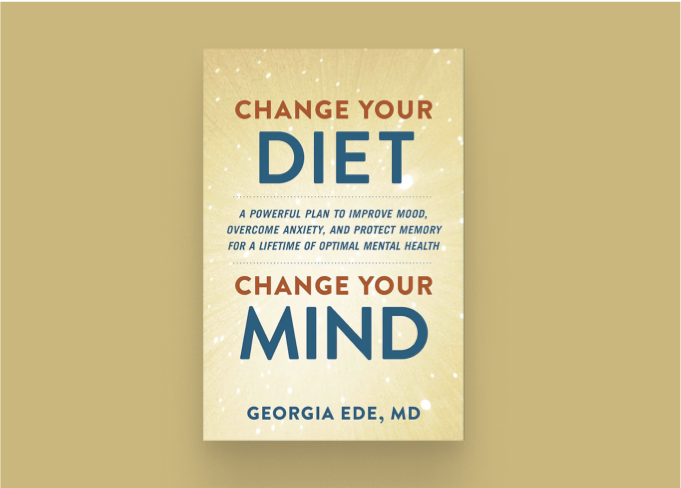
A powerful plan to improve mood, overcome anxiety, and protect memory for a lifetime of optimal mental health.
Read more

Ketogenic therapy for mental health is gaining traction, but what happens when it doesn’t seem to work or even makes things worse? In this episode, Dr. Georgia Ede and Dr. Bret Scher answer some of the most common questions about ketogenic diets, including what to do when your mental health doesn’t improve, how to properly enter ketosis, and why sweeteners, snacks, and dairy might be holding you back. They break down the difference between a ketogenic diet and ketogenic therapy, and why things like ketone levels, medication adjustments, and lifestyle factors matter. You’ll also learn why some people experience initial worsening symptoms, how to transition more gradually, and when to seek support from experienced clinicians.
Learn more
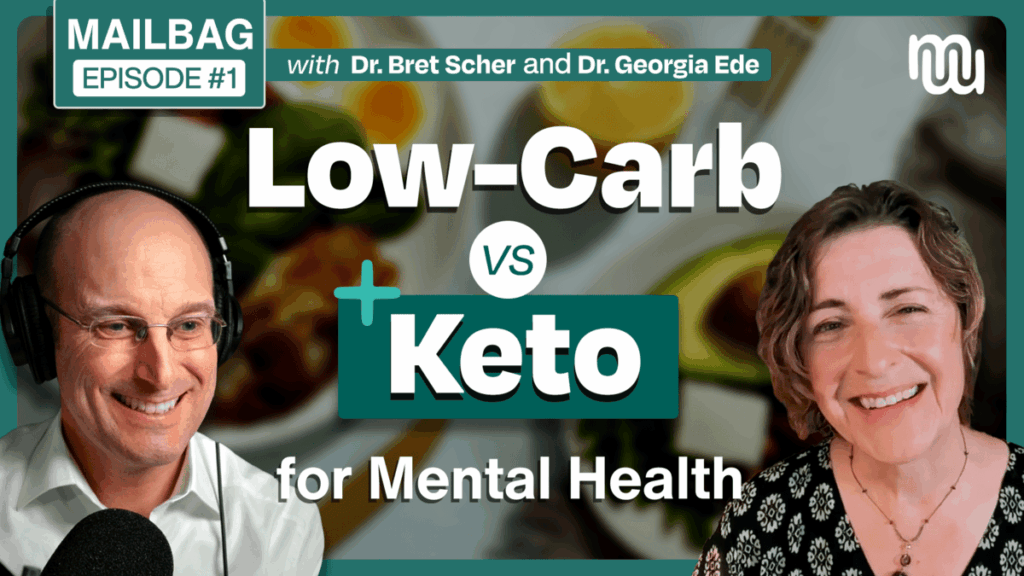
What’s the difference between a low-carb diet and a ketogenic diet, especially when it comes to mental health? In this premiere Mailbag episode, Dr. Bret Scher (Medical Director at Metabolic Mind) and Harvard trained psychiatrist Dr. Georgia Ede answer some of the most common questions they receive about ketogenic diets specifically for mental illness.
Learn more

This episode of the Metabolic Mind Podcast features Dr. Lily Mujica Parodi, a Baszucki Endowed Chair of Metabolic Neuroscience, and Dr. Kirk Nylen, Managing Director of Neuroscience at Baszucki Group. Together with host Dr. Bret Scher, they explore groundbreaking research on insulin resistance in the brain and its link to dementia and cognitive decline. The conversation highlights a critical age window for intervention, the stabilizing role of ketones on brain networks, and the potential of ketogenic diets and lifestyle changes to prevent or slow neurodegeneration. Listeners gain both scientific insight and practical takeaways on how metabolic health influences long-term brain function.
Learn more
A powerful plan to improve mood, overcome anxiety, and protect memory for a lifetime of optimal mental health.
Read more
Ketogenic therapy for mental health is gaining traction, but what happens when it doesn’t seem to work or even makes things worse? In this episode, Dr. Georgia Ede and Dr. Bret Scher answer some of the most common questions about ketogenic diets, including what to do when your mental health doesn’t improve, how to properly enter ketosis, and why sweeteners, snacks, and dairy might be holding you back. They break down the difference between a ketogenic diet and ketogenic therapy, and why things like ketone levels, medication adjustments, and lifestyle factors matter. You’ll also learn why some people experience initial worsening symptoms, how to transition more gradually, and when to seek support from experienced clinicians.
Learn more
What’s the difference between a low-carb diet and a ketogenic diet, especially when it comes to mental health? In this premiere Mailbag episode, Dr. Bret Scher (Medical Director at Metabolic Mind) and Harvard trained psychiatrist Dr. Georgia Ede answer some of the most common questions they receive about ketogenic diets specifically for mental illness.
Learn more
This episode of the Metabolic Mind Podcast features Dr. Lily Mujica Parodi, a Baszucki Endowed Chair of Metabolic Neuroscience, and Dr. Kirk Nylen, Managing Director of Neuroscience at Baszucki Group. Together with host Dr. Bret Scher, they explore groundbreaking research on insulin resistance in the brain and its link to dementia and cognitive decline. The conversation highlights a critical age window for intervention, the stabilizing role of ketones on brain networks, and the potential of ketogenic diets and lifestyle changes to prevent or slow neurodegeneration. Listeners gain both scientific insight and practical takeaways on how metabolic health influences long-term brain function.
Learn more