Share your story. Help someone else start theirs. Share Now


Listen, Watch & Subscribe on:



Could GLP1 medications help patients go keto?
Listen
About the host

About the guest

About the guest

About the host
About the guest
About the guest

Bret:
Welcome to the Metabolic Mind Podcast. I’m your host, Dr. Bret Scher. Metabolic Mind is a nonprofit initiative of Baszucki Group where we’re providing information about the intersection of metabolic health and mental health and metabolic therapies, such as nutritional ketosis as therapies for mental illness.
Thank you for joining us. Although our podcast is for informational purposes only and we aren’t giving medical advice, we hope you will learn from our content and it will help facilitate discussions with your healthcare providers to see if you could benefit from exploring the connection between metabolic and mental health.
Today, we’re going to wrap-up our video series on the use of GLP-1 agonist medications, like Wegovy and Ozempic, within psychiatry and how these medications may compare with ketogenic therapy. Now, we’ve had interviews with Dr. Matthew Bernstein, Dr. Rodrigo Mansur, and Dr. Roger McIntyre. All have slightly different approaches to the use of these medications. So, let’s synthesize what we’ve heard, and see what this may mean for you if you are considering these medications.
But before we begin, please remember our channels for informational purposes only. We’re not providing individual or group medical or healthcare advice or establishing a provider patient relationship. Many of the interventions we discussed can have dramatic or potentially dangerous effects of done without proper supervision.
So, consult your healthcare provider before changing your lifestyle or your medications. So, first off, why are we even talking about GLP-1 drugs, like Wegovy and Ozempic? And there are two main reasons, which we covered in the other videos. But as review, the first is that having a mental health disorder significantly increases the risk of metabolic disease, and many psychiatric medications cause significant weight gain and metabolic dysfunction.
The data are pretty clear that people living with depression, bipolar disorder, schizophrenia, and other psychiatric diagnoses, die prematurely from metabolic-related diseases. So, psychiatrists have started turning to GLP-1s to treat weight gain and metabolic dysfunction.
But the other reason is that some studies and clinical experience indicate that GLP-1 medications may help some people with their mood symptoms, such as depression. But others suggest the medications may worsen symptoms or even increase suicidality in a small subgroup. This is clearly new and emerging area.
So, we wanted to embark on an exploratory series to gain clarity about if and how these medications can be used and, again, how they compare to ketogenic therapy. Now, here’s a clip from Dr. Mariela Glandt, an endocrinologist and co-founder of OwnaHealth, who’s used GLP-1 medications for over a decade and has a lot of experience with these.
Mariela:
I was able to start using GLP-1s very early on from 2005, I think. Already, we had the clinic with the most victoza prescriptions. What happens is that patients have a ton of side effects. So, while there are a lot of great things to GLP-1s, they also make people feel bad a lot of the time. And they’re trying to stick with it because they’re no real good alternatives, but you and I both know that there are.
And once you combine it with a lifestyle change, then one of the things that it allows me to do is lower the dose of the GLP-1. And that is a nice combination. And some people who have been struggling with weight loss all their life and suddenly have this relief. They’re actually happy, right?
At least at the beginning. But I have to say that I have seen, and I saw this very early on, that there are patients that feel worse and they feel more depressed, and they don’t know why. So, I started thinking that maybe it was the GLP-1 because that was the only intervention that was new. So, we would take it off, and we would see an improvement in mood. And then, we would put it back on, and then you would see the decrease in mood. And you would see the return of depression, or it was never really severe, but something new, a negative response.
Bret:
Now, I I think that’s great insight. Now, one thing we can take away from all our interviews is that most of psychiatry, or all of medicine for that matter, is still focused on medication-based solutions. It’s how doctors are taught, and let’s be honest, it’s easier to prescribe a pill or a shot than discuss lifestyle.
And patients are more likely to take a pill or an injection than change their lifestyle. I worry that’s the sad reality of the average person in the average medical practice today. But that doesn’t mean it’s the right or the best approach. So, GLP-1s can help with weight loss and improve metabolic health at least in the short-term.
And as Dr. Mansur discussed, early research suggests there are psychoactive medications with direct brain effects. Now, that alone warrants for the research to test their effect in a psychiatric population. Because remember, in the initial large trials for FDA approval, anyone with a psychiatric diagnosis was excluded.
So, we need more data in this specific population, but the medications are not without side effects. The mild nausea is well known and common, and there’s growing evidence of rare but more severe complications, such as stomach or intestinal paralysis and pancreatitis. But also, as Dr. Bernstein pointed out, people lose weight in a nearly even mix of fat mass and muscle mass.
Matt:
When someone goes on one of those weight loss medications, but does not change their diet, does not change into an exercise regime, my worry is that they’re losing as much lean body mass as they are losing fat mass, at times. And that’s really observable with certain people. But also, that’s borne out in studies whenever they’ve reported body composition seems to be about a one-to-one ratio of losing lean body mass to le losing fat mass.
And talking to weight loss experts, they would ideally want to have a three-to-one ratio of losing fat to losing lean body mass. So, I really worry about the people, who are losing lots of weight with these medications, not eating enough protein, having a calorie deficit, and then losing lots of lean body mass over the course of a year or two.
Then, never being able to make that back up in the future potentially, and setting themselves up for a lot of health issues due to the low muscle mass over the course of their lifetime. I worry that we can have an epidemic of sarcopenia in 10 or 20 years from all the people taking these medications and Dr. Glandt shares those concerns.
Mariela:
You are basically starving yourself, right? You’re causing a lot of, you can become deplete of nutrients very quickly. In my opinion, people tend to choose the carby options instead of going for the meat. This is really an issue because people have an aversion to protein for some reason on this medication.
And therefore, i’m very concerned about getting bad nutrition.
Bret:
So, for healthiest weight loss, we prefer losing fat mass while maintaining muscle or lean mass, or even building it. And as with many weight loss drugs, you can become dependent on the drug for the effect. Studies show as soon as you stop the drug, the weight comes back on although not the lean mass, only the fat mass for most people.
Now, does all that mean we should avoid these medications? No, not necessarily. Instead, it may be best to view them as a potential bridge treatment or an adjunctive treatment with purposeful lifestyle interventions.
Matt:
GLP-1, GIP agonist medications might be the ideal approach for certain individuals.
And I’m thinking of someone who really is having trouble with even following the prescription for the ketogenic diet. That their appetite is too high or their cravings are too high, and they need some help on that front. These medications might really play an important role for that person.
But I’d also think that it’s key when someone is using one of these medications that they have to be doing something else, in terms of their diet and exercise, to really minimize those potential issues and problems. Because I don’t think it’s a great scenario for someone to have to be on one of these weight loss medications for the rest of their life, if there’s a way that they don’t need to be on it for the rest of their life.
Some people, it may be that they do stay on it for the long term. But I think ideally, we would rather not have someone stay on a medication like that for the long term.
Mariela:
So, one of the things I love is getting people off GLP-1s.
It’s my, one of my, favorite things to do because, and see them maintain their weight loss when you combine it with a low-carb ketogenic diet. So, this is a really a rewarding thing because then you’re not trapped. You can use it as a bridge. Then, you’re not trapped using it forever.
Bret:
And when it comes to lifestyle interventions for improving metabolic health, ketogenic diets rank as probably the most effective. Now, that doesn’t mean they’re the only way to improve metabolic health, but they are certainly one of the most effective, especially when combined with exercise and improved sleep hygiene. Two interventions that likely can help any diet work better.
But the bonus is that emerging studies demonstrate ketogenic therapy can effectively treat someone’s psychiatric symptoms as well. So, why wouldn’t someone consider starting a ketogenic diet, following markers of metabolic and mental health, and if they aren’t improving, consider starting a GLP-1 receptor agonist to possibly kickstart their treatment or use it as a bridge?
Now, do we have large scale randomized control trials demonstrating the utility of this approach? No, we don’t. And as Dr. McIntyre stated in his interview, many doctors won’t want to try it until that data exists.
But I would argue that we don’t need to hold dietary therapies to the same standard we hold medications. We need to eat, right? We don’t need to take medications. So, eating in a way that eliminates refined and processed carbs and added sugars is not a dangerous intervention. And nutritional ketosis is a natural physiologic state.
Now, the difference comes when we’re using ketosis to treat a serious mental condition. Just like someone with diabetes needs careful monitoring with ketosis for safety, so does someone with a serious mental illness. As Doctors Bernstein and Sethi, Ede, Palmer, Calabrese and others have demonstrated, we know enough to safely and effectively start patients on ketogenic therapy now, today and tomorrow.
And we’re sure to learn more as research and clinical experience progresses. So, I guess you could say it’s a good thing that we have multiple tools we can use to address weight gain and metabolic dysfunction, especially for those with a mental health condition. And it’s a good thing that we have emerging therapies that can treat symptoms of mood disorders.
We just have to make sure we use those treatments in a way that maximizes the benefits while minimizing adverse effects and sets the patient, or you up, for a lifetime of improved health. That’s what you should want for yourself or for your loved one. Now, for some, that could be starting with ketogenic therapy.
For others, it could be a combination of ketosis and weight loss medications, but hopefully, it will always be combined with appropriate exercise and sleep. While this isn’t necessarily earth shattering, I think it’s important to show the synergy, the potential usage of the medications and lifestyle together but with lifestyle coming first, not necessarily medications coming first, which is a little bit opposite, I think, of the mindset of medicine currently.
I hope this wrap-up was helpful. If it was, please like and subscribe as that can help others find our content. And please go back and watch the other interviews about this topic, if you haven’t already. And you can follow our content here at Metabolic Mind for even more information about metabolic psychiatry and ketogenic therapies for mental illness.
Thanks for listening to the Metabolic Mind Podcast. If you found this episode helpful, please leave a rating and comment as we’d love to hear from you. And please click the subscribe button so you won’t miss any of our future episodes. And you can see full video episodes on our YouTube page at Metabolic Mind.
Lastly, if you know someone who may benefit from this information, please share it as our goal is to spread this information to help as many people as possible. Thanks again for listening, and we’ll see you here next time at The Metabolic Mind Podcast.
Listen, Watch & Subscribe on:
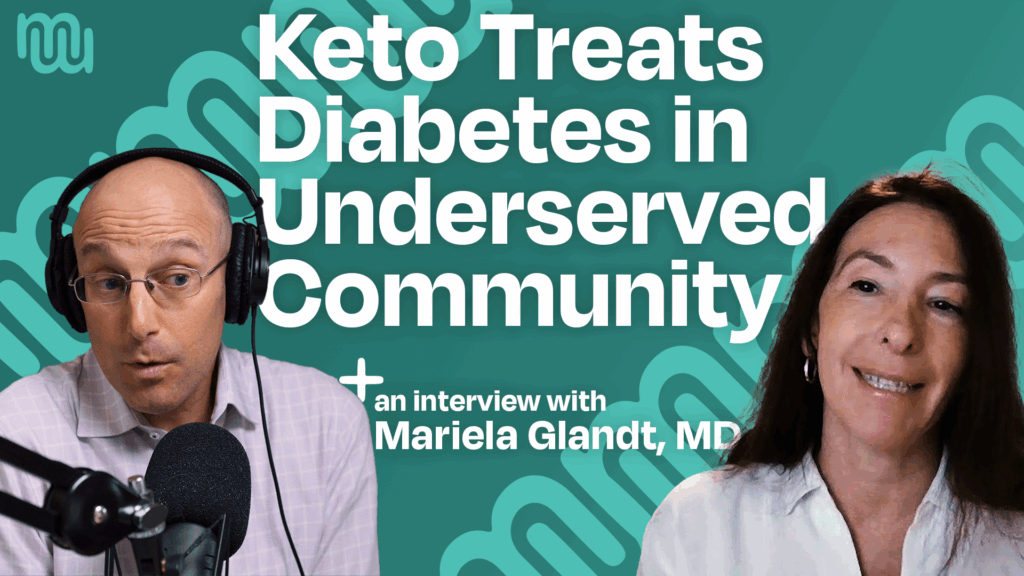
Endocrinologist Mariela Glandt’s South Bronx program uses the OwnaHealth app and a ketogenic, low-carb plan to reverse metabolic disease in a Medicaid population. Patients report rapid A1C reductions, major medication cutbacks, and broad quality-of-life gains, proving keto can be affordable, scalable, and effective across socioeconomic lines.
Read more

GLP-1 medications like Ozempic and Wegovy are changing how the medical system approaches obesity and metabolic disease. But are they a replacement for dietary intervention? Or are dietary interventions a replacement for these medications? Could they be used together for even better outcomes? In this conversation, Dr. David Ludwig (Harvard, Boston Children’s Hospital) and journalist Gary Taubes explore the science behind GLP-1s, their impact on insulin, weight loss, and chronic disease, and where dietary strategies like low carb or ketogenic therapy fit in.
Learn more

What if We're Using GLP-1 Medications All Wrong? Drugs like Ozempic, Wegovy, and Mounjaro are transforming the landscape of medical weight loss, but could their side effects be a sign that we’re not harnessing their full therapeutic potential? In this eye-opening conversation, Dr. Ben Bikman, metabolic health researcher and professor at BYU, joins Dr. Bret Scher to explore a powerful new framework: using GLP-1 medications at low doses and for short durations to help curb carbohydrate cravings, break addictive eating cycles, and support long-term metabolic health.
Learn more

Research suggests that metabolic health may play an essential role in mental well-being. After years of therapies, medications, retreats, and self-exploration, Michael, a former nutrition client of mine,…
Learn more
Endocrinologist Mariela Glandt’s South Bronx program uses the OwnaHealth app and a ketogenic, low-carb plan to reverse metabolic disease in a Medicaid population. Patients report rapid A1C reductions, major medication cutbacks, and broad quality-of-life gains, proving keto can be affordable, scalable, and effective across socioeconomic lines.
Read more
GLP-1 medications like Ozempic and Wegovy are changing how the medical system approaches obesity and metabolic disease. But are they a replacement for dietary intervention? Or are dietary interventions a replacement for these medications? Could they be used together for even better outcomes? In this conversation, Dr. David Ludwig (Harvard, Boston Children’s Hospital) and journalist Gary Taubes explore the science behind GLP-1s, their impact on insulin, weight loss, and chronic disease, and where dietary strategies like low carb or ketogenic therapy fit in.
Learn more
What if We're Using GLP-1 Medications All Wrong? Drugs like Ozempic, Wegovy, and Mounjaro are transforming the landscape of medical weight loss, but could their side effects be a sign that we’re not harnessing their full therapeutic potential? In this eye-opening conversation, Dr. Ben Bikman, metabolic health researcher and professor at BYU, joins Dr. Bret Scher to explore a powerful new framework: using GLP-1 medications at low doses and for short durations to help curb carbohydrate cravings, break addictive eating cycles, and support long-term metabolic health.
Learn more
Research suggests that metabolic health may play an essential role in mental well-being. After years of therapies, medications, retreats, and self-exploration, Michael, a former nutrition client of mine,…
Learn more