Share your story. Help someone else start theirs. Share Now


Listen, Watch & Subscribe on:



Can a Keto Diet Cause Hypomania, and How Can It Be Avoided?
Listen
About the host

About the guest

About the guest

About the host
About the guest
About the guest

Bret:
Welcome to the Metabolic Mind Podcast. I’m your host, Dr. Bret Scher. Metabolic Mind is a nonprofit initiative of Baszucki Group where we’re providing information about the intersection of metabolic health and mental health and metabolic therapies, such as nutritional ketosis as therapies for mental illness.
Thank you for joining us. Although our podcast is for informational purposes only and we aren’t giving medical advice, we hope you will learn from our content and it will help facilitate discussions with your healthcare providers to see if you could benefit from exploring the connection between metabolic and mental health.
Should we be concerned about the risk of hypomania when treating bipolar disorder with a ketogenic diet? Let’s hear what two experts have to say. But first, before we get into this, why are we even talking about hypomania and a ketogenic diet? As we’ve explored here at Metabolic Mind, there’s emerging data and clinical experience indicating that ketogenic therapy, starting with a ketogenic diet, can safely and effectively help treat symptoms of bipolar disorder.
And ketogenic diets can also help treat common adverse effects of many psychiatric medications, such as weight gain and metabolic dysfunction. We have many videos delving deeper into these issues that we encourage you to watch for more information. But some providers and individuals have noticed an increased risk of symptoms of hypomania when transitioning onto a ketogenic diet.
But without large scale trials, it’s hard to know how much of a risk this poses. Should someone avoid ketogenic diets because of it, or is it completely insignificant and we can ignore it? As with many things, it’s likely in between those two. So, we’ll hear from metabolic psychiatry pioneer, Dr. Georgia Ede, and licensed mental health counselor, Nicole Laurentt.
And they’ll describe their experience and their approach towards the risk of hypomania with ketogenic therapy. So, what’s the conclusion? As you’ll hear, experts in the field agree that the risk of hypomania when transitioning into ketosis is real and certainly can happen.
But many experts maintain that with appropriate knowledge and preparation and with proper clinical guidance, it can be entirely preventable or treatable, if it does happen. And as Dr. Ede will say she doesn’t believe it should preclude anyone from trying ketogenic therapy. But before we hear from our experts, please remember our channels for informational purposes only. We’re not providing individual or group medical or healthcare advice or establishing a provider patient relationship.
Many of the interventions we discuss can have potentially dangerous effects if done without proper supervision. So consult your healthcare provider before changing your lifestyle or medications.
So, how often does hypomania occur with ketosis and how serious is it?
Georgia:
So, from my clinical experience, what I see is, yes, there is a risk of hypomania, not just hypomania.
There’s a risk of lots of different ripple effects on mental health that are temporary, usually quite short-lived, often minor things, not just hypomania, meaning sort of mild manic symptoms or excitation, but also depression, anxiety, irritability, insomnia, and poor concentration, and low mental energy. And so, there are many different symptoms that people can experience as they’re transitioning onto a ketogenic diet.
Not only are these symptoms largely preventable, if you approach the diet in a particular way, meaning that you transition gradually onto the diet and that you put certain protective mechanisms into place. For example, electrolyte supplementation and educating the patient about what to expect. So, there are things you can do to reduce the risk of these, already very uncommon and usually mild disturbances in mental health.
But again, these are usually temporary, and usually by week three, they have resolved.
Bret:
Now, we can also ask what the science says about it. But we have to acknowledge we don’t have large scale trials with thousands of patients, at least not yet.
But Dr. Ede points to a study she co-authored with Dr. Albert Danan, in France, that showed some encouraging results.
Georgia:
In the case of the study that we published last year, there were 28 patients with bipolar disorders, schizophrenia, and major depression, who started a whole foods, mildly ketogenic diet in a hospital setting under supervision.
And those patients, none of them experienced any worrisome worsening of their psychiatric condition that required any special psychiatric management, and that’s very reassuring. Now, that doesn’t mean it can’t happen. It can, and there are lots of reasons why it could happen. But there are simple things, there are simple steps you can take to minimize, or even eliminate, the risk of these happening.
So, that’s what I teach in my training program, is how can you minimize the risk? What do you need to watch out for, and what do what do you do if they do occur?
Bret:
But here’s another important point we have to keep in mind that not all increased energy is hypomania, as many people do experience increased energy with ketogenic diets.
Let’s hear from Nicole Laurent.
Nicole:
You do get an increase in energy. Not all increases in energy is a sign of a pathological mechanism going awry, right? It can be a little bit difficult to figure out if someone is hypomanic, or if they’re just experiencing an elevated mood. They feel better and they have more energy.
So, the thing that I look at clinically, and that I track, is sleep. And I have them track sleep. And if that starts to inch-up, and in real ways, it’s bedtime is an hour later. Oh, bedtime was two hours late, two hours later. Now, it’s only, I’m always sleeping four hours a night. So, we catch it really early.
So, I say that as soon as sleep starts to become disrupted, more than a night or so, maybe two, then it’s time to talk to the prescriber about whether it’s time to use the bridge medication or not.
Bret:
Now, both Dr. Ede and Nicole have mentioned transitioning slowly into a ketogenic diet, but what does that exactly mean?
Here, they each explain it, and they have a slightly different take from each other. So, it’s interesting to hear.
Nicole:
How slow or fast we go with that. Of course, some of that is behavioral, how they’re transitioning to the ketogenic diet. And they’re putting things in place to be consistent because, I think, it is not good to do it, run out of food or figure out what you’re going to eat.
Go off of it, go back on it, go back off of it, go back on it. I think that is really not a great thing to do, those behavioral pieces. So, usually about four to six weeks is what I like to transition people onto a ketogenic diet with from their baseline carbohydrate intake that their body is expecting.
Georgia:
Ask everybody to start with a diet that contains 90 grams of carbohydrate per day rather than plunging themselves directly to 20 grams of carbohydrate per day or so. So, that brings you, because most people are eating 200 to 300 grams of carbohydrate per day. So, that just eases you and brings your insulin and glucose levels down more gradually so that you’re not, it’s not such a shock to the brain and to the rest of the body.
And I ask people to do that for two weeks. And there’s another very nice way to do it that I learned from Beth Zupec-Kania and Denise Potter’s Keto Mastery course is to have people change one meal at a time. So, first you start with keto breakfast, then you get that down. Then you add a keto lunch, you get that down. And then you transition your dinner, and after a couple of weeks or so, you’re eating three meals a day that are ketogenic.
So there are lots of friendly ways to ease yourself onto these diets.
Bret:
Another important topic is how to approach using bridge medications or potentially increasing dosages of medications. We’ve heard anecdotal reports of patients taking extra medications or at least having them handy when starting a ketogenic diet.
Now, interestingly, Nicole, as a non-prescriber, and Dr. Ede, as a prescriber, have different approaches to this topic, which kind of makes sense given their different clinical scopes. So here’s what they have to say.
Nicole:
Risk is very real. And so that need for having a bridge medication on hand, I will actually not work with someone with a bipolar diagnosis unless they have a collaborative prescriber.
And we confirm that they have that bridge medication on hand. And whatever that looks like for them, that’s a conversation with their prescriber.
Georgia:
I wouldn’t, personally, my prescribing style, I wouldn’t personally prescribe a medication unless I already knew it was needed, I wouldn’t use it prophylactically, and I don’t find that I need to use prophylactic medicines.
My preference is to educate people about what to expect, to put these specific procedures in place to minimize the risk. And then, if something does happen, I want them to contact me. I tell them what they can do if they can’t reach me, but they can reach me.
All you have to do, if you’re in a worry, and I put this in the book as well. If you’re experiencing worrisome side effects of a ketogenic diet that are too great to bear or concerning in any way, all you have to do is stop the diet. By having a generous serving of carbohydrate, let’s say, an apple or a sweet potato, within an hour or two, you will no longer be experiencing those transitional symptoms.
You can go back to the drawing board. So, safety first. Go back to the drawing board, and then we can troubleshoot, say, how can we reduce the risk of this? And maybe, we do need to use a medication next time around? But I would not normally do that with every patient because it’s almost never necessary.
Bret:
That’s a really interesting approach Dr. Ede employs simply using carbohydrates temporarily to address worrisome hypomania symptoms. Then, troubleshooting to get right back on track. And that’s another reason why it’s so important to work closely with an experienced provider to help address these concerns in the safest and most effective manner, depending on the individual and their specific mental health condition.
And finally, Dr. Ede describes how she would talk to a patient about the risk. And Nicole shares how she suggests her clients talk to their physicians.
Georgia:
Just be on the lookout for any worrisome symptoms, emerging signs of mania or hypomania, and especially sleeplessness or any kind of agitation, that might be concerning.
If you see any symptoms at all that are concerning to you, please let me know. But because we do sometimes see these when people are transitioning to the diet, but they’re usually mild, and they usually resolved by week three.
Nicole:
I would have them go to their physician and I would say, I’m going to be doing a ketogenic diet.
It’s a metabolic therapy for the brain, and it has the potential to cause hypomania or mania, initially. And we don’t know why that happens necessarily, although we have some hypotheses. But in doing the ketogenic diet, I need you as my prescriber to help me manage that possibility. I need you to work with me to discuss what types of bridge medication or dosages of my current medication that I could use, that would help keep that under control and would ensure that I sleep properly during that initiation phase.
Bret:
I really appreciate their expert input. As you’ve heard, the risk of hypomania is real, but we’ll let Dr. Georgia Ede sum it up with her key takeaway. But before we do, thank you for joining us at Metabolic Mind. We hope this was helpful. And if it was, please click the thumbs up and subscribe buttons, and please share this content with anyone who you think may benefit from it.
And also, feel free to leave as a comment as we’d love to hear you from your experience. Alright, now let’s hear what Dr. Ede has to say to sum all the stuff.
Georgia:
Again, this doesn’t happen to everybody. It’s usually mild, and it’s usually very short-lived. I don’t want worry about these uncommon symptoms to scare people unnecessarily away from trying these very healthy, very powerful, potentially very therapeutic interventions.
So, I certainly don’t want people to plunge themselves on the ketogenic diets without supervision, especially if you’re taking medication or have a history of any serious symptoms. Safety first, but please don’t let the theoretical or the small possibility that these could happen to you, please don’t let that be the only reason why you don’t consider these diets.
Bret:
Thanks for listening to the Metabolic Mind Podcast. If you found this episode helpful, please leave a rating and comment as we’d love to hear from you. And please click the subscribe button so you won’t miss any of our future episodes. And you can see full video episodes on our YouTube page at Metabolic Mind.
Lastly, if you know someone who may benefit from this information, please share it as our goal is to spread this information to help as many people as possible. Thanks again for listening, and we’ll see you here next time at the Metabolic Mind Podcast.
Listen, Watch & Subscribe on:
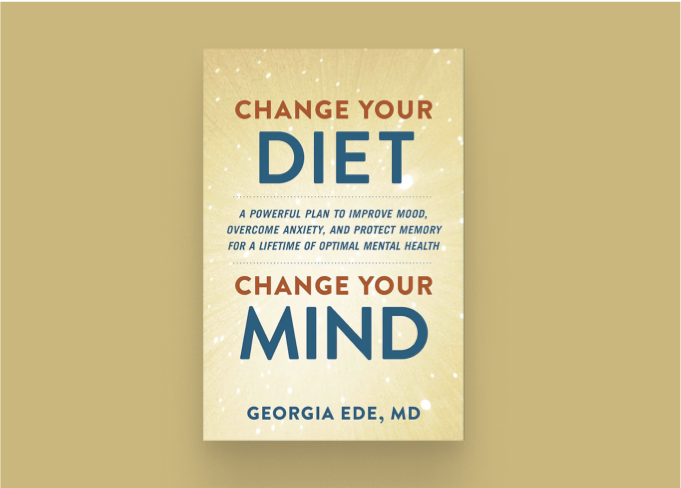
A powerful plan to improve mood, overcome anxiety, and protect memory for a lifetime of optimal mental health.
Read more

Through metabolic therapies, I’ve discovered that the positives I once believed were tied to my bipolar illness—like creativity and philosophical thinking—can be retained in recovery. I’ve learned that…
Learn more

Subscribe to Laurent’s Mental Health Keto Blog: Because you deserve to know all the ways you can feel better.
Learn more
How do you convince someone to try ketogenic therapy? Transcript: Should You Try Ketogenic Therapy? Inspiration for the Keto CuriousI’ve been asked many times how to convince someone…
Learn more
A powerful plan to improve mood, overcome anxiety, and protect memory for a lifetime of optimal mental health.
Read more
Through metabolic therapies, I’ve discovered that the positives I once believed were tied to my bipolar illness—like creativity and philosophical thinking—can be retained in recovery. I’ve learned that…
Learn more
Subscribe to Laurent’s Mental Health Keto Blog: Because you deserve to know all the ways you can feel better.
Learn more
How do you convince someone to try ketogenic therapy? Transcript: Should You Try Ketogenic Therapy? Inspiration for the Keto CuriousI’ve been asked many times how to convince someone…
Learn more